Search Results for: Biodroga MD Skin Booster Anti-Pigment Spot Serum

header image; right age to use face serum

What Age Should I Start Using Serum?

Face serums are power-packed products that contain skin care actives to target specific skin concerns. If your skin is not at its best these days, face serums are something you need to try now! But, does that make you wonder, what age should I start using serum?

You should start using face serum at the age of about 20 years, ideally! You may begin to notice some sort of skin damage at about your mid-twenties. So, 20-25 years is the right age to start using face serums.

Follow along to explore all about choosing face serums; according to your age in the best way!

Best Age To Start Using Serum

To get a clear idea of which face serums work well at which age, here is a table to guide you!

Face Serums

Right Age To Use

How To Use

Hyaluronic Acid

20 Onwards

Morning and evening; Everyday

Niacinamide

Teenage (13-19 years) and  beyond

Morning and evening; Everyday

Vitamin C

Late Teens

Daily morning

Vitamin E

Teenage and beyond

1-2 times in a week, before bedtime

Retinol

25 Onwards

Every other day, before bedtime, Wear SPF daily

Salicylic Acid (BHA)

Teenage

Start With 3 times a week, Better at night

AHAs

25 years

2-3 times a week or every other day, day/night

Peptides

25 to 30 years

Twice daily

Coenzyme Q10

25 to 30 years

Twice daily

But that’s not only about the right age to start a face serum; you should know;

  • what to look for in the long list of ingredients
  • how to choose the best face serum 
  • and finally, how to use them!

Best Face Serums For Teens

Is serum good for teenage skin?

Yes! You do need at least some skin care even in your teenage. And serums are one of them. 

Here is a list of serums that are good for teenage skin:

  1. Niacinamide Serum
  2. Vitamin C Serum
  3. Vitamin E Serum
  4. Salicylic Acid Serum
  5. Organic Serums

Is hyaluronic acid good for teenage skin? Hyaluronic acid is not bad for your skin in your teens. But, the thing is that you don’t need to use hyaluronic acid at such a young age. That is because it’s best to use it to prevent aging skin or to treat it once you have it!

best face serums for teens

Niacinamide Serum For Teenage Skin

You can use niacinamide even in your teens; that is 13-year; to 19 years of age. It is one of the most beloved skin care essentials of all time! 

Here is why you should use niacinamide serum in your teenage skin care routine:

  • Niacinamide works for all skin types and ages.
  • Niacinamide improves skin texture.
  • It takes care of your skin barrier.
  • It deeply cleanses your pores.
  • Also, help lighten up dark patches.
  • And may reduce teenage acne.

Here is a niacinamide serum perfect to use in your teens:

A unique blend of niacinamide with alpha arbutin that promises spot reduction! If you are a teen struggling with acne spots or dark patches, this face serum is a perfect add-on to your skin care routine.

Vitamin C Serum For Teenage Skin

Vitamin C is a powerful serum you can use even as a 15-year-old! And here is why:

  • You can start vitamin C in your late teens and continue it for life.
  • It works well for all skin types.
  • It brightens up your skin.
  • It can fade acne scars.
  • It fights against the harmful effects of the sun on your skin.
  • It boosts collagen. 

Vitamin C Serum + Good SPF is enough to protect your skin from sun damage in your teens!

Here is a list of vitamin C serum products that you can use in your teens:

  1. Vitamin C Serum Plus Antioxidant
  2. Dr. Grandel Vitamin Infusion Serum
  3. Guinot Newhite Vitamin C Brightening Serum
  4. Glymed Plus Master Aesthetic Elite Vitamin C Serum


Hyaluronic Acid Hydrating Facial Serum with Vitamin C
Our Score

Easy, lightweight hydration. Hyaluronic acid locks in moisture to plump, soothe, and support elasticity — for silky, smooth skin.

Vitamin E For Teenage Skin

Is vitamin E good for teenage skin? Vitamin E is good for teenage skin, especially if your skin is dry. Even if you are anywhere from 13 to 19, you can start using vitamin E serums on your skin.

A couple of serums have vitamin E combined with vitamin C, making it a perfect duo for teenage skin. Here is one for you!

It is the ultimate antioxidant serum for teenage skin, enriched with vitamins E and C!

Salicylic Acid Serum For Teenage Skin

A teenager, 13 to 19 years of age, can use a salicylic acid serum. That is the time when some teenage acne starts popping in! And Salicylic acid 2% works well for acne in your teens.

Here is why you can use a salicylic acid serum in your teens:

  • Works for all skin types – Best for oily/acne-prone skin
  • Improves teenage acne
  • Resurfaces textured skin
  • Unclogs pores 
  • Exfoliates gently

Here is a salicylic acid serum that you can use in your teens:

organic skin care ingredients

Organic Serums For Teenage skin

If you’re looking for gentle yet effective face serums in your teens – organic face serums are what experts swear by. A gorgeous blend of organics that:

  • Make your skin flawless – renews it!
  • Are not harsh on your teenage skin
  • Work well for sensitive skin 

Here is an organic serum you can use in your teens:

Best Face Serums For 20s And 30s

Which serum is best for the 20s 

Here is a list of serums best to use in your 20s:

  1. Vitamin C Serum
  2. Vitamin E Serum
  3. Hyaluronic Acid

Right Age To Use Hyaluronic Acid

The right age to use hyaluronic acid serum is 20 and above! Your skin starts to lose some of its elasticity in your 20s. However, the signs of aging appear in your late 20s or early 30s.

You should use hyaluronic acid in your 20s, and here is why:

  • Hyaluronic acid maintains your skin’s moisture.
  • That makes it hydrated. 
  • Also, it improves your skin’s elasticity.
  • Making your skin plumper and younger

Here is a list of hyaluronic acid serums you should start in your 20s:

  1. Schrammek Hyaluron HY+ Performance Serum
  2. Physiodermie Organics Bi-Molecular Hyaluronic Acid
  3. Sothys Hydra 3Ha Hyaluronic Acid Intensive Hydrating Serum 

Which serum is best for mid-twenties or 30s 

Here is a list of serums best to use in your mid-twenties or 30s:

  1. Retinol Serum
  2. Peptide Serum
  3. Coenzyme Q10
  4. AHAs
  5. Vitamin C Serum
  6. Vitamin E Serum
  7. Hyaluronic Acid

Top 3 Hyaluronic Serums

Top Rated
3Ha Hyaluronic Acid Intensive Hydrating Serum
9.7

HYALURONIC ACID BOOSTER: Contains Hyaluronic Acid, boosts healing and anti-aging properties

Best Seller
Strawberry Rhubarb Hyaluronic Serum
9.5

Replenish your thirsty skin with Eminence Strawberry Rhubarb Hyaluronic Serum, a hydrating, healing and exfoliating formula. Strawberry gently exfoliates dead skin and helps reduce pore size while rhubarb works as an astringent and provides vitamin C to improve skin tone.

Editors Choice
Hyaluronic Acid Hydrating Facial Serum with Vitamin C
9.8
  • Easy, lightweight hydration. Hyaluronic acid locks in moisture to plump, soothe, and support elasticity — for silky, smooth skin.
  • Improves the feel of the skin’s texture by decreasing the appearance of dry skin.
  • Diminishes the look of fine lines and wrinkles.

Right Age To Use Retinol Serums

You should use retinol serums at the age of 25 years and onwards! Begin with 0.5% of retinol. And to give you a range, most experts agree that you use 0.25 to 1 percent.

Retinol does make your skin look a lot better, and here is how:

  • Retinol fades pigmentation
  • It gives your skin a smooth texture
  • Fade wrinkles and fine lines
  • Brightens up your skin

Is it okay to use retinol at 18? Although people younger than 25 years of age can also use retinol but should use in milder forms – that are available over the counter. 

Which type of retinol should I use in my 20s? 

Retinyl palmitate is a type of retinol you should use in your 20s; to prevent aging skin. That is because it is milder retinol.

A study with retinyl palmitate showed:

  • Improvement in fine lines
  • Even skin tone
  • Smooth skin texture
  • A firmer skin tone

The study combined retinyl palmitate with a moisturizer rich in antioxidants. As a result, dry patches and scales improved too. 

Here is a list of retinol serums you should start in your 20s or 30s:

  1. Phyris Retinol Anti-Age Serum
  2. GlyMed Plus Retinol Restart Rejuvenation Serum
  3. Sothys Cosmeceutique RX Retinol Dermobooster
  4. Biodroga MD Skin Booster Anti-OX Retinol & Vitamin C Serum

Right Age To Use Peptide Serums

You should start using peptides serum after 25 to 30 years of age! And here is how to use natural peptides serum for skin and why you should do so:

Peptide Serums:

  • treat inflammation
  • treat breakouts
  • efficient skin barrier
  • improved collagen production

Here is a list of peptide serums you should start in your 20s or 30s:

  1. Nelly De Vuyst Lifting Peptides Serum
  2. Eminence Marine Flower Peptide Serum
  3. Eminence Organics Marine Flower Peptide Lip Serum
  4. Ilike Organics Eco-Peptide Therapy Serum with Aloe and Ginkgo

Right Age To Use Coenzyme Q10 Serums

You should start using coenzyme Q10 serums after 25 to 30 years of age! And here is why you should do so:

Coenzyme Q10;

  • Retain skin moisture
  • make skin youthful 
  • stimulates collagen production
  • reduce the impact of environmental stressors on skin

Here is an organic Coenzyme Q10 serum you can use in your late 20s or 30s:

Ilike Organics Q10 Serum

Right Age To Use AHA Serums

You should start using AHA serums in your mid-twenties or at 25 years of age!

AHAs are alpha hydroxy acids, and common AHAs include:

  • Lactic Acid
  • Mandelic Acid
  • Tartaric Acid
  • Glycolic Acid
  • Citric Acid

 Here is what AHA serum does for your skin:

  • treat wrinkles and blemishes
  • improve skin texture
  • make youthful skin
  • heal damages from sun 

Here is a list of AHAs serums you can start in your 20s or 30s:

  1. BioVegane Organic Papaya AHA Night Face Serum
  2. Phyris Skin Results Serum
  3. Grandel Timeless Serum
  4. Biodroga MD Skin Booster Leave-On Anti-Age Acid Serum
  5. Ilike Soothing Herbs Relief Serum


Eminence Organics Bakuchiol + Niacinamide Moisturizer
Our Score

This moisturizer combines anti-aging niacinamide and bakuchiol. These ingredients smooth the look of fine lines, visibly tighten pores and deliver retinol-like results without the irritation. As a moisturizer, this formula also hydrates dry skin and replenishes your skin barrier.

Results:

  • Smooths the look of fine lines and wrinkles with no visible irritation
  • Replenishes the skin barrier and locks in hydration
  • Reduces the appearance of large pores
  • Skin appears visibly tightened

How to use: Apply a layer of moisturizer over the entire face and neck area. Leave on. For a lighter application, emulsify a small amount of moisturizer in your hand with a few drops of water. For extra hydration, apply a thicker layer on dry areas.

The Takeaway

So, that is how you choose the best face serum according to your age. Serums are concentrated skin care actives, so they promise results! Thus, if you are adding face serums to your skin care, choose them as per your age and your skin’s needs, and you will see them do wonders to your skin for sure!

What Age Should I Start Using Serum? Read More »

skin care routine for hyperpigmentation

A 6-Step Effortless Skin Care Routine For Hyperpigmentation – With Organics!

According to research, hyperpigmentation is among the most common skin conditions varying among up to 33 percent of the population.

Hyperpigmentation is a harmless skin condition that badly affects how our skin looks! However, you can get rid of it with a simple skin care routine for hyperpigmentation – which is research-proven!

Shopping for beauty products without proper knowledge will end you with no treatment and even make you lose your money! Every product will make you think this is what you need, leading to a double-minded situation! Hold on, that article will not only answer your “whys?”; but also satisfy your “hows?” and proper routine to follow backed with scientific reasons!

What Causes Hyperpigmentation?

Melanin pigment is responsible for skin coloration. Increased melanin production of irritated skin cells can lead to dark, patchy skin, known as hyperpigmentation. This include skin condition such as:

  1. Melasma- butterfly-shaped dark patches 
  2. Age spots -oval-shaped dark spots 
  3. Acne scars
  4. Freckles- flat, circular spots, tanned light brown

It is often triggered by:

  • Hormonal imbalance
  • Sun exposure
  • Age
  • Inflammation or environmental stress

Before we look into skin care routine for hyperpigmentation, let us first discuss some active ingredients for pigmented skin.

Hydroquinone

Hydroquinone is a tyrosinase inhibitor. And tyrosinase is an enzyme that forms melanin. Melanin is what gives our skin its color, which causes skin pigmentation.

Hydroquinone is a great bleaching agent which decreases the number of melanocytes present. That lightens the skin tone. 

Although hydroquinone is safe to use according to many pieces of research, it can irritate your skin rarely if used prolonged daily!

Tip! Do not rely on hydroquinone-based products for more than five months at once.

A downside of hydroquinone is that it can sometimes cause rebound hyperpigmentation. That is, your pigmentation might return once you stop using it! Therefore, many dermatologists are not a big fan of hydroquinone unless you use it for specific skin concerns under supervision.

Luckily, we have natural alternatives to hydroquinone that works well too. But they are without the adverse effects of hydroquinone.

You can even consider vitamin A, vitamin C, and niacinamide instead!

Alpha Arbutin

Alpha arbutin is a depigmenting agent derivative of hydroquinone. It also inhibits melanin formation. However, during product use, hydroquinone may be generated.

Retinoids

It is a class of chemical compounds famous for treating fine lines and wrinkles as they boost collagen production. Besides this, it can treat hyperpigmentation. It limits melanin production by inhibiting the enzyme “tyrosinase”! 

Vitamin C

A powerful antioxidant that also heals hyperpigmentation by targeting melanin production! Moreover, it also prevents pigmentation in the future by minimizing UV exposure and environmental stress by neutralizing free radicles.

Niacinamide

Niacinamide is also a great lightning agent. Study proves that it can inhibit melanosome transfer from melanocytes to keratinocytes beneath the skin. 

Studies suggest that niacinamide can reduce pigmentation within four weeks of its use! Seems promising, right?

Kojic Acid

Kojic acid is a natural substance that comes from fungi. It inhibits tyrosinase (reduces melanin). Moreover, koji acid:

  • soothes inflammation
  • fights against oxidants
  • antimicrobial
  • UV protector
  • lightens pigmentation

Soy Complex

You might have used soy complex previously to reduce signs of aging, as it plumps up your skin and improves skin texture. Alongside this, it even fights hyperpigmentation. Study proves it is an able ingredient to treat uneven skin tone!

It works by inhibiting melanin production by decreasing the number of melanocytes by phagocytosis.

Dermatologists are confident that it is even safe for people with sensitive skin. It reduces redness, protects from UV rays, and even eliminates dark spots giving a radiant and bright look!

Until now, you know some key ingredients you should consider to cure your hyperpigmentation. Now, let’s discuss a complete routine you can follow!

WHY DOES ORDER MATTER?

Have you heard, “A little knowledge is a dangerous knowledge”? That is the best way to explain this case!

Applying products without considering the factor “what goes first” can result in no result, and in worst scenarios, can even cause skin damage by the reaction.

Correct order of skin care will not only give the best possible results but will even offer better penetration in your skin!

General tip! Try applying products from thinnest (water-based) to thickest (oil-based).

Get yourself ready skin free from hyperpigmentation is just around the corner!

Layering For Hyperpigmentation

Do you want to use more than one ingredient for hyperpigmentation? And are you stuck with the order of layering them up? We have got you covered! 

So, if you want to start with the order of layering, first understand that there are mainly five categories of bases:

  • Water
  • Anhydrous
  • Suspensions
  • Oils
  • Emulsions

So, each of them layers differently! To know which product to layer, first, you should know which base it is (as they layer differently).

To layer these bases correctly, you should start with water-based products. Next, use anhydrous or oil formulations, followed by emulsions. And in the end, use suspensions. 

INfographic- layering skin care ingredients- skin care routine for hyperpigmentation

STEP 1: CLEANSING

This step is like a foundation for every skincare routine! Cleansing your skin will remove dirt and grim, remove excess sebum, and kill microbes. That will lead to better penetration of the product you are applying in the further steps.

Oil-Based Cleanser Or Water-Based Cleanser?

Well, it depends on you! Use an oil-based cleanser to remove makeup and emulsify dirt. They usually work well to remove sebum, makeover, skin care actives, or sunscreens. Water-based gives you a deeper clean (removes sweat and dirt from your face). The thing that matters is how to use them effectively!

If your skin is normal to dry, the cleansers you can use include 

  • squalene
  • coconut milk
  • ceramides

If your skin is oily, look for

  • salicylic acid 
  • niacinamide

Look for a complete guide on organic face washes and cleansers here!

For oil-based cleansers, dispense 1-2 pumps on a dry face and massage gently all over your face. Wash with warm water.

Tip! Avoid applying on a wet face due to the opposite polarities of water and oil.

For water-based cleansers, apply a generous amount of cleanser on a wet face and massage to form enough foam. Rinse it off thoroughly.

We offer a great variety of both types of cleanser, with organic options to add to your skincare routine!

After you have clean skin, let’s start by applying the first layer of serum!

STEP 2:EXFOLIATION

WHY EXFOLIATE?

The sole purpose of exfoliation is to remove dead cells from your skin and to bring in new cells on the topmost surface. It also deep cleanses your clogged pores and removes dirt, cleanser might have missed!

Eminence Bright Skin Licorice Root Exfoliating Peel

This exfoliator is eminent for hyperpigmented skin. It comes with cotton pads and a great formula comprised of mandelic acid and glycolic acid. The best part is it contains a natural alternative to hydroquinone. Hydroquinone can cause redness and rebound hyperpigmentation when a person stops its use.

Key benefits include:

  • Evens out uneven skin
  • Brightens the skin tone
  • Diminishes dark spots
  • Give a radial glow

Apply a thin layer on your face with the brush, and press gently with a cotton pad. This step is not mandatory to perform daily. Twice to thrice time a week will be enough to get the job done.

STEP 3: SERUM

Specifically for hyperpigmentation, you should consider serum with vitamin C or niacinamide. Fortunately, organic skincare offers some great products which you can surely give a shot!

Guinot NEW WHITE Vitamin C Brightening Serum

Guinot’s NEW WHITE Vitamin C Brightening Serum contains all that you need!

It has a good dose of vitamin C, which will neutralize free radicles and decrease melanin production. It wipes out dark spots and makes your complexion fairer. 

This power duo of melanoxyl and pure vitamin C will give you a radiant look and is suitable for all skin types.

skin care routine for hyperpigmentation-Guinot NEWHITE Vitamin C Brightening Serum

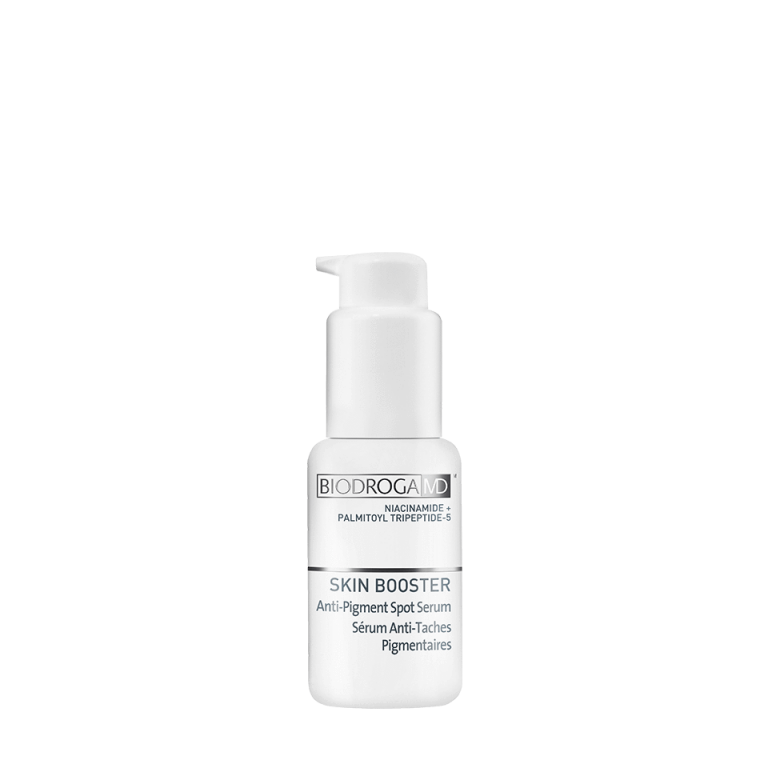
Biodroga MD Skin Booster Anti-Pigment Spot Serum

Biodroga MD Skin Booster Anti-Pigment Spot Serum includes ingredients such as:

  • Niacinamide
  • Alpha-arbutin
  • Glycolic Acid

They will give a lightening effect to your pigmented skin and gradually fade away dark spots, and even resist hyperpigmentation in the future.

Daily dab an optimum amount of serum all over your face, and soon you will see a noticeable change.

skin care routine for hyperpigmentation- serum

STEP 4: FACE MASK

Adding face masks to your skin care routine will give your skin a therapeutic and relaxing touch! Just relax in the meantime and let the goodness penetrate your skin.

Eminence Bright Skin Masque

For hyperpigmentation, this mask will surely stand out! 

Applying it 2-3 times a week will be enough to glow your skin and evens out hyperpigmented areas. It contains natural alternatives to hydroquinone making it suitable for all skin types. 

Apply on the dry face and leave it for at least 10-15 min before washing it off. You can leave it overnight too!

Tip! Instead of rubbing the mask while removing, place a washcloth soaked in warm water on your face. That will loosen it up, making it easy and gentle for you to remove!

The upcoming steps are more of a precaution than a treatment! That means these steps will not only cure your hyperpigmentation but also save you from it in the future.

skin care routine for hyperpigmentation- Eminence Bright Skin Masque - 2 fl. oz

STEP 5: MOISTURIZE

As mentioned previously, one of the leading causes of hyperpigmentation is inflammation. Rubbing dry skin can cause scrapes, bruises, and even cuts at their worst. Upon healing, they leave a dark spot, a sign of hyperpigmentation. To avoid this, moisturize your skin to hydrate and keep it supple. 

Keeping hyperpigmentation in our point of vision, Eminence Bright Skin Moisturizer SPF 40″ definitely deserves your try!

Eminence Bright Skin Moisturizer SPF 40

This chemicals-free product moisturizes your skin well and keeps it glowing and radiant. It also contains hydroquinone alternatives which will help to reduce dark spots. Apart from just hydrating, it also fortifies one from UVA and UVB rays. Moreover, it vanishes age spots and can treat premature aging and hyperpigmentation altogether.

eminence organics lilikoi daily defense moisturizer spf 40

STEP 6: SUNSCREEN

Although, we have a comprehensive post dedicated to sunscreens that cover all you need to know about them. For instance, when skin free from hyperpigmentation is your goal, sunscreens resist them getting worse. 

If you have melasma, age spots, and dark spots, sunscreen protects you from sunrays when you are out. Study proves that exposure to UV rays intensify melasma and postinflammatory hyperpigmentation.

Here are our top-pick sunscreens for you!

GM Collin High Protection Veil SPF 50

This high-protection veil is

  • 100% mineral sunscreen (Titanium dioxide)
  • Broad spectrum (protects against both UVA and UVB)
  • SPF 50
GM Collin High Protection Veil SPF 50

Nelly De Vuyst SPF 30 Mineral Sunscreen

This mineral sunscreen is another broad-spectrum formula that protects you from UVA and UVB. Additionally, this sunscreen is for you if your skin is sensitive, as it reduces the chance of skin burns – thanks to its aloe extracts!

skin care routine for hyperpigmentation- sunscreens

The Bottom Line

So, here is a simple step by step guide to skin care routine for hyperpigmentation, in a nutshell:

  • Cleanse (twice daily)
  • Exfoliate (two to three times per week)
  • Serum (use skin care actives at night- use natural alternates to hydroquinone, alpha arbutin, vitamin C, niacinamide, retinoids, kojic acid)
  • Face masks (weekly)
  • Sunscreen (morning skin care)
  • Seal it with a moisturizer (for both morning and night skin care routine)

That concludes our guide to treating hyperpigmentation. You can fade pigmentation marks with a few changes to your skin care routine. Use skin care actives that lighten them up! Also, it is preferable to use skin care actives at night. And do not forget to double cleanse in the morning.

A 6-Step Effortless Skin Care Routine For Hyperpigmentation – With Organics! Read More »

Shopping Cart
Scroll to Top
0