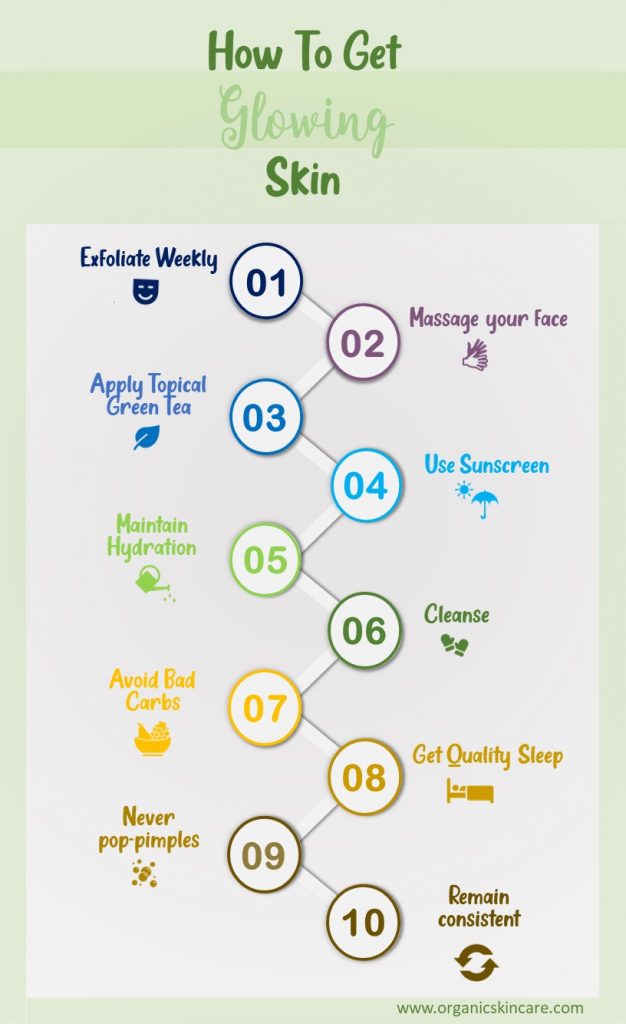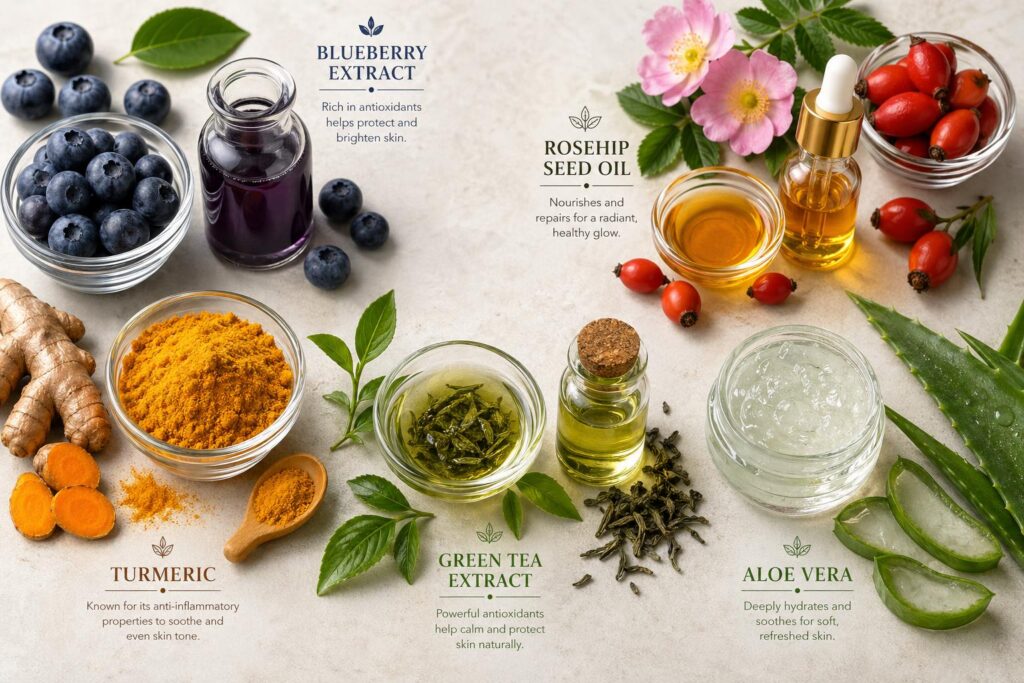

What are the possible effects of green tea on skin health?


What are the possible effects of green tea on skin health? Read More »

Written by Clelia Gakshteyn
Quick Answer: The best organic skin care gifts for the holidays are certified-clean, skin-type-matched products — think hyaluronic acid serums, probiotic cleansers, and superfood boosters. Choose items with USDA Organic or COSMOS certification, avoid synthetic fragrance, and match the formula to the recipient’s skin concern. A curated set or gift card is always a safe, thoughtful choice.
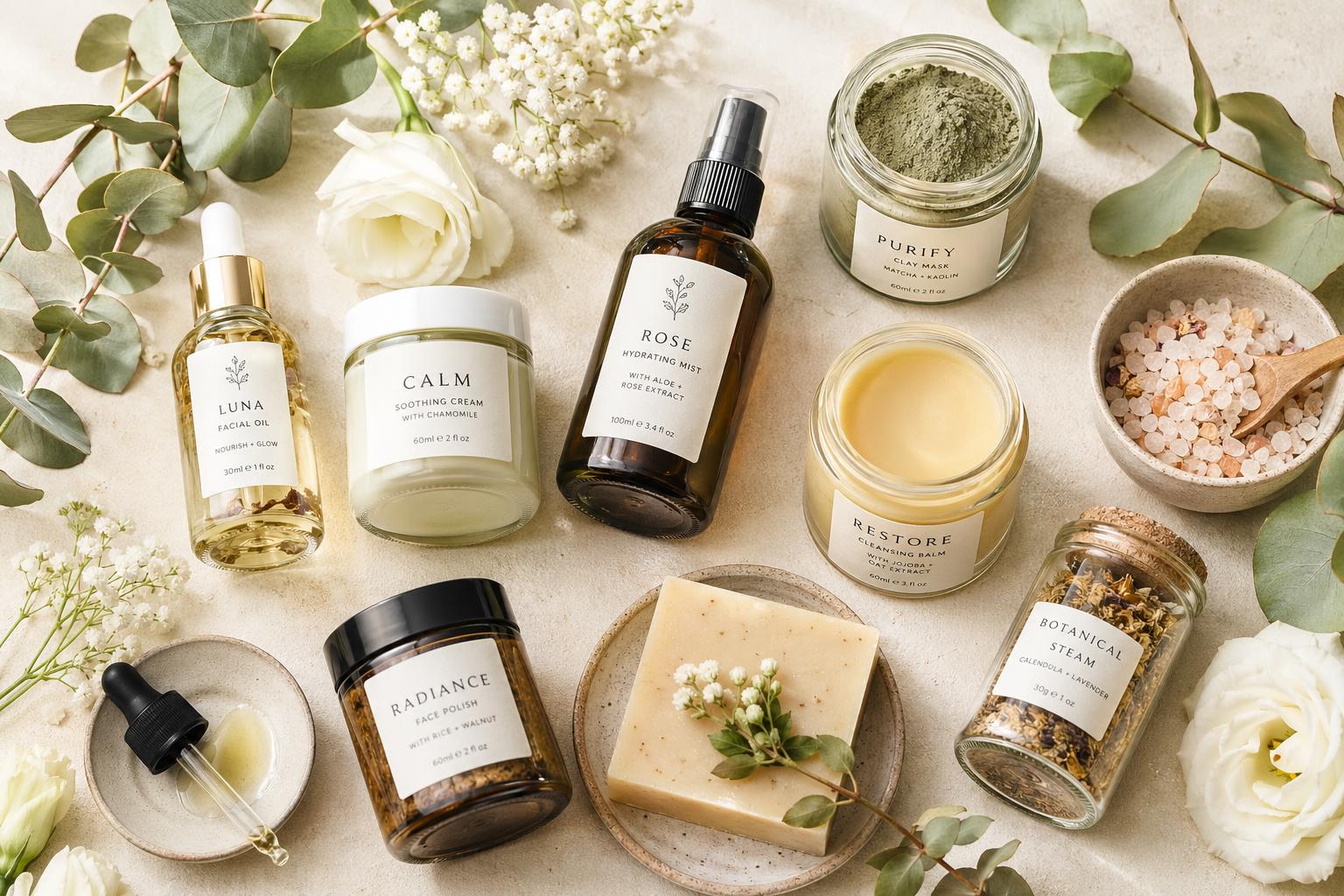
Gifting organic skin care says something beyond “here’s a nice thing.” It says you thought about what goes on their body, not just what looks good under the tree. And in 2026, that matters more than ever — the global organic personal care market is projected to reach $25.1 billion by 2030 (Grand View Research, 2024), driven by consumers who want transparency in every ingredient.
The holiday season is also the harshest time of year for skin. Cold air, indoor heating, and stress all compromise the skin barrier. A well-chosen organic product isn’t just a gift — it’s genuinely useful from day one.
But here’s the catch: not every product labeled “natural” or “organic” actually is. Greenwashing is rampant in the beauty industry, and without knowing what to look for, it’s easy to spend good money on something that doesn’t deliver. This guide cuts through the noise.
If a product claims “organic” without one of these seals, treat it as marketing language, not a guarantee.
The most common gifting mistake? Buying what you love for someone with completely different skin. Here’s a quick cheat sheet so your gift actually gets used — and loved.
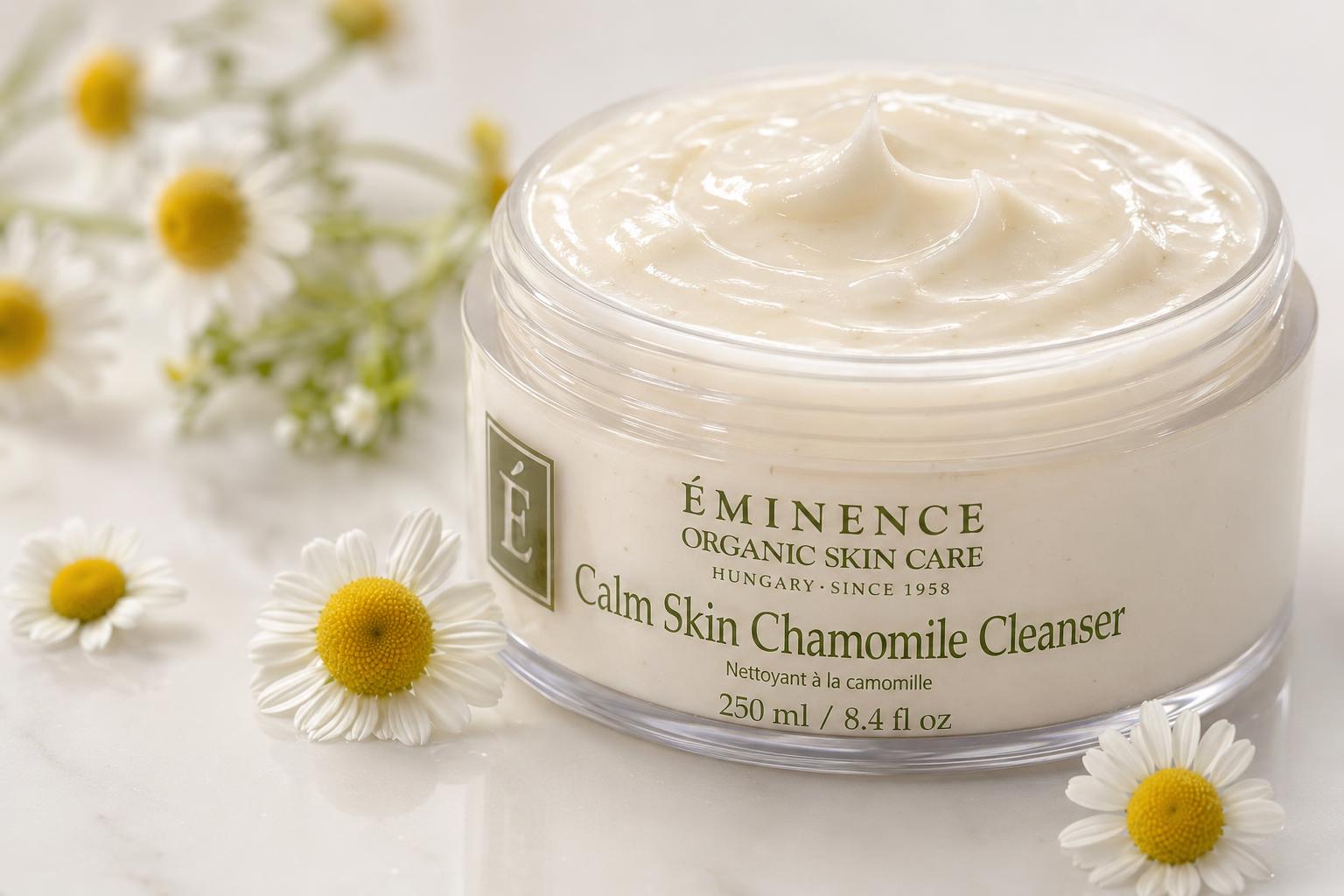
Dry skin in winter is a barrier problem. The skin is losing water faster than it can hold it. Look for products rich in hyaluronic acid, ceramides, squalane, and shea butter — ingredients that both attract moisture and lock it in.
“Hyaluronic acid is a naturally occurring polysaccharide found in the human body that can hold up to 1,000 times its weight in water, making it one of the most effective humectants available in topical skin care.”
Counter-intuitively, oily skin often needs more moisture, not less. When the barrier is stripped, skin overproduces sebum to compensate. Gift lightweight, non-comedogenic formulas with niacinamide, green tea extract, or probiotic cultures.
Niacinamide at 5% concentration visibly reduces the appearance of enlarged pores and uneven skin tone over 8 weeks, according to Bissett et al. 2005, Journal of Cosmetic Dermatology — making it one of the most evidence-backed ingredients you can gift.
Sensitive skin needs the fewest ingredients, not the most exotic ones. Stick to fragrance-free, essential-oil-free formulas with calming actives like chamomile, oat extract, or centella asiatica. Avoid anything with high concentrations of citrus oils or synthetic dyes.
best organic ingredients for sensitive skin
Every product below is chosen for certified-clean formulas, real ingredient science, and genuine gifting appeal. No filler products, no greenwashed labels.
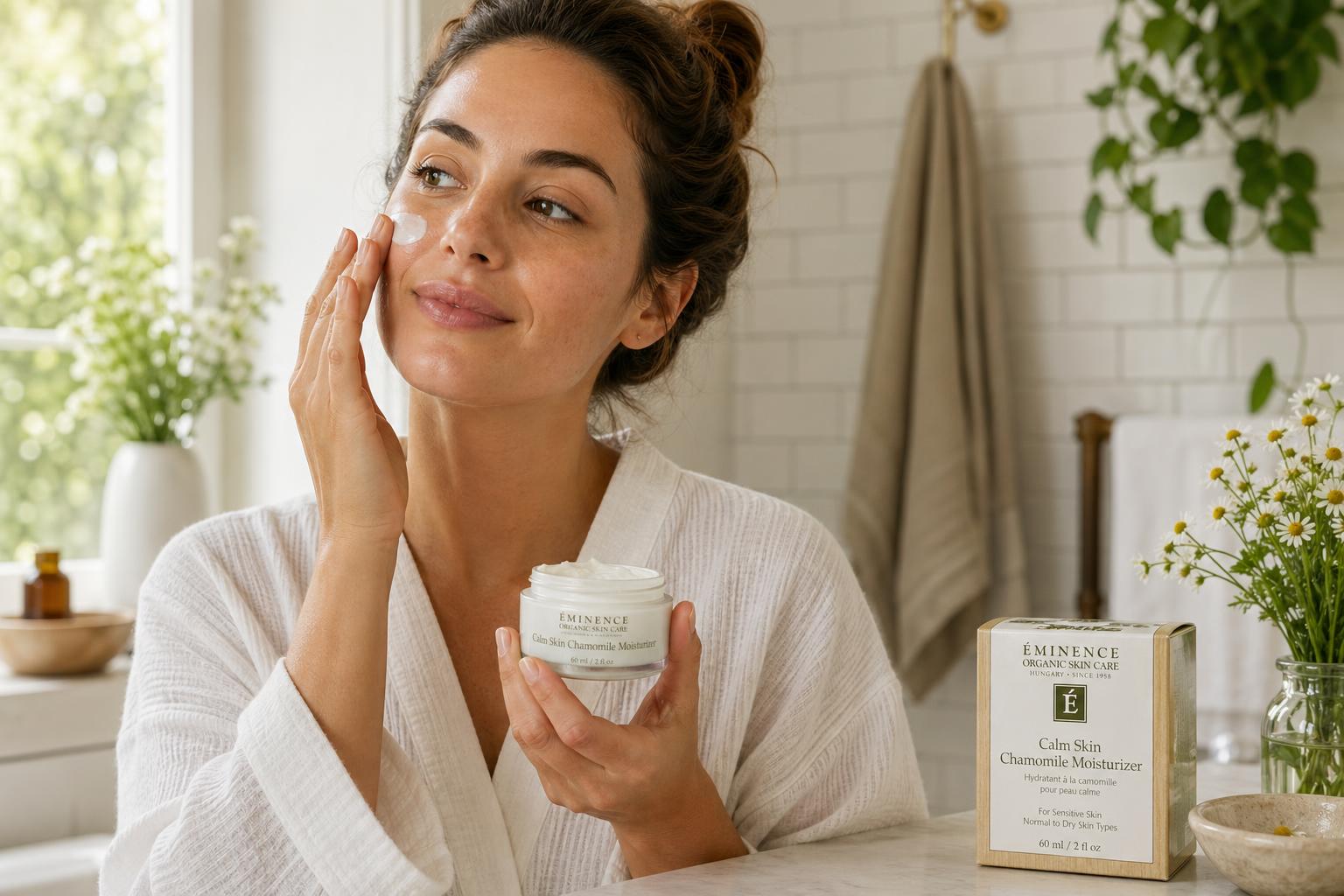
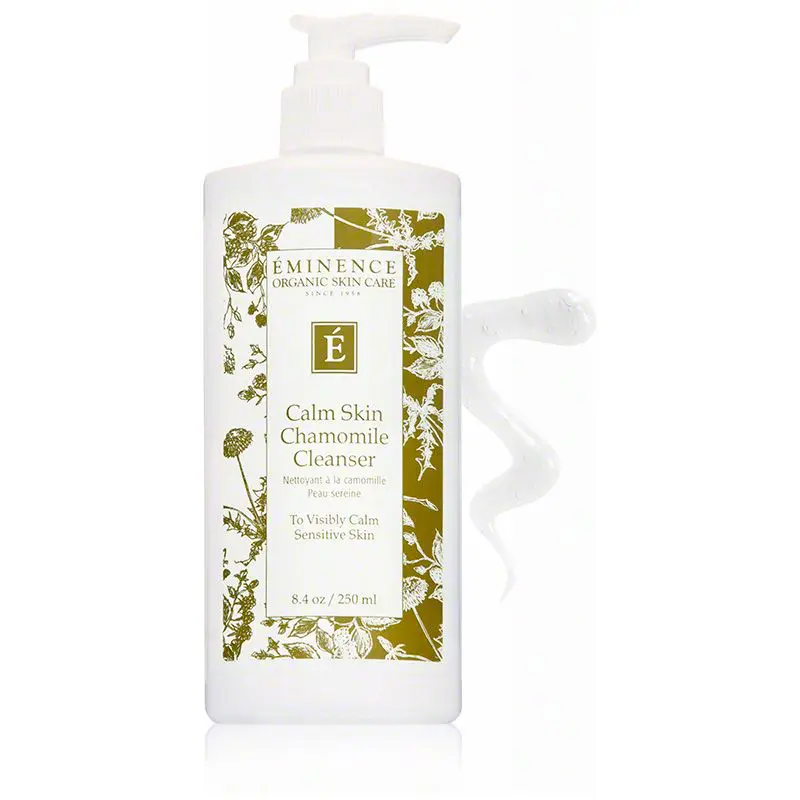
This is the cleanser you gift when you want to be thoughtful and safe. Chamomile extract is one of the most studied botanicals for skin calming — Kim et al. 2006, International Journal of Dermatology, found that chamomile’s active compound, apigenin, visibly reduces the appearance of redness and irritation with consistent use.
It’s gentle enough for daily use, fragrance-forward in the best way (real chamomile, not synthetic), and works beautifully as a first step in any routine. At 8.4 fl. oz., it’s a generous size that won’t run out in two weeks.
$60.00
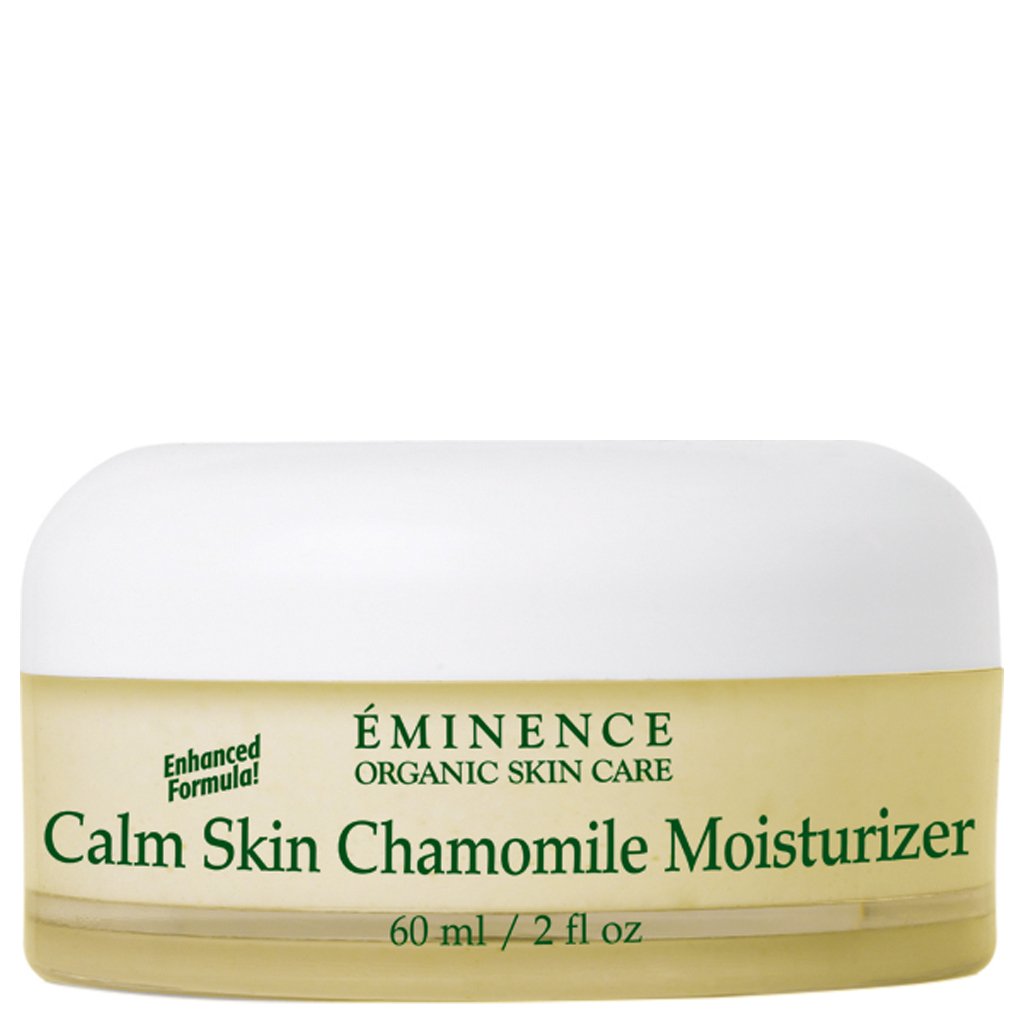
Pair this with the cleanser above for an instant two-piece gift set that covers the most essential steps of any routine. The formula leans on chamomile, shea butter, and calendula to help visibly soothe and hydrate without clogging pores.
It’s a strong choice for anyone dealing with winter redness, post-holiday stress skin, or general sensitivity. The 2 fl. oz. size is perfect for travel or as a “try before you commit to full size” gift.
$42.00
Probiotic skin care is one of the most exciting developments in clean beauty right now. Topical probiotics help support the skin’s natural microbiome, which plays a direct role in how skin manages inflammation and barrier function (Fabbrocini et al. 2016, Beneficial Microbes).
This cleanser delivers Lactobacillus ferment alongside willow bark and tea tree to help visibly minimize the look of blemishes — without the harshness of conventional acne cleansers. It’s a genuinely thoughtful gift for anyone who struggles with breakouts and wants a cleaner approach.
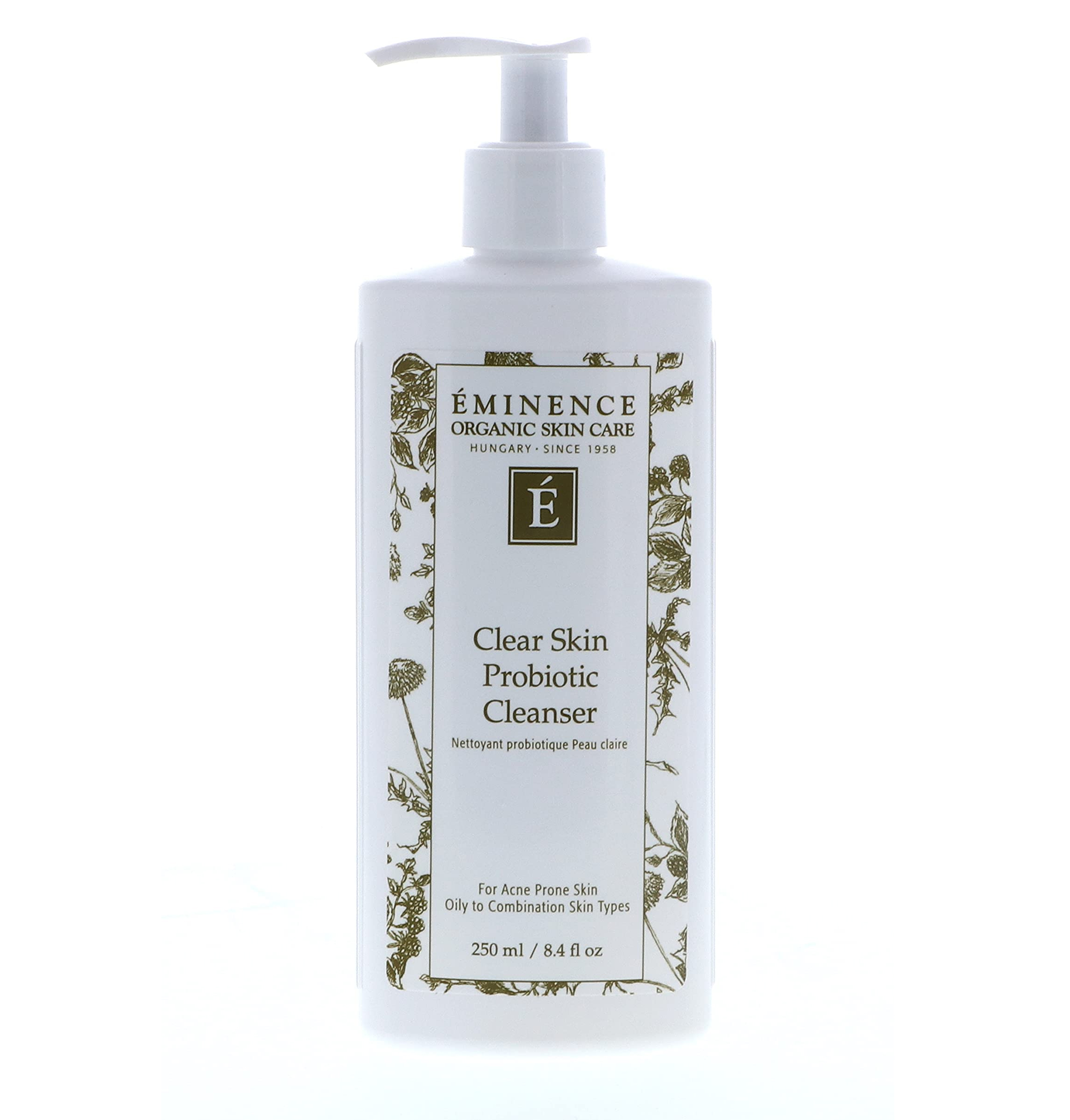
$48.00
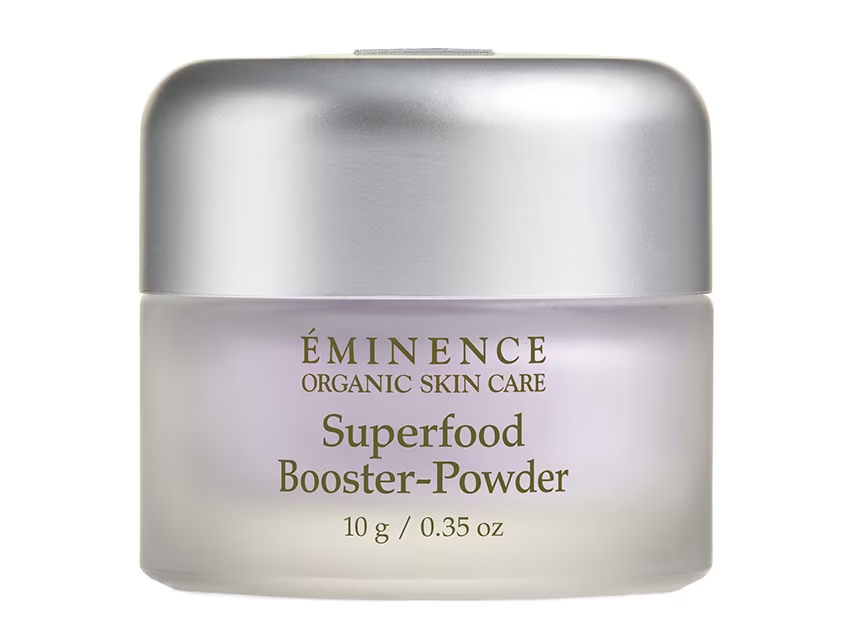
This is the gift for the skincare enthusiast who already has a routine and wants to level it up. The Superfood Booster-Powder mixes into any serum or moisturizer, delivering a concentrated hit of antioxidant-rich botanicals — think turmeric, spirulina, and adaptogenic mushrooms.
Antioxidants in topical form help neutralize free-radical damage from UV exposure and pollution. Green tea polyphenols, a key antioxidant class, help inhibit UV-induced matrix metalloproteinase expression — enzymes that break down collagen — according to Kim et al. 2006, International Journal of Dermatology.
$62.00
[VIDEO_EMBED: How to build an organic skin care holiday gift set — step-by-step gifting guide]
A curated gift set you put together yourself often feels more personal than a pre-packaged box. Here’s how to do it without guesswork.
Every great skin care gift set covers three steps: cleanse, treat, moisturize. This gives the recipient a complete routine they can actually use together, rather than a random collection of products.
how to build a complete organic skin care routine
Presentation matters — especially for skin care, where the unboxing experience is part of the gift. Skip the plastic wrap and go for recycled kraft paper, linen pouches, or reusable glass jars as filler. It keeps the “organic” ethos consistent from the product to the packaging.
A gift card is the most thoughtful choice. It lets them choose what’s right for their skin — and that’s always better than guessing.
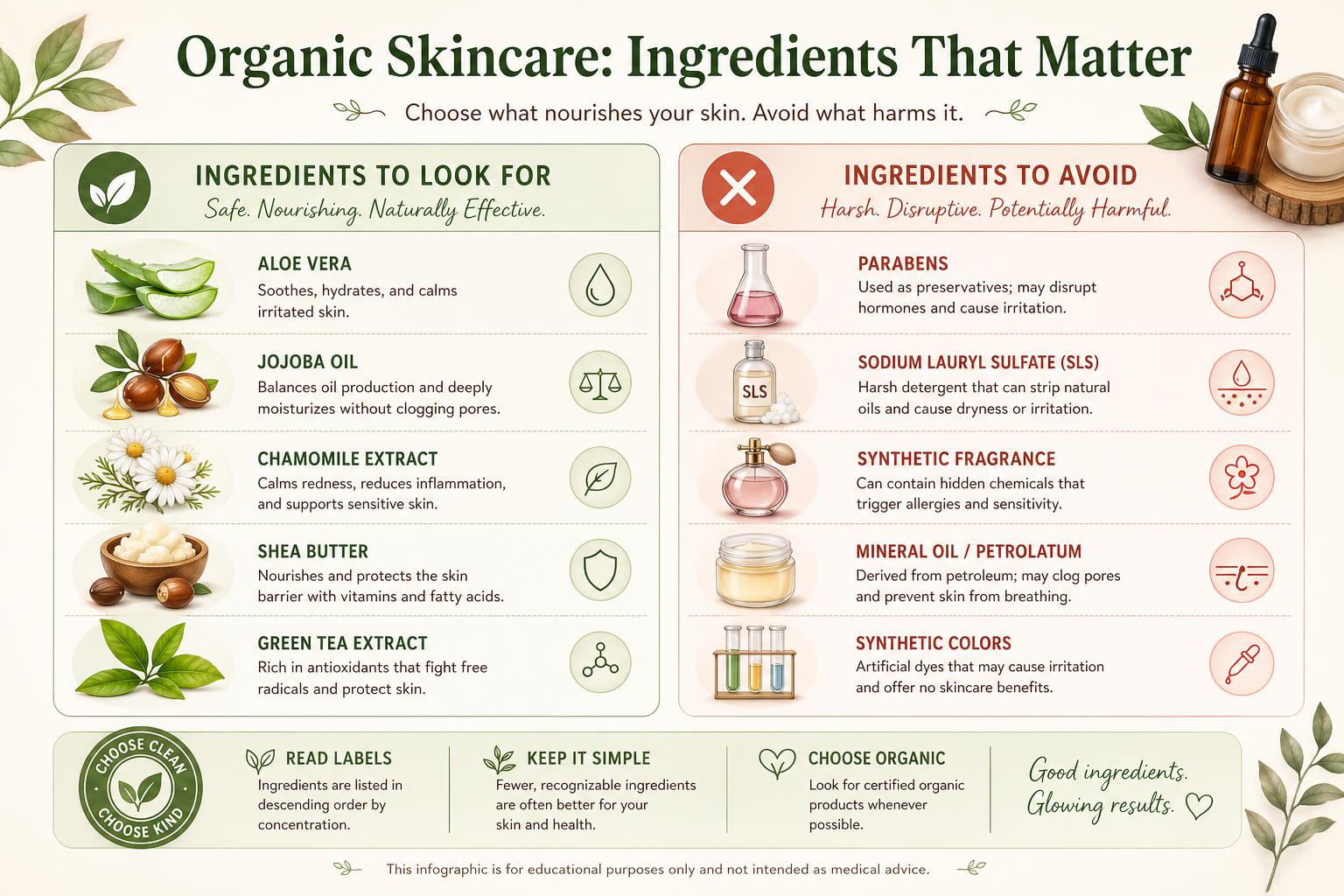
Reading an ingredient list (INCI list) is a skill worth developing before you shop. Here’s a quick reference for holiday gifting.
complete guide to reading organic skin care ingredient labels
| Product | Best For | Key Ingredients | Price |
|---|---|---|---|
| Calm Skin Chamomile Cleanser | Sensitive, dry | Chamomile, calendula | $42 |
| Calm Skin Chamomile Moisturizer | Sensitive, reactive | Chamomile, shea butter | $62 |
| Clear Skin Probiotic Cleanser | Oily, blemish-prone | Lactobacillus, willow bark | $48 |
| Superfood Booster-Powder | All skin types (enthusiast gift) | Turmeric, spirulina, mushroom | $60 |

$497.00
A genuinely organic skin care product contains ingredients grown without synthetic pesticides or fertilizers and is certified by a recognized body like USDA Organic, COSMOS Organic, or Ecocert. Look for these seals on the label — the word “natural” alone carries no legal standard and can be used by any brand.
Most organic formulas are well-tolerated by sensitive skin because they avoid common synthetic irritants like parabens, artificial fragrance, and sulfates. That said, natural ingredients like essential oils and botanical extracts can still trigger reactions. Always check the ingredient list and patch-test before gifting to someone with known sensitivities.
When you’re unsure of the recipient’s skin type, choose versatile, gentle formulas — a fragrance-free cleanser, a ceramide-rich moisturizer, or a gift card. Avoid active-heavy products like exfoliating acids or retinol alternatives unless you know their skin is accustomed to them.
Winter skin craves ingredients that restore moisture and reinforce the barrier. Look for hyaluronic acid, ceramides, squalane, shea butter, and chamomile extract. Hyaluronic acid holds up to 1,000 times its weight in water (Stern et al. 2004, Journal of Controlled Release), making it one of the most effective humectants for cold-weather dryness.
Yes — curated gift sets typically offer 20–30% more value than buying the same products individually. They also let the recipient try a full routine before committing to full sizes. Look for sets that include a cleanser, treatment, and moisturizer so the recipient gets a complete experience.
The most credible certifications are USDA Organic, COSMOS Organic, Ecocert, and NSF/ANSI 305. COSMOS Organic requires at least 95% of plant-based ingredients to be organically sourced. Avoid products that only display vague “all-natural” or “eco-friendly” badges without a certifying body named.
The best holiday gift is one that fits seamlessly into someone’s life. Organic skin care does exactly that — it’s used every day, it’s personal, and when you choose well, it genuinely makes a difference in how someone’s skin looks and feels through the coldest months of the year.
Start with the recipient’s skin type, check for a real certification seal, and lean toward gentle, versatile formulas if you’re unsure. A cleanser-and-moisturizer duo from a trusted organic brand is almost always a win. And if you’re ever in doubt — a gift card is never the wrong answer.
Your skin (and theirs) deserves ingredients you can actually pronounce. Happy gifting.
Buying Organic Skin Care Products as Gifts For The Holidays Read More »
Written by Clelia Gakshteyn
A solid organic skin care summertime routine centers on four steps: a gentle low-pH cleanser, a vitamin C antioxidant serum, a lightweight organic moisturizer, and a broad-spectrum mineral SPF 30+. Applied consistently morning and evening, this routine helps visibly protect skin from UV-related dark spots, dehydration, and premature aging all season long.
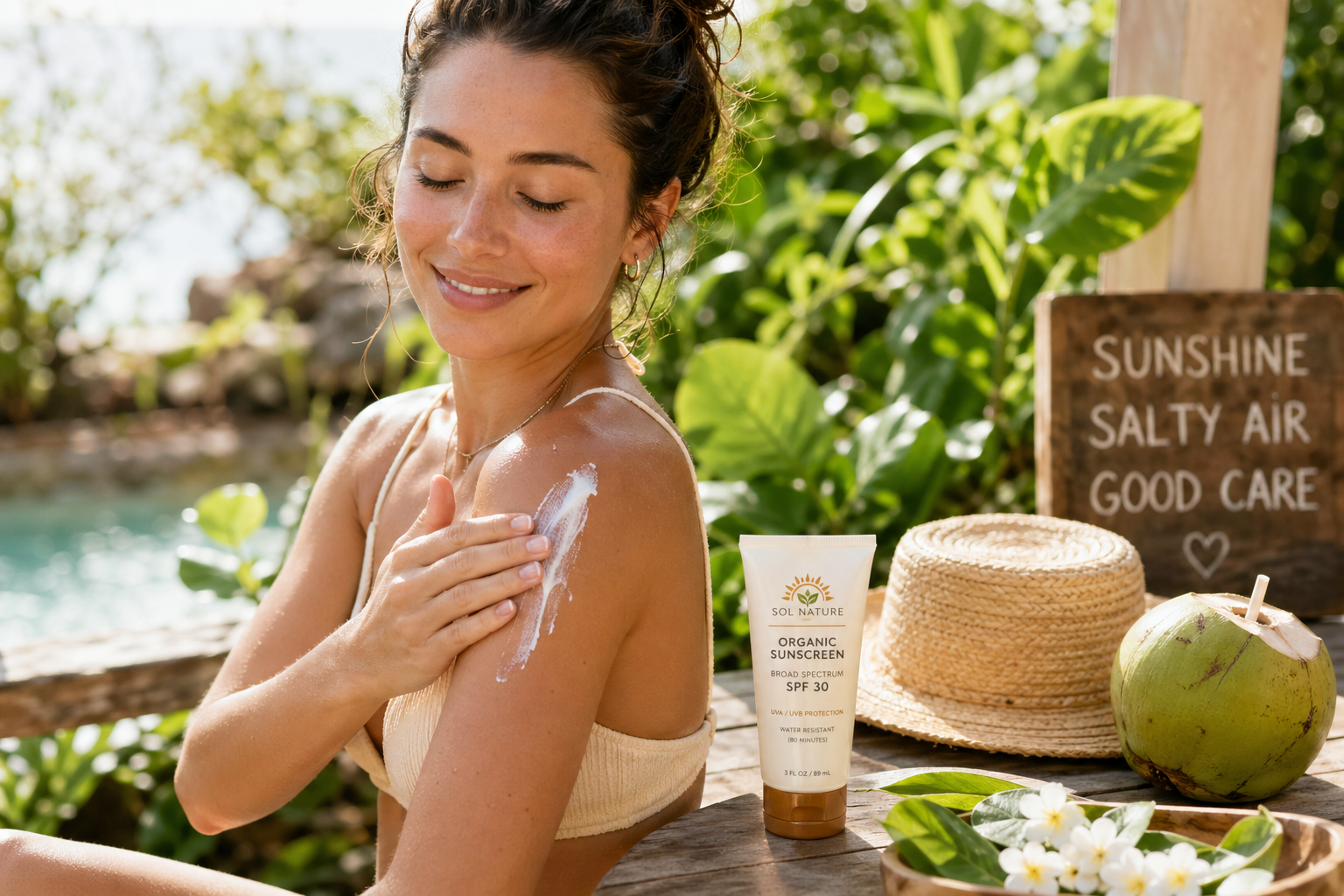
Summer isn’t just hotter — it’s a completely different environment for your skin. Higher UV index, increased humidity, sweat, and chlorine exposure all shift how your skin produces oil, retains moisture, and responds to products.
Your sebaceous glands ramp up production when temperatures rise, which means your trusty winter moisturizer may suddenly feel suffocating. At the same time, UV radiation is at its annual peak, making photoprotection the single most important step in your routine.
The good news? A few targeted swaps to your existing organic routine are all it takes to keep your skin balanced, protected, and genuinely glowing — no synthetic chemicals required.
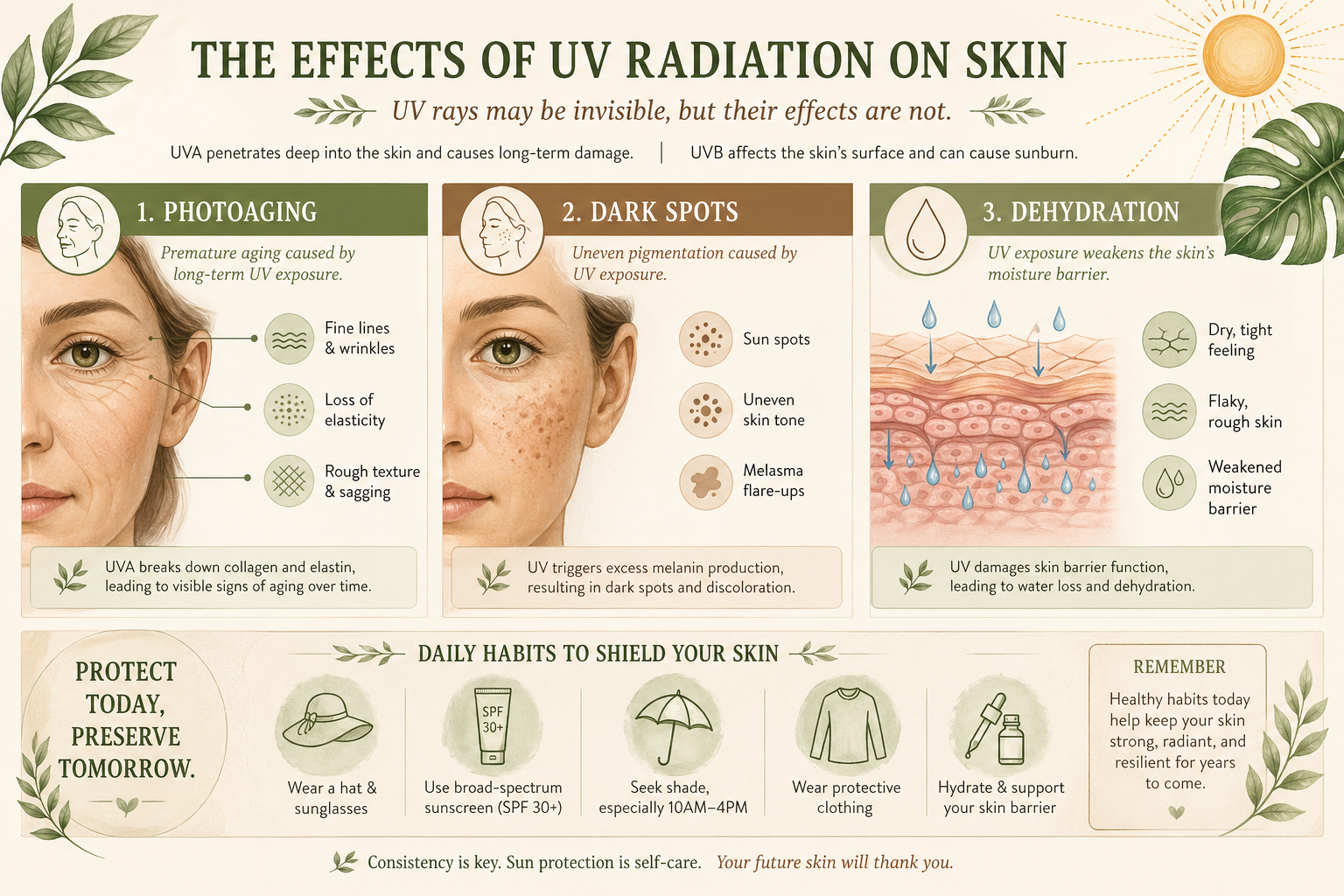
UV radiation arrives in two forms that affect your skin differently. UVB rays cause the visible redness and burning you feel on the surface. UVA rays penetrate deeper into the dermis, where they break down collagen and elastin over time — the main driver of photoaging.
Unprotected UV exposure triggers a cascade of damage: free radical generation, DNA strand breaks, and melanin overproduction. Each of these contributes to the visible signs of sun damage you want to avoid.
📌 Quotable Fact: “Daily broad-spectrum SPF 30 use prevents approximately 24% of visible signs of aging over a 4.5-year period, according to Hughes et al. 2013, Annals of Internal Medicine.”
UV exposure is responsible for up to 80% of visible facial aging, including fine lines, loss of firmness, and uneven texture (Flament et al. 2013, Clinical, Cosmetic and Investigational Dermatology). This isn’t inevitable — it’s largely preventable with consistent photoprotection and antioxidant support.
Organic ingredients like rosehip seed oil and bakuchiol (a plant-based retinol alternative) help support a smoother, more even-looking complexion without the photosensitivity that makes synthetic retinol tricky in summer.
When UV rays trigger excess melanin production, the result is dark spots, sunspots, and uneven skin tone — especially on areas that get the most sun exposure like your cheeks, nose, and décolletage. Melanin deposits can take months to fade without targeted treatment.
Niacinamide at 5% visibly reduces the appearance of dark spots by interfering with melanin transfer to skin cells. Vitamin C provides additional brightening support by neutralizing the free radicals that trigger melanin overproduction in the first place.
⚠️ Safety Note: If you notice a mole changing in size, shape, or color, or a new growth that bleeds or doesn’t heal, see a board-certified dermatologist promptly. Organic skincare supports healthy-looking skin — it does not diagnose or treat skin cancer. Annual skin checks are non-negotiable.
Sweating depletes your skin’s water reserves faster than you’d expect. Transepidermal water loss (TEWL) increases in heat, meaning your skin loses moisture to the air even when the air itself feels humid. The fix isn’t a heavier cream — it’s a smarter hydration strategy.
Layer a hyaluronic acid serum (ideally with multiple molecular weights) under a lightweight moisturizer to draw water into the skin and seal it there. Hyaluronic acid holds up to 1,000 times its weight in water, according to Stern et al. 2004, Journal of Controlled Release.
Heat + sweat + sunscreen residue = a recipe for clogged pores. If you’re suddenly breaking out more in summer, your routine — not your skin — is likely the culprit. Heavy oils and occlusive balms that worked beautifully in winter can trap debris against your skin when you’re sweating.
Switch to non-comedogenic organic oils like squalane (derived from sugarcane or olives) or sea buckthorn, and double-check that your mineral sunscreen is labeled non-comedogenic. A gentle double cleanse in the evening removes sunscreen and sweat without stripping your barrier.
Heat dilates blood vessels and can make skin more reactive, flushed, and prone to irritation. If you have rosacea or sensitive skin, summer can be particularly challenging. Green tea polyphenols help minimize the look of redness, and oat extract (colloidal oatmeal) is an FDA-recognized skin protectant that soothes the appearance of irritated skin.
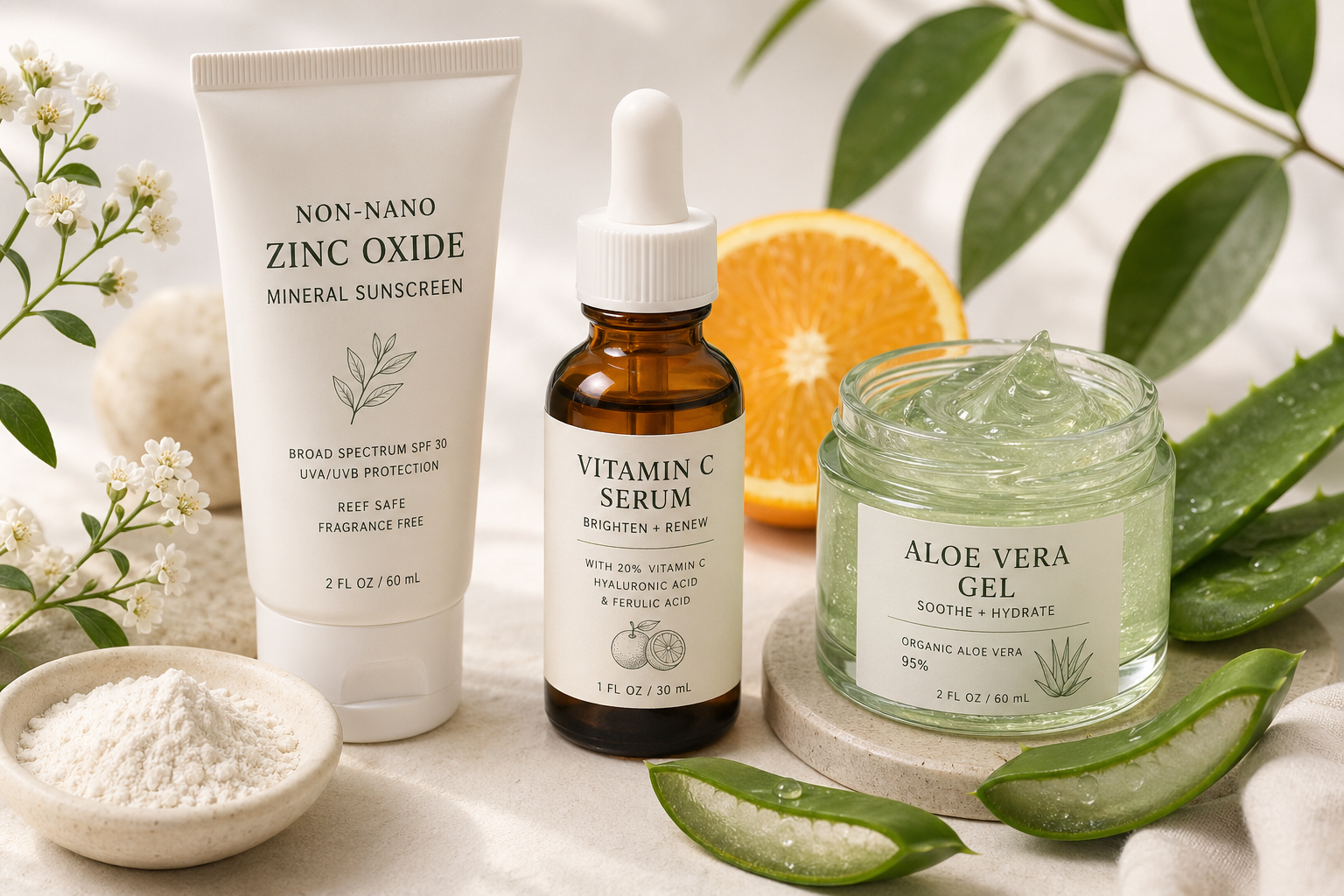
Non-nano zinc oxide is the cleanest, most effective mineral UV filter available. It sits on top of skin and physically reflects both UVA and UVB rays without being absorbed into the bloodstream — a key concern with chemical UV filters like oxybenzone (Matta et al. 2019, JAMA).
It’s also reef-safe, making it the responsible choice if you’re spending time near the ocean. Look for at least 15–20% concentration for reliable broad-spectrum SPF 30+ coverage. The “non-nano” designation matters — nano-sized particles raise different absorption concerns.
mineral sunscreen guide
L-ascorbic acid is the most bioavailable form of vitamin C for skin. Applied in the morning, it neutralizes UV-generated free radicals before they can damage collagen and trigger melanin overproduction. Think of it as a second line of defense working alongside your SPF.
Vitamin C also helps visibly brighten the appearance of existing dark spots over time. A stable 10–15% concentration in a low-pH formula (between 2.5 and 3.5) is the sweet spot for efficacy without irritation. Store your vitamin C serum away from direct sunlight to prevent oxidation.
📌 Quotable Fact: “Topical vitamin C at 10% concentration, combined with SPF, provides significantly greater photoprotection than SPF alone, according to Lin et al. 2003, Journal of Investigative Dermatology.”
Niacinamide (vitamin B3) is one of the most versatile ingredients you can add to your summer routine. At 5%, it visibly reduces the appearance of dark spots, minimizes the look of enlarged pores, and helps regulate sebum production — all concerns that peak in summer.
Niacinamide at 5% concentration reduces the appearance of hyperpigmentation by up to 35% over 8 weeks, according to Bissett et al. 2005, Journal of Cosmetic Dermatology. It’s also exceptionally well-tolerated, making it a great option for sensitive and combination skin types.
Organic aloe vera gel is the original summer skin ingredient — and the science backs up its reputation. It contains acemannan polysaccharides, antioxidants, and vitamins A, C, and E that help support a calm, comfortable-looking complexion after heat and sun exposure.
Keep a bottle of pure aloe vera gel in the fridge for an instant cooling treatment after a long day outdoors. It layers beautifully under moisturizer and won’t clog pores. Look for formulas where aloe vera juice or gel is the first ingredient, not a filler buried at the bottom of the list.
Cold-pressed rosehip seed oil is rich in trans-retinoic acid equivalents, essential fatty acids (linoleic and alpha-linolenic acid), and vitamin C precursors. It helps support a more even-looking skin tone and smoother texture without the photosensitivity associated with synthetic retinol.
Rosehip seed oil delivers trans-retinoic acid equivalents that support skin cell turnover without the irritation of synthetic retinol, according to Valerón-Almazán et al. 2015, Clinical and Cosmetic Investigational Dermatology. Use it in your evening routine only — it’s best applied at night when skin is in repair mode.
rosehip oil benefits guide
Here’s how to structure your routine for maximum protection and hydration — morning and evening. Each step builds on the last, so order matters.
[VIDEO_EMBED: How to Build an Organic Summer Skincare Routine — Step-by-Step Tutorial]
Step 1: Gentle Low-pH Cleanser
Start with a sulfate-free, pH-balanced cleanser (ideally pH 4.5–5.5) to remove overnight oils without stripping your skin barrier. Harsh cleansers signal your skin to overproduce sebum — the last thing you want heading into a hot day.
Step 2: Vitamin C Antioxidant Serum
Apply 3–4 drops of a stable L-ascorbic acid serum to clean, slightly damp skin. Press gently — don’t rub. Allow 60 seconds to absorb before the next step. This is your free-radical defense layer.
Step 3: Lightweight Organic Moisturizer
Choose a gel-cream or water-based formula in summer. Look for hyaluronic acid, aloe vera, and niacinamide as key actives. Apply while skin is still slightly damp from the serum to lock in hydration.
Step 4: Mineral SPF 30+ (Non-Negotiable)
Apply a generous amount — about a quarter teaspoon for your face alone — of a non-nano zinc oxide sunscreen as the final step. Don’t forget your neck, ears, and the back of your hands. Reapply every two hours outdoors.
Step 1: Double Cleanse
Start with an oil-based cleanser or micellar water to dissolve sunscreen and sweat. Follow with your gentle low-pH cleanser. This two-step process ensures your skin is truly clean without over-stripping.
Step 2: Niacinamide Toner or Serum
Evening is the ideal time for niacinamide — it helps minimize the look of pores and supports a more even tone while you sleep. Apply to clean skin before heavier treatments.
Step 3: Targeted Treatment (2–3 nights per week)
Rotate between bakuchiol serum (a plant-based retinol alternative that’s safe for summer use) and a brightening mask with ingredients like turmeric, licorice root, or kojic acid to help address the appearance of sun-related dark spots.
Step 4: Rosehip Seed Oil or Overnight Moisturizer
Seal everything in with a few drops of cold-pressed rosehip seed oil or a richer organic night cream. Skin does its most active repair work between 11pm and 3am — give it the ingredients it needs.
Just as important as what you add is what you remove from your summer routine. Some ingredients that work beautifully in cooler months can cause problems in heat and sun.
ingredients to avoid in organic skincare
Focus on gel-based hydrators and clay-containing masks (kaolin or bentonite) 1–2 times per week to help minimize the look of enlarged pores. Niacinamide is your best friend. Choose a matte-finish mineral SPF to reduce midday shine without reapplying powder over sunscreen.
Layer hydration: hyaluronic acid serum → ceramide moisturizer → facial oil. Don’t skip the oil step — it creates an occlusive seal that prevents TEWL in air-conditioned environments. Look for organic marula oil or sea buckthorn for dry skin types.
Stick to fragrance-free, minimal-ingredient formulas. Zinc oxide is your safest SPF option — it’s less likely to cause reactions than titanium dioxide or chemical filters. Colloidal oatmeal and centella asiatica (cica) are your go-to calming ingredients. Patch test every new product before full application.
Double cleansing is non-negotiable. Look for salicylic acid (BHA) in your cleanser or toner to help keep pores clear — it’s oil-soluble, so it penetrates through sebum effectively. Choose a non-comedogenic mineral SPF labeled “oil-free.” Avoid touching your face after applying sunscreen to prevent transfer to pores.
Even with the best intentions, sometimes your skin gets more sun than planned. Here’s how to support your skin’s recovery with organic ingredients.
Important: Severe sunburn with blistering, fever, or chills warrants medical attention. Organic skincare supports the appearance of healthy skin — it does not treat sunburn as a medical condition.
Try It: Organic Vitamin C Brightening Serum
Key ingredients: L-ascorbic acid 12%, ferulic acid, organic rosehip extract, hyaluronic acid
Best for: All skin types, especially those targeting dark spots and dullness
⭐⭐⭐⭐⭐ 4.8/5 from 2,400+ reviews
Shop our organic vitamin C serum →
Try It: Non-Nano Zinc Oxide Mineral SPF 30
Key ingredients: Non-nano zinc oxide 20%, aloe vera, green tea extract, vitamin E
Best for: All skin types, reef-safe, water-resistant 80 minutes
⭐⭐⭐⭐⭐ 4.7/5 from 1,800+ reviews
Shop our organic mineral sunscreen →
Non-nano zinc oxide is the gold standard for organic mineral sunscreen. It sits on top of skin, reflects both UVA and UVB rays, and is reef-safe. Look for at least 15–20% concentration in your formula for broad-spectrum SPF 30+ protection.
Yes. Summer heat and humidity increase sebum production and sweat, which can clog pores and alter how products absorb. Switching to lighter textures, adding an antioxidant serum, and upgrading your SPF are the three most impactful seasonal changes.
Absolutely. Vitamin C (L-ascorbic acid) neutralizes UV-generated free radicals and helps reduce the appearance of sun-related dark spots. Apply it in the morning under SPF for a synergistic photoprotective effect, per Lin et al. 2003, Journal of Investigative Dermatology.
Every two hours when outdoors, or immediately after swimming or sweating. Mineral sunscreens can rub off more easily than chemical formulas, so consistent reapplication is especially important with zinc oxide and titanium dioxide products.
Some can, yes. Heavy plant oils like coconut oil rate high on the comedogenic scale and may worsen breakouts in humid heat. Opt for non-comedogenic organic oils like squalane, rosehip, or sea buckthorn, and choose gel or water-based formulas in summer.
Aloe vera gel is the most evidence-backed option for soothing heat-stressed skin. Calendula extract, green tea, and oat extract also help support a calm, comfortable complexion after sun exposure. Avoid alcohol-based products on sun-stressed skin.
Not sure which organic SPF or serum is right for your skin type?
Take our free 2-minute skin quiz and get a personalized organic summer routine — matched to your skin type, concerns, and budget.
[RELATED_
Organic Skin Care Summertime Routine Read More »
Taking care of skin is one of the most critical parts of health care on a daily basis. Dry skin is not only uncomfortable. It can also be painful and harmful to the body. After all, cracks and cuts in dry skin can allow bacteria and pathogens into the body. That’s where a good skin care routine for dry skin comes in.
Winter weather highlights the problem of dry skin. The cold tends to deprive the skin of the necessary nutrients it needs for repair and rejuvenation. All that dry air simply saps it away, and it takes a good skin care routine to put it back.
Since winter is so hard on the skin, it’s a fantastic time to update a skin care routine. Skin needs proper nutrients and moisture added back, or it will break down. However, setting up the appropriate nutrients can be tricky, since bodies can react negatively to certain substances.
The easy answer to this is using ingredients found naturally on earth. These natural ingredients are efficient, safer, environmentally-friendly, and generally more effective than their synthetic counterparts. That’s why organicskincare.com only uses certified organic ingredients.
To that end, organicskincare.com has curated products that specifically help dry skin rejuvenate itself. Building these into a routine often helps drive dry skin away for good.

The morning skin care routine for dry skin prepares the skin for the rigors of the day. The routine is designed to protect skin and keep it looking great throughout the day without the harshness some products employ.
A cleanser serves two purposes, removing buildup and preparing skin for the day. The cleanser included in a skin care routine for dry skin must be gentle. Otherwise, it strips skin down. Be careful of foaming cleansers.
Additionally, consider restraining exfoliation to a few times a week. This change gives the skin time to heal while still allowing dead skin cell removal.
Facial toners are fast-absorbing liquids that help balance Ph and remove any excesses left on the skin. When considering a toner for dry skin, ensure it does not contain alcohol. Alcohol is a common ingredient, but it dries skin out even more rather than helping moisturize.
Serums concentrate specific nutrients for the skin. These apply lightly, so they do not clog the pores. In the morning, a facial serum with vitamin C can help the skin form a barrier to protect against the rigors of the day.
Moisturizer is a vital part of any skin care routine for dry skin. In this case, a richer moisturizer works best. Additionally, you can try Eminence Bright Skin Moisturizer SPF 40 which offers a great mix of beneficial ingredients without the oily residue many women find annoying.
The skin around the eyes is incredibly sensitive. Unfortunately, this means it dries out quickly too. The specific formulation goes into eye creams to counter this. A day eye cream will also be light enough to put makeup on over without smearing.
Perhaps the most crucial part of a morning skin care routine for dry skin is applying SPF sunscreen. Sunscreen blocks the most damaging radiation from reaching the surface. Over time, this has a myriad of benefits, including avoiding melanoma cancer.

The Best Organic Skin Care Routine for Dry Skin In 2023 Read More »

Written by Clelia Gakshteyn
Organic skin care products are the best choice for most people because they deliver active botanicals without synthetic pesticides, hormone-disrupting preservatives, or undisclosed “fragrance” chemicals. Certified organic formulas visibly support healthier-looking skin, reduce the risk of irritation, and are better for the planet — all backed by a growing body of ingredient science.
Here’s a fact that surprises most people: the US has not passed a major federal law updating cosmetic ingredient safety since 1938. The European Union has banned or restricted over 2,400 cosmetic ingredients. The US FDA has restricted fewer than 15.
That gap matters for your skin. Ingredients like parabens, formaldehyde-releasing preservatives, and synthetic musks are still legal in US products — and still showing up in bestselling moisturizers, cleansers, and serums. The Environmental Working Group’s Skin Deep database (2025) flags over 40% of personal care products as containing at least one ingredient of moderate-to-high concern.
Certified organic products operate under a different standard. To earn the USDA Organic seal, a product must contain at least 95% organically produced ingredients — grown without synthetic pesticides, herbicides, or GMOs. Third-party certifiers like COSMOS and Ecocert add another layer of verification. You’re not just taking a brand’s word for it.
Note: “Natural” and “clean” are unregulated marketing terms. Always look for a third-party certification seal.
The Modernization of Cosmetics Regulation Act (MoCRA), signed in 2022, did strengthen FDA oversight — requiring manufacturers to register facilities and report serious adverse events. It’s a step forward. But it still doesn’t pre-approve ingredients before they reach your bathroom shelf.
how to read a skin care ingredient label
You’ve probably heard the claim that “your skin absorbs 60% of what you put on it.” The real science is more nuanced — and still worth paying attention to. Skin absorption varies significantly by molecule size, skin condition, and where on the body you apply a product (Bos & Meinardi 2000, Experimental Dermatology).
Thinner skin areas — like your eyelids, neck, and inner arms — absorb ingredients at much higher rates than your forearms or back. Broken or compromised skin barriers absorb even more. This means the products you use around your eyes and on irritated skin deserve the most scrutiny.
What we do know clearly: certain synthetic ingredients do penetrate the skin barrier and enter systemic circulation. A 2019 FDA-commissioned study (Matta et al. 2019, JAMA) found that four common chemical sunscreen filters — avobenzone, oxybenzone, octocrylene, and ecamsule — were detected in blood plasma after a single day of use at concentrations exceeding FDA safety thresholds. This doesn’t mean they’re definitively harmful, but it does mean the conversation about what we put on our skin is worth having.
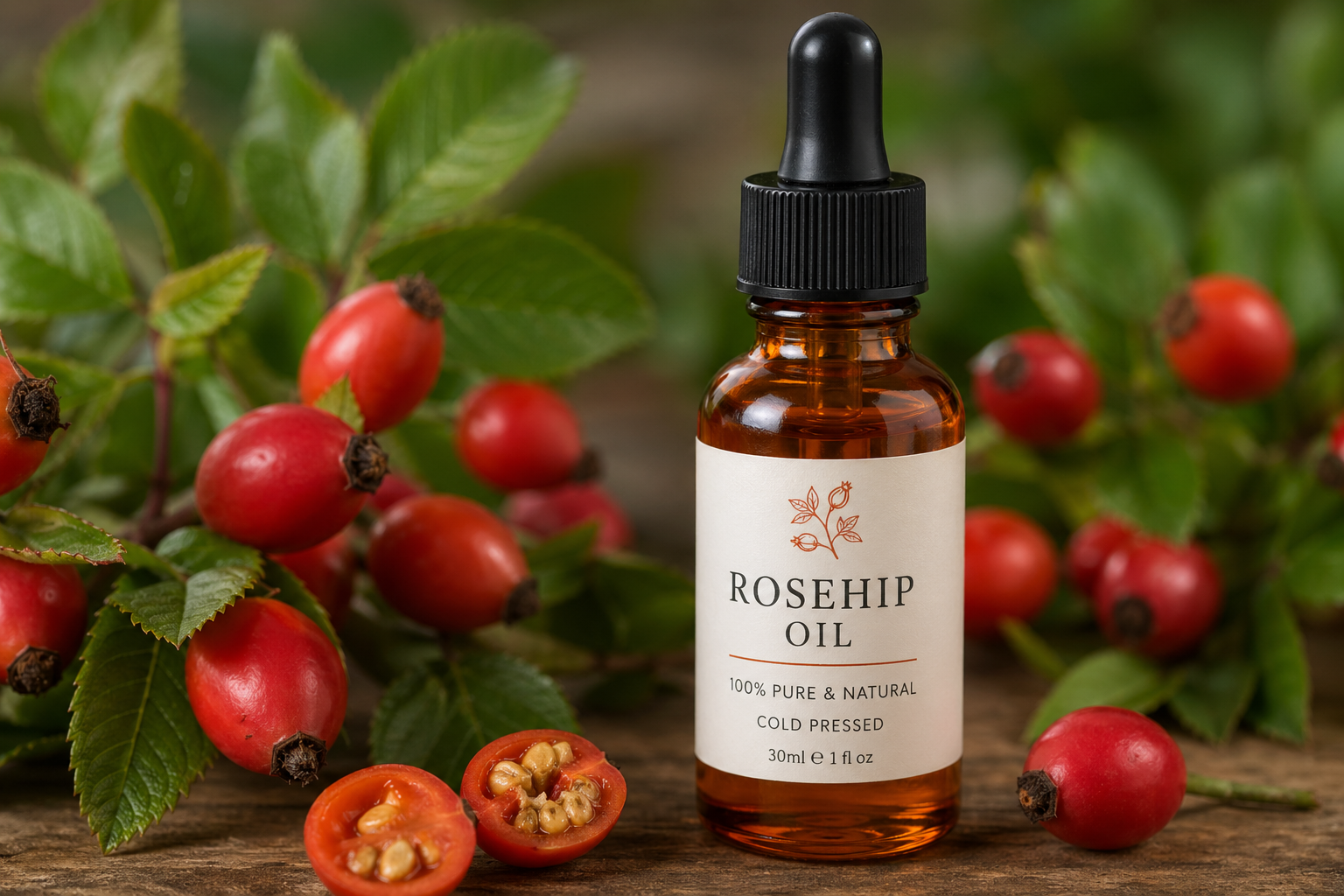
Scan the ingredient list of almost any conventional skin care product and you’ll find one word: fragrance (or its synonym, parfum). That single word can legally conceal a blend of up to 3,000+ individual chemical compounds — none of which the brand is required to disclose.
The International Fragrance Association (IFRA) maintains a list of restricted fragrance ingredients, but compliance is largely voluntary. The Campaign for Safe Cosmetics has identified fragrance blends as one of the leading causes of contact dermatitis, hormone disruption, and respiratory irritation in personal care products.
Organic skin care products don’t hide behind “fragrance.” Every ingredient is listed by its INCI (International Nomenclature of Cosmetic Ingredients) name. If a product smells like lavender, you’ll see Lavandula angustifolia (lavender essential oil) on the label — not a proprietary chemical blend. Transparency is built into the certification standard.
best fragrance-free organic moisturizers for sensitive skin
[VIDEO_EMBED: YouTube video explaining how to read a cosmetic ingredient label and identify hidden fragrance chemicals]
Let’s get into the evidence — because “organic is better” only means something if the ingredients actually perform. The good news: some of the most well-researched actives in dermatology are plant-derived, and their organic-grown versions deliver those actives without pesticide residue diluting the formula.
Organic cold-pressed rosehip seed oil is one of the most studied plant oils in cosmetic dermatology. It contains trans-retinoic acid equivalents, essential fatty acids (omega-3 and omega-6), and vitamin C precursors that work together to visibly improve skin tone and texture.
Valerón-Almazán et al. 2015 (Clinical and Cosmetic Investigational Dermatology) found that rosehip oil applied twice daily for 8 weeks significantly improved the appearance of scars, fine lines, and skin moisture compared to placebo.
Niacinamide (vitamin B3) is one of the most versatile and well-tolerated actives in skin care. At 5% concentration, it visibly reduces the appearance of dark spots, minimizes the look of enlarged pores, and supports a more even skin tone.
Niacinamide at 5% concentration reduces the appearance of hyperpigmentation by up to 35% over 8 weeks, according to Bissett et al. 2005, Journal of Cosmetic Dermatology.
Organic green tea extract (EGCG) is a potent antioxidant that helps neutralize free-radical damage from UV exposure and pollution. Kim et al. 2006 (International Journal of Dermatology) found that green tea polyphenols help inhibit UV-induced matrix metalloproteinase expression — the enzyme process linked to the visible breakdown of collagen in skin.
Hyaluronic acid derived through fermentation (rather than animal extraction) holds up to 1,000 times its weight in water, according to Stern et al. 2004 (Journal of Controlled Release). In organic formulas, you get this hydration powerhouse without the synthetic stabilizers often added to conventional versions.
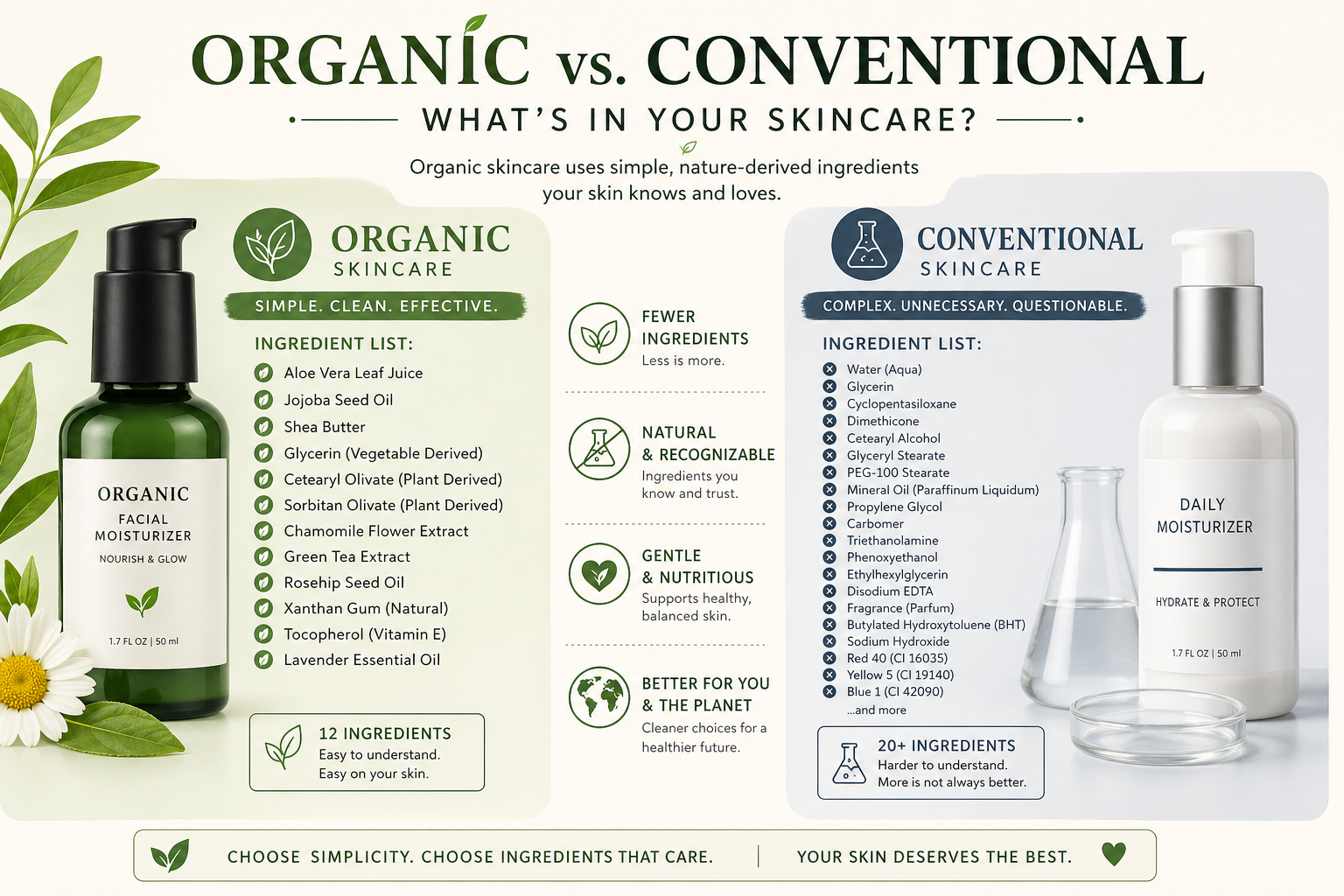
The average conventional skin care product contains 15–50 ingredients. Many of those are synthetic stabilizers, emulsifiers, and preservatives that exist to extend shelf life or improve texture — not to benefit your skin. More ingredients means more potential triggers for sensitive or reactive skin.
Organic formulas tend to be shorter and more purposeful. When you can read and recognize every ingredient on the label — Rosa canina (rosehip), Simmondsia chinensis (jojoba), Camellia sinensis (green tea) — you’re in a much better position to identify what your skin loves and what it doesn’t.
This matters especially if you have eczema, rosacea, or contact dermatitis. A 2021 review in the Journal of the European Academy of Dermatology and Venereology (Mowitz et al. 2021) identified fragrance and preservatives as the two most common causes of allergic contact dermatitis from cosmetics. Both are dramatically reduced or eliminated in certified organic formulations.
Patch-testing is still essential, even with organic products. Natural ingredients like essential oils, citrus extracts, and certain plant proteins can trigger reactions in sensitive individuals. Always test a new product on your inner arm for 24–48 hours before applying to your face.
how to patch test a new skin care product
Choosing organic skin care isn’t just a personal health decision. Conventional cosmetic manufacturing contributes to water pollution, soil degradation, and biodiversity loss through synthetic chemical runoff and non-biodegradable packaging.
Certified organic farming practices build soil health, reduce synthetic chemical load in waterways, and support biodiversity. When you choose a COSMOS-certified organic product, you’re supporting supply chains that are audited for environmental impact — not just ingredient sourcing.
On the animal testing front: most certified organic brands are also cruelty-free, because the ingredient safety profile of plant-based formulas is already well-established. The EU banned cosmetic animal testing in 2013. In the US, Leaping Bunny certification is the gold standard — look for it alongside your organic certification seal.
Microplastics are another growing concern. Many conventional exfoliants and formulas contain synthetic polymers that wash into waterways and have been detected in marine ecosystems. Organic exfoliants use biodegradable alternatives — bamboo powder, rice bran, oat flour — that break down naturally.
“Organic” on a label doesn’t always mean what you think. Greenwashing — using natural-sounding language and earthy packaging to imply organic credentials that don’t exist — is rampant in the beauty industry. Here’s how to shop smart:
If you answer yes to the first two and no to the third, you’re in good shape.
Ready to make the switch? Here’s a simple framework for building an effective organic routine — morning and evening — using clean, certified ingredients your skin will actually thank you for.
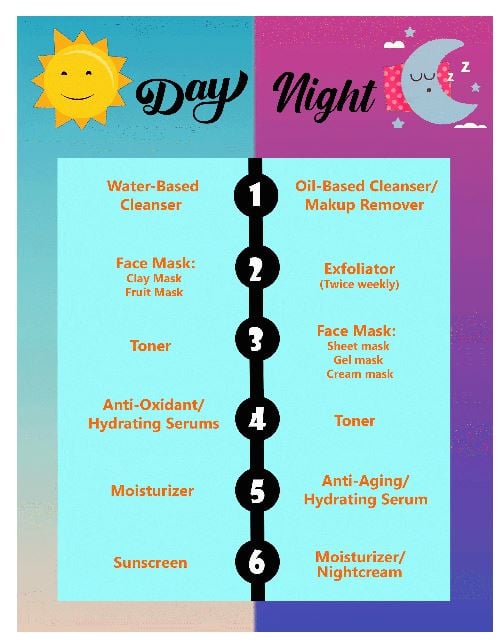
Morning routine: Gentle organic cleanser → antioxidant serum (vitamin C or green tea) → organic moisturizer → SPF (mineral, zinc oxide-based)
Evening routine: Double cleanse (oil cleanser + gentle foaming cleanser) → treatment serum (niacinamide or rosehip oil) → organic night moisturizer or facial oil
Start with one product swap at a time — your skin needs time to adjust to new formulas, and introducing everything at once makes it impossible to know what’s working.
Not sure which organic products are right for your skin type?
Take our 2-minute skin quiz and get a personalized organic routine recommendation →
Find Your Organic Routine
Organic skin care products are formulated without synthetic pesticides, parabens, or artificial fragrances — ingredients linked to skin irritation and hormone disruption. Many certified organic ingredients, like rosehip oil and green tea extract, have peer-reviewed evidence supporting their ability to visibly improve skin texture, tone, and hydration over time.
A “certified organic” label means the product’s ingredients were grown without synthetic pesticides or fertilizers and verified by a third-party certifier like USDA, COSMOS, or Ecocert. In the US, a product must contain at least 95% organically produced ingredients to carry the USDA Organic seal.
Yes — and in many cases, better. Organic ingredients like vitamin C from kakadu plum, retinol alternatives from rosehip, and niacinamide from natural sources deliver measurable results. Without synthetic fillers diluting the formula, you often get a higher concentration of active botanicals per application.
Natural doesn’t automatically mean reaction-free. Some people are sensitive to botanical ingredients like essential oils or plant extracts. However, organic products typically use fewer total ingredients, making it easier to identify and avoid your personal triggers. Always patch-test a new product on your inner arm for 24–48 hours before full application.
Key ingredients to watch for include parabens (methylparaben, propylparaben), sodium lauryl sulfate (SLS), synthetic fragrances listed as “parfum,” formaldehyde-releasing preservatives, and oxybenzone in sunscreens. The Environmental Working Group’s Skin Deep database rates over 90,000 products for ingredient safety.
Generally, yes. Organic formulas avoid the synthetic dyes, artificial fragrances, and harsh preservatives most commonly associated with contact dermatitis and sensitivity flares. Shorter, plant-based ingredient lists are easier for reactive skin to tolerate. Look for fragrance-free certified organic options if your skin is particularly reactive.
Why Organic Skin Care Products are the Best Read More »
Written by Clelia Gakshteyn
Choosing an organic skin care brand used to mean sacrificing performance for purity. That trade-off is over. Today’s top organic brands are formulating with bioactive botanicals, clinically studied plant actives, and sustainable packaging — and the results speak for themselves.
This guide cuts through the noise. Below, you’ll find 25 brands that genuinely earn the “organic” label, along with what makes each one worth your attention (and your shelf space).
how to read organic skincare labels and certifications
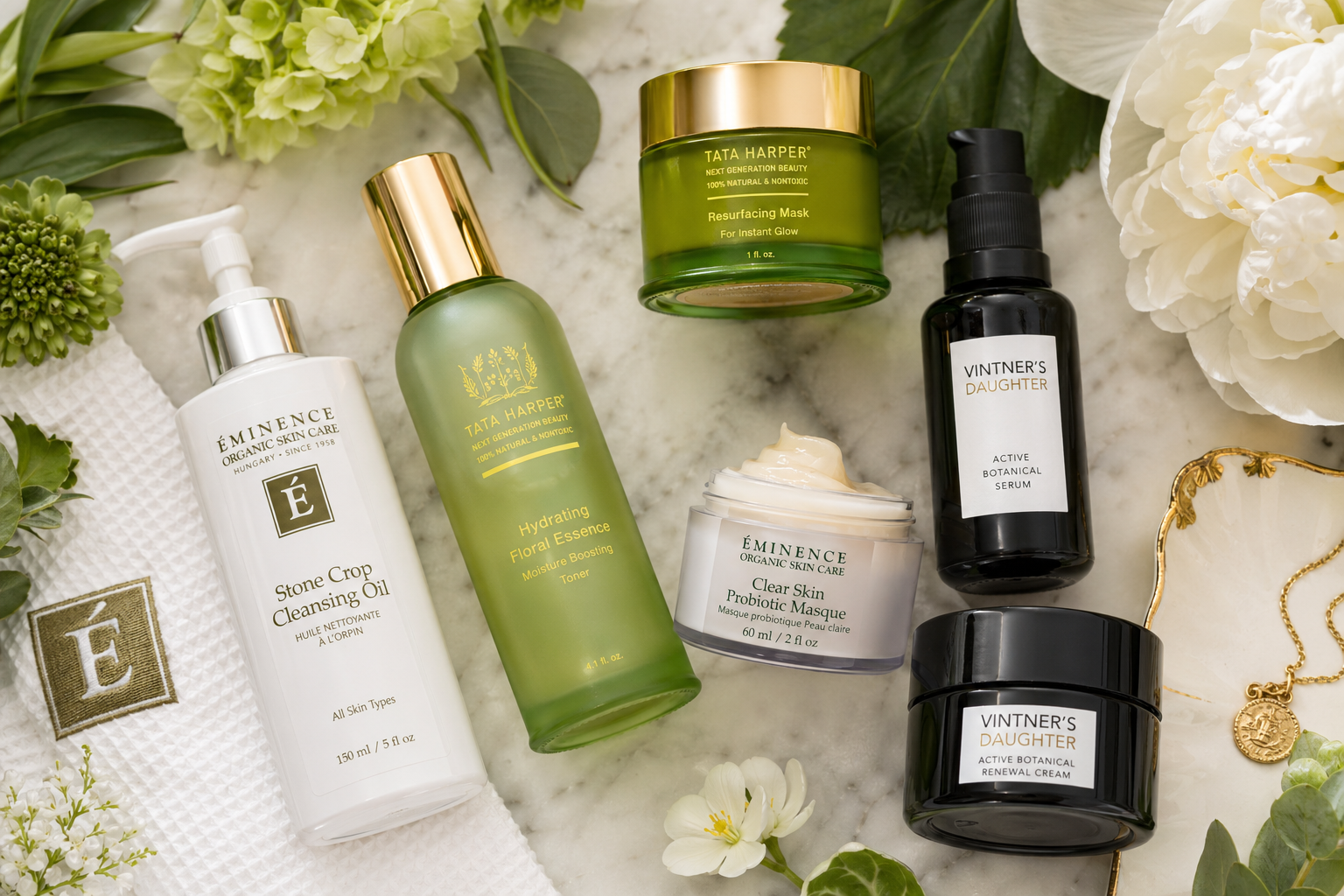
These brands sit at the premium end of the market — but their ingredient quality, sourcing transparency, and formulation science justify the price point. Think of them as the fine dining of your skin care routine.
Eminence Organics is a Budapest-born, B Corp–certified brand that has been setting the standard for professional organic skin care since 1958. Their products are free of parabens, propylene glycol, mineral oils, petroleum, and synthetic colorants.
What sets Eminence apart is their Biodynamic farming partnership — ingredients are grown on their own certified organic farm in Hungary, harvested at peak potency, and cold-processed to preserve active compounds. Their Acne Advanced Cleansing Foam and Strawberry Rhubarb Hyaluronic Serum are consistent bestsellers for good reason.
Eminence Organics product collection
Tata Harper is the gold standard for farm-to-face luxury organic skin care. Every product is formulated and manufactured on their 1,200-acre certified organic farm in Vermont — no outsourcing, no compromises.
Their formulas source from over 300 natural ingredients across 68 countries, and every batch is made fresh. The Resurfacing Serum (with BHA and AHA from natural sources) and the Crème Riche moisturizer are consistently rated among the best organic anti-aging products available.
Vintner’s Daughter built its reputation on two hero products: the Active Botanical Serum and the Active Treatment Essence. Both are formulated with 22+ certified organic and wildcrafted botanicals, each chosen for a specific skin function.
The brand’s founder, April Gargiulo, spent three years developing the serum before launch — and it shows. The formula layers omega fatty acids, phytonutrients, and plant-based antioxidants in a way that visibly supports skin texture and radiance within weeks of consistent use.
Seed to Skin is a Tuscany-based luxury brand that uses Green Molecular Science — an advanced extraction method that preserves the full bioactive profile of each plant ingredient. Their formulas are 100% natural origin and free of synthetic preservatives.
The The Urban Dweller moisturizer and The Healer facial oil are standout products for anyone dealing with environmental stress, pollution exposure, or barrier compromise. Seed to Skin is a quieter name in the U.S. market but has a devoted following among clean beauty insiders.
Wildsmith Skin is a UK-based brand that bridges organic botanicals with cutting-edge bioactive science. Their formulas incorporate copper peptides, fermented plant extracts, and adaptogenic herbs — ingredients that are gaining serious traction in evidence-based skin care.
Their Copper Peptide Firming Treatment is particularly noteworthy. Copper peptides have been shown to visibly support skin firmness and help reduce the appearance of fine lines (Pickart & Margolina 2018, Biomolecules).
You don’t need to spend $200 on a serum to get genuinely organic, high-performance skin care. These brands hit the sweet spot between clean formulation and accessible pricing.
ilike Organic Skin Care was founded by a Hungarian dermatologist and has been formulating with fresh, biodynamic plant pulps and juices since 1999. Their products are made in small batches and contain live enzymes and vitamins that are typically destroyed by conventional manufacturing processes.
The Mineral Exfoliating Wash and Rosehip Whip Moisturizer are consistent favorites in professional spa settings. ilike is also one of the few brands that uses biodynamic farming principles — a step beyond standard organic certification.
Herbivore Botanicals is a Seattle-born brand that made clean beauty approachable without dumbing it down. Their formulas are 100% natural, vegan, and cruelty-free, with a focus on single-hero-ingredient products that are easy to understand and layer.
The Lapis Blue Tansy Face Oil (for oily and acne-prone skin) and the Prism 20% AHA + 5% BHA Exfoliating Glow Serum are standout performers. Herbivore is also transparent about their ingredient sourcing — a rarity at this price point.
True Botanicals is one of the few organic brands that has invested in independent clinical trials on their finished products — not just individual ingredients. Their Pure Radiance Oil was clinically tested and shown to visibly improve skin radiance and texture in 4 weeks.
The brand holds MADE SAFE certification, which screens for over 6,500 known harmful chemicals. Their Chebula Active Serum — featuring chebula fruit, a potent Ayurvedic antioxidant — is one of the most talked-about organic serums of 2025–2026.
OSEA (Ocean, Sun, Earth, Atmosphere) is a California-based brand founded in 1996 — making it one of the original clean beauty pioneers. Their formulas are built around certified organic seaweed, which is rich in minerals, amino acids, and antioxidants that visibly support skin hydration and firmness.
The Ocean Cleanser and Atmosphere Protection Cream are perennial bestsellers. OSEA is also one of the most accessible certified organic brands, with a wide retail footprint and consistent availability.
May Lindstrom Skin is a small-batch, artisan organic brand that treats skin care as a sensory ritual. Every product is handcrafted in small batches using food-grade, certified organic ingredients — many of which you’d recognize from your kitchen.
The The Blue Cocoon (a concentrated balm with blue tansy and sea buckthorn) and The Problem Solver (a clay mask with cacao and cinnamon) have cult followings. This brand is for the skin care enthusiast who wants an experience, not just a product.
[VIDEO_EMBED: How to Build a Complete Organic Skin Care Routine — Step-by-Step for Every Skin Type]
Great organic skin care shouldn’t require a luxury budget. These brands prove that clean, certified formulations can be both affordable and effective for daily use.
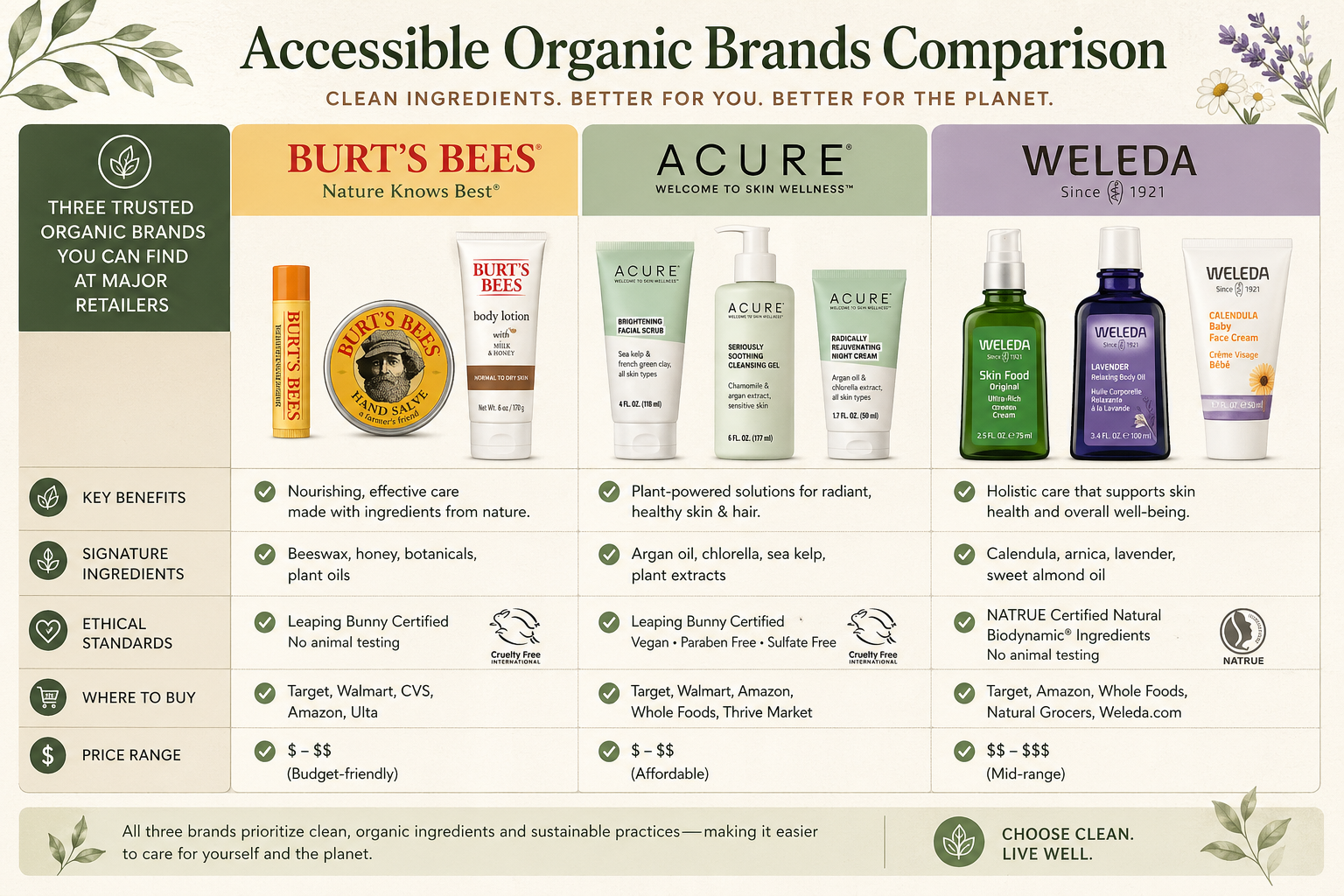
Burt’s Bees has been a gateway brand into natural skin care for decades — and their commitment to natural origin ingredients (99%+ in most formulas) remains genuine. Their Sensitive Facial Cleanser with cotton extract and their Renewal Firming Moisturizing Cream with bakuchiol are standout clean picks at a drugstore price point.
Worth noting: Burt’s Bees is owned by Clorox, which some clean beauty purists flag. However, the brand maintains its own formulation standards and ingredient commitments independently.
Acure is one of the most affordable certified organic skin care brands on the market, with a full range covering cleansers, serums, masks, and moisturizers. Their products are EWG Verified, vegan, and cruelty-free — and they’re widely available at Target, Whole Foods, and Amazon.
The Brightening Vitamin C Serum and Seriously Soothing Cloud Cream are consistently top-rated. For anyone building their first organic routine on a budget, Acure is the place to start.
Andalou Naturals is built around their proprietary Fruit Stem Cell Complex — a blend of plant stem cells from Swiss apple, grape, and gardenia that visibly supports skin renewal. Their formulas are non-GMO, gluten-free, and made with certified organic and fair-trade ingredients.
The 1000 Roses Rosewater Toner and Brightening Turmeric + C Enlighten Serum are bestsellers that consistently outperform their price point.
Dr. Bronner’s is the original organic multi-tasker. Their Pure-Castile Liquid Soap — made with certified organic coconut, olive, and hemp oils — has been a clean beauty staple for over 70 years. The brand is also one of the most ethically transparent in the industry, with Fair Trade certification across their entire supply chain.
Beyond the iconic soap, their Organic Sugar Soaps and Organic Lotion line are worth exploring for a full-body organic routine.
Weleda has been formulating biodynamic and organic skin care since 1921 — making them one of the oldest organic beauty brands in the world. Their Skin Food original ultra-rich cream has achieved near-legendary status as a dry skin rescue product.
Weleda holds NATRUE certification (a rigorous European natural and organic standard) and sources ingredients through biodynamic and fair-trade partnerships. Their Wild Rose Facial Oil and Pomegranate Firming Day Cream are modern favorites.
how to layer organic skin care products correctly
These brands are doing something genuinely new — whether it’s fermentation technology, upcycled ingredients, or clinical-grade organic actives. They’re the ones to watch in 2026 and beyond.
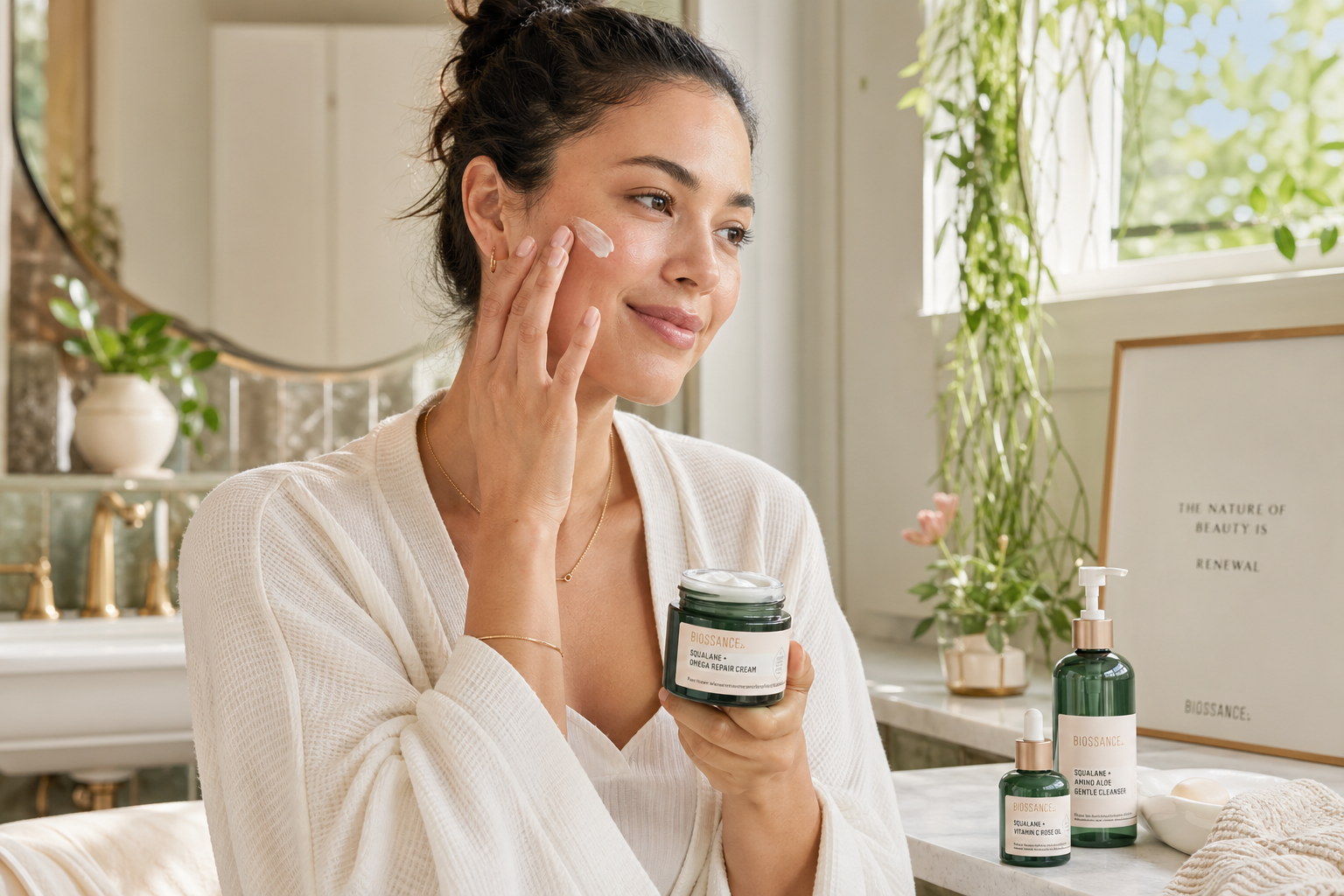
Biossance is built on a single hero ingredient: sugarcane-derived squalane. Their squalane is bio-identical to the squalane naturally produced by human skin, making it one of the most compatible moisturizing ingredients available — and their version is sustainably sourced from sugarcane rather than shark liver oil.
The Squalane + Vitamin C Rose Oil and Squalane + Omega Repair Cream are clinical-grade performers. Biossance also publishes their full ingredient sourcing data — a transparency standard more brands should follow.
Circumference is a newer brand (founded 2019) that has quickly earned a reputation for upcycled organic ingredients — using byproducts from the food and wine industries that would otherwise go to waste. Their Active Botanical Refining Toner uses upcycled grape skin extract, a potent source of resveratrol.
This is the brand for the environmentally conscious skin care enthusiast who also wants clinical-grade results. Their formulas are COSMOS Organic certified and packaged in recycled glass.
Pai Skincare is a UK-based brand specifically formulated for sensitive and reactive skin. Every formula is certified organic, fragrance-free, and developed with input from dermatologists and allergy specialists. Their Rosehip BioRegenerate Oil is one of the most studied organic facial oils available.
25 Organic Skin Care Brands that You Should Know About Read More »