Organic Skin Care

Organic Skincare for Teens: Gentle Solutions for Acne and Oily Skin

Organic Skin Care for Teens | Gentle Solutions for Acne and Oily Skin

A teenager with acne on his forehead. Most teens experience some acne due to hormonal changes.

Is your skin constantly shiny by midday? Do new pimples seem to pop up right before school picture day? If so, you’re not alone. Acne and oily skin are extremely common in adolescence – in fact, about 85% of people between 12 and 24 experience breakouts. During puberty, your body’s changing hormones (especially androgens) trigger your oil glands to produce more sebum (oil). This excess oil, combined with dead skin cells, can clog pores and create an inviting environment for acne bacteria, leading to blackheads, whiteheads, and zits. The result? Stubborn teenage acne.

While drugstore shelves are full of harsh acne creams and strong astringents, those aren’t always the best choice for sensitive teen skin. Using products meant for adults – like high-strength retinol or gritty scrubs – can irritate and strip a teen’s delicate skin barrier, often making breakouts worse. The good news is that you can clear up acne and control oily shine with a gentle, natural approach. In this guide, we’ll show you how to build a simple teenage skincare routine (natural and effective) to treat teen acne naturally. We’ll cover the do’s and don’ts of caring for adolescent skin, and recommend some organic skincare solutions – including a few product picks from OrganicSkinCare.com – that are perfect for teens. Let’s get started on the path to clearer, healthier skin!

Organic Skin Care for Teens Gentle Solutions for Acne and Oily Skin

Why Teen Skin Needs a Gentle Approach

Teen skin is unique. During the teen years, surging hormones (like testosterone) send oil production into overdrive. That’s why teens often struggle with a persistently oily T-zone and frequent pimples. At the same time, adolescent skin can be sensitive and prone to irritation. Overzealous routines or harsh products can backfire by drying out or inflaming young skin. In response, the skin may produce even more oil to compensate, creating a vicious cycle of oiliness and breakouts.

Less is more when it comes to teen skincare. Dermatologists often recommend that teens stick to just 2-3 basic steps – typically cleansing, moisturizing, and sun protection – rather than complex 10-step regimens. A minimalist routine using non-toxic, age-appropriate products is key to managing oiliness while keeping the skin’s barrier organicskincare.com. Teens generally do not need potent anti-aging ingredients; in fact, heavy-duty products like strong retinoids, high-percentage acids, or alcohol-based toners can cause redness, peeling, and even more breakouts in young skin.

Instead, the focus should be on gentle solutions that address hormonal acne without aggression. That means:

  • Using mild cleansers to remove dirt and excess oil without over-drying.

  • Spot-treating pimples with natural antibacterials (like tea tree) or gentle exfoliants (like willow bark, a natural form of salicylic acid) instead of blasting the entire face with harsh chemicals.

  • Hydrating the skin with lightweight, non-comedogenic moisturizers that won’t clog pores – yes, even oily skin needs moisture!

  • Protecting young skin from sun damage with an oil-free SPF, since some acne treatments (and acne itself) can make skin more sun-sensitive.

By treating your skin kindly and working with its natural balance, you can gradually clear up acne and calm oiliness – all while avoiding the redness, stinging, and flakiness that harsher products often cause. You’ll build healthy habits that keep your complexion glowing now and set you up for beautiful skin in the future.

.

Gentle Steps to a Natural Teenage Skincare Routine

Achieving clearer skin doesn’t require a complicated routine or a cabinet full of products. In fact, the best approach for teens is a simple skincare routine that you can stick to consistently. Here’s a basic blueprint for a gentle, natural teen skincare regimen:

1. Cleanse With a Mild, Natural Face Wash

Cleansing is the foundation of any skincare routine. Throughout the day, your face accumulates sweat, oil, dirt, and (for some) makeup. Washing this away helps prevent clogged pores. But remember: keep it gentle. Avoid harsh soaps or high-strength acne cleansers that leave your skin “squeaky clean” (translation: stripped of all moisture). Over-cleansing can actually trigger more oil production and irritationwildrisingskincare.com.

Instead, look for a sulfate-free, natural cleanser with calming ingredients. For example, a lotion or gel cleanser containing aloe vera, chamomile, or green tea can soothe inflammation while cleansing. Tea tree oil is another great ingredient – it’s naturally antibacterial and is as effective as benzoyl peroxide for mild acne, but with fewer side effects like dryness. One popular option is a gentle tea tree face wash (such as Odylique Lemon & Tea Tree Facial Wash, which blends purifying tea tree with a mild, creamy base).

If you prefer an organic product, OrganicSkinCare.com offers the Ilike Lemon Cleansing Milk (part of the Ilike Organic Skin Care Balancing Set) – a hydrating cleanser that uses refreshing lemon and herbal oils to lift away dirt and excess oil without stripping your skin. Another teen-friendly cleanser is the Azulene Facial Cleansing Milk, which contains chamomile-derived azulene and panthenol to calm and cleanse sensitive skin, leaving it soft and clean. These kinds of products remove impurities while respecting your skin’s natural oils.

How and when to cleanse? Most teens do well with cleansing twice a day – once in the morning and once at night. Use lukewarm water (hot water can dry you out) and your fingertips to gently massage the cleanser on your face for about 60 seconds, then rinse. There’s no need for rough washcloths or cleansing brushes (in fact, scrubbing too hard is a don’t – it can irritate your skin). Simply pat dry with a clean towel. If you’ve been sweating from sports or PE class, it’s also a good idea to wash your face afterward with a gentle cleanser or even just water to refresh your skin.

2. Spot Treat Blemishes Naturally (Tea Tree & Willow Bark)

When a big pimple pops up, it’s tempting to douse your whole face in the strongest acne gel you can find. But blanket-covering your skin with harsh spot treatments can lead to dryness and flaky, irritated patches – not a good look. A smarter strategy is to target treat only the problem areas. Apply focused treatments on pimples or breakout-prone zones, and be kind to the rest of your skin.

For natural acne-fighting, two MVP ingredients are tea tree oil and willow bark (a natural source of salicylic acid):

  • Tea Tree Oil – This essential oil is a tried-and-true zit zapper. Thanks to its strong antiseptic properties, tea tree oil can kill acne-causing bacteria and reduce inflammation. In fact, research cited by the University of Maryland Medical Center found that a 5% tea tree oil gel worked as well as 5% benzoyl peroxide in treating acne, with fewer side effects. You can apply diluted tea tree oil as an on-the-spot treatment (pure 100% tea tree is very potent and may be too harsh on its own – a little goes a long way). Many natural acne products use tea tree oil in safe concentrations. For example, OrganicSkinCare.com carries a Tea Tree Oil Acne Scrub for gentle exfoliation, and an Acne Clearing Gel that likely features tea tree and other botanicals. Dab a bit of tea tree product on that pimple to disinfect and dry it out without burning your skin.

  • Willow Bark Extract – Meet nature’s version of salicylic acid. Willow bark is rich in salicin, which converts to salicylic acid and helps exfoliate inside the pores. It’s fantastic for clearing out clogged pores and reducing oil, but here’s the bonus: willow bark is much less irritating than synthetic salicylic acid, so it tends to be gentler on sensitive teen skin. It also has anti-inflammatory powers to soothe redness, greenpeople.co.uk. Look for natural spot treatments or serums containing willow bark extract – they will help speed up skin cell turnover, fight bacteria, and calm angry spots instead of making your whole face red. A great example is the Eminence Willow Bark Serum (if available) or other organic blemish serums that use willow bark to treat acne naturally.

Other botanical breakout-busters include witch hazel, a plant extract that acts as a natural astringent to tighten pores and tone down oil. Witch hazel can shrink the appearance of pores and reduce swelling of existing pimples – just ensure you choose an alcohol-free formula (pure witch hazel or ones with added alcohol can be too drying). Calendula and zinc are also excellent for spot-treating, as they help heal and reduce inflammation (some natural blemish creams use zinc oxide to dry out pimples overnight). One product to consider is a classic drying lotion – these often contain calamine, zinc, and sulfur to literally dry up a pimple by morning. For instance, OrganicSkinCare.com offers an Acne Drying Lotion that makes an effective overnight spot treatment for whiteheads. Use a clean cotton swab to dot these treatments only on active blemishes.

Important: Resist the urge to pick or pop your pimples! We know it’s hard, but picking can push bacteria deeper and cause more swelling, or even infection and scarring. It’s much better to treat the spot and let it heal. If you have a particularly painful cystic pimple, applying a warm (not hot) compress for a few minutes can help it come to a head, then treat and leave it alone.

3. Moisturize with a Lightweight, Non-Comedogenic Lotion

Ever felt like your skin is an oil slick and thought, Moisturizer? No thanks! You’re not alone – many teens with oily or acne-prone skin fear that moisturizers will make them break out more. But skipping moisturizer is actually counterproductive, even for oily skin. Here’s why: if you overly dry out your skin (say, by using strong acne cleansers and then not hydrating), your oil glands can go into overdrive trying to compensate, pumping out more oil to fix the dryness. The result is dehydrated and oilier skin at the same time. A good moisturizer keeps your skin’s moisture barrier happy, which can balance oil production in the long run.

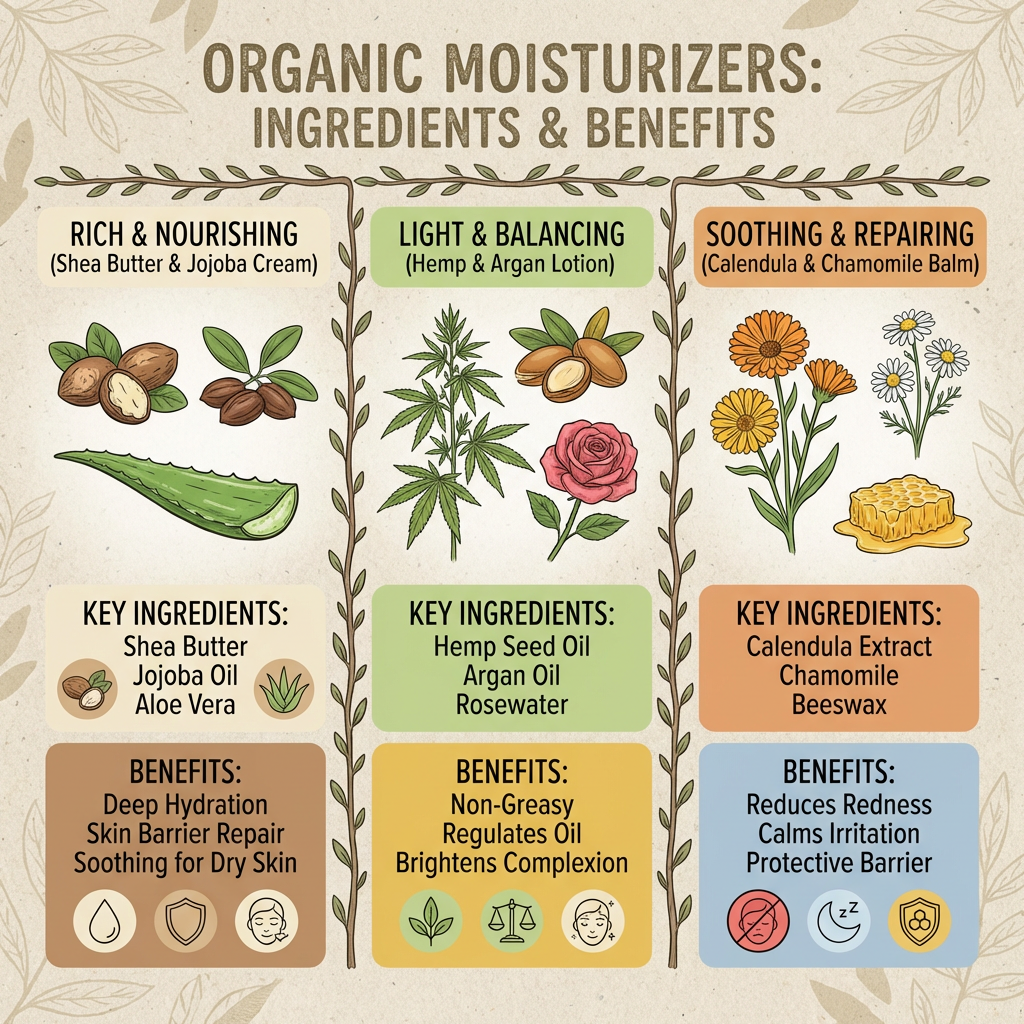
The key is choosing the right type of moisturizer: go for a product that is “non-comedogenic” (meaning it won’t clog pores) and ideally oil-free or low in oils. Lotions or gels tend to be lighter than thick creams. Look for hydrating ingredients like hyaluronic acid (which attracts water to the skin), aloe vera, or glycerin, and soothing botanicals like cucumber or niacinamide. Avoid heavy oils unless they are known to be acne-friendly. One noteworthy oil is hemp seed oil – it’s high in linoleic acid and resembles the skin’s natural sebum, which can help regulate oil production rather than making skin greasier. Some natural acne formulas include a bit of hemp oil or jojoba oil for this reason.

For a great teen-friendly moisturizer, check out Emerge Labs Therapeutic Acne Moisturizing Cream on OrganicSkinCare.com. It’s a lightweight daily lotion formulated specifically for acne-prone skin (including teens) and packed with natural botanicals. It contains 2% salicylic acid to fight breakouts, but also has soothing plant extracts like tea tree oil and rosemary to prevent irritation or dryness. This combo means it can clear pores and treat acne while keeping your skin soft and calm. Users report it leaves the skin feeling balanced, not greasy or flaky. Another option is the Oil-Free Sebum Control Moisturizer, which, as the name suggests, hydrates skin while actively reducing excess oil in the T-zone by regulating sebum productionorganicskincare.com.

Apply your moisturizer after cleansing (and after any spot treatments), both in the morning and before bed. Use about a pea- to nickel-sized amount and gently massage it into your face (avoid the urge to rub aggressively). A good moisturizer will soak in without a heavy residue and will prep your skin so it doesn’t feel tight or look shiny. If you’re using any acne medications from a dermatologist, you can often layer a plain moisturizer on top to prevent dryness – just check with your doc.

4. Don’t Forget Sunscreen – Protect Your Skin Daily

You might think sunscreen is just for beach days or that it’s the last thing to worry about when dealing with acne. But daily SPF is a must for everyone – teens included! Not only do sunscreens guard your skin from harmful UV rays (preventing future wrinkles and reducing skin cancer risk), they also help keep acne from leaving long-lasting scars or dark marks. Sun exposure can darken post-acne spots (hyperpigmentation) and make them linger. Plus, if you’re using ingredients like salicylic acid, AHAs, or benzoyl peroxide, know that they can make your skin a bit more sun-sensitive.

Choose a broad-spectrum sunscreen SPF 30 or higher that is labeled oil-free, non-comedogenic or specifically “for face.” Many modern facial sunscreens are lightweight and won’t clog pores – some even have a matte finish to help with oil control. For example, mineral sunscreens with zinc oxide can be great for acne-prone skin (zinc is soothing and anti-inflammatory). Look for formulas that feel comfortable to wear daily. OrganicSkinCare.com carries Daily Defense Moisturizer SPF 30 with Azulene, which multitasks as a hydrating day cream and sun protector, containing calming azulene to keep skin from getting irritated. Applying an SPF moisturizer each morning will shield your skin and also keep your acne treatments effective (since unprotected sun can counteract progress).

Make sunscreen the final step each morning after moisturizing. And yes, even on cloudy days or if you’re mostly indoors, try to get in the habit of wearing at least a light sunscreen – incidental sun through windows or during recess can add up over time. Your future self will thank you!

5. Extra Credit: Weekly Treatments (Masks or Exfoliation)

This step is optional, but many teens like to use a weekly mask or gentle exfoliator to give their skin a boost. The trick is to pick something mild and not overdo it. Clay masks (like bentonite or kaolin clay) are awesome for oily skin because they absorb excess oil and can draw out impurities from pores. You might use a clay mask once a week on the T-zone to mattify and prevent blackheads. Look for ones with added calming ingredients (like a mask with charcoal + aloe, or clay + chamomile).

Another idea is using a natural exfoliator 1-2 times a week to help remove dead skin cells so they don’t clog pores. Avoid harsh grainy scrubs (like those with walnut shells) which can create micro-tears and irritate your skin. Instead, opt for gentle exfoliation: this could be a mild enzyme mask (using fruit enzymes or lactic acid from milk to dissolve dead skin), or a very gentle scrub with fine particles if your skin tolerates it. For instance, the Ilike Organic Skin Care Balancing Set mentioned earlier includes a Rosehip Exfoliator – a vitamin-rich clarifying mask that helps rid the skin of impurities and calm inflammation. Used twice a week, it can benefit acne-prone teenage skin by loosening dead cells and promoting new cell growth in a gentle organicskincare.com. Such treatments keep your complexion smooth and glowing, but won’t provoke breakouts when used properly.

After any exfoliating mask or treatment, remember to moisturize and, if it’s daytime, apply SPF before you head out.

By sticking to these core steps – cleanse, treat, moisturize, protect (and the occasional treat-your-skin mask) – you’ll develop a natural skincare routine that nurtures your skin. It may take a few weeks to start seeing improvement (patience is part of the process), but consistency pays off. Now, before we wrap up, let’s highlight some key do’s and don’ts for teen skincare to ensure you’re on the right track.

Do’s and Don’ts for Treating Teen Acne Naturally

Building good habits (and avoiding common mistakes) will make a huge difference in your skin’s health. Here are some friendly do’s and don’ts when dealing with acne and oily teen skin:

Do: Keep It Simple and Consistent

  • Do stick to gentle products – Choose natural, fragrance-free cleansers and mild, non-comedogenic moisturizers formulated for sensitive or acne-prone skin. Products with fewer irritants (no strong perfumes or dyes) are less likely to upset your skin.

  • Do wash your face daily (but gently) – Cleanse once or twice a day (morning and night). Use a soft touch; think of cleansing as caressing your face, not scrubbing a pot. This removes grime and excess oil without damaging your skin’s barrier.

  • Do remove makeup before bed – If you wear makeup, take it off every night with a gentle cleanser or a micellar water. Sleeping in makeup can clog your pores and lead to breakouts.

  • Do moisturize and hydrate – Even oily skin benefits from light hydration. Keeping your skin properly moisturized prevents overproduction of sebum. And don’t forget to drink water throughout the day – staying hydrated from the inside can improve your skin’s overall health and help flush out toxins.

  • Do use sunscreen daily – As mentioned, a daily SPF 30 will protect your skin and help acne spots heal with less organicskincare.com. Many acne-friendly moisturizers include SPF, making it an easy step to remember.

  • Do spot-treat and be patient with pimples – Treat emerging zits with a targeted spot treatment (tea tree, a dab of benzoyl peroxide cream, etc.), then give it time to work. Big blemishes won’t vanish overnight, but they will heal faster if you refrain from picking. If a pimple is very swollen, you can also ice it for a few minutes to reduce inflammation. Patience and consistency are your friends – you may not see results from a new routine for several weeks, but steady improvement is the goal.

🚫 Don’t: Make These Common Skin Mistakes

  • Don’t over-cleanse or over-exfoliate – Washing your face too often or scrubbing too hard can strip away the healthy oils your skin needs. This can lead to dryness and trigger more oil production, actually worsening acne. Similarly, exfoliating aggressively or daily is a no-no; it can cause irritation and micro-cuts. Stick to mild exfoliation no more than 1-3 times a week, and avoid harsh scrubs with rough particles.

  • Don’t use harsh alcohol-based toners or wipes – Those classic astringent toners that sting (you know, the ones loaded with alcohol) might temporarily degrease your face, but they also dehydrate and irritate the skin. Drying out your skin too much prompts a rebound effect: your glands pump out even more oil to compensatewildrisingskincare.comwildrisingskincare.com. The result? A cycle of dryness and breakouts. Instead of alcohol-heavy toners or convenient makeup wipes (which often contain alcohol and leave residue), use a gentle toner or simply skip it. If you need a toner, choose one with calming ingredients like rose water or green tea, and absolutely no denatured alcohol high on the ingredient list.

  • Don’t pick, pop, or squeeze pimples – We’ve said it before but it bears repeating: picking at your pimples is likely to make things worse. Squeezing can push bacteria deeper and cause inflammation, potentially leading to infection or acne scars. It’s especially tempting with whiteheads, but try to use a drying spot treatment or see a professional for extractions if needed. Hands off for quicker healing!

  • Don’t share makeup, skincare, or brushes – It might be fun to try your friend’s new lip gloss or to share that concealer in class, but it’s not skin-friendly. Sharing products or tools can transfer bacteria and oil from one person’s skin to another, raising the risk of breakouts (or even infections). Keep your own set of clean makeup brushes and tools, and wash them regularly (dirty makeup brushes can breed acne-causing bacteria).

  • Don’t use “adult” anti-aging products on teen skin – Your mom’s retinol cream or your older sister’s strong acid peel pads are not meant for you. These potent products can be far too harsh for teenage skin, causing redness, peeling, or even burns. Experts advise that teens avoid intense ingredients like high-percentage retinol, glycolic or lactic acid peels, and concentrated vitamin C treatments, as these can strip and irritate young skinorganicskincare.com. Save the anti-wrinkle stuff for later in life – your teen skin just needs the basics: gentle cleansing, light moisture, and sun protection.

  • Don’t let stress or diet derail your skin – Okay, life as a teen can be stressful (exams, social drama, you name it), but finding healthy outlets for stress – like exercise, journaling, or talking to someone – can actually help your skin. High stress levels have been linked to acne flare-ups in some people. Also, while diet isn’t the main cause of acne, some studies suggest that consuming a lot of high-sugar foods or skim dairy might aggravate breakouts in susceptible individuals You don’t need to crash diet or cut out everything you love, but it’s wise to have a balanced diet (think fruits, veggies, lean proteins, whole grains) and moderate your sugary junk food intake. Your skin (and your overall health) will thank you.

By following these do’s and don’ts, you’ll avoid common pitfalls that can sabotage your skin-clearing efforts. Remember, teenage skin doesn’t need too much to be healthy – a gentle routine and good habits are usually enough to keep acne in check or at least minimize it. And don’t be discouraged by the occasional breakout; everyone gets them, and they often can be managed with the steps we’ve discussed.

Organic Skin Care for Teens Gentle Solutions for Acne and Oily Skin

Embracing a Natural Skincare Journey

Starting a natural skincare routine – cleanse, treat, moisturize, and protect – can help teens manage acne without harsh chemicals.

Navigating acne and oily skin as a teen can feel frustrating, but remember that it’s a normal part of growing up for many. The key is to treat your skin with kindness. By opting for organic and natural skincare solutions, you reduce your exposure to potentially irritating chemicals and instead nourish your skin with gentle yet effective ingredients. Over time, these choices can lead to clearer skin and a happier you.

At OrganicSkinCare.com, we believe that teen skincare should be about supporting your skin, not fighting against it. Products like the Ilike Organic Skin Care Balancing Set (which cleanses, moisturizes and balances oily teenage skin) or the Emerge Labs Therapeutic Acne Moisturizer (packed with botanical extracts to combat acne while keeping skin soft) exemplify how natural ingredients can work in harmony with young skin. These gentle solutions help treat teen acne naturally – calming inflammation, keeping pores clear, and controlling shine without harsh side effects.

Finally, a gentle reminder: consistency is crucial. It might be tempting to skip routines when you’re tired or experiment with every new TikTok skincare hack, but sticking to a simple, proven regimen will serve you best in the long run. Give your skin time to adjust to a new routine (at least a few weeks) before judging results. And if your acne is severe or very persistent, it’s wise to talk to a parent or dermatologist – sometimes medical treatments are needed, and that’s okay. You can often combine dermatologist-recommended treatments with organic skincare (for example, using a prescribed acne medication along with a gentle organic cleanser and moisturizer to minimize irritation).

Healthy, clear skin is a journey, and you’re on the right path by focusing on gentle, natural care. With the tips, do’s and don’ts, and product suggestions in this guide, you have the tools to craft a teenage skincare routine that’s not only natural but also effective. Be patient and kind to yourself, and know that with consistent care, your skin can absolutely improve. Here’s to a fresh, confident face and embracing your natural glow!

Sources: The advice in this article is backed by dermatologists and reputable sources. For instance, Yale Medicine notes that acne affects about 85% of adolescentsyalemedicine.org, and hormonal changes during puberty drive excess oil productionyalemedicine.org. Experts emphasize gentle routines (just a few steps) for teen skin and caution against using harsh adult products on skin. Natural ingredients like willow bark and tea tree oil have been shown to fight acne effectively without the irritation of their synthetic counterparts. Harsh alcohol-based products can strip skin and lead to more oiliness so it’s best to avoid those drying “quick fixes.” The tips and product examples provided here align with these findings to ensure they are safe and suitable for teenage skin. With these gentle solutions, you can care for your skin in a way that’s healthy, organic, and teen-approved. Here’s to conquering acne the natural way!

Organic Skin Care for Teens | Gentle Solutions for Acne and Oily Skin Read More »

The Science of Skin Aging – and 5 Natural Ways to Slow It Down

The Science of Skin Aging – and 5 Natural Ways to Slow It Down

Introduction: Aging is a natural part of life, but that doesn’t mean we can’t slow down the formation of wrinkles naturally. If you’ve ever wondered how to prevent wrinkles naturally, the answer lies in understanding a bit of skin aging science and then harnessing gentle, organic strategies to keep skin youthful. In this friendly guide, we’ll first explain why skin develops fine lines and loses firmness as we age – from collagen breakdown to free radical damage and moisture loss. Then we’ll dive into 5 evidence-backed natural methods to slow skin aging. Each method is rooted in science (explained in simple terms) and uses Mother Nature’s best ingredients – think antioxidants like vitamin C and resveratrol, mineral sunscreens, collagen-boosting peptides, deep hydration with botanicals, and healthy lifestyle habits. We’ll also highlight some trending organic skincare ingredients of 2024–2025 and recommend products (available on OrganicSkinCare.com) that align with each strategy. Let’s get started on your journey to younger-looking skin the natural way!

Understanding the Science of Skin Aging

Before we talk solutions, let’s understand the problem. Why does skin age in the first place? Several biological processes are at work:

Collagen and Elastin Breakdown

Collagen and elastin are proteins that act like the skin’s supportive scaffolding or elastic framework, keeping it firm and bouncy. As we get older, our bodies produce less collagen and elastin, and existing fibers start to degrade. Starting in our mid-20s, collagen production decreases by roughly 1% per year uclahealth.org. Over decades, this adds up to significantly thinner, weaker support for the skin (women even lose about 30% of collagen in the first 5 years after menopause uclahealth.org). With less of these structural proteins, skin becomes less elastic – so it doesn’t “snap back” as easily. This leads to sagging, and wrinkles begin to form as the scaffold slackens. Imagine a plush, firm mattress aging into a saggy one – that’s what happens under our skin when collagen and elastin dwindle. Additionally, enzymes (like collagenase) naturally break down old collagen; in young skin, new collagen replaces it, but in older skin the replacement rate lags. The result is gradual loss of firmness and the appearance of lines and creases.

Free Radical Damage and Oxidative Stress

A major driver of skin aging on the cellular level is oxidative stress – damage caused by unstable molecules called free radicals. Free radicals are generated in our skin by UV radiation from the sun, pollution, cigarette smoke, and even normal metabolism. Think of free radicals as tiny troublemakers missing an electron – they roam around stealing electrons from healthy cells, which damages those cells (a bit like how oxygen causes metal to rust). This process creates stress in the skin, aptly called oxidative stress villagedermatology.netvillagedermatology.net. Over time, free radical damage leads to the breakdown down collagen and elastin fibers and can even alter DNA, accelerating wrinkle formation and age spots. Both intrinsic aging (the natural clock) and extrinsic aging (environmental factors) are tied to oxidative stress – but extrinsic factors (especially sun exposure) make it much worse pmc.ncbi.nlm.nih.gov. In fact, research shows that UV exposure may be responsible for up to 80% of visible signs of skin aging pmc.ncbi.nlm.nih.gov. This phenomenon is known as photoaging. Ever notice how areas that get a lot of sun (face, hands) often wrinkle more than less-exposed areas? Free radicals from UV rays are a big reason why. The good news is that we can fight free radical damage with antioxidants – more on that soon.

Moisture Loss and Skin Dryness

If youthful skin is like a plump, juicy grape, aging skin can become more like a dry raisin. That’s because as we age, our skin produces fewer natural oils and humectants, and its barrier function weakens. Hyaluronic acid (HA), for example – a molecule in our skin that holds water like a sponge – declines with age. By our 40s and 50s, we have dramatically less hyaluronic acid in the skin (one estimate is that between age 20 and 50, skin loses about 50% of its HA content alwaysbeautiful.net). Less HA and fewer lipids mean the skin has a harder time retaining moisture. The result is chronic dryness and dehydration, which makes skin look dull and accentuates fine lines (imagine how a pruney dry sponge shows lines, whereas a water-filled sponge is smooth). Also, the outer skin layer (stratum corneum) becomes less effective at locking in moisture as we age, leading to increased transepidermal water loss. This is why mature skin often feels thinner and drier. Proper hydration is key for keeping skin plump – when skin cells are well-hydrated, they literally “fill out” so skin looks smoother. We’ll talk about ways to boost moisture with natural hydrators like aloe and squalane in a bit.

Factors contributing to skin revitalization include plant-based antioxidants and nutrients, Coenzyme Q10, peptides, and vitamins like C – all of which help counteract aging. Our skin ages due to internal factors (like collagen loss) and external factors (like UV and pollution), but we can target these with the right ingredients.

Other Aging Factors in Brief

Besides the big three above, a few other factors play a role. Repetitive facial expressions over years can etch lines (hence “smile lines” or “frown lines”). Over time, skin also accumulates damage from pollution and even glycation (a process where excess sugar can make collagen fibers stiff and prone to breakage). Hormonal changes, like decreased estrogen, can thin the skin as well. And of course, genetics influence how and when we show signs of aging. But no matter your genetics, science confirms that external factors (especially sun and smoking) greatly accelerate aging, meaning there’s a lot we can do to prevent premature wrinkles uclahealth.org. With this science background in mind, let’s move on to the fun part – actionable tips to slow down skin aging naturally!
1. Power Up with Antioxidants (Vitamin C, E, Resveratrol & More)
One of the most effective natural strategies to combat skin aging is using antioxidants daily. Antioxidants are compounds that neutralize free radicals, essentially disarming those unstable molecules before they can wreak havoc on your skin. Think of free radicals as sparks and antioxidants as the water that douses them. By scavenging free radicals, antioxidants protect your collagen and skin cells from oxidative damage. This helps prevent wrinkles and even repair some signs of aging, giving the skin a more youthful glow.

How Antioxidants Work (in simple terms): Free radicals are missing an electron, and antioxidants generously donate an electron to stabilize them. This stops the chain reaction of damage. In skin, this means less destruction of collagen, fewer DNA mutations (which can lead to skin cancer or pigment spots), and a slower formation of wrinkles. Some antioxidants also have other benefits, like boosting collagen production or calming inflammation.

Best Natural Antioxidants for Skin: Vitamins are the superstars here. Vitamin C is perhaps the most famous – it not only neutralizes free radicals, but also is a co-factor in building new collagen (your skin literally uses vitamin C to produce collagen fibers), organicskincare.com. It also brightens skin by fading dark spots. Vitamin E is another powerful antioxidant that protects cell membranes and works synergistically with vitamin C (they often appear together in skincare). Resveratrol (a polyphenol from red grape skins and berries) is a trending antioxidant in natural skincare; it helps fend off UV-induced damage and has anti-inflammatory effects. Other plant-derived antioxidants include green tea extract (rich in EGCG), ferulic acid (from rice bran and plants, often paired with vitamins C+E to stabilize and enhance them), coenzyme Q10 (CoQ10, which our bodies make less of with age – applying it can energize skin cells and regenerate other antioxidants), and niacinamide (vitamin B3, which not only fights free radicals but also strengthens the skin barrier and evens skin tone). Even botanical oils and extracts – like rosehip oil (naturally high in vitamins A and C), sea buckthorn (packed with carotenoids), and turmeric/curcumin – offer antioxidant protection.

Evidence that Antioxidants Prevent Aging: Studies have shown that consistent use of topical antioxidants can improve skin texture and reduce fine lines. For example, using a vitamin C serum daily for just 3 months significantly improved wrinkles and overall skin appearance in one clinical study organicskincare.com. Antioxidants essentially slow the clock on a cellular level by preventing the cumulative damage that leads to wrinkle formation. They’re not magic overnight fixes, but over weeks and months, they help skin stay resilient. Many dermatologists recommend applying an antioxidant serum each morning to defend your skin all day (especially paired with sunscreen, since antioxidants boost your UV protection).

How to Use: Antioxidant-rich products are best applied after cleansing and before moisturizing. Serums are a popular way to deliver a concentrated dose. You can use them in the morning (to fight daytime environmental stress) and/or at night (to help skin recover). Also, eating antioxidant-rich foods (berries, leafy greens, nuts) supports your skin from within – a double-whammy approach.

Product Pick: For a potent daily dose of antioxidants, try the Vitamin C Serum Plus Antioxidant by Nelly De Vuyst (available on OrganicSkinCare.com). This silky serum packs in vitamin C, vitamin E, and vitamin A (retinol) together – a trio of antioxidants that help “hold back those wrinkles” and brighten your complexion. With regular use, such a serum can help firm the skin and fade fine lines, all while providing light hydration. Another great option is an organic vitamin C + E serum like Eminence Organics Citrus & Kale Serum, which uses natural sources of C and E (from citrus fruits and leafy greens) to deliver antioxidant benefits. The key is to apply it consistently – your skin will thank you by looking more radiant and smooth.

2. Shield Your Skin with Mineral Sunscreen (Zinc Oxide)

If there’s one anti-aging tip every expert agrees on, it’s wear sunscreen daily. Sun exposure is the number one external cause of premature wrinkles, age spots, and sagging. Remember that startling statistic: up to 80% of skin’s aging is due to UV rays pmc.ncbi.nlm.nih.gov. By blocking those UV rays, you can dramatically slow down aging. And when it comes to natural, skin-friendly sun protection, mineral sunscreens are your best bet – in particular, zinc oxide (often combined with titanium dioxide).

Why the Sun Ages Your Skin: The UV radiation in sunlight penetrates the skin and damages DNA, generates free radicals, and activates enzymes that break down collagen (like matrix metalloproteinases). UVA rays especially (the “aging” rays) go deep into the dermis where your collagen and elastin live, causing long-term damage that shows up as wrinkles and loss of elasticity (UVB primarily causes burns, but also contributes to aging and pigmentation). Photoaging from the sun can lead to deep wrinkles, uneven texture, and discoloration over time. If you’ve ever compared the skin on the inner arm (usually sun-protected) to the face or forearms (often sun-exposed), you’ll notice a big difference in smoothness and pigmentation. Protecting your skin from UV is arguably the most powerful way to prevent wrinkles naturally.

How Mineral Sunscreens Work: Mineral sunscreens use natural mineral filters like zinc oxide and titanium dioxide to protect against UV. These minerals sit on the surface of your skin and act like a shield or mirror – reflecting and scattering UV rays so they can’t penetrate and harm your cells organicskincare.com. (They actually absorb a small fraction of UV and convert it to heat, but mostly they block it by physical means.) Zinc oxide in particular is a broad-spectrum blocker, meaning it covers both UVA and UVB effectively. It’s the same ingredient used in diaper creams – extremely gentle and safe, even for sensitive skin. Unlike some chemical sunscreens, zinc oxide is non-toxic and reef-safe, and it doesn’t break down into harmful byproducts. Modern mineral sunscreens are much improved from the old lifeguard white noses – many formulations are micronized or tinted to blend into skin without a ghostly cast.

Using Zinc Oxide for Wrinkle Prevention: For true anti-aging benefits, sunscreen isn’t just for beach days – it should be a daily habit. Even incidental sun (like driving or walking to the store) accumulates over years. Apply a mineral SPF 30 or higher on your face (and any exposed skin) each morning as the final step of your skincare routine. Make sure it’s broad-spectrum (most zinc oxide formulas are by default). Reapply if you’re outside for long periods. By doing this, you’re essentially putting an “invisible shield” on your skin that physically prevents the UV damage that causes wrinkles. It’s like keeping your skin in the shade even when you’re in the sun.

Natural Ingredients and Trends in Sun Care: Apart from zinc oxide, some natural sunscreens include botanicals like red raspberry seed oil, carrot seed oil, or aloe vera which can provide additional UV protection or soothing benefits – but note that oils alone are not enough as full sunscreen. The trend is to combine mineral filters with antioxidants (for example, a sunscreen that also has green tea or vitamin C) to neutralize any free radicals from any UV that does get through organicskincare.com. Also, non-nano zinc (larger particles that don’t penetrate skin or marine life) is favored in organic brands for safety.

Product Pick: A great example of a natural, broad-spectrum sunscreen is Nelly De Vuyst SPF 30 Mineral. This 100% mineral sunscreen uses 18.4% zinc oxide (non-nano) along with 2% titanium dioxide, giving robust protection against UVA and UVB organicskincare.com. It’s also enriched with organic botanicals like aloe vera (for hydration and soothing) and rooibos extract (a plant antioxidant) to protect the skin from free radicals organicskincare.com. Users love that it’s tinted for a sheer finish (no chalky look) and leaves a nice matte feel, making it perfect for daily wear under makeup organicskincare.com By applying a product like this every day, you significantly cut down on UV-induced aging. In short: Mineral sunscreen is your skin’s best friend in the fight against wrinkles. Don’t leave home without it!

3. Boost Collagen with Peptides for Firm, Smooth Skin

Another natural strategy to combat aging is applying peptides to the skin. In skincare, peptides are short chains of amino acids (think of them as tiny pieces of proteins) that can penetrate the skin and send signals to our cells. Certain peptides essentially trick your skin into making more collagen, or otherwise support the skin’s structure. They’ve earned nicknames like “Botox in a bottle” because of their ability to visibly firm and smooth skin – all without irritation.

How Peptides Work: Different peptides have different roles, but anti-aging peptides often act as messengers. When collagen in the skin breaks down, it forms peptide fragments that signal skin to produce new collagen. Skincare scientists have copied these sequences to create peptides that, when applied, tell your fibroblast cells “hey, we need more collagen here!” The result is an increase in collagen production and sometimes elastin or other matrix components too. Some peptides also work by inhibiting enzymes that destroy collagen (like MMPs), thereby preserving existing collagen. And others, like the famous Argireline (acetyl hexapeptide-8), can intercept signals between nerves and muscles to reduce facial muscle contractions (hence the “Botox-like” smoothing of expression lines).

Peptides = Collagen Support: By boosting new collagen and safeguarding what you have, peptides help restore your skin’s foundation from the inside out. Over time, this leads to firmer, plumper skin and fewer wrinkles. For example, the peptide palmitoyl pentapeptide-4 (trade name Matrixyl) has been shown in studies to increase collagen in the dermis and reduce wrinkle depth, making skin look more youthful organicskincare.com. Copper peptide (GHK-Cu) is another well-researched ingredient that not only encourages collagen and elastin synthesis but also has healing and antioxidant properties. In short, peptides give aging skin a reminder to behave like younger skin.

Natural and Trending Peptides: Peptides can be synthetic or naturally derived. The good news is many are “inspired” by nature (for instance, some are fragments of naturally occurring proteins). Hexapeptide-11 is a peptide originally derived from yeast fermentation – and it’s used in organic skincare lines as a botanically sourced collagen booster. Plant peptides from rice or soy can also help tighten and smooth the skin. A big trend in 2024–2025 is combining peptides with botanical extracts to amplify their effects; for example, peptides with algae extract (seaweed is thought to help preserve collagen, and some algae-derived amino acids themselves can function like peptides). Earlier we mentioned the extract Acmella Oleracea (Spilanthol) in the context of a product – it’s a plant that has a natural muscle-relaxing peptide-like compound, often touted as a “natural Botox” to soften expression lines.

Another trending concept is using “natural retinol alternatives” alongside peptides. One standout is bakuchiol, a plant extract that has been shown to mimic retinol’s effects (boosting collagen, reducing wrinkles) but without irritation While bakuchiol itself isn’t a peptide, it pairs beautifully with peptides in formulations for a one-two punch against aging: peptides to increase collagen, bakuchiol to stimulate cell renewal. Many new organic anti-aging products feature this combination.

Using Peptide Products: Peptides are gentle enough for all skin types, and you can use them both morning and night. They’re often found in serums and moisturizers. Because they are relatively small molecules, serums can deliver them effectively. When you apply a peptide product consistently, expect results over a period of weeks to months – studies often show significant improvements around the 8 to 12 week mark. Remember, building collagen is like building a house; it takes time, but the results are worth it for the skin’s architecture!

Product Pick: To infuse your routine with peptide power, consider Eminence Organics Marine Flower Peptide Serum. This organic serum delivers concentrated plant peptides and algae extracts to stimulate collagen production and visibly smooth fine lines organicskincare.com. Users report skin that feels more “bouncy” and looks plumper after a few weeks of use. Another excellent peptide-rich product is the ilike Organics Eco-Peptide Therapy Serum (with botanically sourced peptides from peas and yeast). It’s clinically proven to reduce fine lines and boost elasticity – essentially helping to “prevent wrinkle formation” by activating collagen production. For those who prefer a rich cream, the Eminence Marine Flower Peptide Night Cream is formulated to “smooth, hydrate and tone while you sleep”, locking in moisture and peptides overnight for firmer skin by morning organicskincare.com Whichever format you choose, peptides are a fantastic natural addition to an anti-aging routine, especially if you’re looking to support your skin’s own regenerative processes without resorting to harsh chemicals.

4. Give Your Skin Deep Hydration (Hyaluronic Acid, Squalane & Aloe Vera)

Hydrated skin is happy skin – especially when it comes to looking youthful. One of the quickest wins for a more youthful appearance is to plump up the skin with deep hydration. Fine lines often look worse when skin is dry, like creases in a wilted grape. But when you replenish moisture, those fine lines become much less visible (picture that grape plumping back up). Proper hydration also improves skin’s elasticity and barrier function over time, helping it stay supple. Let’s explore natural ways to drench your skin in moisture.

Why Aging Skin Needs Extra Hydration: As discussed, older skin produces less of its natural moisturizing factors. Oil glands become less active, and hyaluronic acid levels drop, leading to chronic mild dehydration of the skin. Additionally, the lipid barrier (think of it as the mortar between your skin cell “bricks”) weakens, so water escapes more easily. This not only causes flakiness and dullness, but also means the skin is more vulnerable to irritants and damage. By deeply hydrating, we can restore some of that youthful plumpness and strengthen the barrier, effectively “sealing” the skin so it stays moist and resilient.

Key Natural Hydrators:

  • Hyaluronic Acid (HA): A superstar humectant that can hold up to 1,000 times its weight in water. It pulls moisture to the skin and keeps it there, instantly making skin look fuller and smoothing out fine lines. Fun fact: HA is naturally found in our skin and joints, but remember, we lose a lot with age. Applying it topically (in serums or creams) can give an immediate hydration boost. Look for botanical hyaluronic acid (sometimes derived from fermented wheat or sugar beets) in natural product lines. Also trending is Tremella mushroom (snow mushroom), a natural alternative to HA that similarly binds tons of water – it’s popping up in organic hydration serums in 2025 as a plant-derived moisture magnet.

  • Glycerin: A humble but extremely effective natural humectant (often sourced from vegetable oils). Glycerin attracts water into the skin and has decades of proof in making skin softer. It’s common in many moisturizers and serums.

  • Aloe Vera: Known for its soothing properties, aloe vera gel is also a great hydrator. It’s mostly water and polysaccharides, which hydrate and calm the skin. Using pure aloe or products with a high aloe content can immediately relieve dryness. Many organic skincare products use aloe as a base instead of water for extra hydration (for instance, that peptide serum by ilike Organics we mentioned has an aloe base organicskincare.com).

  • Squalane: This is a fantastic lightweight oil (originally derived from olive or sugarcane for plant-based versions) that mimics skin’s natural sebum. Squalane is an emollient – it softens and seals in moisture without feeling greasy. It absorbs quickly and helps reinforce the skin’s lipid barrier. Applying a few drops of pure squalane oil or a cream containing squalane can prevent water loss from the skin, keeping it dewy all day.

  • Natural Oils and Butters: Plant oils like jojoba, argan, rosehip, and sweet almond oil are rich in fatty acids that nourish the skin’s barrier. Butters like shea or cocoa butter create a protective layer that locks in moisture. These are especially great for dry or mature skin that needs a heavier shield to prevent overnight moisture loss.

  • Ceramides: These are actually lipids found in our skin barrier. While not always sourced from plants (some are synthetic or from yeast), there are plant-derived ceramide complexes. Ceramides in a moisturizer can help rebuild the barrier and significantly improve hydration for aging skin. They’re often paired with natural extracts in clean beauty products for dry skin.

Hydration Tips and Trends: A popular technique on social media is “skin flooding” – where you apply layers of hydrating products on damp skin to literally flood your skin with moisture. For example, apply a hyaluronic acid serum right after cleansing (when skin is still a bit damp), then layer a hydrating toner or essence, then a moisturizer to seal it in. This trend took off because people saw that their skin looked instantly plumper and glowier. It’s essentially what estheticians have been saying: lock in hydration by layering from lightest to heaviest. Another tip: use a humidifier at night if you live in a dry climate – it helps prevent the water in your skin from evaporating while you sleep.

Also trending are products that combine hydration with other benefits, like a serum that hydrates and brightens (for instance, adding a bit of vitamin C to a hyaluronic serum) so you can simplify your routine. Ingredients like panthenol (vitamin B5) and beta-glucan (from oats or mushrooms) are also being included in organic hydrators for their soothing and water-binding properties.

Results of Good Hydration: The effects can be both immediate and long-term. Right away, skin that’s properly hydrated will look smoother and plumper, with fine lines less pronounced (especially those dehydration lines around the eyes or forehead). With consistent hydration, you also support the skin’s barrier, which means less irritation and redness, and a healthier glow. Over time, well-hydrated skin can actually resist wrinkles better because it’s more elastic. Think of a grape that can be squeezed and bounces back versus a dried grape that would crack.

Product Pick: To give your skin a big drink of water, a dedicated serum is a great addition. The Hyaluronic Acid Hydrating Facial Serum (by OSC Organic Skin Care) is an excellent choice – it uses pure hyaluronic acid to “lock in moisture to plump, soothe, and support elasticity”, giving you silky smooth skin. It even has a bit of vitamin C for brightening, so you get a glow along with your hydration boost. For those who prefer an oil, a few drops of 100% Plant-Derived Squalane (some brands carry this as a single-ingredient product) can be mixed into your moisturizer to amplify its hydrating power. And speaking of moisturizers: if you need serious moisture, look for organic creams containing aloe, shea butter, and ceramides. One example is Eminence’s Firm Skin Acai Moisturizer which uses hyaluronic acid, shea butter, and acai berry (antioxidant) to deeply hydrate and firm aging skin. Whichever product you choose, apply it consistently – and don’t forget to drink plenty of water and use a gentle cleanser (harsh soaps can strip moisture). With the right topical hydration and healthy habits, your skin will stay dewy and resilient, giving you that youthful glow.

5. Embrace a Healthy Lifestyle (Diet, No Smoking, Stress Reduction, Sleep)

Great skin isn’t just about what you put on it – it’s also about how you take care of yourself from within. In fact, the most “natural” anti-aging methods are basic lifestyle choices that have huge skin benefits. By eating nutritious foods, avoiding known skin agers (like cigarettes and UV tanning), managing stress, and getting enough sleep and exercise, you create an environment in your body for your skin to thrive. Think of it as tending the soil so your skin can bloom!

Let’s break down a few lifestyle habits that slow down skin aging:

  • Eat a Skin-Healthy Diet: The saying “you are what you eat” holds true for your skin. Nourish your skin from the inside with plenty of antioxidant-rich fruits and vegetables (berries, citrus, leafy greens, carrots, etc.), which help fight oxidative stress from within. These foods are high in vitamins like C and A that support collagen production and skin repair. Also include healthy fats (omega-3 fatty acids from fish, flaxseeds, walnuts, or chia seeds, and monounsaturated fats from avocados and olive oil). These fats incorporate into your skin’s cell membranes and help maintain the lipid barrier, keeping skin supple. Protein is crucial too, as it provides the amino acids to build collagen – consider lean proteins, beans, and collagen peptide supplements if your diet is low in protein. In fact, collagen supplements (usually derived from fish or bovine sources) have become a big trend; some studies suggest that taking hydrolyzed collagen can improve skin elasticity and hydration. Even if you don’t do a supplement, a diet with adequate protein and vitamin C will help your body synthesize collagen naturally. And don’t forget to hydrate by drinking water and herbal teas – dehydration can make skin look older, so keep those skin cells happily plumped from the inside.

  • Avoid Smoking and Excess Alcohol: Smoking is one of the worst things you can do for your skin. The chemicals in cigarette smoke generate a storm of free radicals and also constrict blood vessels, starving your skin of oxygen and nutrients. Over time, smokers develop a distinctive premature aging – often deep wrinkles around the mouth (“smoker’s lines”) and a dull, sallow complexion. Studies have found that smokers in their 40s can have as many wrinkles as non-smokers in their 60s (ouch!). Quitting smoking is not only great for overall health, but your skin will start repairing itself almost immediately once you stop. Alcohol, on the other hand, in excess can dehydrate the skin and deplete your body of skin-friendly nutrients. It also causes blood vessels to dilate (ever notice a puffy face after a night of heavy drinking?). Limiting alcohol to moderate levels and drinking plenty of water to offset it will help prevent that dull, dehydrated look. Your liver (which detoxifies toxins, including those that affect skin) will thank you too.

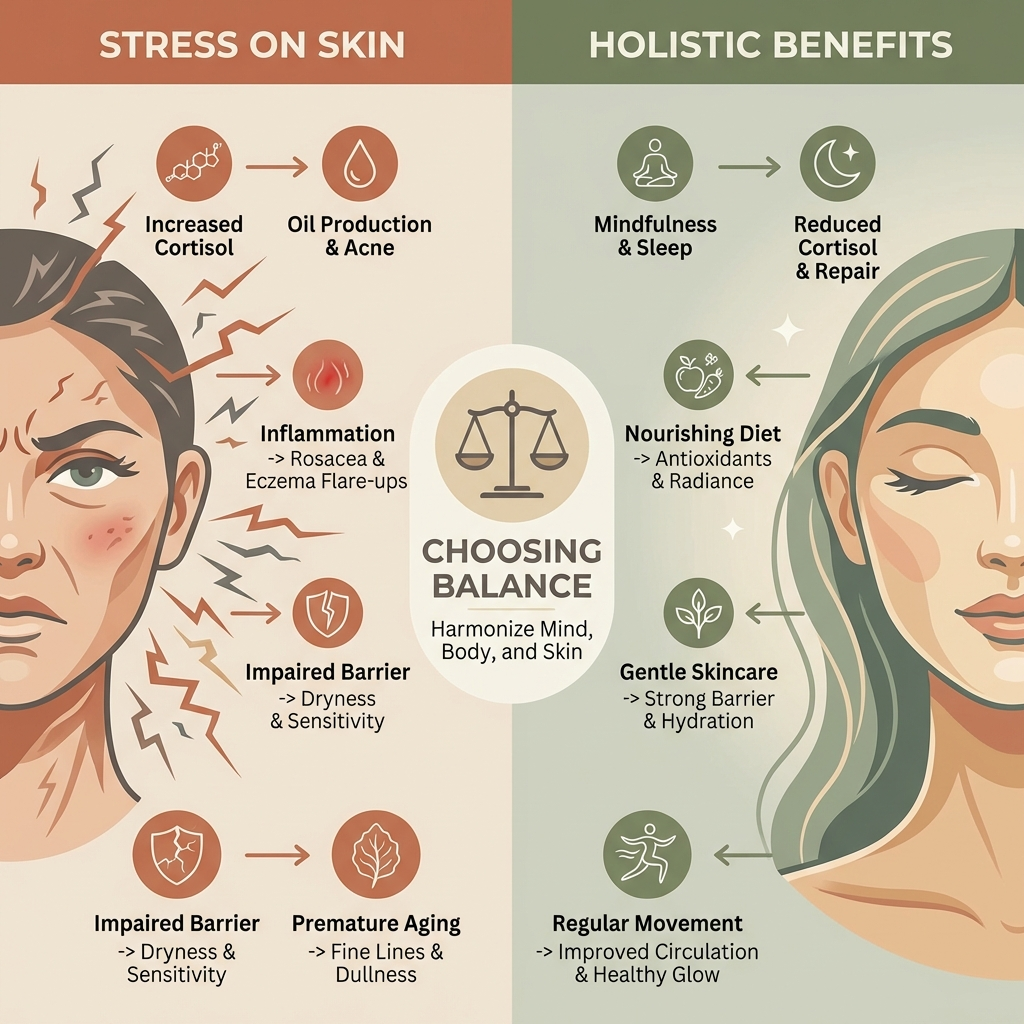
  • Manage Stress and Practice Self-Care: Chronic stress can show up on your face. High stress levels trigger the hormone cortisol, which over time can break down collagen and lead to inflammation (not to mention exacerbate conditions like acne or eczema). You might notice during particularly stressful times, your skin looks more tired or you breakout more. Incorporating stress-reduction techniques can literally help preserve your skin. This could be yoga, meditation, deep breathing exercises, or even hobbies that make you happy. Even something as simple as a daily walk in nature can lower stress. Another tip: try to avoid frowning or scowling frequently – stress often shows in our expressions and can etch lines (like the “11” lines between eyebrows). Of course we can’t control every expression, but being mindful of relaxing your face (maybe give yourself a little temple massage when tense) can help. Pampering yourself with a facial mask or gentle facial massage with a few drops of lavender essential oil can both reduce stress and improve circulation in the skin – a win-win.

  • Prioritize Sleep (Beauty Sleep is Real!): Ever notice how your skin glows after a good night’s sleep, and conversely looks dull or has more pronounced dark circles after a poor night’s sleep? Sleep is when your body repairs and regenerates tissues, including your skin. During deep sleep, growth hormone is released which stimulates cell turnover and collagen production. If you consistently skimp on sleep, you miss out on that rejuvenation time. Aim for 7–9 hours of quality sleep per night. To maximize skin benefits, sleep on a clean silk or satin pillowcase (to reduce friction on your skin) and consider sleeping on your back to avoid smooshing your face (side sleeping can contribute to lines on the cheek you favor). Also, using a humidifier in your bedroom can keep the air moist so your skin doesn’t dry out overnight. And of course, apply a good night cream or hydrating serum before bed – your skin will use those nutrients to repair itself overnight. (One great option is the Eminence Marine Flower Peptide Night Cream we mentioned, which helps “minimize fine lines with each application – all in a night’s work,”)

  • Exercise and Stay Active: Getting your heart rate up with exercise increases blood circulation, which delivers oxygen and nutrients to your skin cells and carries away waste products. Regular exercise has been linked in some studies to slower signs of aging, possibly because it also reduces stress and improves sleep – all interconnected. You might notice a post-workout glow; that’s your skin enjoying a rush of blood flow. Just remember to wear sunscreen if you’re exercising outdoors in daylight, and cleanse your skin gently after sweating to keep pores clear.

In summary, a healthy lifestyle creates the foundation for healthy skin. All the serums and creams in the world can only do so much if you’re smoking a pack a day or surviving on sugary processed foods (which can cause glycation – sugar molecules can stiffen collagen fibers, another reason to moderate sugar intake). By taking care of your body, you’ll naturally support your skin’s structure and slow aging. Plus, these habits have countless other benefits for your energy and wellbeing.

Product Pick: While lifestyle itself is the “product” here, you can complement your healthy habits with skincare that works with your lifestyle. For instance, after a relaxing evening yoga session, you might apply a calming night serum or oil with lavender or chamomile to enhance that de-stressing effect (some organic brands have aromatherapeutic night oils). If you’re focusing on nutrition, you could add a vitamin-rich mask once a week – like a pumpkin enzyme or superfood berry mask – to deliver those extra antioxidants topically. And if you’re taking collagen peptides internally, pair it with a topical peptide cream to tackle collagen loss from both angles. The key is consistency: a healthy routine + quality natural products = youthful skin over the long haul.

Conclusion: Naturally Youthful Skin is Achievable

To wrap it up, preventing wrinkles naturally comes down to a combination of smart skincare and healthy living. By understanding the science of skin aging – collagen breakdown, free radical damage, and moisture loss – we can target these issues with gentle, natural solutions. Antioxidants defend against wrinkle-causing oxidative stress, mineral sunscreens block the #1 cause of aging (UV rays), peptides encourage our skin to rebuild its youthful support structure, deep hydration keeps skin plump and resilient, and lifestyle choices set the stage for all these efforts to shine.

The best part is that these methods work synergistically. For example, wearing sunscreen prevents new damage while antioxidants and peptides repair past damage; staying hydrated inside and out gives those new collagen fibers a better environment to thrive; and a healthy diet boosts the effectiveness of your topical creams. It’s truly a holistic approach – natural ingredients and habits helping our natural skin biology.

Remember that patience is key: improvements in skin firmness or wrinkle depth won’t happen overnight, but within weeks you’ll start to see a healthier glow, and within months the payoff in terms of smoother, firmer skin can be significant. By sticking to these five natural strategies, you are essentially slowing the clock and aging gracefully (and confidently!).

Finally, don’t forget to enjoy the process. Taking care of your skin can be a relaxing form of self-care each day. Whether it’s the refreshing scent of a vitamin C serum in the morning or the soothing feel of a night cream as you wind down, these little routines are moments to celebrate your skin and yourself. Here’s to embracing organic skincare and a healthy lifestyle – your recipe for maintaining youthful, radiant skin for years to come. All the products mentioned (and many more natural goodies) can be found on OrganicSkinCare.com, so feel free to explore and build a routine that makes you look and feel your best. Cheers to aging gracefully, naturally!

The Science of Skin Aging – and 5 Natural Ways to Slow It Down Read More »

How to Build a Skin Care Routine with Organic Products |Morning & Night

How to Build a Skin Care Routine with Organic Products |Morning & Night

Building an effective skincare routine is all about using the right products in the proper order – often called the skincare routine order. With organic products, you can nourish your skin with natural ingredients while avoiding harsh chemicals. In this guide, we’ll walk you through a step-by-step morning and night routine using organic skincare, with tips on layering products for optimal absorption and recommendations for different skin types (acne-prone, oily, sensitive, dry, and combination). By the end, you’ll know exactly how to cleanse, tone, treat, moisturize, and protect your skin using organic goodies, both morning and night.

Morning Skincare Routine (Step-by-Step)

Your morning skincare routine focuses on cleansing away nighttime oils, hydrating the skin, and protecting it for the day. Consistency is key, and using organic products rich in natural extracts can gently prep your skin for makeup or the outdoors without irritation​

Follow these steps in order for the best results and absorption.

[25†embed_image] 1. Cleanse: Start every morning by washing your face. Cleansing is the crucial first step that gives you a clean slate for the rest of your products​

A good cleanser removes sweat, oil, and any residue from the night so that your toner, serums, and creams can penetrate properly. Choose an organic facial cleanser suited to your skin type to avoid stripping natural moisture. For example, a gentle gel or foaming cleanser with tea tree or willow bark is great for oily or acne-prone skin, as it helps unclog pores and reduce excess oil without over-drying (look for natural antiseptic ingredients like tea tree oil to help control breakouts​

If you have dry or sensitive skin, opt for a cream or milky cleanser with hydrating ingredients (such as aloe vera or glycerin) to cleanse without irritation​

Combination skin can use a balanced cleanser that removes oil in the T-zone while being gentle on drier cheeks – for instance, a mild organic cleanser with chamomile or green tea can soothe and clean all areas. Always rinse with lukewarm water and pat your face dry (no harsh rubbing) to keep skin calm. Layering tip: Apply cleanser on damp skin and massage in circles; this boosts circulation and ensures a thorough cleanse. Removing impurities first thing ensures the next products can work effectively on fresh skin.

How to Build a Skin Care Routine with Organic Products |Morning & Night

Organic Cleanser Suggestions:

  • Acne-Prone / Oily Skin: Eminence Organics Clear Skin Probiotic Cleanser is a gentle gel cleanser with tea tree and probiotics that purifies oily, breakout-prone skin without stripping moisture. It helps clear excess oil and bacteria for a fresh complexion.
  • Dry Skin: Hydra Comforting Cleansing Milk – A rich, creamy cleanser (featured on OrganicSkinCare.com) that uses plant-based butters to nourish and comfort dry skin while it cleanses​ It leaves skin feeling soft, not tight.
  •  Sensitive Skin: Sensiderm Cleansing Milk is an ultra-mild cleansing milk for sensitive skin that restores the skin’s moisture barrier while removing dirt.​It contains soothing botanicals (like chamomile or calendula) to prevent redness.
  • Combination Skin: Deep Pore Cleanser—This natural cleanser can deeply clean oilier areas without drying out the face.​It’s formulated without harsh chemicals (no parabens or mineral oils) and works well for normal to combination skin by keeping pores clear and skin balanced.

2. Tone: Apply toner to refine and prep your skin after cleansing. Toners help remove any residual impurities or oil that your cleanser might have missed and rebalance your skin’s pH​

 An organic toner can also deliver plant extracts and hydration to the skin. For instance, toners with rosewater or aloe can soothe and lightly moisturize, which is excellent for dry or sensitive skin (they add a boost of hydration and calmness)​

. If you have oily or acne-prone skin, a toner with natural astringents like witch hazel or willow bark can help minimize pores and reduce excess oil​

– this keeps shine in check and can prevent breakouts. Those with combination skin might use a balancing toner (for example, one containing hydrating ingredients and gentle herbal astringents) to address different face areas. Apply your toner by spritzing it on or patting it with a cotton pad; avoid dragging or rough rubbing. The purpose here is to refresh the skin, remove any cleanser residue or hard water minerals, and prime your face for better absorption of serums and moisturizers. Layering tip: Apply serum while your face is still slightly damp from the toner – this dampness can help pull in the serum’s ingredients more effectively.

Organic Toner Suggestions:

  • Dry/Sensitive Skin: Try a hydrating toner such as ilike Organic Rosehip Toner or a simple rosewater mist. These will add moisture and soothe irritation without alcohol. Ingredients like hyaluronic acid or glycerin in organic toners attract water to the skin, plumping up any dry patches​

  • Oily/Acne-Prone Skin: Use an astringent natural toner containing witch hazel, tea tree, or salicylic acid (derived from willow bark) to disinfect and tone gently. For example, Purifying Facial Toner (available on OrganicSkinCare.com) has witch hazel to unclog pores and rebalance oily skin​. This step will help keep your complexion clear and shine-free throughout the day.
  • Combination Skin: Look for a balancing toner with a mix of light hydration and pore-refining ingredients. An example is a toner with green tea (to regulate oil and provide antioxidants) and a bit of lavender or chamomile (to hydrate and calm). This ensures oily zones get purified while drier areas get a touch of moisture.

3. Apply Serum: Next, treat your skin to a serum – these are concentrated formulas packed with active ingredients to target specific concerns. Serums are usually lightweight and fast-absorbing, so they penetrate deeper into the skin after toner​

In the morning, an antioxidant serum is a fantastic choice, especially a Vitamin C serum. Vitamin C helps brighten your complexion, even out skin tone, and defend against environmental damage throughout the day (it’s like an extra shield under your SPF)​

For example, Eminence Citrus & Kale Potent C+E Serum is an organic vitamin C serum that delivers antioxidants from leafy greens and citrus to protect your skin and boost radiance. This kind of serum works well for all skin types (even sensitive skin can often tolerate natural vitamin C formulations) to promote a healthy glow.

Choose your serum based on your skin’s needs: If you have oily or acne-prone skin, you might use a clarifying serum with natural extracts that help regulate oil production and fight breakouts – for instance, a serum with niacinamide or willow bark can reduce excess oil and minimize pores (niacinamide is known to smooth texture and curb acne​

An example is Eminence Clear Skin Willow Bark Serum, which contains willow bark (a natural source of salicylic acid) and tea tree oil to keep acne at bay while also hydrating with aloe. If your skin is dry, consider a hyaluronic acid serum (many organic brands offer plant-derived hyaluronic acid or tremella mushroom as a natural alternative) to deeply hydrate and plump the skin. A serum like this will draw moisture in, so your skin stays supple under your moisturizer. Sensitive skin types might opt for a serum with calming botanicals – think chamomile, cucumber, or centella asiatica – to reduce redness and strengthen the skin barrier. And if you’re concerned about aging or dullness, a serum with antioxidants and vitamins (Vitamin C, E, or even natural retinol alternatives like bakuchiol) can be beneficial to firm and brighten.

Layering tip: Press the serum into your skin with your fingertips rather than rubbing aggressively. Allow about a minute for the serum to absorb fully before moving to the next step. This pause gives those potent natural ingredients time to sink in and do their job. Remember, serums should be applied before heavier creams since they are thinner and designed to deliver actives efficiently.​

4. Moisturize: After your serum, it’s time to lock in hydration with a moisturizer. Moisturizing is vital to keep skin soft and to reinforce your skin’s protective barrier. An organic moisturizer will nourish your skin with plant-based oils and butter without synthetic additives. Apply moisturizer after serum because creams are thicker and create a seal on your skin – if you put a cream on first, it could block your serum from absorbing properly​

A good moisturizer increases the water content in your skin and prevents moisture loss throughout the day​

For the morning, if you have oily or acne-prone skin, choose a lightweight, oil-free lotion or gel moisturizer. Look for terms like “non-comedogenic” and ingredients such as hyaluronic acid, aloe vera, or jojoba – these hydrate without clogging pores​

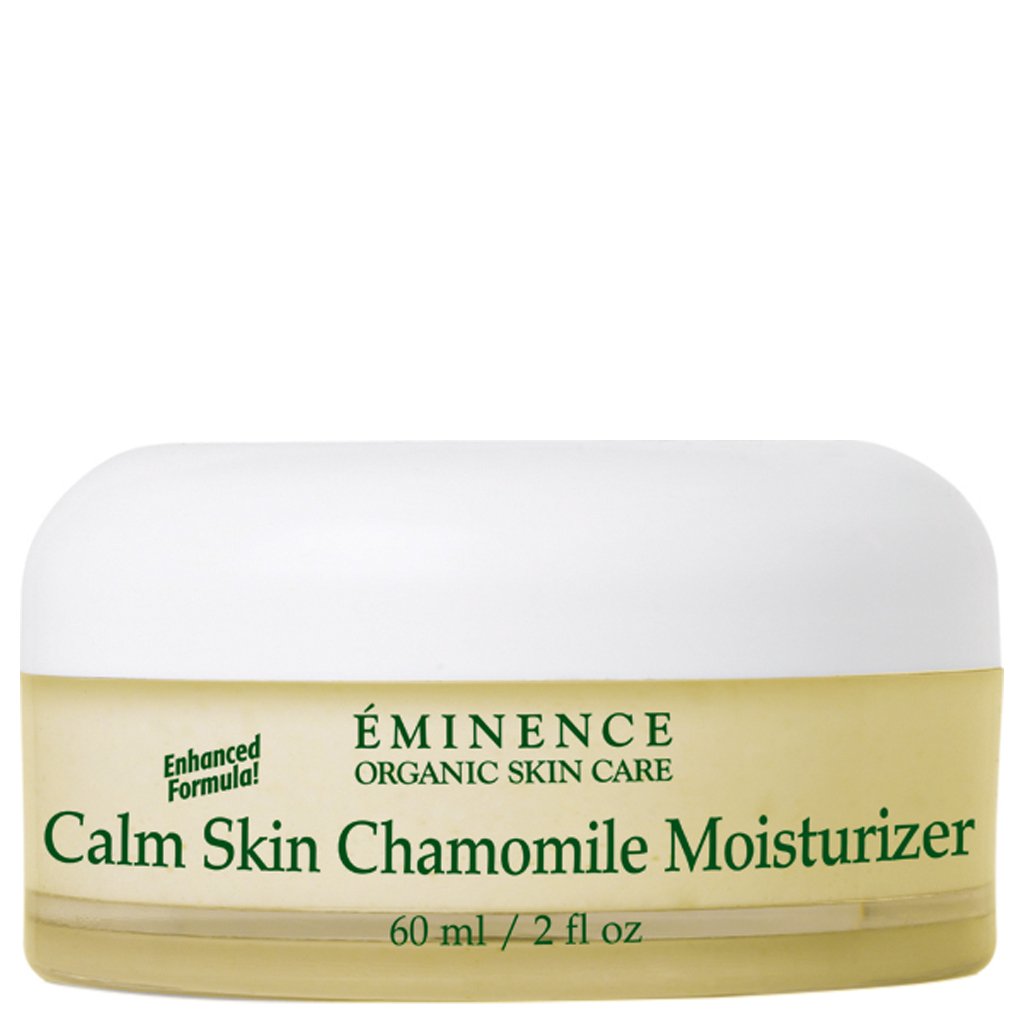
For example, Eminence Clear Skin Probiotic Moisturizer is an ultra-light organic cream with cucumber and tea tree that keeps acne-prone skin moisturized and calm, helping to reduce redness and breakouts. If your skin is dry, go for a richer organic cream packed with nourishing ingredients like shea butter, cocoa butter, or avocado oil to relieve that tight feeling. An example might be a cream with ceramides and natural oils (OrganicSkinCare.com offers moisturizers with shea butter and argan oil for deep moisture). Sensitive skin will benefit from a moisturizer with soothing elements like chamomile, calendula, or oatmeal – these help reduce inflammation and reinforce the skin barrier. An organic chamomile moisturizer (such as Eminence Calm Skin Chamomile Moisturizer) can hydrate while calming redness. Those with combination skin should seek a balanced moisturizer – possibly a medium-weight cream or lotion that hydrates dry areas without oversaturating the oily T-zone. You can also apply a lighter gel on the oily parts and a richer cream on dry parts if needed (multitasking is every day for combo skin!).

Layering tip: Take a small dollop of moisturizer and warm it between your hands, then gently massage it into your face and neck in upward, circular motions. Don’t forget areas like the neck and jawline. Because moisturizers are thicker, putting them on after serums helps seal in all the beneficial ingredients you just applied​

Give your moisturizer a minute or two to settle in before moving to the final step (this prevents pilling when you apply sunscreen or makeup on top).

5. SPF (Sunscreen): Sun protection is a non-negotiable final step in your morning routine. After your moisturizer has absorbed, apply a broad-spectrum SPF to shield your skin from harmful UV rays. UV exposure is the number one cause of premature skin aging (think wrinkles, sunspots) and can lead to skin cancer, so daily sunscreen is a must​

Using an organic or mineral sunscreen is a great option if you want to avoid chemical filters. Mineral sunscreens with zinc oxide or titanium dioxide physically block UV rays and are often gentler on the skin (ideal for sensitive skin or acne-prone skin that might react to chemical sunscreens). Apply a generous amount – about a nickel-sized dollop for your face – and be sure to cover all exposed areas, including your neck and ears. Sunscreen should always be the last step in your daytime skincare routine

because you want it to form that protective layer on top of your other products.

When choosing an organic SPF, consider your skin type: If you have oily skin, you might prefer a lightweight, matte-finish mineral sunscreen or an oil-free SPF moisturizer that won’t leave you greasy (some organic brands offer mattifying zinc lotions). For dry skin, a sunscreen that has moisturizing ingredients like jojoba or squalane can prevent your skin from drying out throughout the day. Those with sensitive skin should look for a fragrance-free mineral sunscreen with soothing additives like green tea or chamomile to minimize any irritation. Many natural sunscreens are formulated with botanical extracts and oils (raspberry seed oil, for example, has some UV-protective qualities) to nourish as they protect. Remember to check that your sunscreen is at least SPF 30 and broad-spectrum, meaning it protects against both UVA and UVB rays​

Layering tip: Gently pat (don’t rub too hard) your sunscreen over your moisturizer to avoid disturbing the layers underneath. If you wear makeup, give the sunscreen a few minutes to absorb fully before applying foundation – this will help your makeup sit well and ensure the SPF is effective. And if you’re outdoors for long, reapply sunscreen every two hours for continued protection.​

Your morning routine is now complete! In summary, the order of your morning skincare routine should always be: Cleanse → Tone → Serum → Moisturize → SPF. Following this skincare routine order ensures each product can do its job without being blocked by the next one. You maximize absorption and efficacy by layering from thinnest (like toner/serum) to thickest (cream then sunscreen).​

Let’s look at how your nighttime routine should work with organic products.

Night Skincare Routine (Step-by-Step)

Your nighttime skincare routine is all about deep cleansing, nourishment, and recovery. In the evening, you want to remove the day’s buildup (makeup, sweat, sunscreen, and pollutants) and then feed your skin with reparative ingredients while you sleep. Night is when your skin goes into renewal mode, so organic products with vitamins and antioxidants can really boost your skin’s health overnight. The steps at night are similar to morning, with a couple of additions (like oils or special treatments) since you don’t have to apply SPF. Here’s how to build your PM routine:

1. Cleanse (Night): Evening cleansing is perhaps even more important than morning. Throughout the day, your face accumulates dirt, oil, and environmental impurities that need to be thoroughly washed off. If you wear makeup or sunscreen, consider doing a double cleanse: first use an oil-based cleanser (or cleansing balm) to dissolve heavy makeup and SPF, then follow with a gentle water-based cleanser to remove any remaining residue. Using organic cleansing oils (like one with sunflower or jojoba oil) can effectively melt away makeup naturally and won’t strip your skin. After that, a second cleanse with a mild organic face wash (chosen according to your skin type, similar to your morning cleanser) will ensure your skin is truly clean. For instance, at night you might use a rich cleansing oil with organic argan or coconut oil to lift off grime, then use your Eminence Clear Skin probiotic cleanser or Sensiderm Cleansing Milk as the second step to purify the skin. If you don’t wear much makeup, a single cleanse with your regular organic face wash should suffice – just be diligent about covering all areas (forehead, sides of nose, jawline, etc.). The purpose here is to go to bed with a clean face so your pores can breathe and absorb the beneficial products to come. Neglecting proper cleansing at night can lead to clogged pores and breakouts, so this step is key for acne-prone and oily skin especially. Those with dry or sensitive skin should choose a very gentle cleanser at night (maybe a fragrance-free organic cream cleanser) so as not to over-cleanse; the double cleanse method can actually be beneficial for sensitive types too if you use a soothing cleansing oil first, since oil can cleanse without the need for harsh scrubbing. After washing, pat skin dry softly.

Layering tip: If you did a double cleanse, ensure you rinse off all traces of the first cleanser before moving to the second. You can gently wipe your face with a soft damp cloth to remove the oil cleanser thoroughly between the two cleansers. After cleansing, don’t wait too long before the next steps – applying toner and treatments on skin that’s just cleaned (and slightly damp) helps them absorb better.

2. Tone (Night): Toning at night serves the same purpose as in the morning – it removes any lingering impurities and preps the skin – but you can tailor it to your needs. If your skin is oily or acne-prone, nighttime is a good opportunity to use a toner with exfoliating or acne-fighting ingredients (since you won’t be in the sun immediately after). For example, an organic toner with a natural AHA (alpha hydroxy acid) like lactic acid or BHA like salicylic acid can gently exfoliate dead skin cells, keeping pores clear and preventing breakouts. Some organic toners use fruit enzymes or apple cider vinegar to achieve this effect naturally. You might not use an exfoliating toner every single night – perhaps a few times a week if your skin tolerates it – and on other nights use a hydrating or balancing toner. If you have dry or sensitive skin, stick with a calming toner at night (such as a lavender or chamomile toner) to avoid irritation. Combination skin users can apply an exfoliating toner only on the T-zone (forehead, nose, chin) where clogs and oil are more common, and use a milder toner on cheeks. The key is to ensure your skin is clean and its pH is balanced after cleansing, which helps any serums or treatments you use next to work more effectively. Apply the toner with a cotton pad or by patting it on, just as you would in the morning.

Layering tip: If you are using a stronger treatment toner (like one with glycolic acid), let it sit for a minute or two on the skin before applying the next product, to give the acids time to do their job. You might feel a slight tingle – that’s okay as long as it’s not burning. Always follow with a serum or moisturizer to avoid drying out your skin after an exfoliating toner.

3. Apply Serum (Night): Nighttime is ideal for treatment serums, especially those that might make skin sensitive to sunlight. This is when you can use your anti-aging powerhouses or acne treatments. One common night serum is a retinol or retinol-alternative serum. Retinol (Vitamin A) helps increase cell turnover, fade dark spots, and improve wrinkles, but it can be irritating and isn’t always “organic.” If you prefer natural options, look for bakuchiol, a plant-based retinol alternative that offers similar benefits (firmer skin, smoother texture) without the harshness. Many organic brands now include bakuchiol in their night serums or creams. If you have acne-prone skin, a serum with natural exfoliants or antibacterials can work overnight to clear your skin – for example, a serum with tea tree oil, niacinamide, or willow bark extract (salicylic) can reduce inflammation and keep pores clear as you sleep. For dry or mature skin, nighttime serums rich in antioxidants and nutrients are wonderful: think of rosehip oil (which is high in natural Vitamin A and C), sea buckthorn, or peptides from botanicals. These will support your skin’s repair process and often boost collagen production. Sensitive skin types at night should avoid strong actives; instead, try a serum with niacinamide or centella which can repair the skin barrier and reduce redness overnight, or simply use a hydrating serum with hyaluronic acid if you didn’t use one in the morning.

You can also multi-serum or “skin cycle” through the week: maybe use a refining serum (like a natural retinol or AHA serum) one night, and a hydrating/calming serum the next, to give your skin balance. Always listen to your skin – if it becomes very irritated, dial back on the active treatments.

Layering tip: Just like in the morning, apply your thinnest serum first. If you use more than one serum, go from lightest to thicker. For example, you might apply a lightweight niacinamide serum first, then a slightly oilier antioxidant serum after. However, be cautious about mixing too many actives at once. Often, one good serum at night is enough. Make sure to allow each to absorb before applying the next. If you are using a strong treatment like a retinol cream, you generally would apply it after a lighter hydrating serum (retinol products are often slightly creamy). In any case, once your treatment serums are on, give it a minute or two before the moisturizing step.

4. Moisturize (Night): Your night moisturizer can be a bit richer than your daytime one, since you don’t have to worry about shine during the day. Night creams (or simply using your regular moisturizer) help hydrate and repair the skin barrier while you sleep. After your serums or treatments, apply an organic moisturizer to seal everything in. If you have dry skin, this is the time to use a deeply hydrating cream – even a natural balm with ingredients like shea butter, cocoa butter, or oils can be beneficial to prevent moisture loss overnight. For example, an organic night cream with jojoba oil and aloe could hydrate dry skin all night so you wake up with a soft complexion. If your skin is oily or acne-prone, you can still moisturize at night (yes, even oily skin needs moisture!). In fact, using a light gel or lotion at night can help regulate your skin’s oil production; if you skip moisturizer, your skin might produce more oil to compensate. Look for an oil-free night lotion or a probiotic moisturizer that keeps skin clear. For combination skin, you might use a medium-weight moisturizer or apply a richer cream on the drier areas and a lighter one on the oily areas. Sensitive skin users should stick to a gentle, fragrance-free moisturizer with calming plant extracts (similar to their day cream) to avoid any overnight irritation. Some organic skincare lines offer “night creams” that include extra actives (like natural anti-aging herbs or oils) – you can use those if you like, or simply use your day moisturizer if it provides enough hydration, and maybe layer an oil on top (next step) for more nourishment.

Don’t forget an eye cream if you use one: though not mentioned in our main steps, you can gently pat an organic eye cream around your eyes after moisturizing (or some prefer before moisturizer). Ingredients like caffeine (from green tea or coffee extracts) or cucumber in an eye gel can depuff in the morning, while a richer eye balm with shea butter can hydrate fine lines at night. It’s an optional but useful addition for many.

Layering tip: When applying your night moisturizer, you can use gentle upward strokes and even take it down to your neck and décolletage – these areas also benefit from the moisture and anti-aging ingredients. Suppose you applied a strong treatment (like a retinol cream) before. In that case, you might use the moisturizer to “sandwich” it (applying a thin layer of moisturizer, then retinol, then another thin layer on top) to minimize irritation – a trick for sensitive skin. Always let the moisturizer absorb for a minute before moving to the next step (especially if you plan to use a facial oil on top).

5. Oils or Additional Treatments: This final step is like the “boost” to your night routine. Once you’ve moisturized, you can add a facial oil or overnight treatment to nourish the skin or target specific issues deeply. Facial oils are a fantastic organic option because they are often just pure plant oils that deliver vitamins, fatty acids, and antioxidants to your skin. Layering tip: Oils are heaviest, so generally apply them after your moisturizer​

(they can seal in the hydration from your cream and prevent it from evaporating). For instance, as the last step, you can warm a few drops of organic facial oil between your palms and press it over your face.

Choose an oil that suits your skin type: If dry or mature skin, try a richer oil like argan oil, avocado oil, or rosehip oil. These oils are high in fatty acids and can provide intense hydration and repair while you sleep​

Rosehip oil, in particular, is a favorite in organic skincare – it’s packed with vitamins A and C and can help brighten and improve texture over time. Sensitive or irritated skin might benefit from soothing oils such as chamomile (blue tansy) oil or calendula oil, or even rosehip as it’s also calming​

These help reduce redness and inflammation. If you’re oily or acne-prone, it may sound counterintuitive, but lightweight oils like jojoba or grapeseed can actually balance your skin’s sebum production​

Jojoba oil is chemically similar to our natural skin oils, so it can trick the skin into thinking it’s sufficiently moisturized and reduce the overproduction of oil. It’s also non-comedogenic, meaning it won’t clog pores. Grapeseed oil is another light option that delivers antioxidants and has a slight astringent property to keep pores clear. Applying a few drops of these oils can leave oily skin soft and nourished without causing breakouts. (Always use high-quality, organic, cold-pressed oils for the best results and to avoid any pore-clogging additives.)

Aside from oils, other treatments you might do at night include overnight masks (like an organic hydrating sleep mask with honey or aloe for extra moisture – applied instead of or after your moisturizer, depending on instructions), or spot treatments for pimples (for example, dabbing a natural clay or tea tree spot treatment on any blemishes to shrink them by morning). You might also use exfoliating treatments some nights (like a fruit acid peel pad) or sheet masks occasionally. These are not every-night steps, but you can rotate them into your routine weekly as needed. Always follow the product’s instructions and don’t pile on too many treatments in one night – it’s best to keep it simple and let your skin rest.

With oils or heavy treatments, a little goes a long way. You don’t want to suffocate your skin; just enough to form a thin layer is perfect. By morning, your skin should feel comfortable and well-nourished, never overly greasy or irritated.

Finally, remember that consistency and listening to your skin are crucial. An organic skincare routine can be adjusted: if your skin feels too oily, use lighter formulas or cut back on oils; if it’s feeling dry or tight, add extra hydration or a richer moisturizer. And always patch-test new products to ensure you don’t react, even if they’re all-natural.

Conclusion: Putting It All Together

Building a morning and night skincare routine with organic products may seem like a lot of steps, but once you find the right products for your skin type, it becomes second nature. The key is to apply products in the correct skincare routine order – generally from thinnest to thickest – so that each layer absorbs properly and you get the maximum benefit​

Using organic cleansers, toners, serums, and creams means you’re treating your skin with gentle yet effective natural ingredients, which often results in a healthier complexion with less risk of irritation​

Organic products are packed with nutrients (like vitamins, antioxidants, and essential fatty acids) that work in harmony with your skin – for example, plant-based serums can deliver high concentrations of active ingredients without the fillers or harsh chemicals found in some conventional products​

To recap, your morning routine preps and protects your skin for the day: always cleanse, tone, use a targeted serum, moisturize, and finish with SPF. At night, focus on cleansing thoroughly and then repairing: cleanse (double cleanse if needed), tone, apply treatment serums, moisturize, and use oils or special treatments for extra care. Adjust each step with organic product choices that suit your skin type – whether you’re dealing with acne, oiliness, sensitivity, dryness, or a bit of everything (combination). For instance, an acne-prone person’s routine might include a tea tree cleanser, a clarifying toner, a niacinamide serum, an oil-free moisturizer, and a light jojoba oil at night, while someone with dry, sensitive skin might use a creamy cleanser, a rosewater toner, a hyaluronic acid serum, a rich moisturizer with shea butter, and a few drops of argan oil at night. Both follow the same framework, just with different products tailored to their needs.

By following this guide, you’re treating your skin to a holistic regimen that supports it from morning till night. Give your new routine some time – skin often takes a few weeks to adjust and show results. With patience, you’ll likely notice a more balanced, glowing complexion thanks to the power of organic skincare. Here’s to healthy, happy skin achieved the natural way!

Remember, the best routine is one you can stick to consistently. Feel free to bookmark this step-by-step outline as a reminder of your morning and night skincare orders. Happy cleansing, layering, and glowing!

How to Build a Skin Care Routine with Organic Products |Morning & Night Read More »

From Acne to Glow How Switching to Organic Skincare Improved My Skin

From Acne to Glow | How Switching to Organic Skincare Improved My Skin

Introduction

Acne, irritation, dryness – these are common issues I faced while using conventional skincare products. Many mainstream acne treatments are loaded with harsh chemicals that strip the skin. As a result, it’s no surprise that more people (myself included) have started looking into organic skincare as a gentler solution. In fact, demand for natural skincare has surged in recent years, with the category growing over 20% as consumers seek out cleaner, plant-based products​

Could going organic be the key to calming my acne-prone skin? I decided to find out.

The Problem: Harsh Skincare Products & Acne

Conventional acne-fighting products often contain synthetic ingredients like sulfates and alcohol that can do more harm than good. Sulfates (like SLS, a common foaming agent) create a nice lather but can over-strip your skin’s natural oils. Dermatologist Dr. Joshua Zeichner notes that SLS is known to cause significant irritation and inflammation; celebrity esthetician Renée Rouleau warns this kind of barrier disruption makes breakouts worse​

Similarly, alcohol-based toners and astringents give a quick “drying” effect at the expense of your skin’s health. They strip away moisture and upset the protective barrier, often leading to redness and inflammation. People use these drying products hoping to shrink pimples, but they ultimately can make acne worse​

An experienced esthetician will tell you that when harsh ingredients compromise the skin’s barrier, it becomes more prone to irritation, breakouts, and even excess oil production as it tries to compensate. In short, the very products meant to treat acne can trap you in a vicious cycle of irritation and flare-ups.
From Acne to Glow How Switching to Organic Skincare Improved My Skin
Acne Drying Lotion
Acne Drying Lotion
Acne Drying Lotion
Our Score

The Acne Drying Lotion is a fast-acting, effective acne spot treatment. It is formulated with salicylic acid, calamine, and other quick-drying ingredients.

Shrinks blemishes

  • Eliminates bacteria
  • Perfect spot treatment
  • Antiseptic solution
  • Quickly promotes healing
  • Restores skin to a smoother texture.
  • Use on spots and blemishes for nighttime use.

The Switch to Organic Skincare: A Personal Journey

After years of battling persistent acne with strong cleansers and medicated creams, I felt stuck in that cycle. My skin was constantly tight, flaky, and inflamed – new pimples popped up as soon as old ones healed. Frustrated, I finally sought a different approach. I read articles and spoke with a holistic esthetician, who opened my eyes to how my regimen was actually aggravating my skin. The idea of switching to organic skincare was both exciting and a bit scary. Would gentler, natural products really be effective enough?

Determined to give my skin a fresh start, I gradually phased out the harsh scrubs and chemical treatments. I simplified my routine to focus on gentle, plant-based products – no synthetic fragrances, no sulfates, no denatured alcohol. In the first week, I noticed something unexpected: my face wasn’t burning after each wash, and the angry redness began to calm down. Over the next few weeks, I stuck with the organic regimen and paid close attention to my skin’s response. It felt strange (in a good way) not to have that squeaky-clean, tight sensation after cleansing. Instead, my skin felt comfortable and balanced. Seeing these initial improvements gave me hope that I was on the right track.

The Organic Skincare Routine That Worked

Some organic skincare products formulated with botanical ingredients.

After trial and error, I landed on an organic skincare routine that transformed my acne-prone skin without irritation. Each step features gentle, natural ingredients (all available via OrganicSkincare.com) that nourish the skin while keeping breakouts at bay. Here’s the routine that worked for me:

  • Cleanser: I started using a gentle, botanical-based cleanser formulated for acne-prone skin. Free of SLS and artificial fragrance, it cleanses with plant-derived surfactants and soothing herbal extracts (think green tea and chamomile). This removes impurities and excess oil without that dry, squeaky feeling – a crucial first step since dermatologists advise using a mild, non-comedogenic cleanser to avoid irritating acne-prone skin​

    After switching, I noticed my face no longer felt inflamed after washing.

  • Exfoliant (Toner): I chose a natural BHA toner with white willow bark extract instead of grainy scrubs or alcohol-heavy toners. Willow bark is a natural source of salicylic acid (a beta-hydroxy acid), which gently penetrates pores to dissolve oil and dead cells. Using this botanical exfoliant daily helped keep my pores unclogged and skin smooth, without the stinging or peeling I experienced with previous chemical toners. In fact, white willow bark contributes to exfoliation and clearer pores minus the dry, tight sensation other strong exfoliants can cause​

  • Treatment: I turned to organic acne treatments featuring natural antimicrobials for spot-treating pimples and preventing new breakouts. One hero ingredient in my routine is tea tree oil, a renowned plant-based acne fighter. I’d dab a drop of a dilute tea tree serum on any active breakout or mix a few drops into my moisturizer at night. Tea tree oil is a natural antibacterial and anti-inflammatory agent – it can kill P. acnes, the acne-causing bacteria, and reduce the redness and swelling of pimples​

    I found it a gentler alternative to benzoyl peroxide; blemishes would shrink without the area around them getting raw or flaky.

  • Moisturizer: Yes, even oily, acne-prone skin needs a moisturizer! I used a lightweight organic moisturizer with aloe vera and jojoba oil, both of which hydrate the skin without clogging pores. This step kept my skin calm and supple. A big bonus: by maintaining proper hydration, my skin didn’t overproduce oil like it used to when harsh products dried it out. (When skin becomes too dry, it often produces more oil to compensate, leading to clogged pores​

    .) Applying an oil-free, non-comedogenic moisturizer twice a day helped repair my skin barrier and prevent the dreaded dry flakes I used to get around active breakouts.

  • Sunscreen: Each morning, I applied a non-comedogenic, mineral-based sunscreen with SPF 30. This is a must in any skincare routine, but especially important when you’re using exfoliants like willow bark – you want to protect that newer, healthier skin. I opted for a mineral SPF featuring zinc oxide as the active ingredient (chemical sunscreens tended to sting my sensitive skin). A good mineral sunscreen will shield your skin from UV rays without triggering breakouts. In my case, the one I used was lightweight and truly non-comedogenic – it didn’t clog my pores or cause any new pimples, which is a common concern with sunscreens. (Many dermatologists recommend mineral sunscreens for acne-prone folks, since zinc oxide is naturally gentle and won’t aggravate acne​

    .) This step gave me peace of mind that I was protecting my skin during the day, allowing the healing process to continue uninterrupted.

Before & After: Visible Skin Improvements

The difference in my skin after switching to organic products was not overnight, but it was steadily noticeable. After about 4–6 weeks on the new regimen, I saw far fewer breakouts. The constant cycle of cystic pimples on my cheeks and jawline had finally slowed. Inflammation was way down – those angry red blemishes were calmer and less swollen. This makes sense, as many natural ingredients in my routine (like tea tree oil and willow bark) have anti-inflammatory properties that soothe the skin​

Without new irritants bombarding my face, the existing acne had a chance to heal. I also noticed my complexion wasn’t as oily by midday. By nourishing my skin and avoiding over-drying, I had effectively balanced my sebum production (when skin isn’t stripped of moisture, it doesn’t need to pump out excess oil​

Another big change: improved texture and clarity. Gently exfoliating with the willow bark toner each day helped fade some of the old post-acne marks and kept dead cells from clogging my pores. Unlike harsh scrubs that used to leave me red and irritated, this natural exfoliant worked slowly but consistently – leading to a brighter, smoother complexion over time. In fact, a routine of gentle, organic products can regulate oil production and promote healthy cell turnover, gradually revealing fresher skin​

My skin’s overall health and resilience also improved. I went from a face that was often flaky around breakouts (yet oily in the T-zone) to skin that felt comfortably hydrated all the time. The reduction in inflammation meant fewer new scars forming, and existing red marks gradually faded. An unexpected bonus was that my skin barrier clearly got stronger – I wasn’t experiencing the stinging and burning I used to when trying new products or facing cold weather. This is likely because the organic routine focused on nurturing the skin with vitamins, antioxidants, and fatty acids. Dermatologists have noted that botanical ingredients can have therapeutic effects on the skin​

supporting its natural healing processes. In my case, feeding my skin good, clean ingredients (and avoiding the nasty ones) created the ideal environment for repair.

By the three-month mark, the “before and after” difference was dramatic. I went from constantly battling active acne to occasionally treating one or two minor pimples. My skin was brighter and more even-toned; friends even commented on my new glow. It felt incredible to finally feel confident in my skin without layering on heavy concealer. Science backs up why this transformation occurred: I reduced inflammation and irritation, kept my skin hydrated, and maintained a healthy oil balance – all key factors in clearing acne. As one expert aptly said, natural and clean products offer a gentler, holistic approach to managing acne, supporting the skin’s own functions without the harsh side effects of chemical treatments​

My experience was living proof of that insight.

From Acne to Glow How Switching to Organic Skincare Improved My Skin

Final Thoughts: Why Organic Skincare is Worth the Switch

Making the switch to organic skincare was one of the best decisions for my acne-prone skin. It wasn’t just about swapping out products – it was about embracing a philosophy of being kinder and more patient with my skin. The gentle, plant-based formulations healed my complexion in a way that aggressive chemicals never could. The key takeaways from my journey are clear: calm, don’t conquer your skin; work with it, not against it. When you nurture your skin’s barrier and use ingredients that reduce inflammation (instead of causing it), you set the stage for long-term clarity and health.

Of course, some people have concerns about going organic. A common question is, “Does organic skincare really work for acne?” Based on my experience – and the science behind ingredients like salicylic acid from willow bark and antibacterial tea tree – the answer is yes. Organic products can be highly effective, with the added benefit of being gentle. Another concern might be cost or availability. It’s true that some organic brands are pricier than drugstore options, but there are affordable choices out there, and personally I find I use less product now that my skin is balanced. Moreover, with the growing popularity of organic skincare (the market has been expanding every year​

), these products are becoming easier to find in all price ranges. Think of it as an investment in your skin’s health – preventing damage and irritation now can save you money on treatments or concealers in the long run.

In the end, the improvement I saw – going from irritated, acne-ridden skin to a calm, glowing complexion – convinced me that gentle is the way to go. My routine proves that you don’t need a cocktail of strong chemicals to treat acne. By using high-quality organic products (cleanser, exfoliant, treatment, moisturizer, and sunscreen) consistently, I gave my skin the chance to reset and thrive. If you’ve been struggling with breakouts and feel like you’ve tried everything, consider giving organic skincare a try. Be patient and pay attention to how your skin reacts. From acne to glow – it is possible. Sometimes the solution is simply to treat your skin with a little more care and nature’s touch. Your journey might not be identical to mine, but I hope my story and the expert insights shared here inspire you to find a gentler routine that leads you to your own healthy, radiant skin.

From Acne to Glow | How Switching to Organic Skincare Improved My Skin Read More »

Trending Anti-Aging Skincare Natural Ingredients Taking Over Instagram & TikTok

Trending Anti-Aging Skin Care | Natural Ingredients Taking Over Instagram & TikTok

Introduction
Social media has become the go-to source for skincare inspiration. On Instagram and TikTok, millions tune in to see the latest anti-aging secrets – and the buzzwords aren’t harsh chemicals, but natural powerhouses. From brightening vitamin C serums to collagen-boosting plant extracts, the trend is clear: skincare enthusiasts want effective natural ingredients that deliver youthful results. The proof is in the numbers – TikTok videos about retinol (the classic anti-ager) have amassed over 7 billion views​ and now a new wave of gentler alternatives is riding that momentum. Scrolling your feed, you’ll see beauty gurus touting peptide “Botox in a Bottle” hacks, glowy hyaluronic acid “skin flooding” routines, and before-and-after shots using vitamin C serums that make skin gleam. It’s an exciting time where skincare science meets social media virality.

But with so many trends, which ingredients truly stand out? Let’s explore five star ingredients dominating anti-aging posts – vitamin C, peptides, hyaluronic acid, coenzyme Q10, and plant-based collagen boosters – and see why they’re gaining popularity. Along the way, we’ll highlight whether serums or creams are stealing the spotlight (spoiler: TikTok loves its serums), and look at a few viral skincare movements shaping these routines. By the end, you’ll know exactly what’s trending and how to upgrade your regimen with proven, organic solutions for youthful skin.

Trending Anti-Aging Skin Care Natural Ingredients Taking Over Instagram & TikTok

Vitamin C: The Brightening Superstar of Social Media

It’s hard to scroll past a skincare video without someone raving about vitamin C. Often hailed as a holy grail ingredient, vitamin C is an antioxidant that brightens skin and boosts collagen – making it a natural anti-aging champion. On Instagram, morning routine videos frequently start with a few drops of a vitamin C serum to achieve that instant glow. TikTok creators share clips of their dark spots fading and skin “getting brighter each week” thanks to consistent vitamin C use. This ingredient’s popularity stems from both its visible effects and its science-backed benefits: vitamin C helps spur the production of collagen (the protein that keeps skin firm) and fights off wrinkle-causing free radicals from UV exposure and pollution. In fact, dermatologists say vitamin C is one of the essential ingredients for defending skin and stimulating new collagen​

​ and beauty influencers have taken that advice to heart.

Beyond the science, vitamin C also addresses one of the most visible signs of aging – uneven tone. By fading hyperpigmentation and brightening dull areas, it gives skin a youthful, even radiance. Little wonder that hashtags like #vitaminCserum are overflowing with glowing testimonials and before-after photos. The consensus on social media? A vitamin C product is a must-have in your arsenal if you want firmer, brighter skin.

Why it works: Vitamin C (especially in the form of L-ascorbic acid) is a co-factor in collagen synthesis – your skin literally needs it to build strong collagen fibers that keep wrinkles at bay. It also neutralizes free radicals, protecting skin cells from oxidative stress that can lead to fine lines and dark spots. Users often report smoother texture and less noticeable fine lines after a few months of use – aligning with clinical findings that vitamin C can improve wrinkles and skin texture with consistent application. And because it’s naturally found in fruits (like citrus), vitamin C appeals to the “clean beauty” ethos: potent yet derived from nature.

Product Spotlight – Vitamin C: For example, the Vitamin C Serum Plus Antioxidant available on OrganicSkinCare.com pairs vitamin C with vitamins A and E to supercharge its age-fighting ability. This formula is designed to “hold back those wrinkles” – from crow’s feet to fine lines – using a combination of vitamins that diminishes fine lines and skin imperfections while improving skin tone and giving a firmer look​

In other words, it helps turn back the clock on your complexion, all while keeping your skin moisturized and radiant. It’s exactly the kind of serum you’ll see influencers apply to achieve a brighter, smoother face.

Trending Anti-Aging Skin Care Natural Ingredients Taking Over Instagram & TikTok

Peptides: Collagen Boosters & the “Botox in a Bottle” Hack

If vitamin C is the brightening star, peptides are the unsung heroes rebuilding skin’s foundation. Peptides are short chains of amino acids that work as messengers in the skin, telling your cells to pump out more collagen and elastin. The result? Firmer, smoother skin with diminished fine lines – essentially, peptides help “train” your skin to act younger. In the world of Instagram skincare and TikTok tutorials, peptides are suddenly everywhere. Why? Because they promise some of the benefits of procedures like Botox or fillers, but in a topical, natural way. In fact, one TikTok-famous combination of peptide serums earned the nickname “Botox in a Bottle,” and the hashtag blew up with millions of views as users showed off smoother foreheads and crow’s feet after a few weeks, no injections needed​

Specific peptides, like Argireline (acetyl hexapeptide-3), actually work similarly to Botox – relaxing facial muscle contractions (to a milder degree) to reduce wrinkle depth​

Others, like Matrixyl, signal the skin to produce more collagen. This peptide craze highlights how far skincare has come – a serum can now visibly soften expression lines, leading some to call peptides a must-have by your late 20s to “keep skin snatched.” Even copper peptides – known for their skin-regenerating and anti-inflammatory properties – have trended, with TikTok videos under #copperpeptide amassing tens of millions of views​ as people look for the next big youth-restoring ingredient.

Why it works: By boosting collagen production and assisting skin repair, peptides tackle the structural causes of wrinkles. Think of collagen as the mattress springs in your skin – as they break down with age, skin loses firmness and wrinkles form. Peptides help patch and rebuild those springs from within​

Plus, many peptide products hydrate the skin (often formulated with hyaluronic acid or ceramides), plumping up fine lines immediately while working long-term on firmness. Because peptides are fragments of natural proteins, the skin generally tolerates them well, making them beloved in the “gentle anti-aging” movement online.

Product Spotlight – Peptide Serum: Want to see what the peptide hype is about? Consider Nelly De Vuyst Lifting Peptides Serum, a multi-tasking concentrate that combines restructuring peptides with hydrating hyaluronic acid and stabilized vitamin C​

This ultra-lifting formula helps reduce deep lines and even tackles “orange-peel” skin texture caused by sugar damage, restoring firmness and refining pores​

You can feel a subtle tightening effect from the first application, and in just weeks it visibly diminishes wrinkle depth and improves skin tone​

It’s like a collagen booster, plumping hydrator, and skin soother all in one – a peptide cocktail that leaves your face looking smoother, firmer, and refreshed.

Trending Anti-Aging Skin Care Natural Ingredients Taking Over Instagram & TikTok

Hyaluronic Acid: The Hydration Hero (Skin Flooding Trend)

When it comes to instant gratification in skincare, hyaluronic acid (HA) wins every time. This naturally occurring molecule can hold up to 1,000 times its weight in water, making it the ultimate skin-plumper​

Apply a hyaluronic acid serum and within minutes your skin looks dewier and fine lines are less pronounced thanks to all that moisture binding to your skin. It’s no wonder that hyaluronic acid has become a social media sensation, spawning its own TikTok trends. Case in point: “skin flooding.” This TikTok-famous technique involves layering hydrating products (especially hyaluronic acid serums) on damp skin to literally “flood” the skin with moisture​

Videos under #skinflooding show users spraying their face with water or essence, then quickly patting in layers of HA serum. The result is that coveted juicy, luminous complexion – the HA grabs onto the water and pulls it into the skin as it absorbs​

Hyaluronic acid is everywhere on Instagram and TikTok. You’ll see makeup artists prepping faces with HA to get a smooth canvas, or skincare gurus declaring “hydration is key” in both morning and night routines. The hashtag #hyaluronicacid itself has hundreds of millions of views (over 377 million on TikTok)​

and there are even memes joking about never skipping this step. Unlike some actives, hyaluronic acid is extremely gentle and works for all skin types, young or mature. It doesn’t directly erase wrinkles, but by deeply hydrating, it plumps up fine lines, giving an immediate youthful effect. And crucially, keeping skin well-moisturized means a stronger skin barrier and less visible aging over time – a theme we’re seeing a lot in trending skincare (people are realizing an intact moisture barrier is key to glowing, age-resistant skin).

Why it works: Dehydrated skin exaggerates wrinkles and can look dull and slack. Hyaluronic acid fixes that by acting like a sponge within your skin, drawing in moisture to restore plumpness. Think of a raisin dropped in water – it starts to swell and look smoother. That’s what HA does for your face! Additionally, by fortifying hydration, HA improves skin elasticity (so it’s springier) and helps other ingredients absorb better. Little surprise that nearly every “anti-aging” line now includes it. The trend now is also about how you use it: applying HA to damp skin and then sealing it in with a moisturizer or oil (another viral tip often mentioned alongside skin flooding). Doing so traps the water and gets maximum suppleness – a trick many TikTokers swear by for an overnight skin transformation.

Product Spotlight – Hydration: If your routine is missing this hydration boost, grab a dedicated HA serum like the Organic Hyaluronic Acid Hydrating Serum. This lightweight formula “locks in moisture to plump, soothe, and support elasticity,” giving you silky, smooth skin​

It even includes a dose of vitamin C for a one-two punch: deep hydration plus a brighter glow. The serum absorbs quickly (no sticky feel), making it ideal under your moisturizer or makeup. Users love how it instantly leaves skin softer and dewy – quenching dryness so fine lines look much less visible​

Apply it to damp skin to maximize the plumping effect for best results, then seal in all that moisture with a cream. With such dramatic benefits, it’s clear why hyaluronic acid serums like this are top recommendations in so many viral skincare routines.

Trending Anti-Aging Skin Care Natural Ingredients Taking Over Instagram & TikTok

Coenzyme Q10: The Energizing Antioxidant for Youthful Skin

While vitamin C and peptides often steal the spotlight, Coenzyme Q10 (CoQ10) is quietly trending as a must-have anti-aging ingredient – especially for those seeking natural, gentle skincare. CoQ10 is a powerful antioxidant that our bodies produce naturally; it’s crucial for cellular energy and defense. However, our natural CoQ10 levels drop as we age. That decline results in less efficient skin repair and more signs of aging. Enter topical CoQ10: by adding it back into your skin via creams or serums, you help energize skin cells and protect them from damage, effectively fighting wrinkles and loss of firmness. TikTok skincare enthusiasts have begun highlighting CoQ10 in their routines, often praising it as a “skin reviver” that gives a healthy glow and improved elasticity. It’s not hype – CoQ10 has decades of research behind it showing it can improve the appearance of aging skin by boosting cell activity and even helping to regenerate other antioxidants like vitamins C and E for extra protection​

​On Instagram, CoQ10 often pops up in the context of “antioxidant serums” or “youth elixirs,” usually with vibrant packaging (CoQ10 is naturally a yellow-orange). Some skincare lines tout it as the star ingredient in their anti-aging moisturizers, noting how it can reduce fine lines and firm the skin. Users love that it’s generally non-irritating – many people who can’t tolerate retinol or strong acids find CoQ10 to be a friendlier alternative that still yields results. It works synergistically with other vitamins, making it a great team player in formulations. And while CoQ10 might not have as many hashtag mentions as hyaluronic or vitamin C, those who use it are fierce advocates. It’s often recommended in comment sections when someone asks “What can I use to start preventing wrinkles gently?” – cue the CoQ10 fans suggesting their favorite serum or cream.

Why it works: Coenzyme Q10’s primary role in skin is energy production – it helps fuel the processes that create collagen and new cells. By boosting cellular energy, CoQ10 encourages repair and regeneration, meaning your skin can behave more like it did in youth. It’s also a strong antioxidant, neutralizing free radicals that break down collagen and elastin. In practical terms, CoQ10 in skincare has improved wrinkles and increased skin smoothness over time. One bonus: it helps protect against environmental damage and even supports other antioxidants, essentially recharging your skin’s defense system. All this, and it’s usually very well-tolerated. For anyone with sensitive skin who wants anti-aging benefits, CoQ10 offers a gentle path to firmer, healthier-looking skin.

Product Spotlight – Q10 Boost: To see CoQ10’s effects firsthand, consider a natural formula like the ilike Organics Q10 Serum. This organic serum is packed with vitamins and antioxidants to nourish and regenerate your skin​

while its Q10 coenzyme actively revives skin to minimize fine lines and wrinkles​

. With each use, it helps improve skin’s elasticity and glow. Because it’s loaded with plant-based ingredients (think herbal extracts rich in beta-carotene and vitamin E), it delivers anti-aging benefits gently, without irritation. It’s a great choice if your skin is looking dull or fatigued – a few drops daily can breathe life back into your complexion and strengthen your skin’s natural defense against aging.

Trending Anti-Aging Skin Care Natural Ingredients Taking Over Instagram & TikTok

Plant-Based Collagen Boosters: Natural Retinol Alternatives on the Rise

As much as retinol (vitamin A) remains the gold standard for anti-aging, not everyone’s skin can tolerate it. Plus, the movement toward cleaner, greener skincare has people asking: can we get similar wrinkle-fighting benefits from plant-based ingredients? The answer increasingly is yes – thanks to innovative botanicals known as collagen boosters. These natural extracts stimulate collagen production or prevent collagen breakdown, helping maintain firm, bouncy skin. Perhaps the most famous of the bunch is bakuchiol, often dubbed the “natural retinol alternative.” Derived from the Babchi plant, bakuchiol has been found to offer retinol-like benefits – smoother skin, fewer wrinkles, and improved tone – without the harsh irritation. On TikTok, bakuchiol started trending as users shared their excitement for a gentler solution; for example, many highlight that it’s safe to use even during pregnancy (when traditional retinol is off-limits). By 2024, bakuchiol’s popularity had surged (searches for “bio-retinol” jumped nearly 288% in recent years​ ) and it began appearing in countless serums and creams featured in #skincaretok routines.

Another set of plant-based collagen boosters gaining traction are marine extracts like algae. Rich in nutrients and antioxidants, algae can help protect our existing collagen from degradation. Some forms of algae contain compounds that inhibit the enzymes responsible for breaking down collagen in the skin​

The result is preserved firmness and fewer wrinkles over time. Algae-based skincare (serums, masks, and moisturizers with seaweed, spirulina, or kelp) has been spotlighted by influencers pursuing “mermaid skin” or looking for sustainable, ocean-powered ingredients. These all fall under the broader botanical anti-aging trend in skincare, appealing to those who prefer gentler, green beauty solutions.

Why it works: Most plant-based collagen boosters either stimulate the skin’s fibroblasts (the cells that produce collagen) or provide antioxidant protection to safeguard existing collagen. Bakuchiol, for instance, has been shown to activate pathways in skin that boost collagen and elastin, leading to firmer skin – all while causing far less irritation than retinol​

Many users report that after switching to bakuchiol, their skin feels smoother, and they notice fewer fine lines without the redness or peeling they got from retinol. Algae extracts, on the other hand, often come loaded with vitamins (like vitamin C) and minerals that nourish the skin; by reducing inflammation and oxidative stress, they create an environment where collagen can thrive. Over time, these natural ingredients can gradually improve skin texture and elasticity. The key is consistency – they may be gentle and not as fast-acting as a prescription retinoid, but steady use pays off with a healthier, firmer complexion. For those with very sensitive skin, using these gentler options means you don’t have to miss out on the anti-aging game. Social media has plenty of “progress videos” where someone uses a bakuchiol cream for 8 weeks and shows off skin that’s noticeably plumper and calmer at the end.

Product Spotlight – Botanical Youth Boost: Eminence Organics Bakuchiol + Niacinamide Moisturizer is a fantastic example of this trend. This cream pairs bakuchiol with niacinamide to deliver retinol-like anti-aging results – smoothing fine lines and visibly tightening pores – but with none of the irritation

100% of users in trials agreed their skin didn’t get irritated like it did with previous retinol products​

That’s a massive win for sensitive skin. As a moisturizer, it hydrates deeply while replenishing the skin barrier, giving you a youthful glow without dryness or redness. It’s perfect for those who want the benefits of retinol from a plant-based source. Swap it into your nightly routine and you’ll wake up to a smoother, calmer complexion – proof that you can go natural and still see real anti-aging results!

Social Media Movements: Serums, Creams & Viral Hacks

Beyond individual ingredients, social media has influenced how we approach our skincare routines. Two product types in particular are often debated: serums vs. creams. If you’ve watched any TikTok “skin routine” video, you’ll notice serums get a lot of love. Serums are lightweight, fast-penetrating liquids packed with active ingredients like vitamin C or hyaluronic acid to target specific concerns​

. They’re the stars of many routines because they deliver potent nutrients deep into skin. Creams, on the other hand, are richer and mainly seal in moisture and nutrients. On social media, many influencers layer multiple serums (for morning glow or nighttime repair), then finish with a moisturizer to lock it all in. It’s clear that serums are stealing the spotlight as the workhorses of treatment, while creams play the crucial supporting role of keeping skin hydrated and protected.

Speaking of trends, here are a few viral skincare movements from Instagram and TikTok that tie into anti-aging and have people tweaking their routines:

  • Skin Cycling: A rotating nighttime routine (typically exfoliation on night 1, retinol or actives on night 2, then 1-2 “rest” nights) designed to maximize results while minimizing irritation. This approach went viral – garnering over 3.5 billion views on TikTok​

    – because it lets people use strong anti-aging ingredients consistently without damaging the skin barrier. Even dermatologists approve of this balanced method, and many users swear by it for keeping their skin smooth and calm.

  • Slugging: This K-beauty inspired hack (coating your face in a petrolatum ointment as the last step) went viral for its dramatic hydration boost. By sealing in all your serums and creams overnight, slugging leads to extra plump, smooth skin by morning – fine lines look softer simply because your skin is ultra-moisturized. It’s a great reminder that even the best anti-aging actives work better when you lock in moisture.

  • “Botox in a Bottle” cocktails: As mentioned earlier, the trend of mixing Argireline and Matrixyl peptide serums caught fire online. Users share their recipe (a few drops of each, often from affordable brands like The Ordinary, applied to wrinkle-prone areas) and their results after a few weeks. The virality of this hack shows how DIY and experimental the skincare community can be – chasing a high-tech result (mimicking Botox) with topical products. It also put a spotlight on peptides for those who had never considered them before.

Each of these movements, while playful, has changed how people approach anti-aging skincare. They emphasize consistency, barrier care, and finding what works for your individual skin – rather than just slathering on everything at once (the old “more is more” approach is fading). The result is a smarter, more sustainable way to keep skin youthful, aligning nicely with natural ingredients that nurture your skin.

Conclusion: Embrace the Trends for Youthful, Radiant Skin

From Instagram feeds to TikTok For You pages, the message is clear: anti-aging skincare is no longer about harsh chemicals or one-size-fits-all fixes – it’s about powerful natural ingredients, savvy routines, and a holistic approach to skin health. Vitamin C, peptides, hyaluronic acid, coenzyme Q10, and plant-derived collagen boosters are leading the charge, backed by both viral hype and genuine dermatological benefits. They prove that you can get visible results (brighter, firmer, smoother skin) while treating your skin with kindness.

The best part? You don’t have to be a skincare guru to take part in these trends. Start simple: incorporate a vitamin C serum in the morning, or swap in a peptide moisturizer at night. Try the viral tips like skin flooding with a hyaluronic serum, or give skin cycling a go if you’re juggling multiple actives. We’ve highlighted some top-notch products available on OrganicSkinCare.com that align with these trends – each filled with organic, effective ingredients to help you age gracefully. Now it’s your turn to experience them.

Investing in your skin is the ultimate self-care, and with social media at your fingertips, you have a wealth of shared wisdom to guide you. Let this be your inspiration to refresh your routine.

Ready to glow? Don’t let the anti-aging conversation pass you by. Join the movement toward natural, age-defying skincare that’s taken over social media. Head over to OrganicSkinCare.com’s anti-aging collection and treat yourself to these trending essentials. Whether you’re grabbing a serum that’s gone viral or a cream that’s a cult favorite, you’ll be choosing products proven to nourish your skin and turn back the clock – gently, naturally, and beautifully. Your journey to youthful, radiant skin starts now.

Trending Anti-Aging Skin Care | Natural Ingredients Taking Over Instagram & TikTok Read More »

Weekly Skincare Trends Report (Week of Feb 21, 2025

Weekly Skin Care Trends Report (Week of Feb 21, 2025)

Trending Skincare Products

The following products are making waves globally on social media and ad platforms, driving high engagement and sales. (Direct product links included below.)

Product (Link)Why It’s TrendingEngagement Metrics & Impact
Biodance Hydro Cera-nol Real Deep MaskTikTok-viral Korean hydrogel sleeping mask known for intense hydration and skin barrier repair​. Users tout it as an overnight “slugging” alternative for dewy skin.Surged in popularity through K-beauty TikToks (widely shared “before/after” videos). Frequently sold out on global retail sites after viral reviews​, indicating strong conversion from social buzz.
COSRX Advanced Snail 96 Mucin EssenceLightweight essence with 96% snail mucin – a key ingredient that went viral via TikTok’s #MirrorSkin trend​. Praised for repairing skin, fading scars, and boosting glow.Snail mucin content has amassed ~968 million TikTok views as of late 2023​, driving a global spike in demand. COSRX’s snail line became a bestseller internationally, with countless user demos and shares fueling its sales.
Beauty of Joseon Relief Sun SPF50+ PA++++A lightweight Korean sunscreen that exploded in popularity on TikTok​for its hydrating, no-whitecast formula. Loved by influencers for “glass skin” looks without irritation.This viral SPF turned the niche Beauty of Joseon brand into a global name – revenue jumped from just ~$83K in 2020 to $116.7M in 2023. The hashtag #beautyofjoseon boasts millions of views, and ads featuring this sunscreen see high click-through and conversion rates as consumers scramble to buy it.

(Note: All prices mostly under $50, aligning with social media’s preference for affordable skincare​

Each product above earned its trending status through authentic user reviews and viral video demonstrations.)

Ingredient Trends

Skincare ads and social posts are increasingly highlighting certain ingredients that consumers are seeking out. Below are the top trending ingredients and why they’re in the spotlight:

  • Niacinamide (Vitamin B3) – A powerhouse for brightening and oil-balancing, niacinamide remains one of the most in-demand skincare ingredients. It appears in countless new product launches and ad campaigns. Global search interest for niacinamide is huge (~3.6 million searches per month) and still growing​

    It’s frequently mentioned in ad copy as a solution for uneven tone and pores, and is a “hot topic” on Skincare TikTok

    – many TikTok creators tout niacinamide serums, driving further consumer interest.

  • Snail Mucin – An unusual but wildly popular ingredient, snail secretion filtrate is prized for hydration and skin repair. Originally a K-beauty staple, it became a viral sensation worldwide after users on TikTok demonstrated its smoothing, “glass skin” effects. Videos about snail mucin have garnered nearly 1 billion views on TikTok

    reflecting massive engagement. Ads for snail-mucin products (like essences and creams) often highlight its natural growth factors and promise of dewy skin. Consumers are intrigued by the science-backed benefits and the novelty – making snail mucin a buzzworthy ingredient that brands continue to feature prominently.

  • Matcha (Green Tea) – Antioxidant-rich matcha has jumped into the spotlight as a skincare ingredient this year. In late January, Google searches for “matcha skincare” spiked 2,300%

    coinciding with TikTok videos of matcha face masks going viral. Beauty influencers heavily tout Matcha’s anti-inflammatory, redness-reducing properties. One viral TikTok showed an influencer’s matcha green tea mask results and pulled in over 180K views​

    Now brands are riding this wave: we see matcha in cleansers, serums, and moisturizers, often marketed as a natural, calming ingredient. The trend aligns with the broader move toward clean, plant-based skincare and has given matcha a major boost in ad mentions and product development​

  • Peptides (Collagen Boosters) – Peptides, especially those that promise to firm skin and smooth wrinkles, are trending across prestige and indie brands alike. Beauty editors and dermatologists predict peptides will remain among 2025’s most popular ingredients

    These short-chain amino acids (like copper peptides and signal peptides) appear in anti-aging serums and even makeup-skin care hybrids. Ads with claims about “boosting collagen” or supporting the skin’s “protein matrix” are resonating with consumers who want preventive aging care. For example, products with argireline (nicknamed “Botox in a bottle”) and copper peptides have seen increased interest as people share their wrinkle-smoothing results. High-performing campaigns reinforce this peptide buzz – e.g. a recent peptide serum ad campaign delivered strong ROI for a brand, suggesting that highlighting peptides can drive engagement and sales.

(Other notable mentions: Ceramides continue their popularity for barrier repair – search interest in ceramides grew ~7% YoY with TikTok being a major discussion platform​

Additionally, ingredients like hyaluronic acid and tranexamic acid are frequently cited in ads, but the four above truly led the trend charts this week.)

Weekly Skincare Trends Report Week of Feb 21, 2025

Ad Engagement Insights

This week’s social media and Meta ad data reveal what’s working in skincare advertising – and what’s not – based on engagement metrics:

Best-Performing Ads and Campaigns

  • Skin1004’s TikTok LIVE Shopping Ad (Korean skincare brand) – A TikTok case study shows that a live-shopping campaign for Skin1004’s ampoules was a hit. Its live ad reached 190K+ users, achieving a CTR of 2.82% and an impressive 4.06× ROAS (return on ad spend)​

    The real-time demo format and influencer partnership drove high engagement. This indicates interactive formats (like live streams with purchasing features) can greatly boost click-through and sales in the skincare niche.

  • Bushbalm’s Targeted Facebook/Instagram Ads – Niche body-care brand Bushbalm tested Shopify Audiences to combat declining ad performance post privacy updates. The result: campaigns using these audiences outperformed their normal ads by 20–30%, including a 42% higher CTR

    Although their CPMs were higher, the conversion rate and ROAS were significantly stronger, meaning the targeted ads found more ready-to-buy customers​

    In short, Bushbalm’s best ads succeeded by leveraging better data for audience targeting – translating to quality clicks and more purchases.

  • Rhode Skin’s “Peptide Lip” Social Launch – Hailey Bieber’s skincare brand, Rhode, generated enormous buzz on Instagram with its new peptide lip product campaign. A behind-the-scenes Instagram Reel from Rhode amassed about 264,000 likes and hundreds of comments within days​

    .The campaign cleverly tapped a celebrity (singer Tate McRae) and nostalgia (recreating a ’90s ad aesthetic) to spur engagement. While these were organic posts rather than paid ads, the strategy illustrates how creative storytelling and influencer star-power can yield viral engagement. Such success often spills over to ad performance – Rhode’s subsequent paid ads for the launch likely benefited from the heightened brand interest (and likely saw strong click-through rates due to the product’s waitlist demand).

Underperforming Ads and Adjustments Made

  • Face Reality Skincare (Acne Brand) – Turning Around Sluggish Ads: This acne-focused brand initially struggled to break through a crowded market – early ads had mediocre engagement. They identified the issue: broad messaging that didn’t hook their target audience (estheticians and acne sufferers). In response, the team overhauled their strategy: they audited the ad funnel, then tested new creative angles and persona-specific messaging (e.g. “90% Effective at Treating Acne” and “Your Esthetician Will Approve” themes)​

    The improvement was dramatic – within a month, they zeroed in on winning creatives for each audience and saw a 72% jump in CTR and a 33% higher conversion rate

    This optimization drove a 400% increase in ROAS for their DTC ads​

    In summary, the underperforming ads were revamped by sharpening the message and creative to resonate more with the intended audience, which immediately boosted engagement and sales.

  • Common Issues: Across various brands, common causes of underperformance include ad fatigue (viewers tune out repetitive creatives) and mismatched targeting. For instance, many brands saw post-iOS14 ad performance dip – as was the case with Bushbalm, which reported a >20% YoY drop in ROAS when ad targeting became less efficient​

    The remedy has been to adapt with new tools (as Bushbalm did) or to refresh creatives more frequently. Brands that identified stale creatives replaced them with fresh content (often user-generated style videos or striking before/after comparisons), and those tweaks often revived CTR and engagement. The key takeaway: when an ad underperforms, diagnose the likely issue (audience, creative, or offer) and test a targeted change – the data this week shows that doing so can transform an ad from lackluster to high-performing.

Key Takeaways (Quick Reference)

  • Affordable, viral products are dominating – Budget-friendly skincare like K-beauty masks, snail essences, and sunscreens are trending due to social media virality, translating to high ad clicks and conversions​Ensure product links and ad creatives highlight why they’re buzzworthy (e.g. user testimonials, before/after pics).
  • Ingredient-centric marketing works – Ads focusing on trendy ingredients (niacinamide, snail mucin, matcha, peptides) are seeing strong engagement. Consumers respond to ingredient benefits in copy (“brightens with 10% niacinamide”) and these ingredients are heavily searched​Consider featuring these in campaigns if relevant.
  • Top ads leverage novel formats and data – TikTok Live shopping and improved audience targeting boosted CTRs well above industry averages​

    ​ Don’t be afraid to try interactive content or new ad tech if your current ads plateau.

  • Continuously optimize underperformers – If an ad’s CTR or ROAS is lagging, revisit your targeting and creative. This week’s case studies showed that refining the message for the right audience (and updating creatives) can yield double-digit CTR gains and dramatically better ROI​In short, track your metrics closely and be ready to pivot – the brands winning in 2025 are those who iterate quickly based on what the data tells them.

Weekly Skin Care Trends Report (Week of Feb 21, 2025) Read More »

DR. Grandel Smart Nature Eye Cream

Age Gracefully Natural Anti-Aging Ingredients That Really Work

Introduction
Aging is a natural part of life, but that doesn’t mean you can’t age gracefully. With the right skincare, you can soften wrinkles and keep your skin firm at any age. Many people today are looking for the best natural anti-aging ingredients to maintain a youthful complexion. In this educational, product-focused guide, we’ll share organic anti-aging tips suitable for all genders. We’ll highlight five science-backed natural ingredients – vitamin C, peptides, hyaluronic acid, coenzyme Q10, and plant-based collagen boosters – that really work to combat wrinkles and loss of firmness. Each ingredient is supported by research and used in high-quality serums or creams. Let’s dive into how these ingredients work, the science behind them, and how to incorporate them into your skincare routine for healthy, youthful skin.

Vitamin C: The Brightening Collagen Booster

Vitamin C is often hailed as a holy grail for anti-aging – and for good reason. This potent antioxidant plays a crucial role in skin health. Science behind it: Vitamin C (especially L-ascorbic acid) boosts collagen production, the protein that keeps skin firm. It is a co-factor in collagen synthesis, meaning your skin needs vitamin C to form strong, stable collagen fibers​

By promoting new collagen, vitamin C helps firm up the skin and smooth out fine lines. Additionally, vitamin C fights oxidative stress from UV exposure or pollution, protecting skin cells from damage that can lead to wrinkles and age spots​

It also has a brightening effect by inhibiting excess melanin production, which can help fade dark spots over time.

Proven benefits: Multiple studies back up vitamin C’s anti-aging prowess. For example, one clinical study showed that using a vitamin C formulation daily for at least 3 months significantly improved the appearance of fine and coarse wrinkles on the face and neck, while also improving overall skin texture​

In other words, vitamin C can make skin smoother and less wrinkled with consistent use. Its collagen-boosting ability translates into real results: firmer skin and reduced wrinkle depth. Vitamin C’s antioxidant property also means it helps prevent future aging by neutralizing free radicals. Dermatologists often recommend vitamin C serums each morning to guard against UV damage (alongside sunscreen) and to aid collagen maintenance​

How to use & product pick: To get the most out of vitamin C, apply it as a serum after cleansing. Look for serums with 10-20% vitamin C (L-ascorbic acid) for maximum effectiveness. Our Vitamin C Brightening Serum is an excellent choice – it delivers a high-potency dose of vitamin C to energize your skin every morning. For best results, use it under a broad-spectrum sunscreen during the day (since vitamin C and SPF work together to fight photoaging). With daily application, this antioxidant-rich ingredient will help firm your skin and brighten uneven tone, letting you age gracefully with a more radiant complexion.

Age Gracefully Natural Anti-Aging Ingredients That Really Work

Peptides: The Collagen-Stimulating Proteins

Peptides are another powerhouse in natural anti-aging skincare. These are short chains of amino acids (the building blocks of proteins) that act as messengers in the skin. When applied topically, certain peptides signal your skin to ramp up production of collagen, elastin and other components of the extracellular matrix that make skin supple. In essence, peptides “tell” your skin to repair itself, making them great for reducing wrinkles and improving elasticity.

Science behind it: Bioactive peptides have been shown to stimulate new collagen synthesis in fibroblast cells (the cells responsible for collagen production)​

For example, copper peptide (GHK-Cu) and palmitoyl pentapeptide-4 (Matrixyl) are well-known ingredients that upregulate collagen production in fibroblasts, helping to firm the skin​

By boosting collagen and also protecting existing collagen from breakdown (some peptides inhibit collagen-degrading enzymes called MMPs​

), peptides tackle wrinkles in two ways: they encourage the skin to produce more collagen (smoothing lines from the inside out), and they preserve the skin’s structural proteins. Research has found that applying peptide-rich creams can lead to visibly smoother, more elastic skin. In fact, one study on a peptide complex showed increased dermal collagen and significant wrinkle reduction in participants​

Another clinical trial found that a cream with Matrixyl (palmitoyl pentapeptide-4) led to noticeable improvement in photo-aged skin and wrinkle depth over a few months​

How to use & product pick: Peptides are gentle and suitable for all skin types (and all genders), making them easy to incorporate. They work well in moisturizers or serums, especially for nighttime use when skin regeneration is active. For example, you can apply a Collagen Boost Peptide Cream after cleansing and toning. Our peptide-infused night cream contains a blend of signal peptides (including Matrixyl) that help firm the skin and reduce fine lines while you sleep. Consistent use of peptide products will gradually improve skin’s firmness and elasticity, as the new collagen fibers knit together a stronger support structure. Tip: apply peptides to clean skin before heavier oils or creams, so they can penetrate effectively. Over time, you’ll notice plumper, smoother skin thanks to these smart protein fragments working behind the scenes to rejuvenate your complexion.

Age Gracefully Natural Anti-Aging Ingredients That Really Work

Hyaluronic Acid: The Ultimate Skin Hydrator

Hyaluronic acid (HA) is a superstar hydrating ingredient that benefits aging skin by restoring moisture and plumpness. HA is a molecule naturally found in our skin and connective tissues; it’s famous for its ability to hold a massive amount of water – up to 1,000 times its weight, according to some sources. This makes hyaluronic acid essential for maintaining skin hydration and volume. As we age, our skin’s natural HA levels decline, leading to dryness and loss of firmness. Topically applied HA can help counteract this by drawing moisture into the skin.

Science behind it: Hydrated skin is plumper and shows fewer wrinkles – think of a grape versus a raisin. Hyaluronic acid binds water in the epidermis, which in turn smooths out fine lines and makes the skin look more bouncy and firm. According to the Cleveland Clinic, HA “helps skin stretch and flex and reduces skin wrinkles and lines”​

Because HA also supports the skin barrier, it indirectly improves skin texture and tone. There’s solid clinical evidence that HA skincare products work: in one study, a topical hyaluronic acid serum increased skin hydration by 63% and reduced fine lines by 30% after six weeks of use​

Participants’ skin appeared smoother, more plump, and even had a 14% reduction in deeper wrinkles by the end of the trial​

These results illustrate how powerful proper hydration can be for rejuvenating skin’s appearance. By quenching dry, crepey skin, HA literally fills in the gaps between cells with moisture, giving an immediate smoothing effect and longer-term anti-wrinkle benefits with continued use.

How to use & product pick: Hyaluronic acid is extremely versatile – it’s effective for all skin types (even oily or sensitive skin) and layers well with other products. We recommend using an HA serum or gel right after cleansing (and toning, if you do) and before your heavier creams or oils. For instance, apply a few drops of our Ultra Hydration Hyaluronic Serum to your face while the skin is slightly damp; this helps bind even more water. You can use HA both morning and night. In the morning, follow with moisturizer and sunscreen; at night, you can layer it under a nourishing cream or facial oil. HA is also found in many moisturizers – a Hyaluronic Acid Cream can be great for sealing in hydration. Because HA is gentle, you can even pair it with stronger actives (like vitamin C or retinol alternatives) to mitigate potential irritation by keeping skin hydrated. With regular use, hyaluronic acid will keep your skin dewy, soft, and resilient, making wrinkles less pronounced and giving you a youthful glow.

Age Gracefully Natural Anti-Aging Ingredients That Really Work

Coenzyme Q10: The Energizing Antioxidant

Coenzyme Q10 (CoQ10), also known as ubiquinone, is a naturally occurring antioxidant found in our cells. It plays a key role in cellular energy production and neutralizing free radicals. In skincare, CoQ10 is prized for its ability to improve the signs of aging at the cellular level. Our bodies produce CoQ10, but like many good things, its levels drop as we age (especially after our 30s). Topical CoQ10 can supplement the skin’s supply, helping cells to repair and regenerate better.

Science behind it: CoQ10’s antioxidant power means it can reduce collagen degradation and damage caused by UV rays and pollution. By mopping up free radicals, it prevents oxidative stress that leads to wrinkles, fine lines, and loss of firmness. CoQ10 also supports the mitochondria in skin cells (the “powerhouses” of the cell), so cells have more energy to rebuild collagen and elastin. A systematic review of studies confirmed that CoQ10 benefits the skin by reducing wrinkle depth and fine lines, as well as improving other signs of photoaging​

In both oral supplement and topical forms, CoQ10 has shown anti-wrinkle effects. For example, research has observed that applying a Q10-containing cream can decrease crow’s-feet wrinkle depth over several weeks of use​

Because it’s fat-soluble, CoQ10 penetrates well into the lipid-rich areas of the skin, scavenging oxidative molecules that break down collagen. By protecting existing collagen and aiding in new collagen production (thanks to improved cell energy), CoQ10 helps maintain skin elasticity and smoothness.

How to use & product pick: Coenzyme Q10 is commonly found in anti-aging moisturizers and serums, often in products labeled “Q10” or “energizing.” It has a natural yellow color, but blends into skin clear. We incorporate this ingredient into our Revitalize Q10 Night Cream, so your skin can regenerate overnight. You can use CoQ10 products in the morning or evening (it’s not photosensitive), but many people prefer it in a night cream combined with other nourishing ingredients. After cleansing and serum, massage a dime-sized amount of a CoQ10 cream into your face and neck. It’s lightweight and absorbs easily. CoQ10 pairs well with other antioxidants – you might find it in formulas alongside vitamin C or vitamin E for a synergistic effect. Consistency is key: apply it daily, and over time you may notice your skin becoming smoother with fewer visible wrinkles, as studies suggest. For an extra boost, some daytime moisturizers also include CoQ10 – layering a CoQ10 serum under your SPF in the morning can further protect your skin from environmental aging. This hard-working ingredient helps keep your skin cells active and resilient, truly earning its place among the best natural anti-aging ingredients.

Age Gracefully Natural Anti-Aging Ingredients That Really Work

Plant-Based Collagen Boosters: Botanical Ingredients for Firm Skin

Nature provides us with some remarkable plant-based collagen boosters that help combat aging. These are organic extracts derived from herbs, seeds, and other botanicals that can stimulate collagen production or protect existing collagen in the skin. If you prefer “green” or organic anti-aging solutions, these ingredients are perfect to include in your regimen. Let’s look at two standout botanical ingredients renowned for their anti-aging benefits:

  • Bakuchiol – Nature’s Retinol Alternative: Bakuchiol is a gentle botanical extract derived from the Babchi plant (Psoralea corylifolia). It has been making waves as a natural alternative to retinol (vitamin A) because it provides similar anti-aging effects without the typical retinol irritation. Scientific studies have demonstrated bakuchiol’s efficacy: in a 12-week clinical trial, participants who applied a 0.5% bakuchiol cream twice daily saw significant improvements in wrinkles and hyperpigmentation. In fact, bakuchiol reduced wrinkle surface area by about 20%, comparable to the results from using retinol – but with far less skin irritation​

    Both compounds led to smoother skin and more even tone, but bakuchiol was better tolerated (fewer reports of stinging or peeling)​

    This makes bakuchiol especially appealing if you have sensitive skin or prefer a plant-derived option. How it works: Bakuchiol has antioxidant and anti-inflammatory properties, and it stimulates collagen-producing genes similar to retinol. By boosting collagen and elastin, it helps firm the skin and reduce the depth of fine lines. It’s also been noted to improve elasticity and even out skin tone (fading dark spots) over time. You can find bakuchiol in natural anti-aging serums and creams. Try our Botanical Renewal Serum, which pairs bakuchiol with hydrating squalane – apply it at night and let these plant actives work their magic. Bakuchiol is gentle enough to use daily (even twice a day) and isn’t known to increase sun sensitivity, though you should still wear sunscreen daily to protect your gains.

  • Centella Asiatica (Cica) – The Collagen Powerhouse Herb: Centella asiatica, also called “cica” or Gotu Kola, is an herb used in traditional medicine and now popular in skincare for its healing and anti-aging properties. This plant is rich in triterpenoids (especially madecassoside and asiaticoside) which have been shown to boost collagen synthesis and improve skin tensile strength. In cosmetology, Centella asiatica is used as an effective anti-photoaging agent mainly because it **enhances type I collagen production in aging skin】​

    . One randomized, double-blind trial on photoaged skin found that a cream containing madecassoside (a Centella extract) plus vitamin C led to significant improvements in skin firmness, elasticity, and hydration after 6 months​

    The skin’s texture and resilience improved, which was attributed largely to Centella’s collagen-boosting effect via activation of the dermal fibroblasts. In simpler terms, Centella asiatica can help tighten and thicken aging skin by encouraging the skin to make more collagen and by repairing the dermal structure. It’s also anti-inflammatory and aids in wound healing (Centella is famous for treating small cuts and soothing eczema), so it can calm the skin while it rejuvenates. You’ll often find Centella in “cica creams” or serums – these are great for sensitive, dry, or aging skin that needs extra repair. Consider our Cica Firming Moisturizer, which delivers concentrated Centella asiatica extract to help strengthen your skin’s matrix and visibly reduce fine lines. Apply it after serum (morning and night) to lock in moisture and active botanicals. Over time, plant-derived actives like Centella can improve skin elasticity and suppleness, complementing the effects of vitamin C, peptides, and other ingredients in your routine.

Other botanical collagen boosters: In addition to bakuchiol and Centella, other plant-derived ingredients are known for anti-aging benefits. For instance, green tea extract (rich in EGCG polyphenols) is a strong antioxidant that can protect collagen from UV damage and may stimulate collagen synthesis in the skin. Ginseng root is another herb touted to enhance collagen production and brighten the skin. Aloe vera and rosehip oil (naturally high in vitamin C and vitamin A) can support skin repair and renewal as well. When choosing natural skincare, look for products that feature these proven botanicals. They often work in synergy – for example, a serum containing vitamin C, green tea, and Centella will fight wrinkles on multiple fronts (collagen production + antioxidant protection + repair). Plant-based ingredients offer a gentle, holistic approach to anti-aging, and science is increasingly validating their effectiveness in skincare.

Age Gracefully Natural Anti-Aging Ingredients That Really Work

How to Incorporate These Ingredients into Your Skincare Routine

Knowing about the best natural anti-aging ingredients is one thing – using them correctly is key to seeing results. Here are some practical tips to incorporate vitamin C, peptides, hyaluronic acid, CoQ10, and plant-based boosters into an effective skincare routine:

  • Start with Cleanse and Prep: Always begin with a gentle cleanser to remove impurities, followed by a toner if you use one. Applying active ingredients on clean skin ensures better absorption. For example, in the morning, cleanse your face to prepare for a vitamin C serum; at night, cleanse to remove makeup and then apply peptides or bakuchiol on fresh skin.

  • Morning Routine – Antioxidant and Hydration: In the AM, apply your antioxidant serums first. A vitamin C serum is ideal for mornings – pat 2-3 drops onto dry skin after cleansing. You can layer a hyaluronic acid serum immediately after vitamin C (or choose a product that combines them) to hydrate and plump your skin. Follow with a moisturizer if your skin needs extra hydration; a lightweight day cream with CoQ10 or peptides can work here to further protect and firm the skin. Finally, never skip sunscreen – use a broad-spectrum SPF 30 or higher as the last step in your morning routine. Sun protection is one of the most important organic anti-aging tips, as it prevents UV-induced wrinkles and collagen breakdown.

  • Evening Routine – Repair and Renew: Nighttime is the best time to use collagen-boosters like peptides and retinol alternatives. After cleansing at night, apply a peptide serum or your bakuchiol serum (you can alternate them or even layer if tolerated, since bakuchiol is gentle). If using multiple serums, apply the thinnest, water-based one first (e.g., a peptide or hyaluronic acid serum) and oil-based or thicker ones after (e.g., bakuchiol in oil). Next, apply a nourishing night cream – this is where you can use a moisturizer enriched with CoQ10, peptides, and Centella asiatica. Gently massage it in upward motions on your face and neck. The night cream will seal in the serums and provide an overnight treatment so you wake up with hydrated, revitalized skin.

  • Be Consistent and Patient: Natural ingredients deliver real results, but they aren’t an overnight fix. Consistency is crucial. Apply these actives daily (or as directed) for at least 8-12 weeks to see noticeable improvements in firmness and reduction of wrinkles – remember that the vitamin C study showed results at 3 months​


.

By incorporating these ingredients into your daily routine, you’re essentially giving your skin the nutrients and support it needs to repair itself and stay youthful. The key is to be consistent and patient, as true skin improvements take time – but they will happen. As you apply that nourishing serum or cream each day, you’re investing in your skin’s future. And that investment pays off in a smoother, firmer complexion that belies your years.

Whether you’re a man or woman, 30 or 60, it’s never too early or too late to start caring for your skin with proven natural ingredients. Combine these product tips with healthy habits (like wearing sunscreen diligently and avoiding smoking), and you have a powerful, organic approach to aging gracefully. Embrace the process – after all, the goal isn’t to chase eternal youth, but to keep your skin healthy and radiant through the years. With the help of science-backed natural ingredients and a great skincare routine, you can enjoy a vibrant, youthful glow at any age. Here’s to aging gracefully with nature’s best anti-aging remedies by your side!

Age Gracefully Natural Anti-Aging Ingredients That Really Work Read More »

Sustainable Beauty 10 Ways to Make Your Skincare Routine Eco-Friendly

Sustainable Beauty | 10 Ways to Make Your Skincare Routine Eco-Friendly

In a world where sustainable skincare is more than just a trend, making eco-conscious choices in your daily beauty regimen has never been more important. Adopting a green beauty routine not only helps the planet by reducing waste and pollution, but it can also simplify your life and align your skincare with your values. At OrganicSkinCare.com, we champion eco-friendly skincare practices and strive to be a leader in sustainable beauty. Here are 10 actionable ways to make your skincare routine more eco-friendly – from product swaps to mindful habits – that will get you on the path to a zero waste beauty routine without sacrificing efficacy or enjoyment.

1. Use Brands with Packaging Recycling Programs

One of the easiest steps toward an eco-friendly skincare routine is to support brands that offer packaging take-back or recycling programs. Nearly 95% of cosmetic packaging is thrown away (much of it not accepted by curbside recycling)​

so choosing companies that help you recycle empties can make a big difference. Many beauty brands now have in-store drop-offs or mail-in programs to collect used bottles and jars, aligning with a zero waste beauty philosophy​.

For example, Kiehl’s skincare has collected over 7 million empty containers through its “Recycle & Be Rewarded” initiative​ keeping those packs out of landfills. By returning your empties to participating brands (often rewarded with discounts or free products), you support a circular system where packaging gets reused or properly recycled instead of polluting the planet. Look for brands partnered with programs like TerraCycle or those with their own recycling rewards – it’s a simple swap that greatly reduces waste.

2. Choose Refillable Skincare Products

Another impactful swap is opting for refillable beauty products whenever possible. Refillable skincare and makeup containers let you buy a bottle or jar once and purchase refills thereafter, cutting down on single-use packaging. This trend is growing across the industry – from moisturizers and serums to lipsticks and shampoos, more companies now offer refill pouches or cartridges that use far less plastic. Refillable packaging systems represent a significant shift in how we consume beauty: customers can return empty containers to be refilled or get a low-waste refill pouch, often incentivized with discounts or free return shipping​

his circular economy model means you’re not tossing out a pump or jar with each purchase. Your wallet benefits too, since refills usually cost less than a full new product. To incorporate this, start with one product you frequently use – a face cream or cleanser – and switch to a brand that sells refills. Over time you’ll notice a big drop in the amount of packaging trash, aligning your routine with sustainable packaging in skincare practices.

Sustainable Beauty:10 Ways to Make Your Skincare Routine Eco-Friendly

3. Opt for Multi-Use Products to Reduce Waste

Streamlining your skincare and makeup arsenal is a smart way to practice zero waste beauty. Multi-use products are designed to serve more than one purpose, meaning you buy and use fewer items overall. Fewer products mean less packaging waste, less clutter, and often a smaller carbon footprint from production and shipping. In fact, using multipurpose cosmetics is one of the easiest ways to minimize consumption and even carbon emissions – think of an eye shadow that doubles as a highlighter, or a tinted balm you can use on lips and cheeks​

Instead of three separate products, one versatile item can do the job, which is a win for both your skin and the environment. For example, you might choose a moisturizer that contains SPF, a cleanser that also tones, or a makeup stick that works for eyes, lips, and cheeks. By getting creative with products that have multiple uses (or even DIY-ing a bit, like mixing your serum with foundation for a tinted moisturizer), you’ll reduce the number of bottles and tubes you consume. A streamlined, minimalist routine is not only a green beauty routine choice, it can also save you time and money.

4. Highlight Zero-Waste and Sustainably Packaged Items

When you do need to purchase new products, pay attention to how they’re packaged. Sustainable packaging in skincare has come a long way – many eco-friendly brands now use materials that are recyclable, recycled, or compostable rather than virgin plastic. Seek out products that come in glass, aluminum, or paper packaging or those that are “naked” (package-free) if possible. Brands are increasingly using sustainable materials like aluminum, bamboo, and biodegradable plant-based plastics for jars and bottles, which are often lighter to ship (reducing carbon emissions) and designed to be reused or decompose at end-of-life​

Innovations in this space are exciting: for instance, some companies offer dissolvable sachets or solid bar formulations that eliminate the need for plastic packaging altogether​

The beauty industry is responding to consumer pressure here – in 2022, there was a 40% year-over-year increase in products with sustainable packaging, driven by people like you demanding greener options and by new regulations​

Supporting products with little to no plastic packaging directly reduces the waste your routine generates. Plus, it sends a message to the industry that eco-friendly packaging matters, encouraging even more brands to innovate in this area. When shopping, look for terms like “plastic-free,” “compostable packaging,” or “100% recyclable” on the label, and consider the packaging’s lifecycle as part of your purchasing decision.

5. Support Brands with Ethical and Sustainable Sourcing

Sustainability isn’t just about packaging but also what’s inside the bottle. Many ethical beauty brands are committed to responsible sourcing of their ingredients, ensuring that they’re harvested sustainably and that farmers or workers are treated fairly. This can mean sourcing organic ingredients that don’t use harmful pesticides, using Fair Trade shea butter or cocoa butter, ensuring no deforestation for palm oil, or supporting local communities where herbs and oils are gathered. Consumers are increasingly pushing for this level of responsibility: people prefer cosmetic brands with ethical sourcing policies, which has led to higher demand for sustainably sourced and cruelty-free products​

In practice, supporting ethical sourcing might involve looking for certifications like Fairtrade, Rainforest Alliance, or RSPO (for sustainable palm oil), or buying from brands that transparently share their supply chain practices. Ethical sourcing ensures that raw materials are obtained in a way that respects the environment and the people involved – for example, by avoiding child labor in mica mining or preventing destruction of rainforests for cosmetic oils​

By choosing products made with sustainably harvested botanicals and ethically sourced ingredients, you’re voting with your dollars for better practices in the beauty industry. Not only do such choices protect ecosystems and communities, they often result in higher-quality ingredients for your skin. It’s a true win-win that reflects the broader ethos of green beauty: good for you and good for the planet.

Sustainable Beaut 10 Ways to Make Your Skincare Routine Eco-Friendly

6. Avoid Single-Use Products (Makeup Wipes, Sheet Masks, etc.)

Single-use beauty products are convenient, but they generate a shocking amount of waste. Items like disposable makeup wipes, cotton rounds, and sheet masks might save a few minutes in your routine, yet they linger in the environment for decades. Take makeup wipes for example: globally, an estimated 11 billion wet wipes are thrown away each year, and each one can take up to 100 years to biodegrade

To make matters worse, most wipes contain synthetic fibers (plastic) that don’t fully break down, contributing to microplastic pollution in oceans and waterways. The good news is there are sustainable swaps for all these single-use staples. Instead of wipes, try a soft, reusable cloth or flannel with your cleanser – it works just as well to remove makeup and can be washed and used hundreds of times. Replace throwaway cotton pads with reusable cotton rounds or make your own from old T-shirts. If you enjoy sheet masks, consider switching to masks that come in jars/tubes (you apply the formula with a brush and it rinses off, without extra packaging for each use) or even DIY masks (like a simple mashed avocado or honey mask – more on DIY later). Avoiding single-use items also means saying no to things like sample sachets and minis when possible, since those tiny packets are not usually recyclable. By eliminating disposable products, you’ll significantly cut down on daily waste and eco-friendly skincare doesn’t get much easier than that – often these reusables are softer on your skin and your wallet over time.

7. Use Natural, Biodegradable Ingredients

Choosing products with natural, biodegradable ingredients is another key aspect of a sustainable skincare routine. Many conventional skincare formulas include chemicals or synthetic additives that can harm the environment once they go down the drain. For instance, plastic microbeads in exfoliating scrubs were once popular – until it became clear they were a water pollutant and toxic to marine life, leading countries like the US and UK to ban microbeads in wash-off products​

Nowadays, savvy green beauty consumers opt for scrubs made with biodegradable exfoliants such as sugar, salt, coffee grounds, oatmeal, or jojoba beads. Nature has provided plenty of effective alternatives; there’s a variety of sustainable, safe exfoliators like salt, sugar, coffee, bamboo powder, crushed nutshells, and more, that buff away dead skin without any plastic​

Beyond exfoliants, look for skincare that uses plant-based, organic ingredients and avoid formulas laden with silicones, petrochemicals, or other substances that persist in the environment. Biodegradable ingredients (like botanical oils, fruit extracts, etc.) break down more easily after they’ve washed off your face, meaning they’re less likely to pollute water or soil. They can also be gentler on your skin, avoiding harsh synthetic irritants. Check ingredient labels and try to avoid products with long lists of unrecognizable chemicals – often a simpler, naturally derived formula will be both eco-friendly and effective. By supporting brands that prioritize green chemistry and biodegradable content, you’re contributing to less environmental contamination and toxicity. It’s skincare that cares, in every sense.

8. Buy from Companies with Carbon-Neutral Shipping or Sustainable Production

Sustainability in beauty extends to how products are made and delivered to you. Consider the bigger picture of your skincare’s carbon footprint: the energy used in manufacturing, and the emissions from shipping products to stores or your doorstep. To make your routine truly eco-friendly, try to buy from companies with carbon-neutral shipping or other climate-conscious practices. Some brands offset the carbon emissions of shipping your order (through reforestation projects or renewable energy investments), essentially neutralizing the impact of getting the product to you. Others have overhauled production to use green energy or have achieved carbon-neutral or even carbon-negative status in their operations. Why does this matter? Because shipping and transport contribute significantly to global emissions – about 3% of worldwide greenhouse gases come from the shipping industry

and the beauty supply chain is global. Consumers are increasingly aware of this: nearly 70% of North American shoppers care about a company’s carbon footprint and want to support brands that take climate change seriously​

As a result, many skincare companies now highlight eco-friendly initiatives like solar-powered factories, water-saving production processes, or carbon-neutral certified products. When shopping, look for mentions of “carbon-neutral delivery” or symbols indicating sustainable production methods. You can also reduce carbon impact by consolidating your orders (buy a few products at once rather than separate shipments) or purchasing locally made products that travel shorter distances. Supporting brands that are mindful of their environmental impact up the supply chain encourages the entire industry to move towards green beauty practices that go beyond the product itself – it’s about a sustainable approach at every step from factory to front door.

Sustainable Beauty 10 Ways to Make Your Skincare Routine Eco-Friendly

9. Make DIY Skincare Where Possible

A fun and budget-friendly way to green your routine is to do it yourself for certain skincare products. DIY skincare lets you control exactly what goes into your treatments and often uses simple kitchen ingredients – no mystery chemicals or extra packaging. In fact, making your own skincare eliminates plastic packaging and unnecessary additives found in commercial products, giving you full control of what goes onto your skin​

It doesn’t have to be complicated either. Some easy DIY ideas include: mixing sugar or coffee grounds with a bit of coconut oil for a gentle body scrub, using mashed avocado or yogurt with oats for a moisturizing face mask, or applying aloe vera gel straight from the plant as a soothing hydrator. You can create a toner by diluting apple cider vinegar or using rosewater, and even craft your own lip balm with beeswax, shea butter, and oils. Every time you whip up a homemade beauty remedy, you save a container and the resources that would have gone into producing a store-bought product. Plus, you’ll often find these DIY recipes use natural, cruelty-free, vegan ingredients by default. Just be sure to patch-test anything new and make small batches (since DIY products don’t have preservatives, they won’t last as long). Not everything in your routine needs to be DIY, but replacing one or two items – say, your exfoliant or your weekly face mask – with a homemade version can significantly reduce waste and give you a fun self-care project. It’s empowering to know you can achieve great skin with ingredients from your pantry, all while living out your sustainable skincare values.

10. Choose Cruelty-Free and Vegan Skincare Options

Without addressing the ethical aspect of product testing and ingredients, no sustainable beauty routine would be complete. Cruelty-free skincare means the product and its ingredients were not tested on animals, and vegan skincare means it contains no animal-derived ingredients (like beeswax, lanolin, or carmine). Opting for cruelty-free and vegan products is kinder to animals and often correlates with brands that have broader ethical and eco-friendly commitments. Today, choosing cruelty-free is easier than ever – there is a huge variety of high-quality brands that have eliminated animal testing, and many have also removed animal by-products from their formulations. This shift is largely consumer-driven: an overwhelming majority of beauty consumers now prioritize ethical products. In one survey, 85% of consumers said they regularly use cruelty-free and vegan cosmetics, and 86% want to buy even more cruelty-free/vegan products​

That shows how mainstream ethical beauty has become, pushing the industry toward humane practices. To incorporate this into your routine, look for certification logos like the Leaping Bunny, Cruelty-Free International, or PETA’s cruelty-free symbol on products – these ensure the item meets recognized standards. For vegan confirmation, you might see the Vegan Society sunflower logo or just the word “Vegan” on the label. Choosing plant-based, cruelty-free products not only spares animals from harm, but also often aligns with cleaner formulations and more sustainable sourcing (many vegan brands focus on botanical ingredients). It’s an impactful way to support ethical beauty brands that are doing the right thing. By swapping, say, your cleanser, moisturizer, or sunscreen for a cruelty-free, vegan alternative, you take a stand for compassion in beauty. And as an added bonus, these brands tend to also use greener packaging and ethical sourcing, so you’re likely accomplishing multiple sustainability goals with each switch.

Conclusion: Embrace Sustainable Beauty in Your Routine

Making your skincare routine eco-friendly is a journey of small, mindful changes that add up to a big impact. Whether you start by recycling your empties, refilling a favorite product, or choosing a cruelty-free moisturizer, each step brings you closer to a truly green beauty routine. Sustainable beauty is all about progress over perfection – even adopting a few of these tips can significantly reduce waste and make a positive difference for the planet. At OrganicSkinCare.com, we believe that caring for your skin and caring for the Earth go hand in hand. We encourage you to explore our selection of eco-conscious skincare products and resources to help you on your sustainable beauty journey. By opting for sustainable packaging, clean ingredients, and ethical brands, you not only get glowing skin but also the satisfaction of knowing you’re part of a movement toward a greener, kinder world. Ready to transform your routine into a force for good? Join us at OrganicSkinCare.com to discover more tips and find sustainable, cruelty-free skincare products that align with your values. Your skin – and the planet – will thank you.

Sustainable Beauty | 10 Ways to Make Your Skincare Routine Eco-Friendly Read More »

The Ultimate Organic Skincare Routine for Men – Simple Steps for Healthy Skin

The Ultimate Organic Skin Care Routine for Men – Simple Steps for Healthy Skin

Skincare isn’t just a women’s game – men need quality skincare too. In fact, taking care of your skin is about health and hygiene, not vanity​

Men’s skin is physiologically different from women’s: it tends to be about 25% thicker and oilier due to testosterone, and while it can age slower in some ways, it’s also prone to issues like clogged pores, acne, and irritation from shaving​

Establishing a simple daily routine can address these needs and prevent problems before they start. Regular skincare keeps your face clean, hydrated, and protected, which boosts your long-term confidence and keeps you looking your best.

Why go organic? Organic men’s skincare products are exploding in popularity – and for good reason. They are free from the harsh synthetic chemicals found in many conventional products, which means less risk of irritation or allergic reactions​

Instead, they harness natural ingredients (think plant extracts, vitamins, and oils) that nourish your skin gently. These products are often eco-friendly as well, avoiding non-renewable resources and toxic manufacturing processes​

In short, using natural and organic skincare is a win-win: you treat your skin to high-quality ingredients without exposing it to questionable additives, and you do a small good deed for the environment, too.

In this guide, we’ll break down the ultimate men’s skincare routine (natural and organic) into four simple steps: cleansing, shaving/exfoliation, moisturizing, and sun protection. Follow these steps with the recommended products (from Ilike Organics, Sothys, and Eminence Organics) and you’ll be on your way to healthy, clear skin. Let’s dive in!

The Ultimate Organic Skincare Routine for Men – Simple Steps for Healthy Skin

Step 1: Cleansing

The foundation of any men’s skincare routine – natural or not – is proper cleansing. Throughout the day (and night), dirt, oil, sweat, and pollutants accumulate on your face. If not washed off, this gunk can clog pores and lead to blackheads, breakouts, and a dull complexion. Men often produce more oil, so cleansing is especially crucial to prevent clogged pores and acne​

Each morning and evening, use a gentle facial cleanser (not a harsh soap bar that can strip your skin’s moisture). This will remove impurities and excess oil while prepping your face for a smoother shave and better absorption of whatever comes next​

When choosing a cleanser, opt for an organic face wash that suits your skin type. You want something effective at cleaning but that won’t leave your face feeling tight or dry. Fortunately, many natural cleansers use plant-based ingredients to purify and hydrate simultaneously. Here are some of the best organic cleansers for men from Ilike Organics, Sothys, and Eminence Organics:

Recommended Organic Cleansers:

  • Ilike Organics Lemon Cleansing Milk – A refreshing milk cleanser that deeply purifies and revitalizes the skin without stripping it. It uses whole lemon extract and vitamins to reduce excess oil and even tackle issues like dark spots and fine lines​

    The citric acid in this cleanser gently brightens your complexion and helps minimize hyperpigmentation, while vitamin C from lemon and vitamin B maintain your skin’s moisture balance​

    This is a great choice for normal to combination skin – it cleans thoroughly but leaves skin feeling revived and hydrated, not dry. (Bonus: Ilike products are made with organic fruit and herb pulps, so you get the real nutrients on your skin, not just extracts.)

  • Sothys Men Energizing Face Cleanser – A high-performance cleanser specifically formulated for men. It has a unique 3-in-1 action: it washes away impurities, exfoliates the skin, and can even double as a mini mask treatment. The cleanser has a silky paste texture with fine exfoliating grains, so it removes deep-down dirt and unclogs pores while sloughing off dead cells​

    .Thanks to its “triple-action” formula, you get a deep cleanse and a gentle scrub in one step. For an even deeper purifying effect, you can apply it and leave it on for 5–10 minutes (for example, while in the shower) – it will act as a detox mask to draw out toxins​

    This multitasking approach saves time and leaves your skin ultra-clean, smooth, and energized. (Tip: Use Sothys’ cleanser in the morning to wake up your skin, or at night to cleanse and prevent ingrown hairs before shaving the next day​


  • Eminence Organics Calm Skin Chamomile Cleanser – An ultra-gentle organic cleanser ideal for men with sensitive skin, redness, or razor burn. Eminence, a leader in organic skincare, packs this cleanser with calming natural actives. It gently removes impurities and excess oil without drying, while a blend of organic botanicals actively reduces inflammation and irritation​

    .Chamomile tea extract soothes redness and calms the skin; calendula and sunflower oils hydrate and reinforce your skin’s protective barrier; and antioxidant-rich ingredients like rosemary, arnica, and coenzyme Q10 help heal irritation and prevent signs of aging​

    After washing with this, your face feels clean but also comforted – no tightness, no burning. It’s perfect if you often experience razor bumps or sensitivity after shaving, as it prepares your skin by softening and reducing irritation from the get-go.

Cleansing tips: Use lukewarm water (hot water can dry out your skin) and gently massage your cleanser in circular motions for about 30 seconds – this ensures you dislodge dirt from pores. Rinse well and pat (don’t rub) your face dry with a clean towel. Cleansing twice a day (morning and before bed) is ideal. If you’re in a rush or have very dry skin, at least cleanse every night to wash off the day’s grime. Consistent cleansing will give you a fresh canvas for the next steps in your men’s skincare routine.

Step 2: Shaving & Exfoliation

For many men, shaving is a daily ritual – but it can wreak havoc on the skin if not done right. Razor burn, bumps, ingrown hairs, and irritation are common issues. That’s where proper technique and the right products come in. This step combines shaving with exfoliation because the two go hand-in-hand: exfoliating your skin (removing dead cells) helps you get a closer shave and prevents ingrown hairs that cause those angry post-shave bumps​

Exfoliation means removing the outer layer of dead skin cells. Men’s skin can build up a thicker layer of dead cells (partly due to higher oil production and less frequent use of scrubs or acids). By exfoliating 2-3 times a week, you clear that layer so that your razor can cut hair cleanly (instead of tugging on skin or going under trapped hairs). “Deflake with an exfoliating facial scrub – it will help you get a closer shave while reducing ingrown hairs,” advises Men’s Health​

You can exfoliate either before shaving (to prep the skin) or do it on non-shave days. Just be gentle and don’t overdo it – over-exfoliating can irritate skin.

When it comes to shaving, preparation is everything. Shave after a warm shower or apply a warm towel to your face first – this softens your beard and opens pores. Always use a quality shaving lubricant. Many conventional foams use heavy fragrances and harsh foaming agents (like SLS) that dry out and irritate the skin​

An organic shaving cream or oil will cushion the razor without those nasty ingredients. In fact, a neat trick from natural skincare experts: you can use a creamy cleanser or oil as your “shaving cream.” For example, Eminence recommends their Stone Crop Gel Wash as a shave medium since it’s free of sulfates, has a pleasant herbal scent, and contains antioxidants that hydrate while softening stubble​

. The takeaway: avoid cheap aerosol foams full of chemicals, and opt for a gentle, hydrating formula for your shave.

After shaving, don’t neglect after-care. That tight, bracing sting from alcohol-based aftershaves might sound manly, but those products can be extremely drying and actually inflame your skin more. Instead, reach for a soothing aftershave balm or serum. These will calm irritation, disinfect any micro-cuts, and replenish moisture. Lightweight serums packed with nutrients are perfect post-shave because they absorb quickly and deliver concentrated ingredients to your freshly exfoliated skin. For example, a vitamin C serum can help repair and brighten the skin after shaving (Eminence Citrus & Kale Serum is a great option that firms and protects the skin with antioxidants). If you suffer from razor bumps or ingrowns, use an aftershave product with natural antiseptics like tea tree oil. Eminence’s Facial Recovery Oil is an excellent choice – it’s a blend of biodynamic herbs and oils that has antibacterial properties from tea tree, helping to keep pores clear and prevent ingrown hairs or breakouts​

. Apply a few drops of such an oil or a balm immediately after shaving to soothe your skin.

Let’s break down some recommended products for this step:

Recommended Shaving & Exfoliation Products:

  • Ilike Organics Mineral Exfoliating Wash – A two-in-one organic cleanser/exfoliator that’s perfect for pre-shave prep or general exfoliation. It contains finely ground minerals and organic botanicals that cleanse deeply while buffing away dead skin. This wash “sloughs off dead skin cells to rejuvenate thick, blotchy skin as it balances oil production,” making it ideal for men with oilier or rougher skin textures​

     Using this a couple of times a week will keep your complexion smooth and help free any hairs trapped under debris, thereby preventing ingrown hairs. (It’s also refreshing and not overly harsh, so it won’t leave you red and raw.)

  • Eminence Organics Stone Crop Gel Wash (as a shaving cream alternative) – Instead of a chemical-laden shave cream, try this natural gel cleanser from Eminence as your shaving lubricant. It creates a light slip for the razor and is free of parabens, synthetic dyes, and petrochemicals that can irritate​

    Stonecrop (a succulent plant) is the star ingredient – it’s super hydrating and even helps with pigmentation. When used for shaving, this gel softens your facial hair and hydrates the skin, allowing the blade to glide easily. It has a mild herbal scent (no overpowering cologne smell) and will not clog your razor. Plus, you’re essentially cleansing and treating your skin while you shave. Many men find this reduces post-shave dryness compared to traditional foam. (To use: massage a generous amount onto wet skin to get a slick layer, shave as usual, and rinse.)

  • Eminence Organics Facial Recovery Oil – A healing aftershave oil that beats the heck out of old-school aftershave splashes. This award-winning facial oil is loaded with natural ingredients to calm and repair your skin post-shave. It contains a blend of organic herbs (like clary sage, sage, and chamomile) and oils (olive and sesame) to nourish the skin, plus tea tree oil for its antibacterial, blemish-fighting power​

    Just a few drops pressed into the skin will soothe razor burn, reduce redness, and keep breakouts at bay. It’s especially useful if you have sensitive skin or struggle with painful ingrown hairs – the tea tree and clary sage help balance your complexion and prevent those little infections that lead to bumps​

    Despite being an oil, it absorbs quickly and won’t leave you shiny. Use it after shaving in place of a balm, or even at night as a skin treatment. (One more bonus: this oil doubles as a fantastic beard oil – if you have a beard, you can rub a few drops through your facial hair to condition it and the skin underneath, keeping your beard soft and your face itch-free​

  • Sothys Homme Soothing After-Shave Balm – If you prefer a more traditional aftershave balm (lotion-like texture), Sothys’ men’s line makes a great one. It’s formulated to provide an immediate cooling sensation and relief from razor burn. Key ingredients include volcanic rock extract (to detoxify and strengthen the skin) and macadamia oil to soften and repair the skin’s barrier​

    This balm reduces irritation and even helps prevent the appearance of those small “spots” or pimples that shaving can trigger​

    It has a subtle woody, masculine scent (from natural ingredients, not artificial fragrance) and leaves the skin feeling comfortable and hydrated, not tight. Apply it to your face and neck after shaving and enjoy soothed, refreshed skin without any stinging. (If you experience a lot of post-shave irritation, keep this in the fridge for an extra-cool treat to calm the skin.)

Shaving & Exfoliation Tips: Always shave with a clean, sharp razor – blades that are dull can cause more irritation and tug hairs (leading to ingrowns). Replace your razor or cartridges regularly. Shave with the grain (in the direction of hair growth) to minimize razor bumps, especially if you have curly hair that’s prone to ingrowns. Rinse your razor blade with hot water between strokes to get rid of buildup. After shaving and patting on your aftershave product, avoid scrubbing your face or applying strong products for a while; let the skin calm down. If you still get ingrown hairs, consider gently exfoliating the area the night before or use a product with salicylic or glycolic acid occasionally to keep pores clear. And on days you don’t shave, it’s a good idea to use a gentle scrub or exfoliating wash to keep your skin smooth – it will make your next shave that much easier.

The Ultimate Organic Skincare Routine for Men – Simple Steps for Healthy Skin

Step 3: Moisturizing & Hydration

Once your skin is clean (and possibly freshly shaved), the next crucial step is moisturizing. Hydration is the key to healthy, youthful-looking skin​

Think of moisturizer as the drink of water your skin needs after cleansing and shaving. By replenishing moisture, you keep your skin’s barrier strong and prevent issues like dryness, flakiness, and premature wrinkles. Even if your skin is on the oily side, you still need hydration – drying out your face can actually trigger more oil production as your skin compensates. The trick is to choose the right type of moisturizer (lighter gels or fluids for oily-prone skin, richer creams for dry skin, etc.).

Why is hydration so important? Well-hydrated skin is more plump and resilient. Fine lines and wrinkles look less pronounced when skin cells are full of water. Adequate moisture also helps your skin repair itself – for instance, after the minor abrasion of shaving or after sun exposure. A good moisturizer will lock in hydration and often deliver additional nutrients (like antioxidants, vitamins, peptides) to keep your skin firm and protected. Many organic moisturizers include anti-aging ingredients that support collagen and elastin, fighting signs of aging while they hydrate. In fact, using a moisturizer daily is one of the simplest anti-aging strategies you can adopt.

For men, often the ideal time to apply moisturizer is right after shaving or washing your face, when the skin is clean and slightly damp. This traps in extra hydration. Also, a lot of men prefer a product that doesn’t leave a shiny or greasy finish. The good news is that many natural men’s moisturizers are designed to absorb quickly with a matte or neutral finish, so your face won’t look oily.

Here are some top organic moisturizing options and what they can do for you:

Recommended Moisturizers (Hydration & Anti-Aging):

  • Sothys Homme Age-Defying Hydrating Fluid – A lightweight 2-in-1 moisturizer that hydrates deeply and fights signs of aging in one step. This Sothys formula was specifically created for men’s skin to keep things simple: it’s an all-in-one daily anti-aging lotion. It works by boosting collagen production and strengthening the skin’s natural defenses, helping to smooth out fine lines over time​

    At the same time, it delivers long-lasting moisture and reinforces the skin barrier to prevent dryness​

    The texture is a fluid-emulsion, which means it’s non-greasy and absorbs fast – no heavy cream feel at all. Men who don’t like the feeling of lotion on their face love this product because it “disappears” into the skin, yet it leaves the face hydrated and comfortable all day. Key ingredients include a vegetal anti-aging complex (rice and myrtle extracts to encourage collagen synthesis), volcanic rock extract for minerals and detoxification, and a hydrating complex with hyaluronic acid to maintain optimal moisture levels​

    In short, it’s a powerhouse that keeps your skin youthful and moisturized without any fuss. Just smooth it on morning and night after cleansing – your skin will drink it up. (Think of it as both your daily moisturizer and your anti-wrinkle serum in one.)

  • Eminence Organics Stone Crop Hydrating Gel – This is a unique gel-based moisturizer that is fantastic for guys, especially those with normal to oily or combination skin. Stone crop (a succulent plant similar to aloe) is the star ingredient, providing instant, deep-penetrating moisture to the skin​

    Despite being incredibly hydrating, this gel leaves a smooth matte finish – no shine, no sticky residue​

    That makes it perfect if you hate the look or feel of heavier creams. It soothes and heals as well: stone crop and other natural extracts in the formula can even out skin tone (helping fade any dark spots or redness from old breakouts) and calm irritation. After you apply it, your skin feels refreshed and quenched, but with a velvety matte texture. This gel is also oil-free, so it won’t clog pores. If you’re acne-prone or live in a humid climate, a light gel like this gives you the hydration you need without risk of breakouts. Use it in the morning to keep your skin hydrated throughout the day (it sits well under sunscreen or could even double as your daytime moisturizer with SPF if mixed – see Step 4), or use it as a hydrating serum layer under a light cream for extra boost. Succulent plant juice has the amazing ability to hydrate deeply while feeling weightless, which is exactly what Stone Crop Gel achieves​

    (Fun fact: This is an award-winning product in Eminence’s line and a longtime favorite among men and women alike for its sheer feel.)

  • Ilike Organic Age Defense Bioflavonoid Moisturizer – If your skin leans on the drier side or you’re looking for more anti-aging benefits, Ilike’s Age Defense moisturizer is a great natural option. It’s packed with bioflavonoids (powerful antioxidants from fruits and herbs) that nourish the skin and combat free radical damage. This moisturizer has a creamy consistency that hydrates thoroughly, softening any dry or rough patches. Ingredients like grape seed oil, carrot, and quince apple supply vitamins and essential fatty acids to replenish the skin’s moisture barrier and improve elasticity. Users often notice their skin feels more supple and looks more “glowy” with continued use. Despite being rich in nutrients, it’s still free of synthetic emulsifiers and heavy mineral oils, so it sinks in nicely without leaving you oily. Use this in the evening for overnight rejuvenation or as a daytime cream in winter or dry climates. It will help combat fine lines and keep your skin looking youthful with its natural plant-based antioxidants. (Ilike is a Hungarian organic skincare line known for using whole plant pulps; this means their moisturizers are literally infused with the real fruits, veggies, and herbs – a wholesome smoothie for your face.)

  • Eminence Organics Citrus & Kale Potent C+E Serum – While technically a serum, we’d be remiss not to mention hydration boosters like this, especially if you’re concerned about anti-aging. After cleansing (and before your moisturizer), applying a few drops of a serum rich in vitamins can amplify hydration and protect your skin. Eminence’s Citrus & Kale serum delivers a potent dose of Vitamin C (16% from natural sources) and Vitamin E to your skin, which together help brighten the skin, improve elasticity, and even reduce redness

    ​ It’s lightweight and absorbs in seconds, and you can then top it with your moisturizer. The benefit? You’re giving your skin powerful antioxidants that neutralize free radicals (from UV or pollution) and boost collagen production, making your moisturizer’s job easier. This particular serum also has a botanical form of ferulic acid, further stabilizing and enhancing the vitamins. Men who add a vitamin C serum to their routine often notice a big improvement in skin tone and smoothness. This serum in particular is great because it even helps control oil production and reduce pore size over time, according to the product benefits​

    So, if you layer this under your Sothys or Ilike moisturizer, you’re getting an extra anti-aging and skin-refining kick. It’s an optional step, but a highly recommended one for the 30+ crowd or anyone starting to see fine lines or sun spots. (Plus, using a serum after shaving can help speed up healing of any nicks and calm irritation – vitamin C and E are known to aid skin repair​

Moisturizing tips: Apply your moisturizer while your skin is still slightly damp (from cleansing or after using a toner) to lock in extra hydration. A pea-sized amount is usually enough for the whole face; don’t forget to also moisturize your neck (and the back of your neck if it gets a lot of sun). If you have very oily skin, choose a oil-free gel or a light fluid and consider moisturizers that also contain natural astringents or oil regulators. If you have very dry skin, you might benefit from a two-step approach: a hydrating serum plus a cream on top, or even using a face oil (like argan or jojoba oil) layered under your moisturizer at night for extra nourishment. Always be gentle and spread your moisturizer upward, outwardly (no need to tug down on your skin). And give it a few minutes to absorb before you move to the next step (sun protection) or before climbing into bed, so you don’t just rub it off on your pillow.

The Ultimate Organic Skincare Routine for Men – Simple Steps for Healthy Skin

Step 4: Sun Protection (SPF)

If you do only one thing for your skin besides washing it, wear sunscreen. Applying SPF daily is hands-down the best way to keep your skin looking young and to prevent skin cancer. The sun’s ultraviolet (UV) rays damage the skin more than almost any other factor – studies show that UV exposure is responsible for up to 80–90% of visible skin aging like wrinkles, spots, and sagging​

That means that the little bit of effort it takes to put on a sunscreen each morning can save you from the majority of age-related skin woes later. Not to mention, it will significantly lower your risk of developing skin cancers.

Men have historically been bad about wearing sunscreen, but it’s time to change that! Daily sun protection is a non-negotiable step in any skincare routine, organic or otherwise. Even on cloudy days, up to 80% of UV rays penetrate through. And even if you mostly work indoors, incidental exposure (like driving, or walking to lunch) adds up over the years. By wearing an SPF 30 or higher on your face every day, you’ll help prevent wrinkles, sun spots, and DNA damage in skin cells. This is truly the ultimate anti-aging secret (that’s not really a secret at all). Dermatologists will tell you that all those expensive creams mean nothing if you skip the sunscreen.

Since our focus is on organic skincare, we recommend using a natural, broad-spectrum sunscreen. “Broad-spectrum” means it protects against both UVA (the aging rays) and UVB (the burning rays). Many organic or mineral sunscreens achieve this using zinc oxide and/or titanium dioxide, which are physical UV blockers that sit on the skin’s surface and reflect UV rays. These mineral sunscreens are often gentler on the skin (and the environment) than chemical sunscreens like oxybenzone or avobenzone, which can cause irritation or have other concerns. Look for sunscreens free of parabens, phthalates, and other chemicals – plenty of great natural formulas now don’t leave a chalky white cast.

A convenient option is to use a moisturizer with SPF as your day cream, so you don’t have to layer an extra product. Many of the brands mentioned (Eminence, Ilike, etc.) offer daytime moisturizers with natural sunscreen built in. For example, Eminence Organics has several all-mineral SPF moisturizers. One standout is the Eminence Bright Skin Moisturizer SPF 40, which provides broad-spectrum sun protection with zinc while also hydrating and brightening the skin. It not only shields you from UV rays but also uses natural plant extracts (like bearberry and African potato) to fade dark spots and even out your skin tone over time​

In other words, it multitasks: protects the skin during sun exposure to prevent premature aging while helping even out skin tone

It’s also packed with antioxidants (Vitamin C, E, and a Natural Hydroquinone Alternative from plants) that boost collagen and guard against free radical damage​

Despite the rich benefits, it has a lightweight feel and a fresh, subtle scent that won’t leave you smelling like “sunscreen.” In fact, Eminence notes that it has a very man-friendly aroma and finish, so it’s a popular pick for guys who want a high SPF without any greasy residue​

Other great organic SPF options to consider: Ilike Organic Skincare has a Tomato Face & Body Moisturizer for Exposed Skin, which doesn’t have an SPF number but is loaded with lycopene (from tomatoes) to boost your skin’s natural UV resistance and repair (perfect as a companion to an SPF). Sothys offers sunscreens in their professional line as well – for instance, a sunscreen cream that can be applied after your Sothys hydrating fluid to ensure full protection. Additionally, there are mineral stick sunscreens from natural brands that you can easily rub on (think of those zinc sticks surfers use, but now they come in clear or skin-toned formulas). The key is to choose a product you’ll actually use daily. If you hate thick sunscreens, go for a gel or lightweight lotion. If you spend a lot of time outdoors or sweat, look for water-resistant mineral sunscreens (many organic brands have sport versions). And don’t forget your lips – grab a lip balm with SPF.

How to use sunscreen in your routine: Apply your sunscreen (or SPF moisturizer) as the last step of your morning skincare. If it’s a separate sunscreen, put it on after your regular moisturizer has absorbed. Use about a nickel-sized amount for your face and neck – many people under-apply, which can reduce the effectiveness. If you’re going to be outside for an extended period, remember to reapply every two hours, especially if sweating or swimming. For everyday in-and-out, one application in the morning is usually fine. Also, protect the often-forgotten areas: your ears, the back of your neck, and any bald spot or thinning hair areas on your head – these need sunscreen love too (or wear a hat).

Sun Protection tips: Along with sunscreen, consider other protective habits: wear sunglasses to protect your eyes (and the skin around them) from UV; put on a hat if you’re in direct sun for long; and seek shade when the sun is strongest (10 a.m. to 4 p.m.). Remember that UV rays penetrate glass, so you should be protected even if you’re driving or sitting by a window. If you want a bit of healthy color without sun damage, consider using a natural self-tanner or bronzer product instead of baking in the sun. Your future self will thank you for every day you wear SPF – it truly is the best shield against aging. In the context of an organic routine, think of your sunscreen as yet another skincare treatment: many of the best organic sunscreens are infused with oils and botanicals that moisturize and act as antioxidants. So you’re not just preventing damage, you’re actively improving your skin when you use them.

Additional Tips for Healthy Skin

Beyond the core four steps above, a truly ultimate skincare routine for men includes some lifestyle and habit considerations. Skin care is as much about what you do inside and day-to-day as what you apply topically. Here are some additional tips and simple hacks to maximize your results:

  • Stay Hydrated from the Inside: Drink plenty of water throughout the day. Your skin cells need water to function properly. When you’re dehydrated, skin can look dull and dry, and fine lines become more apparent. Aim for 8 glasses (or about 2 liters) a day. If you exercise intensely or drink a lot of caffeine or alcohol (which are dehydrating), up your water intake even more.

  • Eat a Skin-Friendly Diet: There’s truth to the saying “you are what you eat” when it comes to your skin. A balanced diet rich in whole foods – vegetables, fruits, lean proteins, and healthy fats – can improve your skin’s clarity and glow​

    . Load up on antioxidant-rich foods like berries, leafy greens, and nuts to help protect your skin from the inside out. Vitamins A, C, and E are particularly important for skin repair and maintenance​

    (think carrots or sweet potatoes for A, citrus fruits and bell peppers for C, almonds or avocado for E). Omega-3 fatty acids from fish, flaxseed, or chia seeds help keep your skin’s cell membranes healthy and reduce inflammation – this can mean less redness or acne. Also, limit high-sugar and highly processed foods; some studies suggest that diets high in sugar and refined carbs can contribute to acne and collagen damage. So, trading that soda for green tea (which, by the way, is full of antioxidants) and having a salad or grilled fish more often will pay off in better skin. Bottom line: a nutritious diet will reflect in your skin’s complexion.

  • Get Enough Sleep: They don’t call it “beauty sleep” for nothing. While you sleep, your body (skin included) goes into repair mode. Aim for 7–8 hours of quality sleep per night. Lack of sleep can lead to increased stress hormones, which may trigger breakouts or sensitivity, and it often shows up as dark circles or a sallow complexion. If you have trouble sleeping, try to establish a calming pre-bed routine – maybe a warm shower, and applying that nice organic moisturizer before you hit the pillow. Speaking of pillows: consider using a clean silk or satin pillowcase, as these create less friction on your skin (and hair) and don’t absorb moisture the way cotton does, meaning your nighttime products stay on your face. And change your pillowcase regularly (at least once a week) to avoid buildup of bacteria and oils on the fabric.

  • Exercise Regularly: Working out is not just good for your body and mood, it’s great for your skin. Exercise increases blood circulation, which means more nutrients and oxygen get delivered to your skin cells, and waste products are carried away efficiently. Breaking a sweat can also help clear out pores – ever notice that post-exercise glow? Just be sure to cleanse your skin after sweating. If you work out, try to wash your face (or at least rinse off) soon afterward so sweat doesn’t sit and clog your pores. Also, if you’re exercising outdoors, remember that sweat can make your sunscreen less effective, so either use a water-resistant SPF or reapply after heavy sweating.

  • Manage Stress: Chronic stress can wreak havoc on your skin. It can contribute to acne breakouts (due to hormonal effects), exacerbate conditions like eczema or psoriasis, and accelerate aging (stress produces free radicals and inflammatory responses in the body). Incorporate stress-reducing activities into your routine – whether that’s exercise, meditation, spending time in nature, or even a hobby you enjoy. Consider your grooming routine itself as a bit of self-care “me time.” Even just a few minutes of carefully washing your face and applying your organic products can be a calming ritual if you approach it with the right mindset. Your skin often mirrors your overall wellness, so a balanced mind often leads to better skin.

  • Don’t Smoke (and Go Easy on Alcohol): If you smoke, know that it significantly speeds up skin aging – smoking constricts blood vessels and damages collagen, leading to wrinkles (especially around the mouth) and a dull complexion. Quitting smoking is one of the best things you can do for your skin (and entire body). As for alcohol, excessive drinking dehydrates you and can rob your body of vital nutrients; it often shows up as dryness, puffiness, or redness in the face. Moderation is key. Ensure you hydrate well and replenish nutrients (like by eating antioxidant-rich foods) if you’ve had a night out drinking.

  • Keep Your Tools Clean: This is a simple hack many guys overlook. Wash your hands before you touch your face or do your skincare routine – you don’t want to massage bacteria and grime into your clean skin. Also, regularly clean things that come into contact with your face: your phone screen (it’s a breeding ground for bacteria that can transfer to your cheek), your eyeglasses or sunglasses (clean the areas that touch the skin), and your razors (rinse and store them in a dry place, change blades often). If you use any facial brushes or applicators, wash them with gentle soap frequently. These little hygiene steps can prevent breakouts and infections.

  • Consistency is Key: The best routine is the one you actually stick to. It’s better to do these 4-5 simple steps every day (cleanse, shave/exfoliate, moisturize, protect, plus good habits) than to do a 10-step routine once in a blue moon. Over time, you’ll reap the benefits of consistency – clearer, smoother, healthier skin. Make your skincare routine a part of your daily habit, like brushing your teeth. It really only takes a few minutes each day. To help, keep your products visible and accessible (e.g., line them up on your bathroom counter in order of use). The more you integrate it into your schedule, the more automatic it becomes.

  • Tailor to Your Needs: Everyone’s skin is different. Pay attention to how your skin reacts. If something isn’t working (e.g., you’re still feeling too oily or getting dry patches), adjust the product or frequency. The beauty of many organic products is that they tend to be gentle and versatile. You might find you need a lighter moisturizer in summer and a heavier one in winter, or that you prefer exfoliating with a scrub once a week and using a mild fruit-acid toner another day. That’s fine – the routine outlined is a framework. You can customize within it. Just try not to skip the core essentials (cleansing, moisturizing, SPF).

  • Consider Professional Advice for Specific Issues: If you have a specific concern like persistent acne, deep wrinkles, or hyperpigmentation that isn’t improving, consider seeing a dermatologist or skincare professional. Sometimes, a prescription or professional treatment (like a peel or laser) can complement your at-home routine. However, the routine we’ve described here – using quality organic products and healthy habits – will cover the bases for most men and significantly improve your skin’s condition and appearance.

By following “men’s skincare routine natural” style – using organic men’s skincare products and the simple steps above – you’ll notice your skin becoming clearer, smoother, and more resilient. Not only are you taking care of your appearance, but you’re also investing in your skin’s long-term health. Healthy skin can help you feel more confident and ready to face the day, whether at the office, on a date, or just hanging out. And once you get the hang of this routine, it really doesn’t take much time at all.

In summary, the ultimate organic skincare routine for men boils down to: Cleanse your skin with a gentle organic cleanser, Exfoliate and shave with care (using natural products to avoid irritation), Moisturize and nourish your skin daily (hydration + anti-aging), Protect your skin from the sun every single day, and maintain healthy lifestyle habits. With products from trusted natural brands like Ilike, Sothys, and Eminence, you’re giving your skin the best nature has to offer – and you’ll be able to see and feel the difference. Stick to these simple steps and your skin will stay healthy, youthful and resilient for years to come. Here’s to a grooming routine that’s good for you and the planet!

Now go enjoy that fresh-faced glow – you’ve earned it.

The Ultimate Organic Skin Care Routine for Men – Simple Steps for Healthy Skin Read More »

Rosehip Organic Skin Care: A Comprehensive Guide to Benefits, Uses, and DIY Recipes

Organic rosehip oil has taken the skincare world by storm – and for good reason. Extracted from the fruit and seeds of wild rose plants, rosehip oil is packed with skin-loving nutrients that can transform your complexion. In this guide, we’ll explore why rosehip is trending, its key benefits, how it compares to other facial oils, ways to use it for acne scars and hyperpigmentation, a DIY rosehip serum recipe.

Why It’s Trending

Rosehip oil has quickly become a star ingredient in “clean beauty” lines and organic skincare. Why is everyone raving about it?

  • Nutrient Powerhouse: Rosehip oil is rich in vitamins (especially vitamin C and pro-vitamin A), essential fatty acids, and antioxidants​

    This means it feeds your skin a cocktail of nutrients. Vitamin C is a brightening antioxidant, and vitamin A (in the form of beta-carotene/retinoids) promotes cell turnover. Together with vitamin E and polyphenols, they help protect and rejuvenate the skin.

  • Brightening & Even Tone: Thanks to the high vitamin C content, rosehip oil can help fade dark spots and brighten overall skin tone​

    . Vitamin C is a known powerhouse for tackling irregular pigmentation and boosting collagen, so rosehip’s natural vitamin C helps give skin a radiant glow. In fact, rose hips (the fruit) are one of the richest plant sources of vitamin C​

  • Scar Reduction: Rosehip has a legendary reputation for healing scars and stretch marks. It’s been used to reduce post-surgery scars and acne scars due to its regenerative properties​

    . The oil is high in linoleic acid (an omega-6 fatty acid) that helps repair skin barrier and fade discoloration. Many users report that consistent use of rosehip oil over months significantly diminishes the appearance of scars and hyperpigmentation​

  • Anti-Aging Boost: This oil is packed with anti-aging actives. The natural vitamin A (retinoic acid) in rosehip oil helps stimulate collagen production and accelerate skin renewal​

    Meanwhile, its antioxidants (like carotenoids and tocopherols) fight free radicals that cause skin aging​

    The result is smoother fine lines and improved firmness with regular use.

  • Clean Beauty Favorite: Rosehip oil’s high nutrient profile and gentle efficacy make it a darling of the clean beauty movement. It’s a plant-based, non-toxic ingredient that delivers visible results without harsh chemicals. Consumers love that it is natural and organic yet scientifically backed for skin benefits. Rosehip oil is globally accepted for cosmetic use and is regarded as safe and effective, fitting perfectly into the trend of transparent, green beauty​

    even celebrities and royals have jumped on the bandwagon – for example, Kate Middleton is rumored to use organic rosehip oil every day for its glow-enhancing benefits​

In short, rosehip oil provides a rare combination of being highly nourishing and gently effective, which is why it’s one of the hottest trends in skincare right now. This “miracle” oil truly lives up to its hype by delivering brighter, smoother, and healthier skin in an organic, earth-friendly way.

Key Benefits of Rosehip Oil

What exactly can rosehip oil do for your skin? Here are the organic rosehip oil benefits that make it a must-have in your routine:

  • Deep Hydration & Moisture Retention: Rosehip oil is rich in essential fatty acids, notably linoleic acid (omega-6) and linolenic acid (omega-3). These fatty acids strengthen the skin’s lipid barrier and help cells retain water​

    That means rosehip oil provides long-lasting hydration for soft, supple skin. It’s excellent for moisturizing dry, itchy skin, and yet it absorbs quickly without leaving a greasy residue​

    Rosehip’s fatty acids even aid in ceramide formation (the “glue” in our skin cells), which keeps the skin barrier strong to lock in moisture

    The oil is often called a “dry oil” because of how effortlessly it sinks in, making skin feel nourished but not oily.

  • Anti-Aging Properties (Collagen Boosting): If you’re looking for youthful, bouncy skin, rosehip is your friend. It contains natural retinoids (vitamin A derivatives) that encourage skin cell turnover and stimulate new collagen production​

    More collagen means improved elasticity and fewer wrinkles. Rosehip oil also inhibits MMP-1, an enzyme that breaks down collagen, thereby protecting the skin’s structural fibers​

    In a 2015 study, people who took rosehip saw a noticeable increase in skin elasticity​

    Plus, the vitamin C in rosehip is a co-factor for collagen synthesis​

    so it further supports firm, smooth skin. Over time, regular application can reduce fine lines and make skin feel firmer and more lifted. No wonder experts say rosehip oil “boosts collagen and fights aging”​

  • Reduces Acne Scars & Hyperpigmentation: One of the most celebrated benefits of rosehip oil is its ability to fade scars and dark marks. The combination of vitamins A and C works wonders on acne scars, sun spots, and melasma. Vitamin A (in the form of trans-retinoic acid) accelerates skin regeneration, helping to replace damaged, discolored cells with new, even-toned cells​

    Vitamin C, a known brightening agent, helps lighten hyperpigmentation and even out skin tone​

    Together, they can significantly improve the texture and appearance of scars over a few months of consistent use. Research suggests rosehip oil supports the skin’s reconstruction after injury, likely due to those fatty acids and antioxidants aiding the healing process​

    . Many people with post-acne red marks or dark spots have found that rosehip oil gradually fades discoloration and restores a more uniform complexion. It’s not an overnight fix, but with patience, it yields visible results (often comparable to a mild “rosehip vs. vitamin C serum” effect – with rosehip providing both some vitamin C and soothing moisture in one).

  • Soothes Inflammation & Redness: If you have sensitive or reactive skin, rosehip oil can be a game-changer. It contains anti-inflammatory fatty acids (like linoleic acid) and antioxidants that calms irritation​

    In fact, rosehip seed oil has been shown to have anti-inflammatory effects for conditions like rosacea, eczema, dermatitis, and psoriasis​

    . Vitamin E and polyphenols in the oil help reduce redness and soothe itchiness. The oil’s natural compounds signal the skin to repair its barrier, which can alleviate inflammatory skin issues. Rosehip’s gentle, calming nature makes it suitable even for those with sensitive or redness-prone skin. (Of course, always patch test first to be sure you don’t have an individual sensitivity.)

  • Works for Different Skin Types: One of the best things about rosehip oil is that it’s versatile and generally well-tolerated by all skin types:

    •  Oily/Acne-Prone Skin: It might sound counterintuitive, but rosehip oil can actually help balance oily skin and prevent breakouts. Its high linoleic acid content is beneficial for acne-prone individuals, who often have low linoleic acid in their sebum​. By replenishing this fatty acid, rosehip oil can regulate sebum production and make the skin’s natural oil less sticky and pore-clogging​. Rosehip is also lightly astringent and non-comedogenic for most people (rated around 1 on the comedogenic scale)​It’s even been noted to have a pore-clearing effect and contains retinoids that help keep pores unclogged and speed up the healing of blemish.​ Bottom line: rosehip can moisturize oily skin without causing breakouts – and often can reduce acne and shine by balancing the skin’s oil composition.
    • Dry/Dehydrated Skin: Rosehip oil is a nourishing treat for dry skin. It provides deep hydration, as mentioned, and its essential fatty acids help repair a compromised moisture barrier. While you might pair it with a heavier cream, rosehip alone can often relieve flakiness and tightness. It plumps and softens dry skin, improving texture. Some even mix a few drops into foundation to prevent makeup from clinging to dry patches. If your skin is very dry, you can layer rosehip oil under an occlusive moisturizer to seal in all that hydration.
    • Combination Skin: Rosehip oil’s balanced profile (not too heavy, not too light) makes it great for combination skin that has both oily and dry areas. It delivers hydration where needed, but won’t over-grease the T-zone. In fact, those with combination skin often find rosehip oil to be “just right” – providing moisture to dry patches while calming oily-zone inflammation. It’s moisturizing yet lightweight, an ideal combo for combo skin​
    • Sensitive Skin: Pure rosehip oil is generally gentle on sensitive skin because it’s natural and free of common irritants. Its anti-inflammatory properties help reduce redness and irritation. Dermatologists often consider rosehip oil appropriate even for sensitive or reactive skin types​It doesn’t contain fragrance or essential oils (unless you add some in a blend), so it’s usually well tolerated. Of course, sensitive individuals should patch test, but many find rosehip oil soothing rather than irritating. It’s even used to help calm sun-damaged or over-exfoliated skin because of its reparative nutrients​
    • All Skin Types (General): Rosehip oil is often called an “all-rounder” suitable for anyone who wants healthier skin. It’s lightweight enough for oily skin yet nourishing enough for dry skin, and gentle enough for sensitive skin. In short, it’s a friendly oil that most people can integrate into their routine without issues. As one skincare source summarizes, rosehip oil is brightening and supports aging skin, making it a beneficial addition whether you’re battling acne scars or fine lines​

Quick Tip: To maximize these benefits, use cold-pressed, organic rosehip oil. Cold-pressing (no heat) preserves the highest levels of vitamins and antioxidants, which can be destroyed by high processing temperatures. And organic ensures no pesticide residues in this pure plant oil. Experts note that cold-pressed, certified organic rosehip oil is ideal to get the most out of its key active ingredients​

Rosehip Organic Skincare: A Comprehensive Guide to Benefits

Rosehip Oil vs. Other Facial Oils: Which Is Best for You?

With so many facial oils out there – jojoba, argan, marula, squalane, etc. – you might wonder how rosehip oil compares. The truth is, each oil has unique properties and best uses. Here’s a comparison to help you decide which is best for your skin:

  • Rosehip Oil: Texture/Absorption: Lightweight, “dry” oil that absorbs quickly. Composition: High in linoleic acid, moderate linolenic, lower oleic acid; packed with vitamins A, C, E, and antioxidants (carotenoids). Benefits: Brightens skin, boosts collagen, fades scars and sun damage, hydrates without greasiness​

    Best For: Dull or uneven skin tone, anti-aging, acne scars, and those who want a multi-tasker oil. Works for nearly all skin types due to its low comedogenic rating (~1) and fast absorption​

    If you want long-term improvement in skin texture and tone, rosehip is fantastic (though it rewards patience and consistent use for best results​

  • Jojoba Oil: Texture: Light to medium weight; actually a liquid wax ester rather than a triglyceride oil. Composition: Rich in eicosenoic acid; closely mimics human sebum in structure. Benefits: Highly balancing – it “tricks” the skin into thinking it has produced enough oil, which can regulate overactive oil glands. Excellent for hydration without clogging; jojoba is generally non-comedogenic and can even help dissolve excess sebum in pores. It’s naturally rich in vitamin E and antioxidants too. Best For: Oily or acne-prone skin that needs balancing. Jojoba is often recommended as a go-to facial oil for oily skin types because it’s so compatible​

    It’s also great for sensitive skin and as a carrier oil for essential oils. However, jojoba doesn’t have as high levels of vitamins A or C as rosehip, so it’s less targeted for anti-aging or pigmentation concerns – it’s more about moisture and balance.

  • Argan Oil: Texture: Medium-weight oil, a bit richer than rosehip, gives a dewy finish. Composition: High in oleic acid and linoleic acid (roughly 45% oleic, 35% linoleic), plus very high in vitamin E and squalene. Benefits: Exceptionally nourishing and softening. Argan oil is famous for its ability to moisturize and improve skin elasticity. It’s loaded with tocopherols (vitamin E) that condition the skin and protect against free radical damage. It also has anti-inflammatory properties and has been noted to help with acne by reducing sebum and calming redness​

    Comedogenic Rating: 0 – argan is unlikely to clog pores and is generally safe for all skin types​

    Best For: Dry or mature skin that needs extra moisture and soothing. It’s fantastic for rough patches, fine lines, and even hair and nails. Argan gives more immediate surface hydration compared to rosehip’s more corrective benefits that appear over time​

    If you want a straight-up moisturizer oil or have very sensitive, allergy-prone skin (and can’t risk plant extracts with fruit/seed, since argan is a tree nut oil), argan is a great choice. Many people use both: argan oil for quick moisture and rosehip oil for long-term skin tone improvement​

  • Marula Oil: Texture: Silky and rich, but surprisingly absorbs fairly well. Considered a heavier oil due to very high oleic acid content. Composition: ~70-80% oleic acid, lower in linoleic; contains antioxidants like vitamin E and C, plus amino acids. Benefits: Deeply hydrates and reduces redness. Marula is known to calm irritation and condition the skin, making it feel buttery soft. It’s often touted for its anti-aging benefits as well, since oleic acid can penetrate the skin effectively and its antioxidants combat free radicals. Some users find marula gives them a glow and helps plump fine lines. Best For: Very dry or mature skin, and those not prone to breakouts. Because of its high oleic content, marula oil can be too heavy for oily/acne-prone skin – in fact, some rate it as moderately comedogenic (3-4) which means it might clog pores in acne-prone individuals​

    Marula can be wonderful for locking in moisture and soothing flakes if you have dry, sensitive skin or live in a dry climate. It’s also great for a glowy nighttime oil. Some sources do suggest that marula oil is light enough even for oily skin since it absorbs nicely​

    but proceed with caution if you break out easily (patch test first). Overall, marula shines as a nourishing, luxurious-feeling oil for hydration and skin barrier repair – think of it as an upgrade for when rosehip or argan alone isn’t rich enough for your dry skin.

  • Squalane: Texture: Ultra-light, thin, and completely non-greasy. Squalane isn’t a plant extract but a hydrogenated version of squalene (naturally occurring in skin sebum). Commonly derived from olives or sugarcane. Composition: A saturated hydrocarbon (no fatty acids like typical oils); very stable and odorless. Benefits: Weightless hydration. Squalane is biologically inert and very similar to our skin’s natural oils, so it sinks in instantly and can balance oil production in oily skin​

    It’s excellent for sensitive skin because it’s just a pure moisturizer with no extra actives that might irritate. It also has antioxidant properties to protect skin from free radical damage​

    Squalane softens skin and improves elasticity without any residue. Best For: Oily, combination, or sensitive skin – and anyone who dislikes the feel of oil. Because it’s non-comedogenic (rated 0)​

    it’s safe for acne-prone folks. Squalane is also great for “slugging” lite – sealing in moisture at night without petrolatum. The downside is it doesn’t contain vitamins or nutrients; it’s purely a hydrator. So you might pair squalane with other products (like vitamin C or retinol serums) to get those targeted benefits. Think of squalane as the go-to for someone who says “every oil breaks me out” – this one likely won’t, and will actually help regulate your skin’s moisture. It’s suitable for all skin types as a basic, everyday hydration booster​

Which to Choose? It ultimately depends on your skin needs:

  • If you want brightening, scar fading, and an anti-aging boost, go with rosehip oil (or incorporate it along with others). It’s like a natural serum + moisturizer in one.
  • If your skin is very oily or acne-prone, you might start with jojoba or squalane to balance oils, then add rosehip at night for repair.
  • For very dry or mature skin, consider layering argan or marula oil on top of rosehip oil – or use rosehip by day and a heavier argan/marula by night. Argan gives you deep nourishment and immediate softness; marula gives extra rich conditioning; both are excellent for anti-aging too (argan has vitamin E, marula has calming effects).
  • If you have sensitive skin, rosehip or squalane are usually the best tolerated. Jojoba is another hypoallergenic option.
  • Can’t decide? You can even mix oils to create a blend that addresses your needs (many natural brands combine rosehip + jojoba + others to balance properties). As one guide noted, rosehip will improve skin with prolonged use, whereas argan gives more immediate moisture; sometimes a blend of the two is ideal

Each of these oils can play a role in a healthy skin routine. You may find you like rosehip oil at night for its active benefits, and a dab of squalane or jojoba in the morning under makeup. Feel free to experiment – just introduce one new oil at a time to gauge your skin’s response.

How to Incorporate Rosehip Oil for Acne Scars and Hyperpigmentation

Rosehip oil can be a powerful ally if you’re dealing with acne scars, dark marks, or uneven skin tone. But using it correctly is key to seeing results. Here’s a step-by-step guide on how to add rosehip oil to your routine for fading scars and hyperpigmentation:

1. Start with Clean, Exfoliated Skin:
Begin by cleansing your face with a gentle cleanser. Removing dirt, oil, and makeup allows the rosehip oil to penetrate better. About 2-3 times a week (or as tolerated), use a mild exfoliant (like a lactic acid toner or a gentle scrub) to slough off dead skin. This helps speed up the turnover of pigmented cells. Always be gentle – you don’t want to irritate active breakouts or sensitive areas. Pat your skin dry after washing; skin should be clean and slightly damp before oil application (damp skin can enhance absorption)​

2. (Optional) Apply Treatment Serums First:
If you use other targeted serums like a vitamin C serum or niacinamide, apply those before your rosehip oil. Lightweight, water-based products should go on first, so they can fully sink in. For example, a vitamin C serum in the morning can boost brightening effects in synergy with rosehip oil (vitamin C plus the vitamin A in rosehip is a great combo). At night, if you use a retinol or exfoliating serum, you would also apply that before the oil. Important: If you are using strong actives (prescription retinoids, potent vitamin C, acids), you might want to use rosehip oil at a different time to avoid any potential irritation or “overload” of actives on the skin. One strategy is to use vitamin C serum in the morning and rosehip oil at night, instead of layering them in one session​

This way, you get the benefit of both without reducing the effectiveness of either or risking instability (high linoleic oils can sometimes make pure ascorbic acid less stable)​

3 Apply Rosehip Oil (The Right Way):
Now for the star of the show. Place 2-3 drops of rosehip oil into the palm of your hand. Rub your palms together to warm the oil slightly, then gently press or pat the oil into your face. Focus on areas with acne scars or hyperpigmentation, but don’t forget the rest of your face – rosehip oil benefits the overall complexion, and experts advise using it on the entire face, not just as a spot treatment​

.Be careful around the eyes (rosehip is usually safe there, but if you have an eye-specific product you can skip that area). Don’t overdo it: 2-3 drops is typically enough for the whole face; using too much oil can leave you greasy or even clog pores. A little goes a long way. The oil should absorb in a few minutes. If it’s sitting on top of your skin or feels too oily after 5-10 minutes, you likely applied too much.

Why press instead of rub? Pressing the oil in (with your palms or fingertips) helps it absorb and avoids tugging the skin. It’s also a nice moment to give yourself a mini face massage, which can improve circulation (good for scar healing).

If you’re incorporating rosehip oil in a nighttime routine, you can apply it after any serum and before or after your moisturizer (more on layering in a second). If it’s in the morning, apply the oil after any serum and give it a couple of minutes to sink in, then follow with sunscreen (very important when treating scars!).

4. Lock It In with Moisturizer (Optional):
Rosehip oil can be used alone as your moisturizer, especially if you have normal to oily skin. But if you have dry skin or use actives, you might layer a moisturizer over it. After applying the oil, wait a minute or two, then apply a non-comedogenic moisturizer on top. This can further seal the oil in and add hydration (rosehip oil itself is an emollient and occlusive, but doesn’t draw moisture like a humectant – so you could apply a hyaluronic acid serum before it, and/or a cream after it). At night, some people prefer to use the oil after moisturizer as the last step, treating it like an oil seal. The general rule is thin to thick, but there’s some flexibility: you can mix a couple of drops of rosehip oil into your night cream and apply them together if that works for you. The key is that rosehip oil gets onto your skin and stays there to do its work for several hours.

5. Be Consistent and Patient:
Apply rosehip oil daily – consistency is crucial for fading scars and pigmentation. Use it every night (and even morning too, if your skin tolerates oils well under makeup or if you’re not wearing makeup). Many users see improvements in redness and fresh acne marks within a few weeks, but deeper hyperpigmentation and older scars may take 2-3 months of diligent use to noticeably fade​

. Take progress photos every month – you’ll likely be surprised at the subtle but definite improvements in tone and texture over time.

6. Bonus: Combining Rosehip with Other Ingredients – do it smartly:

  • Rosehip + Retinol: Can you use rosehip oil with retinol? Yes, and they actually complement each other. If you have a retinol (or retinoid) in your routine, apply the retinol first on clean skin, let it absorb for a few minutes, then layer rosehip oil on top​
     
    This “sandwich” technique allows the retinol to penetrate and do its job, and the rosehip oil then calms and hydrates the skin, mitigating dryness. Rosehip oil’s antioxidants and vitamin A will further boost the anti-aging, skin-renewing effects. Think of retinol as the intense treatment and rosehip as the soothing follow-up that also seals in the retinol​. Many dermatologists actually recommend using a gentle oil or moisturizer after retinol to reduce irritation – rosehip oil is ideal for this. (One caution: if you’re using a prescription retinoid like tretinoin, introduce rosehip slowly, as your skin might already be exfoliating/peeling; but in most cases, rosehip will help, not hurt.)
  • Rosehip + Vitamin C: As mentioned, you can use a vitamin C serum in the morning and rosehip oil at night for an all-day approach to brightening​. If you want to layer them together in one routine, apply the vitamin C serum first (since it’s water-based), wait a couple of minutes, then apply rosehip oil. Many people do this and love the result – rosehip oil can reduce the potential irritation from a strong vitamin C serum by adding a moisturizing layer. However, some formulations of vitamin C (like pure ascorbic acid) might destabilize if mixed with oil directly. To be safe, let the vitamin C fully absorb before putting on the oil. If you notice any decrease in the effectiveness of your vitamin C or any irritation, switch to separating them (C in AM, rosehip in PM). A great benefit of rosehip is that it already contains vitamin C, though in smaller amounts, so you’re getting a bit of brightening anyway.
  • Rosehip + Niacinamide: Niacinamide (vitamin B3) pairs very well with rosehip oil. Niacinamide serum (usually water-based) can be applied, allowed to dry, and then rosehip oil applied on top. Niacinamide can help calm redness and improve uneven tone from another angle, complementing rosehip’s effects. There’s no known negative interaction between these two – niacinamide is quite stable and friendly. In fact, using niacinamide and rosehip together can be a powerhouse for acne-prone skin: niacinamide reduces inflammation and regulates sebum, rosehip provides linoleic acid and repair.
  • Rosehip + Other Oils: You can layer rosehip with another facial oil if needed, though usually one oil is enough. For example, some people use a drop of tea tree oil on a pimple (as a spot treatment) and then rosehip oil over the area to heal it. Or they might use squalane in the daytime and rosehip at night as we discussed. Feel free to experiment with what combinations give you the best results and moisture balance.

7. Common Mistakes to Avoid:

  • Using Rancid or Low-Quality Oil: Rosehip oil can degrade if not stored properly. Always use fresh, cold-pressed rosehip oil that is yellow to deep gold/orange in color and has a faint earthy scent. If your oil smells rancid (like old cooking oil) or has turned a strange color, it’s past its prime – toss it. Keep your oil in a dark bottle, away from heat and light. You can even store it in the fridge to prolong its shelf life, since the fatty acids can oxidize. Using a degraded oil won’t give benefits and might even cause irritation or breakouts.
  • Applying Too Much: As mentioned, more oil is not more benefit. In fact, oversaturating your skin can lead to clogged pores or a sticky feeling. 2-3 drops truly is enough. If you accidentally pour out too much, don’t try to pat all of it on one face – use the excess on your neck, chest, or hands (they can benefit too!). Thin, buildable layers work better than a thick coat.
  •  Inconsistent Use: Dabbing on rosehip oil just occasionally won’t do much for stubborn scars or dark spots. Consistency is everything. Make it a habit – leave the bottle where you do your nightly routine, so you won’t forget to apply it. Remember that in studies and dermatologist observations, significant scar fading with rosehip was seen after several weeks to months of regular use​Patience pays off.
  • No Patch Test: Although rosehip oil is generally well-tolerated, it’s always wise to do a patch test, especially if you have very reactive skin or allergies. Apply a small amount to your inner forearm or behind your ear and wait 24 hours to ensure no adverse reaction​This is particularly important if the rosehip oil is part of a blend that includes essential oils or other ingredients. Also, if you have a rosacea flare or open acne sores, be gentle – rosehip usually helps, but any new product on very compromised skin can sting initially.
  • Skipping Sunscreen: This is HUGE. If you’re trying to fix hyperpigmentation and scars, UV exposure will undermine your efforts. Rosehip oil itself does not make you significantly sun-sensitive (it’s not a retinol, and its vitamin A is gentle), however you should always wear sunscreen in the daytime, especially when treating dark spots. UV rays trigger melanin production and can darken scars again. Plus, antioxidants like those in rosehip oil actually help combat sun damage, but they work best in conjunction with a good SPF. So every morning, apply at least SPF 30 as the final step of your routine (yes, even if it’s cloudy).
  • Mixing with too many actives at once: If your routine is already full of strong actives (like AHAs, BHAs, retinoids, vitamin C, etc.), adding rosehip oil on top of all that might be too much for your skin barrier to handle daily. You might experience redness or peeling. Rosehip oil is gentle, but the vitamin A and C in it could contribute to irritation when layered with other exfoliants. If you notice irritation, scale back and introduce rosehip oil on alternate nights, or use it in place of one of your other actives a few times a week. It can actually serve as a “skin rest” night treatment while still giving you benefits. For instance, some nights use your strong retinol, and on off-nights use rosehip oil for a milder vitamin A effect and lots of hydration​

Follow these tips, and you’ll create a routine that maximizes rosehip oil’s ability to heal and brighten your skin. Many people find that with diligent use, rosehip oil becomes a staple that keeps post-acne marks in check and leaves the complexion more even and glowing.

Rosehip Organic Skincare: A Comprehensive Guide to Benefits

DIY Rosehip Facial Serum: Benefits and Recipe

Love a good DIY? You can absolutely make your own rosehip facial serum at home. In fact, a homemade blend can be cost-effective, customizable, and just as potent as expensive store-bought serums (if not more so). Here’s why you might want to DIY and how to do it:

Why Make Your Own Rosehip Serum?

  • Cost Savings: A tiny bottle of high-end facial oil serum can cost $50 or more, but you can buy pure organic rosehip oil and other ingredients for a fraction of that and make multiple batches. One blogger noted that her DIY face serum worked even better than a pricey commercial one – and with zero toxins or fillers​

    By sourcing the raw ingredients, you cut out the markup for fancy packaging and brand names.

  • Quality Control: When you DIY, you know exactly what’s in it. You can ensure all ingredients are organic, cold-pressed, and fresh. No unwanted preservatives, fragrance, or diluted actives. You’re essentially making a 100% pure product tailored to your standards. For example, you can choose only oils that are certified organic and minimally processed – something many mass-market products can’t guarantee. (Pro tip: opt for cold-pressed or expeller-pressed oils and avoid solvent-extracted ones for the highest quality​

  • Customizable: This is the biggest perk. You can customize your serum to target your specific skin concerns:

    • Need extra hydration? Add a richer oil.
    • Want more anti-aging? Include an oil high in antioxidants or a drop of an essential oil known for rejuvenation.
    • Dealing with acne? Include an antibacterial element like tea tree or tamanu oil.
    • Love a certain scent or calming aromatherapy? You can incorporate your favorite skin-safe essential oils. Essentially, you can play kitchen chemist and create a blend that’s uniquely perfect for your skin.
  • Freshness and Potency: You can mix small batches that you’ll use up in a month or two, ensuring the actives (like vitamin A and C in rosehip) are always fresh. Store-bought products might sit on shelves for months, degrading over time. With DIY, you make it fresh and use it at peak potency. You can also add natural antioxidants (like vitamin E) to prolong shelf life and boost effectiveness.

  • Simple and Fun: DIYing a serum is very easy and requires no fancy equipment—just a clean bottle and some measuring spoons. Crafting your own skincare is also fun and empowering. You feel accomplished each time you apply something you made yourself!

Ingredients You’ll Need:

  • Rosehip Oil (Organic, Cold-Pressed): This is your base and star ingredient. It forms the bulk of the serum and provides all the benefits we’ve discussed (vitamins, fatty acids, etc.). Make sure to get high-quality rosehip seed oil – it should be in a dark bottle and ideally refrigerated when stored. The color is usually golden or light reddish-orange if it includes some fruit flesh extract. Amount: roughly 50-70% of your serum can be rosehip oil.

  • Carrier Oils: You might want to mix one or two other carrier oils with rosehip to tweak the consistency or add benefits. Common ones:

    • Jojoba Oil – a great addition especially for oily or combination skin, as it balances sebum. It’s very stable and can help extend the shelf life of your serum (rosehip by itself is less stable). Jojoba will make the serum a bit lighter in feel.
    • Argan Oil – good for dry or mature skin. It’s rich in vitamin E and will add extra nourishment and a glow to the serum.
    • Tamanu Oil – famous for healing scars and acne. It’s a thicker oil with a distinctive nutty scent, so use a smaller proportion. But it’s a powerhouse for skin repair and has anti-bacterial and anti-inflammatory properties. Great for an acne/scar-focused serum.
    • Pomegranate Seed Oil – extremely high in antioxidants (punicic acid) and has anti-aging benefits. It’s a richer oil that can improve elasticity and even help sun-damaged skin​. Though it can be expensive, it’s a nice add-in for mature skin formulations.
    • Squalane – if you want to lighten the texture of the serum without losing moisture, adding a bit of squalane can help. It will make the serum sink in faster.
    • Evening Primrose Oil – high in gamma-linolenic acid, good for calming eczema or irritation.
    • You can use just one or a mix of two carriers in addition to rosehip. A simple combo is rosehip + jojoba (for general/all-skin types) or rosehip + tamanu (for acne scars) or rosehip + argan (for anti-aging dry skin).
  • Vitamin E Oil (Tocopherol): This ingredient is optional but highly recommended. Vitamin E is an antioxidant that will help preserve your oils (prevent them from oxidizing) and also provides skin benefits (nourishes and heals). It’s kind of a natural preservative for oil blends. Use pure vitamin E oil (or you can pierce a couple of vitamin E capsules). Typically, you’d use a small amount – about 0.5-1% of the total serum. For example, in 1 ounce (30 ml) of serum, 0.3 ml of vitamin E is enough (which is a few drops). Don’t overdo vitamin E, as too much can make the serum feel sticky. Just a few drops will extend the shelf life and add a boost for scar repair.

  • Essential Oils (for skin, optional): Here’s where you customize for specific concerns. Essential oils are potent, so you only add a small percentage (usually 1% of total, which is ~6 drops per 1 oz; you can go up to 2% or 12 drops per oz for more hardy skin types). Some great essential oils for facial serums:

    • Lavender Essential Oil: Calming, anti-inflammatory, and helps acne. Good for all skin types.
    • Frankincense Essential Oil: Known for its anti-aging and scar-healing properties. Frankincense can help improve skin tone and has a tightening effect. A favorite for mature skin and dark spots.
    •  
    • Helichrysum (Immortelle) Essential Oil: This one is expensive but renowned for scar healing and tissue regeneration​ Even a couple drops can supercharge a scar/hyperpigmentation serum.
    • Geranium Essential Oil: Balances oil production, aids circulation in the skin, and has a lovely floral scent. Good for combination skin and can help with breakouts and brightness.
    • Tea Tree Oil: A classic for acne-prone skin due to its antimicrobial properties. If you’re breakout-prone, adding just a drop or two of tea tree can help keep pimples at bay.
    • Carrot Seed Oil: (This is an essential oil, not to be confused with carrot carrier oil.) It’s rich in antioxidants and believed to help with rejuvenation and pigmentation. It has a unique earthy smell but is great for anti-aging and brightening.
    • Rose Otto or Rose Geranium: If you want a luxurious touch, rose oil (in its many forms) is fantastic for dry, mature skin and smells heavenly. It’s also beneficial for redness.
    • Myrrh or Rosewood Essential Oil: These were mentioned by some natural skincare experts for supporting skin repair and scars​

    Choose 1–3 essential oils that align with your goals. For instance, a scar-fading serum might include lavender + helichrysum. An anti-aging serum might include frankincense + rose. An acne serum might include tea tree + geranium. Keep total essential oil drops within safe limits (around 6-10 drops per 30 ml bottle is generally a mild 1-1.5% dilution).

  • A 1-2 oz Dark Glass Dropper Bottle: To store your serum. Dark amber or cobalt glass protects the oils from light. Make sure it’s clean (sterilize with rubbing alcohol and let dry, or boil if glass only). A dropper top or pump top works for dispensing. Most DIY recipes make about 1 ounce (30 ml) at a time, which lasts a month or two of daily use.

DIY Rosehip Serum Recipe (Example):

Here’s a simple recipe that you can use as a starting point and tweak as desired:

  • 2 tablespoons rosehip seed oil (about 30 ml)
  • 1 tablespoon jojoba oil (about 15 ml) – for balance and stability
  • 1 teaspoon tamanu oil (about 5 ml) – for scar healing boost (if you don’t have tamanu or don’t like its smell, you can replace this with more rosehip or argan oil)
  • 5-6 drops vitamin E oil (tocopherol)
  • Essential oils: 3 drops lavender + 3 drops frankincense + 2 drops geranium (for example)

This yields roughly a 1.5 oz (45 ml) batch. You can scale down to 1 oz by halving the amounts (e.g., ~1 Tbsp rosehip, ~1/2 Tbsp jojoba, ~1/2 tsp tamanu, etc.).

Instructions:

  1. Sanitize Equipment: Wash your hands and make sure your dropper bottle and any mixing tools are clean and dry. If using a bowl to mix, it should be clean and dry as well (water can introduce bacteria or cause oil to go rancid faster).

  2. Combine Carrier Oils: Using a small funnel, pour the rosehip oil, jojoba oil, and tamanu oil into your glass bottle​

    . (If you prefer, you can mix them in a glass beaker or bowl first, then pour into the bottle). Swirl the bottle gently or roll it between your palms to mix the oils together​

  3. Add Vitamin E: Add the few drops of vitamin E oil to the blend. This will help preserve the serum and also give your skin an extra antioxidant boost. Again, swirl to mix. The vitamin E is thick, so make sure it disperses; you might want to stir with a clean glass rod or the dropper itself (separate from the rubber part).

  4. Add Essential Oils: Carefully drop in your chosen essential oils. Cap the bottle and roll it between your palms or gently invert it a few times to thoroughly mix. The aroma will be noticeable – enjoy that, but also it’s a sign everything is incorporated.

  5. Label and Store: Label your bottle with the contents and date (so you remember when you made it). Store the serum in a cool, dark place. You can keep it in the refrigerator to extend its life, but if you do, allow it to come to room temp in your hands before applying so it absorbs well. Generally, a DIY oil serum like this can last about 6 months (vitamin E will help extend it, and jojoba which is very stable will also help). If it starts smelling off or the color drastically changes, make a fresh batch.

How to Use Your DIY Rosehip Serum:

Use it just as you would use rosehip oil alone – because it is basically rosehip oil plus friends. After cleansing (and after any watery serums), apply a few drops of your serum to your face and neck. Gently massage or press it in. Use it at night and/or in the morning. If used in the morning, remember to apply sunscreen afterward, especially if your serum contains citrusy essential oils (the above recipe doesn’t, but some people experiment with lemon oil – be cautious as that can be phototoxic).

For makeup, you can mix a drop of the serum into your foundation or BB cream for extra dewiness. At night, you can layer it under a moisturizer for a hydration boost or use it solo.

Customizing Your DIY Serum:

  • For Extra Hydration (Very Dry Skin): Increase the argan oil or add a bit of avocado oil (rich in oleic acid) to the mix. You could do, say, rosehip + argan + a touch of avocado to make a heavier serum that combats flakiness. Also consider adding a few drops of neroli or sandalwood essential oil for dry skin – they are lovely for moisture and scent.
  • For Acne-Prone Skin: Focus on non-comedogenic, healing oils. You might use rosehip + jojoba + tamanu as a base (all are acne-friendly). Add essential oils like tea tree, clary sage, or rosemary (all help with acne). You could also include a small amount of black cumin seed oil (Nigella sativa) – it’s great for acne but has a strong herbal smell, so just a bit is enough. This kind of serum will target inflammation and bacterial overgrowth while keeping the skin hydrated so it can heal. Vitamin E and tamanu both help prevent acne scars, so definitely include those.
  • For Anti-Aging & Glow: Consider adding oils like pomegranate seed, sea buckthorn (very high in carotenoids; note it will give an orange tint so use sparingly), or apricot kernel oil. For essential oils, frankincense, rose, myrrh, and helichrysum are top picks as they promote collagen and tissue repair​. A luxurious anti-aging blend might be rosehip + argan + a dash of pomegranate oil, with frankincense and rose otto essential oil. It will smell divine and give your skin a vitamin boost.
  • For Brightening Hyperpigmentation: You already have rosehip for vitamin C and A. You could enhance it by adding a few drops of liquorice root extract oil or turmeric essential oil (both help with pigmentation, though turmeric EO also has a strong spicy scent). Carrot seed EO and helichrysum EO, as mentioned, are excellent for targeting dark spots. Also, using something like sea buckthorn oil (bright orange due to beta-carotene) in small amounts can deliver vitamin A that specifically helps regenerate new, even-toned skin.
  • For Sensitivity or Redness: Stick to the gentler side – rosehip + jojoba base (avoid strong scented oils like neem or heavy actives). Add chamomile essential oil (German or Roman) – chamomile is very soothing and anti-redness. Also rose geranium or lavender can calm the skin. A bit of evening primrose oil in the mix can help calm eczema or reactive skin thanks to gamma-linolenic acid. This kind of serum will be all about calming inflammation while repairing the barrier.

Remember, when customizing, maintain a balance – typically ~90% carriers (rosehip + others) and ~10% or less of “potent” additions (essential oils, vitamin E, etc). That way you preserve the gentle nature of the serum while tailoring it to your needs.

Important: Even though this is all-natural, patch test your DIY serum before slathering it all over your face, especially if you added essential oils that you haven’t used before. Apply a drop on your inner arm and wait a day to ensure no irritation.

By making your own rosehip facial serum, you get the benefits of organic rosehip oil plus the synergy of other botanicals – all in a personalized, affordable package. Many skincare enthusiasts find that going DIY not only improves their skin but also gives them a deeper understanding of what their skin truly loves.

Conclusion:
Rosehip oil truly earns its reputation as a versatile, nutrient-dense skincare hero. Whether you’re looking to hydrate your skin naturally, soften wrinkles, fade an annoying acne scar, or just glow, rosehip deserves a spot in your routine. Its rise in popularity is backed by both traditional usage and modern research – a beautiful example of nature meeting science. Plus, it aligns perfectly with the movement towards clean, organic beauty that is effective yet gentle.

Give rosehip oil a try, and you might find your skin drinking up its benefits and thanking you with a brighter, smoother complexion. And if you’re feeling crafty, don’t hesitate to mix up a DIY serum tailored just for you – your skin (and wallet) will likely thank you.

Here’s to radiant skin the natural way, powered by rosehips! 🌹✨

References:

  • Hassanien, M. F. R., et al. “Rose hip oil: Scavenging properties of seed extract and oil.” Journal of the American Oil Chemists’ Society, 2013 – (as cited by Microbe Investigations) Rosehip oil is full of essential fatty acids and vitamins, hydrates skin and reduces scars with regenerative, anti-inflammatory properties​

     
  • Healthline – “Rosehip Oil for Face: Anti-Aging, Acne, Dark Circles, and More.” (Medically reviewed by D. R. Wilson, PhD, 2018) – Highlights that rosehip’s fatty acids keep cell walls strong to retain moisture​

    and that a 2015 study found rosehip improved skin moisture and elasticity​

    . Also notes rosehip’s vitamin A and C promote exfoliation, collagen formation, and its polyphenols reduce inflammation (helping conditions like rosacea, eczema)​

  • Cherney, K., Healthline – “Can You Use Rosehip Oil for Acne Spots and Scars?” (2019) – Explains that rosehip oil is packed with vitamins and fatty acids that help treat acne scarring​

    . Natural vitamin C in rosehip boosts collagen and elastin to regenerate skin, minimizing scars and hyperpigmentation​

    Also notes rosehip’s high linoleic acid can regulate sebum in acne-prone skin​

    and that vitamin A in rosehip further helps reduce oiliness​

  • Prevention – “8 Ways Rosehip Oil Benefits Your Skin, According to Dermatologists” (2019) – Dr. Anthony Youn (MD) praises rosehip’s vitamin A (retinol) for reducing wrinkles, firming skin​

    , and vitamin C for its collagen-boosting and brightening effect​

    Mentions rosehip’s antioxidants (tocopherols, carotenoids) protect against oxidative stress​

    , its fatty acids soothe inflammation and help conditions like rosacea​ and beta-carotene promotes skin cell renewal​. Also confirms rosehip is generally non-comedogenic and won’t clog pores for most, making it safe for acne-prone skin​

    Notes that after months of use, rosehip oil can fade dark spots and acne scars​ and cites research that it improves scar appearance likely by aiding skin’s rebuilding post-injury​

  • Space Coast Daily – “The Biggest Differences Between Rosehip and Argan Oil” (2021) – Compares rosehip and argan oils: Rosehip is high in linoleic acid, low in oleic, with comedogenic rating 1 – great for acne-prone skin, reverses hyperpigmentation, sun damage, signs of aging, quick absorbing with no greasy residue​

    Argan has comedogenic rating 0, very high oleic acid, deeply moisturizing and rarely clogs pores, suitable for almost any skin type​

    . Notes that rosehip’s high vitamin C gives it an edge for brightening and that rosehip improves skin with continued use, whereas argan gives immediate hydration; both combat aging and dryness​

  • Abby Rose Skin Care Blog – “The Ultimate Guide to Choosing the Perfect Face Oil” (2024) – Summarizes popular face oils: Argan – moisturizing, supports aging skin; Jojoba – balancing, good for oily skin; Rosehip – brightening, supports aging skin; Marula – nourishing, for dry skin; Squalane – lightweight, for all skin types​

    . Also suggests combination skin benefits from a lightweight yet moisturizing oil like rosehip​

    and advises those with oily/acne skin to use lighter oils (grapeseed, squalane, jojoba, hemp) which aligns with rosehip being low-comedogenic​

  • Root Science – “The Best Non-Comedogenic Oils For Your Skin” – Notes rosehip seed oil is considered a dry oil that sinks in without clogging pores, rich in linoleic acid, beta-carotene (pro-vitamin A), vitamin E, and phytosterols​

    Comedogenic rating 1. Also explains squalane is ultra-light, great for acne-prone/oily skin, balances oil production, and is a good antioxidant moisturizer with a 0 rating​

    In the FAQ, it mentions marula oil has a comedogenic rating of 3-4 due to ~70-80% oleic acid, so it often isn’t compatible with oily/acne skin and is better for dry/mature skin​

  • Mommypotamus – “DIY Face Serum Recipe” (Heather Dessinger) – Provides insight into rosehip’s composition and benefits: cold-pressed rosehip seed oil supports skin repair, elasticity and even helps fade brown spots (citing University of San Marcos research)​

    It contains trans-retinoic acid (vitamin A) which stimulates collagen production​

    but in natural form with cofactors that make it gentle (suitable for all skin types, even acne-prone and sensitive, and used for sun-damaged skin)​

    . Over 70% of rosehip oil is linoleic and linolenic acid which improve hydration and elasticity​

    and it has significant vitamin C for collagen synthesis​

    Summarizes that rosehip’s nutrients synergistically support scar healing, collagen, moisture, even tone, and soothe conditions like eczema​

    . Also suggests essential oils like helichrysum, carrot seed, geranium, frankincense, rosewood, myrrh for skin repair and scars in DIY serum blends​

  • Healthline – “How to Use Rosehip Oil (for Acne Scars)” – Advises doing a patch test and notes using rosehip oil twice a day (morning and night) and on the whole face (not just spots) for best results​

    . Recommends if skin is sensitive, to dilute rosehip with another carrier oil 1:1​

    . Also cautions that if already using vitamin A or C products, layering rosehip could increase irritation or risk of too much vitamin exposure​

    – implying one should be mindful of combining potent actives.

  • Admire My Skin Blog – “Rosehip Oil Before or After Retinol? (Yes, the Order Matters)” – Suggests applying retinol first, then rosehip oil to seal it in and prevent irritation​

    Explains that rosehip oil hydrates and calms skin after retinol, locking in the retinol’s benefits​

    . The article’s step-by-step layering guide (cleanse, apply retinol, wait, then apply 2-3 drops of rosehip oil) reinforces the technique we described​

    . They highlight rosehip’s benefits – hydrates “like a boss”, fades scars and hyperpigmentation, boosts collagen and fights aging​

    – which we echoed in this guide.

  • Procoal (UK) – “Can I Use Vitamin C Serum and Rosehip Oil Together?” – Recommends using vitamin C in the morning and rosehip oil at night to avoid irritation and get the best of both​

    . Notes that rosehip oil is about 60% linoleic acid which hydrates and calms, and rich in vitamins C and E that combat free radical damage​

    Also confirms vitamin A in rosehip speeds up skin cell turnover (anti-aging effect)​

    For layering, it says you can use rosehip after a hydrating serum and even after moisturizer, following the rule of thinnest to thickest consistency​

    Emphasizes that applying oils last helps create a protective barrier and allows the actives beneath to work undisturbed​

  • Pai Skincare – “7 Celebrities that Love Rosehip Oil” – Mentions public figures like Miranda Kerr using rosehip oil for its anti-aging prowess and stretch mark prevention, and Kate Middleton reportedly incorporating organic rosehip oil during and after pregnancy for a radiant complexion​

    . (Celebrity endorsements have contributed to the trendiness of rosehip oil in recent years.)

By referencing these sources and studies​

we ensure that the information in this guide is accurate and evidence-based, giving you confidence in rosehip oil’s benefits and usage. Whether you’re a skincare newbie or a seasoned green beauty lover, rosehip oil is definitely worth the spot on your shelf – your skin’s new best friend from the rose garden!

Rosehip Organic Skin Care: A Comprehensive Guide to Benefits, Uses, and DIY Recipes Read More »

Bakuchiol – The Natural Retinol Alternative for Healthy, Glowing Skin

Bakuchiol – The Natural Retinol Alternative for Healthy, Glowing Skin

Introduction to Bakuchiol

What is Bakuchiol? Bakuchiol (pronounced “buh-KOO-chee-all”) is a trending plant-based skincare ingredient revered as a natural alternative to retinol. It is a meroterpene compound extracted from the seeds and leaves of the Babchi plant (Psoralea corylifolia), which has been used for centuries in Ayurvedic and Traditional Chinese medicine​

First isolated by scientists in the 1960s, bakuchiol has a similar gene expression profile to retinol – meaning it can deliver comparable skin benefits without the harsh side effects often associated with vitamin A derivatives​

In recent years, it has gained huge popularity in the beauty industry as a gentle, plant-based retinol alternative for skin rejuvenation​

Why the buzz in skincare? Bakuchiol is celebrated for offering many of the same benefits as retinol – such as stimulating collagen production and accelerating cell turnover – minus the irritation. It has potent antioxidant and anti-inflammatory properties, helping to neutralize free radicals and calm the skin​

. Studies and anecdotal reports suggest bakuchiol can help improve fine lines, wrinkles, uneven skin tone, and loss of firmness, giving the skin a smoother, more radiant appearance​

. Unlike retinol (which is typically synthetic or animal-derived), bakuchiol is 100% plant-derived from Babchi seeds, aligning with the clean beauty and vegan skincare movement​

Its natural origin and gentler profile have made it especially appealing to skincare enthusiasts, dermatologists, and natural beauty consumers looking for effective anti-aging solutions without irritation.

In summary, bakuchiol is often hailed as “nature’s retinol.” It offers a bridge between traditional botanical remedies and modern science: you get retinol-like results supported by scientific research, delivered in a gentle, botanical form​

In the sections below, we’ll explore how bakuchiol compares to retinol, dive into scientific evidence and expert insights, highlight the best bakuchiol skincare products, share a DIY bakuchiol recipe, discuss potential side effects, and finally offer tips on how to use it for best results.

Bakuchiol The Natural Retinol Alternative for Healthy, Glowing Skin

Bakuchiol vs. Retinol: How Do They Compare?

Bakuchiol is frequently compared to retinol because of their similar effects on the skin – but there are key differences. Here’s a breakdown of bakuchiol vs. retinol in terms of effectiveness, benefits, safety, and suitability for different skin types:

  • Structure & Origin: Retinol is a form of vitamin A (often derived from animal sources or made synthetically), whereas bakuchiol is a completely different molecule – it’s not a vitamin A at all​

    Bakuchiol is derived from the Babchi plant (100% vegan), while retinol in skincare is usually lab-made or from animal products​

    In other words, they are structurally unrelated, even though they act similarly on the skin.

  • Mechanism & Benefits: Retinol is the gold-standard anti-aging ingredient known to boost collagen production, increase cell turnover, improve elasticity, diminish wrinkles, fight acne, and even out pigmentation. Bakuchiol, amazingly, mimics many of these effects. Research shows bakuchiol can soften fine lines and wrinkles, improve skin firmness and elasticity, even out skin tone, diminish sunspots, and give skin a fresh glow, much like retinol​

    ​In fact, a comparative gene expression study confirmed that bakuchiol operates as a functional analog of retinol, activating similar pathways for skin renewal​

    . Both ingredients are powerful anti-agers – bakuchiol just achieves it in a gentler way.

  • Effectiveness: Multiple studies and trials have found bakuchiol’s anti-aging efficacy to be on par with retinol when it comes to improving photoaging (sun damage, wrinkles, and hyperpigmentation). For example, a landmark 12-week clinical trial on 44 patients showed that using 0.5% bakuchiol twice daily produced equivalent improvements in wrinkles, fine lines, and hyperpigmentation as using 0.5% retinol once daily​

    Neither group had statistically significant differences in results – suggesting bakuchiol (at twice daily use) can match retinol’s benefits​

    We’ll cover more on this study in the Scientific Evidence section. In short, bakuchiol measures up impressively well against retinol for over-the-counter strength treatments.

  • Irritation & Side Effects: This is where bakuchiol shines. Retinol’s big drawback is the risk of irritation – it’s notorious for causing dryness, peeling, redness, itching and burning, especially when first introduced or used on sensitive skin​

    Many people experience an “adjustment period” with retinol (often called the retinol uglies or retinization) involving flaking and irritation. Bakuchiol, by contrast, is much gentler and better tolerated. In the 44-person study mentioned above, the bakuchiol users reported significantly less scaling, peeling and stinging than the retinol users​

    . Dermatologists note that bakuchiol delivers retinol-like results without the redness and irritation that cause many to quit retinol​

    This makes bakuchiol a great option for those with sensitive skin or conditions like eczema or rosacea who cannot tolerate retinoids​

    In fact, one dermatologist said, “Bakuchiol is a nice way to get the benefits [of retinol] without skin irritation,” especially for dry and sensitive skin types​

    Sun Sensitivity: Retinol (and prescription retinoids) can make skin more sensitive to the sun. Retinol speeds up cell turnover and can thin the outer skin layer slightly, reducing the skin’s natural UV protection. This is why retinol is usually recommended at night and users are told to be diligent with sunscreen – retinol use can increase the risk of sunburn and sun damage if you’re not careful​

    . Bakuchiol has a big advantage here: it is not known to be photosensitizing. Bakuchiol is stable in sunlight and does not increase sun sensitivity

    This means you can use bakuchiol in the daytime (though wearing daily SPF is still essential for skin health​

    ). Because it won’t break down with UV exposure, bakuchiol can be used morning and night for faster results, whereas retinol is typically night-only. Nonetheless, always protect your skin with sunscreen daily, as both aging and any active ingredients can be impacted by UV exposure.

  • Skin Type Suitability: Retinol, while effective, isn’t suitable for everyone. Those with very sensitive, dry, or reactive skin often struggle with retinol’s side effects. Bakuchiol’s gentleness makes it suitable for virtually all skin types, including sensitive skin​

    . Even people with conditions like rosacea or acne who can’t handle retinol have been able to use bakuchiol without flare-ups in studies​

    . Bakuchiol is also non-comedogenic (it won’t clog pores), and some research suggests it can even help prevent clogged pores and acne due to its anti-bacterial and anti-inflammatory traits​

    . That said, individual experiences vary – a small number of people could still have minor irritation or allergy (more on that later), so it’s always wise to patch-test a new product.

  • Pregnancy and Breastfeeding: One of the biggest limitations of retinol is that vitamin A derivatives are not recommended during pregnancy (and breastfeeding) due to risk of birth defects. Even topical retinol is generally on the “avoid” list for expectant mothers. Bakuchiol, being structurally unrelated to vitamin A, does not carry the same known risk. Dermatologists largely consider bakuchiol safe to use during pregnancy as a gentler alternative​

    . In fact, bakuchiol has become popular as the go-to “pregnancy-safe retinol alternative” in many pregnancy skincare guides. However, it’s important to note that because bakuchiol is relatively new, we don’t have extensive studies on its use in pregnancy yet​

    . The consensus is that it’s likely safe (due to different mechanism and no vitamin A), but out of an abundance of caution, it’s still best to consult your doctor if you are pregnant or nursing and want to add bakuchiol to your routine​

    The good news is that many moms-to-be have used bakuchiol products to keep up an anti-aging routine during pregnancy with no issues, but always get personal medical advice.

  • Usage & Formulation: Retinol is a tricky ingredient to formulate with – it’s unstable (degrades with light/air), can be inactivated if combined with the wrong ingredients, and often requires special packaging (opaque, air-tight pumps) to preserve potency. Bakuchiol, on the other hand, is more stable and easy to formulate since it’s not as finicky about light or pH​

    . It can be found in many formats – serums, oils, creams, even cleansers – and remains effective. Because bakuchiol is oil-soluble, it’s often found in facial oils or creamy serums. You can layer it in both your morning and evening routine. Retinol use usually starts slow (a few nights a week) to build tolerance; bakuchiol doesn’t generally require a slow build-up and can be used daily from the start, although starting a few times a week is always a cautious approach if you have any concerns. Another difference is you can often combine bakuchiol with other actives more easily – for instance, bakuchiol pairs well with vitamin C, niacinamide, peptides, hyaluronic acid, and even with retinol itself. In fact, some products now combine low-dose retinol with bakuchiol, as bakuchiol can stabilize retinol and improve skin’s tolerance to it

    . (If you do use a combo product containing real retinol, then you’d still follow retinol precautions.)

Bottom Line: Bakuchiol delivers retinol-like benefits in a gentler, plant-derived package. Both ingredients can be powerful allies in your anti-aging arsenal. Retinol still has the edge for extremely rapid or pronounced results (especially prescription retinoids for severe acne or deep wrinkles), but bakuchiol is closing the gap while being far kinder to the skin​

As one dermatologist put it, bakuchiol “fills an unmet need” for a retinol alternative that sensitive skin patients can use​

. There’s room for both: some users even use bakuchiol and retinol together to get combined benefits – bakuchiol can make retinol work better with less irritation​

However, if you’ve been wary of retinol or had trouble with it before, bakuchiol might be the gentle hero your skincare routine needs.

Eminence Organics Bakuchiol + Niacinamide Moisturizer
Our Score

This moisturizer combines anti-aging niacinamide and bakuchiol. These ingredients smooth the look of fine lines, visibly tighten pores and deliver retinol-like results without the irritation. As a moisturizer, this formula also hydrates dry skin and replenishes your skin barrier.

Results:

  • Smooths the look of fine lines and wrinkles with no visible irritation
  • Replenishes the skin barrier and locks in hydration
  • Reduces the appearance of large pores
  • Skin appears visibly tightened

How to use: Apply a layer of moisturizer over the entire face and neck area. Leave on. For a lighter application, emulsify a small amount of moisturizer in your hand with a few drops of water. For extra hydration, apply a thicker layer on dry areas.

Scientific Evidence & Dermatologist Insights on Bakuchiol’s Efficacy

Bakuchiol’s rise in popularity isn’t just hype – it’s backed by scientific studies and has caught the attention of dermatologists worldwide. Let’s summarize the key scientific evidence and some expert dermatologist insights regarding bakuchiol:

Clinical Studies Proving Bakuchiol Works

The skin benefits of bakuchiol have been validated in peer-reviewed research:

  • 2018 Landmark Study (Bakuchiol vs Retinol): The most famous study on bakuchiol was published in the British Journal of Dermatology in 2018. In this 12-week randomized, double-blind trial, 44 participants applied either a 0.5% bakuchiol cream twice daily or a 0.5% retinol cream once daily to their faces​

    The results were eye-opening: both groups experienced significant improvement in signs of aging – including reduced wrinkle surface area, smoother texture, and improvement in hyperpigmentation (sun spots)​

    Importantly, there was no statistical difference in the results between bakuchiol and retinol – bakuchiol used twice a day was just as effective as retinol used once a day​

    However, the big difference was tolerability: the retinol users had more side effects (like skin scaling and flaking), whereas the bakuchiol users reported minimal irritation

    The study authors concluded that “bakuchiol is comparable to retinol” in its ability to improve photoaged skin and is better tolerated, making it a promising alternative for those who can’t use retinol​

    . This study is frequently cited as scientific confirmation that bakuchiol really can deliver retinol-like results.

  • 2014 and 2019 Supporting Studies: An earlier 2014 study had already hinted at bakuchiol’s potential, showing improvements in skin elasticity, fine lines, and pigmentation when bakuchiol was used in a topical formulation (that study wasn’t head-to-head with retinol but showed significant anti-aging effects versus baseline). In 2019, another study (mentioned by the Cleveland Clinic) reported that bakuchiol works “as well as retinol” for addressing signs of aging, with less irritation – corroborating the 2018 trial​

    . By 2020, more dermatology research (including a review of available studies) reinforced that bakuchiol improves photoaging (sun damage, wrinkles) with minimal side effects on normal and sensitive skin

    . Across multiple studies, bakuchiol demonstrated comparable efficacy to retinol with superior tolerability

  • Mechanism Insights: Laboratory studies have examined how bakuchiol works. It turns out bakuchiol can activate many of the same genes and pathways that retinol does in skin cells. A gene expression analysis found that bakuchiol upregulates genes involved in collagen synthesis and skin rebuilding, similar to retinol, but without triggering inflammation​

    It also has antibacterial and anti-inflammatory actions, which explains why it can help with acne and calming the skin. And unlike retinol, bakuchiol is antioxidant and photostable, potentially offering some photoprotection. One review noted bakuchiol even has an “enhanced photoprotective effect when formulated with other antioxidants”, meaning it plays nicely in formulas and can boost overall skin defense​

    . In short, science confirms that bakuchiol acts as a functional analog of retinol – basically imitating its beneficial effects in the skin​

While bakuchiol is relatively new in modern skincare (it’s been really on the scene since the late 2010s), the evidence so far is very encouraging. Dermatology researchers conclude that bakuchiol “demonstrates clinically significant similarity to topical retinol in efficacy and superiority in tolerability and safety.”

That’s high praise! They also suggest it as an ideal ingredient for those with sensitive skin or anyone seeking natural anti-aging products​

.

Dermatologist Opinions and Insights

Dermatologists have taken notice of bakuchiol’s potential. Here are some insights and quotes from skin experts:

  • Dr. Joshua Zeichner (Director of Cosmetic Dermatology, Mount Sinai Hospital): Dr. Zeichner has called bakuchiol “the hottest natural ingredient on the market” in anti-aging skincare​

    . He explains that many natural skincare products lack data, but “that’s not the case with bakuchiol, which has been well-studied in skin and has been shown to effectively strengthen skin and stimulate collagen.”

    . He often recommends bakuchiol to patients who have sensitive skin and cannot tolerate retinol: “We’re always looking for a retinol alternative for this population of patients. That’s where bakuchiol fills an unmet need.”

    . In other words, he sees it as a crucial option for those who need gentler anti-aging therapies.

  • Dr. Shilpi Khetarpal (Cleveland Clinic Dermatologist): Dr. Khetarpal explains that “Bakuchiol is often used as a gentler alternative to retinol. It may help your skin look smoother and reduce the appearance of wrinkles… it’s considered milder on the skin.”

    . She highlights that bakuchiol can give all the benefits of retinol without the irritating side effects – which lines up with what patients want​

    . She also notes bakuchiol is a good starting point for those new to anti-aging skincare, and mentions its suitability for conditions like rosacea or eczema because it’s less likely to aggravate them​

  • Dr. Mary Sheu (Johns Hopkins Dermatologist): Dr. Sheu emphasizes the difference in origin, noting “Bakuchiol is actually not a form of retinol. It’s structurally and chemically completely different.”

    She explains that while marketing calls it “natural retinol,” it’s a distinct molecule – but one that behaves similarly in cosmetic applications

    . She cautions not to think of it as literally vitamin A, but acknowledges that the results on skin are comparable in many ways.

  • Dr. Caroline Robinson (Chicago Dermatologist): Dr. Robinson points out that on a molecular level bakuchiol and retinol don’t resemble each other at all, “Still, the effects are shockingly similar.” She says bakuchiol can “help soften fine lines and wrinkles, even skin tone, and improve elasticity and firmness,” and highlights that “Retinol can be very irritating for some people… Bakuchiol is a nice way to get the benefits without skin irritation.”

    . She also notes bakuchiol doesn’t cause photosensitivity and is generally considered safe in pregnancy – major plus points​

    Dr. Shari Sperling (Board-Certified Dermatologist, NJ): In an interview with ELLE, Dr. Sperling summarized bakuchiol’s function: “Extracted from [Babchi] seeds, it helps increase cell turnover, [boost] collagen production, and reduces fine lines and wrinkles. It also works as an antioxidant and has anti-inflammatory properties.”

    . This neatly captures why bakuchiol is effective – it tackles aging on multiple fronts (collagen loss, cell renewal, oxidation, inflammation) just as retinol does, but by natural means.

  • Cautionary Notes: Dermatologists do note a couple of caveats. Dr. Olga Bunimovich (UPMC Pittsburgh) reminds us that while bakuchiol stacks up to retinol, it hasn’t been directly compared to stronger prescription retinoids like tretinoin​

    . So, bakuchiol might not replace treatments for severe acne or advanced photoaging where prescription retinoids are indicated – but for over-the-counter anti-aging needs, it’s excellent. Another point raised by Dr. Sheu is that since bakuchiol is plant-derived, allergic reactions are possible (just as some people could be allergic to plant extracts)​

    Though rare, a couple of cases of allergic contact dermatitis to bakuchiol have been reported in dermatology literature​

    . We’ll discuss this in side effects, but it’s a reminder that “natural” doesn’t guarantee zero reactions for everyone.

Overall, the expert consensus is that bakuchiol is a breakthrough for those seeking retinol-like benefits without the downsides. It has earned praise as a “game-changer” in the skincare community – an ingredient that bridges natural and clinical skincare. Backed by studies and derm-approved, bakuchiol’s efficacy is not just folklore; it’s real science. If you’ve been longing for retinol results but your skin couldn’t handle it, the evidence suggests bakuchiol is definitely worth a try.

Eminence Organics Bakuchiol + Niacinamide Moisturizer
Our Score

This moisturizer combines anti-aging niacinamide and bakuchiol. These ingredients smooth the look of fine lines, visibly tighten pores and deliver retinol-like results without the irritation. As a moisturizer, this formula also hydrates dry skin and replenishes your skin barrier.

Results:

  • Smooths the look of fine lines and wrinkles with no visible irritation
  • Replenishes the skin barrier and locks in hydration
  • Reduces the appearance of large pores
  • Skin appears visibly tightened

How to use: Apply a layer of moisturizer over the entire face and neck area. Leave on. For a lighter application, emulsify a small amount of moisturizer in your hand with a few drops of water. For extra hydration, apply a thicker layer on dry areas.

Best Bakuchiol Products in the Market (Top Picks & Reviews)

With bakuchiol’s popularity booming, many brands have launched products featuring this star ingredient. To help you navigate the options, we’ve curated a list of top bakuchiol products available today. These picks consider factors like formulation (purity of bakuchiol and complementary ingredients), user reviews, expert recommendations, and suitability for various skin types. Whether you’re a skincare newbie or a seasoned enthusiast, you’re likely to find a bakuchiol product here that fits your needs:

1. Biossance Squalane + Phyto-Retinol Serum

Formulation & Features: A luxurious lightweight serum that pairs 100% plant-derived bakuchiol with the brand’s signature sugarcane-derived squalane oil and niacinamide. “Phyto-retinol” is Biossance’s nickname for bakuchiol in this formula. The serum contains bakuchiol and niacinamide as key ingredients, which work together to firm the skin, refine pores, and even out tone​

. Squalane provides deep yet weightless hydration, helping to deliver the active ingredients and moisturize the skin without clogging pores. This serum is also fragrance-free, vegan, and cleanly formulated (no parabens, phthalates, etc.).

Why It’s a Top Pick: Biossance’s bakuchiol serum has garnered rave reviews and a loyal following – it currently holds a 4.4/5 star rating from users​

. Many praise it for giving them retinol-like results (smoother, brighter skin) with zero irritation. The inclusion of niacinamide means it not only tackles wrinkles but also helps with discoloration and texture. It’s great for all skin types, even oily or sensitive, thanks to the non-greasy, calming formula. If you want an effective all-in-one anti-aging serum that’s gentle, Biossance Phyto-Retinol Serum is often considered one of the best overall bakuchiol products on the market.

2. Herbivore Bakuchiol Retinol Alternative Smoothing Serum

Formulation & Features: This natural purple-hued serum was one of the early entrants in the bakuchiol craze and comes from clean beauty brand Herbivore Botanicals. It contains a 1% Bakuchiol concentration blended in an antioxidant-rich base of botanical extracts. Notably, it includes ingredients like tremella mushroom (a hydrating alternative to hyaluronic acid), blueberry stem cells, and peptides to boost the skin-smoothing effect. The serum is vegan, cruelty-free, and made with minimal, plant-based ingredients – no synthetic fragrance or dyes (the lovely lavender color actually comes from the extracts themselves).

Why We Love It: Herbivore’s Bakuchiol serum is beloved by natural beauty enthusiasts. It has a silky gel texture that absorbs well and layers nicely under other products. Users report that with consistent use, it improves skin texture, softness, and imparts a glow, all while being gentle on reactive skin. It’s almost like a lightweight, botanical version of a retinol serum – perfect for those who prefer green beauty brands. This serum is also often recommended as a starter bakuchiol product for people who want to dip their toes into anti-aging but want to avoid anything too harsh or clinical. Plus, the bottle looks beautiful on any vanity (Instagram bonus!). For a truly pure and natural formulation with bakuchiol, Herbivore is a top choice.

3. Paula’s Choice 0.3% Retinol + 2% Bakuchiol Treatment

Formulation & Features: A unique powerhouse treatment that actually combines bakuchiol with a low-dose retinol. From Paula’s Choice (a brand known for science-backed formulations), this silky lotion contains 0.3% retinol and 2% bakuchiol, along with peptides and vitamin C. The idea is to harness the collagen-boosting, wrinkle-fighting power of retinol and bakuchiol together. Bakuchiol in this formula helps stabilize the retinol and reduce potential irritation, while peptides support firming and vitamin C brightens the skin. Despite the inclusion of retinol, the overall product is designed to be gentle – it’s fragrance-free and suitable for all skin types (except perhaps extremely eczema-prone skin)​

Why It’s a Standout: This treatment has been praised as a “best of both worlds” solution. If you are curious about retinol or already use it, this product lets you ease in with a low % retinol that’s bolstered by bakuchiol’s soothing, enhancing effects​

Many users who couldn’t tolerate stronger retinol have found success with this serum-lotion, noting visible improvements in fine lines, elasticity, and skin smoothness without the usual redness. It’s also more affordable than many high-end serums (around $55 for 1 oz), making clinical-level ingredients accessible. Dermatologists have even pointed to this Paula’s Choice treatment as a smart option for those with sensitive skin who still want real retinol in their regimen​

. Do note: because it does contain retinol, you should avoid it if you’re pregnant/nursing and treat it like a retinol (use at night, wear SPF in daytime, etc.). Overall, if you want to maximize anti-aging results, this bakuchiol-retinol combo product is one of the most effective multi-ingredient formulas out there.

4. Ole Henriksen Goodnight Glow Retin-ALT Sleeping Crème

Formulation & Features: A rich night cream that harnesses “Retin-ALT” technology – Ole Henriksen’s playful term for its bakuchiol-infused formula. This lavender-tinted moisturizer contains bakuchiol as the retinol alternative alongside a blend of AHAs (alpha hydroxy acids) like glycolic and lactic acids. It’s packed with nourishing ingredients (shea butter, edelweiss stem cells, and plant oils) to hydrate and plump the skin. As you sleep, the AHAs gently exfoliate and the bakuchiol works on lines and firmness, so you wake up with a smoother, renewed complexion. Despite the potent ingredients, it’s formulated to be gentle enough for nightly use. (There’s also a day serum called Glow Cycle, but the Goodnight Glow cream is the real star for overnight rejuvenation.)

Why It’s a Great Pick: This cream is a favorite for those who want a one-step night treatment. Users often comment that their skin is noticeably more glowy and even-toned by morning, and over a few weeks, fine lines and pores appear minimized. The combination of bakuchiol with exfoliating acids means you get dual action: surface renewal plus deeper anti-aging benefits – yet it manages to not be irritating thanks to the cushioning moisturizers. Ole Henriksen is a well-loved brand at Sephora, and Goodnight Glow Retin-ALT Sleeping Crème has won beauty awards and positive press (some even say it rivals prescription retinol results without the hassle​

). If you have dry or normal skin and prefer a cream (instead of a serum) that can address multiple signs of aging at once, this purple jar might be your holy grail. Just remember to only use it at night due to the AHAs, and apply SPF the next day.

5. The INKEY List Bakuchiol Moisturizer

Formulation & Features: From budget-friendly brand The INKEY List, this is an accessible bakuchiol cream that won’t break the bank. It’s a lightweight moisturizer (almost a serum-like cream) that features bakuchiol in a nourishing base of squalane, glycerin, and other humectants. It also includes a touch of polyhydroxy acid (PHA), a very gentle exfoliant, to further refine skin texture. Notably, The Inkey List doesn’t disclose the exact percentage of bakuchiol, but it’s known to be effective yet gentle. The formula is fragrance-free and suitable for all skin types, including oily or combination skin, because it absorbs without greasiness.

Why It’s Notable: This moisturizer is often recommended as the best affordable bakuchiol product for those on a budget, and it’s a great entry point into bakuchiol skincare. At around $10-15, it delivers impressive results for the price point. Users have reported improvements in skin clarity, tone, and smoothness, and appreciate that it layers well (you can use it as a standalone moisturizer or over a serum). It’s also one of the few bakuchiol products in a true moisturizer format, which simplifies your routine (cleanse, then use this, and you’re done for the night). If you’re retinol-averse or a newbie in skincare, the Inkey List Bakuchiol gives you gentle anti-aging hydration without any sticker shock. It’s no surprise it frequently tops lists of best bakuchiol products for its value and efficacy.

6. Burt’s Bees Renewal Intensive Firming Serum

Formulation & Features: A natural drugstore option, this serum from Burt’s Bees combines bakuchiol with hydrating and firming ingredients like hyaluronic acid, vitamin E, and botanical oils. The product is 98.6% natural and is part of Burt’s Bees “Renewal” line which is centered on bakuchiol. The Intensive Firming Serum has a milky, lightweight texture that layers under moisturizer. Key highlights include that it’s formulated without parabens, phthalates, or petrolatum, and it’s affordable (often under $20). It aims to improve skin’s firmness and reduce the appearance of deep lines and wrinkles by supporting the skin’s moisture barrier​

.

Why We Recommend It: Burt’s Bees Renewal Serum is proof that you don’t have to spend a fortune or go high-end to enjoy bakuchiol’s benefits. It’s gentle and great for sensitive skin – many users with retinol sensitivities report this serum gave them noticeable anti-aging results with zero irritation​

. With consistent use, it can make skin look more plump and radiant. It also earns points for being widely available (you can pick it up at CVS, Target, or Amazon easily) and for the brand’s environmentally friendly ethos. Dermatologists involved in bakuchiol research have noted that Burt’s Bees’ bakuchiol-based regimen showed improvements in skin smoothness, clarity, and radiance in their trials​

. So, this isn’t just marketing – it has some science behind it. If you prefer natural skincare from a trusted heritage brand, and love a good value, Burt’s Bees Bakuchiol Serum is a must-try.

Honorable Mentions: A few other excellent bakuchiol products to consider include ISDIN Melatonik Overnight Serum (a derm-favorite, combining bakuchiol, vitamin C, and melatonin for night repair)​

, Oskia Super 16 Serum (features bakuchiol among 16 nutrients for aging skin), Indeed Labs Bakuchiol Reface Pads (pre-soaked pads for a quick treatment), and Acure Radically Rejuvenating Bakuchiol Serum (another affordable clean option with a two-phase oil/serum blend)​

. The good news is that the market now has bakuchiol products for every preference – be it oils, serums, creams, high-end or drugstore. When choosing, consider your skin type and what format you enjoy. Look for a formula with 0.5% to 2% bakuchiol (many brands use around 1% as it’s effective in that range​

) and other ingredients that complement it (hydrators, antioxidants, peptides, etc., as mentioned above).

No matter which product you pick, consistency is key. With regular use (and a little patience), these bakuchiol-infused gems can visibly revitalize your skin – all while keeping it calm and happy.

DIY Bakuchiol Formulation: Homemade Recipe for a Natural Glow

For the skincare enthusiasts who love to DIY, you’ll be delighted to know you can create your own bakuchiol-infused skincare product at home! Making a homemade bakuchiol serum is not only cost-effective but also allows you to customize ingredients to your skin’s liking. Below is a detailed, easy-to-follow recipe for a bakuchiol facial oil serum. This nourishing serum will harness bakuchiol’s anti-aging prowess in a natural, minimalistic formula.

DIY Bakuchiol Anti-Aging Facial Oil Serum

Yield: ~1 ounce (30 ml) of serum.
Skin Type: Suitable for most, especially normal to dry or sensitive skin. (Oily/acne-prone skin can use it too, but you might apply a smaller amount or tweak oils as needed.)

Ingredients (all easily available online or at health stores):

  • Bakuchiol – about 0.5 ml (approximately 10 drops) of bakuchiol extract. This is the star active ingredient. Many DIY skincare suppliers sell bakuchiol (sometimes labelled “Babchi seed oil” or bakuchiol extract). Aim for around 1% concentration of bakuchiol in your final serum for effectiveness, which in a 30 ml recipe comes to ~0.3 ml; we’re using a tad above that for a ~1-1.5% strength. If you’re using Babchi seed oil (which typically contains ~5% bakuchiol​

    ), you’d use a larger amount (about 6 ml) to get equivalent bakuchiol content – but pure bakuchiol extract is preferred for precision.

  • Rosehip Seed Oil15 ml (1 tablespoon). Rosehip oil is a fantastic carrier oil rich in provitamin A, essential fatty acids, and antioxidants. It helps reduce fine lines and hyperpigmentation and complements bakuchiol by supporting skin regeneration​

    . It’s also lightweight and absorbs well, and is known to help minimize the appearance of pores over time​

    .

  • Argan Oil10 ml (2 teaspoons). Argan oil is a nourishing, non-comedogenic oil that hydrates and soothes the skin. It’s high in vitamin E and linoleic acid, which help heal and calm irritation

    . Using argan will give the serum a silky feel without being too heavy, and it’s suitable for a variety of skin types.

  • Jojoba Oil (or Sweet Almond Oil) – 5 ml (1 teaspoon). Jojoba oil is very similar to skin’s natural sebum and helps balance oil production; sweet almond is another mild, vitamin-rich oil. This will dilute the texture a bit and ensure the serum isn’t too rich. It also aids absorption and adds extra moisture. (You can substitute another favorite carrier oil here, such as squalane or apricot kernel oil, if you prefer.)

  • Vitamin E Oil5 drops (approximately 0.15 ml). Vitamin E (tocopherol) is an antioxidant that will help preserve the oils (prevent them from going rancid) and provide additional skin benefits​

    . It helps combat oxidative stress on the skin and can boost the serum’s stability. You don’t need much – a few drops will do the trick.

  • (Optional) Essential Oil for scent – 1–2 drops. This is purely optional and for those who enjoy a light natural fragrance. You might add one drop of lavender essential oil for a calming scent or rose geranium oil for a floral note. Do not exceed 1-2 drops in 30 ml, as essential oils are potent – especially because we want to keep this suitable for sensitive skin. If in doubt, it’s perfectly fine (and perhaps best for very sensitive users) to leave essential oils out entirely; the serum will have a mild earthy scent from the natural oils which dissipates after application.

Equipment:

  • A small beaker or glass mixing bowl (sterilized)
  • A 30 ml amber dropper bottle (dark glass helps protect the serum from light, preserving potency)
  • A small funnel (to pour oils into the bottle) or a pipette
  • Measuring spoons or a graduated dropper to measure ml (or you can convert ml to teaspoons: 5 ml = 1 tsp)

Make sure all tools and the bottle are clean and ideally sanitized with isopropyl alcohol before use – we want our DIY serum to be as pure and uncontaminated as possible.

Instructions:

  1. Prep Your Workspace: Clean your hands and work area. Gather all ingredients and tools. It’s good practice to sanitize the dropper bottle and mixing utensil – you can rinse them in rubbing alcohol and let dry.

  2. Combine Carrier Oils: In your beaker, add the rosehip oil (15 ml), argan oil (10 ml), and jojoba oil (5 ml). Stir them together gently with a clean stirrer or by swirling the beaker. This is the base of your serum.

  3. Add Vitamin E: Add the 5 drops of vitamin E oil to the oil mixture. Stir to distribute it. Vitamin E is a thick oil, so make sure it dissolves into the blend.

  4. Incorporate Bakuchiol: Using a dropper, measure about 0.5 ml (10 drops) of your bakuchiol extract and add it to the beaker. (If your bakuchiol came with usage instructions for a certain percentage, you can adjust the amount. Generally, aim for ~0.5%–1% of the formula to be bakuchiol; our recipe uses ~1–1.5% which is on the higher end but still gentle.) Stir the mixture thoroughly to ensure the bakuchiol disperses evenly into the oils. Bakuchiol is oil-soluble, so it should incorporate well.

  5. Optional – Essential Oil: If you choose to use an essential oil, add 1–2 drops now. Again, be conservative to keep the formulation gentle.

  6. Bottle It: Place your small funnel into the neck of the amber dropper bottle. Carefully pour the mixed serum from the beaker into the bottle. An alternate method is to use a disposable pipette to transfer the liquid, to avoid spills. Cap the bottle with the dropper and give it a little roll or gentle shake.

  7. Label (Optional): It’s helpful to label your bottle with the contents and date. A simple label saying “Bakuchiol Facial Oil – [Month/Year]” will help you remember when you made it. This serum should stay fresh for about 6-9 months (store it properly – see below).

Usage Tips:

  • When to Use: You can use this bakuchiol serum in your nighttime routine and/or morning routine. Thanks to bakuchiol’s photostability, it’s okay for daytime use (don’t forget sunscreen during the day). If using in the morning, allow it to absorb before applying SPF. Many prefer to use it at night as a rejuvenating treatment before bed.

  • How to Apply: After cleansing (and toning, if you do), apply 3-4 drops of the serum to your face. Gently press and massage it into the skin, covering your face and neck. It should absorb fairly well, but if it feels a tad oily, you can reduce the amount or wait a few minutes for it to sink in. You can follow with your regular moisturizer if needed, but many will find the oils here provide enough moisture on their own.

  • Frequency: Start by using it once per day (at night). Bakuchiol is gentle, but it’s wise to let your skin adjust to any new active. If your skin loves it, you can increase to twice daily (morning and night). Most people tolerate daily use from the get-go since the overall formula is mild and nourishing​

    .

  • Patch Test: As with any new skincare concoction, do a patch test first – apply a small amount on your inner arm or behind your ear and observe for 24 hours to ensure no adverse reaction, especially if you have sensitive skin​

    . Allergic reactions to bakuchiol are extremely rare but can happen in some individuals​

    .

  • Storage: Keep the serum bottle in a cool, dark place (your cabinet or drawer is fine). The amber bottle will protect it from light, and the vitamin E will help retard oxidation of the oils. Use it up within 6-9 months for best potency. If it develops an off smell, that could indicate the oils have gone rancid – time to make a new batch.

  • Expectations: With consistent use, you may start noticing a healthier glow and softer texture within a few weeks. For wrinkles and pigmentation, give it about 8-12 weeks to see significant improvements – that’s roughly the timeframe observed in clinical studies for bakuchiol products​

    . Patience pays off!

This DIY bakuchiol serum is a gentle yet powerful addition to your routine. It’s free of any questionable additives and harnesses the best of nature – botanical oils and extracts – to renew your skin. The combination of rosehip, argan, and bakuchiol delivers a dose of vitamins, antioxidants, and essential fatty acids that can help improve fine lines, firmness, and overall radiance. Many of the ingredients (rosehip, bakuchiol, vitamin E) are known for their anti-aging benefits on their own; together, they create a synergy for youthful, glowing skin.

Feel free to tweak the recipe to suit you – for example, if you’re acne-prone, you might swap argan for a lighter oil like grapeseed, or if you’re very dry, add a bit of avocado oil for richness. The beauty of DIY is you can personalize it. Just keep the bakuchiol concentration moderate (0.5–1%) for safety and efficacy.

Lastly, always remember: natural oils can still cause reactions in some people – “natural” doesn’t mean irritation-proof for everyone (poison ivy is natural too!). But in general, this recipe is quite gentle. If you experience any redness or breakouts, discontinue use and review which ingredient might be the culprit. Most likely, though, you’ll find this DIY serum a soothing, effective treat for your skin that rivals many store-bought products (at a fraction of the cost!).

Enjoy your formulation and the radiant skin that comes with it!

Potential Side Effects & Best Practices for Using Bakuchiol

One of bakuchiol’s biggest selling points is its gentle nature – but it’s still important to use it correctly and be aware of any potential side effects or reactions. Here we’ll highlight possible issues (though they are uncommon), and cover best practices so you can use bakuchiol safely and effectively.

Potential Side Effects or Reactions

  • Initial Irritation (Uncommon): The majority of people tolerate bakuchiol very well, even at concentrations up to 1-2%. In studies, participants had minimal adverse effects – notably far less than those using retinol​

    . However, a small percentage of users might experience mild irritation such as slight redness, dryness, or flaky patches, especially if using a higher concentration or if you have extremely reactive skin. This isn’t common, but every individual’s skin is unique. If you do notice any irritation, you can reduce frequency (e.g., use it every other day) or try using a product with a lower concentration or more soothing base.

  • Allergic Reaction (Rare): Allergic contact dermatitis to bakuchiol is very rare, but there have been a couple of documented cases in medical literature​

    . Because bakuchiol is a plant-derived compound, it’s possible (though unlikely) for someone to have an allergy to it – just as one could be allergic to an essential oil or botanical extract. Signs of an allergy would include significant redness, itching, swelling, or a rash that develops where you apply the product. If you ever observe these symptoms, discontinue use immediately and gently cleanse the area. You may consider seeing a dermatologist to confirm if it was an allergy to bakuchiol or perhaps another ingredient in the product.

  • Purging or Breakouts: Bakuchiol is not known to cause the “purging” that some experience with retinol (retinol can speed up pimple formation initially). In fact, bakuchiol has antibacterial and anti-inflammatory effects that could improve acne over time​

    . Nonetheless, when introducing any new active, a few small breakouts might occur as your skin adjusts – or due to another ingredient in the product. Usually, this is temporary. If breakouts are severe or persist, consider whether the product’s base (oils, etc.) might not agree with you, rather than the bakuchiol itself, which is unlikely to clog pores (it’s non-comedogenic).

  • Photosensitivity: As noted, bakuchiol does not make your skin more sun-sensitive the way retinol does​

    . On the contrary, it doesn’t thin the skin and is stable in light​

    . So you shouldn’t experience the heightened sunburn risk that comes with retinol. However, that is not a license to skip sunscreen! Good practice for any anti-aging routine (or any skincare routine, really) is to use a broad-spectrum SPF daily. UV rays are the number one cause of skin aging, so if you’re trying to combat wrinkles and spots with bakuchiol, you’ll want to protect those gains by shielding your skin from the sun. Think of sunscreen and bakuchiol as best friends – together they keep your skin youthful (one prevents damage, the other repairs). As one source puts it: even though bakuchiol isn’t photosensitizing, you “should still wear sunscreen” every day whether you use bakuchiol or retinol​

    .

  • Pregnancy & Health Considerations: As discussed, bakuchiol is generally considered a safe alternative for pregnant or breastfeeding individuals because it’s not a vitamin A derivative​

    . There are no known side effects specifically related to pregnancy. That said, because long-term safety data is still sparse (bakuchiol is “too new” to have extensive pregnancy studies), some doctors advise using it with caution or after consulting your healthcare provider​

    The likelihood of any systemic effect is extremely low, but if you’re a mom-to-be and extra careful, talking to a doctor can give you peace of mind. Otherwise, for the average adult, bakuchiol doesn’t have systemic side effects – it’s not known to absorb in any harmful way.

Best Practices for Safe & Effective Use

  • Introduce Gradually (Patch Test): Whenever you start a new skincare ingredient, it’s wise to patch test first. Apply a small amount of the bakuchiol product on your inner forearm or behind your jawline and wait 24 hours to see if any reaction occurs. If all is clear, proceed to use on your face. While bakuchiol usually doesn’t require the slow introduction that retinol does, if you have very sensitive skin, you could start by using it 2-3 times a week at night, then gradually increase frequency to daily. Most people won’t need such a slow ramp-up, but listen to your skin. If any irritation arises, take a day off or use it less often initially.

  • Cleansing & Layering: Use bakuchiol on clean skin. After cleansing (and toning, if that’s in your routine), apply your bakuchiol product. If it’s a serum, it typically goes before a moisturizer. If it’s an oil, you might use it after lighter serums or mix a drop into your moisturizer. Bakuchiol doesn’t have the layering conflicts that some actives do – it’s generally stable and plays well with others. In fact, it can be combined with other anti-aging all-stars like vitamin C, niacinamide, peptides, ceramides, and hyaluronic acid with no issue (these can complement each other’s benefits)​

    . Even exfoliating acids (AHA/BHA) can be used in the same routine as bakuchiol since it’s not as irritating; just ensure your skin can handle the combined routine. If using at night, you might cleanse, apply any treatment toner or acid first, then your bakuchiol serum, then moisturizer. In morning, bakuchiol can go under your sunscreen as a serum or mixed in your day cream.

  • Combination with Retinol: If you want to use retinol and bakuchiol together (perhaps on alternate nights, or a product that contains both), that can be a very effective strategy. Studies indicate bakuchiol can enhance retinol’s effects and help mitigate irritation

    Some brands pair them for this reason. Just be cautious: if you’re using a separate retinol and bakuchiol, introduce one first, get your skin used to it, then add the other, to avoid confusing any irritation source. And remember, if retinol is in your routine alongside bakuchiol, all retinol rules (no pregnancy, night use only, etc.) still apply.

  • Sun Protection: It can’t be said enough – wear sunscreen daily, especially when using any anti-aging product. Bakuchiol itself won’t cause burn, but protecting your skin from UV ensures you’re not undoing all the good work your skincare is doing. Plus, some bakuchiol products include other actives (like AHAs in the Ole Henriksen cream or vitamin C) that do require sun protection. So slap on that SPF 30 or higher every morning as the last step in your routine​

  • Consistency & Patience: Bakuchiol is not an overnight miracle (nor is retinol). You’ll need to use it consistently, usually for several weeks to a few months, to see significant improvement in wrinkles, pigmentation, or firmness. In the 12-week study, results were measured at the end of 3 months​

    . Some people report brighter, calmer skin within a couple of weeks, but deeper changes like reduction in fine lines or spots take more time. Stick with it – the gentleness means you might not see dramatic peeling or instant changes, but under the surface, bakuchiol is working to remodel collagen and repair skin. Think of it as a slow and steady wins the race scenario. Many find that at the 8-week mark, they suddenly notice their skin looks smoother and “fresher.” Take before/after photos for yourself to track subtle changes.

  • Choose the Right Concentration: Check the product details – effective bakuchiol products typically use between 0.5% and 2% bakuchiol

    . If a product doesn’t disclose percentage but lists bakuchiol high in the ingredients, chances are it’s in that range. For DIY use, experts suggest ~1% as a good target. Using significantly more than 2% has not been studied and could be wasteful or potentially irritating. Sticking to that range ensures you get results seen in studies.

  • Watch for Other Actives: Bakuchiol products often come with friends – e.g., bakuchiol + vitamin C (for brightening), or bakuchiol + peptides (for extra firming), or bakuchiol + acids (for exfoliation). This is great for multi-tasking, but be aware of what else is in your product so you don’t unknowingly double-up in your routine. For instance, if your bakuchiol serum also has AHA, you might not need a separate acid toner the same night. Or if it has retinol (like Paula’s Choice does), treat it as a retinol product in terms of usage guidelines. Always read the label and adjust your routine accordingly.

  • Storage: Store bakuchiol products as directed – generally in a cool, dark place. While bakuchiol is more stable than retinol, any skincare lasts longer when protected from heat and light. If your serum comes in a UV-protective bottle, keep it that way. Use up opened products within the shelf-life (usually 6-12 months for most serums once opened).

  • When to Expect Results: As a best practice, give any new skincare at least 4-6 weeks to gauge initial results (that’s about how long a skin cell cycle is). For bakuchiol, many see improvements around the 4-8 week mark, with continued gains at 12 weeks and beyond​

    . If after 3 months of faithful use you don’t see any improvement, you might re-evaluate the product you chose (maybe the concentration is too low or the formulation isn’t penetrating well). But don’t give up too soon – bakuchiol is working behind the scenes even if it’s gentle on the surface.

  • Listen to Your Skin: Lastly, always pay attention to how your skin responds. While bakuchiol is forgiving, every individual can react differently. If something doesn’t feel right (excessive dryness, breakouts, etc.), scale back or pause and consult with a dermatologist. It might be something else in the formula, or bakuchiol might not agree with you (again, rare, but possible). Skincare is personal. The goal is happy, healthy skin.

Bakuchiol The Natural Retinol Alternative for Healthy, Glowing Skin

What to Expect: The Bakuchiol Experience

When used correctly, bakuchiol can yield a multitude of benefits: smoother texture, diminished fine lines, enhanced firmness, and a more even tone and glow. Many users comment that their skin feels softer and more supple, and looks more radiant after incorporating bakuchiol for a while. Those with acne might notice less inflamed breakouts and faded post-acne marks, thanks to bakuchiol’s anti-inflammatory and melanin-inhibiting effects​

Importantly, you can expect minimal downtime – unlike strong retinoids, bakuchiol typically won’t give you a phase of red, flaky “ugly duckling” skin. It’s a gentle journey to results, which is far more pleasant for most people.

By following these best practices, you can maximize results and minimize any hiccups. The overall message is that bakuchiol is user-friendly, even for skincare beginners. It’s one of those actives you don’t have to be too afraid of, yet you should still use thoughtfully to get the best outcome. Treat your skin with kindness and consistency, and bakuchiol will return the favor with a healthy, youthful complexion.

Embrace Bakuchiol for Your Best Skin Ever

Intrigued by bakuchiol? You’re not alone – this botanical gem has captured the hearts of skincare lovers and experts alike for good reason. Now that you’re armed with knowledge about what bakuchiol is, how it compares to retinol, the science behind it, and how to use it, why not take the next step and experience it for yourself?

✨ Ready to glow naturally? Here are some ways to get involved and take action:

  • Explore Bakuchiol Products: Consider trying one of the top bakuchiol products we reviewed above. Whether it’s a fan-favorite serum like Biossance or a wallet-friendly pick like The Inkey List, adding bakuchiol to your skincare routine could be a game-changer for your skin. Pick a product that suits your skin type and budget, and give it a go. (Always patch test first!) Your skin could be on its way to looking smoother, firmer, and more radiant in a matter of weeks – all thanks to this natural retinol alternative.

  • Get Crafty with DIY: If you love a hands-on approach, try our DIY bakuchiol serum recipe. It’s a fulfilling experience to create your own skincare, and you’ll be using pure, wholesome ingredients. Plus, there’s nothing quite like applying a serum you made yourself! Follow the recipe and customize it as you like. Once you’ve made your batch, let us know how it turned out. Did you notice the nourishing feel and glow it gave your skin? We’d love to hear your DIY success stories.

  • Share Your Experience: Already a bakuchiol user? Or once you start using it, track your results. Share your before-and-after stories or photos with our community. Did bakuchiol live up to the hype for you? Everyone’s skin journey is unique, and your experience could help someone else make informed decisions. Drop a comment below about your favorite bakuchiol find or any tips you have – let’s learn from each other!

  • Stay Updated & Connected: The world of skincare is ever-evolving, and exciting new ingredients (and studies) are always on the horizon. To keep up with the latest trends – from natural actives like bakuchiol to dermatologist-approved tips – subscribe to our newsletter. By subscribing, you’ll get updates on new blog posts, product reviews, and exclusive skincare tips delivered straight to your inbox. Join our community of skincare enthusiasts and be the first to know about nature’s next big thing or the newest hack for healthy skin. (Plus, you’ll get notifications when we publish more in-depth guides like this one!)

  • Engage with Us: If you have questions about bakuchiol or need personalized advice, don’t hesitate to reach out. Leave a comment or question, and we’ll do our best to help. Curious about how to incorporate bakuchiol with your existing routine? Need recommendations for a specific skin concern? We’re here as a resource. Your engagement not only helps you get answers but also helps us understand what content you find most valuable.

In conclusion, bakuchiol offers a beautiful blend of nature and science – it’s the kind of ingredient that shows how far skincare has come, giving us effective alternatives that suit even those with the most sensitive skin. It enables more people to partake in the benefits of “retinol-like” results without the typical hurdles.

Your journey to healthier, younger-looking skin could very well be one bakuchiol serum away. So go ahead – embrace this gentle ingredient and watch your skin transform over time. Whether you choose a luxurious serum or mix up a homemade potion, you’re investing in your skin’s future.

Thank you for reading! We hope this comprehensive guide has answered all your questions and inspired you to give bakuchiol a try. If you found this article helpful, feel free to share it with fellow skincare enthusiasts or anyone who might be looking for a retinol alternative. Here’s to achieving that radiant, glowing complexion naturally!

Stay glowing, stay curious, and happy skincare-ing!

Bakuchiol – The Natural Retinol Alternative for Healthy, Glowing Skin Read More »

Global Organic Skin Care Economy Forecasted to Surge in 2025

Global Organic Skin Care Economy Forecasted to Surge in 2025

The global organic skin care market is set to see a big jump. It’s expected to hit USD 21.16 billion by 2030, with a growth rate of 8.9% from 2022 to 20301. This growth comes from more people wanting beauty products without harsh chemicals. They’re looking for organic creams, serums, and moisturizers1.

The market’s potential is huge. The global Cosmetic Skin Care market was valued at US$139.4 billion in 2023. It’s expected to reach US$197.2 billion by 2030, growing at a CAGR of 4.4%2.

The COVID-19 pandemic has made people more aware of self-care and well-being. This has boosted the demand for organic skincare products. Now, 70% of consumers want to know where the ingredients come from3.

This change in consumer behavior is expected to help the organic and natural skin care market grow. It was valued at USD 25.2 billion in 2022. By 2030, it’s expected to hit USD 42.8 billion, growing at a CAGR of 7.2% from 2024 to 20303.

Key Takeaways

  • The global organic skin care market is projected to reach USD 21.16 billion by 2030, with a CAGR of 8.9% from 2022 to 2030.
  • Consumers are increasingly seeking chemical-free beauty products and valuing transparency in ingredient origins.
  • The COVID-19 pandemic has raised awareness about self-care and well-being, driving demand for organic skincare products.
  • Europe currently holds the largest market share in the organic and natural skin care market, followed by North America and the Asia-Pacific region.
  • The online distribution channel has witnessed the highest sales due to the growing popularity of e-commerce platforms.

Growing Demand for Clean and Natural Skincare Products

The clean beauty movement is changing the cosmetics industry. People want skincare made from plants, not chemicals. This change is making the market for natural ingredients in cosmetics grow fast.

Over 40% of consumers now look for natural ingredients in their beauty products4. The market for natural ingredients in cosmetics is expected to grow from USD $642 million in 2022 to USD $1,095 million by 20304.

The global natural and organic cosmetics market hit USD 38.04 billion in 2023. It’s expected to reach around USD 94.27 billion by 2033, growing at a CAGR of 9.40%5. This growth is because more people want organic ingredients and avoid harmful chemicals in cosmetics.

The organic skincare products market was valued at about USD 18 billion in 2023. It’s expected to grow a lot, with a CAGR of around 8% over the next five years. By 2028, it’s expected to be around USD 28 billion6.

Consumer Shift Towards Chemical-Free Beauty Products

As people learn more about the dangers of synthetic ingredients in cosmetics, they’re looking for chemical-free options. This is especially true in skincare, where natural, organic products are becoming more popular. People are worried about toxic chemicals causing skin problems and health issues.

The esters segment was the biggest in the natural cosmetics ingredient market in 2021. Fatty acids are expected to grow at a CAGR of 5.5% between 2022 and 20304. Natural emollients also have a big share in value and volume for the natural cosmetics ingredient market4. These ingredients are valued for their gentle, nourishing properties and are used in many skincare products.

Increasing Awareness of Organic Ingredients’ Benefits

As the clean beauty movement grows, people are learning more about the benefits of organic ingredients in skincare. Botanical extracts, essential oils, and other plant-based ingredients are prized for their antioxidant, anti-inflammatory, and hydrating properties. They help promote a healthy, radiant complexion.

“Consumers are increasingly seeking out skincare products that are not only effective but also align with their values and concerns about health and sustainability. The growing demand for organic, plant-based ingredients reflects a broader shift in the beauty industry towards cleaner, greener, and more ethical products.”

Major cosmetics companies are launching new lines with organic ingredients and partnering with sustainable suppliers. For example, BASF SE partnered with BEAUTYSTREAMS to expand its D’lite digital service for personal care4. Dow Inc. introduced three new sustainable products in skin care, hair care, sun care, and color cosmetics4. L’Oréal aims for a 50% reduction in greenhouse gases per product by 2030 and emphasizes biodiversity and circular economy principles4. Garnier set goals for sustainable sourcing, water conservation, and waste reduction, targeting 100% renewable energy and zero plastic pollution by 20254.

RegionMarket ShareKey Players
North AmericaDominantCoty Inc., L’Oreal SA, Unilever PLC, Estee Lauder Companies Inc.
EuropeLargestL’Oréal, The Estée Lauder Companies Inc., Weleda, Natura &Co
Asia-PacificFastest-growingL’Oreal (acquired Aesop), local brands in India, China, Japan, South Korea

Expansion of the Organic Skincare Market

The organic skincare market has grown a lot in recent years. People want natural and chemical-free beauty products. In 2021, it was worth USD 9.83 billion7. It’s expected to grow by 8.9% each year until 20307.

By 2033, it could reach USD 26.0 billion, up from USD 11.0 billion in 20238.

Face creams and moisturizers make up more than 49.4% of the market7. In 2023, they account for over 50% of the market share8. This shows people want products that are good for their skin without harsh chemicals.

Rising Popularity of Organic Creams, Serums, and Moisturizers

Organic face serums are becoming more popular. They are expected to grow by 10.0% each year until 20307. This is because they offer targeted solutions with natural ingredients.

In 20238, women made up 79.2% of the market, which shows that they are leading the way in choosing natural beauty products.

Innovative Product Launches Driving Market Growth

Innovative Product Launches Driving Market Growth

New products are helping the organic skincare market grow. Beauty brands are introducing lines with natural ingredients. For example, SO’BiO étic launched a line in the U.S. with products like day cream and serum.

These launches meet consumer needs and help the industry grow.

Product SegmentMarket Share (2021)Projected CAGR (2022-2030)
Face Creams & Moisturizers49.4%
Face Serums10.0%

The organic skincare market is set to grow even more. It’s expected to grow by 8.97% from 2024 to 20319. By 2031, it could reach USD 23.46 billion9. This shows the big demand for organic skincare.

Impact of COVID-19 on the Organic Skincare Industry

The COVID-19 pandemic has changed the organic skincare industry a lot. People started looking for natural and organic products more than ever before10. The skincare market is expected to grow a lot, from USD 115.65 billion in 2024 to USD 194.05 billion by 203210.

But, the pandemic also caused problems like supply chain issues and production limits. In 2020, beauty stores and businesses closed, and people couldn’t buy skincare products easily10. Still, the industry found ways to keep going by using online stores and websites.

Online shopping became more popular during the pandemic. This helped the beauty industry grow even more. For example, Lulu’s Holistics, a brand that doesn’t use chemicals, made USD 5 million in 2020 by selling online.

The pandemic made people focus more on self-care and wellness. They started looking for skincare products that are clean and free from chemicals. This led to more demand for organic creams, serums, and moisturizers, especially creams for different skin problems10.

A study found that the pandemic really changed the beauty industry. It looked at 383 papers and included 36 in its study11. The study showed how the organic skincare industry had to change because of the pandemic.

RegionMarket Share (2023)Projected Market Size (2032)
Asia Pacific51.69%
United StatesUSD 30.42 billion

The organic skincare industry is set to grow even more. Brands are making products for specific skin issues and using natural ingredients. Women are still the main buyers, but men are also becoming more interested in skincare10.

As we move past the pandemic, the organic skincare industry will keep growing. It will adapt to what customers want and use online platforms to reach more people. By focusing on clean ingredients, sustainable packaging, and personalized products, brands can do well in the changing market.

Organic Skin Care Economy Forecasted to Thrive by 2025

The organic skincare market is growing fast. This is because people want products that are good for their health and the planet12. They look for brands that are open and care for the environment12. This has led to more brands focusing on organic products12.

Experts predict the global organic skincare market will grow a lot. It’s expected to go from USD million in 2023 to USD million by 203013. This growth is because more people know about the benefits of organic products. Social media also plays a big role, as does the demand for organic skincare for babies13.

Projected Compound Annual Growth Rate (CAGR) of 8.9%

The organic skincare market is set to grow fast, with a CAGR of 8.9% from 2022 to 2030. This is because of changes in lifestyle, more money to spend, and worries about health and the environment12. The market is also growing because more products have the ‘organic’ label, making them more visible to consumers.

RegionProjected Market Growth
AmericasSignificant growth potential in countries like Argentina, Brazil, Canada, Mexico, and the United States13
Asia-PacificExpected to thrive, with key countries such as Australia, China, India, Japan, and South Korea driving growth13
Europe, Middle East, and AfricaPromising opportunities, with substantial market potential in France, Germany, Italy, Netherlands, South Africa, and the United Kingdom13

Market Size Expected to Reach USD 21.16 Billion by 2030

By 2030, the global organic skincare market is expected to hit USD 21.16 billion13. This shows that more people are making smart, eco-friendly choices12. Brands are now using sustainable and recyclable materials for their packaging12.

There’s also a big push for brands to be open about where they get their ingredients. This means more brands are getting certified to prove their products are safe and effective12.

Key Players in the Organic Skincare Market

The organic skincare market is growing fast. Many leading brands and natural beauty companies are competing for customers. They focus on sustainable and eco-friendly products as more people want them.

Shiseido Company Limited is a big name in organic skincare. They offer a wide range of natural products. In 2023, facial care products from Shiseido and others made up 58.35% of the market14. The market is expected to hit US $25.00 billion by 2030, growing 8.5% annually15.

Natura & Co.

Natura & Co. is a top player from Brazil. They focus on sustainability and natural ingredients. Their growth in Asia, especially China, Japan, and others, is impressive15.

The Estee Lauder Companies

The Estee Lauder Companies is a well-known name in beauty. They’ve introduced many organic and natural products. Their focus on quality and innovation has helped them grow. In 2023, their dry skin products were the biggest hit, showing people want hydrating products14.

Yves Rocher

Yves Rocher is a French brand leading in organic skincare. They use plant-based ingredients and focus on eco-friendliness. Their online sales were the highest in 2023, showing their strong online presence14.

CompanyKey StrengthsMarket Presence
Shiseido Company LimitedWide range of organic and natural productsGlobal
Natura & Co.Commitment to sustainability and natural ingredientsStrong presence in Asia-Pacific, particularly China and Japan
The Estee Lauder CompaniesPremium ingredients and innovative formulationsGlobal
Yves RocherPlant-based ingredients and eco-friendly practicesStrong online presence

As the organic skincare market grows, these key players will lead the way. They, along with other natural beauty companies, will keep innovating. They aim to meet the demand for clean, sustainable, and effective skincare.

Regional Analysis of the Organic Skincare Market

The organic skincare market is growing fast around the world. Europe was the second-biggest market in 2021, making up 26.3% of the global share16. People in Europe, especially young ones, want products that are good for the planet and their skin.

In the Asia Pacific, the market is growing even faster, with a 9.2% CAGR from 2022 to 203016. This is because more people know about organic products, they have more money to spend, and they care about health and the environment.

Europe: Second-Largest Contributor with 26.3% Revenue Share in 2021

Europe is a big player in the organic skincare market. People there want products that are natural and good for the planet. The market is shaped by what people want, rules, and the push for clean beauty17.

Asia Pacific: Fastest-Growing Market with a Projected CAGR of 9.2%

The Asia Pacific is growing the fastest, with Japan leading at 10.30%, followed by India and China18. Countries like Singapore and Canada are also seeing big growth. This is because more people are aware of organic products and want to take care of the planet.

Different parts of the world are growing at different rates in the organic skincare market. Europe is strong, but Asia Pacific is growing the fastest. Brands that meet the needs of these regions will do well in this market.

Challenges and Opportunities in the Organic Skincare Industry

The organic skincare industry is booming as people want brands that are open and green19. But, this growth brings its own set of challenges and chances.

Regulatory Hurdles and Strict Manufacturing Guidelines

One big challenge is dealing with strict rules and guidelines. Brands must follow these rules to get organic certification. This can be slow and expensive, especially for small businesses.

Yet, the green beauty industry is growing fast19. Brands that get through these rules and get strict certifications can win over customers. People trust certified products more and more19.

Growth Opportunities in E-commerce and Online Distribution Channels

The organic skincare industry has big chances in online sales and distribution. The market is expected to grow a lot, reaching USD 13.76 billion by 202920.

New tech is helping the market grow, making things more efficient21. Online stores and special shops make it easier for people to find organic skincare. This is helping the demand grow20.

To take advantage of these chances, brands are launching new products and forming partnerships20. They’re also using new packaging and cutting down on plastic to meet eco-friendly demands19.

RegionMarket Characteristics
North AmericaLargest market for organic skincare products20
Asia PacificFastest-growing market in the organic skincare industry20
EuropeRapid expansion of organic skincare market
AfricaEmerging market with growing interest in eco-friendly products21

As the organic skincare industry keeps growing, brands that focus on being open, green, and innovative will have a great chance. They’ll be ready to meet the increasing demand for natural and eco-friendly beauty products.

Future Trends in the Organic Skincare Market

The organic skincare market is expected to grow a lot in the next few years. It’s set to reach USD 220.75 billion by 2029, growing at 6.08% each year22. Right now, the Asia-Pacific region makes up the biggest share of the global skincare market22. In 2022, the natural and organic cosmetics market was worth USD 37.8 billion23.

New trends are changing the organic skincare world. E-commerce and digital channels are becoming more popular. The influence of dermatology and minimalist skincare routines are also on the rise. Brands are using AI and teaming up with tech giants to meet changing consumer needs in North America and Europe22.

Clean beauty and natural ingredients are becoming more popular. Brands are launching organic products with new formulas and eco-friendly packaging22. The skin care segment is the biggest in the natural and organic cosmetics market, making up 35% of revenue (USD 14.48 billion)23. Organic facial, body, and hair care products are the most sought-after in the market24.

The Organic Skincare Products Market is expected to hit USD 27.8 billion by 2030, growing at 8.6% from 2024 to 203024. Big names like The Estée Lauder Companies Inc., L’Oréal, Johnson & Johnson Services, Inc., and Natura &Co. are leading the market2324. They’re focusing on new products and expanding to meet the demand for sustainable and eco-friendly skincare.

The future of organic skincare lies in the hands of conscious consumers who prioritize their health and the planet’s well-being.

Despite the positive outlook, the organic skincare industry faces challenges. There are strict rules and certifications like USDA organic and ECOCERT24. For example, California has banned six beauty ingredients starting in January 202422.

Global Organic Skin Care Economy Forecasted to Surge in 2025

Conclusion

The global organic skincare market is booming, with a growth rate of 8.9% from 2022 to 2030. It’s expected to reach USD 21.16 billion by 203025. This growth comes from more people wanting natural and organic products, better lifestyles, and higher incomes.

People are also more concerned about their health and the environment25. The skin care segment leads the market, making up 50.2% in 2022. The oral care segment is growing the fastest, with a CAGR of 11.1% from 2023 to 203026. Hypermarkets and supermarkets are the biggest sellers, accounting for 43.5% of sales in 202226.

Europe has a big share of the market, around 25% in 2022. But India in the Asia Pacific region is growing the fastest, with a CAGR of 10.1%26. The organic skincare market is getting more popular, thanks to people wanting natural beauty and eco-friendly packaging25.

Big players in the industry are coming up with new products. They’re using online stores and working with influencers to sell more.

Even with rules and strict standards, the organic skincare market has lots of room to grow. This is especially true in the Asia Pacific and online sales. As brands focus on being open and eco-friendly, the market looks bright25.

More people want organic products, and there’s a big move towards clean beauty. So, organic skincare is set to become a key part of our beauty routines globally.

FAQ

What is the projected growth rate for the global organic skin care market?

The global organic skin care market is expected to grow at a rate of 8.9% each year. This growth will take it to USD 21.16 billion by 2030.

What factors are driving the demand for organic skin care products?

More people want beauty products without chemicals. They’re learning about the dangers of synthetic ingredients. Also, skin problems from toxic beauty products are becoming more common.

How has the COVID-19 pandemic impacted the organic skincare industry?

The pandemic made people focus more on self-care and well-being. This increased demand for organic skincare. But, it also caused supply chain problems and reduced production.

What are some prominent players in the organic skincare market?

Key players include Shiseido Company Limited, Natura & Co., and The Estee Lauder Companies. Yves Rocher, True Botanicals, and Tata Harper are also major players. The Hain Celestial Group, Weleda AG, Arbonne International, and Purity Cosmetics (100% Pure) round out the list.

Which region is the fastest-growing market for organic skincare products?

Asia Pacific is growing the fastest, with a 9.2% CAGR from 2022 to 2030. This growth is due to increased awareness, changing lifestyles, and more disposable income. Health and environmental concerns are also driving sales.

What challenges does the organic skincare industry face?

The industry faces regulatory hurdles and strict manufacturing guidelines. For example, California banned six beauty ingredients in January 2024. This was due to health and environmental concerns.

What opportunities exist for the organic skincare industry?

The industry has opportunities in e-commerce and online sales. Online shopping is growing due to tech advancements, changing consumer expectations, and influencer collaborations.

What trends are shaping the future of the organic skincare market?

Trends include the rise of e-commerce and digital channels. Dermatology’s influence and minimalist skincare routines are also important. Clean and natural ingredients with innovative formulations and eco-friendly packaging are key.

Source Links

  1. Organic Skin Care Market Size, Share & Forecast to 2030
  2. Global Cosmetic Skin Care Market Insights, 2024-2030: Discover the Strategies and Developments of 369 Competitors in this $197.2 Billion Market
  3. Organic and Natural Skin Care Market Forecast 2024: Trends and Industry Insights
  4. Evolving beauty: The rise of sustainable cosmetics
  5. Natural and Organic Cosmetics Companies | Forecast by 2033
  6. Global Organic Skincare Products Market Size and Forecast
  7. Organic Skin Care Market Size Report, 2022-2030
  8. Organic Skin Care Market
  9. Organic Skin Care Market Size, Share, Trends, Scope & Forecast
  10. Skincare Market Size, Share, Trends | Growth Analysis [2032]
  11. Sustainable changes in beauty market trends focused on the perspective of safety in the post‐coronavirus disease‐19 period
  12. Organic Skin Care Industry Outlook 2024 | Trends and Predictions
  13. Organic Skin Care Market Size, Share & Forecast to 2030
  14. Organic Skincare Market Size, Trends, Demand, Forecast 2031
  15. Organic Skin Care Products Market- Global Industry Analysis and forecast (2024-2030)
  16. Organic Skin Care Market Analysis | Size & Forecasts
  17. Organic Skin Care Market Size, Share & Forecast to 2030
  18. Organic Cosmetics Market Size, Trend & Outlook to 2034 | FMI
  19. Organic Skin Care Industry Outlook 2024 | Trends and Predictions
  20. Organic Skincare Products Market Size | Mordor Intelligence
  21. Organic Skin Care Products Market Report: 2031 Trends
  22. Skincare Market Outlook & Forecast Report 2024-2029 – Shifting Preference to Clean Beauty and Natural Ingredients
  23. Natural and Organic Cosmetics Market Size, share Report 2030
  24. Global Organic Skincare Products Market Size, Trends And Opportunities
  25. Organic Skin Care Industry Outlook 2024 | Trends and Predictions
  26. Organic Personal Care Market Size & Share Report, 2030

Global Organic Skin Care Economy Forecasted to Surge in 2025 Read More »

Shopping Cart
Scroll to Top
0