
Written by Clelia Gakshteyn
Organic skin care products are the best choice for most people because they deliver active botanicals without synthetic pesticides, hormone-disrupting preservatives, or undisclosed “fragrance” chemicals. Certified organic formulas visibly support healthier-looking skin, reduce the risk of irritation, and are better for the planet — all backed by a growing body of ingredient science.
The Regulatory Gap Conventional Brands Don’t Want You to Know
Here’s a fact that surprises most people: the US has not passed a major federal law updating cosmetic ingredient safety since 1938. The European Union has banned or restricted over 2,400 cosmetic ingredients. The US FDA has restricted fewer than 15.
That gap matters for your skin. Ingredients like parabens, formaldehyde-releasing preservatives, and synthetic musks are still legal in US products — and still showing up in bestselling moisturizers, cleansers, and serums. The Environmental Working Group’s Skin Deep database (2025) flags over 40% of personal care products as containing at least one ingredient of moderate-to-high concern.
Certified organic products operate under a different standard. To earn the USDA Organic seal, a product must contain at least 95% organically produced ingredients — grown without synthetic pesticides, herbicides, or GMOs. Third-party certifiers like COSMOS and Ecocert add another layer of verification. You’re not just taking a brand’s word for it.
A USDA Organic seal on a skin care product means:
- At least 95% of ingredients are certified organically grown
- No synthetic pesticides, herbicides, or GMO-derived ingredients
- Third-party audited — not self-declared
- No irradiation or sewage sludge used in production
Note: “Natural” and “clean” are unregulated marketing terms. Always look for a third-party certification seal.
The Modernization of Cosmetics Regulation Act (MoCRA), signed in 2022, did strengthen FDA oversight — requiring manufacturers to register facilities and report serious adverse events. It’s a step forward. But it still doesn’t pre-approve ingredients before they reach your bathroom shelf.
how to read a skin care ingredient label
What Your Skin Actually Absorbs — And Why It Matters
You’ve probably heard the claim that “your skin absorbs 60% of what you put on it.” The real science is more nuanced — and still worth paying attention to. Skin absorption varies significantly by molecule size, skin condition, and where on the body you apply a product (Bos & Meinardi 2000, Experimental Dermatology).
Thinner skin areas — like your eyelids, neck, and inner arms — absorb ingredients at much higher rates than your forearms or back. Broken or compromised skin barriers absorb even more. This means the products you use around your eyes and on irritated skin deserve the most scrutiny.
What we do know clearly: certain synthetic ingredients do penetrate the skin barrier and enter systemic circulation. A 2019 FDA-commissioned study (Matta et al. 2019, JAMA) found that four common chemical sunscreen filters — avobenzone, oxybenzone, octocrylene, and ecamsule — were detected in blood plasma after a single day of use at concentrations exceeding FDA safety thresholds. This doesn’t mean they’re definitively harmful, but it does mean the conversation about what we put on our skin is worth having.
The “Fragrance” Loophole — And How Organic Products Close It
Scan the ingredient list of almost any conventional skin care product and you’ll find one word: fragrance (or its synonym, parfum). That single word can legally conceal a blend of up to 3,000+ individual chemical compounds — none of which the brand is required to disclose.
The International Fragrance Association (IFRA) maintains a list of restricted fragrance ingredients, but compliance is largely voluntary. The Campaign for Safe Cosmetics has identified fragrance blends as one of the leading causes of contact dermatitis, hormone disruption, and respiratory irritation in personal care products.
Organic skin care products don’t hide behind “fragrance.” Every ingredient is listed by its INCI (International Nomenclature of Cosmetic Ingredients) name. If a product smells like lavender, you’ll see Lavandula angustifolia (lavender essential oil) on the label — not a proprietary chemical blend. Transparency is built into the certification standard.
Organic products that use essential oils for scent are more transparent — but essential oils can still trigger reactions in sensitive skin. If you’re prone to redness or rosacea, look for fragrance-free certified organic options. “Unscented” and “fragrance-free” are not the same thing — unscented products may still contain masking fragrances.
best fragrance-free organic moisturizers for sensitive skin
[VIDEO_EMBED: YouTube video explaining how to read a cosmetic ingredient label and identify hidden fragrance chemicals]
The Ingredient Science: Why Organic Botanicals Visibly Work
Let’s get into the evidence — because “organic is better” only means something if the ingredients actually perform. The good news: some of the most well-researched actives in dermatology are plant-derived, and their organic-grown versions deliver those actives without pesticide residue diluting the formula.
Rosehip Oil
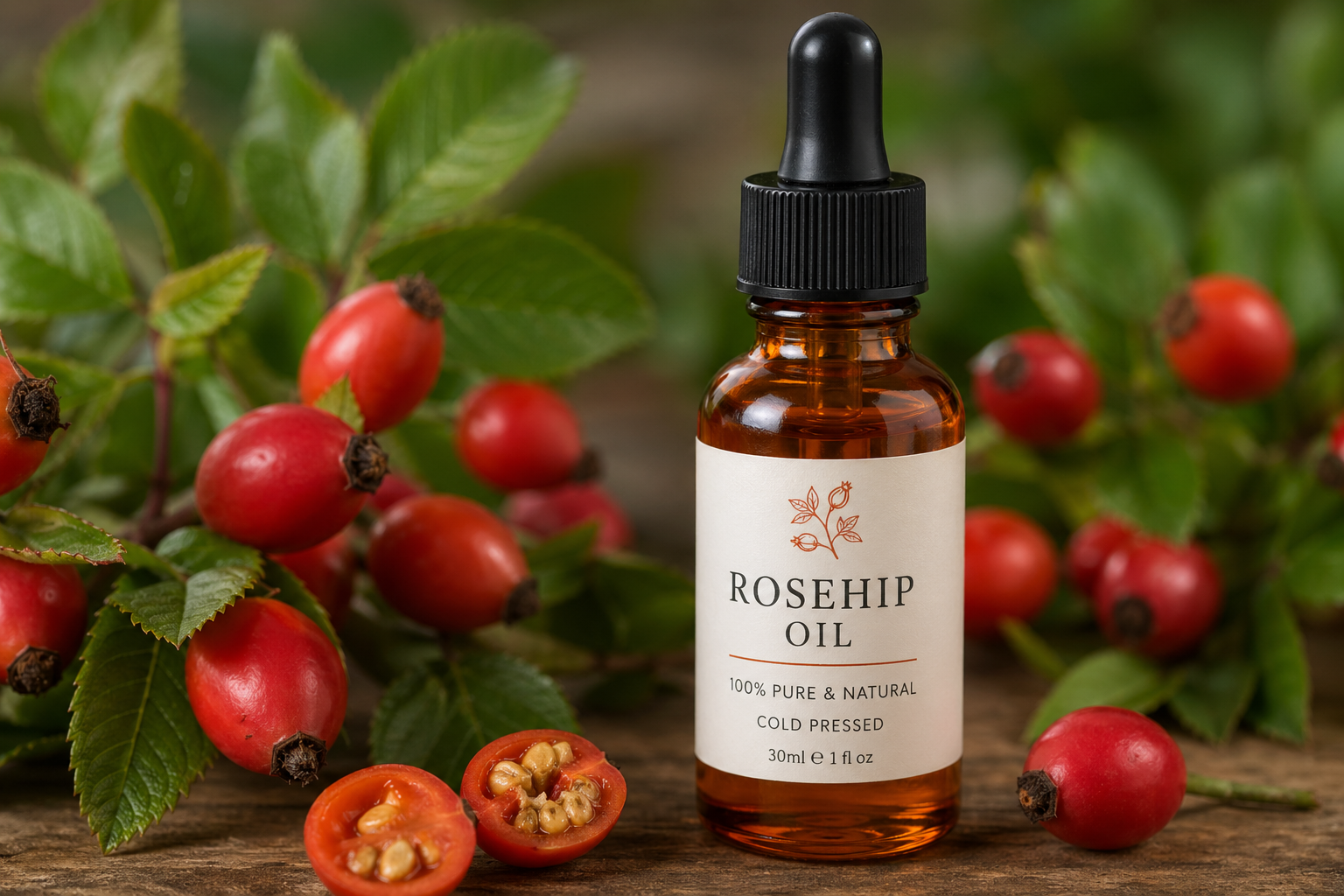
Organic cold-pressed rosehip seed oil is one of the most studied plant oils in cosmetic dermatology. It contains trans-retinoic acid equivalents, essential fatty acids (omega-3 and omega-6), and vitamin C precursors that work together to visibly improve skin tone and texture.
Valerón-Almazán et al. 2015 (Clinical and Cosmetic Investigational Dermatology) found that rosehip oil applied twice daily for 8 weeks significantly improved the appearance of scars, fine lines, and skin moisture compared to placebo.
Niacinamide
Niacinamide (vitamin B3) is one of the most versatile and well-tolerated actives in skin care. At 5% concentration, it visibly reduces the appearance of dark spots, minimizes the look of enlarged pores, and supports a more even skin tone.
Niacinamide at 5% concentration reduces the appearance of hyperpigmentation by up to 35% over 8 weeks, according to Bissett et al. 2005, Journal of Cosmetic Dermatology.
Green Tea Extract
Organic green tea extract (EGCG) is a potent antioxidant that helps neutralize free-radical damage from UV exposure and pollution. Kim et al. 2006 (International Journal of Dermatology) found that green tea polyphenols help inhibit UV-induced matrix metalloproteinase expression — the enzyme process linked to the visible breakdown of collagen in skin.
Plant-Derived Hyaluronic Acid
Hyaluronic acid derived through fermentation (rather than animal extraction) holds up to 1,000 times its weight in water, according to Stern et al. 2004 (Journal of Controlled Release). In organic formulas, you get this hydration powerhouse without the synthetic stabilizers often added to conventional versions.
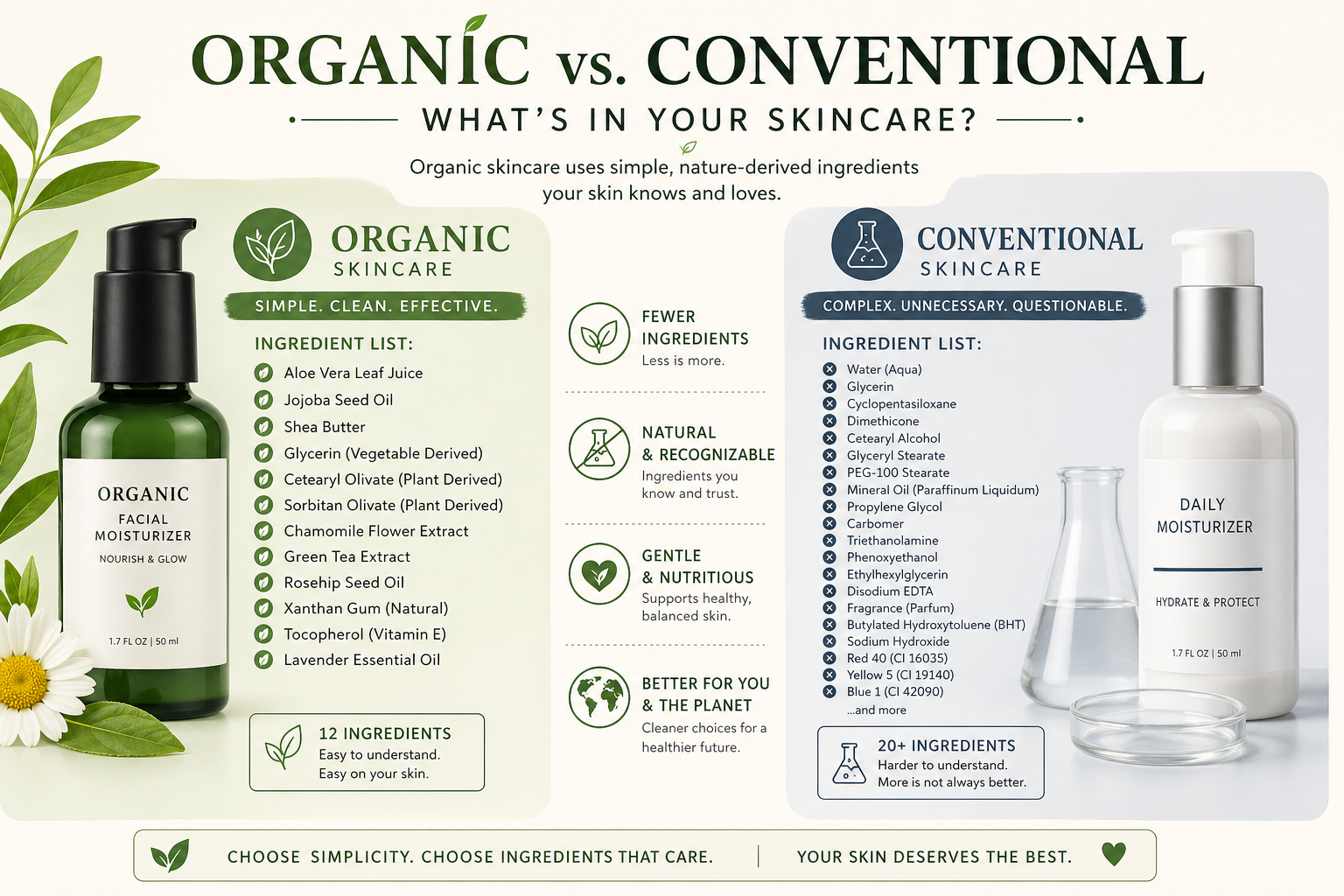
Fewer Ingredients, Fewer Triggers — The Case for Simpler Formulas
The average conventional skin care product contains 15–50 ingredients. Many of those are synthetic stabilizers, emulsifiers, and preservatives that exist to extend shelf life or improve texture — not to benefit your skin. More ingredients means more potential triggers for sensitive or reactive skin.
Organic formulas tend to be shorter and more purposeful. When you can read and recognize every ingredient on the label — Rosa canina (rosehip), Simmondsia chinensis (jojoba), Camellia sinensis (green tea) — you’re in a much better position to identify what your skin loves and what it doesn’t.
This matters especially if you have eczema, rosacea, or contact dermatitis. A 2021 review in the Journal of the European Academy of Dermatology and Venereology (Mowitz et al. 2021) identified fragrance and preservatives as the two most common causes of allergic contact dermatitis from cosmetics. Both are dramatically reduced or eliminated in certified organic formulations.
Patch-testing is still essential, even with organic products. Natural ingredients like essential oils, citrus extracts, and certain plant proteins can trigger reactions in sensitive individuals. Always test a new product on your inner arm for 24–48 hours before applying to your face.
how to patch test a new skin care product
Better for Your Skin — And the Planet You Live On
Choosing organic skin care isn’t just a personal health decision. Conventional cosmetic manufacturing contributes to water pollution, soil degradation, and biodiversity loss through synthetic chemical runoff and non-biodegradable packaging.
Certified organic farming practices build soil health, reduce synthetic chemical load in waterways, and support biodiversity. When you choose a COSMOS-certified organic product, you’re supporting supply chains that are audited for environmental impact — not just ingredient sourcing.
On the animal testing front: most certified organic brands are also cruelty-free, because the ingredient safety profile of plant-based formulas is already well-established. The EU banned cosmetic animal testing in 2013. In the US, Leaping Bunny certification is the gold standard — look for it alongside your organic certification seal.
Microplastics are another growing concern. Many conventional exfoliants and formulas contain synthetic polymers that wash into waterways and have been detected in marine ecosystems. Organic exfoliants use biodegradable alternatives — bamboo powder, rice bran, oat flour — that break down naturally.
How to Actually Shop for Organic Skin Care (Without Getting Greenwashed)
“Organic” on a label doesn’t always mean what you think. Greenwashing — using natural-sounding language and earthy packaging to imply organic credentials that don’t exist — is rampant in the beauty industry. Here’s how to shop smart:
- Look for third-party certification seals: USDA Organic, COSMOS Organic, Ecocert, or NSF/ANSI 305. These require independent auditing.
- Ignore “natural,” “botanical,” and “plant-based” as standalone claims — these are unregulated marketing terms with no legal definition in cosmetics.
- Read the INCI ingredient list: Ingredients are listed in descending order of concentration. If water (aqua) is first and your “organic rosehip oil” is near the bottom, you’re getting a trace amount.
- Check the EWG Skin Deep database: Free tool that rates over 90,000 products for ingredient safety concerns.
- Understand “made with organic ingredients”: This USDA designation means 70–94% organic content — still meaningful, but not the same as the full USDA Organic seal.
- Shorter ingredient lists are often better: Especially for sensitive skin. If you can’t identify what most ingredients are, that’s worth investigating.
Before buying any new skin care product, ask:
- Does it carry a recognized third-party organic certification?
- Can I read and recognize the ingredient list?
- Is “fragrance” or “parfum” listed? (If yes, ask why.)
- Is the brand cruelty-free certified (Leaping Bunny)?
- Does the packaging minimize plastic waste?
If you answer yes to the first two and no to the third, you’re in good shape.
Build Your Organic Skin Care Routine
Ready to make the switch? Here’s a simple framework for building an effective organic routine — morning and evening — using clean, certified ingredients your skin will actually thank you for.
Morning routine: Gentle organic cleanser → antioxidant serum (vitamin C or green tea) → organic moisturizer → SPF (mineral, zinc oxide-based)
Evening routine: Double cleanse (oil cleanser + gentle foaming cleanser) → treatment serum (niacinamide or rosehip oil) → organic night moisturizer or facial oil
Start with one product swap at a time — your skin needs time to adjust to new formulas, and introducing everything at once makes it impossible to know what’s working.
Not sure which organic products are right for your skin type?
Take our 2-minute skin quiz and get a personalized organic routine recommendation →
Find Your Organic Routine
Frequently Asked Questions About Organic Skin Care
Are organic skin care products actually better for your skin?
Organic skin care products are formulated without synthetic pesticides, parabens, or artificial fragrances — ingredients linked to skin irritation and hormone disruption. Many certified organic ingredients, like rosehip oil and green tea extract, have peer-reviewed evidence supporting their ability to visibly improve skin texture, tone, and hydration over time.
What does “certified organic” mean on a skin care label?
A “certified organic” label means the product’s ingredients were grown without synthetic pesticides or fertilizers and verified by a third-party certifier like USDA, COSMOS, or Ecocert. In the US, a product must contain at least 95% organically produced ingredients to carry the USDA Organic seal.
Do organic skin care products work as well as conventional ones?
Yes — and in many cases, better. Organic ingredients like vitamin C from kakadu plum, retinol alternatives from rosehip, and niacinamide from natural sources deliver measurable results. Without synthetic fillers diluting the formula, you often get a higher concentration of active botanicals per application.
Can organic skin care products cause allergic reactions?
Natural doesn’t automatically mean reaction-free. Some people are sensitive to botanical ingredients like essential oils or plant extracts. However, organic products typically use fewer total ingredients, making it easier to identify and avoid your personal triggers. Always patch-test a new product on your inner arm for 24–48 hours before full application.
What ingredients should I avoid in conventional skin care products?
Key ingredients to watch for include parabens (methylparaben, propylparaben), sodium lauryl sulfate (SLS), synthetic fragrances listed as “parfum,” formaldehyde-releasing preservatives, and oxybenzone in sunscreens. The Environmental Working Group’s Skin Deep database rates over 90,000 products for ingredient safety.
Is organic skin care better for sensitive skin?
Generally, yes. Organic formulas avoid the synthetic dyes, artificial fragrances, and harsh preservatives most commonly associated with contact dermatitis and sensitivity flares. Shorter, plant-based ingredient lists are easier for reactive skin to tolerate. Look for fragrance-free certified organic options if your skin is particularly reactive.
References
- Bos JD & Meinardi MM. 2000. “The 500 Dalton rule for the skin penetration of chemical compounds and drugs.” Experimental Dermatology.
- Matta MK et al. 2019. “Effect of sunscreen application under maximal use conditions on plasma concentration of sunscreen active ingredients.” JAMA.
- Bissett DL et al. 2005. “Niacinamide: A B vitamin that improves aging facial skin appearance.” Journal of Cosmetic Dermatology.
- Valerón-Almazán P et al. 2015. “Evolution of post-surgical scars treated with pure rosehip seed oil.” Clinical and Cosmetic Investigational Dermatology.
- Kim J et al. 2006. “Green tea polyphenols and UV-induced matrix metalloproteinase expression.” International Journal of Dermatology.
- Stern R et al. 2004. “Hyaluronic acid: a key molecule in skin aging.” Journal of Controlled Release.
- Mowitz M et al. 2021. “Fragrance and preservatives as causes of allergic contact dermatitis.” Journal of the European Academy of Dermatology and Venereology.
- Environmental Working Group. 2025. Skin Deep Cosmetics Database. ewg.org/skindeep.