New to a sensitive-skin routine? Start with our complete sensitive-skin routine guide — all 7 steps, in order.
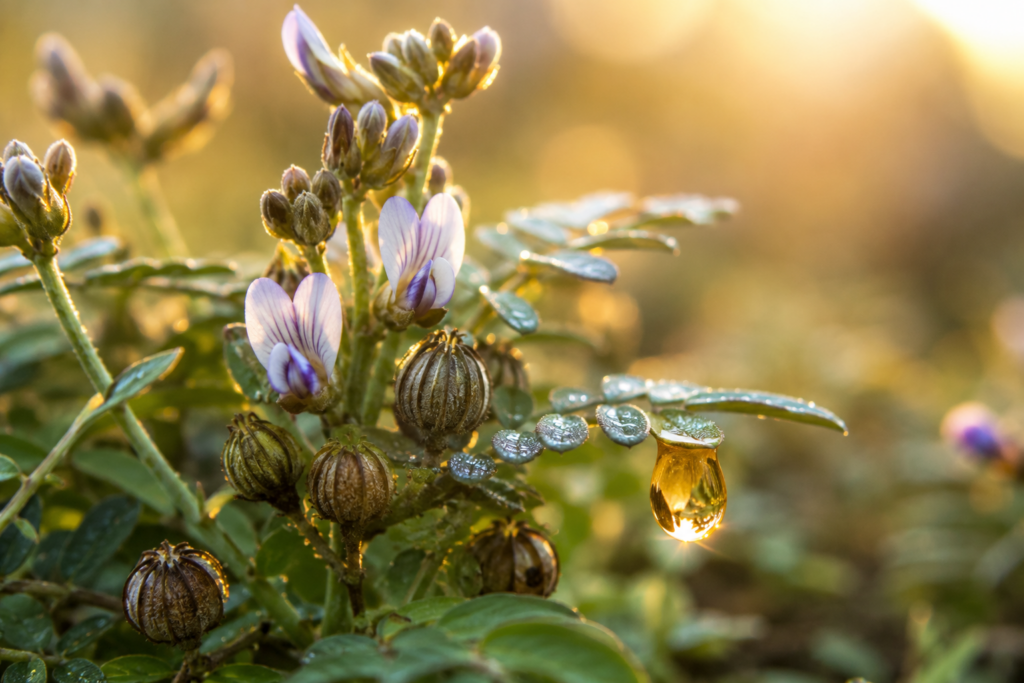
Bakuchiol is a plant compound from the seeds of Psoralea corylifolia that signals skin cells through the same retinoic-acid pathway retinol uses, which is why it can reduce the appearance of fine lines and even out tone without the flaking, stinging, and redness retinol often triggers. In a 2019 randomized, double-blind trial (44 participants, 12 weeks), it performed comparably to over-the-counter retinol on wrinkle depth and pigmentation, with fewer reports of irritation. The honest tradeoff: it is gentler, so for most skin it also works more slowly, and it is not a substitute for prescription tretinoin.
Our pick from the OSC shelf
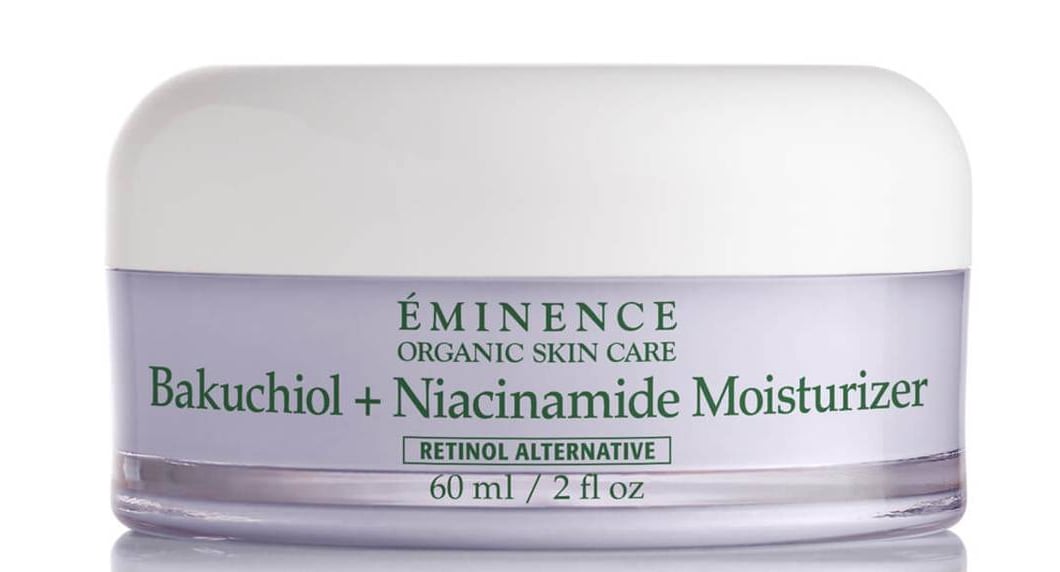
Eminence Organics Bakuchiol + Niacinamide Moisturizer — $69
The organic age-corrective product we curate and recommend in-house: bakuchiol working on the retinoic-acid pathway to soften the look of fine lines, paired with niacinamide to help calm redness and reinforce the skin barrier. One moisturizer, no retinoids, formulated to the professional-grade standard we stand behind for sensitive, reactive skin.
Heads up: as of this writing it is on backorder — check the product page to get notified when it restocks, or browse the Eminence Organic Skin Care collection. The Amazon picks below are the options you can buy right now.
What the research shows
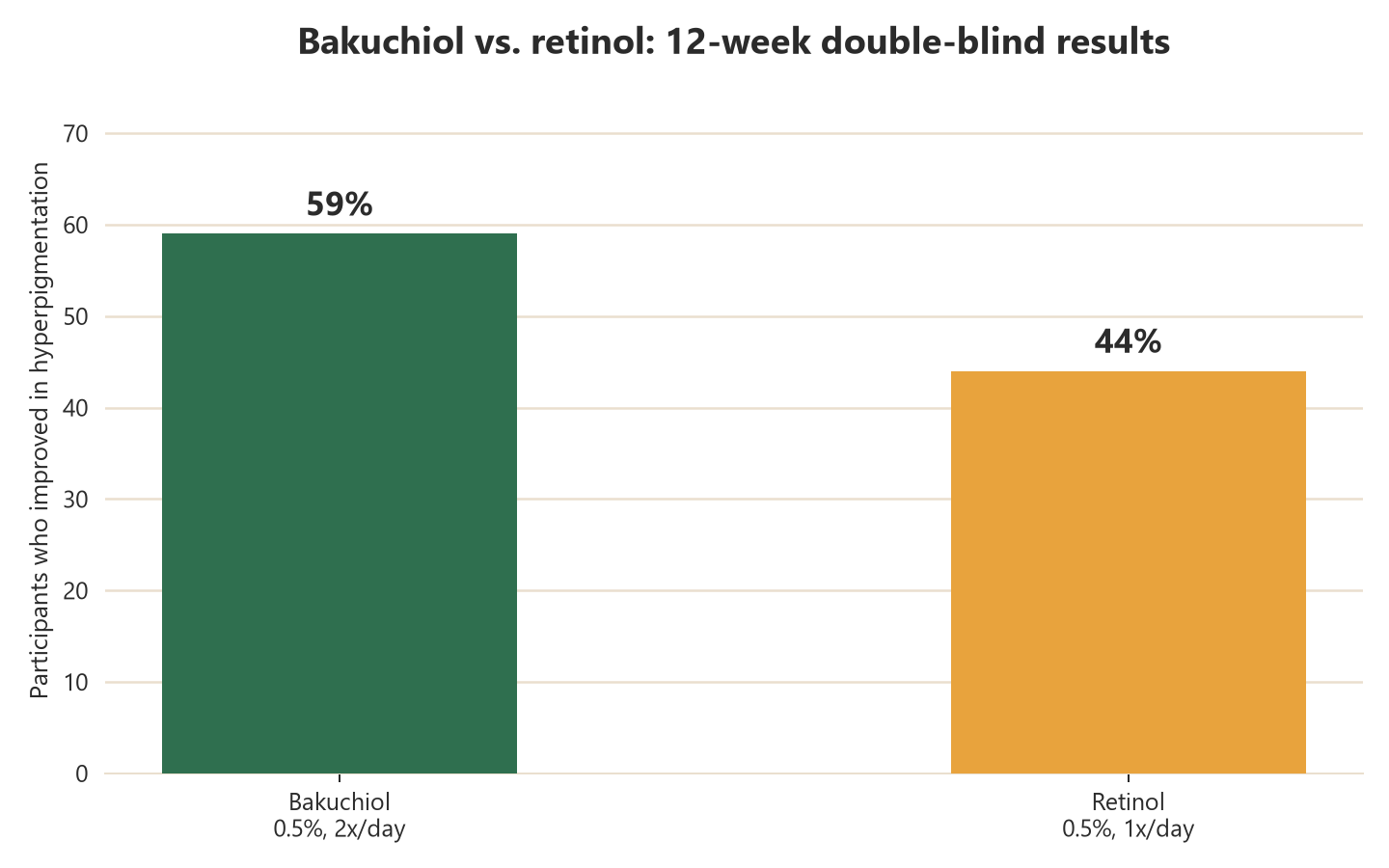
In a randomized, double-blind, 12-week trial led by Simran Dhaliwal and colleagues at UC Davis (British Journal of Dermatology), twice-daily bakuchiol matched once-daily retinol almost exactly on wrinkle reduction and edged it out on hyperpigmentation — 59% of bakuchiol users improved versus 44% of retinol users — while the retinol group reported significantly more scaling and burning at every single check-in across the study. It is exactly why a well-formulated bakuchiol serum has earned the term “retinol alternative” for reactive skin — and what separates a real head-to-head clinical comparison from a plant extract riding on the word “natural” alone.
How to choose a bakuchiol product
Check the concentration, and whether it’s purified bakuchiol
The clinical results most often cited used 0.5% bakuchiol; well-formulated serums usually list 0.5%–2%. Favor labels that state “bakuchiol” as the active rather than raw Psoralea corylifolia (babchi) seed oil as the hero, since raw babchi can carry photosensitizing psoralens.
Confirm it is genuinely retinol-free
Some products pair “bakuchiol” with retinol, retinaldehyde, or retinyl esters, which reintroduces the irritation you were avoiding and rules the product out during pregnancy. Scan the INCI list for retinol, retinal, and retinyl before you buy. Brand terms like “phyto-retinol” or “beta-retinol” are marketing names for bakuchiol, not added retinoids — but verify the ingredient list to be sure.
Look at the supporting actives
Niacinamide, peptides, ceramides, hyaluronic acid, and squalane pair well with bakuchiol and help support the skin barrier. If your skin is reactive, hold off on stacking bakuchiol with strong acids or actual retinol at first; vitamin C in the morning and bakuchiol at night is a simple, low-friction split.
Match the format to your skin
Lightweight serums absorb fast and layer well for combination or oily skin; richer creams and facial oils suit dry or mature skin. Format affects both comfort and how much active stays on the skin.
Read the pregnancy and nursing note honestly
Bakuchiol contains no retinoids, which is why it is a common choice when retinol is off the table. But cosmetic actives are rarely studied in pregnancy and bakuchiol has no pregnancy-specific safety data, so it is commonly considered a reasonable alternative rather than a proven-safe one. Clear any product with your OB or dermatologist before starting.
Patch-test before full-face use
Apply a small amount to the inner forearm or behind the ear for three to five nights before bringing a new active to your face. Sensitive and rosacea-prone skin especially benefits from this slow introduction.
The 8 best bakuchiol & clean retinol alternatives you can buy on Amazon
Every pick below was checked to confirm it contains no retinol, retinaldehyde, or retinyl esters. Each owns a distinct use-case so you can match it to your skin and budget.

1. Acure Radically Rejuvenating Dual Phase Bakuchiol Serum
Acure pairs bakuchiol with blue tansy and turmeric in a two-layer formula you shake before use. It is vegan, fragrance-free, and the most accessible entry point for finding out whether a plant-based retinol alternative suits your skin before spending more. Use it at night and follow with a moisturizer.
- Bakuchiol (no retinol) + blue tansy, turmeric · bi-phase serum
- Vegan, fragrance-free · pregnancy: commonly considered safe, confirm with your provider
- Tradeoff: concentration not disclosed; oil layer can look shiny — best at night
Check price on Amazon →~$22–25

2. Dermelect Flawless Bakuchiol Treatment
Dermelect’s cushiony cream combines bakuchiol with squalane, hyaluronic acid, and panthenol to support the barrier while it works on tone and the look of fine lines. It is fragrance-free and rated roughly 91% top-allergen-free, which is why it is frequently chosen for reactive skin and for pregnancy and nursing. The product name is the brand’s own; it makes no medical promise.
- Bakuchiol (no retinol) + squalane, hyaluronic acid, panthenol · cream
- Fragrance-free, ~91% top-allergen-free · pregnancy: commonly considered safe, confirm with your provider
- Tradeoff: contains dimethicone + ginger extract — patch-test the botanicals

3. Herbivore Moon Fruit Bakuchiol + Peptides Retinol Alternative Serum
Herbivore’s Moon Fruit pairs bakuchiol with peptides and fruit extracts in a clean, prestige formula — the ingredient-purist’s pick. It works on the retinoic-acid pathway to soften the look of fine lines and even tone while staying free of synthetic fragrance and retinoids. A considered splurge for sensitive skin that wants results without the irritation.
- Bakuchiol (no retinol) + peptides + fruit extracts · serum
- Synthetic-fragrance-free, vegan · pregnancy: commonly considered safe, confirm with your provider
- Tradeoff: prestige price — a considered splurge
Check price on Amazon →~$54–68

4. KORA Organics Plant Stem Cell Retinol Alternative Serum
KORA Organics carries COSMOS-certified-organic and EWG VERIFIED status, the strongest clean-and-organic credential on this list, pairing bakuchiol with alfalfa extract in a milky, dual-action serum. It works on the retinoic-acid pathway to ease the look of fine lines and uneven tone while staying gentle. Make sure you are buying the Plant Stem Cell Retinol Alternative, not the Super A serum, which contains actual retinoids.
- Bakuchiol (no retinol) + alfalfa stem-cell extract · milky serum
- COSMOS-certified organic, EWG Verified · pregnancy: commonly considered safe, confirm with your provider
- Tradeoff: brand also sells a “Super A” retinoid serum — buy the right one
Check price on Amazon →~$58–68
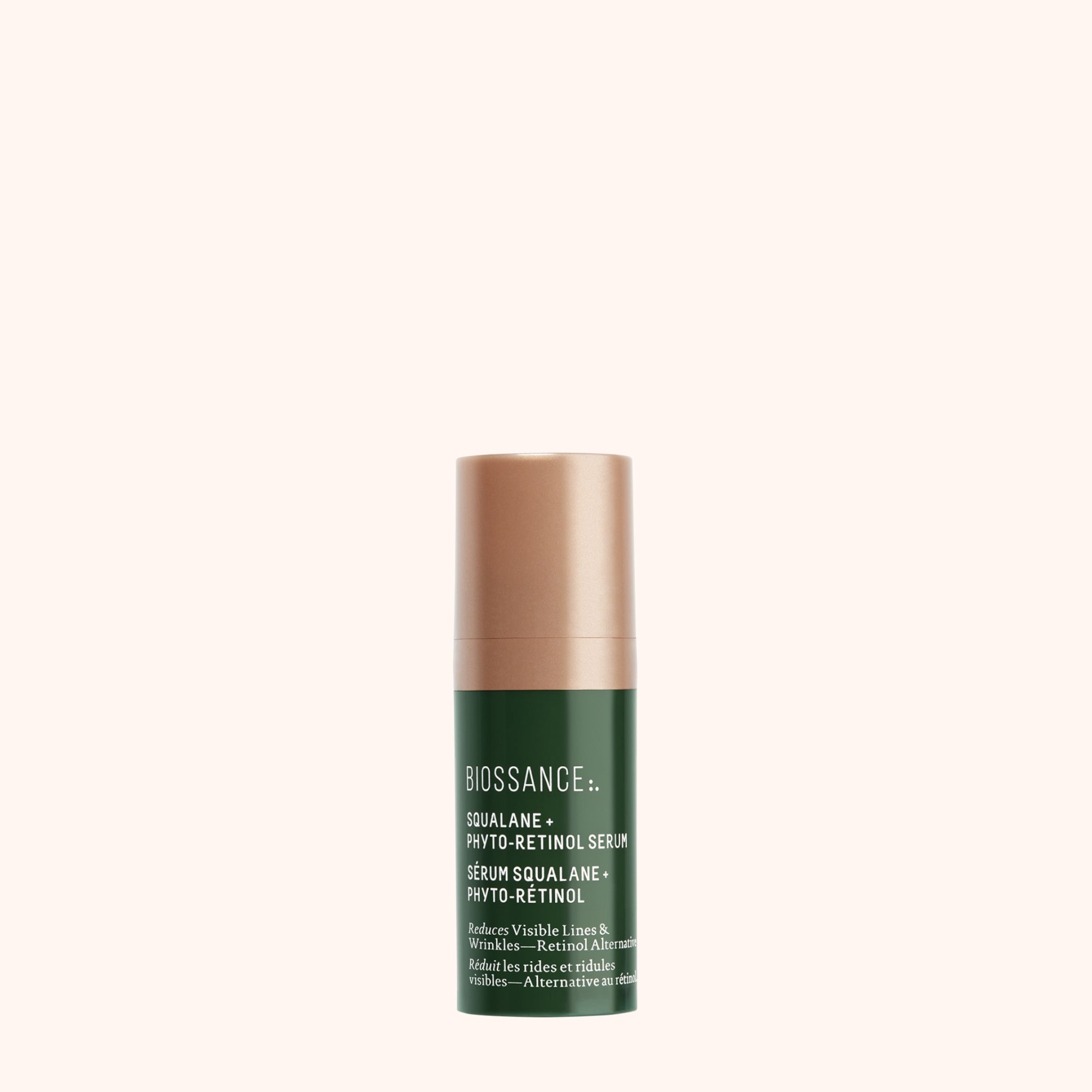
5. Biossance Squalane + Phyto-Retinol Serum
Biossance blends bakuchiol, which it calls “phyto-retinol” as its brand term for the plant compound, with sugarcane-derived squalane and niacinamide. The result is hydrating and lightweight, a sensible fit for combination skin. To be clear: the ingredient list confirms bakuchiol with no retinol, retinaldehyde, or retinyl esters, despite the listing’s auto-generated tag.
- Bakuchiol (“phyto-retinol”, no retinol) + squalane + niacinamide · serum
- Lightweight, hydrating · pregnancy: commonly considered safe, confirm with your provider
- Tradeoff: Amazon listing auto-tags “retinol” — a data artifact, not an ingredient
Check price on Amazon →~$54–72

6. Alpyn Beauty PlantGenius Melt Moisturizer with Bakuchiol
For readers who prefer a moisturizer over a serum, Alpyn delivers bakuchiol alongside ceramides, squalane, and hyaluronic acid in one barrier-supporting cream. The ceramide-and-squalane base makes it a comfortable choice for dry or mature skin that wants its plant-based retinol alternative in a single nighttime step.
- Bakuchiol (no retinol) + ceramides + squalane + hyaluronic acid · cream
- Barrier-supporting · pregnancy: commonly considered safe, confirm with your provider
- Tradeoff: a fixed moisturizer gives less control over layering than a serum
Check price on Amazon →~$48–60

7. Good Molecules Bakuchiol Oil Blend for Dry Skin
At around $10, Good Molecules suspends bakuchiol in rosehip and chia seed oils for the price-sensitive reader with dry skin. Honest framing: the workhorse here is the rosehip oil and its barrier-nourishing fatty acids, with bakuchiol as a supporting active, so if you want a higher, stated bakuchiol percentage the Herbivore is a better fit. Fragrance-free with a short ingredient list.
- Bakuchiol in rosehip seed oil (~80%) + chia seed oil (no retinol) · facial oil
- Fragrance-free, short ingredient list · pregnancy: commonly considered safe, confirm with your provider
- Tradeoff: rosehip oil is the hero; can feel rich on oily skin

8. Burt’s Bees Renewal Firming Eye Cream with Bakuchiol
Burt’s Bees brings bakuchiol to the eye area with a 99%-natural, drugstore-accessible firming eye cream, a gentle option for the thin skin around the eyes where many people cannot use retinol. It pairs bakuchiol with vitamin E to support the look of firmness over time. Patch-test first, since this area reacts more readily than the rest of the face.
- Bakuchiol (no retinol) + vitamin E · eye cream
- 99% natural origin · pregnancy: commonly considered safe, confirm with your provider
- Tradeoff: the eye area reacts more readily — patch-test even gentle formulas
Check price on Amazon →~$22–29
Frequently asked questions
- Is bakuchiol as effective as retinol?
- In the head-to-head trial most often cited (44 people, 12 weeks, 2019), 0.5% bakuchiol matched 0.5% retinol on reducing the appearance of wrinkles and dark spots, with less peeling and stinging. Keep the context in mind: it was one small study comparing bakuchiol to over-the-counter retinol, not prescription tretinoin, and the changes build gradually. For sensitive skin that cannot tolerate retinol, a comparable result you can actually wear is worth more than a stronger one you cannot.
- Is bakuchiol safe during pregnancy?
- Bakuchiol contains no retinoids, which is why many people choose it when retinol and prescription retinoids are avoided in pregnancy and nursing. The honest caveat: cosmetic actives are seldom tested in pregnancy, and bakuchiol has no pregnancy-specific safety studies, so it is commonly considered a reasonable alternative rather than a proven-safe one. Clear any product with your OB or dermatologist before you start.
- Can you use bakuchiol with retinol or vitamin C?
- With vitamin C, yes; bakuchiol is stable enough to layer with most actives, though many people simply use vitamin C in the morning and bakuchiol at night. With retinol you also can, and some formulas combine the two to soften irritation. But if your goal is a retinol-free routine for sensitive skin or pregnancy, read the label and skip anything that lists retinol, retinal, or retinyl.
- Should I use bakuchiol in the morning or at night?
- Either works. Unlike retinol, bakuchiol is not broken down by light, so it fits a morning or an evening routine. Some people use it twice daily, which mirrors how it was applied in the 2019 study. Daily sunscreen every morning still matters.
- How long does bakuchiol take to work?
- Plan on 8 to 12 weeks of consistent use before judging fine lines and tone, with early smoothness and texture changes sometimes showing around week 4. Because it is gentler than retinol, it rewards patience. Using it consistently matters more than using a lot.
- Does bakuchiol cause purging?
- Bakuchiol is not associated with the “purge” some people get from retinoids, because it does not accelerate cell turnover in the same aggressive way. Most sensitive-skin users tolerate it without an initial breakout, though any new product can occasionally cause congestion, which is why a patch test first is worth the few days.
Related reading: Eminence Organic Skin Care · best organic & mineral facial sunscreens.