Written by Clelia Gakshteyn
A solid organic skin care summertime routine centers on four steps: a gentle low-pH cleanser, a vitamin C antioxidant serum, a lightweight organic moisturizer, and a broad-spectrum mineral SPF 30+. Applied consistently morning and evening, this routine helps visibly protect skin from UV-related dark spots, dehydration, and premature aging all season long.
Why Your Skin Behaves Differently in Summer
Summer isn’t just hotter — it’s a completely different environment for your skin. Higher UV index, increased humidity, sweat, and chlorine exposure all shift how your skin produces oil, retains moisture, and responds to products.
Your sebaceous glands ramp up production when temperatures rise, which means your trusty winter moisturizer may suddenly feel suffocating. At the same time, UV radiation is at its annual peak, making photoprotection the single most important step in your routine.
The good news? A few targeted swaps to your existing organic routine are all it takes to keep your skin balanced, protected, and genuinely glowing — no synthetic chemicals required.
What UV Radiation Actually Does to Your Skin
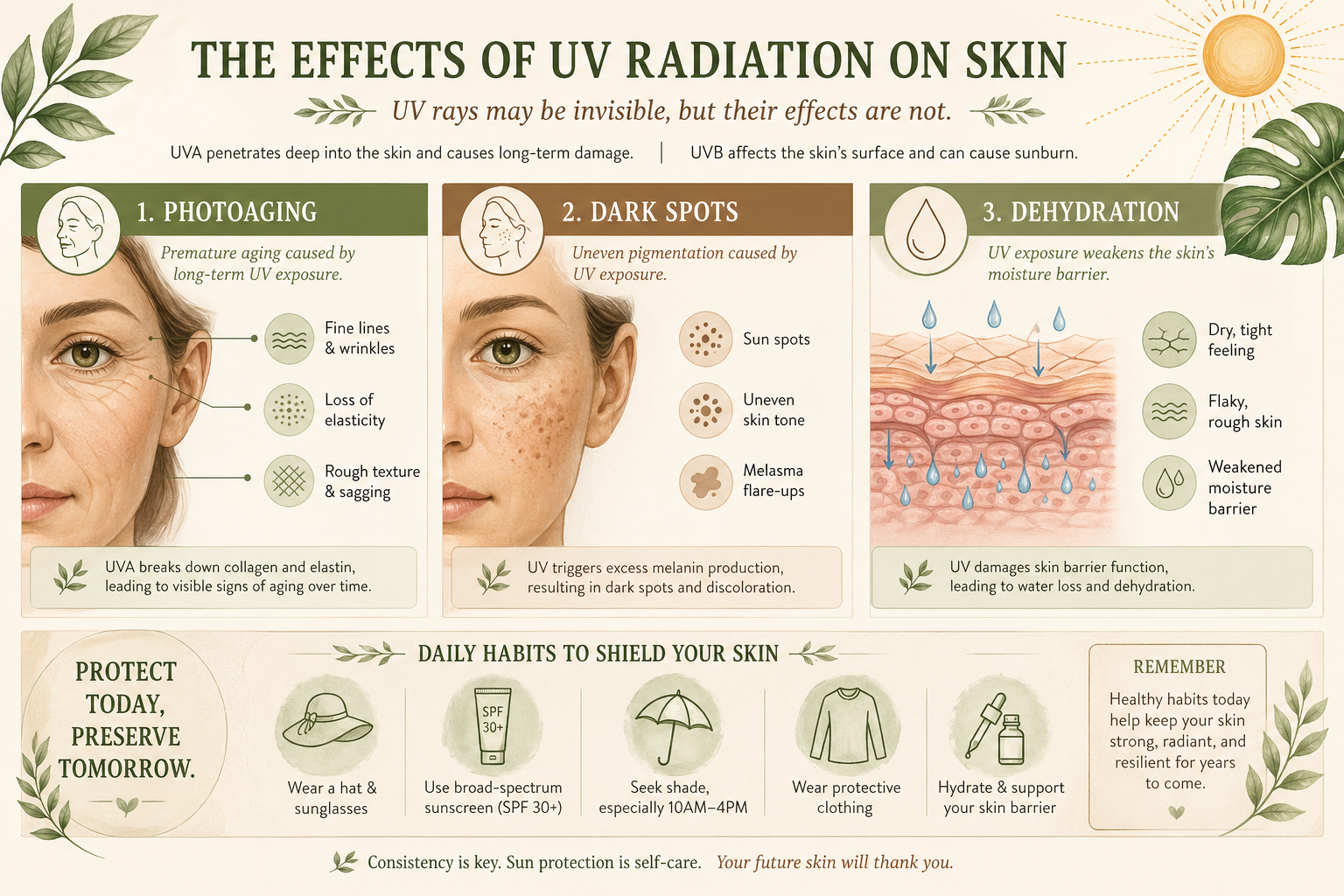
UV radiation arrives in two forms that affect your skin differently. UVB rays cause the visible redness and burning you feel on the surface. UVA rays penetrate deeper into the dermis, where they break down collagen and elastin over time — the main driver of photoaging.
Unprotected UV exposure triggers a cascade of damage: free radical generation, DNA strand breaks, and melanin overproduction. Each of these contributes to the visible signs of sun damage you want to avoid.
📌 Quotable Fact: “Daily broad-spectrum SPF 30 use prevents approximately 24% of visible signs of aging over a 4.5-year period, according to Hughes et al. 2013, Annals of Internal Medicine.”
The 5 Most Common Summer Skin Concerns (and How Organic Ingredients Help)
1. Photoaging and Fine Lines
UV exposure is responsible for up to 80% of visible facial aging, including fine lines, loss of firmness, and uneven texture (Flament et al. 2013, Clinical, Cosmetic and Investigational Dermatology). This isn’t inevitable — it’s largely preventable with consistent photoprotection and antioxidant support.
Organic ingredients like rosehip seed oil and bakuchiol (a plant-based retinol alternative) help support a smoother, more even-looking complexion without the photosensitivity that makes synthetic retinol tricky in summer.
2. Dark Spots and Hyperpigmentation
When UV rays trigger excess melanin production, the result is dark spots, sunspots, and uneven skin tone — especially on areas that get the most sun exposure like your cheeks, nose, and décolletage. Melanin deposits can take months to fade without targeted treatment.
Niacinamide at 5% visibly reduces the appearance of dark spots by interfering with melanin transfer to skin cells. Vitamin C provides additional brightening support by neutralizing the free radicals that trigger melanin overproduction in the first place.
⚠️ Safety Note: If you notice a mole changing in size, shape, or color, or a new growth that bleeds or doesn’t heal, see a board-certified dermatologist promptly. Organic skincare supports healthy-looking skin — it does not diagnose or treat skin cancer. Annual skin checks are non-negotiable.
3. Dehydration (Yes, Even in Humid Weather)
Sweating depletes your skin’s water reserves faster than you’d expect. Transepidermal water loss (TEWL) increases in heat, meaning your skin loses moisture to the air even when the air itself feels humid. The fix isn’t a heavier cream — it’s a smarter hydration strategy.
Layer a hyaluronic acid serum (ideally with multiple molecular weights) under a lightweight moisturizer to draw water into the skin and seal it there. Hyaluronic acid holds up to 1,000 times its weight in water, according to Stern et al. 2004, Journal of Controlled Release.
4. Summer Breakouts
Heat + sweat + sunscreen residue = a recipe for clogged pores. If you’re suddenly breaking out more in summer, your routine — not your skin — is likely the culprit. Heavy oils and occlusive balms that worked beautifully in winter can trap debris against your skin when you’re sweating.
Switch to non-comedogenic organic oils like squalane (derived from sugarcane or olives) or sea buckthorn, and double-check that your mineral sunscreen is labeled non-comedogenic. A gentle double cleanse in the evening removes sunscreen and sweat without stripping your barrier.
5. Increased Sensitivity and Redness
Heat dilates blood vessels and can make skin more reactive, flushed, and prone to irritation. If you have rosacea or sensitive skin, summer can be particularly challenging. Green tea polyphenols help minimize the look of redness, and oat extract (colloidal oatmeal) is an FDA-recognized skin protectant that soothes the appearance of irritated skin.
The Best Organic Ingredients for Your Summer Routine
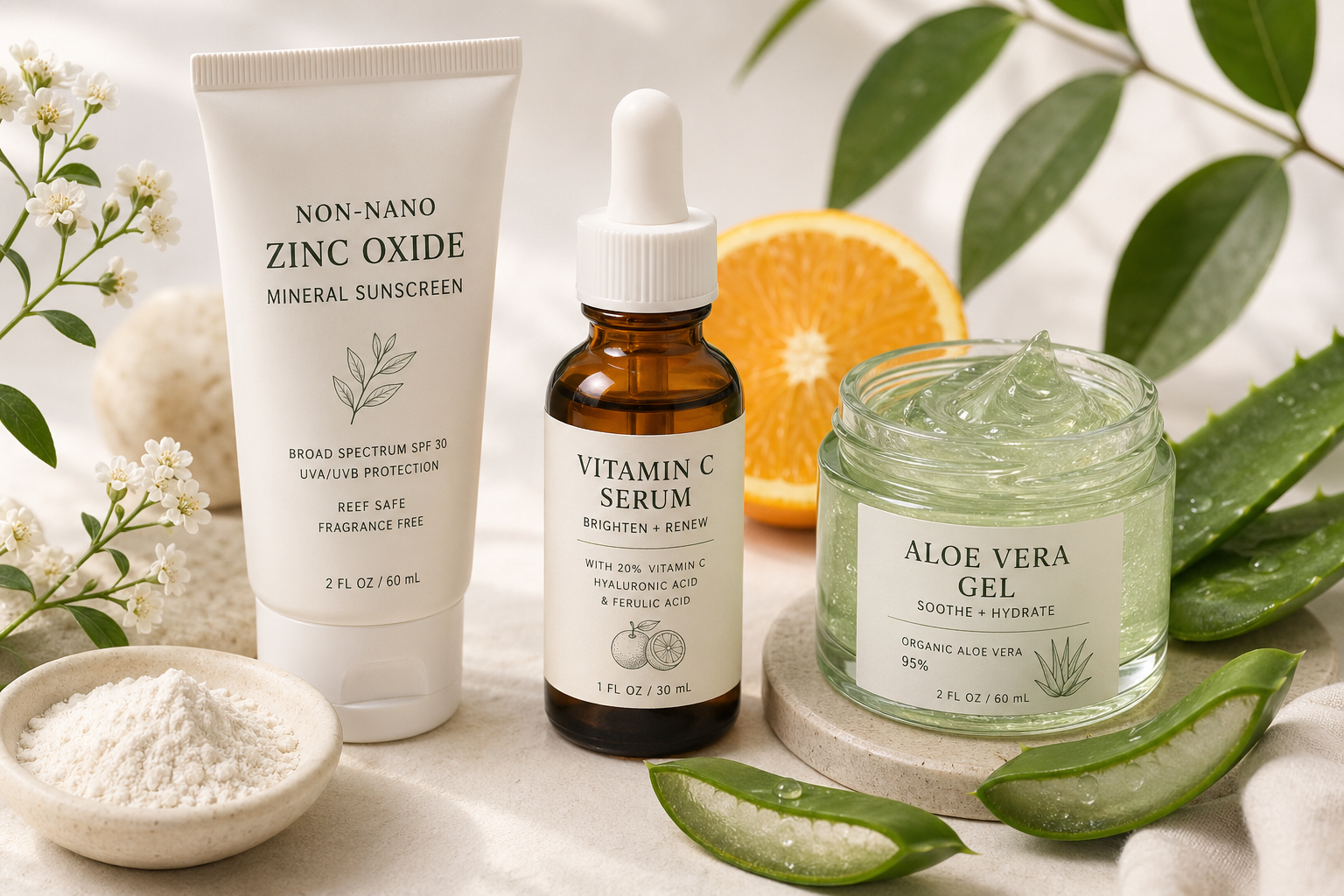
Non-Nano Zinc Oxide — Your SPF Foundation
Non-nano zinc oxide is the cleanest, most effective mineral UV filter available. It sits on top of skin and physically reflects both UVA and UVB rays without being absorbed into the bloodstream — a key concern with chemical UV filters like oxybenzone (Matta et al. 2019, JAMA).
It’s also reef-safe, making it the responsible choice if you’re spending time near the ocean. Look for at least 15–20% concentration for reliable broad-spectrum SPF 30+ coverage. The “non-nano” designation matters — nano-sized particles raise different absorption concerns.
mineral sunscreen guide
Vitamin C (L-Ascorbic Acid) — Your Antioxidant Shield
L-ascorbic acid is the most bioavailable form of vitamin C for skin. Applied in the morning, it neutralizes UV-generated free radicals before they can damage collagen and trigger melanin overproduction. Think of it as a second line of defense working alongside your SPF.
Vitamin C also helps visibly brighten the appearance of existing dark spots over time. A stable 10–15% concentration in a low-pH formula (between 2.5 and 3.5) is the sweet spot for efficacy without irritation. Store your vitamin C serum away from direct sunlight to prevent oxidation.
📌 Quotable Fact: “Topical vitamin C at 10% concentration, combined with SPF, provides significantly greater photoprotection than SPF alone, according to Lin et al. 2003, Journal of Investigative Dermatology.”
Niacinamide — The Multi-Tasker
Niacinamide (vitamin B3) is one of the most versatile ingredients you can add to your summer routine. At 5%, it visibly reduces the appearance of dark spots, minimizes the look of enlarged pores, and helps regulate sebum production — all concerns that peak in summer.
Niacinamide at 5% concentration reduces the appearance of hyperpigmentation by up to 35% over 8 weeks, according to Bissett et al. 2005, Journal of Cosmetic Dermatology. It’s also exceptionally well-tolerated, making it a great option for sensitive and combination skin types.
Aloe Vera — The Summer Soother
Organic aloe vera gel is the original summer skin ingredient — and the science backs up its reputation. It contains acemannan polysaccharides, antioxidants, and vitamins A, C, and E that help support a calm, comfortable-looking complexion after heat and sun exposure.
Keep a bottle of pure aloe vera gel in the fridge for an instant cooling treatment after a long day outdoors. It layers beautifully under moisturizer and won’t clog pores. Look for formulas where aloe vera juice or gel is the first ingredient, not a filler buried at the bottom of the list.
Rosehip Seed Oil — The Overnight Repair Oil
Cold-pressed rosehip seed oil is rich in trans-retinoic acid equivalents, essential fatty acids (linoleic and alpha-linolenic acid), and vitamin C precursors. It helps support a more even-looking skin tone and smoother texture without the photosensitivity associated with synthetic retinol.
Rosehip seed oil delivers trans-retinoic acid equivalents that support skin cell turnover without the irritation of synthetic retinol, according to Valerón-Almazán et al. 2015, Clinical and Cosmetic Investigational Dermatology. Use it in your evening routine only — it’s best applied at night when skin is in repair mode.
rosehip oil benefits guide
Your Complete Organic Summer Skin Care Routine
Here’s how to structure your routine for maximum protection and hydration — morning and evening. Each step builds on the last, so order matters.
[VIDEO_EMBED: How to Build an Organic Summer Skincare Routine — Step-by-Step Tutorial]
☀️ Morning Routine
Step 1: Gentle Low-pH Cleanser
Start with a sulfate-free, pH-balanced cleanser (ideally pH 4.5–5.5) to remove overnight oils without stripping your skin barrier. Harsh cleansers signal your skin to overproduce sebum — the last thing you want heading into a hot day.
Step 2: Vitamin C Antioxidant Serum
Apply 3–4 drops of a stable L-ascorbic acid serum to clean, slightly damp skin. Press gently — don’t rub. Allow 60 seconds to absorb before the next step. This is your free-radical defense layer.
Step 3: Lightweight Organic Moisturizer
Choose a gel-cream or water-based formula in summer. Look for hyaluronic acid, aloe vera, and niacinamide as key actives. Apply while skin is still slightly damp from the serum to lock in hydration.
Step 4: Mineral SPF 30+ (Non-Negotiable)
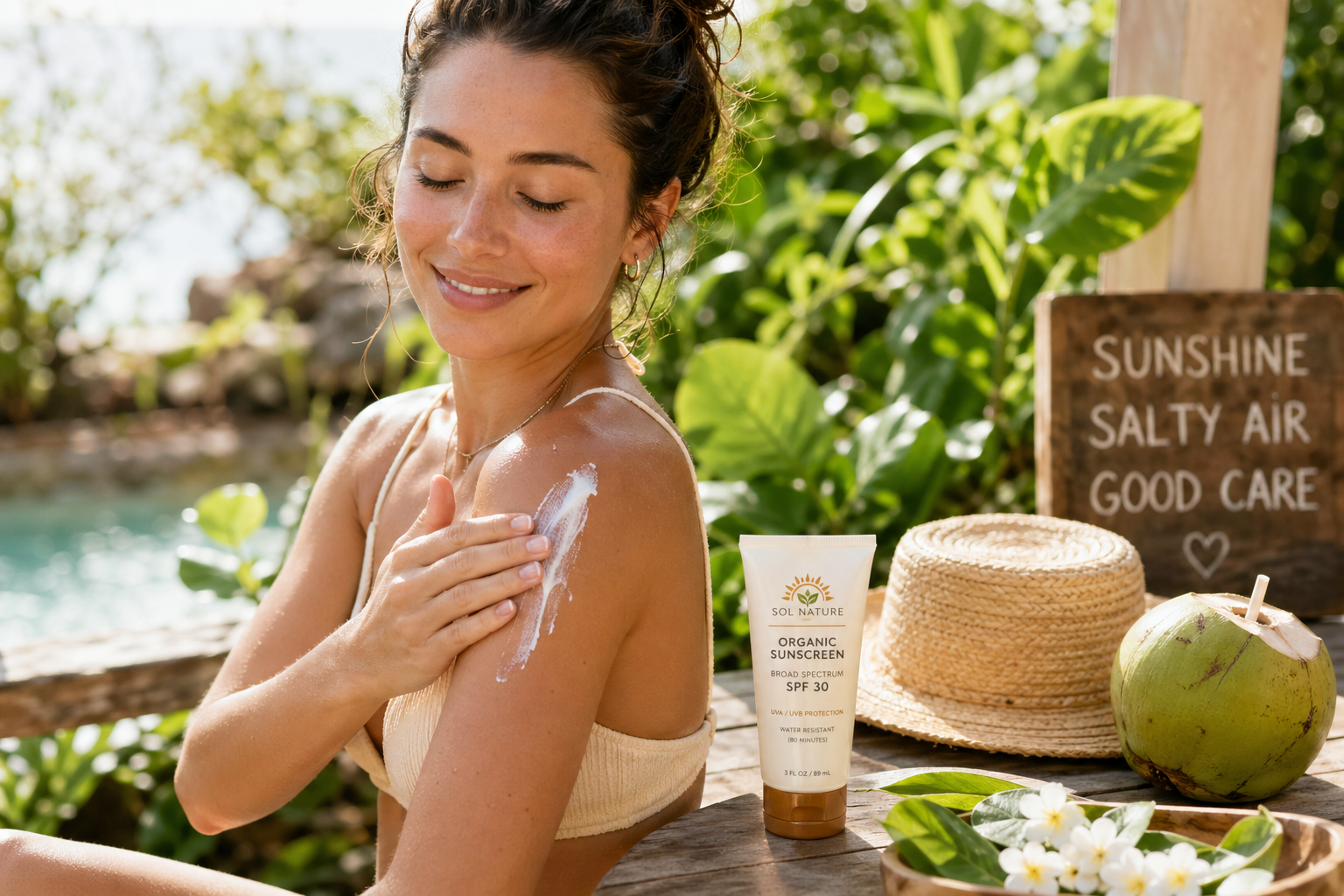
Apply a generous amount — about a quarter teaspoon for your face alone — of a non-nano zinc oxide sunscreen as the final step. Don’t forget your neck, ears, and the back of your hands. Reapply every two hours outdoors.
- ✅ Use SPF even on cloudy days — up to 80% of UV rays penetrate cloud cover
- ✅ Apply SPF 15–20 minutes before sun exposure for full activation
- ✅ Choose a water-resistant formula if you’re swimming or sweating heavily
- ✅ Lip balm with SPF 30 protects one of the most UV-vulnerable areas on your face
🌙 Evening Routine
Step 1: Double Cleanse
Start with an oil-based cleanser or micellar water to dissolve sunscreen and sweat. Follow with your gentle low-pH cleanser. This two-step process ensures your skin is truly clean without over-stripping.
Step 2: Niacinamide Toner or Serum
Evening is the ideal time for niacinamide — it helps minimize the look of pores and supports a more even tone while you sleep. Apply to clean skin before heavier treatments.
Step 3: Targeted Treatment (2–3 nights per week)
Rotate between bakuchiol serum (a plant-based retinol alternative that’s safe for summer use) and a brightening mask with ingredients like turmeric, licorice root, or kojic acid to help address the appearance of sun-related dark spots.
Step 4: Rosehip Seed Oil or Overnight Moisturizer
Seal everything in with a few drops of cold-pressed rosehip seed oil or a richer organic night cream. Skin does its most active repair work between 11pm and 3am — give it the ingredients it needs.
Organic Summer Skincare: What to Avoid
Just as important as what you add is what you remove from your summer routine. Some ingredients that work beautifully in cooler months can cause problems in heat and sun.
- 🚫 Synthetic retinol (high-strength) — increases photosensitivity; swap for bakuchiol in summer or use retinol only at night with strict SPF compliance
- 🚫 Coconut oil as a moisturizer — comedogenic rating of 4/5; can clog pores when combined with sweat and heat
- 🚫 Alcohol-heavy toners — strip the skin barrier, increasing TEWL in already dehydrating summer conditions
- 🚫 Oxybenzone and octinoxate — chemical UV filters flagged by the FDA for systemic absorption concerns (Matta et al. 2019, JAMA) and harmful to coral reefs
- 🚫 Heavy fragrance — photosensitizing compounds in synthetic fragrance can cause phototoxic reactions in sun exposure
- 🚫 Citrus essential oils (undiluted) — bergapten in bergamot and other citrus oils is strongly phototoxic; avoid in daytime products
ingredients to avoid in organic skincare
Adjusting Your Summer Routine by Skin Type
Oily and Combination Skin
Focus on gel-based hydrators and clay-containing masks (kaolin or bentonite) 1–2 times per week to help minimize the look of enlarged pores. Niacinamide is your best friend. Choose a matte-finish mineral SPF to reduce midday shine without reapplying powder over sunscreen.
Dry and Dehydrated Skin
Layer hydration: hyaluronic acid serum → ceramide moisturizer → facial oil. Don’t skip the oil step — it creates an occlusive seal that prevents TEWL in air-conditioned environments. Look for organic marula oil or sea buckthorn for dry skin types.
Sensitive and Rosacea-Prone Skin
Stick to fragrance-free, minimal-ingredient formulas. Zinc oxide is your safest SPF option — it’s less likely to cause reactions than titanium dioxide or chemical filters. Colloidal oatmeal and centella asiatica (cica) are your go-to calming ingredients. Patch test every new product before full application.
Acne-Prone Skin
Double cleansing is non-negotiable. Look for salicylic acid (BHA) in your cleanser or toner to help keep pores clear — it’s oil-soluble, so it penetrates through sebum effectively. Choose a non-comedogenic mineral SPF labeled “oil-free.” Avoid touching your face after applying sunscreen to prevent transfer to pores.
After-Sun Care: What to Do When Your Skin Has Had Too Much
Even with the best intentions, sometimes your skin gets more sun than planned. Here’s how to support your skin’s recovery with organic ingredients.
- 🌿 Cool (not cold) shower — reduces surface heat without shocking the skin
- 🌿 Chilled aloe vera gel — apply generously to sun-stressed areas; the cooling effect helps soothe the look of redness
- 🌿 Calendula extract — helps support a calm, comfortable complexion; look for it in after-sun lotions
- 🌿 Drink water — rehydration starts from within; aim for an extra 500ml after extended sun exposure
- 🌿 Skip actives for 48 hours — no vitamin C, AHAs, BHAs, or retinol on sun-stressed skin; let your barrier recover first
- 🌿 Wear SPF the next day — fresh sun damage makes skin even more vulnerable to further UV exposure
Important: Severe sunburn with blistering, fever, or chills warrants medical attention. Organic skincare supports the appearance of healthy skin — it does not treat sunburn as a medical condition.
🌿 Build Your Organic Summer Routine
Try It: Organic Vitamin C Brightening Serum
Key ingredients: L-ascorbic acid 12%, ferulic acid, organic rosehip extract, hyaluronic acid
Best for: All skin types, especially those targeting dark spots and dullness
⭐⭐⭐⭐⭐ 4.8/5 from 2,400+ reviews
Shop our organic vitamin C serum →
Try It: Non-Nano Zinc Oxide Mineral SPF 30
Key ingredients: Non-nano zinc oxide 20%, aloe vera, green tea extract, vitamin E
Best for: All skin types, reef-safe, water-resistant 80 minutes
⭐⭐⭐⭐⭐ 4.7/5 from 1,800+ reviews
Shop our organic mineral sunscreen →
Frequently Asked Questions
What is the best organic sunscreen ingredient for summer?
Non-nano zinc oxide is the gold standard for organic mineral sunscreen. It sits on top of skin, reflects both UVA and UVB rays, and is reef-safe. Look for at least 15–20% concentration in your formula for broad-spectrum SPF 30+ protection.
Should I change my skincare routine in summer?
Yes. Summer heat and humidity increase sebum production and sweat, which can clog pores and alter how products absorb. Switching to lighter textures, adding an antioxidant serum, and upgrading your SPF are the three most impactful seasonal changes.
Is vitamin C good for summer skin care?
Absolutely. Vitamin C (L-ascorbic acid) neutralizes UV-generated free radicals and helps reduce the appearance of sun-related dark spots. Apply it in the morning under SPF for a synergistic photoprotective effect, per Lin et al. 2003, Journal of Investigative Dermatology.
How often should I reapply organic sunscreen?
Every two hours when outdoors, or immediately after swimming or sweating. Mineral sunscreens can rub off more easily than chemical formulas, so consistent reapplication is especially important with zinc oxide and titanium dioxide products.
Can organic skincare products cause breakouts in summer?
Some can, yes. Heavy plant oils like coconut oil rate high on the comedogenic scale and may worsen breakouts in humid heat. Opt for non-comedogenic organic oils like squalane, rosehip, or sea buckthorn, and choose gel or water-based formulas in summer.
What organic ingredients soothe sunburned skin?
Aloe vera gel is the most evidence-backed option for soothing heat-stressed skin. Calendula extract, green tea, and oat extract also help support a calm, comfortable complexion after sun exposure. Avoid alcohol-based products on sun-stressed skin.
Not sure which organic SPF or serum is right for your skin type?
Take our free 2-minute skin quiz and get a personalized organic summer routine — matched to your skin type, concerns, and budget.
[RELATED_