New to a sensitive-skin routine? Start with our complete sensitive-skin routine guide — all 7 steps, in order.
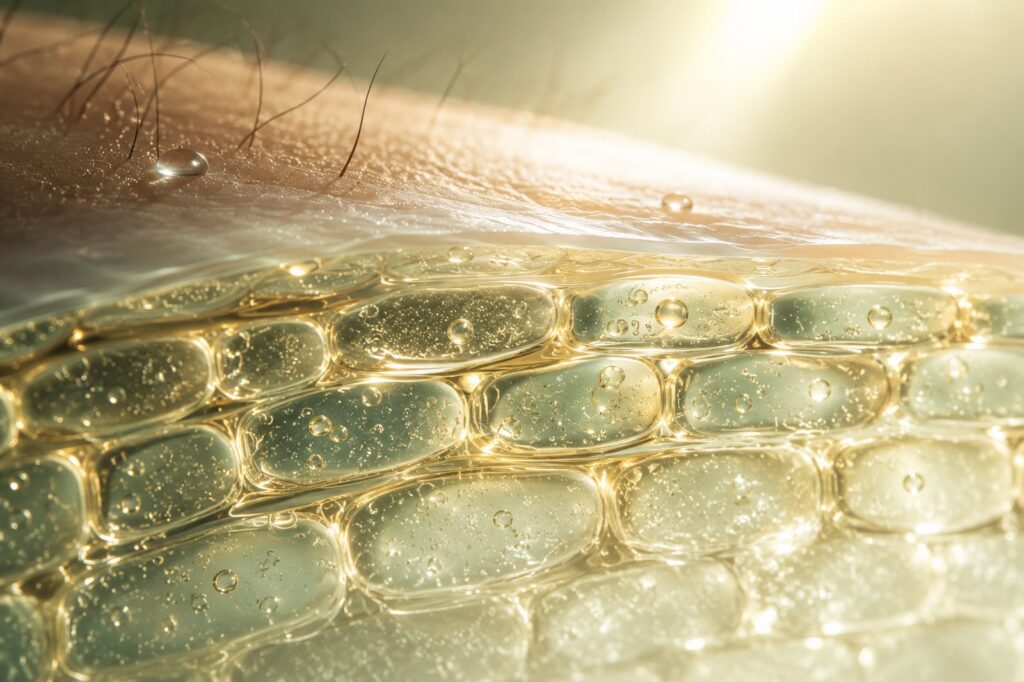
Your skin barrier works like a brick wall: skin cells are the bricks, and a mortar of ceramides, cholesterol, and fatty acids holds them together and keeps water in. A basic cream sits on the surface and softens it for a few hours; a barrier-repair moisturizer resupplies that mortar in roughly skin-mimicking ratios, so reactive skin holds onto moisture and the look of redness eases over time. It is also the seal step — the layer you apply over a humectant like hyaluronic acid or over an exfoliating acid, trapping that water instead of letting it evaporate within the hour.
Our pick from the OSC shelf
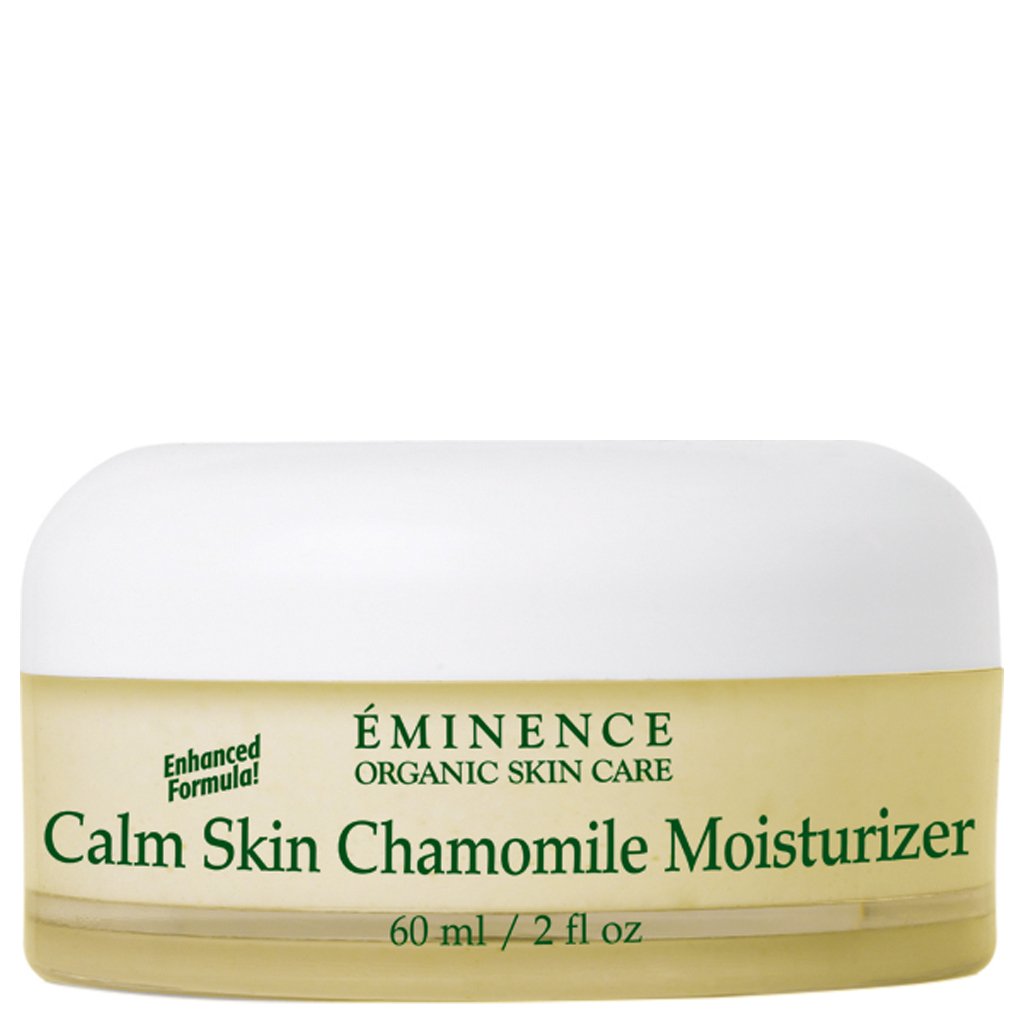
Eminence Organics Calm Skin Chamomile Moisturizer — $62
For redness- and rosacea-prone sensitive skin, our estheticians reach for this calming organic cream first: chamomile, calendula, arnica, and aloe soothe the feel of reactive skin while shea butter, sunflower, evening primrose, and jojoba oils plus panthenol support the look and feel of the moisture barrier. It is the curated boutique pick that sits apart from the drugstore ceramide creams — botanical rather than clinical, chosen for skin that flushes and tightens.
Honest note: this is a botanical cream, not fragrance-free and not a ceramide formula — it is naturally scented by essential oils and plant extracts (chamomile, calendula, arnica, lavender, lemon peel), which can sting very reactive skin, so patch test first. If fragrance is your main trigger, choose one of the fragrance-free Amazon picks below (CeraVe, Vanicream, or La Roche-Posay). Our in-stock in-house alternative is the Phyris Sensitive Moisturizing Cream ($67) — squalane, niacinamide, and GLA/linoleic plant oils — though its ingredient list also ends in added fragrance, so it too is not fragrance-free.
What the research shows
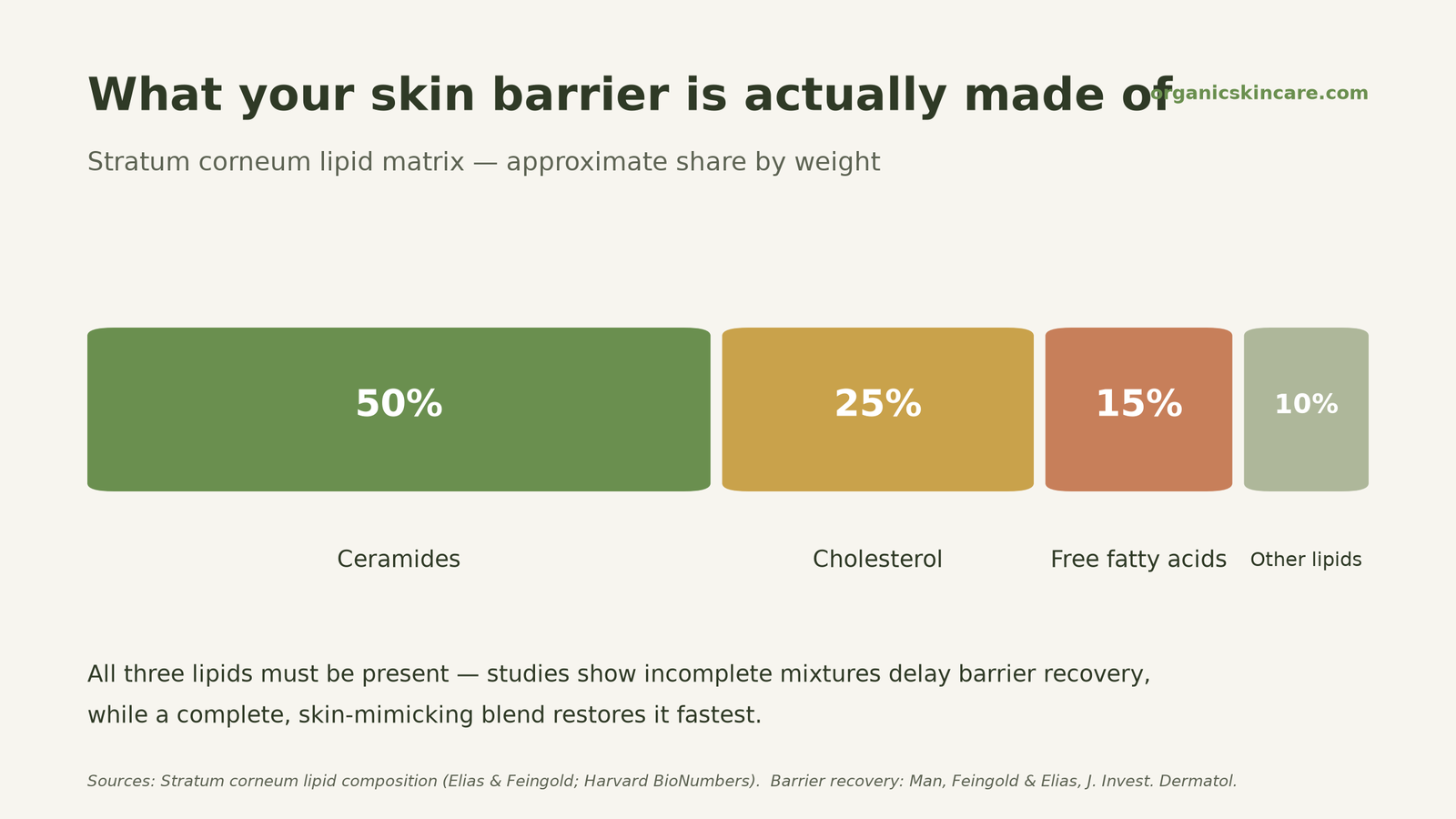
Your stratum corneum holds itself together with a lipid “mortar” that is roughly 50% ceramides, 25% cholesterol, and about 15% free fatty acids by weight. That balance is the whole game. In the foundational barrier-repair research of Man, Feingold & Elias (Journal of Investigative Dermatology), lipid mixtures missing even one of the three actually delayed recovery, while a complete, skin-mimicking blend restored the barrier fastest. It is exactly why a true ceramide-plus-cholesterol-plus-fatty-acid cream does more for reactive skin than ceramides alone — and what separates a real barrier-repair moisturizer from a cream that only sits on top.
How to choose a barrier moisturizer for sensitive skin
Start with the ceramide-cholesterol-fatty-acid trio
A basic cream hydrates; a barrier moisturizer rebuilds the mortar between skin cells. Research on barrier lipids points to a roughly skin-mimicking ratio of ceramides, cholesterol, and free fatty acids as the combination that best helps restore the look and feel of the moisture barrier — more reliably than ceramides alone. Scan the INCI list for ceramide NP/AP/EOP, cholesterol, and fatty acids such as linoleic or stearic acid.
Pair a humectant with an occlusive
Humectants (glycerin, hyaluronic acid, panthenol) draw water into the upper layers; occlusives (squalane, shea butter, dimethicone) slow how fast that water leaves. Sensitive skin does best when a formula carries both, so hydration is pulled in and then sealed rather than evaporating fast.
Prioritize fragrance-free formulas with soothing actives
For reactive, rosacea-prone skin, what a moisturizer leaves out matters as much as what it adds. Fragrance-free (including no masking fragrance) lowers the odds of a flare, and calming actives — niacinamide, centella/madecassoside, allantoin, colloidal oatmeal, panthenol — help soothe the feel of tightness and reduce the look of redness.
Match the texture to your skin type
Oily- or combination-sensitive skin tends to tolerate a gel-cream or lotion; normal-to-dry sensitive skin suits a true cream; very dry, flaky, or compromised skin (and overnight slugging) calls for a balm or ointment that seals more firmly. The right format is the one you will actually wear daily without congestion or a tight, under-moisturized feel.
Know what to avoid
Added or masking fragrance, drying denatured alcohol (alcohol denat. high on the list), menthol, eucalyptus, camphor, and “cooling” actives, plus heavy essential-oil blends, are the usual triggers for stinging on compromised skin. Fatty alcohols (cetyl, stearyl, cetearyl) are the exception — they are non-drying emollients. Shorter ingredient lists are easier to troubleshoot when something does not agree with you.
Patch test, then introduce one product at a time
Even a well-formulated barrier cream can disagree with individual skin. Apply a small amount to the inner forearm or behind the ear for a few days first, and add a new moisturizer to your routine on its own so you can tell what is actually working.
The 8 best barrier-repair moisturizers for sensitive skin on Amazon
Ranked to cover every skin type and budget — from a $15 ceramide cream to a full-lipid-trio clinical cream — so you can match the texture and price to your skin. Each owns a distinct use-case.
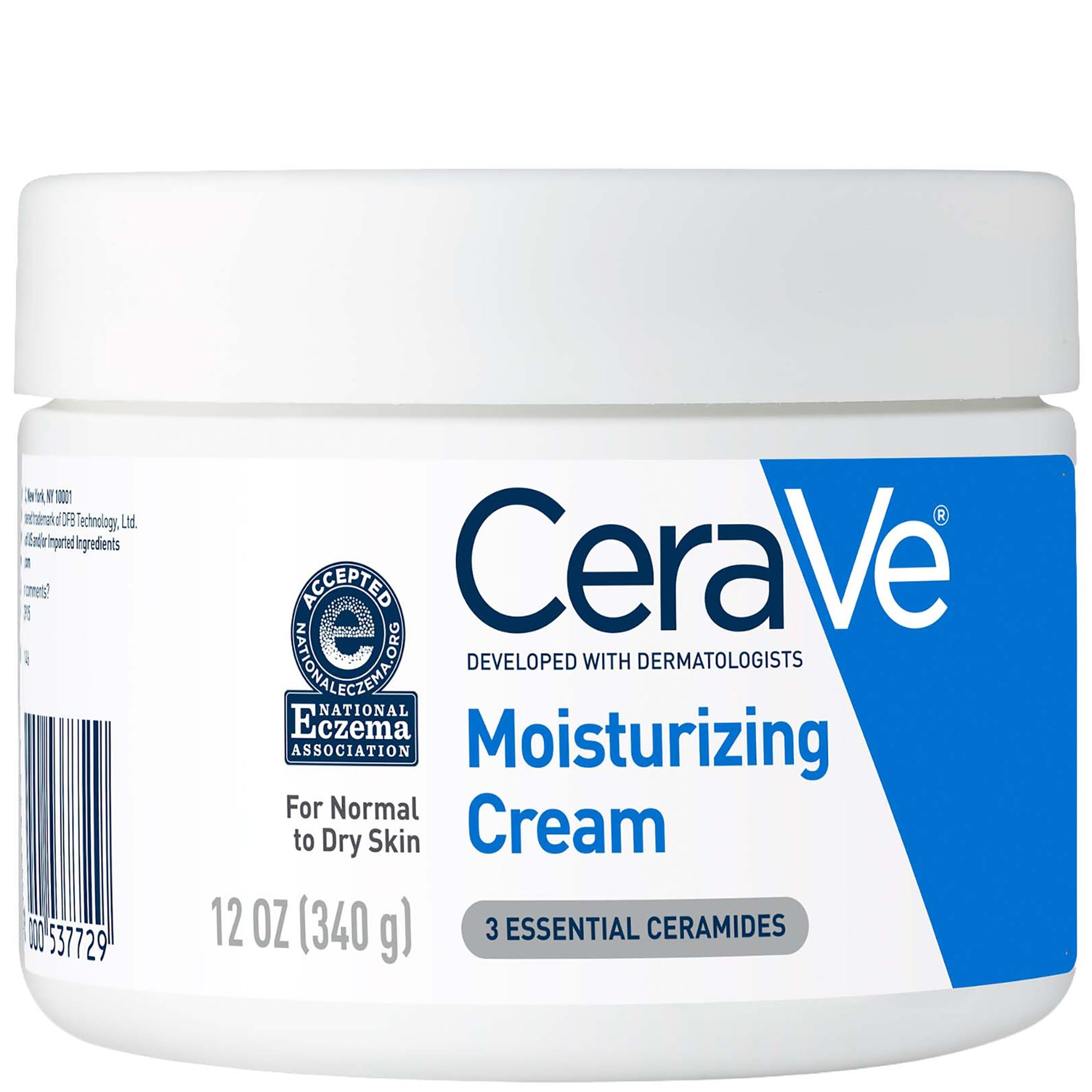
1. CeraVe Moisturizing Cream
A rich cream built on three skin-identical ceramides (1, 3, and 6-II) plus cholesterol and phytosphingosine, released gradually through the brand’s MVE delivery, with hyaluronic acid and glycerin to draw water in and petrolatum and dimethicone to slow how fast it leaves. It is fragrance-free, essential-oil-free, and carries the National Eczema Association seal, which is why estheticians reach for it as the everyday seal step over a hyaluronic-acid or exfoliant layer. The tradeoff: the thick texture feels heavy and slow to absorb, so it suits normal-to-dry sensitive skin more than breakout-prone skin.
- Ceramides 1, 3, 6-II + cholesterol + phytosphingosine (MVE delivery)
- Fragrance-free, essential-oil-free · National Eczema Association seal
- Tradeoff: heavy, slow-absorbing — too occlusive for oily/breakout-prone skin
Check price on Amazon →~$15–20
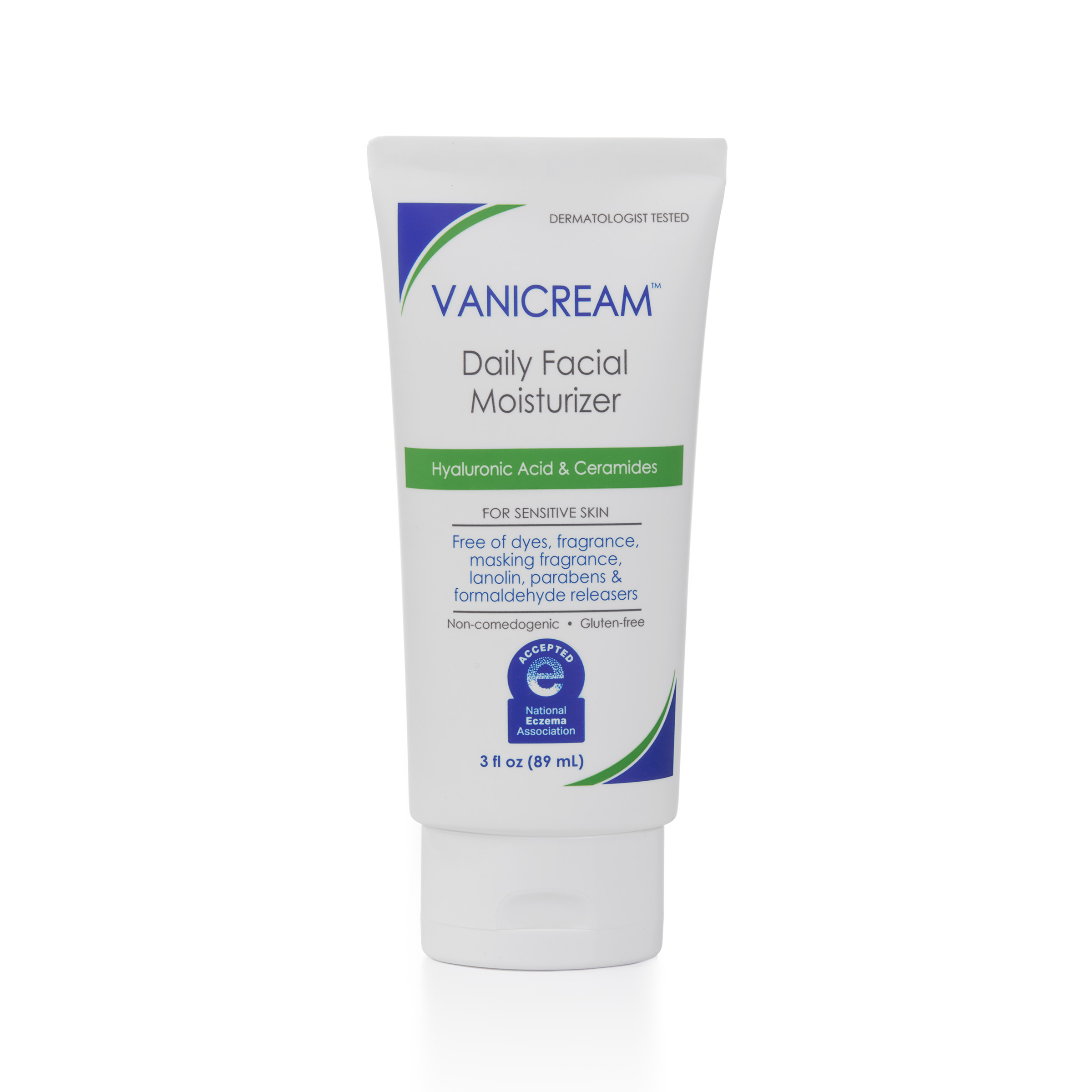
2. Vanicream Daily Facial Moisturizer with Ceramides & Hyaluronic Acid
The lowest-allergen choice here: free of fragrance, dyes, lanolin, parabens, and formaldehyde-releasers, with ceramides, hyaluronic acid, and squalane-style emollients in a lightweight, pH-balanced cream. When skin reacts to almost everything, this short, deliberate list is the place to start. The tradeoff is that it keeps the extras to a minimum, so it soothes and seals more than it actively does anything else — which is the point for contact-dermatitis-prone skin.
- Ceramides + hyaluronic acid + squalane-style emollients
- Free of fragrance, dyes, lanolin, parabens, formaldehyde-releasers
- Tradeoff: minimalist by design — fewer active extras
Check price on Amazon →~$12–15
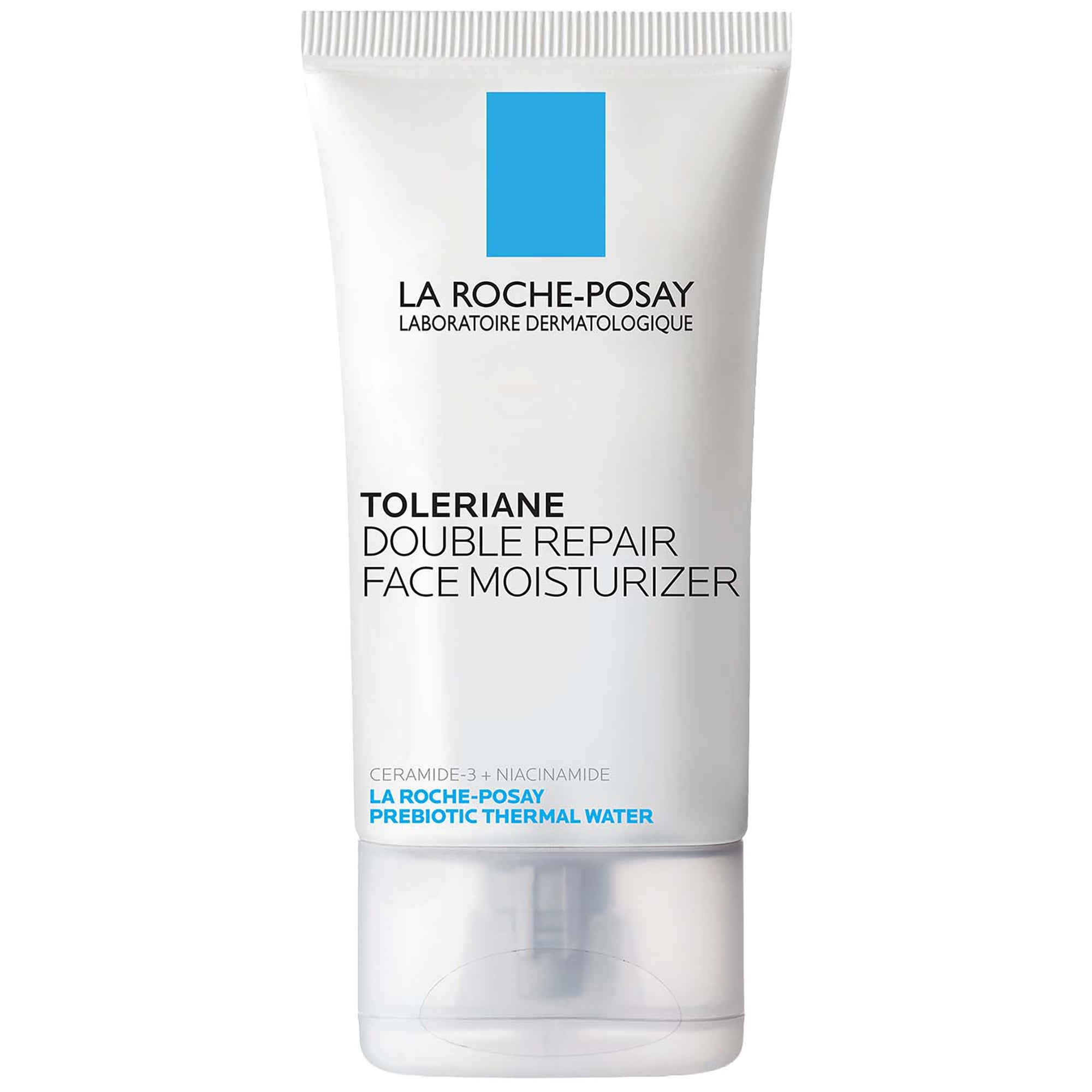
3. La Roche-Posay Toleriane Double Repair Face Moisturizer
A light-cream texture that pairs ceramide-3 with niacinamide, glycerin, and prebiotic thermal water, so it helps soften the look of redness while it seals. The niacinamide is the reason this one suits redness- and rosacea-prone skin that finds heavier tub creams too occlusive, and it is fragrance-free and allergy-tested. The tradeoff is that it is lighter on barrier lipids than a full-trio cream, so very dry or compromised skin may want a richer option layered on at night.
- Ceramide-3 + niacinamide + glycerin + prebiotic thermal water
- Light-cream / oil-free feel · fragrance-free, allergy-tested
- Tradeoff: lighter lipid load than a true trio cream
Check price on Amazon →~$20–25
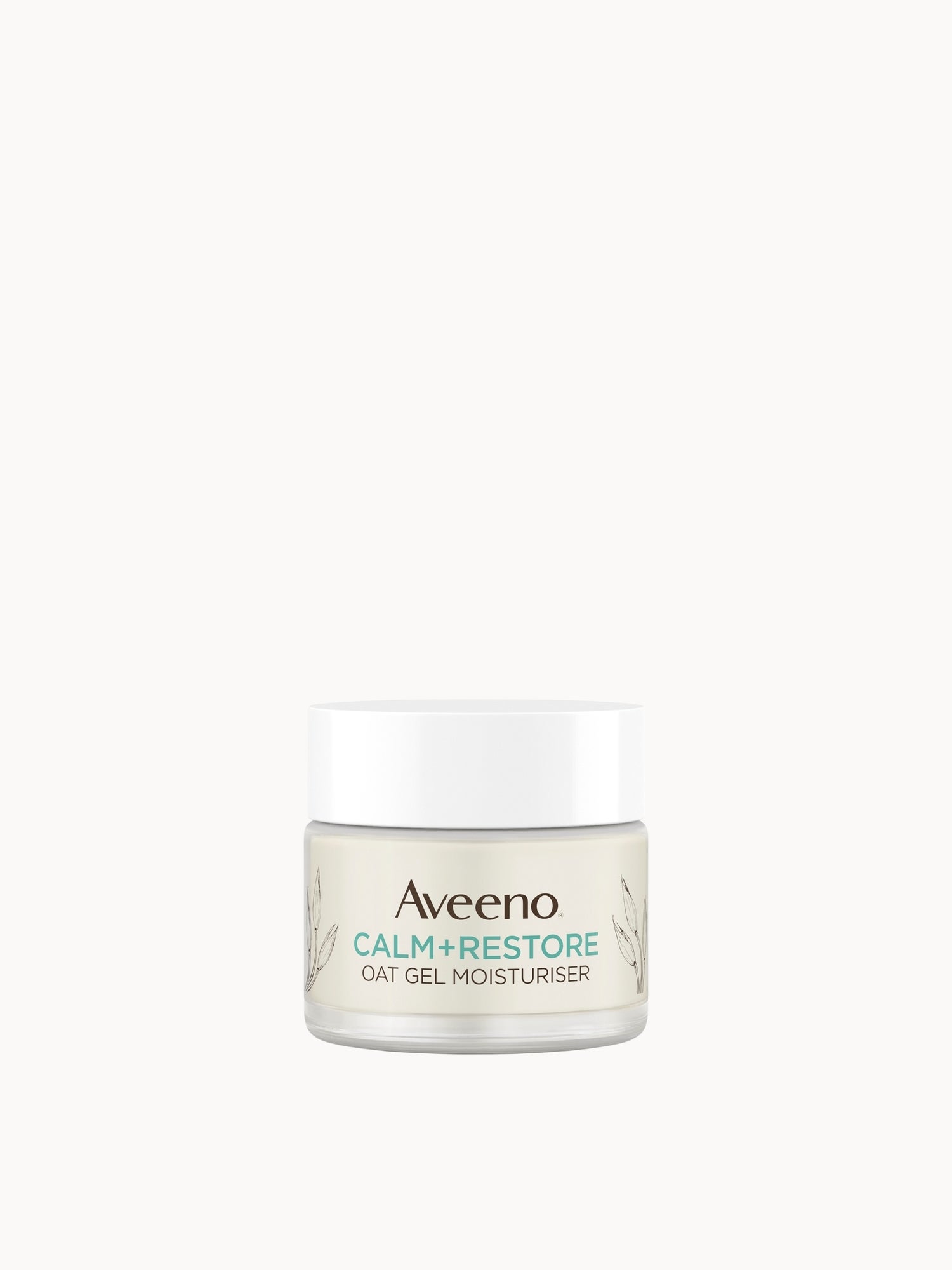
4. Aveeno Calm + Restore Oat Gel Face Moisturizer
A fast-absorbing gel-cream built on prebiotic colloidal oat — an FDA-recognized skin protectant — plus feverfew and glycerin, with an oil-free finish that flushed or breakout-prone skin tends to tolerate. It is fragrance-free, and the oat helps calm the feel of tightness and the look of redness at a drugstore price. The honest tradeoff is that it is lighter on barrier lipids than the ceramide creams, so it hydrates and soothes more than it seals — pair it with an occlusive step in winter or layer it under a balm for very dry skin.
- Prebiotic colloidal oat + feverfew + glycerin · oil-free gel-cream
- Fragrance-free · fast-absorbing, non-greasy finish
- Tradeoff: light on barrier lipids — not enough seal alone for very dry/winter skin
Check price on Amazon →~$17–20
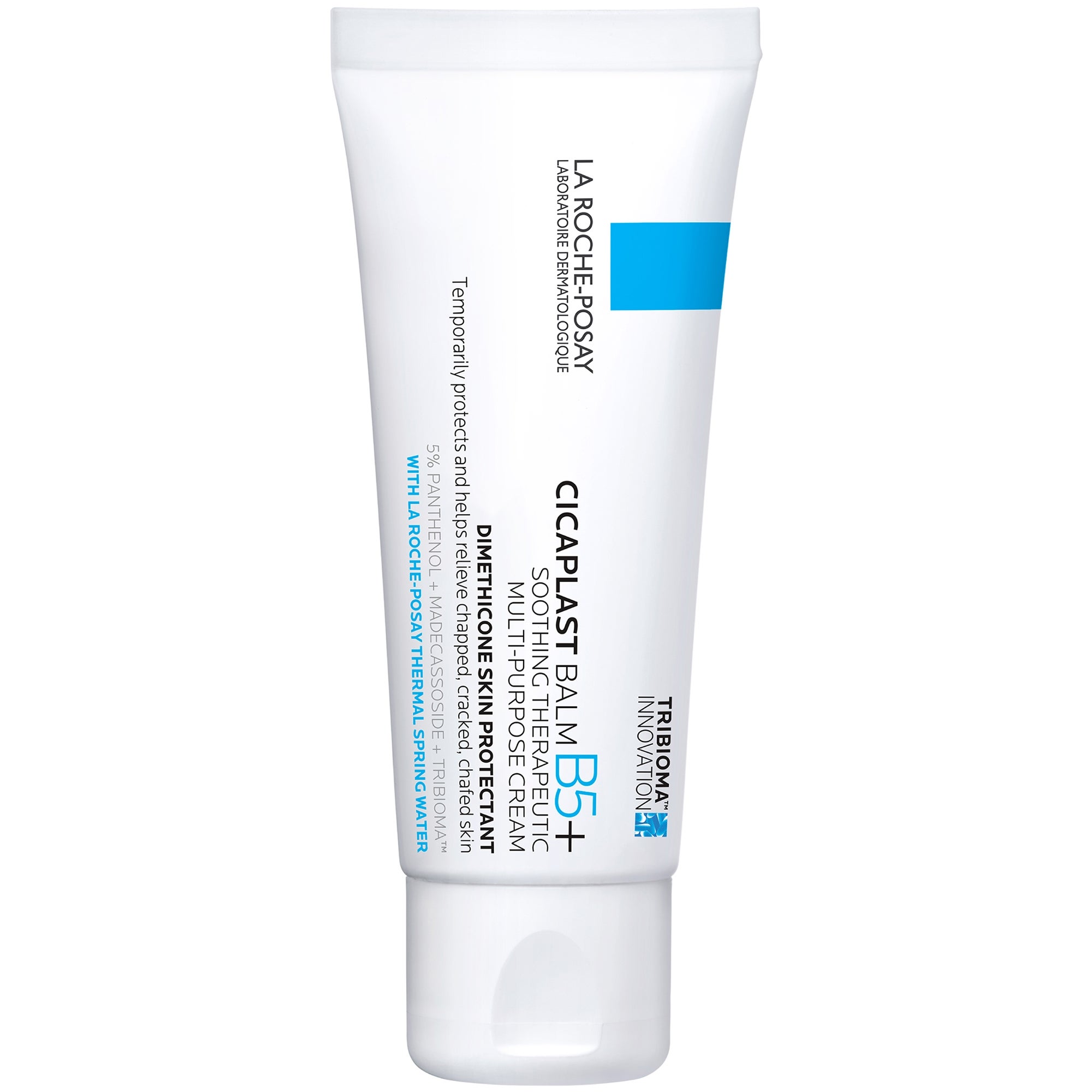
5. La Roche-Posay Cicaplast Balm B5
A rich balm built on 5% panthenol, madecassoside from centella, shea butter, and glycerin, with zinc-copper-manganese gluconates to comfort the feel of irritation; its ingredient list is fragrance-free and alcohol-free. It is the pick for very dry, flaky, or compromised areas and for overnight slugging over a ceramide cream. The honest tradeoff is that it is a panthenol-and-centella balm, not a ceramide formula, so for a ceramide-led routine layer it over a ceramide cream rather than using it alone.
- 5% panthenol + madecassoside (centella) + shea + zinc/copper/manganese
- Fragrance-free, alcohol-free · rich balm texture
- Tradeoff: not a ceramide cream — best layered over one
Check price on Amazon →~$14–31
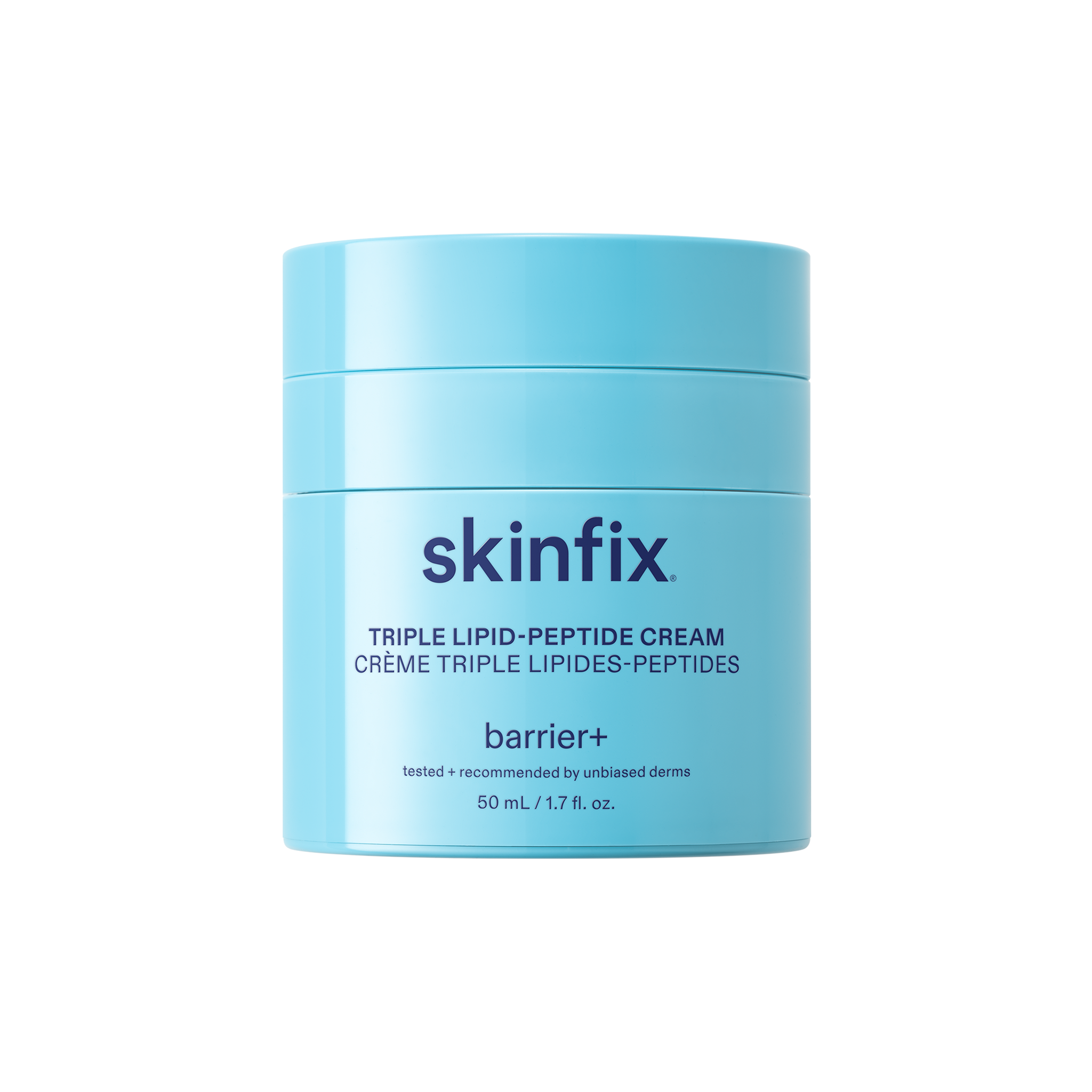
6. Skinfix Barrier+ Triple Lipid-Peptide Cream
The clearest example in this roundup of what separates a true barrier cream from a basic one: ceramides (NP, AP, EOP) plus cholesterol and fatty acids in roughly skin-mimicking ratios, delivered through a skin-lipid-mimetic blend with added peptides. It is fragrance-free and built for committed dry-sensitive skin that wants the full lipid system. Two honest tradeoffs: it is the priciest pick here, and a low level of rosemary-leaf extract sits near the end of the list, so the most rosemary-reactive should patch test — and buy from a brand-sold listing, since the main jar can ship from a third-party reseller.
- Ceramides NP/AP/EOP + cholesterol + fatty acids in skin-mimicking ratios + peptides
- Fragrance-free · rich cream · the full lipid trio
- Tradeoff: priciest pick; trace rosemary extract; verify a brand-sold listing
Check price on Amazon →~$48–54
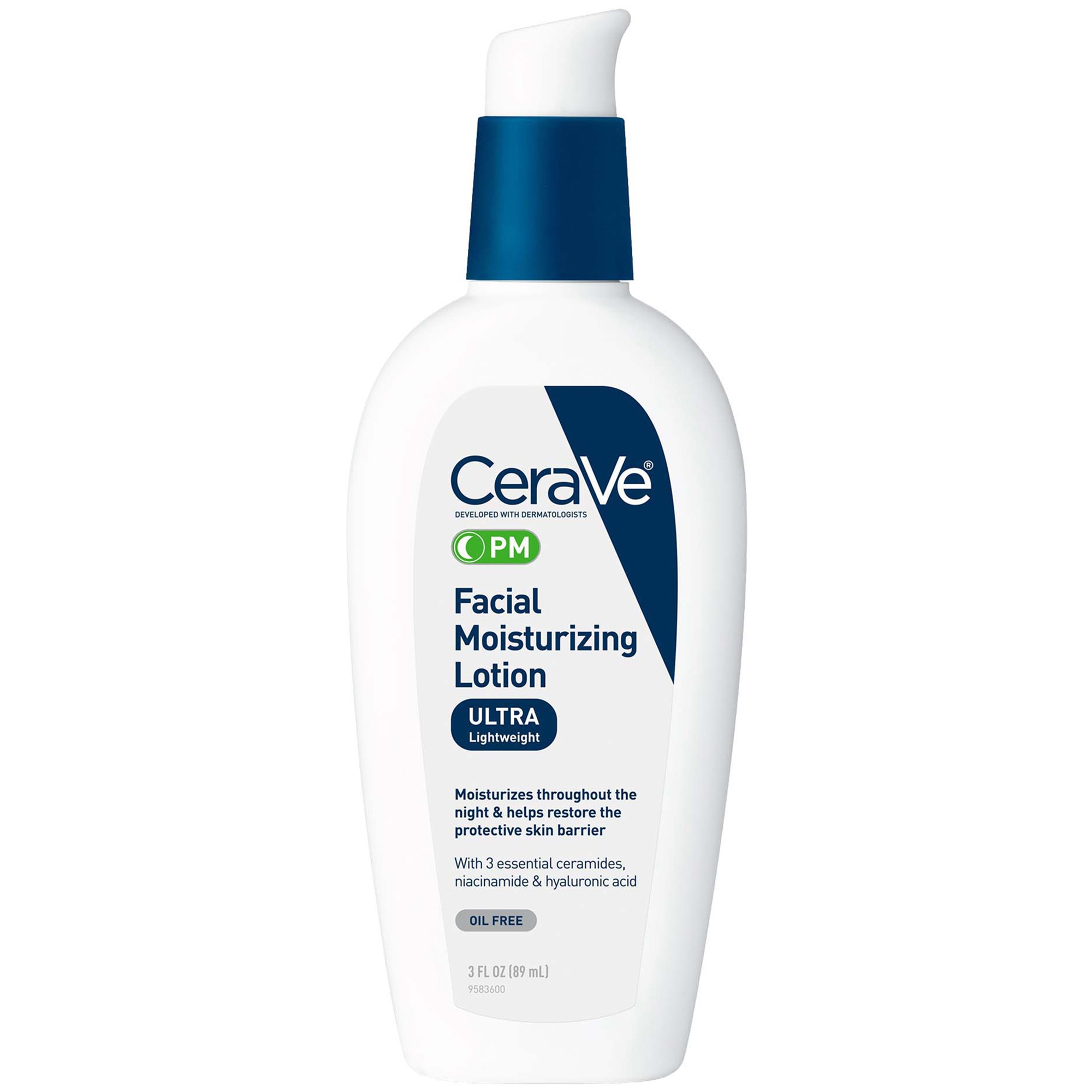
7. CeraVe PM Facial Moisturizing Lotion
A lightweight, oil-free night lotion with ceramides 1, 3, and 6-II, niacinamide, and hyaluronic acid — thin enough to layer over a retinoid, bakuchiol, or an exfoliating acid without feeling heavy. This is the natural seal step for the retinol-alternative and exfoliant routines, where a thick cream would feel like too much. It is fragrance-free and non-comedogenic. The tradeoff is that the light texture is not enough on its own for very dry or winter skin, which will want a richer cream or balm on top.
- Ceramides 1/3/6-II + niacinamide + hyaluronic acid · oil-free lotion
- Fragrance-free, non-comedogenic · lightweight, layers over actives
- Tradeoff: too light alone for very dry / cold-weather skin
Check price on Amazon →~$12–16

8. COSRX Balancium Comfort Ceramide Cream
A cushiony cream that pairs ceramides with a high level of centella asiatica (cica) to calm the feel of sensitivity, at a lower price than the K-beauty ceramide creams it competes with. It is a solid budget ceramide-plus-cica option for normal-to-dry sensitive skin. The honest tradeoff is that it carries a light natural scent rather than being fully fragrance-free, so the most fragrance-reactive readers should patch test or choose CeraVe, Vanicream, or La Roche-Posay instead.
- Ceramides + a high level of centella asiatica (cica) · cushiony cream
- Paraben-free · budget K-beauty ceramide-plus-cica option
- Tradeoff: not fully fragrance-free (light natural scent) — patch test if highly reactive
Check price on Amazon →~$18–22
Frequently asked questions
- How is a ceramide (barrier-repair) moisturizer different from a regular moisturizer?
- A regular moisturizer mostly hydrates and softens the surface for a few hours. A barrier-repair moisturizer also supplies the lipids skin uses to hold itself together — ceramides, cholesterol, and fatty acids — so it helps support and restore the look and feel of the moisture barrier rather than just sitting on top. For healthy skin the difference is subtle; for reactive, dehydrated, or over-exfoliated skin it is the difference between staying calm and staying tight and flaky.
- Can a moisturizer fix a damaged skin barrier?
- A moisturizer is not a medical treatment, so it will not cure anything — but supplying barrier lipids and soothing actives, while avoiding triggers, gives skin the conditions to restore its own barrier over a few weeks. Many people find the look of redness and the feel of tightness ease within about two to four weeks of consistent use. If skin is broken, weeping, or painful, that is a job for a dermatologist, not a moisturizer.
- Should I use a barrier moisturizer in the morning, at night, or both?
- Both, in most cases. In the morning it sits under sunscreen and buffers the day’s environmental stress; at night it works alongside skin’s natural overnight cycle. If you only want one application, keep the evening one — and on mornings when skin feels reactive, a barrier cream is a calmer choice than layering more actives.
- How do I layer a barrier moisturizer over hyaluronic acid, a retinoid, or an exfoliating acid?
- Treat the barrier cream as the seal step that goes last. Apply your humectant (such as a hyaluronic acid serum) to slightly damp skin first, then the moisturizer over it to trap that water. With a retinoid or an exfoliating acid (AHA/BHA), let the active absorb for a few minutes, then apply the moisturizer on top to cushion it — or use the buffer method and moisturize first if the active stings. Acids and retinoids belong in the PM routine; the barrier cream seals either of them.
- Is fragrance-free really necessary for sensitive skin?
- For most reactive and rosacea-prone skin, yes. Added fragrance — synthetic or essential-oil based — is one of the more common causes of contact irritation, and “unscented” is not the same as fragrance-free (an unscented product can still contain a masking fragrance). If a botanically scented product appeals to you, patch test it first and watch for stinging or redness. Readers whose main concern is fragrance should choose from the fragrance-free options above.
- Gel, cream, or balm — which texture should I choose?
- Match it to skin type and season. A gel-cream or lotion is lightweight and suits oily- or combination-sensitive skin and humid weather. A cream is the middle ground for normal-to-dry sensitive skin. A balm or ointment is the richest and seals the most, which makes it well suited to very dry, flaky, or compromised skin, harsh winter air, and overnight slugging. Many people use a lighter texture in summer and a richer one in winter.
Related reading: hyaluronic acid serums · niacinamide serums · vitamin C serums · bakuchiol & retinol alternatives · gentle exfoliants · mineral sunscreens.