New to a sensitive-skin routine? Start with our complete sensitive-skin routine guide — all 7 steps, in order.
Hyaluronic acid is a humectant — a molecule that binds water and holds it in the upper layers of skin — which is why it eases that tight, dehydrated feeling without the stinging actives that make reactive skin flush. HA itself is one of the gentlest hydrators there is, so for sensitive skin the decision is rarely about the HA; it is about the rest of the formula, mainly whether it is fragrance-free and free of drying alcohol. One point estheticians repeat: hydrating is not the same as moisturizing — HA pulls water in, but you still need a moisturizer on top to hold it there, especially in dry air.
Our pick from the OSC shelf
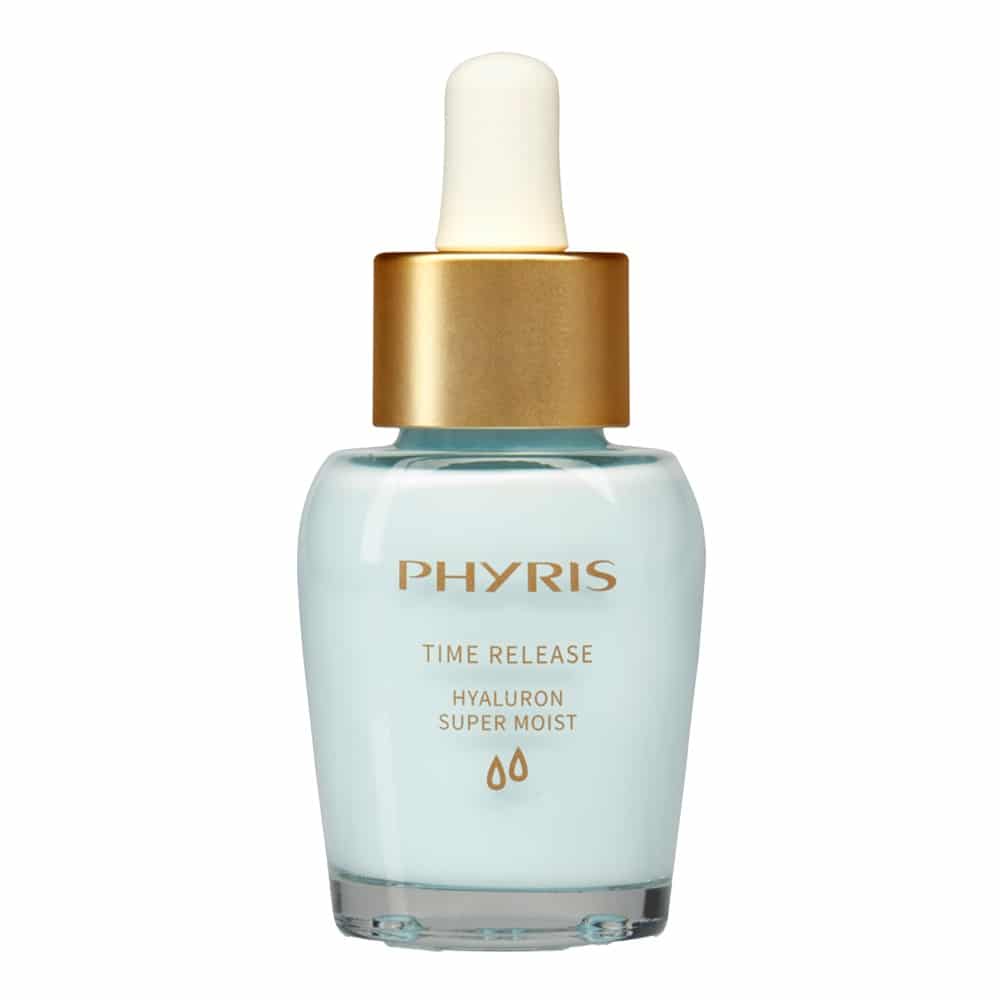
Phyris Hyaluron Super Moist — $57
A genuine dual-molecular-weight HA serum from a flagship professional line, which maps directly onto the multi-weight approach this guide recommends. A low-molecular-weight “Filler” sodium hyaluronate swells on contact to plump the look of fine dehydration lines, while a high-molecular-weight “Depot” form is lipid-encapsulated to release moisture more slowly over several hours — two timescales of hydration from one bottle. Squalane, jojoba seed oil, and vitamin E sit alongside as barrier-supporting lipids, and the texture is light enough to layer under a moisturizer.
Honest note: the Phyris is not fragrance-free (its ingredient list includes fragrance and citrus/floral allergens), so if fragrance is one of your triggers, patch test first — or choose one of the fragrance-free Amazon picks below. Another in-house, in-stock option is the soothing Alex Cosmetic Absolute Hyaluron Essence (HA + aloe + panthenol + bisabolol; also fragranced, so patch test).
What the research shows
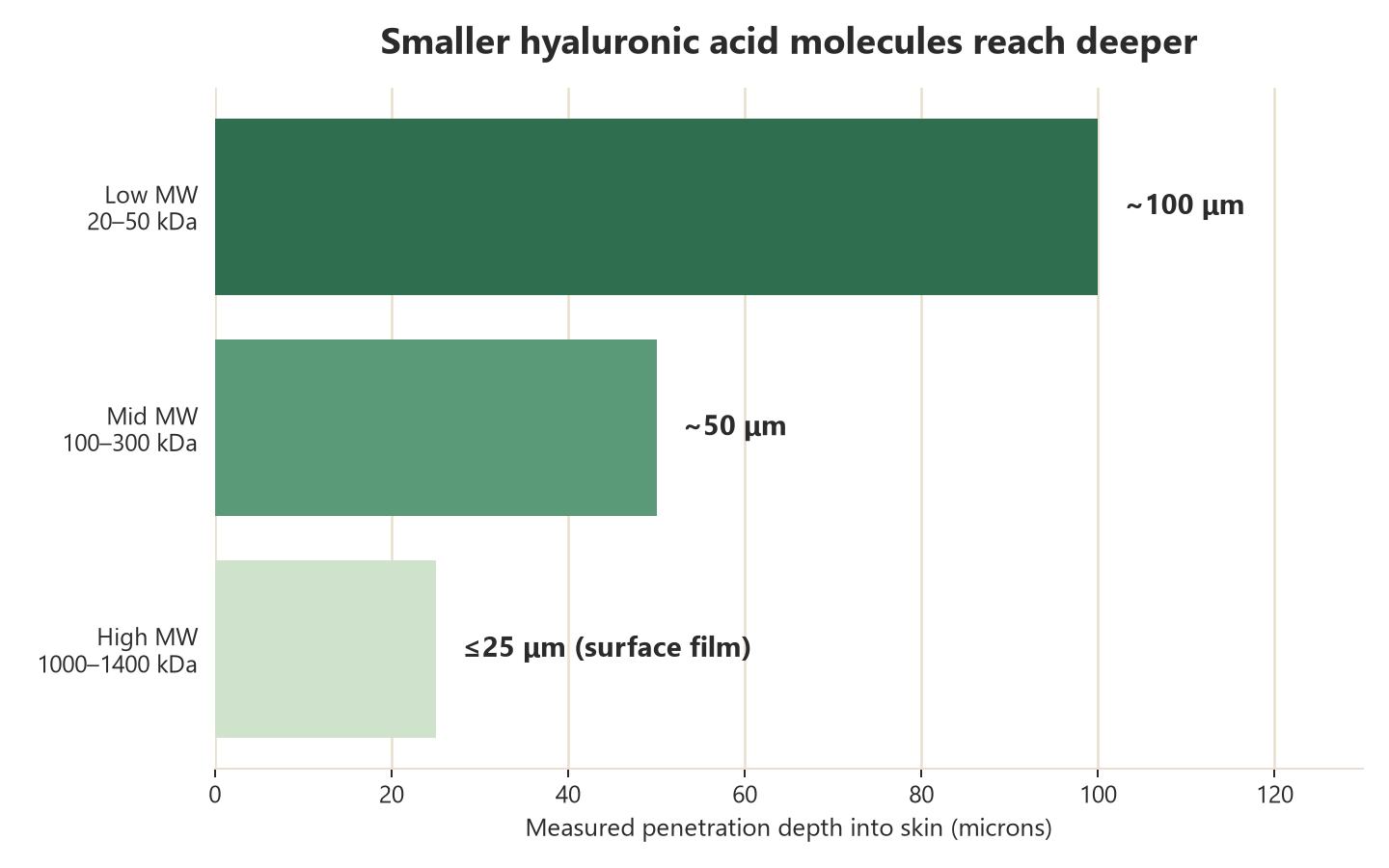
Using Raman spectroscopy to directly track penetration, Essendoubi and colleagues (Skin Research and Technology) found that low-molecular-weight hyaluronic acid (20–50 kDa) reached roughly 100 microns into skin — the full depth of the epidermis — while high-molecular-weight hyaluronic acid (1,000–1,400 kDa) stayed within about the top 25 microns, forming a surface film instead. It is exactly why a multi-molecular-weight HA serum layers a high-MW film-former over a low-MW penetrator — and what separates a serum engineered for both surface plumpness and deeper moisture retention from one that only sits on top.
How to choose a hyaluronic acid serum for sensitive skin
Fragrance-free comes first
HA is inherently gentle and is rarely the irritant. On reactive or rosacea-prone skin, the trouble almost always traces back to added fragrance or a high percentage of drying alcohol. Read the INCI list and skip formulas that list “parfum/fragrance,” essential oils, or alcohol denat. near the top. Since the HA itself is non-irritating, there is no reason to accept fragrance in a hydrating serum.
Look for more than one molecular weight of HA
A single high-molecular-weight HA mostly sits on the surface; a blend of high and low weights hydrates the surface and reaches slightly deeper, so skin feels less tight for longer. On the label, look for more than one form listed — for example sodium hyaluronate, hydrolyzed hyaluronic acid, and sodium hyaluronate crosspolymer together.
Check for barrier partners
Panthenol (provitamin B5), ceramides, glycerin, and squalane support the moisture barrier and help reactive skin hold the water that HA draws in. A serum that pairs HA with these does more for a stressed barrier than HA on its own, which only brings water and no lipids to keep it there.
Match the texture to your skin and your other actives
A thin, water-light serum layers cleanly under a moisturizer and plays well with the rest of a routine; a richer essence-style formula suits very dehydrated or tight skin. If your barrier is already stressed by retinoids or exfoliating acids, a simpler, lower-active HA serum is the gentler choice.
Plan for the damp-skin and seal step
Apply HA to skin that is still slightly damp from cleansing or a hydrating toner, then lock it in with a moisturizer within a minute or two. This one detail decides whether the serum hydrates skin or quietly works against it.
Mind the dry-climate caveat
In low-humidity indoor or winter air, a humectant with nothing over it can draw water up from the deeper skin instead of from the air, which can leave skin feeling tighter. The fix is not to skip HA — it is to always seal it with a moisturizer, and to lean toward formulas that already include emollient or occlusive partners like squalane and ceramides.
The 7 best hyaluronic acid serums for sensitive skin on Amazon
Every Amazon pick below is fragrance-free, chosen so reactive skin has less to react to. Each owns a distinct use-case.
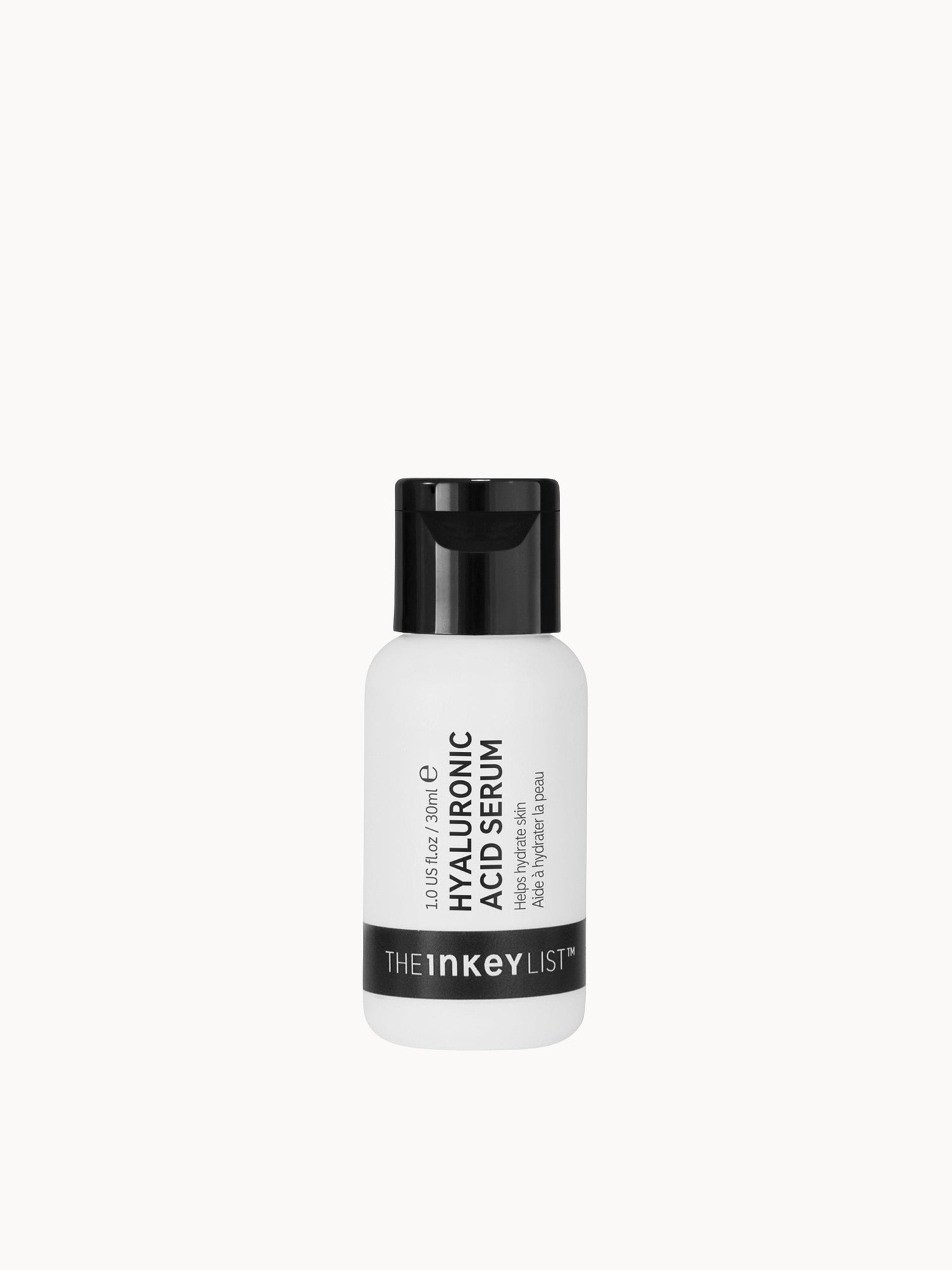
1. The INKEY List Hyaluronic Acid Serum
This is about as low-trigger as a serum gets: verified fragrance-free, essential-oil-free, and alcohol-free, with three molecular weights of HA so it hydrates the surface and reaches a little deeper. The texture is lighter and less tacky than most budget HA serums, and it layers cleanly under everything else in a routine. The honest tradeoff is that there are no occlusive lipids to hold water in, so the damp-skin-and-seal step matters most with this one, especially in winter air.
- 2% HA at three molecular weights + glycerin + Matrixyl peptides
- Fragrance-free, essential-oil-free, alcohol-free
- Tradeoff: no ceramides/occlusives — depends on sealing with a moisturizer
Check price on Amazon →~$10–16
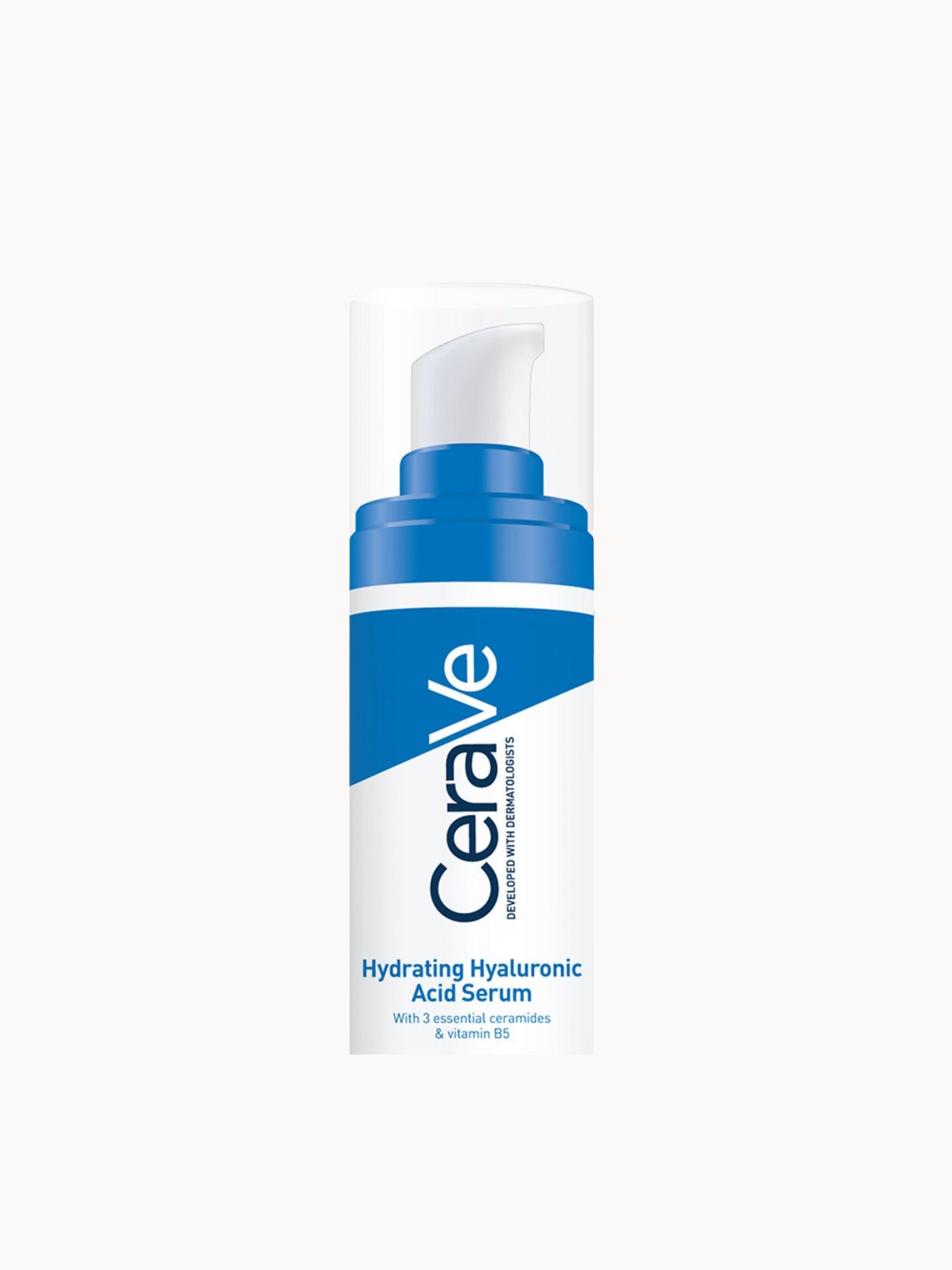
2. CeraVe Hydrating Hyaluronic Acid Serum with Vitamin B5 + Ceramides
This does more than draw in water — the ceramide, cholesterol, and phytosphingosine blend helps rebuild the lipid layer that holds water in, rather than only sitting on top as a humectant. It is fragrance-free with no denatured alcohol, which makes it a sensible choice when the barrier is already irritated by retinoids or acids. The tradeoff is that it uses a single HA molecular weight and silicones for slip, so clean-leaning shoppers should read the INCI before buying.
- Sodium hyaluronate + 3 ceramides + cholesterol + panthenol (B5)
- Fragrance-free, no denatured alcohol, time-release
- Tradeoff: single HA weight; contains dimethicone (silicone)
Check price on Amazon →~$15–19

3. Naturium Quadruple Hyaluronic Acid Serum 5%
This is the most direct expression of the multi-weight approach on the list — four weights of HA in one fragrance-free gel, which hydrate the surface and the layers just beneath it. The gel texture layers cleanly and absorbs without residue. Because a higher total HA percentage leans harder on the humectant effect, sealing with a moisturizer matters more here, not less, particularly in dry air.
- Four molecular weights of HA at 5% total · fragrance-free gel
- Best for the widest molecular-weight spread
- Tradeoff: higher HA load makes the dry-climate seal step non-negotiable
Check price on Amazon →~$18–22

4. Torriden DIVE-IN Low Molecular Hyaluronic Acid Serum
This carries the most calming supporting cast on the list — allantoin, centella, beta-glucan, and a ceramide alongside five forms of HA — which is why it suits reactive and rosacea-prone skin so well. It is fragrance-free and alcohol-free in a light, non-tacky gel that layers easily. It does include a trace of witch hazel extract, but far down an alcohol-free formula it behaves as a mild soother, not an astringent, so the position on the label matters more than its presence.
- 5 forms of HA + panthenol + allantoin + centella + beta-glucan + ceramide NP
- Fragrance-free, alcohol-free · light gel
- Tradeoff: trace witch hazel (low on the list, behaves as a mild soother)
Check price on Amazon →~$18–22
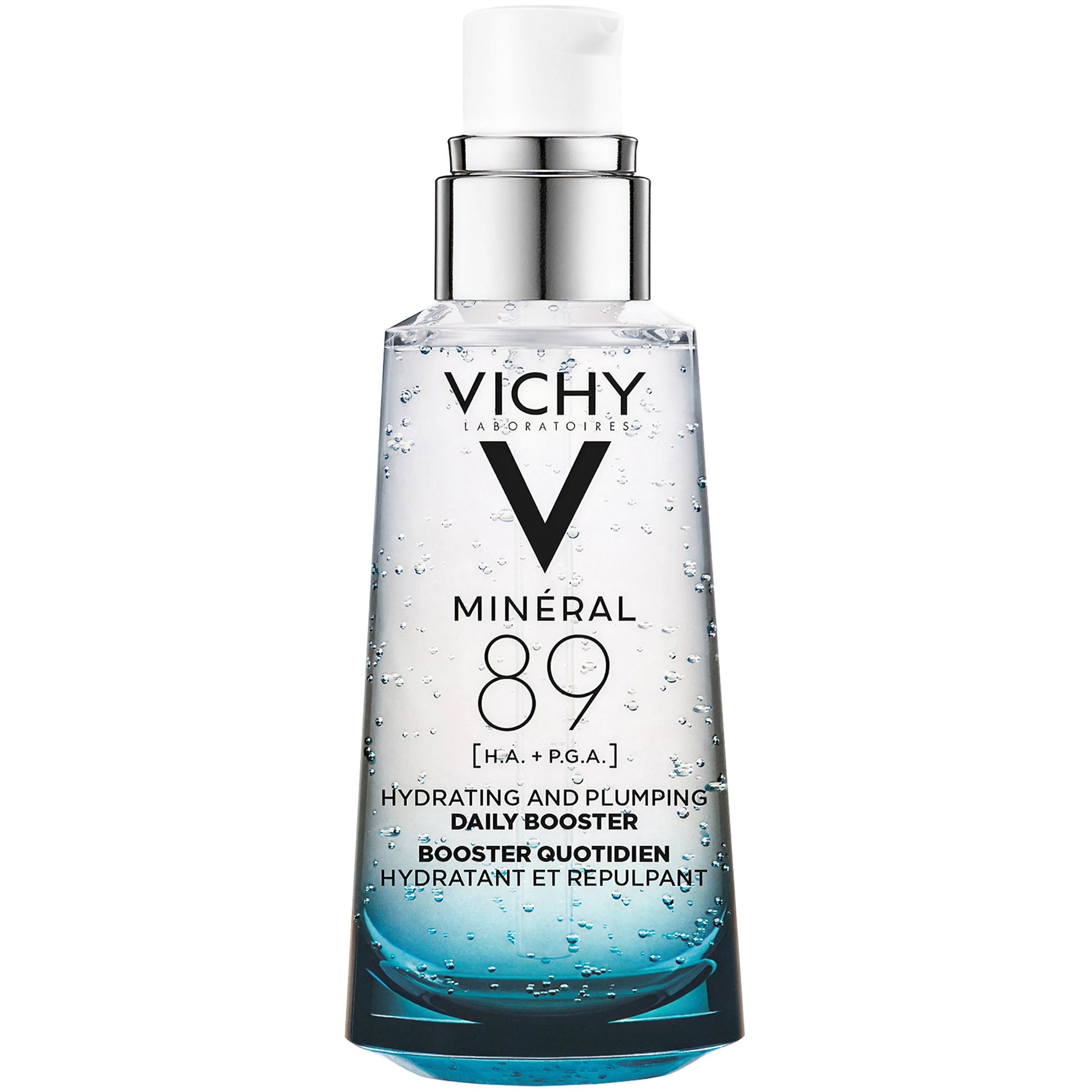
5. Vichy Mineral 89 Hyaluronic Acid Face Serum
A water-light serum with a short, low-risk ingredient list and a soothing biosaccharide the brand measured cutting lactic-acid tingling — built for skin that reacts to almost everything. It is fragrance-free and alcohol-free, and it sits invisibly under sunscreen and makeup. The tradeoff is a single HA weight, so it is more a surface hydrator than a deep one — which also makes it a sensible first HA for very reactive skin.
- Sodium hyaluronate + mineralizing thermal water + glycerin + soothing biosaccharide
- Fragrance-free, alcohol-free · near-invisible under makeup/SPF
- Tradeoff: single HA weight, very watery — a surface hydrator, seal it
Check price on Amazon →~$30–37
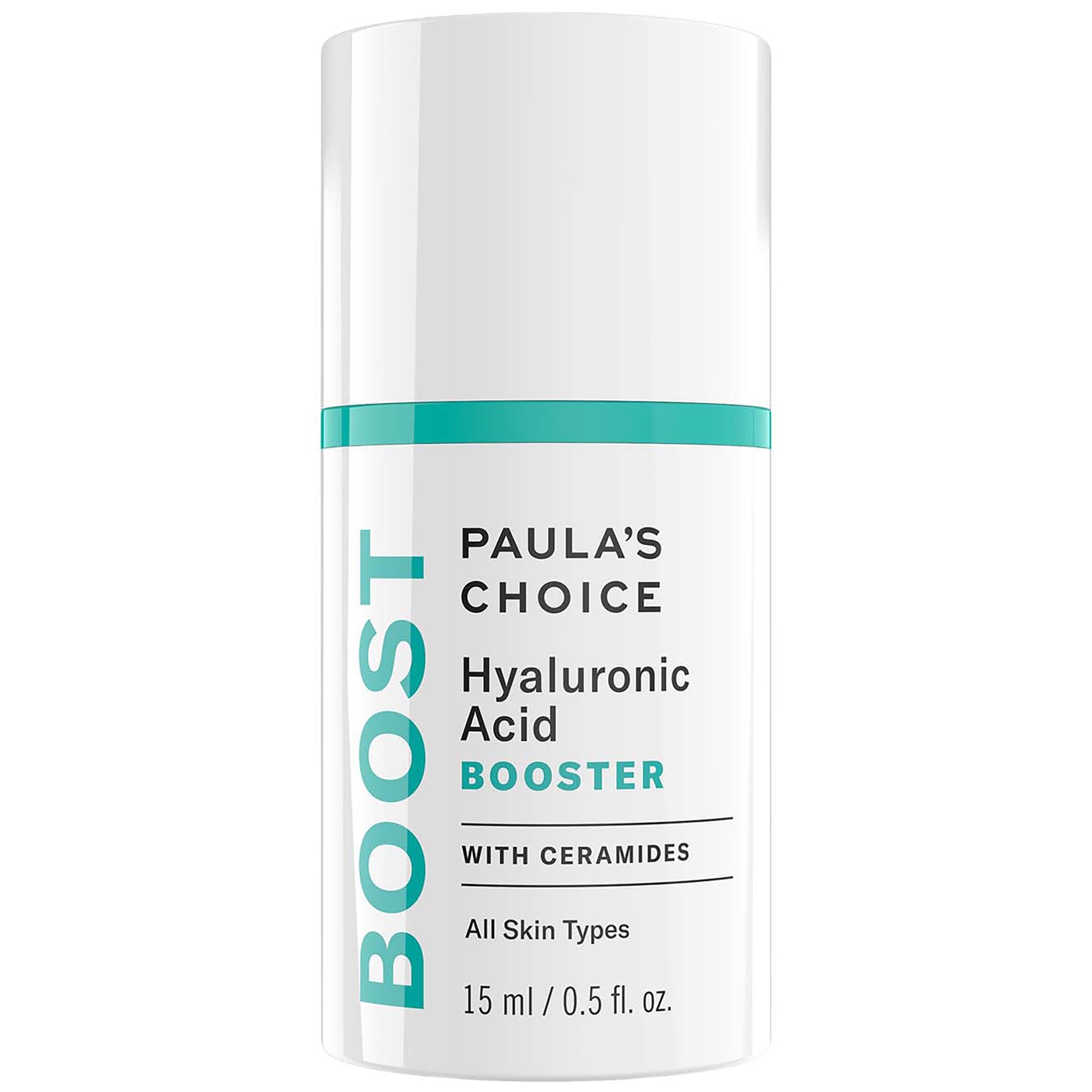
6. Paula’s Choice BOOST Hyaluronic Acid Booster
The standout here is format: a barrier-minded formula whose ceramide-cholesterol-phytosphingosine trio mirrors the skin’s own lipids, and which you can use alone or blend a few drops into your moisturizer to add hydration without adding a step. It is fragrance-free with no denatured alcohol. The honest tradeoff is that it is the costliest per ounce on this list, so it earns its place mainly if the mixable-booster approach fits how you actually use products.
- Two HA forms + ceramide trio + phytosphingosine + cholesterol + panthenol
- Fragrance-free, no denatured alcohol · use neat or mix into moisturizer
- Tradeoff: costliest per ounce of the picks here
Check price on Amazon →~$44–49
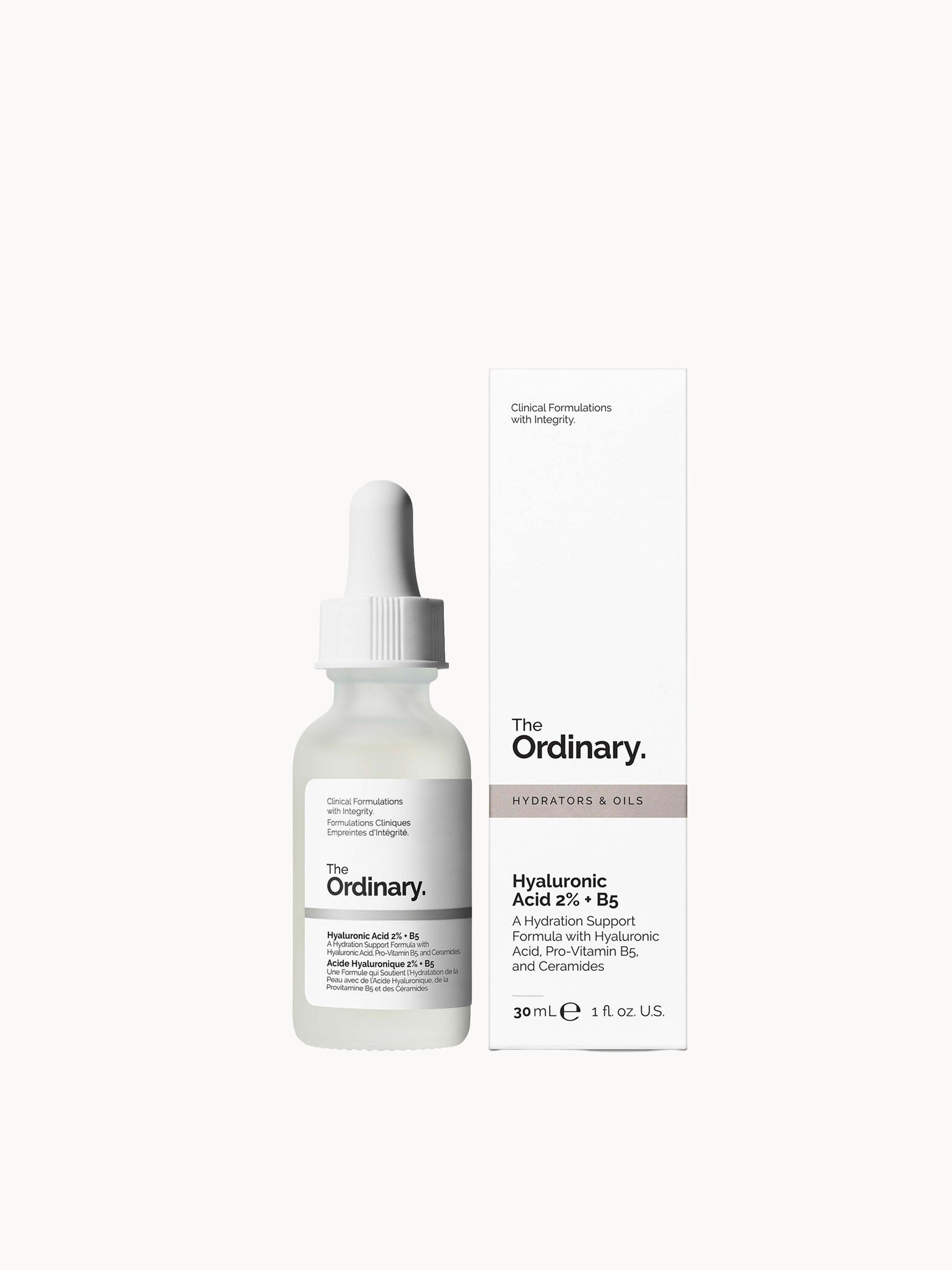
7. The Ordinary Hyaluronic Acid 2% + B5
The lowest-cost way to get multi-weight HA with panthenol, and the reformulated version adds ceramides for a little barrier support. It is fragrance-free and essential-oil-free, with a short ingredient list that gives reactive skin less to react to. The honest tradeoff is that it is a near-bare humectant that can feel tacky and may feel tight in dry air, so the damp-skin-and-seal step is not optional. Buy only the authentic DECIEM listing, since near-identical copycat listings exist.
- Multi-weight HA + panthenol (B5) + ceramides (reformulated)
- Fragrance-free, essential-oil-free · short ingredient list
- Tradeoff: can feel tacky/tight in dry air — seal it; buy only the authentic DECIEM listing
Check price on Amazon →~$9–12
Frequently asked questions
- Does hyaluronic acid work in dry climates?
- Yes, but technique matters more in dry air. A humectant pulls water toward skin; when the surrounding air is very dry, it can pull moisture up from the deeper layers and let it evaporate, which feels tight. Apply HA to damp skin and seal it with a moisturizer so the water it binds stays put. Formulas that include glycerin, squalane, or ceramides handle dry climates better than HA on its own.
- Do I apply hyaluronic acid to damp or dry skin?
- Damp. Apply it within about a minute of cleansing, or after a hydrating toner, while skin is still slightly moist, then follow with a moisturizer. Damp skin gives the humectant water to bind on the surface, and the moisturizer on top keeps that water from evaporating. This single step is what turns an HA serum from drying into hydrating.
- Is a hyaluronic acid serum the same as a moisturizer?
- No, and this is the most common mix-up. HA is a humectant that draws and binds water; a moisturizer holds that water in with emollients and occlusives. Hydrating and moisturizing are two different jobs. An HA serum is a step before your moisturizer, not a replacement for it.
- Can I use hyaluronic acid with my other actives?
- In most cases, yes. HA is one of the most broadly compatible ingredients — it layers under or alongside vitamin C, niacinamide, retinoids, and exfoliating acids, and can make a retinoid routine more comfortable by easing dryness. Apply the water-light HA serum first, then your treatment, then a moisturizer. If your skin is very reactive, introduce one new product at a time so you can tell what agrees with it.
- Should I use a hyaluronic acid serum in the morning or at night?
- Either, and both is fine. HA is not light-sensitive and does not increase sun sensitivity, so it fits AM or PM. In the morning it layers under your sunscreen; at night it goes under your moisturizer. The rule that matters most is sealing it with a moisturizer each time.
- Will a hyaluronic acid serum cause breakouts?
- HA itself is non-comedogenic and is unlikely to clog pores. Breakouts after starting a new serum usually trace back to another ingredient in the formula — a heavy occlusive, a fragrance, or a botanical extract — or to a richer texture than oily skin needs. If you are breakout-prone, choose a fragrance-free, water-light formula and patch test first.
Related reading: niacinamide serums · vitamin C serums · bakuchiol & retinol alternatives · gentle exfoliants · mineral sunscreens.