
Why Organic Skincare Matters for Your Unique Skin Type
Organic skincare is essential for nearly 50% of individuals with sensitive skin, as synthetic ingredients often cause reactions. Choosing organic products helps prevent breakouts and irritation, making it a practical choice for those with unique skin sensitivities.
Your skin is not generic, and your skincare shouldn’t be either. Studies show that nearly 50% of people self-identify as having sensitive skin (International Journal of Cosmetic Science, 2019). Many of those reactions trace back to synthetic preservatives, artificial fragrances, and chemical fillers found in conventional products. Choosing organic skincare isn’t a trend. It’s a practical decision for skin that reacts, breaks out, or simply refuses to cooperate.
Key Takeaways
- Nearly 50% of people report sensitive skin, often triggered by synthetic ingredients (International Journal of Cosmetic Science, 2019)
- “Natural” and “certified organic” are not the same thing: certification requires verified ingredient sourcing and processing standards
- Organic formulations can be tailored to specific skin types, from oily and acne-prone to dry and reactive
- Certified organic products avoid common irritants like synthetic fragrances and parabens
- Matching the right organic formula to your skin type is the key to real, visible results
Synthetic ingredients are a common trigger for skin reactions. Parabens, sulfates, and artificial fragrances can damage your skin’s natural barrier. That damage leads to redness, dryness, or breakouts. For sensitive skin types, these ingredients create a cycle of irritation that’s hard to break without switching to cleaner formulas.
Organic formulations work differently. They’re built around plant-derived actives that work with your skin’s biology rather than against it. A formula for oily skin might feature kaolin clay and tea tree. One designed for dry skin leans on shea butter and hyaluronic acid. The right match makes a real difference.
How to Identify Your Skin Type: The Foundation of Personalized Skincare
Identifying your skin type is crucial for an effective skincare routine, as most people misidentify theirs. The bare-face test is the most reliable method, and understanding sebum production in different zones can prevent worsening skin issues.
Knowing your skin type is the single most important step in building a routine that actually works. According to the American Academy of Dermatology, most people misidentify their skin type. That mistake leads to products that worsen the very problems they’re trying to fix.
Key Takeaways
- The bare-face test is the most reliable at-home method for identifying your skin type
- Sebum production varies by zone: your T-zone and cheeks can behave very differently
- Sensitivity is a condition, not a skin type. It can affect any skin type
- Skin type shifts seasonally, so your summer routine may not work in winter
- Matching products to your actual skin type prevents irritation and wasted money
The Bare-Face Test: Your Most Reliable Starting Point
This method is simple, free, and surprisingly accurate. Wash your face with a gentle cleanser, then wait 30 minutes without applying anything. After that window, press a clean tissue to your forehead, nose, chin, and cheeks separately.
Read the results like this:
- Oil on every zone: You likely have oily skin
- No oil, tight or flaky feeling: You’re probably dry
- Oil only on the T-zone (forehead, nose, chin): Classic combination skin
- No oil, no tightness, no flaking: You’re in the normal skin category
What Sebum Zones Tell You About Your Skin
Sebum is your skin’s natural oil. It’s produced by oil glands (called sebaceous glands) beneath the skin’s surface. Different areas of your face have different gland densities. Your T-zone has the highest concentration, which is why most people notice shine there first, even if their cheeks feel dry.
Best Organic Skincare for Oily Skin: Lightweight and Balancing Routines
Oily skin affects about 40% of adults, and organic skincare can effectively manage it with lightweight botanical formulas. These products balance sebum production without stripping moisture, while lightweight oils like neem and jojoba are preferable to heavy creams.
Oily skin affects roughly 40% of adults, according to the Journal of the American Academy of Dermatology (2021). Organic skincare for oily skin works well when you choose the right ingredients. Lightweight botanical formulas balance sebum production without stripping your skin bare, which is exactly what your skin needs.
Key Takeaways
- Oily skin still needs hydration. Skipping moisturizer makes oil production worse.
- Lightweight oils like neem and jojoba regulate sebum better than heavy creams.
- Key balancing ingredients include clay, green tea, and witch hazel.
- Stripping your skin with harsh cleansers is the number one mistake oily skin types make.
- A simple AM/PM routine keeps your skin calm and clear long-term.
Why Lightweight Organic Oils Outperform Heavy Creams
It sounds counterintuitive, but the right oils can actually reduce excess shine. Research published in the International Journal of Molecular Sciences (2018) shows that certain non-comedogenic oils (oils that don’t clog pores) signal your skin to produce less sebum on its own. Heavy creams, by contrast, can block pores and trigger more oil production.
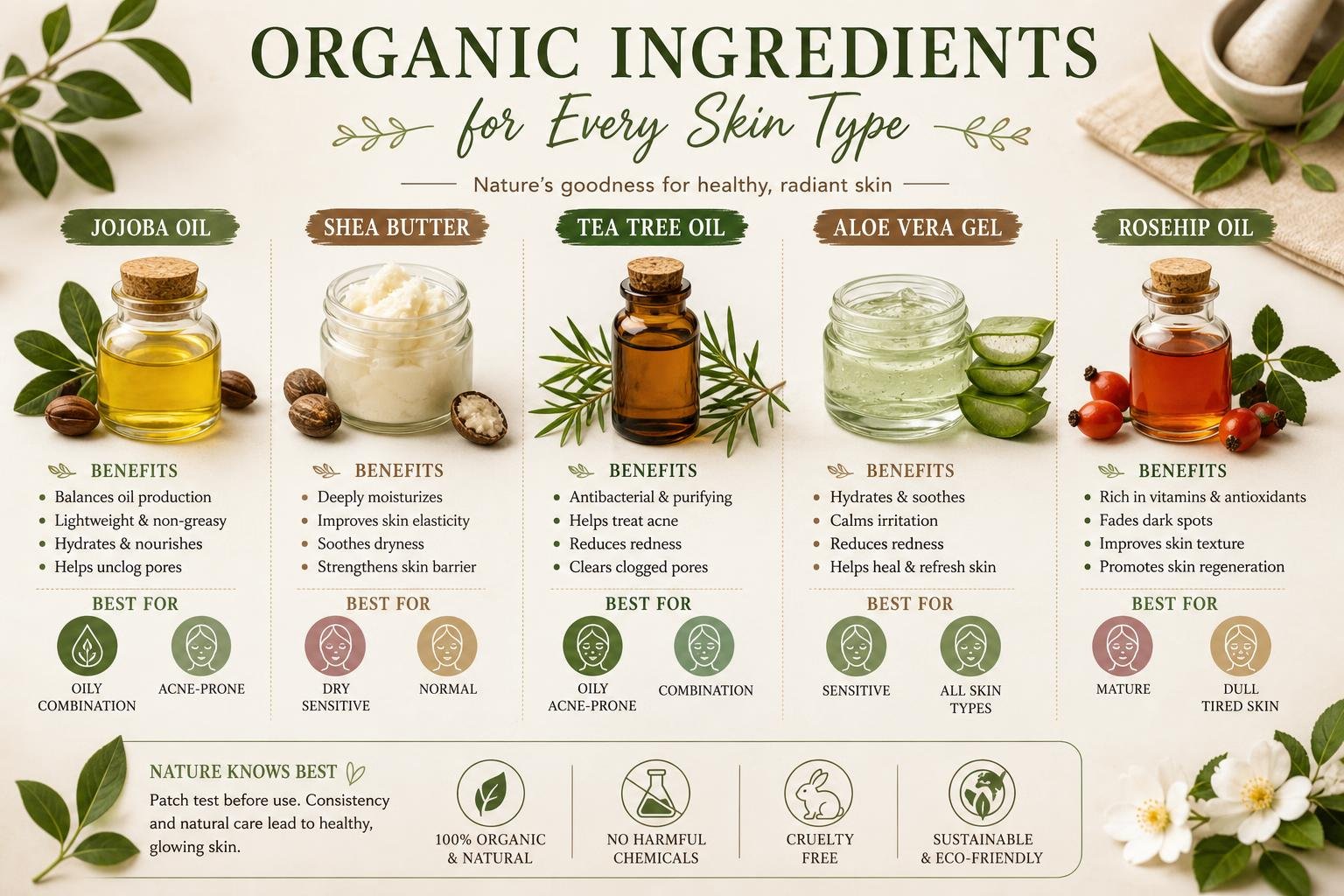
Neem oil is the standout choice here. It contains nimbidin, a compound with proven antibacterial properties that targets the bacteria linked to breakouts. A few drops blended into a lightweight serum gives you the benefit without the grease.
Jojoba oil is another smart pick. Its molecular structure closely mimics your skin’s natural sebum. That similarity helps signal your skin to produce less of its own oil. It absorbs quickly and leaves no residue.
Organic Skincare for Dry Skin: Nourishing and Hydrating Solutions
Dry skin, affecting roughly 29% of adults, benefits from organic skincare due to plant-based ingredients that mimic skin lipids. These ingredients enhance moisture absorption and retention, addressing both hydration and moisture needs effectively.
Dry skin affects roughly 29% of adults and is one of the most common concerns dermatologists see year-round (American Academy of Dermatology, 2023). Organic skincare works well for dry skin because plant-based ingredients mirror your skin’s own lipid structure. That similarity helps your skin absorb moisture faster and hold it longer.
Key Takeaways
- Hydration and moisture are two different things. Dry skin needs both
- Hyaluronic acid, jojoba oil, shea butter, and ceramides are your best organic allies
- Layer products thinnest to thickest for maximum absorption
- Some “natural” ingredients, like alcohol and fragrance, can quietly dehydrate skin
- One stat worth knowing: ceramide levels in dry skin can be up to 40% lower than in normal skin (Journal of Investigative Dermatology, 2022)
Hydration vs. Moisture: Why the Difference Matters for Dry Skin
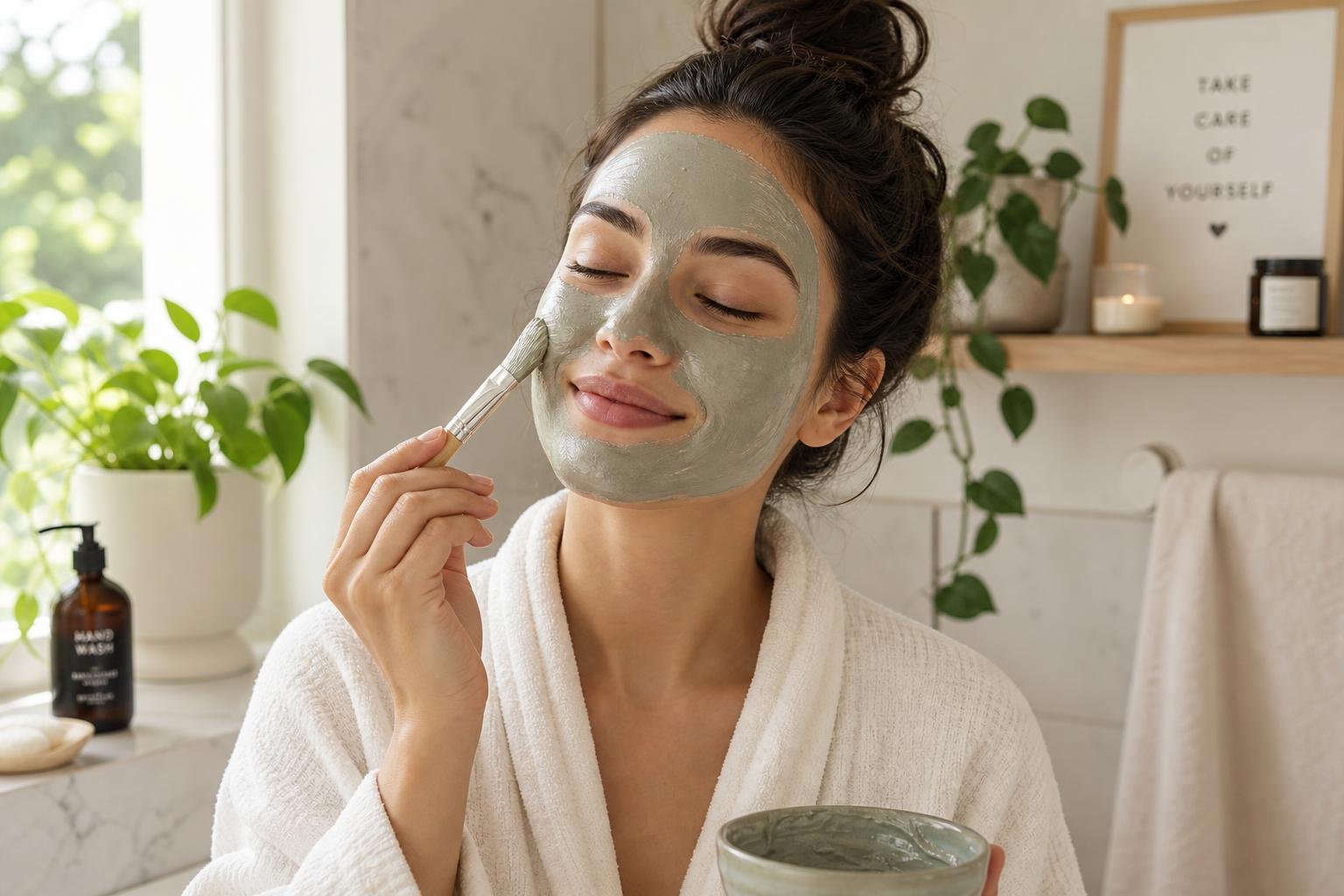
Hydration means drawing water into your skin cells. Moisture means sealing that water in with oils and lipids. Dry skin is typically short on both. Skip one step, and you’ll always feel like you’re fighting a losing battle. Think of hydration as filling a glass and moisture as putting a lid on it.
Most people reach for a rich cream and stop there. That’s moisture without hydration. Your skin still feels tight an hour later because there was no water to lock in. You need both layers working together for lasting comfort.
Star Ingredients to Look for in Organic Dry Skin Products
These four ingredients consistently outperform synthetics for dry skin. They work with your skin barrier rather than coating over it.
- Hyaluronic acid: a humectant (water-attracting molecule) that holds up to 1,000 times its weight in water (National Institutes of Health)
- Jojoba oil: closely mimics your skin’s natural sebum, absorbs quickly, and leaves no residue
- Shea butter: a rich emollient that seals moisture in and supports a comfortable, supple barrier
- Ceramides: barrier lipids worth replenishing, since levels in dry skin can run up to 40% lower than in normal skin (Journal of Investigative Dermatology, 2022)
What’s the Best Organic Skincare Routine for Combination Skin?
Combination skin, the most common type affecting about 60% of people, requires a targeted zone-based approach for effective organic skincare. This strategy addresses the differing needs of oily T-zones and dry cheeks.
Combination skin affects roughly 60% of people, making it the most common skin type worldwide (International Journal of Cosmetic Science, 2014). The challenge is straightforward: your T-zone behaves like oily skin while your cheeks act dry. A zone-based approach, rather than one blanket routine, is the most effective strategy for organic skincare for combination skin.
Key Takeaways
- Combination skin affects about 60% of people. It requires targeted zone-based care rather than a single product approach.
- Hybrid ingredients like niacinamide and jojoba oil balance oil production and hydration across all zones at once.
- Over-treating your T-zone strips moisture and triggers rebound oil production.
- Seasonal shifts demand routine adjustments. Use lighter formulas in summer and richer ones in winter.
Zone-Based Application: Work With Your Skin, Not Against It
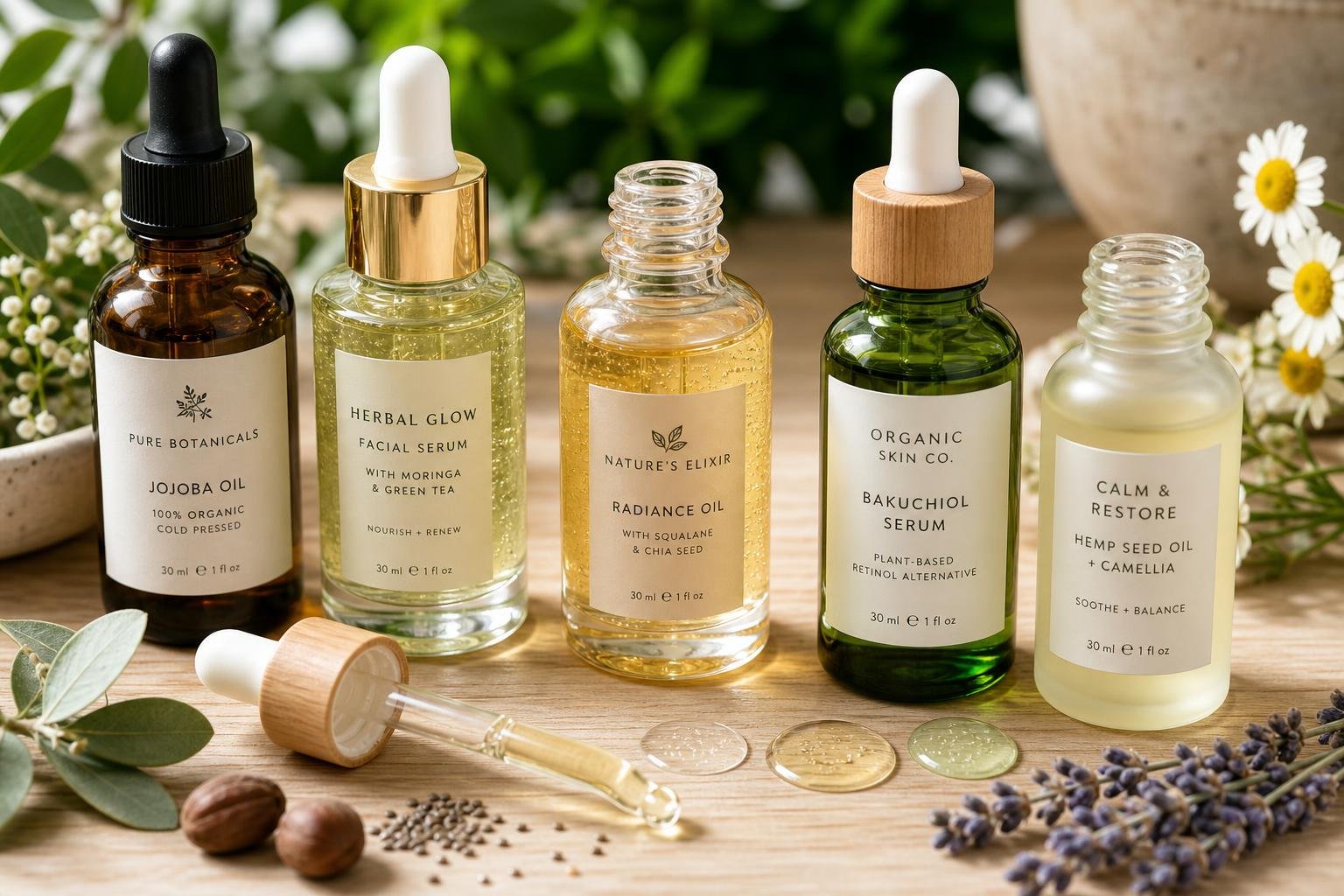
Treat your face as two distinct zones. Apply a lightweight, oil-controlling serum to your T-zone (forehead, nose, chin) and a richer, nourishing moisturizer to your cheeks. This targeted method prevents over-drying your already-dry cheeks while keeping midface shine in check.
Masking is where zone-based care really pays off. Apply a clarifying formula to oily areas and a calming formula to dry zones at the same time. The Eminence Clear Skin Probiotic Masque uses lactic acid derived from yogurt to exfoliate and clear congestion in your T-zone without stripping surrounding skin. For cheeks that need calming, pair it with a soothing, hydrating mask applied to those areas only.
Recommended Products
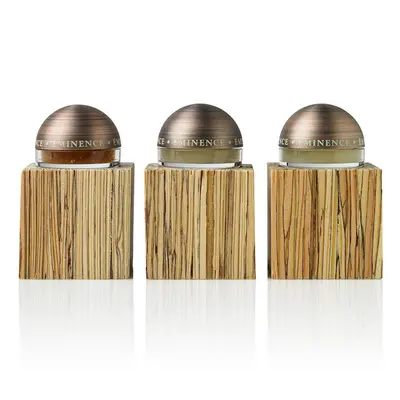
Eminence Organics Lip Trio Kit – (3 piece)
Eminence Organic Skin Care Lip Trio refines, preps and hydrates your lips to leave them looking full, supple and renewed. These organic formulas are infused with exfoliating enzymes and active botanicals like orange, lemon and avocado oils to promote firmness and elasticity. Shea butter locks in moisture for a kissably soft texture as vitamins A, ester C, E and coenzyme Q10 protect lips from environmental aggressors.
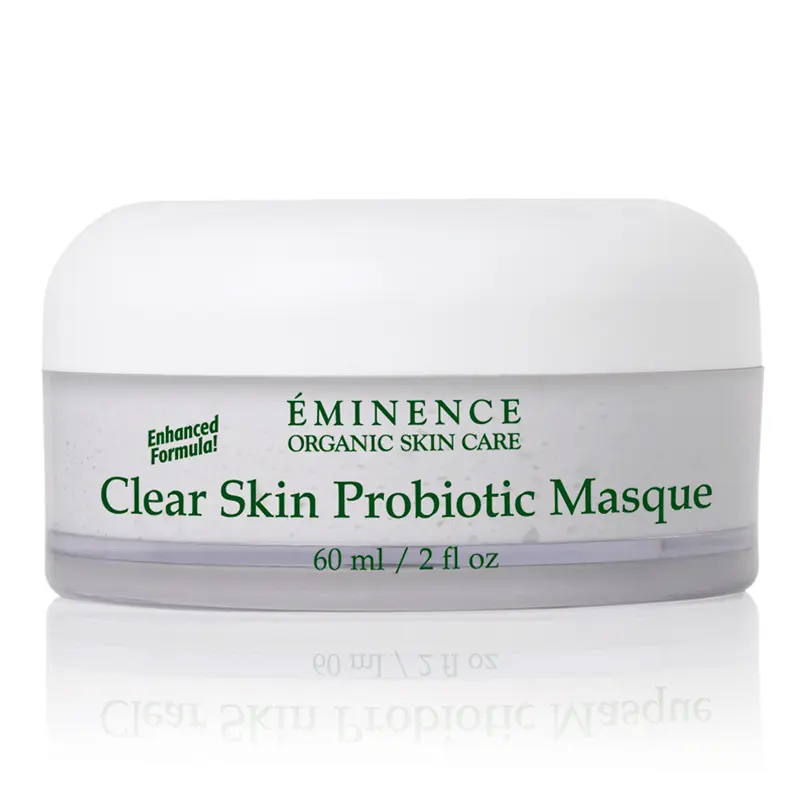
Eminence Clear Skin Probiotic Masque – 2 oz.
Eminence Clear Skin Probiotic Masque gives your skin a dose of highly nourishing and cleansing ingredients to soothe inflamed skin and clear breakouts. Lactic acid derived from yogurt exfoliates and moisturizes as cucumber rejuvenates and tones the skin. Shea butter aids in healing as marigold gently soothes, cleans and reduces irritations. Clay penetrates pores to eliminate dirt and impurities, while tea tree oil works as a repairing antiseptic. Finishing off this nutritious mask is a biocomple
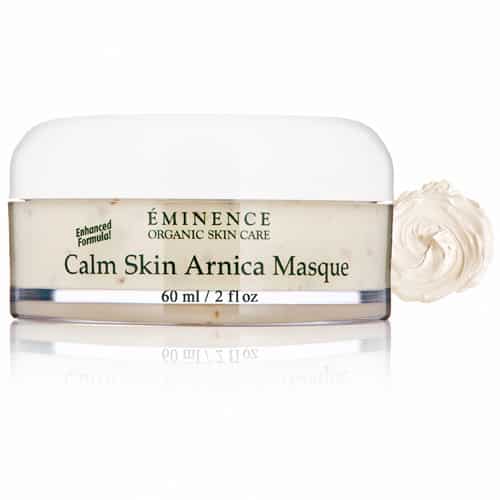
Eminence Calm Skin Arnica Masque – 2 oz.
Eminence Calm Skin Arinca Mask offers various benefits to irritated, inflamed skin with antioxidants, moisturizers and conditioning ingredients. Key ingredient arnica soothes as an anti-inflammatory and antibacterial while improving circulation. Emollient shea butter aids in repairing as ivy leaf and horse chestnut tone and deliver a potent vitamin C. Linseed helps further calm and alleviate irritations while a biocomplex boosts skin functions and fends off free radicals.
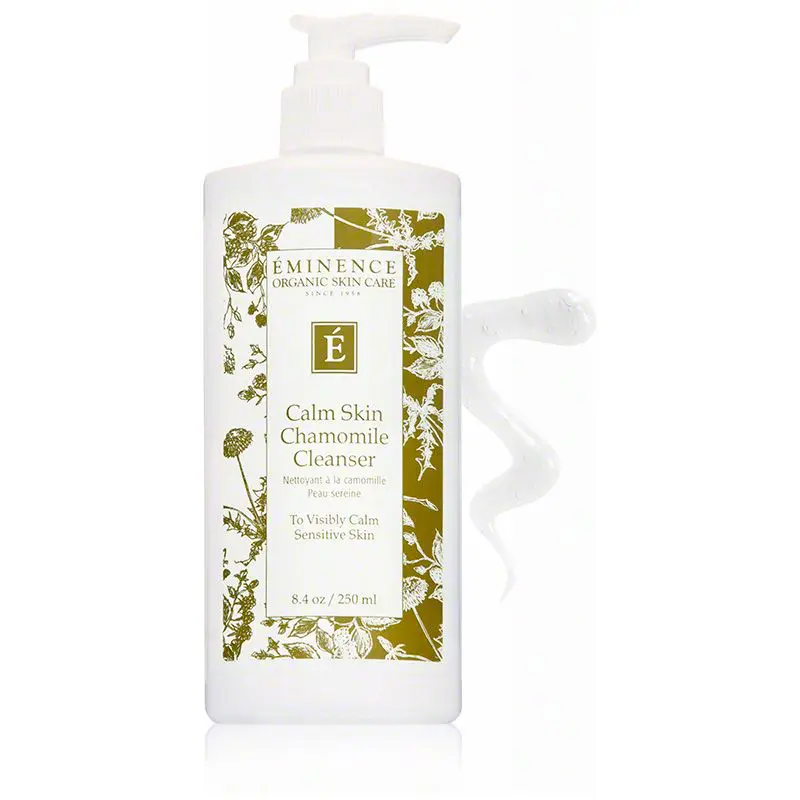
Eminence Organic Calm Skin Chamomile Cleanser – 8.4 fl. oz.
Eminence Calm Skin Chamomile Cleanser gently removes impurities from your skin while reducing irritation with organic, active botancials. Sunflower and calendula oils hydrate and protect your skin while chamomile extract reduces irritation. Rosemary extract heals and cools inflammation while arnica fortifies your skin’s defensive barrier. A biocomplex of antioxidants, coenzyme Q10 and vitamins prevents the visible signs of aging.
Organic Skincare for Sensitive Skin: Minimal, Clean and Soothing
Sensitive skin affects 60-70% of women and 50-60% of men, necessitating minimal and clean skincare. Organic products with shorter ingredient lists reduce irritation risks, avoiding synthetic fragrances and harsh preservatives that can trigger reactions.
Sensitive skin affects roughly 60 to 70% of women and 50 to 60% of men worldwide, according to a 2019 review published in the Journal of the European Academy of Dermatology and Venereology. For this skin type, less is genuinely more. Shorter ingredient lists mean fewer chances for irritation. Organic formulas tend to skip the synthetic fragrances and harsh preservatives that trigger reactions most often.
Your sensitive skin barrier is thinner and more reactive than average. Redness, stinging, and dryness can flare up quickly when you introduce the wrong product. A clean, minimal routine built around calming botanicals can make a real difference.
What Ingredients Should Sensitive Skin Avoid?
Start by avoiding synthetic fragrance, alcohol denat., and sulfates. These three ingredients appear in the majority of sensitization reactions reported in patch-test studies (National Institutes of Health, 2017). Check your labels before you buy anything new.
- Synthetic fragrance: a single “fragrance” listing can hide dozens of undisclosed chemicals
- Alcohol denat.: strips the skin barrier and worsens reactivity over time
- Sulfates (SLS/SLES): too harsh for a compromised barrier
- Essential oils at high concentrations: even natural oils like peppermint or eucalyptus can irritate
Which Organic Ingredients Actually Calm Sensitive Skin?
Arnica, oat extract, and aloe vera are among the most researched soothing botanicals for reactive skin. Arnica has well-documented anti-inflammatory properties that help reduce redness and swelling at the skin’s surface (National Institutes of Health, 2017). If your skin flares regularly, these ingredients deserve a permanent place in your routine.
Written with AI assistance.


