Physiodermie Dry Skin Cream – 6.42 oz (Professional Size)
Replenishes the skin’s moisture barrier and provides essential lipid ingredients, protecting dry skin from environmental stressors without a greasy feel.
This is the 6.42 oz professional (back-bar) size — the same formula as the retail size in a treatment-room format sized for repeat facials and high-use routines.
Who it’s for
Formulated for dry skin.
Key benefits
Nourishes and helps maintain the skin’s moisture balance
Comfortable, cushioning texture that absorbs without heaviness
Helps keep skin soft, supple, and protected through the day
On cleansed skin, apply to the whole face and neck. For an optimal result, combine with the Essential Concentrate Hydro-Tonifying.
Not for
External use only; avoid contact with the eyes. If you are pregnant, nursing, or have a diagnosed skin condition, consult your physician or skincare professional before use. Discontinue if irritation occurs. This product is not a substitute for medical treatment.
Is the professional size the same formula as the retail product? Yes — it is the identical Dry Skin Cream formula in a larger 6.42 oz back-bar size for professional and high-use application.
Can I use this at home? Absolutely. While sized for the treatment room, it is the same formula many clients choose to continue their routine at home.
Is this authentic Physiodermie? Yes. OrganicSkinCare.com is an authorized US retailer of Physiodermie.
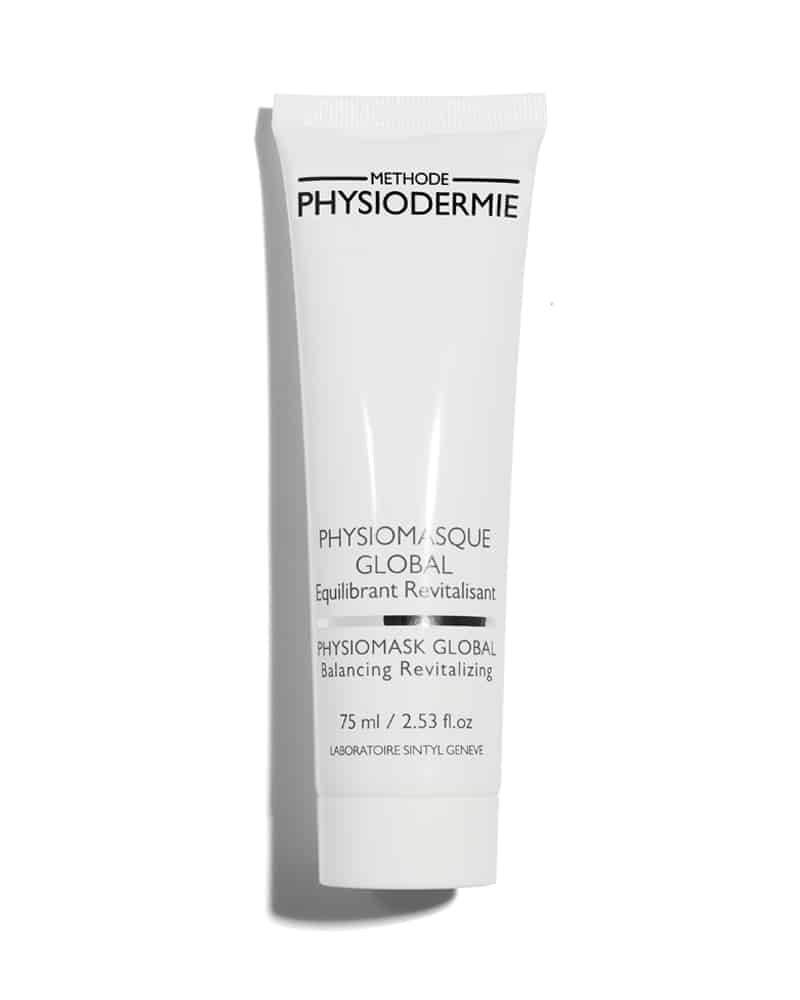
Physiodermie Global Mask – 6.76 oz (Professional Size)
A peel-off film mask rich in PCbG Complex, natural essential oils, plant extracts and energizing minerals that eliminates impurities and unifies the complexion, leaving skin smooth, soft and radiant.
This is the 6.76 oz professional (back-bar) size — the same formula as the retail size in a treatment-room format sized for repeat facials and high-use routines.
Who it’s for
Formulated for all skin types.
Key benefits
Intensive treatment that works in a single application
Leaves skin feeling refreshed, comfortable, and revived
A spa-style step you can bring into a home routine
Use after each exfoliation, once or twice a week. After cleansing and exfoliating, apply all over face and neck; peel off once dry.
Not for
External use only; avoid contact with the eyes. If you are pregnant, nursing, or have a diagnosed skin condition, consult your physician or skincare professional before use. Discontinue if irritation occurs. This product is not a substitute for medical treatment.
Is the professional size the same formula as the retail product? Yes — it is the identical Global Mask formula in a larger 6.76 oz back-bar size for professional and high-use application.
Can I use this at home? Absolutely. While sized for the treatment room, it is the same formula many clients choose to continue their routine at home.
Is this authentic Physiodermie? Yes. OrganicSkinCare.com is an authorized US retailer of Physiodermie.
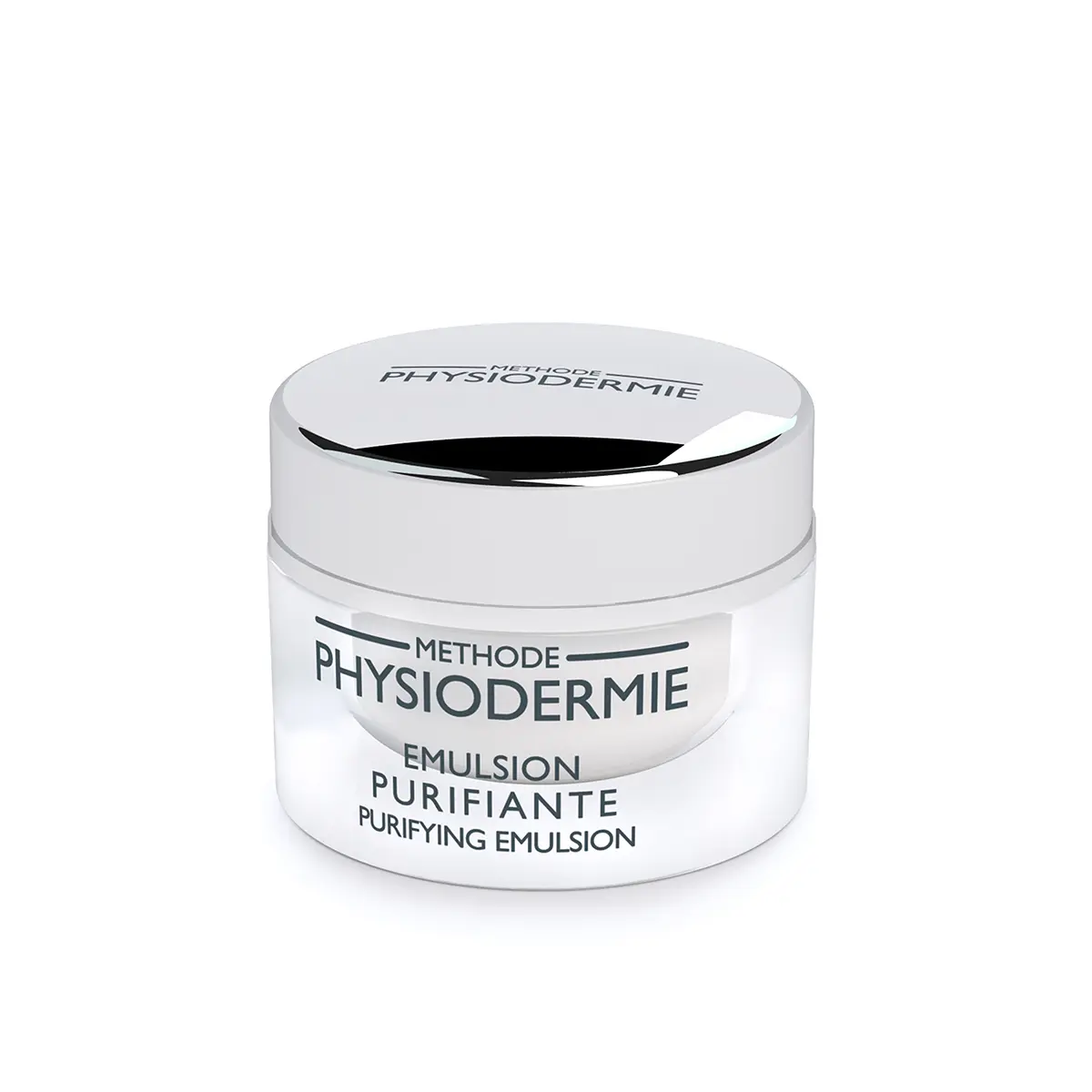
Physiodermie Purifying Cream – 6.76 oz (Professional Size)
A balancing and hydrating cream for skin prone to acne, blackheads, open pores, impurities and a dull complexion.
This is the 6.76 oz professional (back-bar) size — the same formula as the retail size in a treatment-room format sized for repeat facials and high-use routines.
Who it’s for
Formulated for acne and blackheads.
Key benefits
Nourishes and helps maintain the skin’s moisture balance
Comfortable, cushioning texture that absorbs without heaviness
Helps keep skin soft, supple, and protected through the day
On cleansed skin, apply to the entire face and neck. For an optimal result, use in synergy with the Bioarome DS.
Not for
External use only; avoid contact with the eyes. If you are pregnant, nursing, or have a diagnosed skin condition, consult your physician or skincare professional before use. Discontinue if irritation occurs. This product is not a substitute for medical treatment.
Is the professional size the same formula as the retail product? Yes — it is the identical Purifying Cream formula in a larger 6.76 oz back-bar size for professional and high-use application.
Can I use this at home? Absolutely. While sized for the treatment room, it is the same formula many clients choose to continue their routine at home.
Is this authentic Physiodermie? Yes. OrganicSkinCare.com is an authorized US retailer of Physiodermie.
A gentle lathering cleanser for face and body, suitable for sensitive skin, that cleanses while respecting the epidermis and leaves skin soft and supple.
This is the 16.9 oz professional (back-bar) size — the same formula as the retail size in a treatment-room format sized for repeat facials and high-use routines.
Who it’s for
Formulated for all skin types, especially sensitive.
Key benefits
Lifts away makeup, oil, and daily impurities without stripping the skin
Leaves skin feeling clean, fresh, and comfortable
Prepares the skin to better receive serums and treatments
Apply to body and face in the shower or bath, lather, then rinse off. Avoid contact with eyes.
Not for
External use only; avoid contact with the eyes. If you are pregnant, nursing, or have a diagnosed skin condition, consult your physician or skincare professional before use. Discontinue if irritation occurs. This product is not a substitute for medical treatment.
Is the professional size the same formula as the retail product? Yes — it is the identical Shower Hydrating Milk SL Evolution formula in a larger 16.9 oz back-bar size for professional and high-use application.
Can I use this at home? Absolutely. While sized for the treatment room, it is the same formula many clients choose to continue their routine at home.
Is this authentic Physiodermie? Yes. OrganicSkinCare.com is an authorized US retailer of Physiodermie.
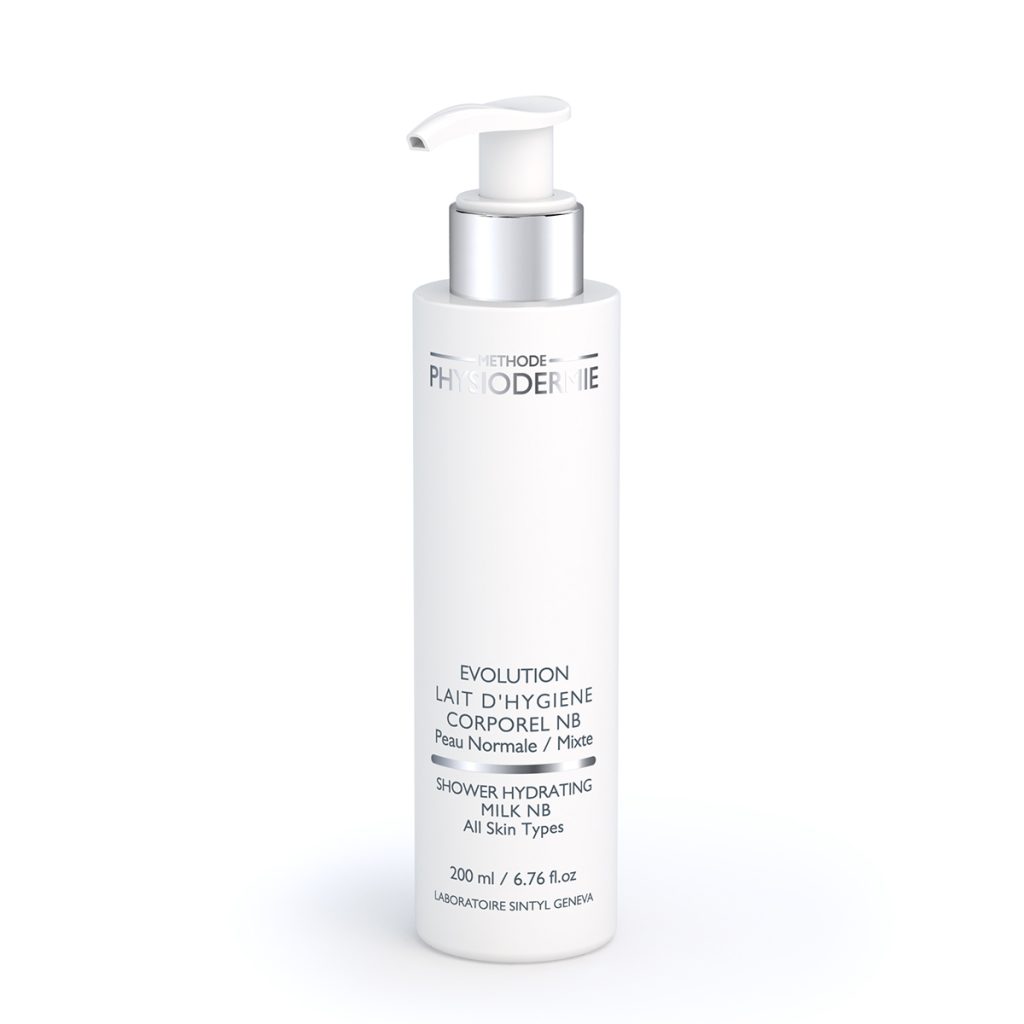
Physiodermie Shower Hydrating Milk NB Evolution – 16.9 oz (Professional Size)
A gentle lathering cleanser for face and body that cleanses while respecting the epidermis, leaving skin soft and supple.
This is the 16.9 oz professional (back-bar) size — the same formula as the retail size in a treatment-room format sized for repeat facials and high-use routines.
Who it’s for
Formulated for normal to oily skin types.
Key benefits
Lifts away makeup, oil, and daily impurities without stripping the skin
Leaves skin feeling clean, fresh, and comfortable
Prepares the skin to better receive serums and treatments
Apply to body and face in the shower or bath, lather, then rinse off. Avoid contact with eyes.
Not for
External use only; avoid contact with the eyes. If you are pregnant, nursing, or have a diagnosed skin condition, consult your physician or skincare professional before use. Discontinue if irritation occurs. This product is not a substitute for medical treatment.
Is the professional size the same formula as the retail product? Yes — it is the identical Shower Hydrating Milk NB Evolution formula in a larger 16.9 oz back-bar size for professional and high-use application.
Can I use this at home? Absolutely. While sized for the treatment room, it is the same formula many clients choose to continue their routine at home.
Is this authentic Physiodermie? Yes. OrganicSkinCare.com is an authorized US retailer of Physiodermie.
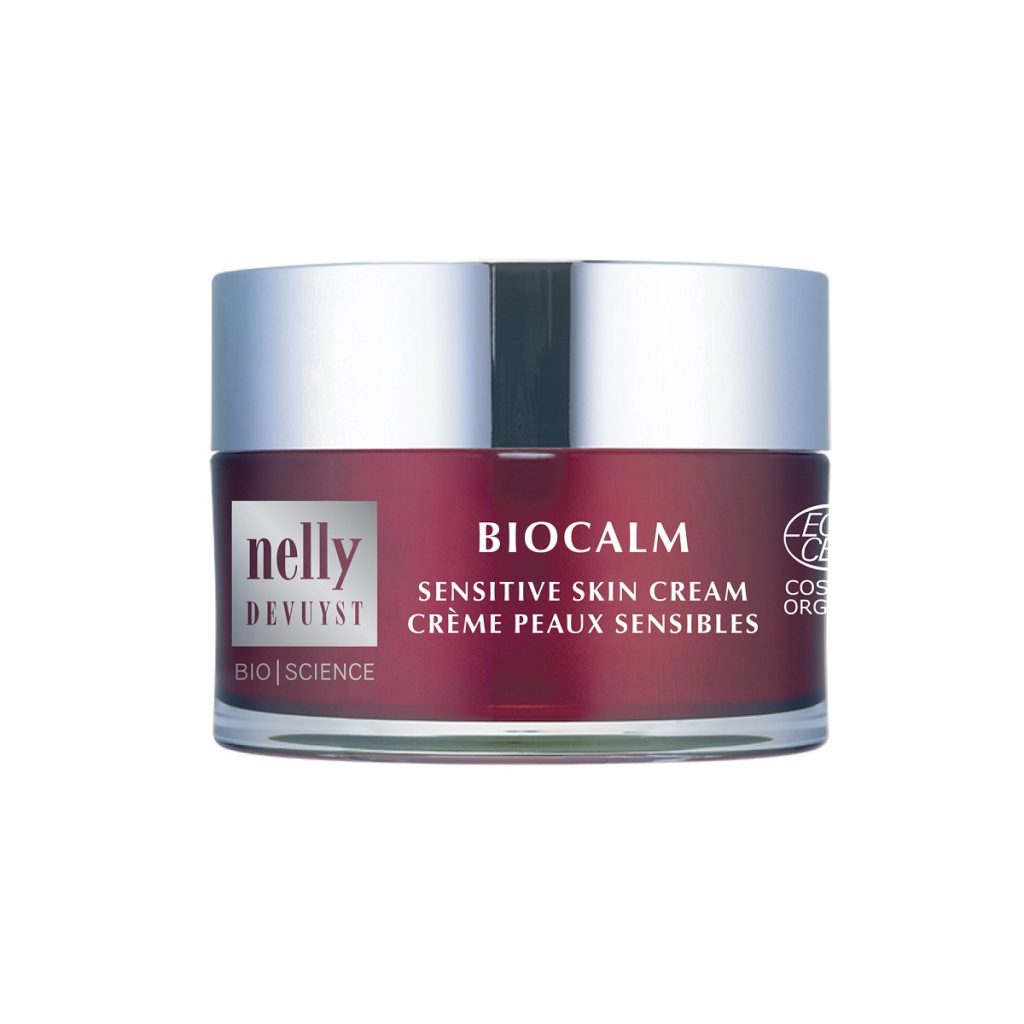
Reactive, sensitized skin needs a moisturizer that calms rather than provokes. Nelly De Vuyst’s BioCalm Sensitive Skin Cream is the cornerstone of the brand’s BioCalm collection — a highly protective organic moisturizer developed for sensitive, intolerant, dry, and eczema-prone skin. This is the 150 g / 5.29 oz professional (back-bar) size, the same formula as the retail jar in a treatment-room format sized for repeat facials and high-use routines.
Who it’s for
Sensitive, reactive, and easily-flushed skin prone to redness, irritation, or discomfort. Suited to professional treatment protocols and clients continuing BioCalm care at home.
Key benefits
Calming arnica and embryonic caper extracts help relieve signs of discomfort and reduce the look of redness
Biomimetic essential fatty acids help restore the skin’s protective barrier and replenish hydration
Prebiotics and antioxidants help strengthen the skin’s natural defenses and daily tolerance
Leaves skin feeling silky-smooth, comfortable, and protected
For daily use morning and/or evening. Apply to cleansed face, neck, and neckline, or as directed within a professional facial protocol. For external use only; avoid contact with eyes.
Not for
External use only. If you are pregnant, nursing, or have a diagnosed skin condition, consult your physician or skincare professional before use. Discontinue if irritation occurs. Not a substitute for medical treatment.
Is the professional size the same formula as the retail cream? Yes — it is the identical BioCalm Sensitive Skin Cream formula in a larger 150 g / 5.29 oz back-bar jar for professional and high-use application.
Is BioCalm suitable for very reactive skin? BioCalm is Nelly De Vuyst’s collection developed specifically for sensitive and reactive skin. As with any new product, patch-test first and introduce gradually.
Can I use this at home? Absolutely. While sized for the treatment room, it is the same cream many clients choose to continue their BioCalm routine at home.
Are you a newbie to skin care? Then this post is undoubtedly very beneficial for you. Starting skin care, people suffer from slow or no results despite wasting money and time, and even reactions on the skin leading to rashes, redness, or even patch formation. The main reason is a lack of knowledge of skin care actives combinations.
Using ingredients that cannot be used complimentary can lead to the effects mentioned before, hence should be avoided by one. In this article, we will dive deep into all the commonly occurring skin care actives in products and explain whether mixing skin care ingredients complement each other or not with proper reasoning.
Here we narrow down a list of skin care actives for you to step ahead in your skin care routine.
Vitamin A (Retinol)
Whenever it’s all about nourishing your body, vitamins come to your rescue. That’s the reason they are the active ingredients in many cosmetics.
Do you want to reverse your age? Obviously not the number but your looks! Then next time you go skincare product shopping, look for vitamin A as an ingredient. As this small, fat-soluble molecule penetrates deep into your skin, it will help in:
Neutralizing free radicles in the skin.
Increasing skin cells’ growth by stimulating the production of collagen.
Reducing the effect of fine lines, wrinkles, and age spots.
Cleansing the clogged pores deeply.
Vitamin B (Niacinamide)
A water-soluble compound often used for its vital role in cell metabolism and red blood cell production is also very beneficial as a skincare active. This magic skincare active possesses the ability to:
Reduce pore size
Reduce skin dullness
Smoothen skin texture
Regulate sebum secretion
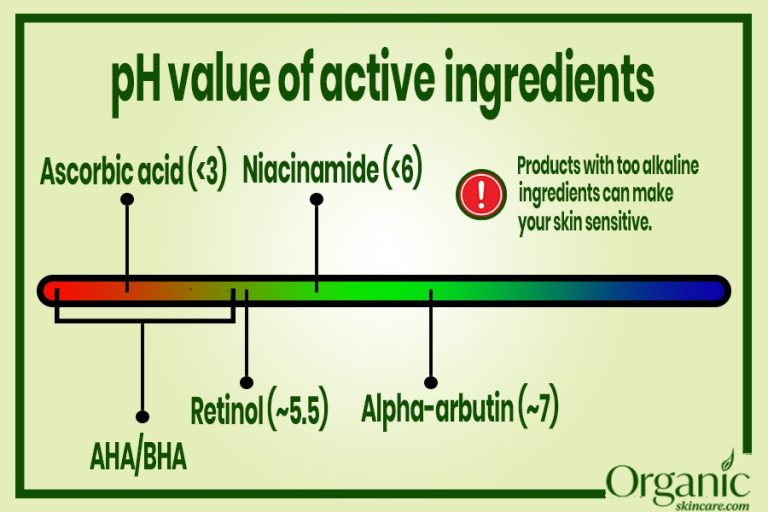
It’s not the best part yet! Due to its slightly acidic nature (4.5), it neither irritates nor burns your skin. So if you have sensitive skin, you don’t need to worry about this too! Vitamin B is best for oily skin, so people with oily skin can use this as an active ingredient.
Vitamin C (Ascorbic acid)
Yet another vitamin that can help to improve your skincare routine. Applying it to your skin will make it brighter and improve its elasticity which is only possible as vitamin C encourages collagen production. Collagen strengthens skin and capillary walls, which led to the results mentioned before.
But Vitamin C, being an acid, can be harsh to the skin as it has a pH of approx 2-3 means this can irritate your skin a bit. That is why many dermatologists suggest its use by people having mature skin. But thanks to the chemists out there, people having sensitive skin can still benefit their skin by using its derivative, which is not as harsh as ascorbic acid and is safe to use as it is comparatively gentle!
$72.00Original price was: $72.00.$36.00Current price is: $36.00.Add to cart
Dermatologists' tip here!
Use a minute amount of vitamin C to apply initially and increase on-demand with time gradually to avoid sudden reactions on the skin.
Alpha arbutin
Alpha arbutin is generally an active ingredient in whitening creams, and this is because of its mode of action. It is an inhibitor of the tyrosinase enzyme. Tyrosinase is responsible for melanin production. A decrease in melanin production lightens the skin pigmentation giving a brighter skin tone.
Alpha arbutin is mainly the extracts from fruity goodness such as cranberries and blueberries and is also almost neutral (5.5 to 6 pH); this self explains that it is safe to use on the skin.
Apart from just skin whitening, they are also used to treat:
If you ever go through the active ingredients of good serums, they must contain hydroxy acids. So now, let us extend the list toward hydroxy acids. Hydroxy acids are even of two types; AHA and BHA. Apart from the fact that they have differences in terms of polarity, other differences help us choose whether AHA or BHA is better to use in a particular product as an active ingredient.
AHA (Alpha-hydroxy Acids)
This water-soluble acid, often extracted from milk and fruit, is an excellent chemical exfoliant that will flay the damaged epidermis eliminating dead skin cells, blackheads, and whiteheads.
The common AHAs are:
Glycolic Acid.
Lactic Acid.
Mandelic Acid.
Citric Acid.
Tartaric Acid
Attention!
Glycolic acid can be harsh, so avoid using it if you think your skin is sensitive! The other acids listed above are gentle and can be used by all.
BHA (Beta-hydroxy Acids)
Yet another acid is used as an exfoliant, but as it has a fat and oil-soluble nature, it can penetrate deep down to your skin, removing dead skin cells and killing bacteria. It also limits excess sebum secretions; therefore can be used to treat oily skins.
To summarize things, AHAs can be used to:
Even out your skin tone.
Reverse aging by treating fine lines, wrinkles, age spots, and open pores.
Neutralize hyperpigmentation and scars.
And BHA can be used to:
heal inflammation caused by bacteria.
Cleanse skin deeply.
Treat acne and patches.
Get rid of skin redness such as in rosacea.
Hyaluronic acid
Yet another acid to advance your skincare results. Hyaluronic acid:
retains moisture
reduces wrinkles, open pores, fine lines of skin
makes your skin grime free
accelerates healing of skin (rashes, wounds, and patch-free skin)
Seeing that many acidic active ingredients and the goodness they possess, you might be surprised, and fear in using them might have vanished too!
Discussing all the active ingredients is not just enough to boost your skincare routine. All these uses mentioned were to make you aware of their mode of action on your skin. Now, things have just started. As of now, we will not only be discussing layering skincare care actives but also fruitful mixing of skincare actives and skincare actives not to mix.
The fundamental tip for all skincare conscious here!
Always apply skincare products to clean and dry skin. Firstly, Rinse your face with soap thoroughly, then pat dry it with towels.
$97.00Original price was: $97.00.$72.18Current price is: $72.18.Add to cart
Skin Care Ingredients That Work Well Together!
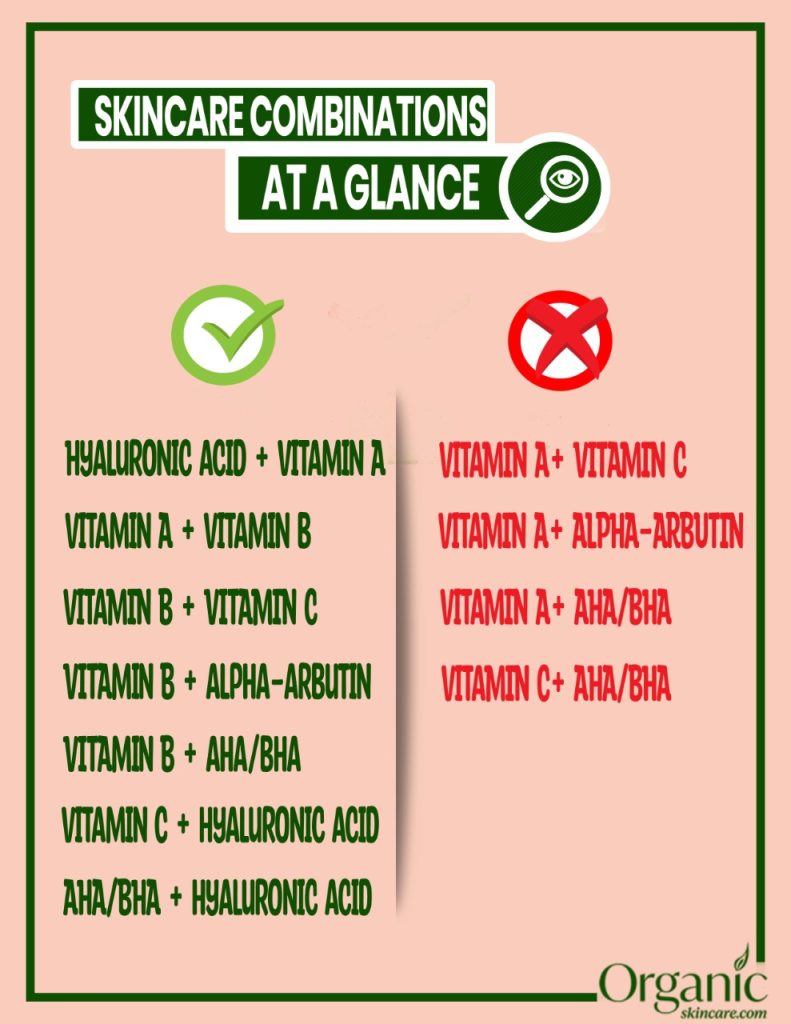
Starting with the good ones, let’s talk about mixing;
1) Hyaluronic acid and retinol
This duo makes sense when we break down their natures. Retinol possesses powers to reverse your age, but unfortunately, it can make your skin too dry. Hyaluronic acid can hydrate the dried skin. When layering skincare actives, it’s better to apply retinol first, then top this off with hyaluronic acid. So, it’s reliable to use without any side effects and is one of the most popular combinations.
2)Retinol and niacinamide
According to researchers, the use of retinol can be potent. Using niacinamide will help to tolerate the strong effect of retinol. This combination is compatible with sensitive skins too.
Niacinamide will heal the damages caused by environmental strain and boost ceramides production beneath your epidermis. Ceramides are notorious for retaining moisture!
3)Niacinamide and vitamin C
This combination was controversial, not anymore, by the way! According to derms, if you mix niacinamide with vitamin C at a high temperature, it can form a strong acid called nicotinic acid. Nicotinic acid has a pH of around 2.7. They suggest this combination is as dangerous as applying this on the skin can irritate.
But, later, fact-finding lists this combination among do’s! The benefits it bore were enough to draw the attention of derms, as it is capable of
Evening out your skin.
Making skin glow.
The eradication of dullness and pigmentation.
For layering skincare actives, apply vitamin C on your skin as it is acidic, and massage with niacinamide afterward.
Protip here!
It’s better to maintain 30 min gap between applying vitamin C and niacinamide so that vitamin C absorbs well!
4)Niacinamide and alpha-arbutin
A safe combination to use as both active ingredients are almost at a neutral pH; niacinamide(4.5) and alpha-arbutin(5-6.6). That indicates that they will neither burn out nor irritate your skin.
Keeping in mind the roles of each active ingredient, mixing these ingredients will help you achieve:
Hydrated and elasticized skin
Hyperpigmentation free skin
Balanced skin tone
If you use this duo to treat your hyperpigmentation, it’s better to apply an alpha-arbutin-based product first, then top it off with a niacinamide-based product. But, make sure you wait for alpha-arbutin to absorb in your skin.
If the concern is to regulate excess sebum secretion or deep cleansing to unclog your clogged pores, apply niacinamide first instead! Later, layer it with alpha arbutin.
5)Niacinamide and AHA/BHA
A great combination to improve your skin texture and reduce:
Dryness, as niacinamide act as a hydrating agent.
Dullness, due to deep cleansing by the action of BHA and AHA.
Pigmentation, due to epidermis flay off by the action of AHA.
First, apply AHA/BHA as a chemical exfoliant, then layering this off with niacinamide will get the job done! But remember to keep at least 30 min delay.
6)Vitamin C and hyaluronic acid
Do you have a breakout in the skin and tried every remedy but still had no success? Stand aside, everyone! Try using products with these as an active ingredient!
Due to its moisture-retaining properties, hyaluronic acid helps make your skin hydrated and flexible. Moreover, It will speed up the healing process of wounds you might have caused by stroking your acne and pimples! Upon recommended usage, its age-defying feature will vanish your wrinkles, fine lines, and visible pores.
Considering the sole benefits of vitamin C, this combination will elevate your skincare routine surely!
When mixed, the negative impact of vitamin C, which might include breakouts and dried skin, the hyaluronic acid outweighs these impacts by causing a moisture barrier.
Because it can protect and strengthen your skin single-handedly, this mixture is one of the most popular combinations in skincare products!
Protip!
If you have vulnerable skin, it is always better to concern with your dermatologist first before applying an active ingredient with lower pH.
7) AHA/BHA and hyaluronic acid
Using acid-based products as a chemical exfoliator makes your skin often dehydrated, but using hyaluronic acid will help to make your skin supple and hydrated.
Skin Care Ingredients Not To Mix!
That is all about mixing skin care ingredients. Now let us turn our attention to skin care ingredients that you shouldn’t mix. It is even more important to know the don’ts of combining skin care actives; for effective skin care.
You may have wondered why your skin care regimen gives you breakouts or is not even working; one reason is that the combinations of skin care actives you use are faulty!
1)Retinol and Vitamin C
You better avoid products having retinol and vitamin C combined. That is because of the combination of pH. Retinol works best in neutral pH, which can be approx 5-6. Layering vitamin C (pH 2-3) can disrupt the functioning of retinol because of its acidic nature. Moreover, both of these skincare actives are potent and can harm due to overactivity.
Next time make sure you don’t layer them up. Instead, apply it to your skin alternatively, one at a time!
2)Retinol and alpha-arbutin
As retinol and vitamin C don’t mix due to combination in optimum pH, similarly; alpha arbutin needs an acidic medium to mix well in your skin (around 3.5-4). And that is not the case with retinol, as it needs 5-6 approx.
So it’s better not to layer these skincare ingredients if you don’t want to waste money!
3)Retinol and AHA/BHA
One of the reasons derms invalidate the mixing of retinol with AHA/BHA is that; both reduce the skin moisture making the skin dehydrated. So, using them together can show an adverse effect on your skin.
Besides this, it is also not recommended to use potent ingredients such as retinol after the chemical exfoliation by AHA/BHA. Upon usage, layering these skincare actives can induce hypersensitivity leading to redness and skin irritation, and can even disrupt the healing action of retinol.
Attention!
Always avoid retinoids on the same day after applying acidic skincare actives!
4)Vitamin C and AHA/BHA
Ascorbic acid and AHA/BHA, as they have acidic nature, can irritate your skin. Layering both at once can drain your skin moisture.
Some derms even allow it to use, which might be surprising for some! But that’s for those patients having quite oily skins. In addition, this applies to those also who got mature skin and can bear the excess acidity.
Well, these are some dos and don’ts to be aware of next time you shop for skin care actives. These guidelines will surely help to raise the bar on your skincare habits.
Frequently Asked Questions
What does active mean in skincare? Includes ingredients in your skincare products that target specific skincare concerns. Such as:
Acne
Reversing aging signs
blackheads
Healing
Curing pigmentation etc.
How do I start using actives?
To do this, first, know your skin type and nature. Always apply actives according to their behavior and reaction on your skin, balancing your optimum skin pH. Do a patch test.
First cleanse, then exfoliate, then smear your skincare actives.
What can you not mix with niacinamide?
Mixing it with retinol is among the most common don’ts.
What goes first, niacinamide or vitamin C?
For layering skincare actives, apply vitamin C on your skin as it is acidic, and massage with niacinamide afterward.
Can you mix niacinamide with lactic acid?
Yes, of course! Lactic acid is one of the AHAs, and niacinamide compliments well with AHAs and BHAs.
What is the best pH for skincare products?
It can be as low as “3” and as high as “7”.
Remember! Your normal skin pH is 5-6, so it’s better to remain in bounds!
Just remember! Your skin needs attention and your care, so apply everything to it wisely!
Expert sensitive-skin guides from our estheticians
2022 has seen consumer awareness about specific active ingredients and the health benefits of natural formulations have been hot topics. OrganicSkinCare.com outlined the top vitamins and bioactives you should look out for in skin care.
Vitamin C
Vitamin C is common in skin care and considered one of the essential ingredients for defending the skin against free radicals and stimulating collagen production, according to dermatologists.
It is recommended to apply vitamin C topically so it can be absorbed quickly, but it also has internal benefits when taken as a supplement. According to a study published in the American Journal of Clinical Nutrition and cited by Mind Body Green, higher vitamin C intake is associated with less wrinkled skin. It’s also been shown to combat oxidative stress in cells.
$72.00Original price was: $72.00.$36.00Current price is: $36.00.Add to cart
Vitamin A
Retinoids are the most common form of vitamin A for the skin. Regular use of retinol can stimulate cell turnover, stimulate collagen production, reduce dark spots, and unclog pores. It is one of the most important topical ingredients for the skin.
Vitamin A is also a lesser-known skin supplement is oral vitamin A. The fat-soluble vitamin is an essential nutrient for the proper functioning of various systems throughout the body and natural regeneration for skin.
Vitamin E
Vitamin E can protect the skin against UV rays and neutralize free radicals, according to Engelman. It is best used alongside vitamins A and C to maximize the potential effects. When consumed as a supplement, vitamin E can assist in collagen production and structure.
Vitamin B5
Vitamin B5, also known as pantothenic acid, is an emollient that can assist in treating naturally dry skin. It is commonly found in serum, gels, and creams and can reduce blemishes and irritation, it can potentially promote skin barrier function and anti-inflammatory properties.
Coenzyme Q10
CoenzymeQ10 (CoQ10), a fat-soluble substance that helps the body produce energy naturally, is called Coenzyme Q10. Although natural production decreases with age, CoQ10 (CoQ10) can be used in skin care products to increase levels in skin cells. Because of its ability to reduce wrinkles and fine lines, it is a popular ingredient in skin care. As a supplement, it can provide many benefits to the body, including reducing oxidative and lipid peroxidation. According to the article, CoQ10 protects mitochondrial membranes and regenerates other antioxidants like vitamins C and E.
Niacinamide
Niacinamide is a popular choice because of its effectiveness and gentleness. According to the article, it has anti-inflammatory properties and regulates oil production. It also helps even skin tone. It is also known as vitamin B3, and it can aid in the production of cellular energy and the maintenance of mitochondrial health.
Astaxanthin
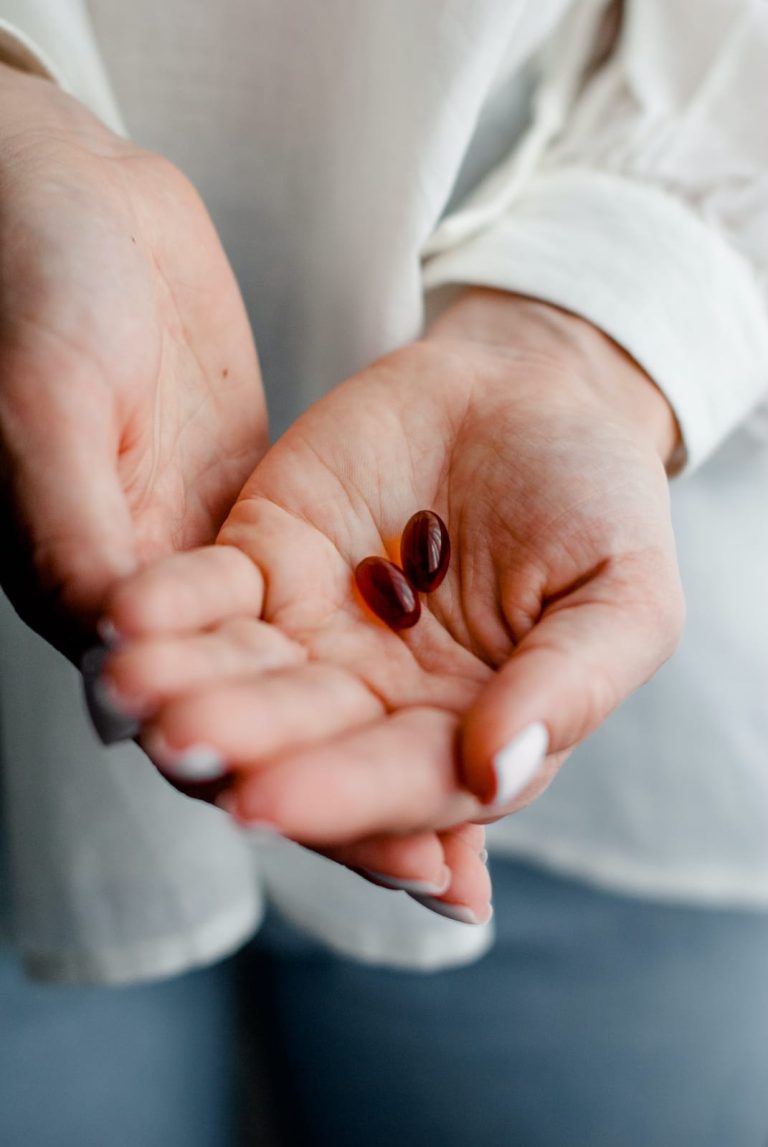
This antioxidant is more effective at neutralizing free radicals than vitamin C, according to Engelman. It can improve skin elasticity and appearance by increasing hydration levels. According to studies cited by Mind Body Green, using Astaxanthin as a supplement can improve skin elasticity and smoothness while reducing skin wrinkles and age spots.
Get up and take a deep breath.Literally.Because roses can have many benefits for the skin, we recommend that you put roses on your face rather than roses in a vase.Rose water, which is a mixture of rose oil, rose petals, rose hip oil, and rose essential oil, can have soothing and anti-inflammatory effects on the skin.This ingredient can be used in a variety of ways, including as a moisturizer, toner or moisturizer.
Benefit 1: Antioxidant
This is one major benefit roses and rosewater can provide for the skin.Antioxidants are great for skin. The antioxidants found in roses are no different.These antioxidants can strengthen the skin cells and help to regenerate them 1Also, they can neutralize free radicals which can give the skin anti-aging benefits.
Benefit 2: Healing and Skin Hydration
Roses are good for all skin types. However, they are especially good for dry skin because of their moisturizing properties.2Roses in essential oils can be used to moisturize the skin. They also protect the skin from moisture loss and keep the moisture barrier strong.3Roses can provide hydration for even those with dry skin.
Benefit 3: Anti-Aging and Wrinkle Eraser
Rose water and rose oil are rich in antioxidants. They also contain vitamin A and C which can be helpful for aging skin.These vitamins not only smoothen wrinkles but also reduce the appearance of age spots and increase collagen production.2Rose essential oil and rose water both come from rose petals. However, rose hip oil comes from small, naturally occurring rosehip seeds.
Benefit 4: Anti-Redness, Soothes the Skin
This ingredient is known for its anti-inflammatory properties, which can reduce redness and irritation.Its moisturizing properties can also soothe irritation and redness.2Rose hip oil is great for anti-aging. The combination of antioxidants, fatty acids and rose hip oil makes it ideal for soothing skin inflammation, such as eczema.
Rose water is a moisturizing agent that balances out the skin’s moisture. 1 Because it is so deeply hydrating, the skin has more water than oils. There are also astringent qualities in roses, which help remove dirt and oil from the skin and help maintain its natural pH.
The short answerCeramides are naturally occurring lipids that make up much of your skin’s outer barrier. Applied topically, they help reinforce that barrier so skin holds onto water and reacts less to the environment. Gentle and buffering, they’re often paired with cholesterol and fatty acids to support the look of calm, resilient skin.
How Ceramides works
Your barrier works like mortar between skin cells, and ceramides are a key part of that mortar. When it’s intact, water stays in and irritants stay out. Topical ceramides help top up those lipids, so the barrier seals more effectively and skin feels less tight, dry, or easily provoked.
Think of the outermost skin as a brick wall: the cells are the bricks and a blend of lipids is the mortar holding them together. Ceramides make up roughly half of that lipid mortar, alongside cholesterol and free fatty acids. When those lipids are depleted — by weather, over-washing, or strong actives — the wall gets leaky, water escapes, and skin feels tight, flaky, or stingy.
Topical ceramides work by replenishing that lipid pool from the outside. Formulas that combine ceramides with cholesterol and fatty acids in a barrier-supporting ratio tend to mimic skin’s own composition most closely, which is why so many barrier-support moisturizers lead with this trio. The result most people notice is simple: skin that holds water better and looks calmer and more comfortable.
What the evidence says
The barrier-support role of ceramides is well established in skin science, though marketing often overstates specific promises. Early and consistent evidence suggests topical ceramide blends can help reduce water loss and support a more comfortable barrier, especially in very dry or easily provoked skin. Individual results vary with formula and skin type.
The general principle — that replenishing barrier lipids helps skin retain water — is one of the better-supported ideas in cosmetic science, and it’s reflected in how widely ceramides now appear in gentle moisturizers. Small studies and reviews in dermatology literature have looked at ceramide-containing creams for very dry, sensitive skin and generally report improved hydration and reduced transepidermal water loss over a few weeks of use.
That said, the specifics matter and are easy to oversell. Concentration, the ratio of ceramides to cholesterol and fatty acids, and the overall formula all influence results, and much of the published work involves small groups or manufacturer-linked testing. Treat ceramides as a well-founded supportive ingredient rather than a dramatic fix, and judge a product by how your own skin feels over two to four weeks.
Sources: A small recent years study in a dermatology journal on a ceramide-containing moisturizer for very dry, sensitive skin, reporting improved hydration over several weeks (small sample, manufacturer-linked).; A narrative review of barrier-lipid research in a cosmetic-science journal describing reduced transepidermal water loss with ceramide, cholesterol and fatty-acid blends (review, not a controlled trial).. Individual results vary; this is educational, not medical advice.
Who it suits, and who should skip
Ceramides suit almost everyone. They’re especially helpful for dry or dehydrated skin, sensitive or easily provoked barriers, and anyone whose skin feels tight after cleansing. They also work well as everyday maintenance and as a buffer alongside stronger actives like retinol or exfoliating acids. Even oily and blemish-prone skin can use lightweight ceramide formulas.
Good fit for
Dry or dehydrated skin that feels tight or flaky
Sensitive or easily provoked barriers that react to new products
Anyone using retinol or exfoliating acids who wants a buffer
Oily and blemish-prone skin (choose a lighter, non-greasy formula)
Everyone, as simple daily barrier maintenance
Skip or patch-test first if
There’s no skin type that needs to avoid ceramides outright
Patch-test any new formula on your inner forearm for a couple of days first
If a specific cream breaks you out, the culprit is usually another ingredient like a heavy oil or fragrance, not the ceramides
Very oily skin may prefer a gel or lotion texture over a rich balm
How to use Ceramides
Ceramides are usually delivered in a moisturizer or cream rather than a standalone serum, so there’s no single percentage to chase — choose a well-formulated product over a number. Use it twice daily, morning and night, applied after your water-based serums and actives to seal them in. It layers comfortably under sunscreen or makeup.
Strength: No standard %; look for a ceramide + cholesterol + fatty-acid blend · Frequency: Twice daily, morning and night · When: Both AM and PM
In a routine, ceramides come near the end: cleanse, apply any water-based serums or actives (like a vitamin C serum or a retinoid), then layer your ceramide moisturizer on top to lock everything in, and finish with sunscreen in the morning. Because they’re buffering, a ceramide cream is a smart partner on the nights you use retinol or an acid. Patch-test a new formula on your inner forearm for a couple of days before applying it to your face, and give any product two to four weeks to judge how your skin responds.
Pairs well & don’t-combine
Ceramides are one of the easiest ingredients to pair — they play well with essentially everything and actively buffer stronger actives. They layer happily over retinol to offset its dryness, cushion exfoliating acids, and seal in hydration from hyaluronic acid. Niacinamide and vitamin C are fine alongside them too. No real conflicts to manage here.
Combine with
Verdict
Why
Retinol / retinoids
Fine
Layering a ceramide moisturizer over your retinoid helps offset the dryness and flaking retinol can bring. It’s a classic buffering pair, not a conflict.
AHAs (glycolic, lactic)
Fine
Ceramides cushion exfoliating acids and help skin feel comfortable afterward. Apply your AHA first, then seal with a ceramide cream.
BHA (salicylic acid)
Fine
As with AHAs, ceramides buffer salicylic acid and support the barrier while you exfoliate. Apply the BHA first, then your ceramide moisturizer.
Niacinamide
Fine
These two are complementary: niacinamide supports the barrier while ceramides replenish its lipids. Layer them in either order without issue.
Hyaluronic acid
Fine
A great duo: hyaluronic acid draws water into the skin and ceramides help seal it in. Apply HA to damp skin, then lock it down with a ceramide cream.
Vitamin C
Fine
Fine together. Apply your vitamin C serum first, then follow with a ceramide moisturizer, which can also cushion any tingling from stronger C formulas.
Verdicts describe general formulation compatibility for most skin, not medical guidance. When in doubt, introduce one active at a time and patch-test.
Best Ceramides products
Our roundup of the best barrier-support moisturizers for sensitive skin compares gentle, ceramide-forward creams that pair cholesterol and fatty acids in a barrier-supporting ratio, so you can match a texture and formula to your skin without guesswork.
Ceramides are lipids that make up a large part of your skin’s outer barrier. Applied topically, they help reinforce that barrier so skin holds onto water and reacts less to the environment. In practice, that usually shows up as skin that feels less tight, dry, or easily irritated.
Are ceramides good for oily skin?
Yes. Barrier lipids aren’t the same as pore-clogging oils, and even oily, blemish-prone skin has a barrier that can become dehydrated. Choose a lighter lotion or gel-cream texture rather than a heavy balm, and ceramides can support comfort without a greasy feel.
Can I use ceramides with retinol and acids?
Yes, and it’s often a smart idea. Ceramides buffer stronger actives, so layering a ceramide moisturizer over your retinoid or after an exfoliating acid helps offset the dryness and tightness those ingredients can cause. There’s no chemical conflict to worry about.
Should I use ceramides in the morning or at night?
Both. Because ceramides are gentle and buffering, they suit AM and PM use. Apply your ceramide moisturizer after your water-based serums to seal them in, then follow with sunscreen in the morning.
Can I use ceramides every day?
Yes. Ceramides are well suited to daily, long-term use as simple barrier maintenance, not just occasional rescue. Most people apply a ceramide moisturizer twice a day, every day, and there’s no need to cycle off them.
Do ceramides help a compromised or over-stressed barrier?
They’re one of the most commonly recommended ingredients for a stressed, over-exfoliated, or very dry barrier, because they help replenish the lipids that keep skin sealed. Pair a ceramide moisturizer with a gentle routine of fewer actives and a mild cleanser, and give it a few weeks. If skin stays very inflamed or broken, check in with a licensed professional.
Which routine is right for your skin?
Take the 2-minute skin quiz — get a routine built around gentle actives like Ceramides, matched to your skin type and sensitivities.
Disclosures. Educational content, not medical advice; Ceramides is not a treatment for any medical condition. This page links to products we carry directly and, where noted, to partner retailers via affiliate links (Amazon tag: davidgakshtey-20); OSC may earn a commission at no extra cost to you. Produced with AI assistance and reviewed by our team. Patch-test new products and, if pregnant or nursing, confirm with your provider.
Not sure which products are right for you? Take our free 60-second organic skin quiz for a routine matched to your skin type and concerns.