Search Results for: organic face oil

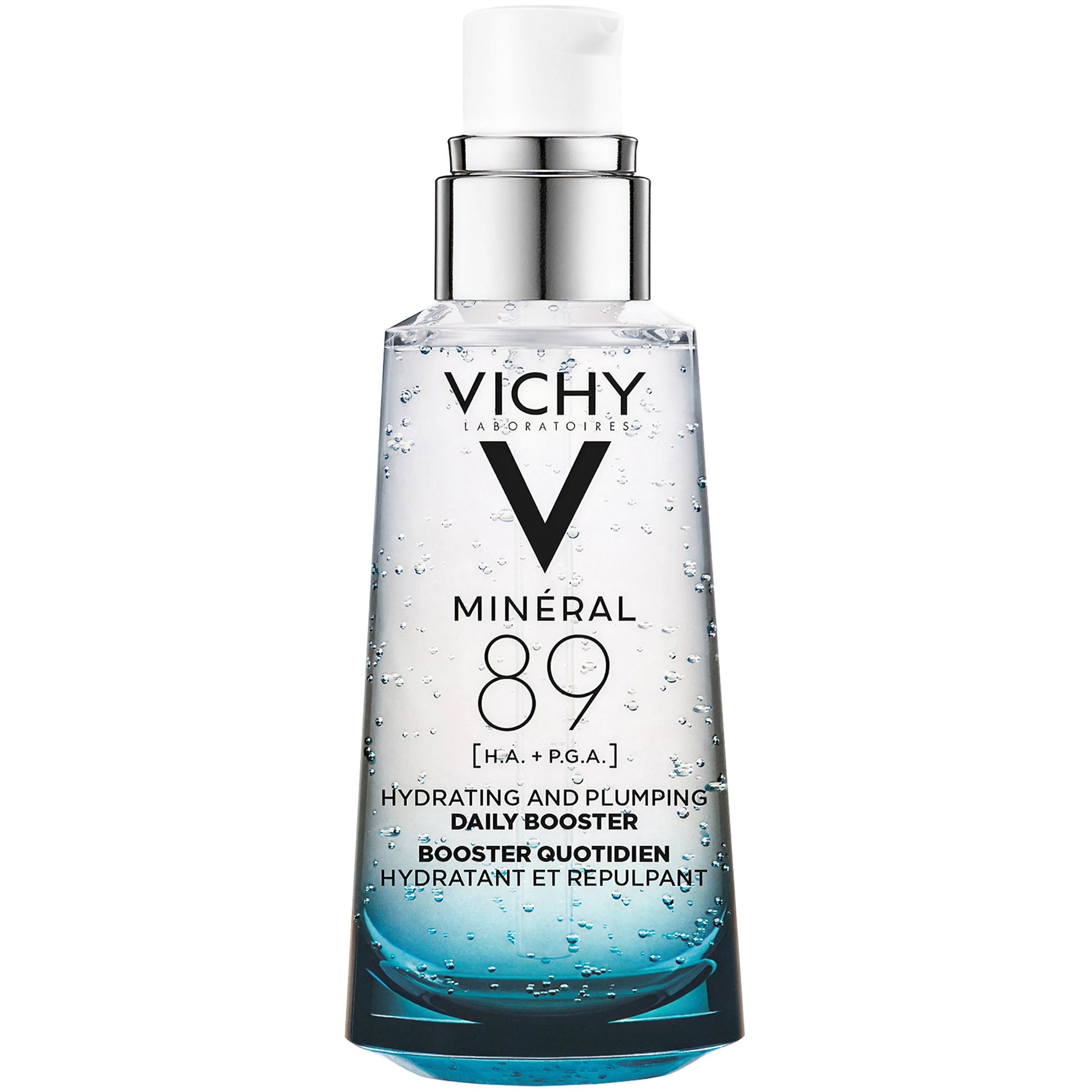
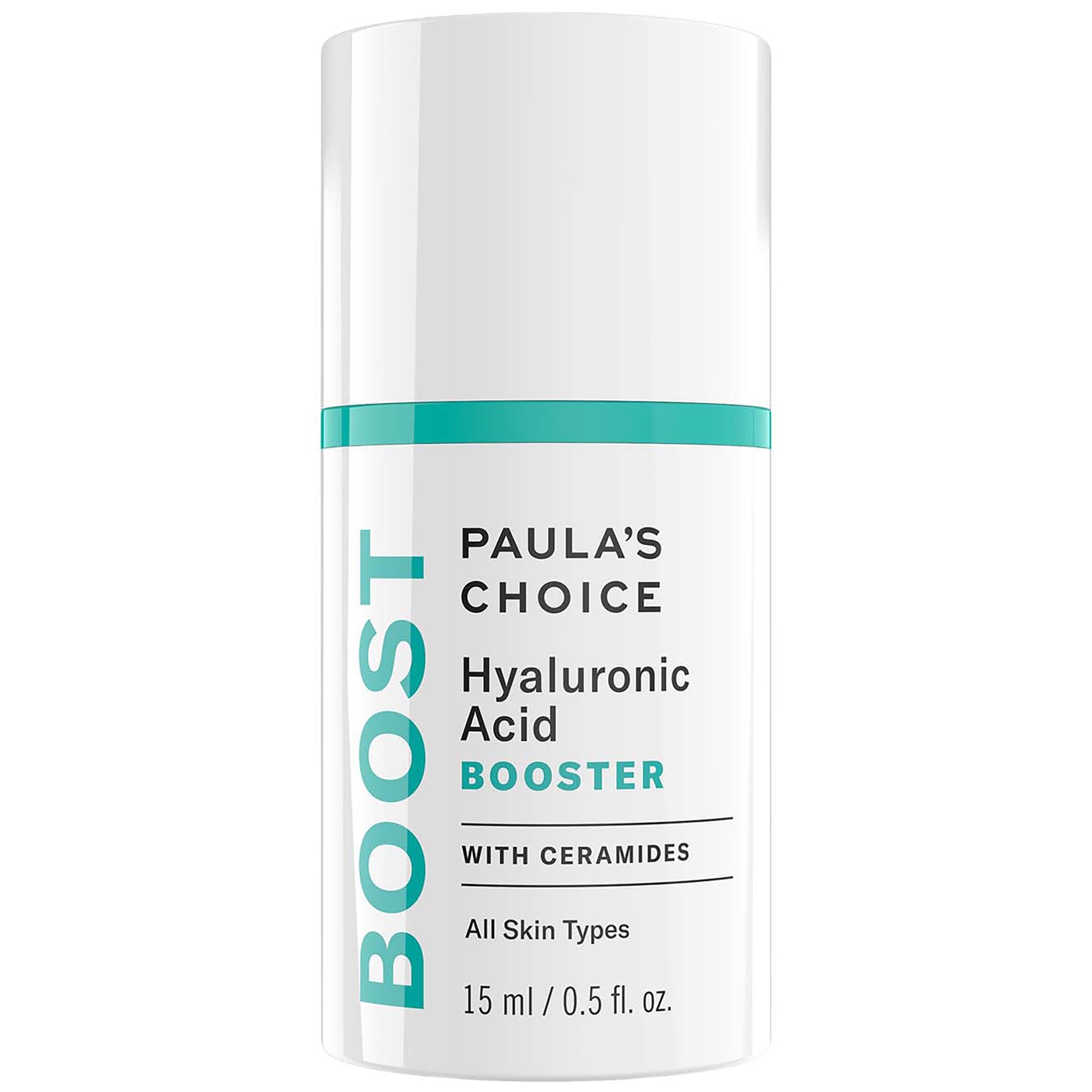
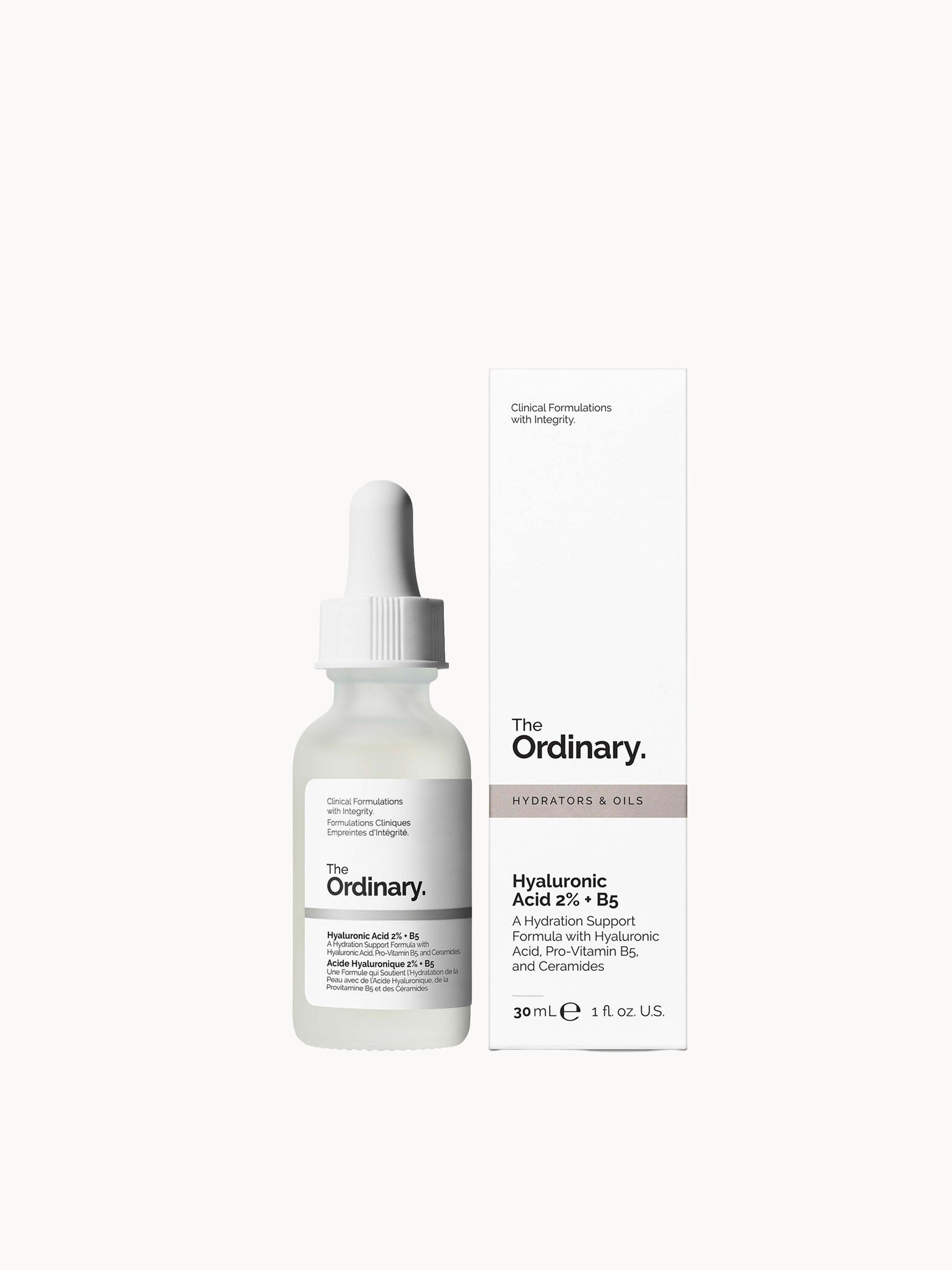
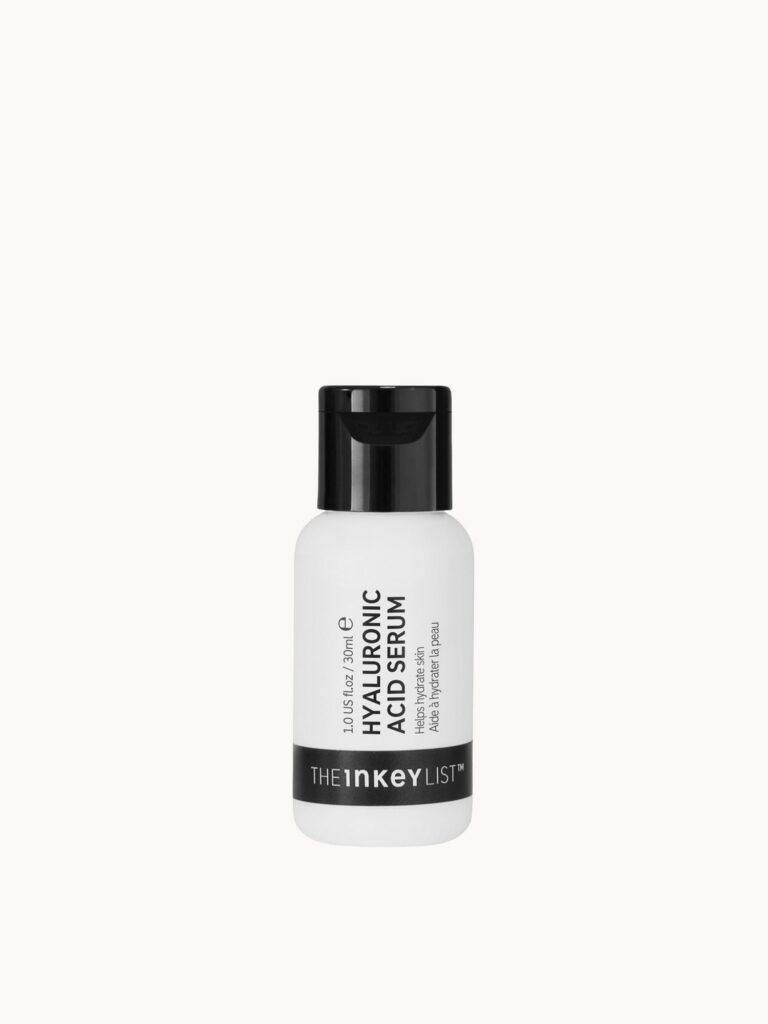
Hyaluronic Acid

Ingredient

Hyaluronic Acid

The short answerHyaluronic acid is a water-binding humectant, naturally present in skin, that draws and holds moisture in the upper layers for lightweight, plumping hydration. It suits nearly every skin type, rarely irritates, and layers easily under moisturizer. Different molecular weights sit at different depths, so many serums blend several for cushioned, all-day comfort.

How Hyaluronic Acid works

Hyaluronic acid works as a humectant: each molecule binds many times its weight in water, pulling moisture from your product and the surrounding air into the upper skin. That water swells and cushions the surface, so fine lines look softened and skin feels plumper, smoother, and more supple without heaviness or an occlusive film.

The molecule acts like a sponge held at the skin’s surface and just below it. It grabs water and holds it in place, which temporarily raises the water content of the outer layers. Better-hydrated skin reflects light more evenly and feels less tight, which is why a well-hydrated complexion often looks brighter and more even.

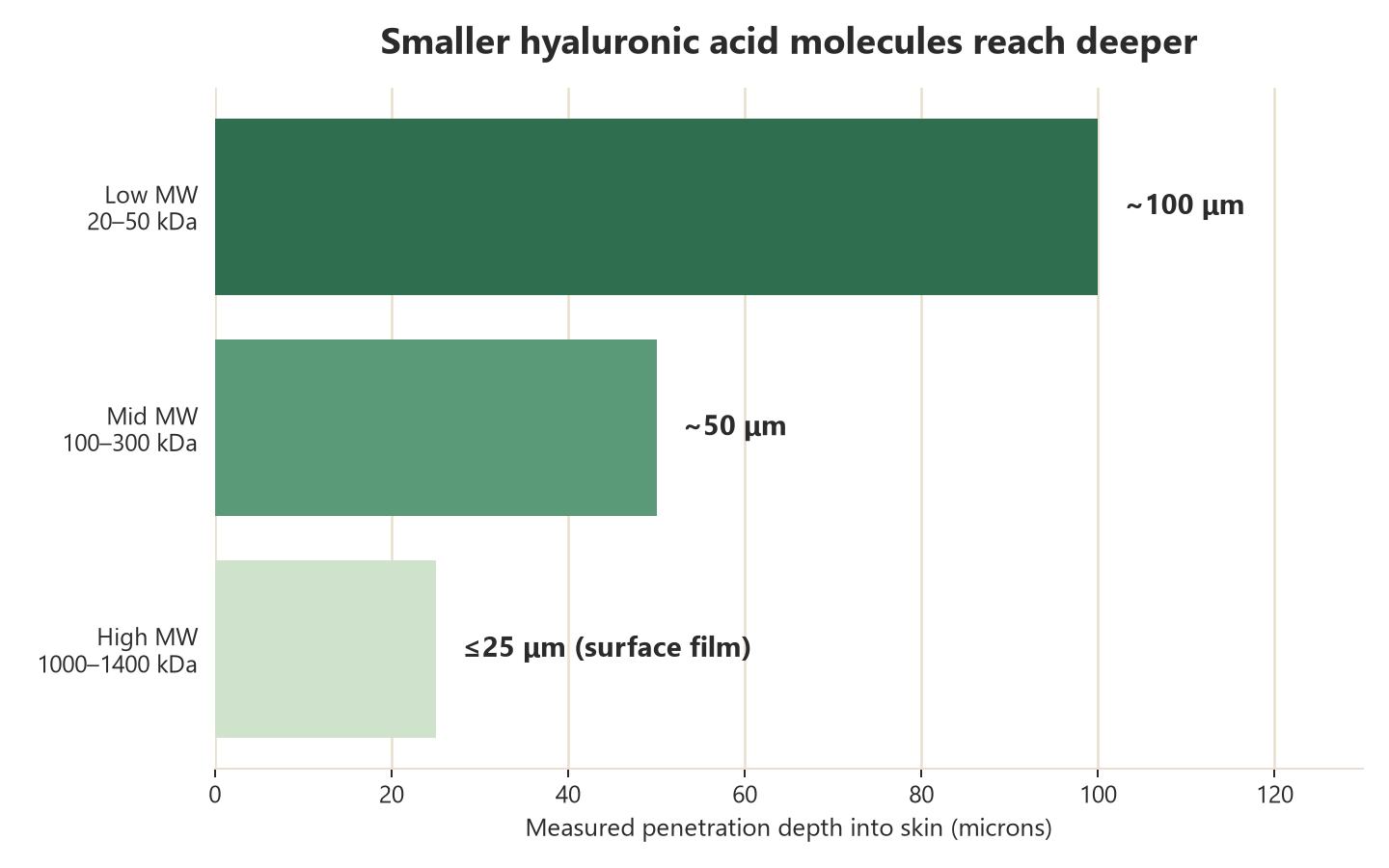
Molecular weight matters. Higher-weight hyaluronic acid tends to stay near the surface and form a smoothing, moisture-holding layer, while lower-weight fragments are thought to settle a little deeper. Many serums blend several weights so hydration feels cushioned at more than one level rather than sitting only on top.

What the evidence says

The evidence here is reassuring but should be read modestly. Hyaluronic acid is a long-established humectant, and small studies of topical formulas generally report improvements in short-term hydration and the look of fine lines. Most trials are small and industry-linked, so treat the effect as supportive of hydration rather than dramatic or permanent.

Across small clinical studies, topical hyaluronic acid generally produces a measurable but temporary rise in skin hydration, with some reports of short-term smoothing over several weeks. The effect depends on consistent use and on sealing it in, rather than on any single dramatic change.

Sources: Small clinical studies of topical hyaluronic acid formulations report short-term improvements in skin hydration and the look of fine lines; effects are temporary and best maintained with consistent use.; Narrative reviews of hyaluronic acid as a cosmetic humectant in the dermatology literature, describing its water-binding capacity and role in temporarily raising outer-layer (stratum corneum) hydration.. Individual results vary; this is educational, not medical advice.

Who it suits, and who should skip

Hyaluronic acid suits almost everyone. Because it hydrates rather than exfoliates and rarely irritates, it works for oily, dry, combination, and reactive skin alike. It is especially helpful for dehydrated, tight-feeling skin and as a lightweight layer under moisturizer. Oily skin can use it too, since hydration and oil control are separate concerns.

Good fit for

  • All skin types, including oily, combination, and blemish-prone
  • Dehydrated, tight- or rough-feeling skin that needs a moisture boost
  • Sensitive, reactive skin that struggles with stronger actives
  • Anyone layering hydration under a moisturizer, morning or night
  • Skin that feels dry after using retinoids or exfoliating acids

Skip or patch-test first if

  • In very dry or low-humidity air, applying it to bone-dry skin without sealing on top can pull water outward and feel tightening — apply to damp skin and follow with moisturizer
  • Skipping a moisturizer afterward, since the held water can simply evaporate
  • If a specific formula has caused stinging or irritation before — patch-test the finished product, not just the ingredient

How to use Hyaluronic Acid

Any percentage works — hyaluronic acid is gentle, so concentration matters less than technique. Use it once or twice daily, morning and night. Apply to slightly damp skin, then lock it in with a moisturizer straight away. Patch-test any new formula first, and let it absorb a moment before layering the next step.

Strength: any %, commonly 0.5%–2%  Â·  Frequency: once or twice daily, AM and PM  Â·  When: AM and PM

Layering order is what makes hyaluronic acid shine. After cleansing, mist or pat your skin so it is slightly damp, apply the serum, then seal with a moisturizer within a minute so the water it draws in stays put. In dry climates this sealing step matters most. If you also use vitamin C, retinol, or an exfoliating acid, hyaluronic acid layers comfortably alongside them and can ease the dryness those actives sometimes cause. As always, patch-test the finished product on your inner forearm for a few days before applying it to your face.

Pairs well & don’t-combine

Hyaluronic acid is one of the easiest actives to combine. It is inert and hydrating, so it pairs comfortably with niacinamide, vitamin C, retinol, bakuchiol, exfoliating acids, and ceramides — often buffering the dryness stronger actives can cause. There is essentially nothing it conflicts with, and no need to space it out from other steps.

Combine with Verdict Why
Niacinamide Fine These two are complementary hydrators and pair well in the same routine. Layer hyaluronic acid on damp skin, then niacinamide, with no need to separate them.
Vitamin C Fine A reliable pairing — hyaluronic acid adds hydration that can offset any dryness from a vitamin C serum. Apply vitamin C first, then hyaluronic acid, and seal with moisturizer.
Retinol / retinoids Fine One of the best partners for retinol. Hyaluronic acid cushions the skin and helps ease the dryness and tightness retinoids can cause, without reducing how the retinoid works.
Bakuchiol Fine Fully compatible and gentle. Hyaluronic acid adds lightweight hydration alongside bakuchiol, making a good option for sensitive skin easing into a firming routine.
AHAs (glycolic, lactic) Fine Hyaluronic acid cushions exfoliating acids and helps replace the moisture they can strip. Apply it after the acid has absorbed, then follow with moisturizer for comfort.
Ceramides Fine A natural pairing: hyaluronic acid draws in water and ceramides help hold it in place. Layer the hyaluronic acid serum first, then a ceramide moisturizer to seal everything in.

Verdicts describe general formulation compatibility for most skin, not medical guidance. When in doubt, introduce one active at a time and patch-test.

Best Hyaluronic Acid products

If you have sensitive or reactive skin, the right hyaluronic acid serum is a gentle, fragrance-considerate formula that layers cleanly under moisturizer. Our roundup of the best hyaluronic acid serums for sensitive skin gathers well-formulated options and explains what to look for, so you can match a texture and molecular-weight blend to your skin.

See the full breakdown: Best hyaluronic acid serums for sensitive skin — our estheticians’ picks, own-brand first, with honest tradeoffs on each.

Frequently asked questions

Does hyaluronic acid work for oily skin?
Yes. Hydration and oiliness are separate issues — even oily skin can be dehydrated, and hyaluronic acid’s lightweight, water-based texture usually feels comfortable without adding grease. Choose a serum rather than a rich cream, and follow with a light moisturizer to hold the hydration in.
Should I apply hyaluronic acid to damp or dry skin?
Slightly damp skin is best. Hyaluronic acid draws in whatever water is nearby, so applying it over a light mist or freshly cleansed, damp skin gives it moisture to bind. Always follow with a moisturizer to seal that water in, especially in dry air.
Can hyaluronic acid dry skin out?
It can feel drying in very low humidity if you apply it to bone-dry skin and skip a moisturizer, because it may pull water from deeper layers toward the surface, where it evaporates. The fix is simple: apply to damp skin and always seal with a moisturizer on top.
Can I use hyaluronic acid with vitamin C or retinol?
Yes, both pair well. Hyaluronic acid is inert and hydrating, so it layers comfortably with vitamin C and retinol and can ease the dryness those actives sometimes cause. Apply the treatment active first, then hyaluronic acid, then your moisturizer.
What does molecular weight mean for hyaluronic acid?
Molecular weight describes the size of the hyaluronic acid molecules. Higher-weight forms tend to sit near the surface and create a smoothing, moisture-holding layer, while lower-weight fragments are thought to settle a little deeper. Many serums blend several weights so hydration feels cushioned at more than one level.
How often should I use hyaluronic acid?
You can use it once or twice a day, morning and night. It is gentle enough for daily use across nearly all skin types, with no need to build up slowly as you would with a strong active. Consistency, and sealing it with moisturizer, matter more than frequency.

Which routine is right for your skin?

Take the 2-minute skin quiz — get a routine built around gentle actives like Hyaluronic Acid, matched to your skin type and sensitivities.

Take the skin quiz →

Disclosures. Educational content, not medical advice; Hyaluronic Acid is not a treatment for any medical condition. This page links to products we carry directly and, where noted, to partner retailers via affiliate links (Amazon tag: davidgakshtey-20); OSC may earn a commission at no extra cost to you. Produced with AI assistance and reviewed by our team. Patch-test new products and, if pregnant or nursing, confirm with your provider.

Not sure which products are right for you? Take our free 60-second organic skin quiz for a routine matched to your skin type and concerns.

Take the skin quiz →

Hyaluronic Acid Read More »

Niacinamide (Vitamin B3)

Ingredient

Niacinamide (Vitamin B3)

The short answerNiacinamide, or vitamin B3, is a gentle, water-soluble active found in many serums and moisturizers. It supports the skin barrier and helps soften the look of redness, visible pores, and uneven tone, while helping regulate the look of excess oil. Typically used at 4–10%, it is very widely tolerated across skin types.

How Niacinamide works

Niacinamide is a form of vitamin B3 that skin cells use to make energy-carrying molecules involved in barrier function. In practice, it appears to support the skin’s natural moisture barrier, help calm the look of redness, and moderate visible oil, which together make tone and pores look more even and refined over time.

Your skin naturally uses vitamin B3 as a building block for the coenzymes that power cell metabolism. When applied topically as niacinamide, it appears to support the production of barrier lipids like ceramides, which help skin hold onto water and stay comfortable. A stronger-feeling barrier is often why skin looks calmer and less reactive.

Niacinamide also seems to influence how much oil sits on the surface and how even skin tone looks. By moderating the appearance of shine and supporting a more uniform-looking complexion, it can make pores look less noticeable and overall tone look more even, though changes are gradual rather than dramatic.

What the evidence says

The evidence for niacinamide is encouraging but should be read with caution. Multiple small studies, mostly at around 4–5%, suggest it supports barrier function and the look of uneven tone and oiliness. Results vary by formula, concentration, and person, and most trials are modest in size, so treat findings as supportive rather than definitive.

Several small dermatology studies over the past two decades have looked at topical niacinamide, typically at 2–5%, and reported improvements in the appearance of skin tone, the look of visible pores, and surface oil, along with signs of better barrier hydration. These were mostly small, relatively short trials, and effect sizes were modest, so they point in a promising direction rather than proving a fixed outcome.

Because niacinamide is usually one active among several in a finished product, it can be hard to isolate exactly how much it contributes. The broad, consistent pattern across independent studies is what makes it a well-regarded, widely tolerated ingredient, but individual results still depend on the specific formula and your skin.

Sources: Independent dermatology studies of topical niacinamide have reported improvements in the appearance of skin tone and surface oil (small samples; results vary).; A separate controlled study reported better barrier hydration and a calmer-looking complexion in a niacinamide group versus vehicle.. Individual results vary; this is educational, not medical advice.

Who it suits, and who should skip

Niacinamide suits almost everyone. Because it is gentle and non-acidic, it works well for sensitive and redness-prone skin, oily and blemish-prone skin that wants oil looking more balanced, and anyone targeting the look of uneven tone or visible pores. It layers easily into most routines and rarely causes irritation at moderate strengths.

Good fit for

  • Sensitive and redness-prone skin looking for a calmer, more even appearance
  • Oily and blemish-prone skin that wants the look of shine and pores kept in check
  • Skin working on the look of uneven tone or dullness
  • Barrier-focused routines that need a gentle, supportive daily active
  • Beginners who want an easy, low-irritation active to start with

Skip or patch-test first if

  • Very reactive skin should start at a lower percentage (around 4–5%) rather than 10%+
  • The most sensitive skin may notice a brief, temporary flush at high strengths — lower the percentage if so
  • Anyone with a history of reacting to new products should patch-test first
  • If irritation appears, reduce frequency before stopping altogether

How to use Niacinamide

Use niacinamide at 4–10%, once or twice daily, in the morning, evening, or both. A 5% concentration is a well-tolerated sweet spot; 10%+ is stronger and can flush the most reactive skin, so start lower if unsure. Apply it after cleansing and any water-based serums, then layer moisturizer and sunscreen on top.

Strength: 4%–10% (5% is a well-tolerated sweet spot)  Â·  Frequency: once daily, building to twice  Â·  When: AM, PM, or both

Niacinamide is one of the easiest actives to layer: apply it to clean skin after any thin, water-based serums and before richer creams and oils. It pairs comfortably with most other ingredients, including vitamin C and retinoids, and in the morning it sits neatly under sunscreen, which should always go on last. As with any new product, patch-test on the inner forearm or behind the ear for a couple of days first, and if your skin is very reactive, begin at a lower percentage and build up as it adjusts.

Pairs well & don’t-combine

Niacinamide is a team player and pairs well with nearly everything. It sits happily alongside hyaluronic acid, vitamin C, retinoids, and exfoliating acids, and can even help buffer the dryness some of those cause. There are no true conflicts to fear; the only rule is to introduce strong actives one at a time so your skin can adjust.

Combine with Verdict Why
Vitamin C Fine The old idea that niacinamide and vitamin C cancel each other out comes from decades-old lab conditions and does not hold for modern, stabilized formulas. Used together, they layer comfortably and are a popular daytime pairing.
Retinol / retinoids Fine Niacinamide pairs well with retinoids and can help buffer the dryness and tightness they sometimes cause. Apply niacinamide first, or use them at different times of day if your skin is still adjusting.
Hyaluronic acid Fine A classic, effortless pairing. Hyaluronic acid draws in water while niacinamide supports the barrier, so they complement each other with no risk of interference.
AHAs (glycolic, lactic acid) Fine Niacinamide works fine alongside AHAs and can help offset the dryness exfoliation can bring. If your skin is reactive and new to acids, introduce them on separate days to keep irritation low.
BHA (salicylic acid) Fine This is a well-liked combination, especially for oily and blemish-prone skin, since both help oil and pores look more balanced. They layer without any known conflict.
Zinc oxide (mineral SPF) Fine Niacinamide layers neatly under mineral sunscreen with no interaction. Apply your niacinamide serum first and let it absorb, then finish with zinc oxide sunscreen as the final morning step.
Benzoyl peroxide Fine Niacinamide is stable next to benzoyl peroxide and can help soothe the dryness it can cause on blemish-prone skin. Unlike a retinoid, it is not deactivated by benzoyl peroxide.

Verdicts describe general formulation compatibility for most skin, not medical guidance. When in doubt, introduce one active at a time and patch-test.

Best Niacinamide products

If you are ready to choose a product, our roundup of the best niacinamide serums for sensitive skin walks through gentle, well-formulated options at beginner-friendly strengths. It highlights textures that layer easily and formulas chosen for calm, redness-prone skin, so you can match a serum to your routine with confidence.

See the full breakdown: Best niacinamide serums for sensitive skin — our estheticians’ picks, own-brand first, with honest tradeoffs on each.

Frequently asked questions

What percentage of niacinamide should I use?
For most people, 4–5% is the sweet spot: effective and very well tolerated. Concentrations of 10% or more are stronger and can cause a brief flush in the most reactive skin, so start lower and build up only if your skin stays comfortable. Higher is not automatically better.
Can I use niacinamide with vitamin C?
Yes. The claim that they cancel each other out is based on outdated lab conditions and does not apply to modern, stabilized formulas. Layered together, they make a popular, comfortable daytime pairing; if your skin is very sensitive, you can still use one in the morning and one at night.
Should I use niacinamide in the morning or at night?
Either, or both. Niacinamide is stable and non-photosensitizing, so it works well in the morning under sunscreen and in the evening under moisturizer. Using it twice daily is fine for most skin once you know you tolerate it.
Does niacinamide help with redness and pores?
By supporting the skin barrier and moderating surface oil, niacinamide often makes skin look calmer and pores appear less noticeable over several weeks. It’s one of the more reliably tolerated actives, so most people can use it daily without a fuss.
Can you use too much niacinamide?
Very high percentages layered on repeatedly can cause a temporary flush or mild irritation in the most reactive skin, though this is uncommon at typical strengths. There is little benefit to going above roughly 10%, so if you notice tightness or warmth, drop to a lower percentage or use it less often.
Can I use niacinamide with retinol?
Yes, and they pair nicely. Niacinamide can help buffer the dryness and tightness a retinoid sometimes causes, making the two comfortable to use together. If your skin is still adjusting to retinol, apply niacinamide first or use them at different times of day.
How long does niacinamide take to work?
Give it time. Most appearance-related changes, like more even-looking tone and less visible shine, tend to show over roughly 8–12 weeks of consistent use. Barrier comfort can feel better sooner, but patience and consistency matter more than any single application.

Which routine is right for your skin?

Take the 2-minute skin quiz — get a routine built around gentle actives like Niacinamide, matched to your skin type and sensitivities.

Take the skin quiz →

Disclosures. Educational content, not medical advice; Niacinamide is not a treatment for any medical condition. This page links to products we carry directly and, where noted, to partner retailers via affiliate links (Amazon tag: davidgakshtey-20); OSC may earn a commission at no extra cost to you. Produced with AI assistance and reviewed by our team. Patch-test new products and, if pregnant or nursing, confirm with your provider.

Not sure which products are right for you? Take our free 60-second organic skin quiz for a routine matched to your skin type and concerns.

Take the skin quiz →

Niacinamide (Vitamin B3) Read More »

Mineral vs Chemical Sunscreen: Which Suits Sensitive, Redness-Prone Skin?

Watercolor sun rising over white mineral blossoms and pebbles

Ingredient comparison

Mineral vs Chemical Sunscreen: Which Suits Sensitive, Redness-Prone Skin?

The verdict

For sensitive, reactive, redness-prone skin, a mineral sunscreen (zinc oxide, titanium dioxide) is usually the gentler first choice — it sits on the surface and shields immediately. Chemical filters feel lighter with no white cast and layer well under makeup, but a few can sting easily-irritated skin.

Mineral vs Chemical, side by side

The biggest difference is where each filter works. Mineral filters sit on top of skin and reflect and absorb UV, giving broad-spectrum protection the moment you apply. Chemical filters absorb into the top layer and convert UV to heat, which delivers a lighter, cast-free finish but needs about fifteen minutes before sun exposure.

Mineral Chemical
How it works Zinc oxide and titanium dioxide sit on the skin’s surface, reflecting, scattering, and absorbing UV. Protection is broad-spectrum the moment it’s applied. Organic filters like avobenzone, octinoxate, octisalate, and homosalate absorb into the top layer and convert UV into heat. They typically need about 15 minutes to become fully active.
Irritation profile Because it stays on the surface, mineral tends to sting less and is a common first choice for easily-irritated, reactive skin. Newer “clear zinc” formulas reduce the classic white cast. Cosmetically elegant with no white cast, and often more flattering on deeper skin tones. Some people find certain filters stinging, and added fragrance can be a trigger for reactive skin.
Pregnancy / nursing note Mineral filters are commonly chosen during pregnancy for their surface-level action. This is general framing, not medical advice — confirm with your OB-GYN or provider. Many people continue using chemical filters, but if you’re concerned about specific ingredients during pregnancy, ask your provider. We avoid calling any product “safe” and defer to your OB-GYN.
Price band $ – $$$ (~$15–70+) $ – $$$ (~$15–70+); broadly comparable to mineral
Organic status Aligns with a clean, organic-leaning routine — several mineral options are certified-organic. This is our house lane. Chemical UV filters are synthetic by nature, so they fall outside a certified-organic formulation, even when the rest of the formula is clean.

When to choose Mineral

Choose mineral if your skin is easily irritated, reactive, or redness-prone, if you want protection that works the instant you step outside, or if a clean, organic-leaning routine matters to you. It’s also the filter type commonly chosen during pregnancy — though you should confirm that with your provider.

  • Easily-irritated, reactive, or redness-prone skin that stings with many products
  • You want broad-spectrum protection active the moment you apply
  • A clean, certified-organic-leaning routine is a priority
  • You prefer a filter commonly chosen in pregnancy (confirm with your provider)

When to choose Chemical

Choose a chemical or hybrid filter if you want the lightest possible feel with no white cast, especially on deeper skin tones, or if you layer sunscreen under makeup daily. Apply it about fifteen minutes before sun, and patch-test first if your skin tends to sting with fragrance or specific filters.

  • You want the lightest, cast-free finish, especially on deeper skin tones
  • Sunscreen needs to disappear smoothly under daily makeup
  • You don’t mind applying about 15 minutes before sun exposure
  • You’ve patch-tested and don’t react to fragrance or specific filters

Picks for each

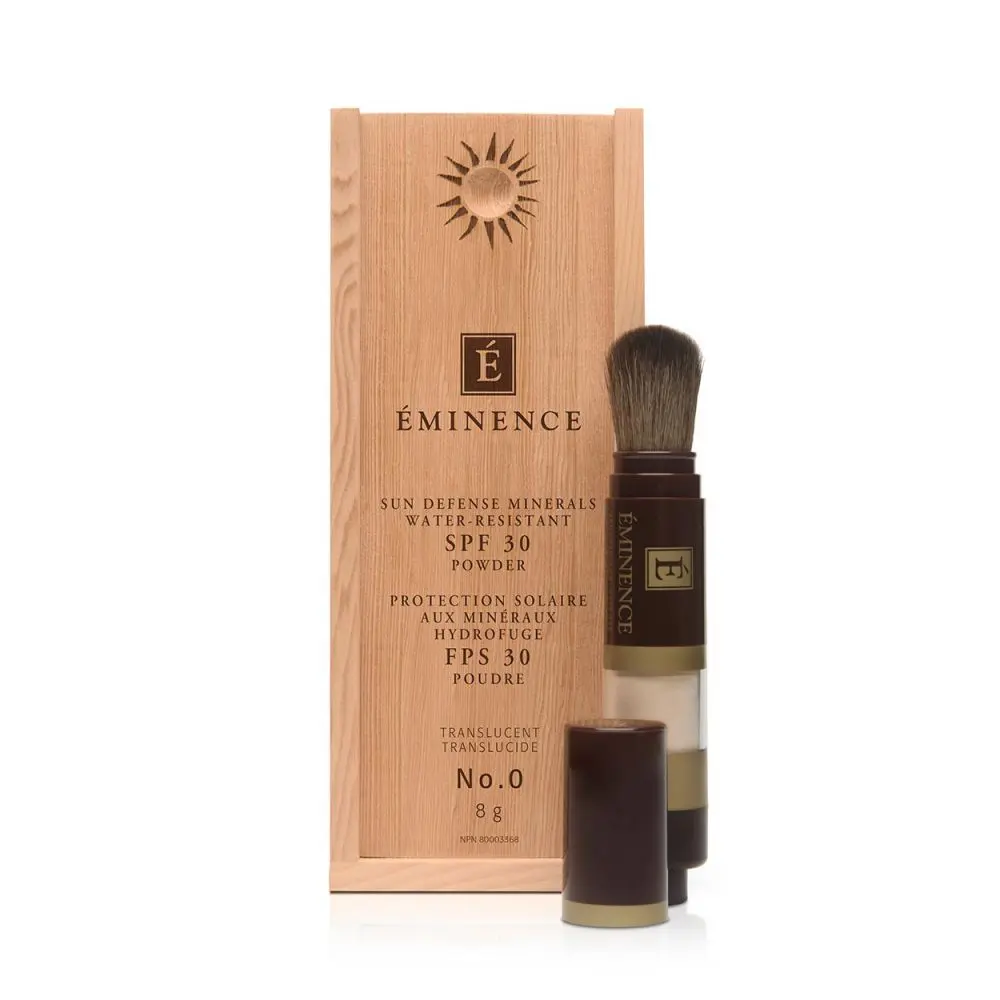
These are the sunscreens we’d actually reach for, starting with the professional organic products we carry — led by our own Eminence SPF 30 Sun Defense Minerals — then clearly-labeled partner options where a format or price point isn’t in our own range. Mineral is our house lane, so that’s where our shelf runs deepest.

Some picks below are affiliate links. OSC may earn a commission if you buy through them, at no extra cost to you, and it does not change our recommendations. Our own-brand picks are products we carry and curate in-house.

Mineral picks

Brush-on mineral SPF 30 that layers over any routine without white cast.
Eminence SPF 30 Sun Defense Minerals – 0.28oz

1. Eminence SPF 30 Sun Defense Minerals – 0.28oz (from our catalog)

  • Zinc oxide (mineral)

View at Organic Skin Care — $58

Best fragrance-free, organic-leaning value pick
Babo Botanicals Sheer Zinc Mineral Sunscreen Lotion SPF 30

2. Babo Botanicals Sheer Zinc Mineral Sunscreen Lotion SPF 30

  • non-nano zinc oxide

Check price on Amazon →

Best minimal-ingredient, certified-organic option
Badger Zinc Oxide Mineral Face Sunscreen SPF 30

3. Badger Zinc Oxide Mineral Face Sunscreen SPF 30

  • clear non-nano zinc oxide

Check price on Amazon →

Chemical picks

OSC’s lane is mineral, so we don’t carry a pure chemical sunscreen. The single option shown here — EltaMD UV Clear — is a widely-liked zinc-plus-chemical hybrid for those who want a lighter, no-cast finish, and it’s clearly labeled as a partner pick.

Best for acne-prone and oily reactive skin
EltaMD UV Clear Broad-Spectrum SPF 46 Facial Sunscreen

1. EltaMD UV Clear Broad-Spectrum SPF 46 Facial Sunscreen

  • transparent zinc oxide 9%

Check price on Amazon →

See the full breakdown: Best organic mineral facial sunscreens for sensitive skin — our estheticians’ picks, own-brand first, with honest tradeoffs on each.

Frequently asked questions

Is mineral or chemical sunscreen better for sensitive skin?
For most sensitive, reactive skin, mineral is the gentler first choice. Because zinc oxide and titanium dioxide sit on the surface rather than absorbing in, they tend to sting less and are less likely to bother the eye area. That said, some people wear chemical filters comfortably — patch-testing is the only way to know your own skin.
Does mineral sunscreen leave a white cast?
It can, though far less than it used to. Traditional zinc oxide leaves a pale film, but newer “clear zinc” and micronized formulas reduce that cast considerably. Tinted mineral options blur it even further and often suit deeper skin tones better than an untinted formula.
Which is better for redness-prone skin?
Mineral filters are usually the easier pick for visibly redness-prone skin, since they’re less likely to sting and a tinted version can visually offset redness with a soft neutral tone. Fragrance-free formulas remove one more common trigger. Keep the routine simple and patch-test anything new before daily use.
Mineral vs chemical sunscreen during pregnancy — which do people choose?
Many people choose mineral filters during pregnancy because they act at the skin’s surface. This is general, widely-published framing rather than medical advice, and we never call any product “safe.” If you have questions about specific chemical filters, confirm with your OB-GYN or provider.
Is one type more effective at protecting skin?
Both can offer excellent broad-spectrum protection when the label says so and you apply enough. The real-world difference is usage: mineral works the instant it’s applied, while chemical filters need about 15 minutes first. The most effective sunscreen is the one you’ll happily reapply every two hours.
Can I layer sunscreen over my serums?
Yes. Apply water-based serums first and give them a minute to settle, then your moisturizer, with sunscreen as the final skincare step before makeup. Let each layer absorb before the next so the sunscreen forms an even film — that even layer, more than the exact order, is what actually protects your skin.
What about hybrid sunscreens that combine both?
Hybrids pair zinc oxide with organic filters to get broad-spectrum coverage plus a lighter, cast-free feel. They’re a sensible middle ground if pure mineral feels too heavy but you still want some zinc in the mix. The partner pick we reference, EltaMD UV Clear, is one example.

Still not sure?

Take the 2-minute skin quiz and get a routine matched to your skin — it’ll tell you which of these fits.

Take the skin quiz →

Disclosures. This comparison is our editorial judgment, not medical advice. Links include products we carry directly and, where noted, partner-retailer affiliate links (Amazon tag: davidgakshtey-20); OSC may earn a commission at no extra cost to you. Produced with AI assistance and reviewed by our team. Patch-test new products and, if pregnant or nursing, confirm with your provider.

Not sure which products are right for you? Take our free 60-second organic skin quiz for a routine matched to your skin type and concerns.

Take the skin quiz →

Mineral vs Chemical Sunscreen: Which Suits Sensitive, Redness-Prone Skin? Read More »

Sensitive Skin: How to Calm Reactivity Without Stripping Your Barrier

Botanical illustration of chamomile flowers, oat stems and a centella leaf in soft watercolor

Skin concern guide

Sensitive Skin: How to Calm Reactivity Without Stripping Your Barrier

The short answerSensitive skin reacts — it stings, flushes, or tightens when the barrier is compromised or overloaded with actives. The fix is usually subtraction, not addition: a short, fragrance-conscious routine of a gentle cleanser, one calming treatment, a barrier-supporting moisturizer, and daily mineral SPF. Introduce anything new one product at a time.

What’s happening in the skin

“Sensitive” describes how skin behaves, not one diagnosis. Visible signs include redness that comes and goes, a warm or tight feeling after cleansing, and stinging when products go on. Often the barrier — the lipid layer that holds water in and irritants out — is temporarily weakened, so skin overreacts to things it would normally tolerate.

Triggers overlap: over-exfoliation, high-strength actives layered too fast, fragrance, hot water, and weather swings all raise reactivity. Because the causes run together, the useful question isn’t “which serum fixes this” but “what can I remove or slow down.” A pared-back routine gives the barrier room to recover, and a recovered barrier tolerates more. Patch-test anything new on the inner forearm for a few days before it touches your face.

Gentle actives that help

A handful of ingredients calm reactive skin instead of provoking it. Niacinamide supports the barrier and eases the look of redness. Bakuchiol offers retinol-style smoothing with a gentler tolerance profile. Ceramides and panthenol help rebuild the lipid barrier. Centella and chamomile soothe visible irritation. Zinc oxide shields from UV without the sting some chemical filters cause.

Niacinamide

Barrier support and a calmer look to redness, usually well tolerated at 5%.

Bakuchiol

A plant-based retinol alternative — slower, but gentler on reactive skin.

Ceramides & barrier lipids

Rebuild the lipid layer so skin holds water and reacts less.

Hyaluronic acid

Lightweight water-binding hydration that rarely irritates.

Zinc oxide (mineral SPF)

Sits on the surface and shields from UV with less stinging risk.

Build it into a routine

The most reliable move for reactive skin is a short, consistent routine rather than a rotating cast of actives. Four steps cover it: a gentle cleanse, one calming treatment, a barrier-supporting moisturizer, and mineral sunscreen every morning. Keep it steady for a few weeks so you can actually tell what is helping.

Ready-made framework: The Organic Sensitive-Skin Routine — cleanse, treat, hydrate, protect, with the exact steps and product slots.

Product picks for sensitive skin

Our picks start with the professional organic products we carry and stand behind. Where a useful format or price point isn’t in our own range, we add a clearly-labeled option from a partner retailer. Every own pick links to its OSC product page; every affiliate pick is disclosed below.

Calming professional serum that visibly reduces the look of redness.
Phyris Sensitive Calming Serum - 30 ml / 1 oz jar

1. Phyris Sensitive Calming Serum (from our catalog)

  • Calming complex + niacinamide

View at Organic Skin Care — $62.00

Chamomile and calendula comfort reactive skin while restoring moisture.
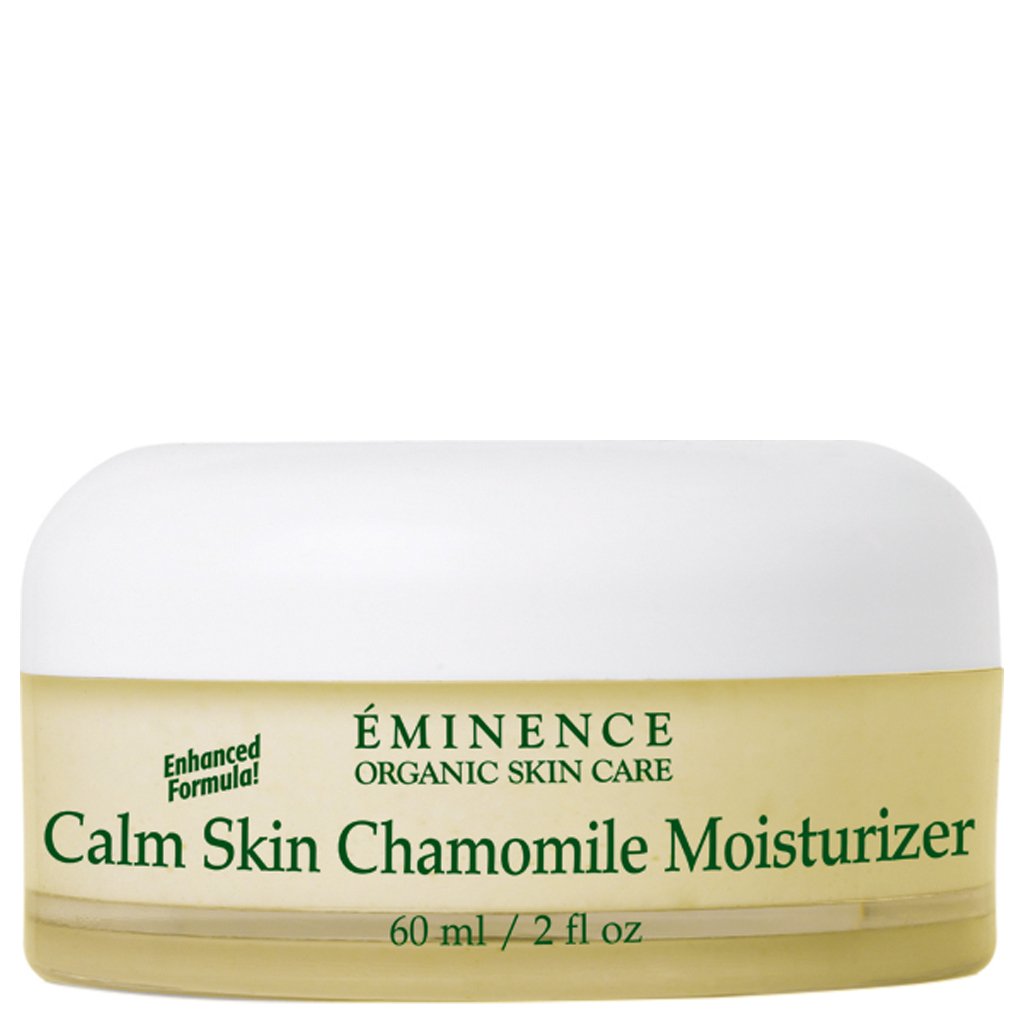
Eminence Organics Calm Skin Chamomile Moisturizer - 2 fl. oz

2. Eminence Organics Calm Skin Chamomile Moisturizer (from our catalog)

  • Chamomile + calendula

View at Organic Skin Care — $62.00

A fragrance-conscious cream built for easily-irritated skin.
Phyris Sensitive Moisturizing Cream - 50 ml / 1.7 oz. jar

3. Phyris Sensitive Moisturizing Cream (from our catalog)

  • Barrier lipids

View at Organic Skin Care — $67.00

Brush-on mineral SPF 30 that layers over any routine without white cast.
Eminence SPF 30 Sun Defense Minerals – 0.28oz

4. Eminence SPF 30 Sun Defense Minerals (from our catalog)

  • Zinc oxide (mineral)

View at Organic Skin Care — $58

The picks below this line contain affiliate links. OSC may earn a commission if you buy through them, at no extra cost to you. It does not change which products we recommend — our own-brand picks above are what we carry and curate in-house.
Barrier balm for very dry, compromised patches
La Roche-Posay Cicaplast Balm B5

La Roche-Posay Cicaplast Balm B5

  • 5% panthenol + madecassoside (centella) + shea + zinc/copper/manganese

Check price on Amazon →

Clean bakuchiol + peptides serum for the retinol-free route
Herbivore Moon Fruit Bakuchiol + Peptides Retinol Alternative Serum

Herbivore Moon Fruit Bakuchiol + Peptides Serum

  • Bakuchiol (no retinol) + peptides + fruit extracts

Check price on Amazon →

Guides for the common decisions

Still weighing two options? These buying guides walk through the choices reactive skin runs into most — a gentler alternative to retinol, and which sunscreen filter tends to sting less — with mechanism and tradeoffs laid out.

Bakuchiol vs. retinol: which fits your skin → · Mineral sunscreens for sensitive skin → · Barrier-repair moisturizers →

Frequently asked questions

What actually causes sensitive skin?
Sensitivity is usually a weakened skin barrier reacting to a trigger rather than a single condition. Over-exfoliation, layering strong actives too quickly, fragrance, hot water, and weather swings all raise reactivity. When the barrier is compromised it holds less water and lets more irritants in, so skin overreacts to things it would normally tolerate.
Can sensitive skin use a retinol alternative like bakuchiol?
Often, yes. Bakuchiol is a plant-derived compound that mimics some of retinol’s smoothing action with a gentler tolerance profile, so reactive skin that flushes on retinoids frequently handles it better. It works more slowly than prescription retinoids. Introduce it a few nights a week and pair it with a barrier moisturizer.
Is fragrance always a problem for sensitive skin?
Not for everyone, but fragrance (added or from essential oils) is one of the more common triggers for stinging and visible redness. If your skin reacts easily, choosing fragrance-conscious formulas removes a frequent variable, which makes it easier to tell what is actually helping or irritating.
How do I introduce a new product without a reaction?
Patch-test first: apply a small amount to the inner forearm or behind the ear once daily for three to five days and watch for redness, itching, or bumps. Then add it to your face one product at a time, waiting one to two weeks before introducing anything else, so you can trace any reaction to its source.
Do I still need sunscreen if I have sensitive skin?
Yes. Daily sun protection is one of the most useful steps for reactive skin. Mineral sunscreens that use zinc oxide or titanium dioxide sit on the surface and tend to cause less stinging than some chemical filters, which makes them a common first choice for easily-irritated skin.
How long until a gentler routine shows a difference?
Give a pared-back routine at least two to four weeks. Barrier repair is gradual, and the point of keeping the routine consistent is to let skin settle so you can judge what is working. If irritation continues after simplifying, that is a good reason to check in with a dermatologist.

Not sure where to start?

Take the 2-minute skin quiz and get a personalized sensitive-skin routine, matched to your skin type, sensitivities, and budget.

Take the skin quiz →

Disclosures. This page links to products we carry directly (internal links, not affiliate) and to partner retailers via affiliate links (Amazon tag: davidgakshtey-20); OSC may earn a commission on affiliate purchases at no extra cost to you. Content was produced with AI assistance and reviewed by our team. Nothing here treats or diagnoses any medical condition; patch-test new products and, if pregnant or nursing, confirm with your provider.

Sensitive Skin: How to Calm Reactivity Without Stripping Your Barrier Read More »

Refreshed hero image for: Discover 8 Latest Anti-Aging Ingredients Trending in 2023

Discover 8 Latest Anti-Aging Ingredients Trending in 2023

Are you looking to find out which ingredients are trending in 2023 for anti-aging and reducing wrinkles? The world of skin care is constantly evolving, so it’s important to stay up to date on the latest trends. From hyaluronic acid and peptides, to plant stem cells and niacinamide – there’s a lot of buzz around what could be the next big thing in skincare. Retinol has been popular for years but now we’re seeing some new players enter the game with innovative technologies like MEP technology. We’ll take a look at all these ingredients as well as collagen, glycolic acid, lactic acid and ceramides – giving you everything you need know about what might be making waves this year when it comes to anti-ageing products. So let’s dive into our exploration of finding out which ingredients are trending in 2023 for anti-aging and reducing wrinkles.

Table of Contents:

Hyaluronic Acid

Hyaluronic acid is a naturally occurring substance in the body that helps to keep skin hydrated and plump. It can be found in many anti-aging products, as it helps to reduce wrinkles and fine lines. Hyaluronic acid works by binding moisture into the skin, making it appear more youthful and radiant. Here’s what you need to know about this powerful ingredient:

Benefits of Hyaluronic Acid:

Hyaluronic acid has been proven to help improve skin elasticity, smoothness, and firmness while reducing the appearance of wrinkles and fine lines. It also helps lock in moisture for long-lasting hydration throughout the day. Additionally, hyaluronic acid can help protect against environmental damage caused by free radicals such as UV rays from the sun or pollution.

How To Use Hyaluronic Acid:

The best way to use hyaluronic acid is after cleansing your face with a gentle cleanser. Apply a few drops onto your fingertips before gently massaging it into your skin until fully absorbed. You can then follow up with other skincare products like serums or moisturizers if desired. For optimal results, apply twice daily – once in the morning and again at night before bedtime for maximum hydration benefits all day long.

There are several types of hydrating products available on the market today containing hyaluronic acid including creams, serums, masks, oils and even sprays. Depending on your individual needs you may want to opt for one type over another but generally speaking any product containing this ingredient will provide similar benefits when used regularly as part of an overall skincare routine.

Hyaluronic acid is a powerful ingredient that can help improve skin elasticity, reduce wrinkles and keep your skin hydrated. Now let’s take a look at peptides, another trending anti-aging ingredient for 2023.

Key Takeaway: Hyaluronic acid is a powerful anti-aging ingredient that helps reduce wrinkles and fine lines while also locking in moisture. It can be used twice daily after cleansing, either as a cream, serum, mask or oil to get the best results.

Peptides

Peptides are small molecules that help to stimulate collagen production in the skin, which can help reduce wrinkles and improve skin elasticity. Peptides have become increasingly popular as an ingredient in skincare products due to their ability to target specific areas of concern.

Benefits of Peptides:

Peptides are known for their anti-aging properties, helping to reduce the appearance of fine lines and wrinkles while also improving overall skin tone and texture. They can also help boost collagen production, which helps keep skin looking firm and youthful. Additionally, peptides may be beneficial for treating acne by reducing inflammation and oiliness on the surface of the skin.

In order to get the best results from peptide products, it is essential to adhere to a regular skincare routine that includes cleansing, toning, moisturizing, exfoliating (if needed), applying sunscreen during daylight hours and incorporating other active ingredients such as antioxidants or retinol. For optimum efficacy when using peptides specifically, apply them after cleansing but before moisturizing so they can penetrate deeply into your skin’s layers.

When choosing a product containing peptides, it is important to select one appropriate for your individual needs based on its concentration level as well as any additional ingredients included in its formulation. Some common examples include Matrixyl 3000™ Serum (for anti-aging benefits) or Acne Control Complexion Clearing Serum (for acne control).

Peptides have become increasingly popular for their ability to reduce wrinkles and fight signs of aging. As the next step, we’ll explore how plant stem cells can provide additional benefits to your skin care routine.

Key Takeaway: Peptides are a popular anti-aging ingredient due to their ability to reduce wrinkles and improve skin elasticity. To get the best results, use peptide products as part of a regular skincare routine that includes cleansing, toning, moisturizing and exfoliating. Choose an appropriate product based on its concentration level and additional ingredients.

Plant Stem Cells

Plant stem cells are a relatively new and exciting ingredient in the world of skin care. They are derived from plants, such as roses, apples, grapes, and other fruits. Plant stem cells contain active ingredients that can help protect skin from environmental damage and aging.

Benefits of Plant Stem Cells:

Plant stem cells have many beneficial properties for the skin. They can help to reduce wrinkles and fine lines by stimulating collagen production. Additionally, they can provide antioxidant protection against free radicals which can cause premature aging of the skin. Furthermore, plant stem cells may be able to repair damaged DNA caused by UV radiation exposure or other environmental factors.

How to Use Plant Stem Cells:

To get the most out of plant stem cell products it is important to use them regularly as part of your daily skincare routine. You should apply a thin layer on clean dry skin after cleansing each morning and evening before applying moisturizer or sunscreen if needed during the day time hours only . It is also recommended that you exfoliate at least once per week with an appropriate product for your particular skin type prior to using any plant-based products in order to maximize their effectiveness on your complexion .

Plant stem cells are a powerful and innovative way to reduce wrinkles and signs of aging, but it is important to remember that niacinamide can also be beneficial for anti-aging. To learn more about the benefits of niacinamide and how to use it in your skin care routine, continue reading below.

Key Takeaway: Plant stem cells are a powerful ingredient for anti-aging and reducing wrinkles, offering antioxidant protection and stimulating collagen production. To get the most out of them, use regularly as part of your daily skincare routine and exfoliate once per week.

Niacinamide

Niacinamide is a form of vitamin B3 that has been used in skin care products for many years. It helps to improve the tone and texture of the skin, reduce wrinkles and fine lines, as well as even out discoloration. Niacinamide can be found in a variety of skin care products such as serums, creams, lotions, masks and more.

Benefits of Niacinamide:

Niacinamide is known for its anti-aging properties due to its ability to stimulate collagen production which helps keep the skin looking youthful. It also helps reduce inflammation which can help with acne breakouts or other irritations on the face. Additionally it can help protect against environmental damage from free radicals like UV rays and pollution by strengthening the outer layer of your skin’s barrier function. Finally niacinamide can also help regulate oil production so you don’t have too much or too little sebum on your face leading to clogged pores or dryness respectively.

How To Use Niacinamide:

When using niacinamide topically, it is recommended to apply it after cleansing but before moisturizing both in the morning and evening for optimal results. However, if multiple active ingredients are being used, they should be staggered throughout different times of the day rather than all at once (e.g., one in the morning and another at night). If any irritation occurs when applying niacinamide, use should be discontinued immediately and a dermatologist consulted if necessary as everyone’s skin reacts differently to certain ingredients/products depending on their individual needs/concerns.
Types Of Niacinamide Products:

Niacinamide is a powerful antioxidant that helps to reduce wrinkles, brighten skin tone and improve texture. It’s no wonder why this ingredient has become so popular in the skincare world. Now let’s move on to Retinol, which has been proven to be an effective anti-aging treatment for decades.

Key Takeaway: Niacinamide is a form of vitamin B3 that can help improve the tone and texture of the skin, reduce wrinkles and fine lines, as well as even out discoloration. It can be found in various products such as serums, creams, lotions, masks etc. and should be applied after cleansing but before moisturizing for optimal results.

Retinol

Retinol is a form of vitamin A that helps to boost collagen production in the skin while also reducing wrinkles and fine lines. It can be found in many skincare products, such as serums, creams, and lotions. Retinol is an effective anti-aging ingredient because it stimulates cell turnover and boosts collagen production.

Benefits of Retinol:

Retinol has numerous benefits for the skin. It helps reduce wrinkles and fine lines by stimulating cell turnover which encourages new cells to replace old ones. Additionally, retinol increases collagen production which gives the skin more elasticity and firmness over time. It can also help improve acne by unclogging pores and reducing oiliness on the face. Lastly, retinol can even out discolorations in the skin caused by sun damage or aging spots like freckles or age spots.

How to Use Retinol:

When using retinols for skincare purposes, it’s important to start slowly with small amounts until your skin adjusts to its effects; otherwise you may experience irritation or redness from too much use at once. Begin with a low concentration product (0.3%) twice a week before gradually increasing usage up to every other day if needed; however this will depend on how your individual skin reacts so always listen to what it tells you. Always apply sunscreen when using any type of retinoid product since they make your skin more sensitive than usual towards UV rays from sunlight exposure – this is especially important during summer months.

Types of Retinol Products:

There are several types of retinoic acid products available, including gels, creams, ointments, liquids/serums/sprays/mists etc., each containing different concentrations depending on their intended purpose. Some are meant specifically for treating acne while others are formulated for anti-aging benefits only. Generally speaking, all forms should be applied directly onto clean dry facial areas after cleansing but before moisturizing at night time to avoid daytime photosensitivity issues associated with these ingredients. Additionally, never mix multiple forms together as this could cause adverse reactions within your complexion.


Tremella Mushroom

In traditional Chinese medicine, the Tremella mushroom, also known as silver ear mushroom or snow fungus, has been utilized as a food and medicinal ingredient for generations. It is well-known for its gelatinous texture and is frequently substituted for agar in a variety of culinary applications. Among the possible health benefits of Tremella mushrooms are the following:

  • The Tremella mushroom is rich in antioxidants, which can help protect cells from damage produced by chemicals known as free radicals.
  • The Tremella mushroom is an excellent source of beta-glucans, which are believed to strengthen the immune system.
  • Tremella mushroom has been used topically for its hydrating effects and for its ability to diminish the appearance of fine lines and wrinkles.


Rosemary Oil

Recent research has revealed the benefits of rosemary oil for skin care products. Here are seven reasons why we appreciate the skincare advantages of rosemary oil.

  • FIGHT ACNE

  • TIGHTEN SKIN TONE

  • SMOOTH OUT FINE LINES

  • DEODORIZE NATURALLY

  • REMOVE UNDER-EYE BAGS

  • GET RID OF CELLULITE

  • REDUCE INFLAMMATION


Sunflower Shoot Active

Time-fighting and energizing ingredient 

Sunflower Shoot Active is a purified extract of organic sunflower sprouts, which energizes the skin and delays aging. Sprouts have naturally occurring levels of nutrients that are higher than the corresponding mature plant.

Gene array analysis as well as in vitro studies performed on a reconstructed epidermis showed the capacity of Sunflower Shoot Active to delay aging and preserve the skin’s structure and quality.

Sunflower Shoot Active is ECOCERT certified.


Key Takeaway: Retinol is an effective anti-aging ingredient that helps reduce wrinkles and fine lines by stimulating cell turnover and increasing collagen production. It should be used gradually, with a low concentration product twice a week before increasing usage up to every other day if needed. Always apply sunscreen when using any retinoid product for best results.

FAQs in Relation to Find Out Which ingredients Are Trending in 2023 for Anti-Aging and Reducing Wrinkles

What skincare ingredients are trending in 2023?

The skincare industry is constantly evolving and new ingredients are being introduced each year. In 2023, some of the trending ingredients include natural oils such as jojoba oil, argan oil, coconut oil, and avocado oil; plant-based extracts like aloe vera extract and green tea extract; fruit enzymes such as papaya enzyme and pineapple enzyme; antioxidants like vitamin C and ferulic acid; peptides to help with collagen production; hyaluronic acid for hydration; probiotics to promote healthy skin bacteria balance; ceramides for moisture retention. All these natural ingredients can be used in combination or alone to create a personalized skincare routine that works best for your skin type.

What is the number one anti-aging ingredient?

The number one anti-aging ingredient is retinol. Retinol is a form of vitamin A that helps to reduce the appearance of wrinkles, fine lines, and age spots by stimulating collagen production and increasing cell turnover. It also has antioxidant properties which help protect skin from environmental damage caused by free radicals. When used regularly, it can help to improve skin texture and tone for a more youthful complexion. Retinol is a powerful ingredient that should be used with caution and in accordance with the instructions of your dermatologist.

What ingredients make wrinkles go away?

Wrinkles are caused by a combination of factors, including age, sun exposure, genetics and lifestyle. To reduce the appearance of wrinkles, it is important to use skin care products that contain natural ingredients such as antioxidants like vitamin C and E, peptides, retinol and hyaluronic acid. These ingredients help protect the skin from environmental damage while also stimulating collagen production for firmer skin. Additionally, using moisturizers with humectants can help keep your skin hydrated which helps reduce wrinkles over time. Finally, regular exfoliation helps remove dead cells on the surface of your skin so that new healthy cells can take their place.

What is the name of the wrinkle cream on Shark Tank?

The name of the wrinkle cream featured on Shark Tank is called Nue Science Cell Revival. It is a revolutionary anti-aging product that uses natural and organic ingredients to help reduce wrinkles, fine lines, and other signs of aging. The unique formula contains powerful antioxidants, vitamins, minerals, and peptides that work together to hydrate skin while helping to restore its youthful appearance. Additionally, it helps improve collagen production for firmer skin and reduces inflammation for healthier looking skin.

Conclusion

As we have seen, there are a number of ingredients that are trending in 2023 for anti-aging and reducing wrinkles. Hyaluronic acid, peptides, plant stem cells, niacinamide, retinol, ceramides, collagen, glycolic acid and lactic acid all offer different benefits to the skin. To find out which ingredient is best suited for your needs it is important to consult with a professional who can help you decide which one will work best for you. With so many options available it can be difficult to choose but taking the time to research each ingredient can ensure that you get the results you desire from your skincare routine.

Organic skin care is becoming increasingly popular and the latest ingredients can help reduce wrinkles and slow down the aging process. With our expert team of researchers, we are here to provide you with up-to-date information on organic products that will give your skin a healthy glow! We know how important it is for you to look your best so don’t hesitate any longer – join us today in discovering which natural ingredients are trending in 2023 for anti-aging and reducing wrinkles. Let’s get started on achieving healthier looking skin now!

Discover 8 Latest Anti-Aging Ingredients Trending in 2023 Read More »

Refreshed hero image for: Benefits of BHT in Skin Care: Anti-Aging, Acne & Sunscreen

Benefits of BHT in Skin Care: Anti-Aging, Acne & Sunscreen

BHT is a popular ingredient in many skincare products, but what are its benefits? BHT stands for Butylated Hydroxytoluene and has been used as an antioxidant preservative in food, cosmetics, and pharmaceuticals. While research suggests that there may be some positive effects from using this ingredient in skin care products, its safety profile needs to be considered before use. In this blog post, we’ll explore bht in skin care and its benefits – including anti-aging skincare with BHT, acne skincare with BHT and best sunscreens with BHT. So if you’re looking to discover new organic ingredients or learn more about adding them into your routine then read on.

Table of Contents:

What is BHT in Skin Care?

BHT, or butylated hydroxytoluene, is a synthetic antioxidant used in skin care products to help protect against oxidation and free radical damage. It is commonly found in moisturizers, sunscreens, cleansers, and other cosmetic products. BHT has been approved by the FDA for use as an additive in cosmetics since 1964.

Definition of BHT:

BHT is a synthetic phenolic compound with antioxidant properties that helps protect against oxidation and free radical damage caused by environmental stressors such as UV radiation from the sun. It can also be used to extend the shelf life of certain skin care products by preventing them from spoiling due to exposure to air or light.

Uses of BHT in Skin Care Products:

In addition to its antioxidant properties, BHT can also be used as an emollient ingredient which helps keep skin soft and hydrated while providing some protection against irritation caused by harsh chemicals or allergens present in many skincare formulations. Additionally, it can act as a preservative agent helping prevent bacterial growth within creams and lotions over time without affecting their performance or safety profile when applied topically on the skin. The main benefit of using BHT-containing skincare products is its ability to provide protection against oxidative damage caused by environmental stressors like UV radiation from the sun, which can lead to premature aging signs such as wrinkles and age spots if left unchecked over time. Additionally, it may help reduce inflammation associated with acne breakouts while providing some antibacterial action helping prevent further infection at the same time too. BHT is a powerful antioxidant used in skin care products to help protect the skin from environmental damage and aging. It has many potential benefits, but it’s important to consider safety guidelines when using BHT on the skin. Next, we’ll look at whether or not BHT is safe for skincare use.
Key Takeaway: BHT is a synthetic antioxidant used in skin care products to protect against oxidation and free radical damage caused by environmental stressors such as UV radiation from the sun. It can also help reduce inflammation associated with acne breakouts, provide hydration, act as an emollient, and extend shelf life of certain skincare products.

Is BHT Safe for Skincare?

It helps to preserve the product’s shelf life and protect it from oxidation. While BHT has been deemed safe for use in food and pharmaceuticals, there are some potential side effects associated with its use on the skin.

Potential Side Effects of Using BHT on the Skin:

Some studies have suggested that BHT may be an irritant when applied topically to the skin. It can cause redness, itching, burning sensations and even rashes in some people who are sensitive to it. In addition, prolonged exposure to high concentrations of BHT may lead to contact dermatitis (skin inflammation). Safety Considerations When Using BHT in Skincare Products: If you choose to use skincare products containing BHT, make sure you read all labels carefully before purchasing them. Avoid using any product if you experience any irritation after applying it onto your skin. Additionally, always do a patch test first by applying a small amount of product onto your arm or leg before using it on your face or other areas of your body. BHT is generally considered safe for use in skincare products, however it is important to be aware of potential side effects and safety considerations when using BHT. Now let’s explore how BHT can help with anti-aging skincare.
Key Takeaway: BHT can be used in skincare products, but it may cause irritation or contact dermatitis if used for a prolonged period of time. It is important to read labels carefully and do a patch test before using any product containing BHT on the skin.

Anti-Aging Skincare with BHT

It has antioxidant properties that help protect the skin from environmental damage and free radicals. BHT also helps to reduce inflammation and irritation caused by sun exposure, making it an ideal ingredient for anti-aging skincare products. When looking for anti-aging skincare with BHT, look for products that contain other antioxidants such as vitamin C and E as well as natural oils like jojoba oil or almond oil. These ingredients will work together to nourish the skin while protecting it from further damage. Look for creams and serums specifically designed to target wrinkles, fine lines, dark spots, and other signs of aging. It’s important to use sunscreen when using any type of anti-aging product containing BHT since this ingredient can make your skin more sensitive to UV rays. Choose a broad spectrum sunscreen with SPF 30 or higher that contains zinc oxide or titanium dioxide as its active ingredients. Apply it generously before going outdoors and reapply every two hours if you are exposed to direct sunlight for extended periods of time. Incorporating an exfoliating scrub into your routine once a week can also help maximize the benefits of using anti-aging skincare with BHT by removing dead cells on the surface of your skin which can clog pores and lead to breakouts over time. Use gentle circular motions when applying an exfoliant so as not to irritate your skin further while still achieving maximum results from your skincare regimen. Using anti-aging skincare products containing BHT can help reduce the signs of aging and improve skin texture. By switching to an acne skincare routine with BHT, you can also get rid of stubborn blemishes and have clearer skin.
Key Takeaway: BHT is an antioxidant-rich preservative used in anti-aging skincare products. To maximize its benefits, use a broad spectrum sunscreen with SPF 30 or higher and incorporate exfoliation into your weekly routine.

Top Rated
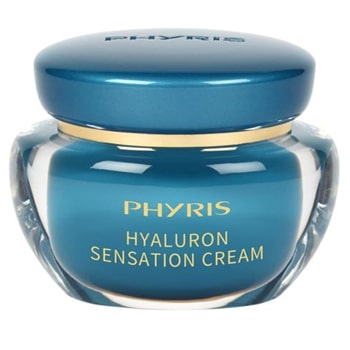
Hyaluron Sensation Cream
9.7

The special timed-release hyaluronic acid contained in phyris hyaluron sensation cream instantly provides maximum moisture and maintains this effect for several hours, leaving the skin feeling fresh and plumped.

Best Seller
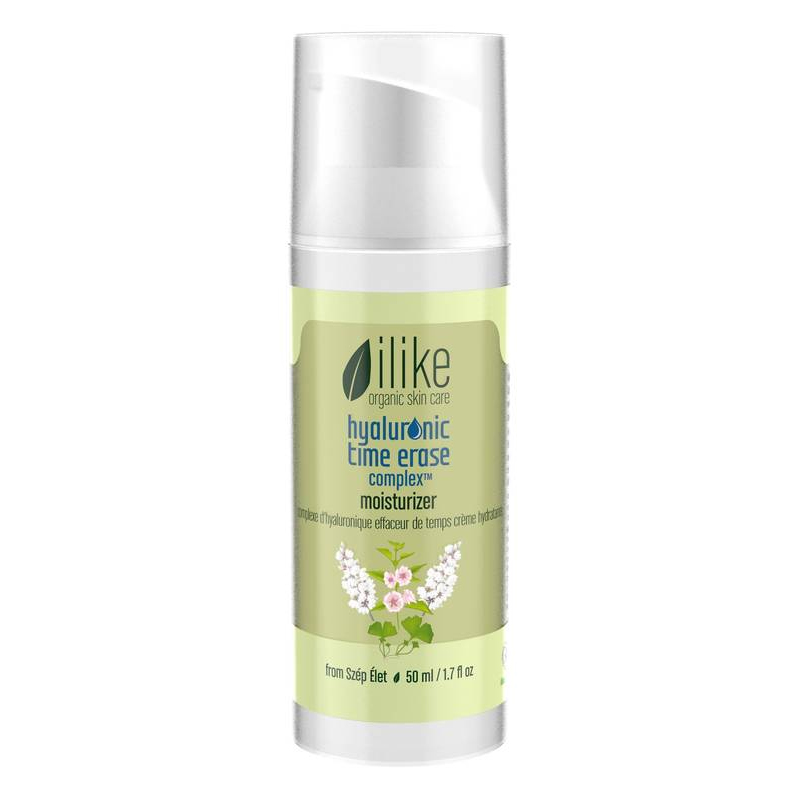
Hyaluronic Time Erase Complex Moisturizer
9.5

Complex Moisturizer reduces the signs of aging by hydrating your complexion and reconstructing your natural moisture barrier. 

Editors Choice
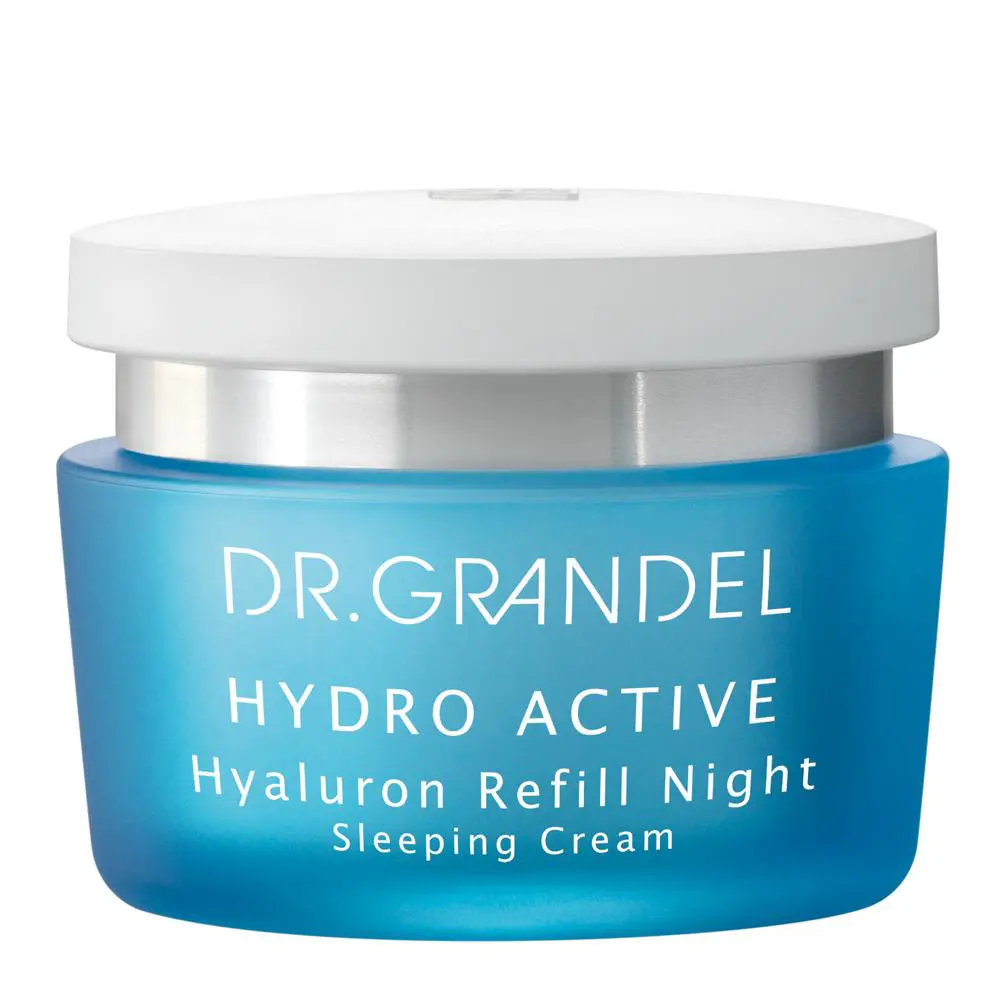
Hyaluron Refill Night Cream
9.1

You want a modern skin care for the night? The Hyaluron Refill Night cream have a silky texture, which is perfectly tailored to nighttime regeneration processes, filling up the skin’s natural moisture reserves overnight. 

Acne Skincare with BHT

It helps to extend the shelf life of these products and can also provide additional benefits for acne-prone skin. BHT works by reducing inflammation and fighting bacteria that can cause breakouts. Additionally, it has antioxidant properties that help protect the skin from environmental damage, such as UV radiation and free radicals. How Does BHT Help with Acne? BHT helps reduce inflammation associated with acne while also helping to fight bacteria that causes breakouts. It is an effective anti-inflammatory agent due to its ability to inhibit enzymes involved in inflammatory processes such as prostaglandin synthesis. In addition, it has been shown to have antibacterial activity against Propionibacterium acnes (P. acnes), one of the main bacterial species responsible for causing acne lesions on the skin surface. Furthermore, its antioxidant properties help protect against oxidative stress caused by environmental factors like pollution and UV radiation which can worsen existing acne symptoms or lead to new ones forming on the face or body. There are numerous skincare products containing BHT, such as cleansers, moisturizers, serums and spot treatments specifically designed for treating acne-prone skin types. Popular brands include CeraVe’s Foaming Facial Cleanser with Hyaluronic Acid & Niacinamide; Neutrogena’s Rapid Clear Stubborn Acne Spot Gel; Dermalogica’s MediBac Clearing Skin Wash; La Roche Posay Effaclar Duo+ SPF 30 Moisturizer; Paula’s Choice CLEAR Regular Strength Anti-Redness Exfoliating Solution 2% Salicylic Acid ;and PCA Skin Purifying Mask With Kaolin Clay & Bentonite Clay. When using any product containing BHT, be sure not to overuse them as this could potentially irritate your skin further leading to more breakouts rather than lessening them. Start off slowly by introducing one product at a time into your routine until you find what works best for you without causing any adverse reactions like redness or dryness. Additionally, always remember sunscreen when using any type of skincare product since sun exposure can aggravate existing blemishes and increase your risk of developing new ones. BHT is a powerful ingredient in acne skincare that can help reduce inflammation and breakouts. Now let’s explore how sunscreen containing BHT can protect your skin from the sun’s damaging rays.
Key Takeaway: BHT is a preservative found in many skin care products that can help reduce inflammation, fight bacteria and protect the skin from environmental damage. It’s important to use BHT-containing products sparingly and always remember sunscreen when using any type of skincare product.

Top Seller
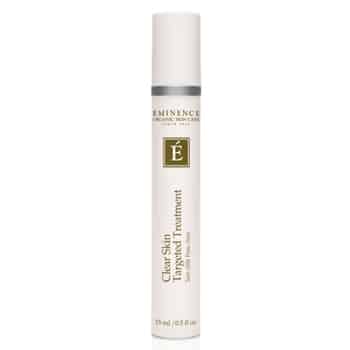
Eminence Clear Skin Targeted Acne Treatment
9.7
  • Controls breakouts and blemishes.
  • Eliminates impurities.
  • Brightens skin.
  • Reduces pores.
  • Controls oil production.
  • Diminishes redness and calms skin.
  • Skin is left looking refreshed and brightened.
  • Moisture is balanced, and skin looks smooth, hydrated, and radiant
Most Affective
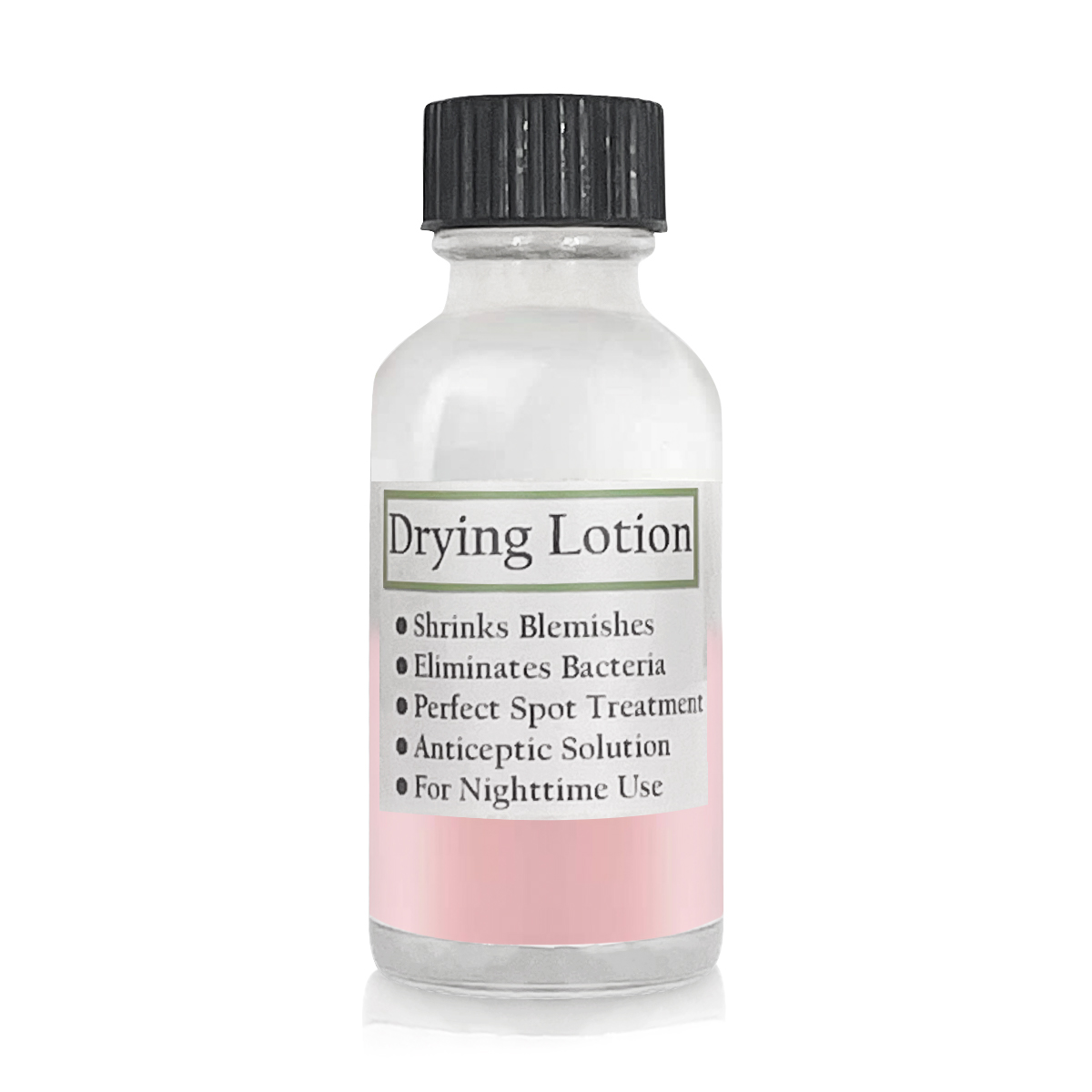
Acne Drying Lotion
9.5
  • Shrinks blemishes
  • Eliminates bacteria
  • Perfect spot treatment
  • Antiseptic solution
  • Quickly promotes healing
  • Restores skin to a smoother texture.
  • Use on spots and blemishes for nighttime use.
Top Pick
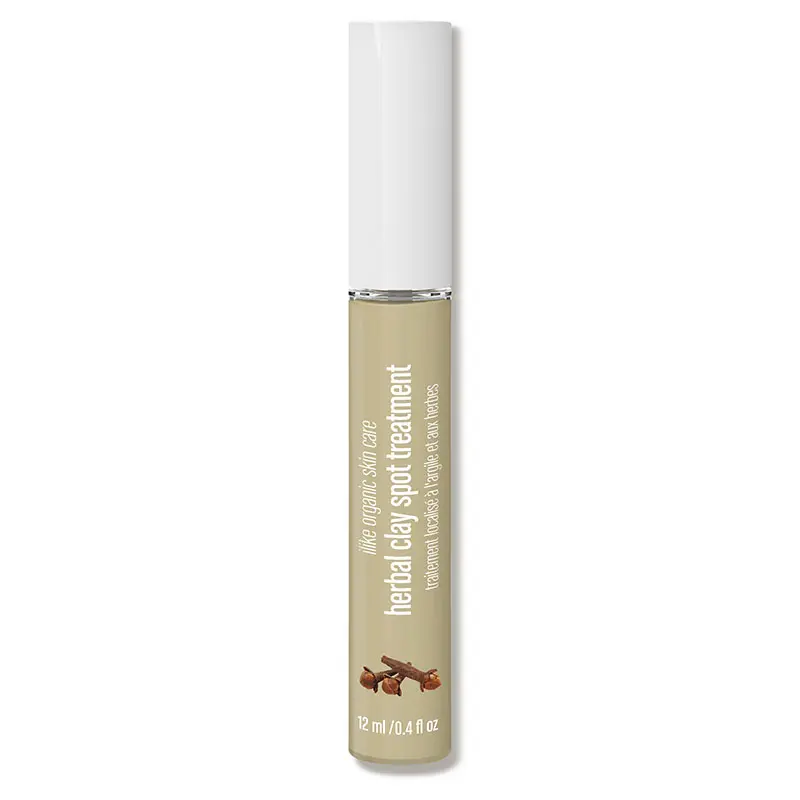
ilike Organics Herbal Clay Spot Treatment
9.1

Repairs damaged and compromised skin that suffers from breakouts, age spots, or environmental damage. Herbal clay removes impurities, tightens the pores, tones the skin, and exfoliates dead skin cells as it reduces inflammation. 

Best Sunscreens with BHT

Sunscreen is essential to any skin care routine, and BHT can be a great addition to your sunscreen. BHT (butylated hydroxytoluene) is an antioxidant that helps protect the skin from environmental damage such as UV radiation and free radicals. It also has anti-inflammatory properties which help reduce redness and irritation associated with sunburns. When used in combination with other ingredients like zinc oxide or titanium dioxide, it provides additional protection against UVA/UVB rays. When choosing a sunscreen containing BHT, look for products labeled “broad spectrum” or “UVA/UVB protection” on the label. This indicates that the product offers both UVA and UVB protection, which is important for protecting your skin from long-term damage caused by exposure to sunlight. Additionally, check the SPF rating of the product; higher SPFs offer more protection against UV rays but may not necessarily contain more BHT than lower SPFs do. It’s also important to choose a sunscreen specifically formulated for facial use if you plan on using it on your face since these are usually gentler than body sunscreens and won’t clog pores or cause breakouts. Look for products that are noncomedogenic (meaning they won’t block pores), oil-free, fragrance-free, hypoallergenic (for those with sensitive skin), water resistant (so you don’t have to reapply after swimming or sweating), and dermatologist tested so you know it’s safe for your skin type. When applying sunscreen containing BHT, make sure to apply generously over all exposed areas 15 minutes before going outside and reapply every two hours while outdoors, even if it is cloudy. Don’t forget about hard-to-reach places such as behind the ears or the back of the neck, as well as areas where clothing does not cover completely such as hands and feet when wearing sandals or flip flops during summer months. Lastly, remember to wear protective clothing such as hats and sunglasses when out in direct sunlight too.
Key Takeaway: BHT is an antioxidant that helps protect the skin from environmental damage and inflammation. When choosing a sunscreen containing BHT, look for broad spectrum or UVAUVB protection, noncomedogenic oil-free products with high SPF ratings, and water resistant formulas suitable for facial use. Apply generously 15 minutes before going outside and reapply every two hours while outdoors.

FAQs in Relation to What is Bht in Skin Care and Its Benefits

Is BHT good for skin?

No, BHT (butylated hydroxytoluene) is not good for skin. It is a synthetic antioxidant used as a preservative in many cosmetics and personal care products. Studies have shown that it can irritate the skin and cause allergic reactions such as contact dermatitis or hives. In addition, research suggests that BHT has potential endocrine-disrupting effects when applied topically to the skin. Therefore, it is best avoided in any skincare routine.

How harmful is BHT in cosmetics?

BHT (butylated hydroxytoluene) is a preservative used in cosmetics, food, and other products. It has been linked to potential health risks such as endocrine disruption, organ system toxicity, and cancer. Studies have also shown that BHT can be absorbed through the skin when applied topically. While there is still much debate about the safety of BHT in cosmetics, it is generally accepted that its use should be avoided due to its potential for harm. Therefore it is recommended to look for cosmetic products without this ingredient or seek out natural alternatives instead.

Should I avoid BHT?

Yes, you should avoid BHT (butylated hydroxytoluene). It is a synthetic preservative used in many skin care products and has been linked to potential health risks. Studies have shown that it can cause irritation and allergic reactions when applied topically. Additionally, some research suggests that long-term exposure to BHT may be associated with cancer risk. For these reasons, it is best to choose organic skin care products without this ingredient for your safety and peace of mind.

What is the purpose of BHT?

BHT (Butylated Hydroxytoluene) is a synthetic antioxidant used in skin care products to protect them from oxidation and extend their shelf life. It is also used as a preservative, preventing the growth of bacteria, fungi, and other microorganisms that can cause spoilage or contamination. BHT has been approved by the FDA for use in cosmetics and personal care products at concentrations up to 0.02%. In addition to its antioxidant properties, it may also help reduce inflammation and irritation caused by environmental factors such as UV radiation or pollutants.

Conclusion

In conclusion, BHT is a powerful antioxidant that can be used in skin care products to help protect the skin from environmental damage and improve its overall health. It has been found to be beneficial for anti-aging skincare, acne skincare, and sunscreens. However, it is important to remember that not all BHT products are created equal and you should always read labels carefully before using any product containing this ingredient. Additionally, it’s best to consult with your dermatologist or healthcare provider if you have any questions about whether or not BHT is safe for your specific skincare needs. With the right knowledge of what BHT in skin care can do for you and proper use of the product, you can reap the benefits of this powerful antioxidant while keeping your skin healthy and protected. Are you looking for organic skin care solutions that are safe, natural and effective? Look no further! Our OrganicSkinCare.com offers the latest in organic ingredients with proven benefits to your skin. Discover the power of BHT – a naturally occurring antioxidant used in many skin care products – which helps protect against environmental stressors while moisturizing and nourishing your complexion. Experience all the positive effects of this powerful ingredient today by shopping our selection of certified organic skincare products now!
Benefits of BHT in Skin Care: Anti-Aging, Acne & Sunscreen Read More »

Macro view of the skin moisture barrier as a brick-and-mortar lipid structure with sealed water droplets

Best Barrier-Repair and Ceramide Moisturizers for Sensitive Skin

New to a sensitive-skin routine? Start with our complete sensitive-skin routine guide — all 7 steps, in order.

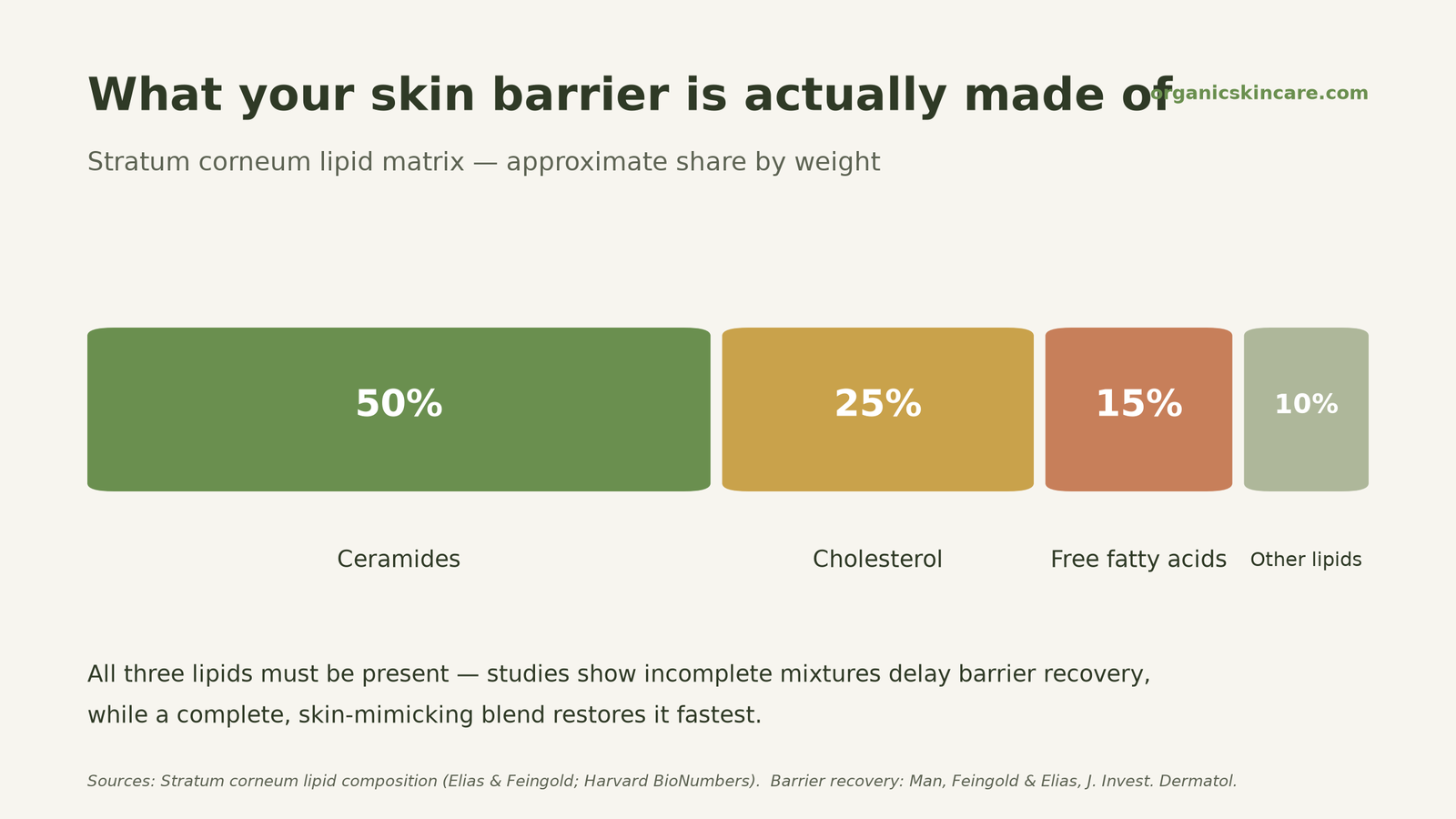
Your skin barrier works like a brick wall: skin cells are the bricks, and a mortar of ceramides, cholesterol, and fatty acids holds them together and keeps water in. A basic cream sits on the surface and softens it for a few hours; a barrier-repair moisturizer resupplies that mortar in roughly skin-mimicking ratios, so reactive skin holds onto moisture and the look of redness eases over time. It is also the seal step — the layer you apply over a humectant like hyaluronic acid or over an exfoliating acid, trapping that water instead of letting it evaporate within the hour.

Some links below are affiliate links. If you buy through the Amazon links, OSC may earn a commission at no extra cost to you, which does not change our editorial picks. Our in-house picks (Eminence, Phyris) link to our own product pages, not Amazon.

Our pick from the OSC shelf

Eminence Organics Calm Skin Chamomile Moisturizer

Eminence Organics Calm Skin Chamomile Moisturizer — $62

For redness- and rosacea-prone sensitive skin, our estheticians reach for this calming organic cream first: chamomile, calendula, arnica, and aloe soothe the feel of reactive skin while shea butter, sunflower, evening primrose, and jojoba oils plus panthenol support the look and feel of the moisture barrier. It is the curated boutique pick that sits apart from the drugstore ceramide creams — botanical rather than clinical, chosen for skin that flushes and tightens.

Honest note: this is a botanical cream, not fragrance-free and not a ceramide formula — it is naturally scented by essential oils and plant extracts (chamomile, calendula, arnica, lavender, lemon peel), which can sting very reactive skin, so patch test first. If fragrance is your main trigger, choose one of the fragrance-free Amazon picks below (CeraVe, Vanicream, or La Roche-Posay). Our in-stock in-house alternative is the Phyris Sensitive Moisturizing Cream ($67) — squalane, niacinamide, and GLA/linoleic plant oils — though its ingredient list also ends in added fragrance, so it too is not fragrance-free.

What the research shows

Stratum corneum lipid matrix: about 50% ceramides, 25% cholesterol, 15% free fatty acids
Your skin barrier is built from a specific lipid matrix — a barrier-repair moisturizer resupplies that same trio.

Your stratum corneum holds itself together with a lipid “mortar” that is roughly 50% ceramides, 25% cholesterol, and about 15% free fatty acids by weight. That balance is the whole game. In the foundational barrier-repair research of Man, Feingold & Elias (Journal of Investigative Dermatology), lipid mixtures missing even one of the three actually delayed recovery, while a complete, skin-mimicking blend restored the barrier fastest. It is exactly why a true ceramide-plus-cholesterol-plus-fatty-acid cream does more for reactive skin than ceramides alone — and what separates a real barrier-repair moisturizer from a cream that only sits on top.

How to choose a barrier moisturizer for sensitive skin

Start with the ceramide-cholesterol-fatty-acid trio

A basic cream hydrates; a barrier moisturizer rebuilds the mortar between skin cells. Research on barrier lipids points to a roughly skin-mimicking ratio of ceramides, cholesterol, and free fatty acids as the combination that best helps restore the look and feel of the moisture barrier — more reliably than ceramides alone. Scan the INCI list for ceramide NP/AP/EOP, cholesterol, and fatty acids such as linoleic or stearic acid.

Pair a humectant with an occlusive

Humectants (glycerin, hyaluronic acid, panthenol) draw water into the upper layers; occlusives (squalane, shea butter, dimethicone) slow how fast that water leaves. Sensitive skin does best when a formula carries both, so hydration is pulled in and then sealed rather than evaporating fast.

Prioritize fragrance-free formulas with soothing actives

For reactive, rosacea-prone skin, what a moisturizer leaves out matters as much as what it adds. Fragrance-free (including no masking fragrance) lowers the odds of a flare, and calming actives — niacinamide, centella/madecassoside, allantoin, colloidal oatmeal, panthenol — help soothe the feel of tightness and reduce the look of redness.

Match the texture to your skin type

Oily- or combination-sensitive skin tends to tolerate a gel-cream or lotion; normal-to-dry sensitive skin suits a true cream; very dry, flaky, or compromised skin (and overnight slugging) calls for a balm or ointment that seals more firmly. The right format is the one you will actually wear daily without congestion or a tight, under-moisturized feel.

Know what to avoid

Added or masking fragrance, drying denatured alcohol (alcohol denat. high on the list), menthol, eucalyptus, camphor, and “cooling” actives, plus heavy essential-oil blends, are the usual triggers for stinging on compromised skin. Fatty alcohols (cetyl, stearyl, cetearyl) are the exception — they are non-drying emollients. Shorter ingredient lists are easier to troubleshoot when something does not agree with you.

Patch test, then introduce one product at a time

Even a well-formulated barrier cream can disagree with individual skin. Apply a small amount to the inner forearm or behind the ear for a few days first, and add a new moisturizer to your routine on its own so you can tell what is actually working.

The 8 best barrier-repair moisturizers for sensitive skin on Amazon

Ranked to cover every skin type and budget — from a $15 ceramide cream to a full-lipid-trio clinical cream — so you can match the texture and price to your skin. Each owns a distinct use-case.

Best budget ceramide cream for normal-to-dry sensitive skin
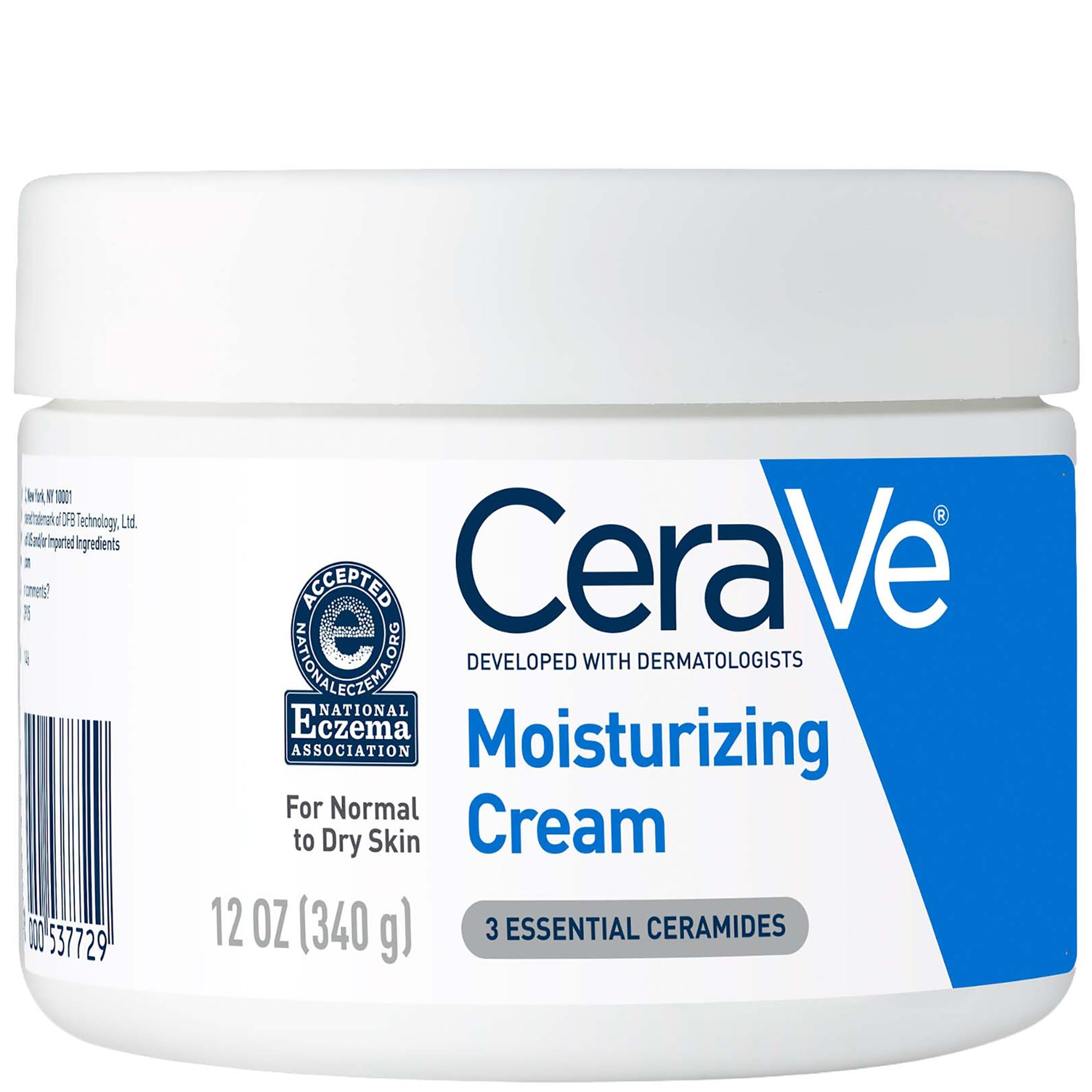
CeraVe Moisturizing Cream

1. CeraVe Moisturizing Cream

A rich cream built on three skin-identical ceramides (1, 3, and 6-II) plus cholesterol and phytosphingosine, released gradually through the brand’s MVE delivery, with hyaluronic acid and glycerin to draw water in and petrolatum and dimethicone to slow how fast it leaves. It is fragrance-free, essential-oil-free, and carries the National Eczema Association seal, which is why estheticians reach for it as the everyday seal step over a hyaluronic-acid or exfoliant layer. The tradeoff: the thick texture feels heavy and slow to absorb, so it suits normal-to-dry sensitive skin more than breakout-prone skin.

  • Ceramides 1, 3, 6-II + cholesterol + phytosphingosine (MVE delivery)
  • Fragrance-free, essential-oil-free · National Eczema Association seal
  • Tradeoff: heavy, slow-absorbing — too occlusive for oily/breakout-prone skin

Check price on Amazon →~$15–20

Best fragrance-free pick for the most reactive, eczema-prone skin
Vanicream Daily Facial Moisturizer with Ceramides and Hyaluronic Acid

2. Vanicream Daily Facial Moisturizer with Ceramides & Hyaluronic Acid

The lowest-allergen choice here: free of fragrance, dyes, lanolin, parabens, and formaldehyde-releasers, with ceramides, hyaluronic acid, and squalane-style emollients in a lightweight, pH-balanced cream. When skin reacts to almost everything, this short, deliberate list is the place to start. The tradeoff is that it keeps the extras to a minimum, so it soothes and seals more than it actively does anything else — which is the point for contact-dermatitis-prone skin.

  • Ceramides + hyaluronic acid + squalane-style emollients
  • Free of fragrance, dyes, lanolin, parabens, formaldehyde-releasers
  • Tradeoff: minimalist by design — fewer active extras

Check price on Amazon →~$12–15

Best for redness- and rosacea-prone skin (ceramide + niacinamide)
La Roche-Posay Toleriane Double Repair Face Moisturizer

3. La Roche-Posay Toleriane Double Repair Face Moisturizer

A light-cream texture that pairs ceramide-3 with niacinamide, glycerin, and prebiotic thermal water, so it helps soften the look of redness while it seals. The niacinamide is the reason this one suits redness- and rosacea-prone skin that finds heavier tub creams too occlusive, and it is fragrance-free and allergy-tested. The tradeoff is that it is lighter on barrier lipids than a full-trio cream, so very dry or compromised skin may want a richer option layered on at night.

  • Ceramide-3 + niacinamide + glycerin + prebiotic thermal water
  • Light-cream / oil-free feel · fragrance-free, allergy-tested
  • Tradeoff: lighter lipid load than a true trio cream

Check price on Amazon →~$20–25

Best gel-cream for oily- or combination-sensitive skin
Aveeno Calm + Restore Oat Gel Face Moisturizer

4. Aveeno Calm + Restore Oat Gel Face Moisturizer

A fast-absorbing gel-cream built on prebiotic colloidal oat — an FDA-recognized skin protectant — plus feverfew and glycerin, with an oil-free finish that flushed or breakout-prone skin tends to tolerate. It is fragrance-free, and the oat helps calm the feel of tightness and the look of redness at a drugstore price. The honest tradeoff is that it is lighter on barrier lipids than the ceramide creams, so it hydrates and soothes more than it seals — pair it with an occlusive step in winter or layer it under a balm for very dry skin.

  • Prebiotic colloidal oat + feverfew + glycerin · oil-free gel-cream
  • Fragrance-free · fast-absorbing, non-greasy finish
  • Tradeoff: light on barrier lipids — not enough seal alone for very dry/winter skin

Check price on Amazon →~$17–20

Best balm for very dry, compromised skin and overnight slugging
La Roche-Posay Cicaplast Balm B5

5. La Roche-Posay Cicaplast Balm B5

A rich balm built on 5% panthenol, madecassoside from centella, shea butter, and glycerin, with zinc-copper-manganese gluconates to comfort the feel of irritation; its ingredient list is fragrance-free and alcohol-free. It is the pick for very dry, flaky, or compromised areas and for overnight slugging over a ceramide cream. The honest tradeoff is that it is a panthenol-and-centella balm, not a ceramide formula, so for a ceramide-led routine layer it over a ceramide cream rather than using it alone.

  • 5% panthenol + madecassoside (centella) + shea + zinc/copper/manganese
  • Fragrance-free, alcohol-free · rich balm texture
  • Tradeoff: not a ceramide cream — best layered over one

Check price on Amazon →~$14–31

Best clinical full-trio cream (ceramide + cholesterol + fatty acids)
Skinfix Barrier+ Triple Lipid-Peptide Cream

6. Skinfix Barrier+ Triple Lipid-Peptide Cream

The clearest example in this roundup of what separates a true barrier cream from a basic one: ceramides (NP, AP, EOP) plus cholesterol and fatty acids in roughly skin-mimicking ratios, delivered through a skin-lipid-mimetic blend with added peptides. It is fragrance-free and built for committed dry-sensitive skin that wants the full lipid system. Two honest tradeoffs: it is the priciest pick here, and a low level of rosemary-leaf extract sits near the end of the list, so the most rosemary-reactive should patch test — and buy from a brand-sold listing, since the main jar can ship from a third-party reseller.

  • Ceramides NP/AP/EOP + cholesterol + fatty acids in skin-mimicking ratios + peptides
  • Fragrance-free · rich cream · the full lipid trio
  • Tradeoff: priciest pick; trace rosemary extract; verify a brand-sold listing

Check price on Amazon →~$48–54

Best lightweight night lotion to seal over actives
CeraVe PM Facial Moisturizing Lotion

7. CeraVe PM Facial Moisturizing Lotion

A lightweight, oil-free night lotion with ceramides 1, 3, and 6-II, niacinamide, and hyaluronic acid — thin enough to layer over a retinoid, bakuchiol, or an exfoliating acid without feeling heavy. This is the natural seal step for the retinol-alternative and exfoliant routines, where a thick cream would feel like too much. It is fragrance-free and non-comedogenic. The tradeoff is that the light texture is not enough on its own for very dry or winter skin, which will want a richer cream or balm on top.

  • Ceramides 1/3/6-II + niacinamide + hyaluronic acid · oil-free lotion
  • Fragrance-free, non-comedogenic · lightweight, layers over actives
  • Tradeoff: too light alone for very dry / cold-weather skin

Check price on Amazon →~$12–16

Best budget ceramide + centella (cica) option
COSRX Balancium Comfort Ceramide Cream

8. COSRX Balancium Comfort Ceramide Cream

A cushiony cream that pairs ceramides with a high level of centella asiatica (cica) to calm the feel of sensitivity, at a lower price than the K-beauty ceramide creams it competes with. It is a solid budget ceramide-plus-cica option for normal-to-dry sensitive skin. The honest tradeoff is that it carries a light natural scent rather than being fully fragrance-free, so the most fragrance-reactive readers should patch test or choose CeraVe, Vanicream, or La Roche-Posay instead.

  • Ceramides + a high level of centella asiatica (cica) · cushiony cream
  • Paraben-free · budget K-beauty ceramide-plus-cica option
  • Tradeoff: not fully fragrance-free (light natural scent) — patch test if highly reactive

Check price on Amazon →~$18–22

Frequently asked questions

How is a ceramide (barrier-repair) moisturizer different from a regular moisturizer?
A regular moisturizer mostly hydrates and softens the surface for a few hours. A barrier-repair moisturizer also supplies the lipids skin uses to hold itself together — ceramides, cholesterol, and fatty acids — so it helps support and restore the look and feel of the moisture barrier rather than just sitting on top. For healthy skin the difference is subtle; for reactive, dehydrated, or over-exfoliated skin it is the difference between staying calm and staying tight and flaky.
Can a moisturizer fix a damaged skin barrier?
A moisturizer is not a medical treatment, so it will not cure anything — but supplying barrier lipids and soothing actives, while avoiding triggers, gives skin the conditions to restore its own barrier over a few weeks. Many people find the look of redness and the feel of tightness ease within about two to four weeks of consistent use. If skin is broken, weeping, or painful, that is a job for a dermatologist, not a moisturizer.
Should I use a barrier moisturizer in the morning, at night, or both?
Both, in most cases. In the morning it sits under sunscreen and buffers the day’s environmental stress; at night it works alongside skin’s natural overnight cycle. If you only want one application, keep the evening one — and on mornings when skin feels reactive, a barrier cream is a calmer choice than layering more actives.
How do I layer a barrier moisturizer over hyaluronic acid, a retinoid, or an exfoliating acid?
Treat the barrier cream as the seal step that goes last. Apply your humectant (such as a hyaluronic acid serum) to slightly damp skin first, then the moisturizer over it to trap that water. With a retinoid or an exfoliating acid (AHA/BHA), let the active absorb for a few minutes, then apply the moisturizer on top to cushion it — or use the buffer method and moisturize first if the active stings. Acids and retinoids belong in the PM routine; the barrier cream seals either of them.
Is fragrance-free really necessary for sensitive skin?
For most reactive and rosacea-prone skin, yes. Added fragrance — synthetic or essential-oil based — is one of the more common causes of contact irritation, and “unscented” is not the same as fragrance-free (an unscented product can still contain a masking fragrance). If a botanically scented product appeals to you, patch test it first and watch for stinging or redness. Readers whose main concern is fragrance should choose from the fragrance-free options above.
Gel, cream, or balm — which texture should I choose?
Match it to skin type and season. A gel-cream or lotion is lightweight and suits oily- or combination-sensitive skin and humid weather. A cream is the middle ground for normal-to-dry sensitive skin. A balm or ointment is the richest and seals the most, which makes it well suited to very dry, flaky, or compromised skin, harsh winter air, and overnight slugging. Many people use a lighter texture in summer and a richer one in winter.

Related reading: hyaluronic acid serums · niacinamide serums · vitamin C serums · bakuchiol & retinol alternatives · gentle exfoliants · mineral sunscreens.

Disclosures. This article contains affiliate links to Amazon (tag: davidgakshtey-20); OSC may earn a commission at no extra cost to you. The Eminence and Phyris picks are brands we carry directly and link to our own product pages, not Amazon; neither is fragrance-free, so patch-test if you are fragrance-reactive. Content was produced with AI assistance and reviewed by our team. Benefit language is limited to “supports the moisture barrier,” “softens the look of,” and “soothes the feel of”; a moisturizer does not treat, cure, or heal any skin condition. Patch test new products and introduce them one at a time.

Best Barrier-Repair and Ceramide Moisturizers for Sensitive Skin Read More »

Macro photo of glistening layered water droplets merging, evoking multi-molecular-weight hyaluronic acid hydration

Best Hyaluronic Acid Serums for Sensitive and Dehydrated Skin

New to a sensitive-skin routine? Start with our complete sensitive-skin routine guide — all 7 steps, in order.

Hyaluronic acid is a humectant — a molecule that binds water and holds it in the upper layers of skin — which is why it eases that tight, dehydrated feeling without the stinging actives that make reactive skin flush. HA itself is one of the gentlest hydrators there is, so for sensitive skin the decision is rarely about the HA; it is about the rest of the formula, mainly whether it is fragrance-free and free of drying alcohol. One point estheticians repeat: hydrating is not the same as moisturizing — HA pulls water in, but you still need a moisturizer on top to hold it there, especially in dry air.

Some links below are affiliate links. If you buy through the Amazon links, OSC may earn a commission at no extra cost to you, which does not change our editorial picks. Our in-house picks (Phyris, Alex Cosmetic) link to our own product pages, not Amazon.

Our pick from the OSC shelf

Phyris Hyaluron Super Moist

Phyris Hyaluron Super Moist — $57

A genuine dual-molecular-weight HA serum from a flagship professional line, which maps directly onto the multi-weight approach this guide recommends. A low-molecular-weight “Filler” sodium hyaluronate swells on contact to plump the look of fine dehydration lines, while a high-molecular-weight “Depot” form is lipid-encapsulated to release moisture more slowly over several hours — two timescales of hydration from one bottle. Squalane, jojoba seed oil, and vitamin E sit alongside as barrier-supporting lipids, and the texture is light enough to layer under a moisturizer.

Honest note: the Phyris is not fragrance-free (its ingredient list includes fragrance and citrus/floral allergens), so if fragrance is one of your triggers, patch test first — or choose one of the fragrance-free Amazon picks below. Another in-house, in-stock option is the soothing Alex Cosmetic Absolute Hyaluron Essence (HA + aloe + panthenol + bisabolol; also fragranced, so patch test).

What the research shows

Chart showing low molecular weight hyaluronic acid penetrates deeper into skin than high molecular weight hyaluronic acid
Molecular size determines depth — which is why the best HA serums layer more than one weight.

Using Raman spectroscopy to directly track penetration, Essendoubi and colleagues (Skin Research and Technology) found that low-molecular-weight hyaluronic acid (20–50 kDa) reached roughly 100 microns into skin — the full depth of the epidermis — while high-molecular-weight hyaluronic acid (1,000–1,400 kDa) stayed within about the top 25 microns, forming a surface film instead. It is exactly why a multi-molecular-weight HA serum layers a high-MW film-former over a low-MW penetrator — and what separates a serum engineered for both surface plumpness and deeper moisture retention from one that only sits on top.

How to choose a hyaluronic acid serum for sensitive skin

Fragrance-free comes first

HA is inherently gentle and is rarely the irritant. On reactive or rosacea-prone skin, the trouble almost always traces back to added fragrance or a high percentage of drying alcohol. Read the INCI list and skip formulas that list “parfum/fragrance,” essential oils, or alcohol denat. near the top. Since the HA itself is non-irritating, there is no reason to accept fragrance in a hydrating serum.

Look for more than one molecular weight of HA

A single high-molecular-weight HA mostly sits on the surface; a blend of high and low weights hydrates the surface and reaches slightly deeper, so skin feels less tight for longer. On the label, look for more than one form listed — for example sodium hyaluronate, hydrolyzed hyaluronic acid, and sodium hyaluronate crosspolymer together.

Check for barrier partners

Panthenol (provitamin B5), ceramides, glycerin, and squalane support the moisture barrier and help reactive skin hold the water that HA draws in. A serum that pairs HA with these does more for a stressed barrier than HA on its own, which only brings water and no lipids to keep it there.

Match the texture to your skin and your other actives

A thin, water-light serum layers cleanly under a moisturizer and plays well with the rest of a routine; a richer essence-style formula suits very dehydrated or tight skin. If your barrier is already stressed by retinoids or exfoliating acids, a simpler, lower-active HA serum is the gentler choice.

Plan for the damp-skin and seal step

Apply HA to skin that is still slightly damp from cleansing or a hydrating toner, then lock it in with a moisturizer within a minute or two. This one detail decides whether the serum hydrates skin or quietly works against it.

Mind the dry-climate caveat

In low-humidity indoor or winter air, a humectant with nothing over it can draw water up from the deeper skin instead of from the air, which can leave skin feeling tighter. The fix is not to skip HA — it is to always seal it with a moisturizer, and to lean toward formulas that already include emollient or occlusive partners like squalane and ceramides.

The 7 best hyaluronic acid serums for sensitive skin on Amazon

Every Amazon pick below is fragrance-free, chosen so reactive skin has less to react to. Each owns a distinct use-case.

Best fragrance-free minimalist pick for the most reactive skin
The INKEY List Hyaluronic Acid Serum

1. The INKEY List Hyaluronic Acid Serum

This is about as low-trigger as a serum gets: verified fragrance-free, essential-oil-free, and alcohol-free, with three molecular weights of HA so it hydrates the surface and reaches a little deeper. The texture is lighter and less tacky than most budget HA serums, and it layers cleanly under everything else in a routine. The honest tradeoff is that there are no occlusive lipids to hold water in, so the damp-skin-and-seal step matters most with this one, especially in winter air.

  • 2% HA at three molecular weights + glycerin + Matrixyl peptides
  • Fragrance-free, essential-oil-free, alcohol-free
  • Tradeoff: no ceramides/occlusives — depends on sealing with a moisturizer

Check price on Amazon →~$10–16

Best HA with ceramides for a barrier stressed by other actives
CeraVe Hydrating Hyaluronic Acid Serum with B5 and Ceramides

2. CeraVe Hydrating Hyaluronic Acid Serum with Vitamin B5 + Ceramides

This does more than draw in water — the ceramide, cholesterol, and phytosphingosine blend helps rebuild the lipid layer that holds water in, rather than only sitting on top as a humectant. It is fragrance-free with no denatured alcohol, which makes it a sensible choice when the barrier is already irritated by retinoids or acids. The tradeoff is that it uses a single HA molecular weight and silicones for slip, so clean-leaning shoppers should read the INCI before buying.

  • Sodium hyaluronate + 3 ceramides + cholesterol + panthenol (B5)
  • Fragrance-free, no denatured alcohol, time-release
  • Tradeoff: single HA weight; contains dimethicone (silicone)

Check price on Amazon →~$15–19

Best dedicated multi-molecular-weight pick
Naturium Quadruple Hyaluronic Acid Serum 5%

3. Naturium Quadruple Hyaluronic Acid Serum 5%

This is the most direct expression of the multi-weight approach on the list — four weights of HA in one fragrance-free gel, which hydrate the surface and the layers just beneath it. The gel texture layers cleanly and absorbs without residue. Because a higher total HA percentage leans harder on the humectant effect, sealing with a moisturizer matters more here, not less, particularly in dry air.

  • Four molecular weights of HA at 5% total · fragrance-free gel
  • Best for the widest molecular-weight spread
  • Tradeoff: higher HA load makes the dry-climate seal step non-negotiable

Check price on Amazon →~$18–22

Best Korean-beauty pick for redness and rosacea-prone skin
Torriden DIVE-IN Low Molecular Hyaluronic Acid Serum

4. Torriden DIVE-IN Low Molecular Hyaluronic Acid Serum

This carries the most calming supporting cast on the list — allantoin, centella, beta-glucan, and a ceramide alongside five forms of HA — which is why it suits reactive and rosacea-prone skin so well. It is fragrance-free and alcohol-free in a light, non-tacky gel that layers easily. It does include a trace of witch hazel extract, but far down an alcohol-free formula it behaves as a mild soother, not an astringent, so the position on the label matters more than its presence.

  • 5 forms of HA + panthenol + allantoin + centella + beta-glucan + ceramide NP
  • Fragrance-free, alcohol-free · light gel
  • Tradeoff: trace witch hazel (low on the list, behaves as a mild soother)

Check price on Amazon →~$18–22

Best lightweight daily layering serum under makeup and sunscreen
Vichy Mineral 89 Hyaluronic Acid Face Serum

5. Vichy Mineral 89 Hyaluronic Acid Face Serum

A water-light serum with a short, low-risk ingredient list and a soothing biosaccharide the brand measured cutting lactic-acid tingling — built for skin that reacts to almost everything. It is fragrance-free and alcohol-free, and it sits invisibly under sunscreen and makeup. The tradeoff is a single HA weight, so it is more a surface hydrator than a deep one — which also makes it a sensible first HA for very reactive skin.

  • Sodium hyaluronate + mineralizing thermal water + glycerin + soothing biosaccharide
  • Fragrance-free, alcohol-free · near-invisible under makeup/SPF
  • Tradeoff: single HA weight, very watery — a surface hydrator, seal it

Check price on Amazon →~$30–37

Best derm-favorite mixable booster for barrier support
Paula's Choice BOOST Hyaluronic Acid Booster

6. Paula’s Choice BOOST Hyaluronic Acid Booster

The standout here is format: a barrier-minded formula whose ceramide-cholesterol-phytosphingosine trio mirrors the skin’s own lipids, and which you can use alone or blend a few drops into your moisturizer to add hydration without adding a step. It is fragrance-free with no denatured alcohol. The honest tradeoff is that it is the costliest per ounce on this list, so it earns its place mainly if the mixable-booster approach fits how you actually use products.

  • Two HA forms + ceramide trio + phytosphingosine + cholesterol + panthenol
  • Fragrance-free, no denatured alcohol · use neat or mix into moisturizer
  • Tradeoff: costliest per ounce of the picks here

Check price on Amazon →~$44–49

Best budget HA + B5
The Ordinary Hyaluronic Acid 2% + B5

7. The Ordinary Hyaluronic Acid 2% + B5

The lowest-cost way to get multi-weight HA with panthenol, and the reformulated version adds ceramides for a little barrier support. It is fragrance-free and essential-oil-free, with a short ingredient list that gives reactive skin less to react to. The honest tradeoff is that it is a near-bare humectant that can feel tacky and may feel tight in dry air, so the damp-skin-and-seal step is not optional. Buy only the authentic DECIEM listing, since near-identical copycat listings exist.

  • Multi-weight HA + panthenol (B5) + ceramides (reformulated)
  • Fragrance-free, essential-oil-free · short ingredient list
  • Tradeoff: can feel tacky/tight in dry air — seal it; buy only the authentic DECIEM listing

Check price on Amazon →~$9–12

Frequently asked questions

Does hyaluronic acid work in dry climates?
Yes, but technique matters more in dry air. A humectant pulls water toward skin; when the surrounding air is very dry, it can pull moisture up from the deeper layers and let it evaporate, which feels tight. Apply HA to damp skin and seal it with a moisturizer so the water it binds stays put. Formulas that include glycerin, squalane, or ceramides handle dry climates better than HA on its own.
Do I apply hyaluronic acid to damp or dry skin?
Damp. Apply it within about a minute of cleansing, or after a hydrating toner, while skin is still slightly moist, then follow with a moisturizer. Damp skin gives the humectant water to bind on the surface, and the moisturizer on top keeps that water from evaporating. This single step is what turns an HA serum from drying into hydrating.
Is a hyaluronic acid serum the same as a moisturizer?
No, and this is the most common mix-up. HA is a humectant that draws and binds water; a moisturizer holds that water in with emollients and occlusives. Hydrating and moisturizing are two different jobs. An HA serum is a step before your moisturizer, not a replacement for it.
Can I use hyaluronic acid with my other actives?
In most cases, yes. HA is one of the most broadly compatible ingredients — it layers under or alongside vitamin C, niacinamide, retinoids, and exfoliating acids, and can make a retinoid routine more comfortable by easing dryness. Apply the water-light HA serum first, then your treatment, then a moisturizer. If your skin is very reactive, introduce one new product at a time so you can tell what agrees with it.
Should I use a hyaluronic acid serum in the morning or at night?
Either, and both is fine. HA is not light-sensitive and does not increase sun sensitivity, so it fits AM or PM. In the morning it layers under your sunscreen; at night it goes under your moisturizer. The rule that matters most is sealing it with a moisturizer each time.
Will a hyaluronic acid serum cause breakouts?
HA itself is non-comedogenic and is unlikely to clog pores. Breakouts after starting a new serum usually trace back to another ingredient in the formula — a heavy occlusive, a fragrance, or a botanical extract — or to a richer texture than oily skin needs. If you are breakout-prone, choose a fragrance-free, water-light formula and patch test first.

Related reading: niacinamide serums · vitamin C serums · bakuchiol & retinol alternatives · gentle exfoliants · mineral sunscreens.

Disclosures. This article contains affiliate links to Amazon (tag: davidgakshtey-20); OSC may earn a commission at no extra cost to you. The Phyris and Alex Cosmetic picks are brands we carry directly and link to our own product pages, not Amazon; both contain fragrance, so patch-test if you are fragrance-reactive. Content was produced with AI assistance and reviewed by our team. Benefit language is limited to “hydrates,” “plumps the look of,” and “supports the moisture barrier”; an HA serum does not treat, cure, or heal any skin condition. Apply to damp skin and seal with a moisturizer.

Best Hyaluronic Acid Serums for Sensitive and Dehydrated Skin Read More »

The INKEY List Hyaluronic Acid Serum

The INKEY List Hyaluronic Acid Serum

This is about as low-trigger as a serum gets: verified fragrance-free, essential-oil-free, and alcohol-free, with three molecular weights of HA so it hydrates the surface and reaches a little deeper. The texture is lighter and less tacky than most budget HA serums, and it layers cleanly under everything else in a routine. The honest tradeoff is that there are no occlusive lipids to hold water in, so the damp-skin-and-seal step matters most with this one, especially in winter air.. 2% HA at three molecular weights + glycerin + Matrixyl peptides. Fragrance-free, essential-oil-free, alcohol-free. Best for very reactive / redness-prone skin. Tradeoff: no ceramides/occlusives — depends on sealing with a moisturizer

FAQ

What is The INKEY List Hyaluronic Acid Serum?

The INKEY List Hyaluronic Acid Serum is a concentrated daily serum from The INKEY List. This is about as low-trigger as a serum gets: verified fragrance-free, essential-oil-free, and alcohol-free, with three molecular weights of HA so it hydrates the surface and reaches a little deeper. The texture is lighter and less tacky than most budget HA serums, and it layers…

Who is The INKEY List Hyaluronic Acid Serum for?

It’s a fit for sensitive or reactive skin looking for a concentrated daily serum.

How is The INKEY List Hyaluronic Acid Serum used?

It’s typically used as a layering step under moisturizer. Follow the retailer’s directions and patch-test first if your skin is sensitive.

Where can I buy The INKEY List Hyaluronic Acid Serum?

Through the retailer link on this page. Current price and availability are shown on the retailer’s site.

The INKEY List Hyaluronic Acid Serum Read More »

Abstract split composition of rough dry texture transforming into smooth silky luminous texture

Best Gentle Exfoliants for Sensitive Skin: Enzymes, PHAs, and Low-Strength Acids

New to a sensitive-skin routine? Start with our complete sensitive-skin routine guide — all 7 steps, in order.

Exfoliation works by loosening the bonds that hold dull, dead-looking cells on your skin’s surface, so they shed and reveal fresher, brighter-looking skin underneath. For sensitive skin, the molecule you pick matters more than the strength: enzymes and PHAs (gluconolactone, lactobionic acid) are the gentlest, then large-molecule mandelic acid, then low-percentage lactic acid, while high-strength glycolic and strong salicylic acid are the ones reactive skin should use sparingly or skip. Exfoliating more often does not give you more results; for a sensitive barrier it usually just causes redness and stinging, so steady, low-frequency use is the goal.

Some links below are affiliate links. If you buy through the Amazon links, OSC may earn a commission at no extra cost to you, which does not change our editorial picks. Our in-house Eminence picks link to our own product pages, not Amazon.
Before you start: exfoliated skin is more sensitive to the sun, so wear a broad-spectrum SPF 30+ every morning. Begin at 1–2x per week, and watch for signs of over-exfoliation — stinging, tightness, new redness, a tight shiny look, or worsening flaking. If you see them, stop, let the barrier settle with a plain moisturizer for 1–2 weeks, then restart less often. A gentle exfoliant supports the look of smoother, brighter skin; it does not treat, cure, or heal any skin condition.

Our pick from the OSC shelf

Eminence Organics Mango Exfoliating Enzyme Masque

Eminence Organics Mango Exfoliating Enzyme Masque — $67

Enzymatic exfoliation is the gentlest mechanism in the hierarchy, which makes this the natural lead for sensitive skin. The masque uses fruit enzymes — actinidin from kiwi, bromelain from pineapple, and papain from papaya — to loosen the bonds between dull, dead-looking surface cells, so it smooths the look of texture without the acid sting or pH drop that high-strength acids cause on reactive and rosacea-prone skin. A vitamin C blend from mango, pineapple, and Kakadu plum supports a brighter-looking, more even-toned finish. From Eminence Organics, OSC’s flagship certified-organic line; vegan, gluten-free, nut-free. Use it as a 1–2x/week treatment mask.

Want enzyme exfoliation built into your cleanse? The Eminence Barbados Cherry Enzyme Cleansing Powder ($68, in stock) is our second in-house option. The Amazon picks below are leave-on PHA, mandelic, and lactic options you can buy now.

What the research shows

Chart comparing AHA glycolic acid and PHA gluconolactone improvement in sallowness and elasticity at 12 weeks
A small efficacy edge for AHA comes with a real comfort cost — PHA delivers most of the benefit without the sting.

In a head-to-head 12-week trial by Edison, Green, and colleagues (Cutis), a 16%-strength glycolic acid (AHA) regimen scored only modestly higher than a 14%-strength gluconolactone (PHA) regimen on sallowness and elasticity — yet caused significantly more stinging and burning at both the 6- and 12-week marks. It is exactly why a gentle PHA like gluconolactone has earned its reputation as the exfoliant reactive skin can actually tolerate — and what separates an acid routine you can stay consistent with from one that buys a few extra points of polish at the cost of comfort.

How to choose a gentle exfoliant for sensitive skin

Start with the acid type, not the label

The gentleness hierarchy is the whole decision. Enzymes (papain from papaya, bromelain from pineapple) sit on the surface and break down only loose dead-looking cells, so they are the mildest option. PHAs — gluconolactone and lactobionic acid — are large molecules that work slowly and tend to draw in water, so they smooth the look of texture with less stinging. Mandelic acid is a large AHA (about 138 daltons) that penetrates slowly. Low-percentage lactic acid is a gentle true AHA. High-strength glycolic acid is a very small molecule (about 76 daltons) that penetrates fast and is the most likely to sting reactive skin; strong salicylic acid is better reserved for oily, congested skin than for a sensitive barrier.

Check the percentage, and stay low

For sensitive skin, lower is smarter: PHAs around 3–10%, mandelic acid around 5–10%, lactic acid at 5% or under. Treat anything labeled 10%-plus glycolic, or a low-pH professional peel, as occasional or in-clinic only, not a routine product.

Match the format to how much control you want

Rinse-off formats — enzyme masques and cleansing powders — sit on the skin for a short, controlled time and wash away, which lowers the risk of overdoing it. Leave-on serums and toners stay in contact longer and act faster, so they ask for more discipline. Pre-soaked pads are convenient but make it easy to over-apply; use one pad, not three.

Keep the frequency honest

Start at 1–2x per week and hold there for a few weeks before deciding to do more. Sensitive skin almost never needs daily acids. Frequency, not strength, is where most people overshoot. Space your actives, too: do not layer an exfoliant with retinol or bakuchiol on the same night.

Read the fragrance and additive list, then patch test

Added fragrance and high levels of essential oils are common triggers for redness and reactivity. Look for fragrance-free or low-essential-oil formulas, and patch test on the jaw or inner arm for two to three days before applying to the full face.

Daily SPF and an over-exfoliation caution are non-negotiable

Exfoliated skin is more sun-sensitive, so a broad-spectrum SPF 30 or higher every morning is part of exfoliating safely. If your skin starts stinging, feeling tight, or flaking worse, that is over-exfoliation — pause and let the barrier recover before restarting at a lower frequency.

The 8 best gentle exfoliants for sensitive skin on Amazon

Ranked gentlest-first — PHAs and enzymes, then mandelic, then low-percentage lactic — so you can start where your skin is. Each owns a distinct use-case.

Best PHA toner for the most reactive skin
The INKEY List PHA Gentle Exfoliating Toner

1. The INKEY List PHA Gentle Exfoliating Toner

This toner uses 3% gluconolactone, a polyhydroxy acid whose large molecule works mostly at the surface and also draws in water, so it smooths the look of texture with little of the sting that smaller acids cause. For a barrier that was worn down by over-exfoliation, it is one of the more forgiving places to start. It is fragrance-light and inexpensive, so testing tolerance is low-risk; use it a few evenings a week, not daily, at first.

  • 3% PHA (gluconolactone) — the gentlest exfoliant tier · toner
  • Best forgiving starting point for a worn-down barrier
  • Tradeoff: surface-level and slow — the brand’s 10% Glycolic Toner is NOT a substitute

Check price on Amazon →~$11–15

Best lactobionic PHA for dry, mature, or dehydrated sensitive skin
NeoStrata Bionic Face Serum

2. NeoStrata Bionic Face Serum (PHA 10, Lactobionic Acid)

Built around 10% lactobionic acid, the most water-binding PHA and an antioxidant in its own right, this fragrance-free serum suits dry, sensitive, or mature skin that wants resurfacing without the tight feeling stronger acids can leave. NeoStrata is the dermatologist-developed brand that helped introduce PHAs, so the formula reads clinical rather than trend-driven. It is the most expensive option here; the tradeoff is a gentler, hydrating path to brighter-looking skin.

  • 10% lactobionic acid (PHA) — most water-binding PHA · serum · fragrance-free
  • Best for dry/mature/dehydrated sensitive skin
  • Tradeoff: priciest pick; works gradually

Check price on Amazon →~$80

Best enzyme exfoliating powder (the buy-now enzyme option)
Dermalogica Daily Microfoliant Exfoliator

3. Dermalogica Daily Microfoliant Exfoliator

A rice-based powder that activates with water and exfoliates with papain (papaya) and rice-bran enzymes, which loosen dull-looking surface cells rather than dropping skin pH the way free acids do. The powder format lets you control dose and contact time, which suits reactive skin. Honest caveat: it includes a low dose of salicylic acid, so salicylate-sensitive or pregnant readers should check with their clinician before using it.

  • Rice-bran + papain (papaya) enzymes, with a low dose of salicylic acid · powder
  • Best everyday-friendly enzyme exfoliant on Amazon
  • Tradeoff: contains low-dose salicylic — salicylate-sensitive/pregnant readers should check with a clinician

Check price on Amazon →~$19–67

Best low-strength mandelic for reactive skin
By Wishtrend Mandelic Acid 5% Skin Prep Water

4. By Wishtrend Mandelic Acid 5% Skin Prep Water

Mandelic acid is a large AHA molecule that penetrates slowly and evenly, and at 5% this prep water sits among the gentlest acid exfoliants — a sensible step up once enzymes and PHAs feel comfortable. It tends to suit skin working on the look of uneven tone without the flushing that glycolic can trigger. Apply with a cotton pad once or twice a week to start.

  • 5% mandelic acid (large, slow-penetrating AHA) · toner/liquid
  • Best step up from enzymes/PHAs to a true acid
  • Tradeoff: slower and milder than glycolic — asks for consistency

Check price on Amazon →~$20–25

Best budget mandelic
The Ordinary Mandelic Acid 10% + HA

5. The Ordinary Mandelic Acid 10% + HA

A 10% mandelic serum with added hyaluronic acid for around ten dollars, this is a low-cost way to trial mandelic at a working strength; the large molecule keeps it gentler than a 10% glycolic. Treat it as an affordable trial rather than the destination. Build up slowly, and only after lower strengths feel comfortable.

  • 10% mandelic acid + hyaluronic acid · serum
  • Best low-cost way to trial mandelic at a working strength
  • Tradeoff: build up slowly; only after lower strengths feel fine

Check price on Amazon →~$9–12

Best dual-acid blend for sensitive skin
Paula's Choice 6% Mandelic Acid + 2% Lactic Acid

6. Paula’s Choice Skin Perfecting 6% Mandelic Acid + 2% Lactic Acid

This leave-on pairs two of the gentler AHAs — 6% mandelic and 2% lactic — at modest strengths, so it smooths the look of texture and uneven tone with less risk than a single high-percentage acid, and it is fragrance-free. It bridges the gap between PHAs and stronger mandelic options. Two notes: confirm the Amazon listing ships from Paula’s Choice or an authorized seller, and patch test if you are salicylate-sensitive.

  • 6% mandelic + 2% lactic (dual gentle AHA) · fragrance-free · leave-on
  • Best dual-acid bridge between PHAs and stronger mandelic
  • Tradeoff: confirm authorized Amazon seller; patch-test if salicylate-sensitive

Check price on Amazon →~$30–40

Best gentle low-percentage lactic acid
The Ordinary Lactic Acid 5% + HA

7. The Ordinary Lactic Acid 5% + HA

Lactic acid is the most hydrating of the AHAs, and 5% is its entry rung, buffered further here by hyaluronic acid — a reasonable low-strength lactic for skin easing into chemical exfoliation. It reveals brighter-looking skin gradually rather than dramatically, which is the point for a sensitive barrier. Once 5% feels comfortable over several weeks, a 10% version is the logical next step, not a starting point.

  • 5% lactic acid + hyaluronic acid (most hydrating AHA) · serum
  • Best gentle low-% lactic for easing into chemical exfoliation
  • Tradeoff: gradual by design; 10% is a later step, not a start

Check price on Amazon →~$9–11

Best pre-soaked resurfacing pad for sensitive skin
Dr. Dennis Gross Alpha Beta Ultra Gentle Daily Peel

8. Dr. Dennis Gross Alpha Beta Ultra Gentle Daily Peel

These pre-soaked pads use a reduced acid dose aimed at dehydrated and sensitive skin — distinct from the brand’s stronger Universal peel, which reactive skin should skip. The format is convenient and pre-measured, which removes the guesswork of mixing or dosing. That same convenience makes it easy to overdo, so use one pad on exfoliation nights only, not every day, and stop if you feel persistent stinging.

  • Low-dose AHA/BHA blend on a pre-soaked pad (Ultra Gentle, not Universal) · pad
  • Best convenient pre-soaked option for dehydrated sensitive skin
  • Tradeoff: easy to over-apply — one pad on exfoliation nights only; choose Ultra Gentle

Check price on Amazon →~$18–48

Frequently asked questions

Which exfoliant is best for sensitive skin?
For most sensitive skin, an enzyme exfoliant or a PHA is the gentlest place to start. Enzymes (papain, bromelain) only break down loose surface cells, and PHAs like gluconolactone are large, slow molecules that also hold water. If you tolerate those well and want a little more, large-molecule mandelic acid or low-percentage lactic acid are the next steps. Save high-strength glycolic acid for skin that has proven it can handle it.
How often should sensitive skin exfoliate?
Once or twice a week is enough for most sensitive skin. Begin at once a week, hold for three to four weeks, and only increase if your skin stays calm. If you notice stinging, tightness, or new redness, scale back. More frequent exfoliation does not give faster results; it tends to wear down the barrier.
AHA vs BHA vs PHA vs enzyme — what is the difference?
AHAs (glycolic, lactic, mandelic) are water-loving acids that loosen dead cells on the surface; glycolic is the smallest and strongest, mandelic the largest and mildest. BHA (salicylic acid) is oil-soluble, so it works inside pores and suits oily, congested skin more than sensitive skin. PHAs (gluconolactone, lactobionic acid) are larger, slower AHAs that tend to be the gentlest acids and add hydration. Enzymes are not acids at all — they are plant proteins that break down only loose surface cells, which makes them the mildest option of the four.
Can I use a gentle exfoliant with retinol, bakuchiol, vitamin C, or niacinamide?
Use them on different days or at different times rather than layering them all at once, especially on sensitive skin. Retinol or bakuchiol and an exfoliating acid on the same night raise the risk of irritation, so alternate evenings. A vitamin C serum is usually fine in the morning while you exfoliate at night. Niacinamide is the easiest companion and can actually support the barrier alongside a gentle exfoliant. When in doubt, simplify and space things out.
What are the signs of over-exfoliation?
Common signs are stinging or burning when you apply products, a tight or shiny look, new or spreading redness, more sensitivity than usual, and flaking that worsens instead of improving. If you see these, pause all exfoliation, stick to a plain moisturizer and SPF for one to two weeks to let the barrier settle, then restart at a lower frequency.
Do I need SPF after exfoliating?
Yes. Exfoliation lifts away dull-looking surface cells and leaves fresher skin that is more sensitive to the sun, so daily broad-spectrum SPF 30 or higher is not optional — it is part of exfoliating safely. Apply it every morning, even on cloudy days, and reapply through the day if you are outdoors. Skipping SPF undercuts the brighter-looking result you are working toward and raises the risk of new dark spots.

Related reading: niacinamide serums · vitamin C serums · bakuchiol & retinol alternatives · mineral sunscreens · Eminence Organic Skin Care.

Disclosures. This article contains affiliate links to Amazon (tag: davidgakshtey-20); OSC may earn a commission at no extra cost to you. The Eminence picks are brands we carry directly and link to our own product pages, not Amazon. Content was produced with AI assistance and reviewed by our team. Benefit language is limited to “smooths the look of texture” and “reveals brighter-looking skin”; a gentle exfoliant does not treat, cure, or heal any skin condition. Wear daily SPF, patch-test new products, and scale back at the first sign of over-exfoliation.

Best Gentle Exfoliants for Sensitive Skin: Enzymes, PHAs, and Low-Strength Acids Read More »

Shopping Cart
Scroll to Top
0