Search Results for: organic face oil

Soft-focus skin-like texture transitioning to smooth luminous texture evoking pore-refining science

Best Niacinamide Serums for Sensitive Skin (2026): An Esthetician’s Picks

New to a sensitive-skin routine? Start with our complete sensitive-skin routine guide — all 7 steps, in order.

Niacinamide is vitamin B3, and on sensitive skin its real job is quiet repair: it helps skin produce more ceramides, the lipids that hold the moisture barrier together, which is why over a few weeks it can visibly calm redness and ease the look of pores and oil. The catch is dose, not enthusiasm. Most reactive skin does best in roughly the 4 to 10% range; very high strengths like 20% add no extra barrier benefit and are more likely to trigger flushing or stinging, so more is not better.

This roundup contains affiliate links. If you buy through the Amazon links, OSC may earn a commission at no extra cost to you, which does not change our editorial picks. Our in-house picks (Phyris, Eminence) link to our own product pages, not Amazon.

Our pick from the OSC shelf

Phyris Sensitive Calming Serum

Phyris Sensitive Calming Serum — $62

Our in-house, esthetician-curated pick for skin that flushes. Its ingredient list genuinely includes niacinamide, sitting mid-list — the gentle, well-tolerated zone rather than the high-dose, flush-risk zone — paired with a barrier-soothing complex (hydrolyzed oat protein, jojoba, sweet almond, and shea lipids) built for the Phyris Sensitive line to support the moisture barrier and visibly calm redness. It is a treatment serum to layer under a moisturizer. Honest tradeoff: it contains fragrance (Parfum) plus rosemary and soybean botanicals, so the most fragrance-reactive or rosacea-prone readers should patch test first, and Phyris does not publish the exact niacinamide percentage.

Prefer niacinamide paired with a gentle retinol alternative? The Eminence Bakuchiol + Niacinamide Moisturizer is our other in-house option (currently restocking — see our bakuchiol guide). The Amazon picks below are buy-now alternatives.

What the research shows
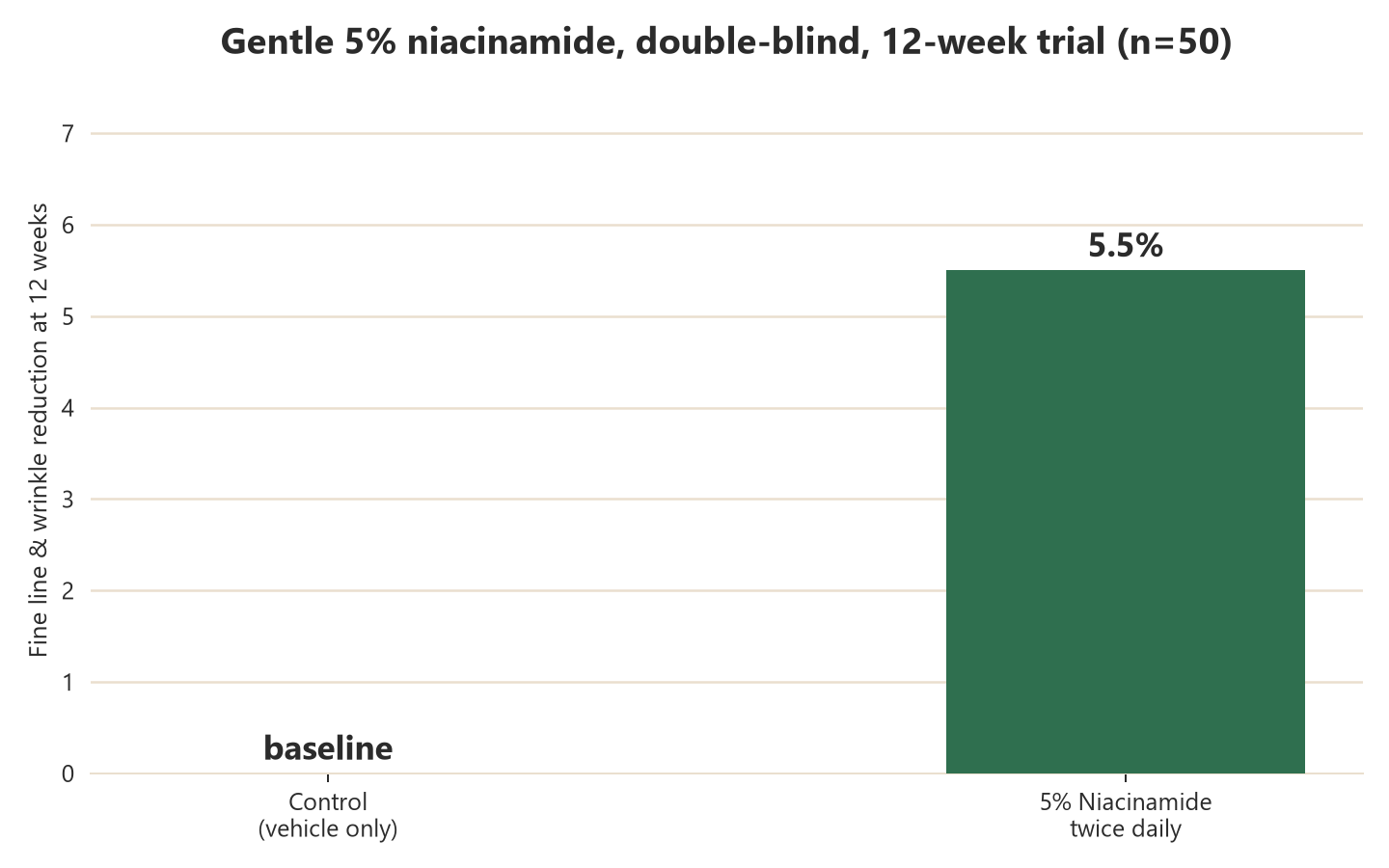
Chart showing 5.5 percent fine line and wrinkle reduction with 5 percent niacinamide versus control at 12 weeks
A gentle, well-tolerated concentration still moved the needle in a real double-blind trial.

In a 12-week, double-blind, placebo-controlled trial by Bissett and colleagues at Procter & Gamble (International Journal of Cosmetic Science), a gentle 5% niacinamide cream measurably reduced fine lines and wrinkles by about 5.5% versus a matched control, alongside significant improvements in hyperpigmentation, redness, and sallowness — with the study reporting no irritation, burning, or stinging at that concentration. It is exactly why a 4–5% niacinamide formula is the dermatology-studied sweet spot for reactive skin — and what separates a barrier-friendly serum from one chasing faster results at a higher, harsher percentage.

How to choose a niacinamide serum for sensitive skin

Stay in the 4 to 10% range

This is the well-tolerated band where niacinamide supports the barrier and helps regulate oil without the flushing higher strengths can cause on reactive skin. If a label hides the percentage, treat it as a low-strength formula and patch test anyway. The often-cited barrier and redness research used roughly 4 to 5%, so a modest number is enough.

Look for supporting partners: zinc, ectoin, oat, or hyaluronic acid

Zinc PCA pairs with niacinamide to help regulate oil and reduce the look of pores; ectoin, oat, and hyaluronic acid help skin hold water and reinforce the barrier so the serum soothes rather than strips. For sensitive skin these pairings matter more than a high single number.

Choose fragrance-free

Added fragrance is one of the most common triggers for redness and stinging in reactive and rosacea-prone skin. “Unscented” can still contain masking fragrance, so read the INCI for parfum, fragrance, and essential oils before you commit.

Match the texture to your skin

A lightweight, watery serum suits oilier, pore-prone skin, while a serum buffered with glycerin, squalane, or light oils sits better on dry or compromised barriers. Thin, alcohol-forward formulas can sting a stressed barrier.

Plan how it layers

Niacinamide is one of the easiest actives to combine. It sits comfortably with vitamin C in the morning and with retinol or bakuchiol at night, works under SPF, and pairs with exfoliating acids if you space them out. If a vitamin C serum ever feels like too much, niacinamide is the gentler way to work on tone.

Patch test, then go slow

Apply to the inner forearm or behind the ear for a few days before the face, and start every other day. Sensitive skin earns its tolerance gradually, even with a gentle active, and a brief sting in the first week usually means the percentage or another ingredient is too strong.

The 8 best niacinamide serums for sensitive skin on Amazon

Ranked from the gentlest low-percentage formulas up to a higher-strength option, so you can match the dose to your skin. Each owns a distinct use-case.
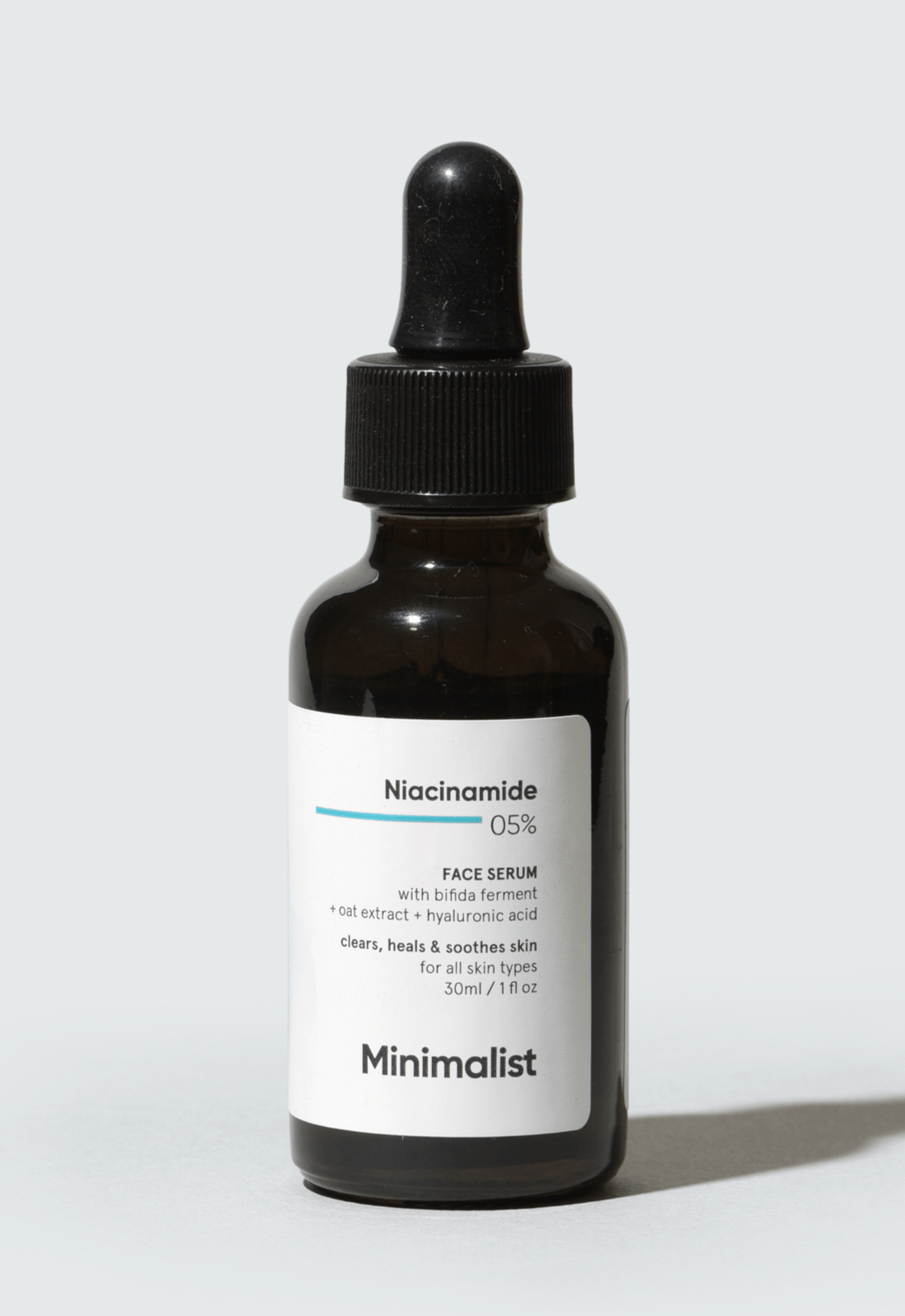
Best gentle low-percentage starter for reactive skin
Minimalist 5% Niacinamide Serum with Hyaluronic Acid

1. Minimalist 5% Niacinamide Serum with Hyaluronic Acid

A 5% niacinamide serum buffered with hyaluronic acid, fragrance-free, and squarely in the gentle band, which makes it a sensible starting point for reactive skin or a barrier that is still settling. The lower percentage supports the moisture barrier and helps even tone without the flushing higher strengths can provoke.

  • 5% niacinamide + hyaluronic acid · fragrance-free · in the gentle 4–10% band
  • Best first niacinamide for a reactive or compromised barrier
  • Tradeoff: milder oil/pore effect than a 10% serum
Check price on Amazon →~$12

Best budget barrier-support pick
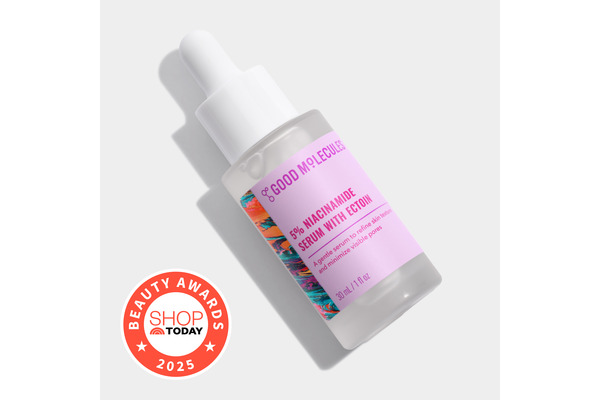
Good Molecules Niacinamide Serum with Ectoin

2. Good Molecules Niacinamide Serum with Ectoin

This combines 5% niacinamide with ectoin, an osmolyte that helps skin hold water and supports the moisture barrier, so the soothing partner does as much work as the active. At a few dollars it is among the gentlest budget options for a stressed barrier.

  • 5% niacinamide + ectoin · osmolyte barrier support
  • Best value pick for a dehydrated or compromised barrier
  • Tradeoff: subtle oil/pore effect; benefits build slowly with daily use
Check price on Amazon →~$8

Best for redness-prone, very reactive skin
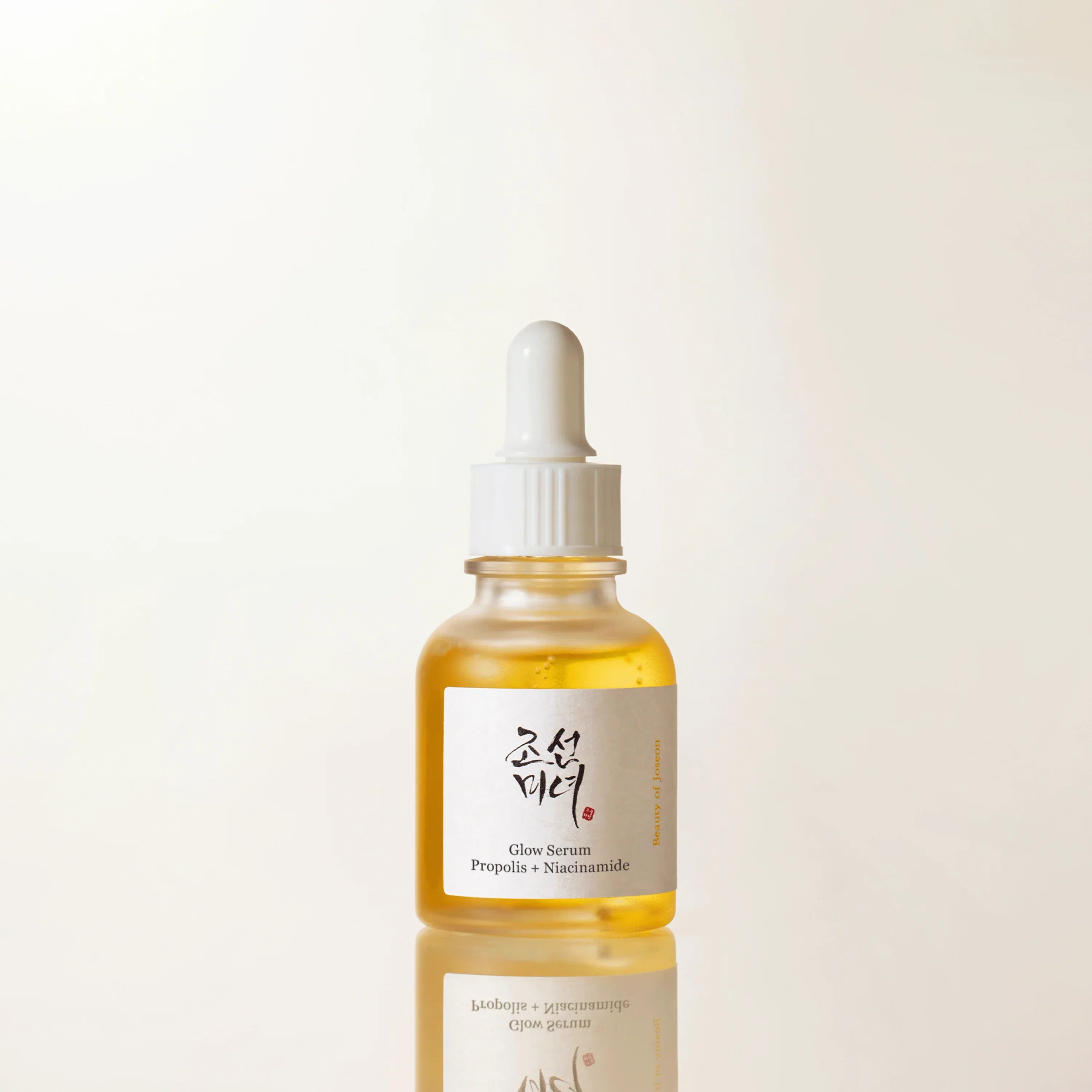
Beauty of Joseon Glow Serum Propolis + Niacinamide

3. Beauty of Joseon Glow Serum: Propolis + Niacinamide

This uses a deliberately low niacinamide level alongside propolis, a humectant-rich soothing ingredient, so it leans calming rather than active-heavy, which suits redness-prone skin that reacts to most serums. It visibly calms redness and adds hydration without a high percentage.

  • Low-percentage niacinamide + propolis extract · calming-first, humectant-rich
  • Best for rosacea-prone skin that stings on most actives
  • Tradeoff: propolis is bee-derived — skip if you react to bee products
Check price on Amazon →~$15

Best budget 10% + zinc for oily, pore-prone skin
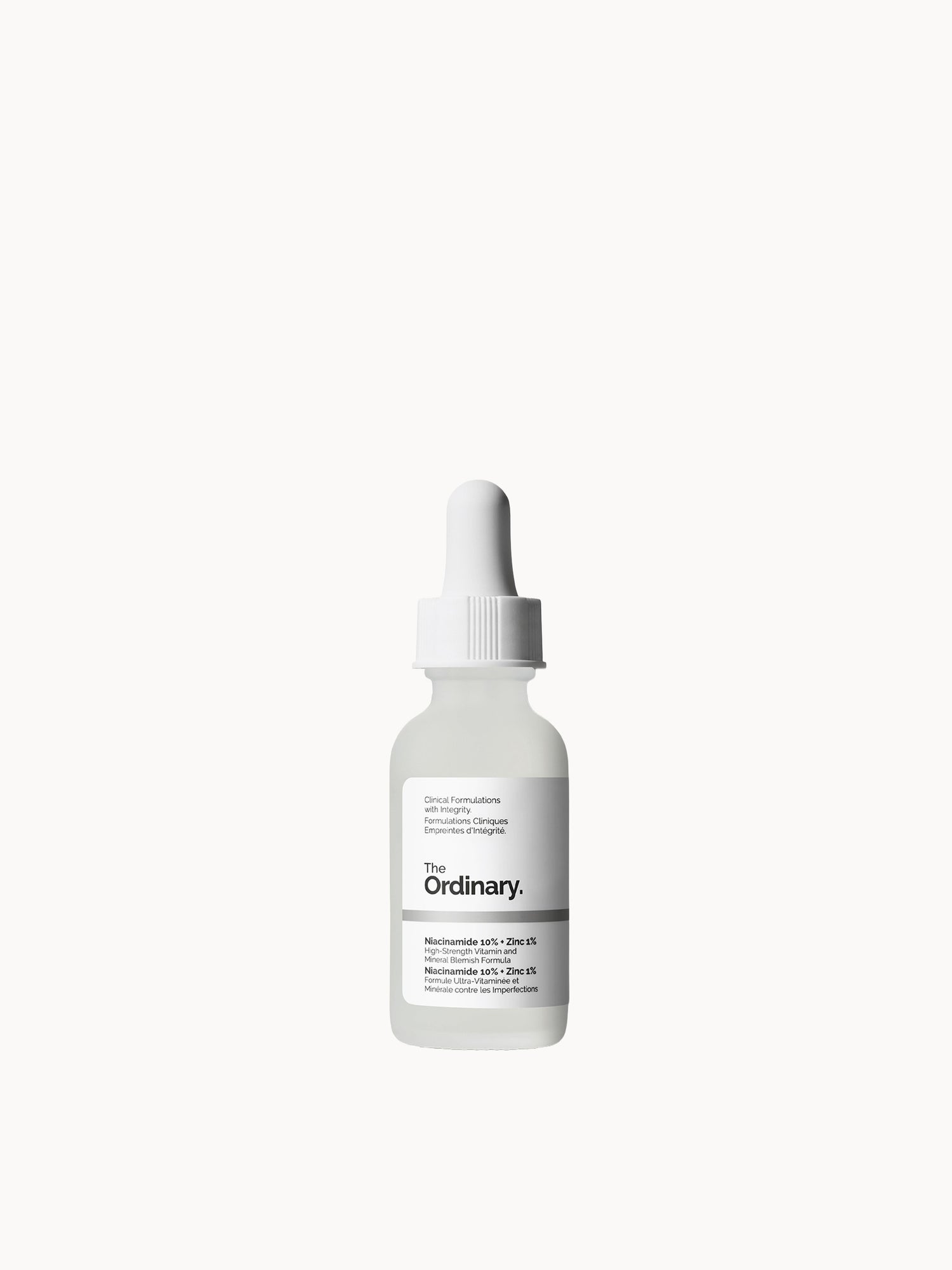
The Ordinary Niacinamide 10% + Zinc 1% Serum

4. The Ordinary Niacinamide 10% + Zinc 1% Serum

This pairs 10% niacinamide with 1% zinc PCA, a combination that helps regulate oil and reduce the look of pores on combination and oily-sensitive skin. It is fragrance-free and inexpensive, which makes it a sensible first trial of the zinc pairing.

  • 10% niacinamide + 1% zinc PCA · fragrance-free
  • Best low-cost 10%+zinc option for oily-sensitive skin
  • Tradeoff: 10% is the ceiling of the gentle range; gel texture can pill — apply on its own first
Check price on Amazon →~$6–8

Best adjustable, mixable fragrance-free option
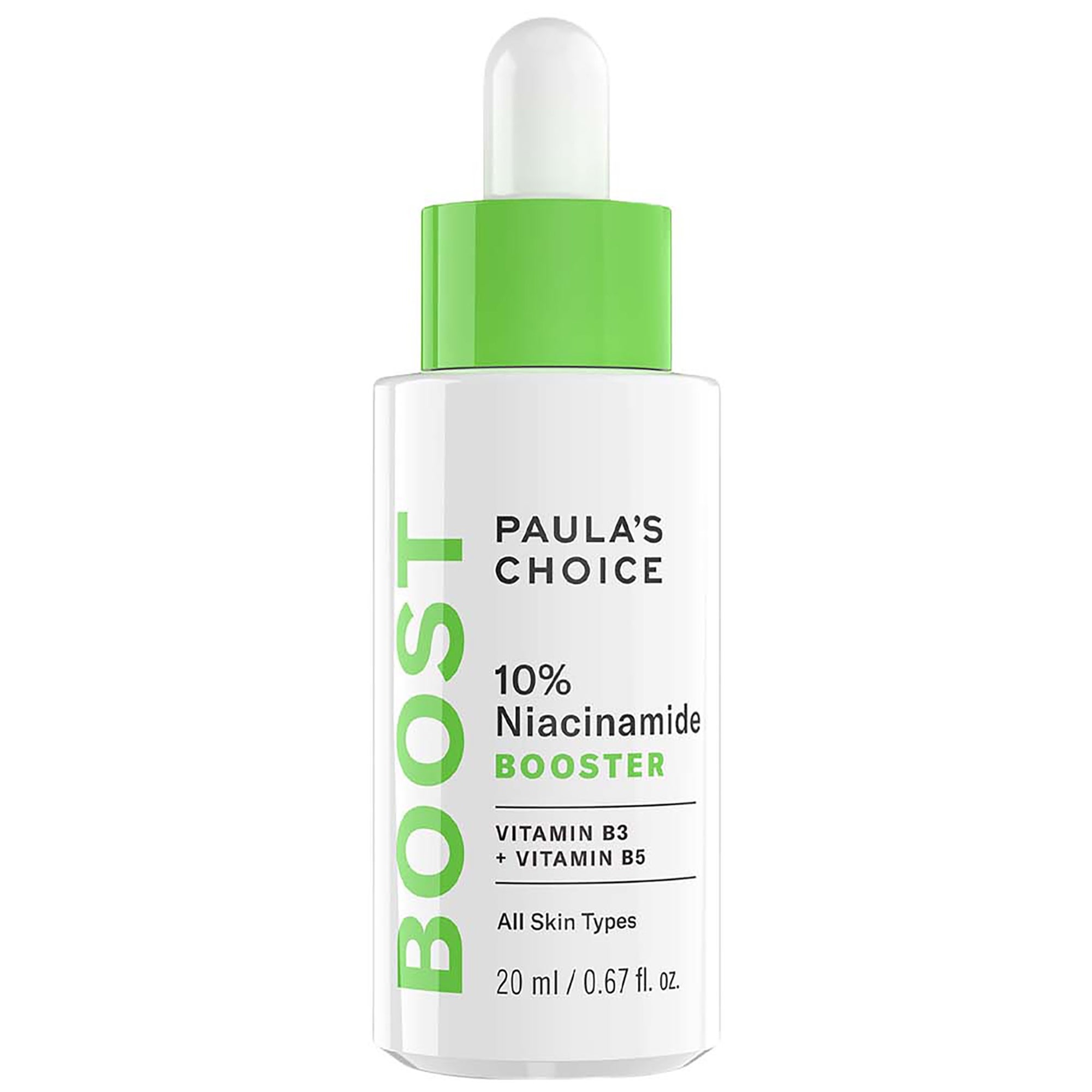
Paula's Choice BOOST 10% Niacinamide Booster

5. Paula’s Choice BOOST 10% Niacinamide Booster

Fragrance-free and made to be used neat or mixed into your moisturizer, which lets reactive skin dilute the 10% and step the strength up as tolerance builds, a level of dose control most serums do not offer. Licorice root extract adds a partner that helps visibly calm redness.

  • 10% niacinamide + licorice root extract + hyaluronic acid · fragrance-free
  • Best for the careful reader who wants to titrate strength
  • Tradeoff: small size, higher price; start diluted on cautious skin
Check price on Amazon →~$49

Best for uneven tone & dark spots (dermatologist brand)
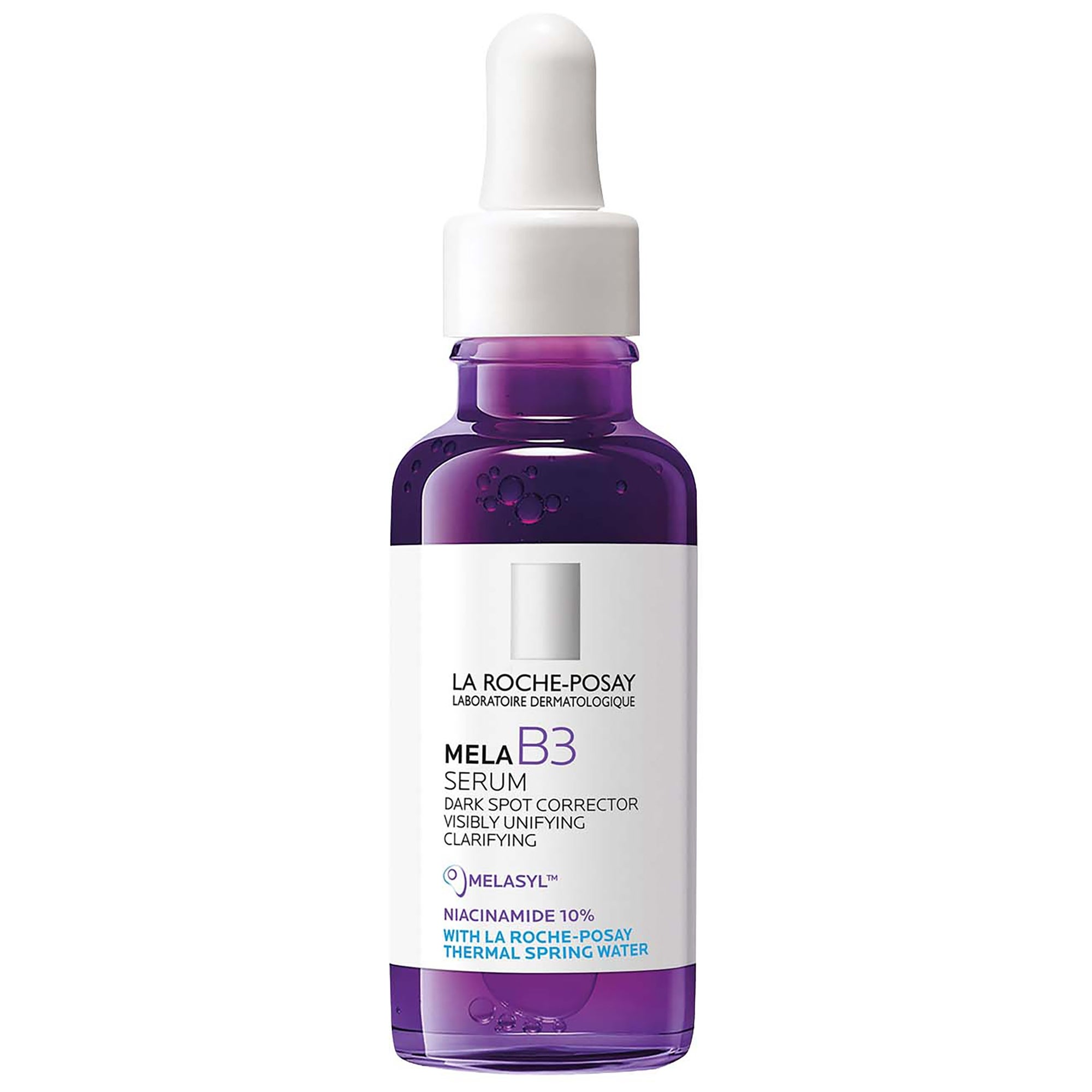
La Roche-Posay Mela B3 Serum

6. La Roche-Posay Mela B3 Serum (Melasyl + 10% Niacinamide)

From a pharmacy brand built around sensitive skin, this 10% niacinamide serum adds Melasyl to target the look of uneven tone, dark spots, and post-blemish marks while niacinamide supports the barrier and visibly calms redness. Many reactive users tolerate it well.

  • 10% niacinamide + Melasyl + LHA · targets the look of dark spots / uneven tone
  • Best for discoloration-focused reactive skin
  • Tradeoff: contains fragrance — not the safest for fragrance-reactive skin; patch-test

Check price on Amazon →~$45

Best fragrance-free purist pick for oily-sensitive skin
Geek and Gorgeous B-Bomb 10% Niacinamide Serum

7. Geek & Gorgeous B-Bomb 10% Niacinamide Serum

A fragrance-free, ingredient-purist formula that pairs 10% niacinamide with zinc PCA and sarcosine to help regulate oil and reduce the look of pores, which makes it a strong match for oily-sensitive skin. The short ingredient list keeps trigger risk low.

  • 10% niacinamide + zinc PCA + sarcosine · fragrance-free · short ingredient list
  • Best clean/purist pick for oily-sensitive skin
  • Tradeoff: sold on Amazon via a third-party seller — verify price/stock before buying
Check price on Amazon →~$10

Best higher-strength pick for oilier, resilient sensitive skin (with a caveat)
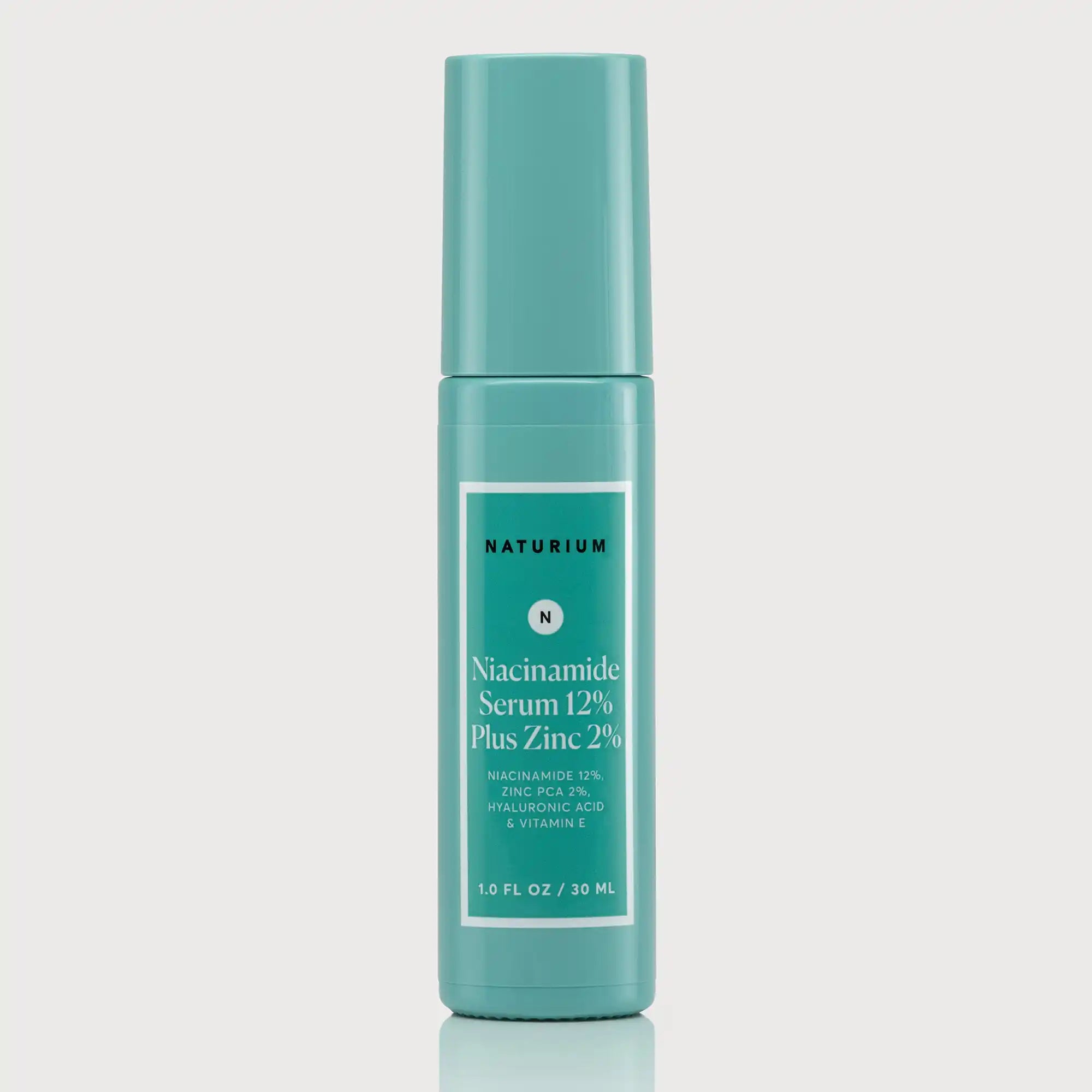
Naturium Niacinamide Face Serum 12% Plus Zinc 2%

8. Naturium Niacinamide Face Serum 12% Plus Zinc 2%

At 12% niacinamide with 2% zinc, this sits just above the gentle 4 to 10% band, so it is the pick for oilier or more resilient sensitive skin rather than a first serum for very reactive complexions. The higher dose works more assertively on oil and the look of pores, and zinc supports that.

  • 12% niacinamide + 2% zinc PCA + hyaluronic acid + vitamin E
  • Best for oilier-but-sensitive skin that already tolerates 10%
  • Tradeoff: 12% is above the well-tolerated band — patch-test, start every other day, step down if it stings

Check price on Amazon →~$14

Frequently asked questions

What percentage of niacinamide is best for sensitive skin?
For most sensitive skin, 4 to 10% does the work, supporting the barrier, helping regulate oil, and reducing the look of pores. The barrier and redness research commonly cited used around 4 to 5%, so you do not need a high number. Strengths near 20% offer no extra benefit for sensitive skin and are more likely to cause flushing.
Can you use niacinamide with vitamin C?
Yes. The old idea that the two cancel out comes from raw-ingredient lab conditions, not finished serums. In modern formulas they layer well. If you prefer, use vitamin C in the morning and niacinamide at night, or apply niacinamide after your vitamin C has absorbed.
Should I use niacinamide in the morning or at night?
Either works, and many people use it twice a day. In the morning it layers well under SPF and can help with oil through the day; at night it supports overnight barrier repair and pairs with retinol or bakuchiol. Consistency matters more than timing.
Does niacinamide help with redness and rosacea-prone skin?
Niacinamide can visibly calm redness and supports the moisture barrier, which is often weak in rosacea-prone skin, so many people find it soothing. It is not a treatment or cure for rosacea. If you have diagnosed rosacea, use it as supportive care alongside your dermatologist’s plan.
Does niacinamide cause purging or flushing?
Niacinamide does not cause purging, because it does not speed up cell turnover the way retinoids or acids do. A small number of people feel a brief, harmless flush from high percentages; staying in the 4 to 10% range and patch testing usually prevents it.
How long does niacinamide take to work?
Oil and the look of pores often look more even within about four weeks of daily use, while barrier strength and redness usually improve over eight to twelve weeks. If a serum stings or worsens redness in the first week, the percentage or another ingredient is likely too strong, so scale back.

Related reading: vitamin C serums · bakuchiol & clean retinol alternatives · mineral facial sunscreens · Eminence Organic Skin Care.

Disclosures. This article contains affiliate links to Amazon (tag: davidgakshtey-20); OSC may earn a commission at no extra cost to you. The Phyris and Eminence picks are brands we carry directly and link to our own product pages, not Amazon. Content was produced with AI assistance and reviewed by our team. Benefit language is limited to “supports the moisture barrier,” “visibly calms redness,” and “reduces the look of pores”; niacinamide does not cure, treat, or heal any condition. Patch-test new products, and if you have diagnosed rosacea, use these as supportive care alongside your dermatologist’s plan.

Best Niacinamide Serums for Sensitive Skin (2026): An Esthetician’s Picks Read More »

Glowing citrus cross-section macro evoking vitamin C antioxidant network

Best Vitamin C Serums for Sensitive Skin: Gentler, More Stable Forms

New to a sensitive-skin routine? Start with our complete sensitive-skin routine guide — all 7 steps, in order.

Vitamin C is an antioxidant that neutralizes the free radicals UV light and pollution generate, and it is also a cofactor your skin uses to build collagen — which is why, used consistently, it brightens the look of dull, uneven tone. The complication for sensitive skin is that the most-studied form, L-ascorbic acid (LAA), is acidic and unstable: it can sting reactive or rosacea-prone skin, and it oxidizes quickly once air reaches the bottle. That is why the form of vitamin C and its percentage matter more than the number on the front of the label, and why gentler derivatives such as tetrahexyldecyl ascorbate or sodium ascorbyl phosphate often suit skin that LAA leaves flushed.

Some links below are affiliate links. If you buy through them, OSC may earn a commission at no extra cost to you. Our picks are chosen by our estheticians on merit, not commission. Our two in-house picks are linked to our own product pages, not Amazon.

Our pick from the OSC shelf

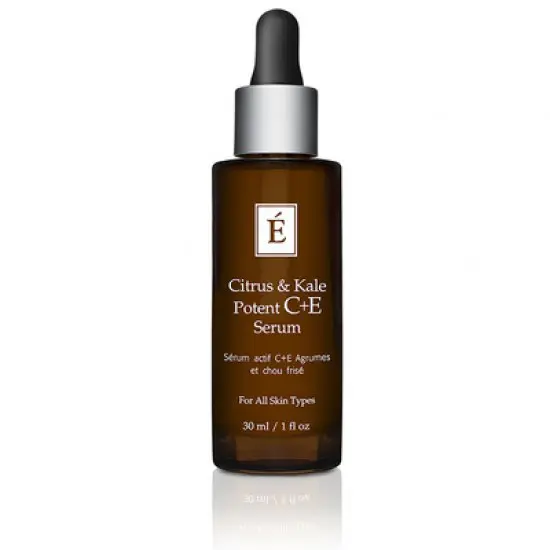
Eminence Citrus and Kale Potent C+E Serum

Eminence Citrus & Kale Potent C+E Serum — $110

Our in-house flagship organic vitamin C serum, and its formula maps neatly onto everything this roundup recommends for sensitive skin: 16% vitamin C in a dual form — pure L-ascorbic acid for potency plus sodium ascorbyl phosphate (SAP), the gentler, more stable derivative reactive skin tolerates better — alongside botanical ferulic acid and vitamin E to keep the actives stable and lower the sting high-strength vitamin C can cause. A leafy-green and citrus antioxidant blend with avocado oil and botanical hyaluronic acid keeps it lightweight. It brightens the look of dull, uneven skin. As the curator’s pick, it is the formula we measure the Amazon options against.

Heads up: the Citrus & Kale serum is on backorder — sign up on its product page to be notified when it restocks. Want an in-stock owned option now? The ilike Organics Vita-C Gel Mask ($160, COSMOS-certified, gentle ascorbyl glucoside) is a rinse-off 1–2x/week treatment — not a daily leave-on serum, and its citrus components warrant a patch test for very reactive skin. The Amazon picks below are daily serums you can buy right now.

What the research shows

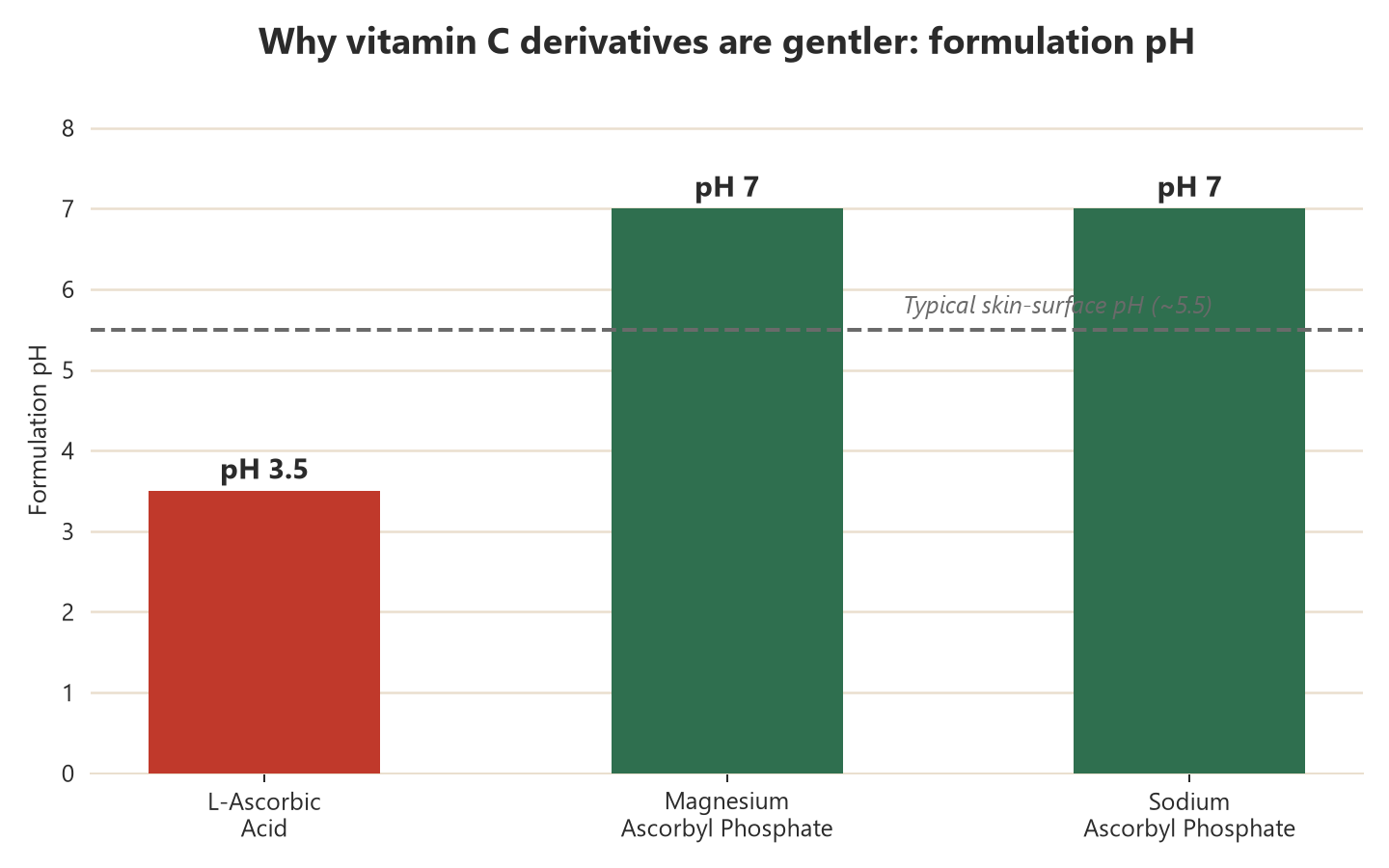
Chart comparing the pH needed for L-ascorbic acid versus gentler derivatives like magnesium and sodium ascorbyl phosphate
A near-neutral pH is what lets a vitamin C derivative sit comfortably on reactive skin.

In Sheldon Pinnell’s landmark percutaneous-absorption study at Duke University (Dermatologic Surgery), pure L-ascorbic acid only penetrated skin effectively when formulated under pH 3.5 at close to 20% concentration — the same acidic, concentrated conditions that make it sting on reactive skin. It is exactly why derivatives like magnesium and sodium ascorbyl phosphate were formulated to work at a near-neutral pH instead — and what separates a vitamin C serum sensitive skin can actually wear daily from one that delivers the same antioxidant benefit at the cost of a stinging, reddened face.

How to choose a vitamin C serum for sensitive skin

Start with the form, not the percentage

Sensitive skin tolerates pH-neutral derivatives better than acidic L-ascorbic acid. Tetrahexyldecyl ascorbate (THD ascorbate) is oil-soluble and stable; sodium ascorbyl phosphate (SAP) and magnesium ascorbyl phosphate (MAP) are water-soluble and mild; ascorbyl glucoside converts to vitamin C in the skin. All are less potent gram-for-gram than LAA, but easier to use daily without redness — and daily use is what shows up in the mirror.

Match the concentration to your tolerance

With LAA, reactive skin does better starting near 8–10% rather than the 15–20% marketed to normal skin. Derivatives are effective at lower numbers: SAP around 5%, MAP roughly 3–5%, THD ascorbate from about 3% to 10%. A lower percentage you tolerate beats a high one that triggers flushing and sits unused.

Look for vitamin E and ferulic acid alongside it

Vitamin C, vitamin E, and ferulic acid stabilize one another and broaden antioxidant protection; the pairing is well documented in dermatology research (Pinnell, 2001). A serum that includes them is doing more antioxidant work and tends to stay stable longer in the bottle.

Check the packaging before you check the price

Vitamin C degrades with light and air. Opaque bottles, airless pumps, or aluminum tubes protect it; clear glass droppers and wide-mouth jars do not. This matters most for L-ascorbic acid and least for stable derivatives like SAP and THD ascorbate.

Skip added fragrance and citrus essential oils

Fragrance is one of the most common triggers for reactive and rosacea-prone skin, and citrus oils (orange, lemon, bergamot) can be phototoxic. A fragrance-free formula adds no irritation risk and lets you judge how the vitamin C itself behaves. Scan the first five ingredients for alcohol denat. too, which can amplify stinging.

Plan how it layers — SPF every morning, bakuchiol if retinol is too much

Vitamin C in the morning complements sunscreen; it does not replace it, so always apply a broad-spectrum SPF over it (see our mineral sunscreen guide). Introduce vitamin C on its own, 2–3x/week, before stacking it with acids or retinoids. If you want a collagen-supporting active at night but retinol leaves you red, bakuchiol is a gentler alternative sensitive skin usually tolerates better.

The 8 best vitamin C serums for sensitive skin on Amazon

Ranked from the gentlest derivatives to well-formulated L-ascorbic acid, so you can start where your skin is. Each owns a distinct use-case.

Best gentle SAP for rosacea-prone & oily-sensitive skin
Mad Hippie Vitamin C Serum

1. Mad Hippie Vitamin C Serum

Built on sodium ascorbyl phosphate (SAP), a vitamin C derivative that stays stable near skin-neutral pH, so it does not carry the acidic sting that high-strength L-ascorbic acid can. The brand reports 0% irritation in its own clinical testing (a brand-stated figure), and the formula rounds it out with vitamin E, ferulic acid, hyaluronic acid and soothing aloe and chamomile. It brightens the look of dull, uneven skin while supporting the barrier, which is why it leads the gentle tier here.

  • Form: sodium ascorbyl phosphate (SAP), ~10%, non-acidic · + E, ferulic, HA, aloe, chamomile
  • Best for rosacea-prone, oily-sensitive skin
  • Tradeoff: gentler but less potent than LAA; clary sage botanical — patch-test

Check price on Amazon →~$28–36

Best fragrance-free THD for the most reactive / eczema-prone skin
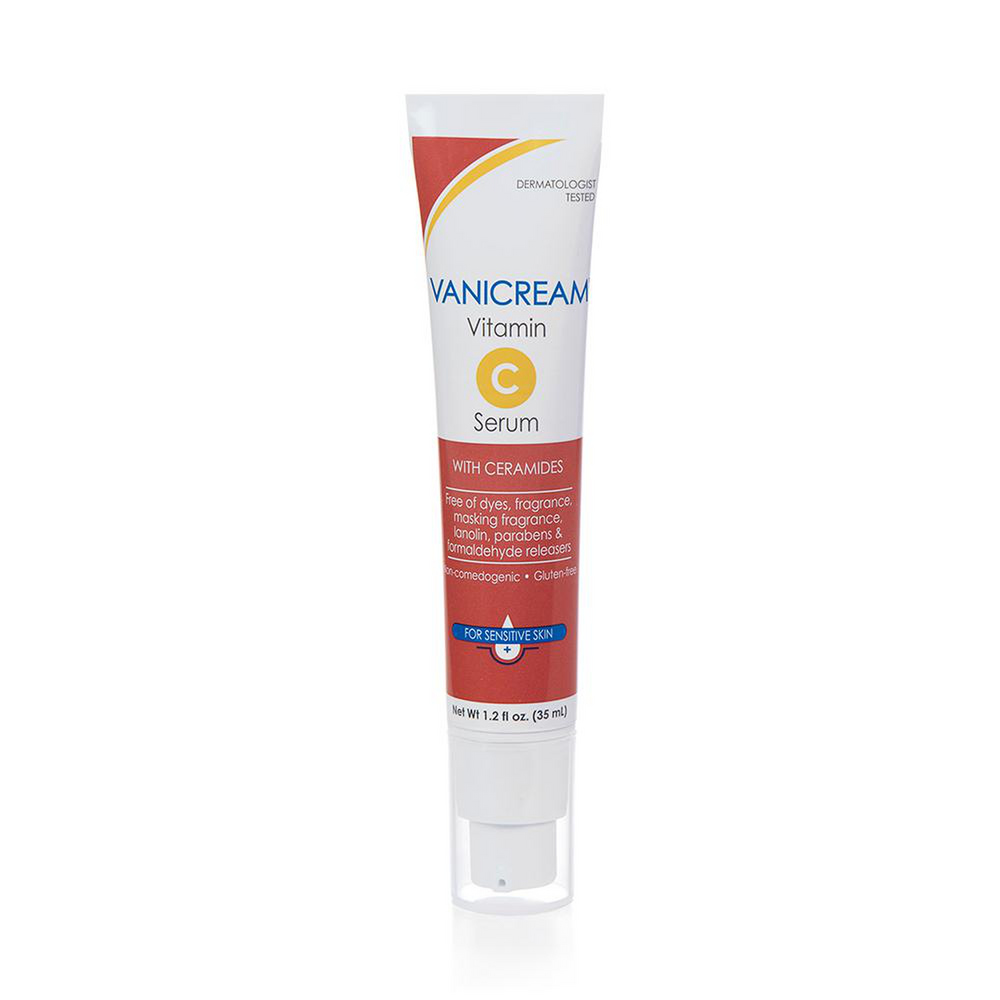
Vanicream Vitamin C Serum

2. Vanicream Vitamin C Serum

A fragrance-free serum built on tetrahexyldecyl ascorbate (THD ascorbate), an oil-soluble derivative that works without a low pH, so there is no acid sting. It is formulated without fragrance, dyes, lanolin and parabens and dermatologist-tested for sensitive and eczema-prone skin, which makes it one of the calmer ways to start vitamin C. At its low price it is a sensible first bottle for skin that flushes easily.

  • Form: tetrahexyldecyl ascorbate (THD), oil-soluble, pH-neutral
  • Fragrance-free, dye-free, lanolin-free, paraben-free · best for the most reactive skin
  • Tradeoff: pared-back formula; works more slowly than LAA

Check price on Amazon →~$16–20

Best hydrating THD for dry, mature, reactive skin
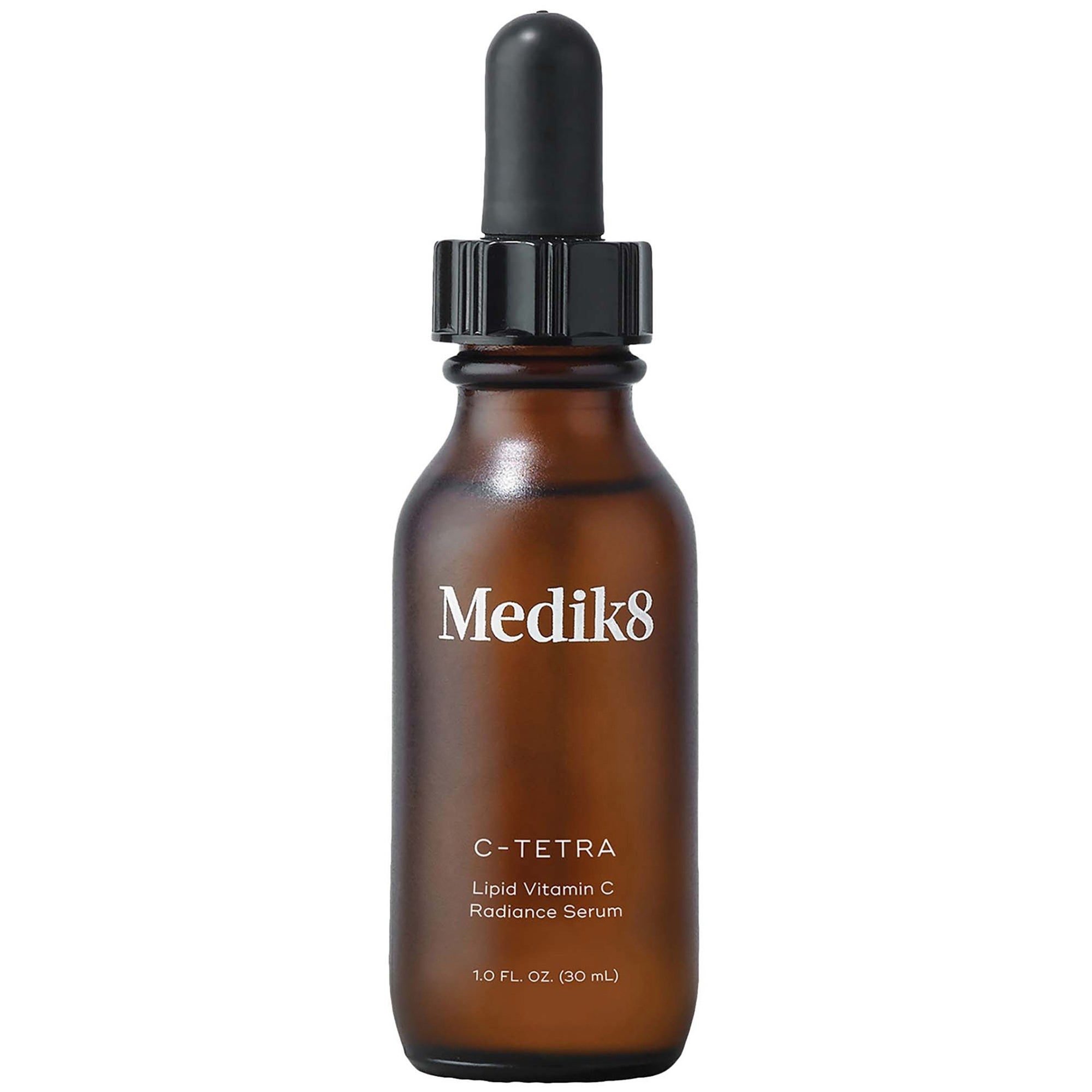
Medik8 C-Tetra Vitamin C Serum

3. Medik8 C-Tetra Vitamin C Serum

Uses THD ascorbate suspended in a squalane base, a combination that suits dry, mature or reactive skin that finds water-based vitamin C drying. Because THD is non-acidic and oil-soluble, it absorbs without the tingle of low-pH formulas and resists oxidation in the bottle. It is a professional-brand THD option that fits our esthetician-led shelf, and a strong stand-in while the Eminence flagship restocks.

  • Form: THD ascorbate in a squalane base · non-acidic, oxidation-resistant
  • Best for dry, mature, reactive skin
  • Tradeoff: pricier per oz; a richer finish than a watery serum

Check price on Amazon →~$45–53

Best multi-form middle ground
Naturium Vitamin C Complex Serum

4. Naturium Vitamin C Complex Serum

Blends a small, stabilized amount of L-ascorbic acid with two gentle derivatives — sodium ascorbyl phosphate and ascorbyl glucoside — in a cushioning glycerin base, so it sits between a pure derivative and a full-strength acid. That middle ground brightens the look of uneven tone with less sting than a straight high-percentage formula. NYT Wirecutter named it a best pick for sensitive skin, and its low price makes it an easy available-now option.

  • Form: stabilized LAA + SAP + ascorbyl glucoside (multi-form) · + hyaluronic acid
  • Best step-up from a pure derivative
  • Tradeoff: small LAA fraction is slightly more active — patch-test fruit actives

Check price on Amazon →~$17–22

Best budget gentle derivative / lowest-risk first try
Good Molecules Vitamin C Serum with Oryzanol

5. Good Molecules Vitamin C Serum with Oryzanol

Pairs two pH-neutral derivatives — ascorbyl glucoside and magnesium ascorbyl phosphate — at a gentle ~8%, with no free L-ascorbic acid, so there is little sting and little of the fast oxidation that plagues acidic serums. At around $13 it is a low-risk way for reactive or rosacea-prone skin to trial vitamin C and see how it behaves before committing to a stronger formula. It brightens the look of dull, uneven skin at the most accessible price in this list.

  • Form: ascorbyl glucoside + magnesium ascorbyl phosphate (~8%), no free LAA
  • pH-neutral, low-sting · best budget / lowest-risk first try
  • Tradeoff: results build slowly; basic formula (no E or ferulic)

Check price on Amazon →~$13

Best for the look of dark spots & deeper, melanin-rich sensitive skin
Eadem Milk Marvel Dark Spot Serum

6. Eadem Milk Marvel Dark Spot Serum

A fragrance-free serum that uses 3-O-ethyl ascorbic acid, a stable vitamin C derivative, with sodium ascorbate and niacinamide, formulated with melanin-rich, sensitive skin in mind to lower the risk of post-inflammatory marks. It is a considered pick for reactive skin working on the look of dark spots and uneven tone, reducing the appearance of dark spots rather than removing them. The niacinamide adds barrier and tone support without the sting of a low-pH acid.

  • Form: 3-O-ethyl ascorbic acid (stable) + sodium ascorbate + niacinamide
  • Fragrance-free, formulated for melanin-rich sensitive skin · best for the look of dark spots
  • Tradeoff: higher price; brand-stated before/after timelines

Check price on Amazon →~$68

Best barrier-supporting starter L-ascorbic acid (drugstore)
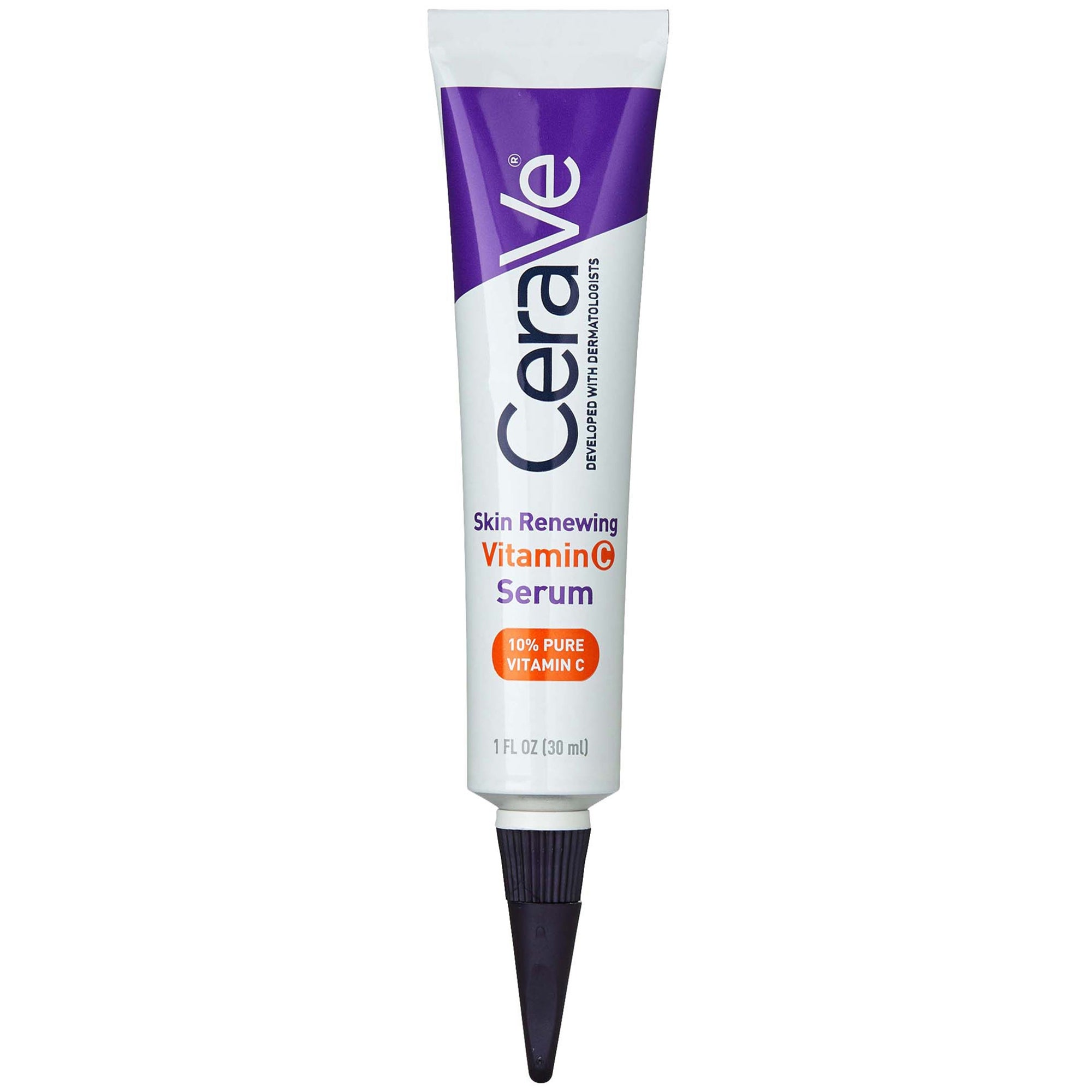
CeraVe Skin Renewing Vitamin C Serum

7. CeraVe Skin Renewing Vitamin C Serum

A 10% encapsulated L-ascorbic acid cushioned by three barrier ceramides, hyaluronic acid and vitamin B5, and fragrance-free — a sensible bridge between a gentle derivative and a full-strength acid. The lower dose, the encapsulation that slows delivery, and the ceramide support make it one of the easier ways to use true L-ascorbic acid on cautious skin. Dermatologists frequently recommend it as an accessible, barrier-friendly entry point.

  • Form: 10% encapsulated L-ascorbic acid · + 3 ceramides, HA, vitamin B5; fragrance-free
  • Best barrier-supporting starter LAA
  • Tradeoff: still an acid — buy fresh, store cool/dark, replace once color shifts

Check price on Amazon →~$20–25

Best well-formulated L-ascorbic acid for the tolerant end of sensitive skin
Maelove The Glow Maker Vitamin C Serum

8. Maelove The Glow Maker Vitamin C Serum

A 15% L-ascorbic acid serum with vitamin E and ferulic acid — the antioxidant trio modeled on the well-known SkinCeuticals C E Ferulic formula, unscented and buffered with hyaluronic acid, at a fraction of the benchmark’s price. Vitamin E and ferulic acid stabilize the L-ascorbic acid and broaden its antioxidant action. It is the pick for the tolerant end of sensitive skin, and a fair-value way to use a real LAA formula once your barrier is stable.

  • Form: 15% L-ascorbic acid + vitamin E + ferulic acid (unscented) · + HA buffer
  • Best LAA for the tolerant end of sensitive skin
  • Tradeoff: acidic 15% LAA — not a first vitamin C; start 2–3 nights/week, skip during a flare

Check price on Amazon →~$30–40

Frequently asked questions

Which vitamin C form is best for sensitive skin?
For reactive or rosacea-prone skin, a gentler derivative usually beats high-strength L-ascorbic acid. Tetrahexyldecyl ascorbate (THD ascorbate) is oil-soluble, pH-neutral, and stable, so it absorbs without the acidic sting. Sodium ascorbyl phosphate (SAP) and magnesium ascorbyl phosphate (MAP) are water-soluble, also pH-neutral, and well tolerated; ascorbyl glucoside is another mild option that converts to vitamin C in the skin. These are less potent gram-for-gram than LAA, but tolerability is what keeps you consistent — and consistency is what shows in the mirror.
What percentage of vitamin C should sensitive skin use?
Start low. With L-ascorbic acid, sensitive skin does better beginning around 8–10% rather than the 15–20% aimed at normal skin. Derivatives work at lower numbers because they behave differently: SAP is typically effective near 5%, MAP around 3–5%, and THD ascorbate from roughly 3% to 10%. A well-tolerated percentage you apply daily does more than a high one that triggers redness and sits unused.
Should I use vitamin C in the morning or at night, and do I still need sunscreen?
Either works, but morning has an edge. Vitamin C’s antioxidant action helps defend skin against free radicals from daytime UV and pollution, and it complements sunscreen rather than replacing it — always layer a broad-spectrum SPF over it. If you also use a retinoid or an exfoliating acid at night, keeping vitamin C in the morning separates your actives and lowers irritation risk.
Can I use vitamin C with niacinamide, retinol, and SPF?
Yes. The old warning that niacinamide and vitamin C cancel each other out came from decades-old research on raw, heated ingredients and does not reflect modern stabilized formulas — they work fine together and both support a more even-looking tone. With retinol, sensitive skin is usually more comfortable splitting them (vitamin C in the morning, retinol at night) to avoid stacking two potential irritants; if retinol is too harsh, bakuchiol is a gentler swap. SPF over vitamin C in the morning is the pairing dermatologists recommend most.
How can I tell if my vitamin C serum has oxidized?
Color and smell are your cues. Fresh L-ascorbic acid serums are clear to pale yellow; once they turn deep yellow, amber, or brown, the vitamin C has oxidized and lost potency, and an oxidized serum can be more irritating to sensitive skin. A sharp or metallic smell is another sign. Derivative-based serums (SAP, THD, MAP, ascorbyl glucoside) are more stable and shift color more slowly. Store any vitamin C cool, capped, and out of direct light, and buy a size you can finish within a few months.
How long until I see brightening?
Give it about 8 to 12 weeks of daily use. Antioxidant protection begins immediately at the molecular level, but the visible change in the look of dullness and uneven tone follows your skin’s natural cell turnover and collagen support, which takes weeks rather than days. Take a photo in the same lighting at the start so you can judge the change honestly later.

Related reading: bakuchiol & clean retinol alternatives · best organic & mineral facial sunscreens · Eminence Organic Skin Care.

Disclosures. This article contains affiliate links to Amazon (tag: davidgakshtey-20); OSC may earn a commission at no extra cost to you. The Eminence and ilike picks are brands we carry directly and link to our own product pages, not Amazon. Content was produced with AI assistance and reviewed by our team. Brand-stated figures (such as Mad Hippie’s “0% irritation” testing) are the brand’s own claims. Vitamin C does not treat any medical condition; introduce a new active slowly and patch-test if your skin is sensitive.

Best Vitamin C Serums for Sensitive Skin: Gentler, More Stable Forms Read More »
Macro photo of Psoralea corylifolia bakuchiol plant with a glowing serum droplet at golden hour

Bakuchiol Serums for Sensitive Skin: Clean Retinol Alternatives

New to a sensitive-skin routine? Start with our complete sensitive-skin routine guide — all 7 steps, in order.

Bakuchiol is a plant compound from the seeds of Psoralea corylifolia that signals skin cells through the same retinoic-acid pathway retinol uses, which is why it can reduce the appearance of fine lines and even out tone without the flaking, stinging, and redness retinol often triggers. In a 2019 randomized, double-blind trial (44 participants, 12 weeks), it performed comparably to over-the-counter retinol on wrinkle depth and pigmentation, with fewer reports of irritation. The honest tradeoff: it is gentler, so for most skin it also works more slowly, and it is not a substitute for prescription tretinoin.

This post contains affiliate links. OSC may earn a commission if you buy through them, at no extra cost to you. It does not change which products we recommend. Our picks are chosen by our estheticians on formulation, and every one was checked to confirm it contains no retinol, retinaldehyde, or retinyl esters.

Our pick from the OSC shelf

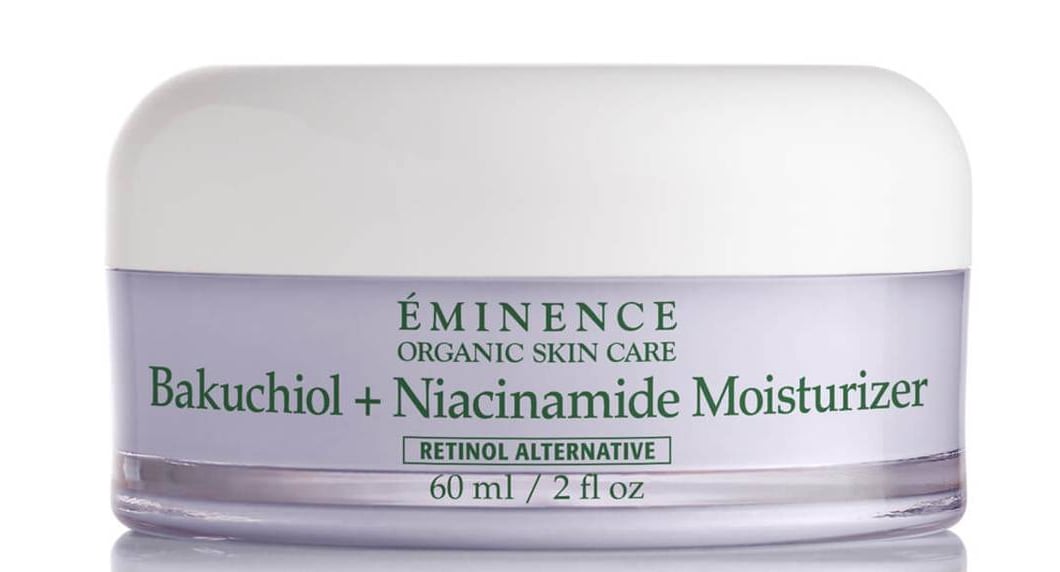
Eminence Organics Bakuchiol + Niacinamide Moisturizer

Eminence Organics Bakuchiol + Niacinamide Moisturizer — $69

The organic age-corrective product we curate and recommend in-house: bakuchiol working on the retinoic-acid pathway to soften the look of fine lines, paired with niacinamide to help calm redness and reinforce the skin barrier. One moisturizer, no retinoids, formulated to the professional-grade standard we stand behind for sensitive, reactive skin.

Heads up: as of this writing it is on backorder — check the product page to get notified when it restocks, or browse the Eminence Organic Skin Care collection. The Amazon picks below are the options you can buy right now.

What the research shows

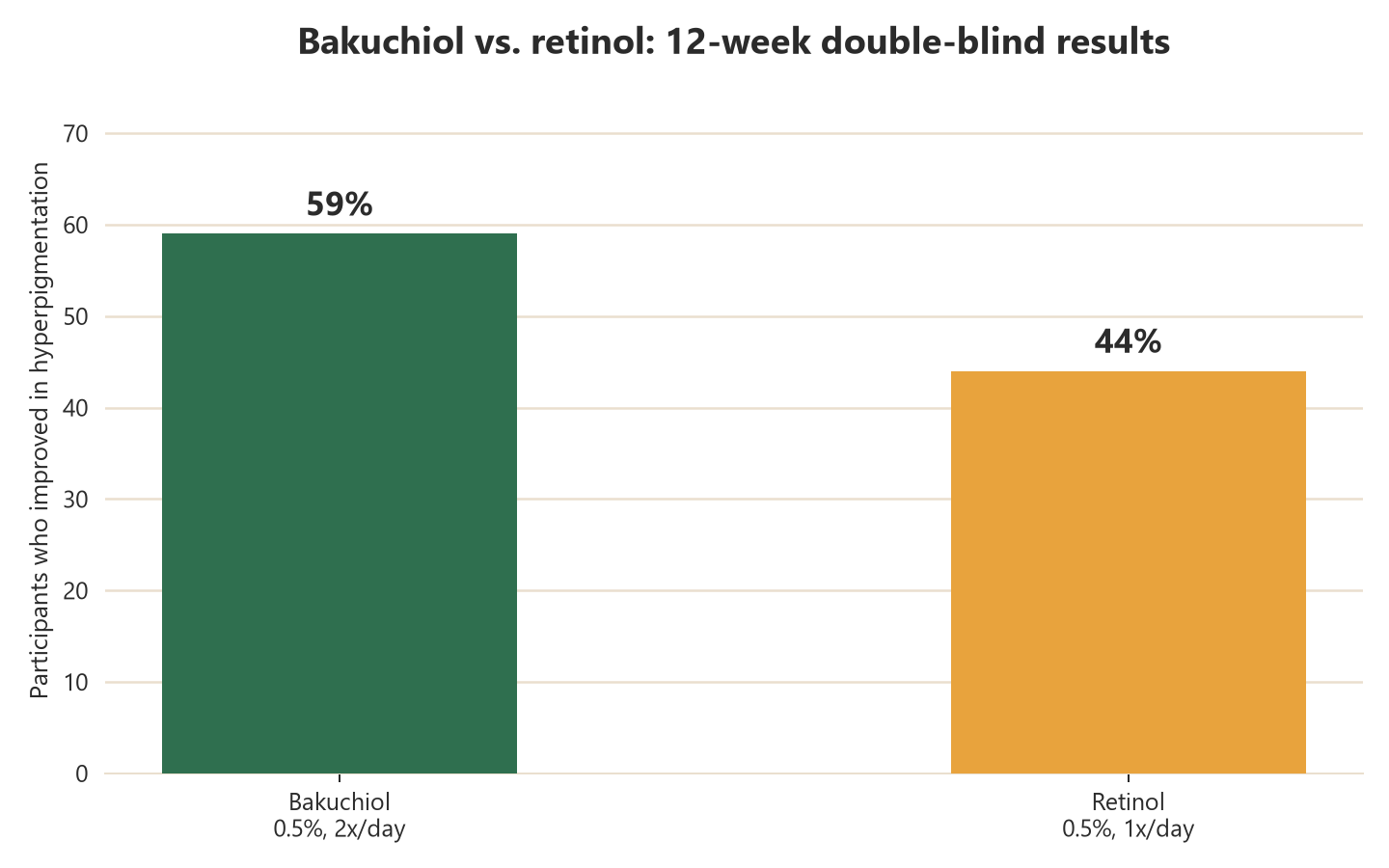
Chart showing 59 percent of bakuchiol users vs 44 percent of retinol users improved in hyperpigmentation at 12 weeks
Two different actives, comparable results — bakuchiol matched retinol on efficacy with meaningfully less irritation.

In a randomized, double-blind, 12-week trial led by Simran Dhaliwal and colleagues at UC Davis (British Journal of Dermatology), twice-daily bakuchiol matched once-daily retinol almost exactly on wrinkle reduction and edged it out on hyperpigmentation — 59% of bakuchiol users improved versus 44% of retinol users — while the retinol group reported significantly more scaling and burning at every single check-in across the study. It is exactly why a well-formulated bakuchiol serum has earned the term “retinol alternative” for reactive skin — and what separates a real head-to-head clinical comparison from a plant extract riding on the word “natural” alone.

How to choose a bakuchiol product

Check the concentration, and whether it’s purified bakuchiol

The clinical results most often cited used 0.5% bakuchiol; well-formulated serums usually list 0.5%–2%. Favor labels that state “bakuchiol” as the active rather than raw Psoralea corylifolia (babchi) seed oil as the hero, since raw babchi can carry photosensitizing psoralens.

Confirm it is genuinely retinol-free

Some products pair “bakuchiol” with retinol, retinaldehyde, or retinyl esters, which reintroduces the irritation you were avoiding and rules the product out during pregnancy. Scan the INCI list for retinol, retinal, and retinyl before you buy. Brand terms like “phyto-retinol” or “beta-retinol” are marketing names for bakuchiol, not added retinoids — but verify the ingredient list to be sure.

Look at the supporting actives

Niacinamide, peptides, ceramides, hyaluronic acid, and squalane pair well with bakuchiol and help support the skin barrier. If your skin is reactive, hold off on stacking bakuchiol with strong acids or actual retinol at first; vitamin C in the morning and bakuchiol at night is a simple, low-friction split.

Match the format to your skin

Lightweight serums absorb fast and layer well for combination or oily skin; richer creams and facial oils suit dry or mature skin. Format affects both comfort and how much active stays on the skin.

Read the pregnancy and nursing note honestly

Bakuchiol contains no retinoids, which is why it is a common choice when retinol is off the table. But cosmetic actives are rarely studied in pregnancy and bakuchiol has no pregnancy-specific safety data, so it is commonly considered a reasonable alternative rather than a proven-safe one. Clear any product with your OB or dermatologist before starting.

Patch-test before full-face use

Apply a small amount to the inner forearm or behind the ear for three to five nights before bringing a new active to your face. Sensitive and rosacea-prone skin especially benefits from this slow introduction.

The 8 best bakuchiol & clean retinol alternatives you can buy on Amazon

Every pick below was checked to confirm it contains no retinol, retinaldehyde, or retinyl esters. Each owns a distinct use-case so you can match it to your skin and budget.

Best budget bakuchiol serum
Acure Radically Rejuvenating Dual Phase Bakuchiol Serum

1. Acure Radically Rejuvenating Dual Phase Bakuchiol Serum

Acure pairs bakuchiol with blue tansy and turmeric in a two-layer formula you shake before use. It is vegan, fragrance-free, and the most accessible entry point for finding out whether a plant-based retinol alternative suits your skin before spending more. Use it at night and follow with a moisturizer.

  • Bakuchiol (no retinol) + blue tansy, turmeric · bi-phase serum
  • Vegan, fragrance-free · pregnancy: commonly considered safe, confirm with your provider
  • Tradeoff: concentration not disclosed; oil layer can look shiny — best at night

Check price on Amazon →~$22–25

Best for pregnancy & nursing (and very reactive skin)
Dermelect Flawless Bakuchiol Treatment

2. Dermelect Flawless Bakuchiol Treatment

Dermelect’s cushiony cream combines bakuchiol with squalane, hyaluronic acid, and panthenol to support the barrier while it works on tone and the look of fine lines. It is fragrance-free and rated roughly 91% top-allergen-free, which is why it is frequently chosen for reactive skin and for pregnancy and nursing. The product name is the brand’s own; it makes no medical promise.

  • Bakuchiol (no retinol) + squalane, hyaluronic acid, panthenol · cream
  • Fragrance-free, ~91% top-allergen-free · pregnancy: commonly considered safe, confirm with your provider
  • Tradeoff: contains dimethicone + ginger extract — patch-test the botanicals

Check price on Amazon →~$59

Best clean prestige bakuchiol + peptides serum
Herbivore Moon Fruit Bakuchiol + Peptides Retinol Alternative Serum

3. Herbivore Moon Fruit Bakuchiol + Peptides Retinol Alternative Serum

Herbivore’s Moon Fruit pairs bakuchiol with peptides and fruit extracts in a clean, prestige formula — the ingredient-purist’s pick. It works on the retinoic-acid pathway to soften the look of fine lines and even tone while staying free of synthetic fragrance and retinoids. A considered splurge for sensitive skin that wants results without the irritation.

  • Bakuchiol (no retinol) + peptides + fruit extracts · serum
  • Synthetic-fragrance-free, vegan · pregnancy: commonly considered safe, confirm with your provider
  • Tradeoff: prestige price — a considered splurge

Check price on Amazon →~$54–68

Best certified-organic bakuchiol serum
KORA Organics Plant Stem Cell Retinol Alternative Serum

4. KORA Organics Plant Stem Cell Retinol Alternative Serum

KORA Organics carries COSMOS-certified-organic and EWG VERIFIED status, the strongest clean-and-organic credential on this list, pairing bakuchiol with alfalfa extract in a milky, dual-action serum. It works on the retinoic-acid pathway to ease the look of fine lines and uneven tone while staying gentle. Make sure you are buying the Plant Stem Cell Retinol Alternative, not the Super A serum, which contains actual retinoids.

  • Bakuchiol (no retinol) + alfalfa stem-cell extract · milky serum
  • COSMOS-certified organic, EWG Verified · pregnancy: commonly considered safe, confirm with your provider
  • Tradeoff: brand also sells a “Super A” retinoid serum — buy the right one

Check price on Amazon →~$58–68

Best for combination skin (lightweight + hydrating)
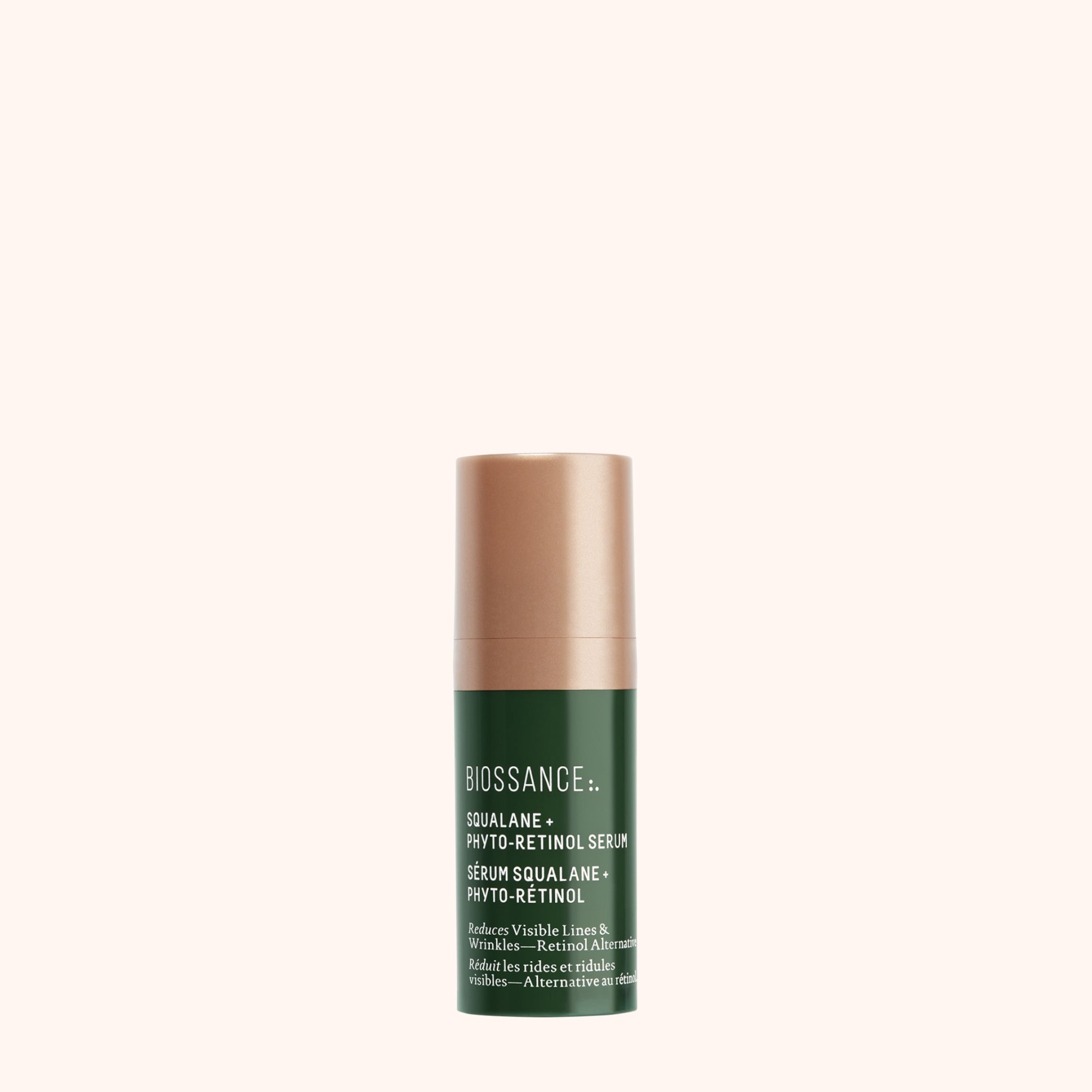
Biossance Squalane + Phyto-Retinol Serum

5. Biossance Squalane + Phyto-Retinol Serum

Biossance blends bakuchiol, which it calls “phyto-retinol” as its brand term for the plant compound, with sugarcane-derived squalane and niacinamide. The result is hydrating and lightweight, a sensible fit for combination skin. To be clear: the ingredient list confirms bakuchiol with no retinol, retinaldehyde, or retinyl esters, despite the listing’s auto-generated tag.

  • Bakuchiol (“phyto-retinol”, no retinol) + squalane + niacinamide · serum
  • Lightweight, hydrating · pregnancy: commonly considered safe, confirm with your provider
  • Tradeoff: Amazon listing auto-tags “retinol” — a data artifact, not an ingredient

Check price on Amazon →~$54–72

Best bakuchiol moisturizer (cream format)
Alpyn Beauty PlantGenius Melt Moisturizer with Bakuchiol

6. Alpyn Beauty PlantGenius Melt Moisturizer with Bakuchiol

For readers who prefer a moisturizer over a serum, Alpyn delivers bakuchiol alongside ceramides, squalane, and hyaluronic acid in one barrier-supporting cream. The ceramide-and-squalane base makes it a comfortable choice for dry or mature skin that wants its plant-based retinol alternative in a single nighttime step.

  • Bakuchiol (no retinol) + ceramides + squalane + hyaluronic acid · cream
  • Barrier-supporting · pregnancy: commonly considered safe, confirm with your provider
  • Tradeoff: a fixed moisturizer gives less control over layering than a serum

Check price on Amazon →~$48–60

Best budget facial oil for dry skin
Good Molecules Bakuchiol Oil Blend for Dry Skin

7. Good Molecules Bakuchiol Oil Blend for Dry Skin

At around $10, Good Molecules suspends bakuchiol in rosehip and chia seed oils for the price-sensitive reader with dry skin. Honest framing: the workhorse here is the rosehip oil and its barrier-nourishing fatty acids, with bakuchiol as a supporting active, so if you want a higher, stated bakuchiol percentage the Herbivore is a better fit. Fragrance-free with a short ingredient list.

  • Bakuchiol in rosehip seed oil (~80%) + chia seed oil (no retinol) · facial oil
  • Fragrance-free, short ingredient list · pregnancy: commonly considered safe, confirm with your provider
  • Tradeoff: rosehip oil is the hero; can feel rich on oily skin

Check price on Amazon →~$10

Best for the eye area
Burt's Bees Renewal Firming Eye Cream with Bakuchiol

8. Burt’s Bees Renewal Firming Eye Cream with Bakuchiol

Burt’s Bees brings bakuchiol to the eye area with a 99%-natural, drugstore-accessible firming eye cream, a gentle option for the thin skin around the eyes where many people cannot use retinol. It pairs bakuchiol with vitamin E to support the look of firmness over time. Patch-test first, since this area reacts more readily than the rest of the face.

  • Bakuchiol (no retinol) + vitamin E · eye cream
  • 99% natural origin · pregnancy: commonly considered safe, confirm with your provider
  • Tradeoff: the eye area reacts more readily — patch-test even gentle formulas

Check price on Amazon →~$22–29

Frequently asked questions

Is bakuchiol as effective as retinol?
In the head-to-head trial most often cited (44 people, 12 weeks, 2019), 0.5% bakuchiol matched 0.5% retinol on reducing the appearance of wrinkles and dark spots, with less peeling and stinging. Keep the context in mind: it was one small study comparing bakuchiol to over-the-counter retinol, not prescription tretinoin, and the changes build gradually. For sensitive skin that cannot tolerate retinol, a comparable result you can actually wear is worth more than a stronger one you cannot.
Is bakuchiol safe during pregnancy?
Bakuchiol contains no retinoids, which is why many people choose it when retinol and prescription retinoids are avoided in pregnancy and nursing. The honest caveat: cosmetic actives are seldom tested in pregnancy, and bakuchiol has no pregnancy-specific safety studies, so it is commonly considered a reasonable alternative rather than a proven-safe one. Clear any product with your OB or dermatologist before you start.
Can you use bakuchiol with retinol or vitamin C?
With vitamin C, yes; bakuchiol is stable enough to layer with most actives, though many people simply use vitamin C in the morning and bakuchiol at night. With retinol you also can, and some formulas combine the two to soften irritation. But if your goal is a retinol-free routine for sensitive skin or pregnancy, read the label and skip anything that lists retinol, retinal, or retinyl.
Should I use bakuchiol in the morning or at night?
Either works. Unlike retinol, bakuchiol is not broken down by light, so it fits a morning or an evening routine. Some people use it twice daily, which mirrors how it was applied in the 2019 study. Daily sunscreen every morning still matters.
How long does bakuchiol take to work?
Plan on 8 to 12 weeks of consistent use before judging fine lines and tone, with early smoothness and texture changes sometimes showing around week 4. Because it is gentler than retinol, it rewards patience. Using it consistently matters more than using a lot.
Does bakuchiol cause purging?
Bakuchiol is not associated with the “purge” some people get from retinoids, because it does not accelerate cell turnover in the same aggressive way. Most sensitive-skin users tolerate it without an initial breakout, though any new product can occasionally cause congestion, which is why a patch test first is worth the few days.

Related reading: Eminence Organic Skin Care · best organic & mineral facial sunscreens.

Disclosures. This article contains affiliate links to Amazon (tag: davidgakshtey-20); OSC may earn a commission at no extra cost to you. The Eminence pick is a brand we carry directly and is not an affiliate link. Content was produced with AI assistance and reviewed by our team. Every product was checked to confirm it is free of retinol, retinaldehyde, and retinyl esters. Bakuchiol is not a treatment for any medical condition; patch-test new products and, if pregnant or nursing, confirm with your provider.

Bakuchiol Serums for Sensitive Skin: Clean Retinol Alternatives Read More »

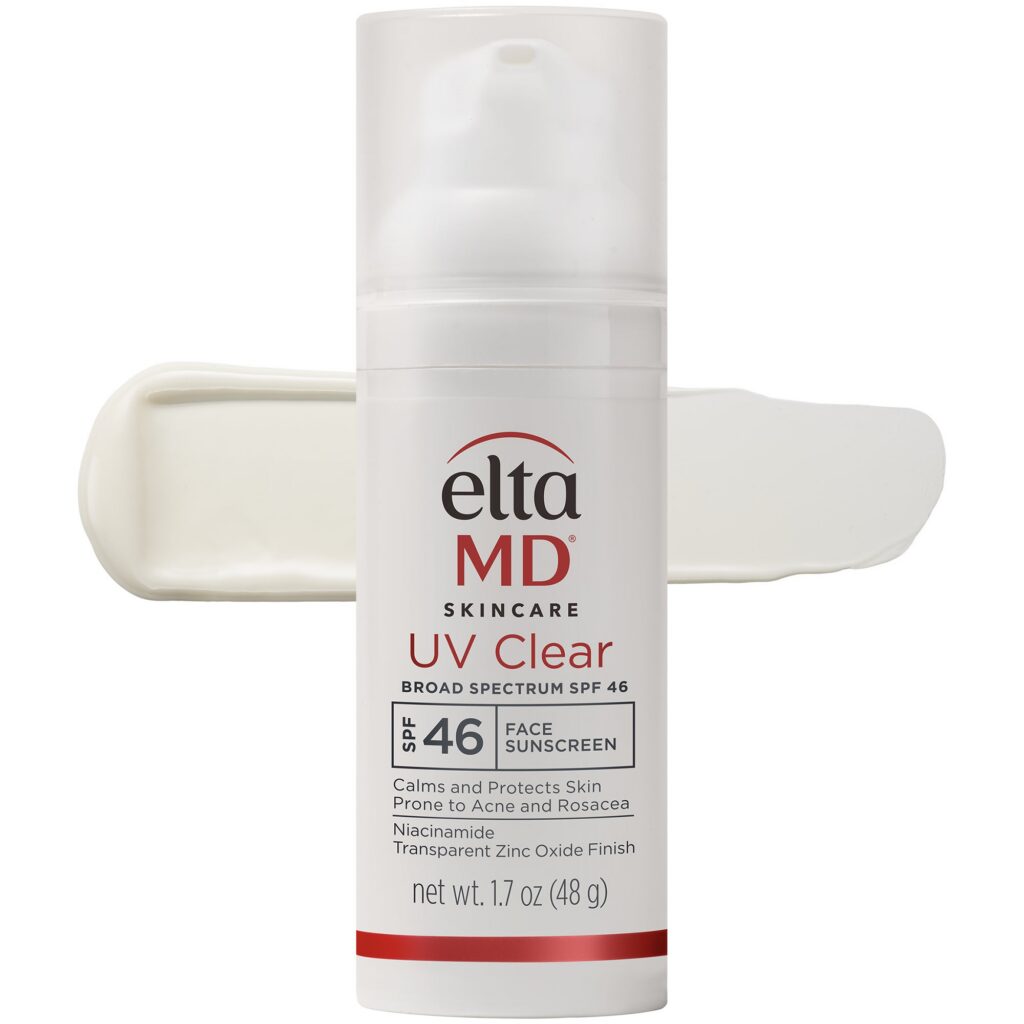
EltaMD UV Clear Broad-Spectrum SPF 46 Facial Sunscreen

EltaMD UV Clear Broad-Spectrum SPF 46 Facial Sunscreen

The mineral face SPF dermatologists reach for most when skin is sensitive, redness-prone, and breaks out. The only active is transparent zinc oxide 9%, paired with niacinamide at 5% and hyaluronic acid; it is fragrance-free, oil-free, and non-comedogenic, so it sits light on oily and blemish-prone skin without a heavy cast. Choose UV Clear or UV Physical, not the look-alike UV Sport or UV Active, which use chemical filters.. Active: transparent zinc oxide 9%. SPF 46, broad spectrum. Fragrance-free, oil-free, non-comedogenic. Niacinamide 5% + hyaluronic acid. Tradeoff: apply a generous, even layer; tinted version has one universal shade

FAQ

What is EltaMD UV Clear Broad-Spectrum SPF 46 Facial Sunscreen?

EltaMD UV Clear Broad-Spectrum SPF 46 Facial Sunscreen is a daily sunscreen from EltaMD. The mineral face SPF dermatologists reach for most when skin is sensitive, redness-prone, and breaks out. The only active is transparent zinc oxide 9%, paired with niacinamide at 5% and hyaluronic acid; it is fragrance-free, oil-free, and non-comedogenic, so it sits light on…

Who is EltaMD UV Clear Broad-Spectrum SPF 46 Facial Sunscreen for?

It’s a fit for sensitive or reactive skin looking for a daily sunscreen.

How is EltaMD UV Clear Broad-Spectrum SPF 46 Facial Sunscreen used?

It’s typically used as everyday protection. Follow the retailer’s directions and patch-test first if your skin is sensitive.

Where can I buy EltaMD UV Clear Broad-Spectrum SPF 46 Facial Sunscreen?

Through the retailer link on this page. Current price and availability are shown on the retailer’s site.

EltaMD UV Clear Broad-Spectrum SPF 46 Facial Sunscreen Read More »
Refreshed hero image for: Fine Lines, Wrinkles, and How to Treat Them at Home

Fine Lines, Wrinkles, and How to Treat Them at Home

Everyone worries about aging and the appearance of fine lines and wrinkles, and understandably so. But is anti-aging really the right term? If we’re not aging, then we’re dead, and if we’re dead, then we have MUCH bigger problems than fine lines and wrinkles!

Anti-aging is really a fight against time, but the truth is that we should be evolving with time, rather than fighting against it. Age does, after all, come with experience and wisdom, and in order to grow old gracefully we have to accept that our faces will change as we do. However, it’s understandable that everyone wants to ensure that they’re always looking like their best self by minimizing the signs of aging. It’s not about fighting every single line and wrinkle, but it’s about feeling better overall.

What are fine lines and wrinkles?

Technically, there is no difference between a fine line and a wrinkle. They are the same thing. A wrinkle is a crease, ridge or fold in the skin, and at best, a fine line is a more superficial version. But that doesn’t make them any less upsetting for those of us who don’t want them!

What causes our skin to age?

The skin is made up of several layers. At the very top is the epidermis, which is a thin layer on the top of your skin in which cells travel upward in a 28-day cycle to replenish.

Beneath this is the dermis, which is the cushion of the skin and has three main components: elastin, glycosaminoglycans (GAGs), and collagen. Elastin is what gives your skin and the muscles of your face elasticity, while GAGs include hyaluronic acid, which gives your skin hydration and plumpness.


It’s collagen, however, which has the strongest impact on how we age. Collagen is what gives our skin firmness, but after we hit our mid-twenties, collagen production decreases by one percent per year. By the time we reach our 90s, our bodies are producing almost no collagen at all, and so we become extremely wrinkled.

This is intrinsic aging, because it is an inevitable part of the cycle of life, and a result of the aging pattern determined by our genetics. Obviously, we cannot beat our genetics, and so we must accept this is just a fact of life, much like death and taxes!

However, this is only one form of aging. We also have to consider extrinsic aging. This is everything in the outside world that affects our skin: oxidative stress, pollution, sun exposure, smoking habits, alcohol intake and diet.

As we get older, all of these factors can lead to the superficial thickening of your skin, which can give you a leathery appearance and can emphasize wrinkles. It can also lead to certain types of pre-cancers, AKs, nonmelanoma skin cancers such as SECs, and basal cells. It also adds to a rough, uneven skin tone that will only get worse as you get older.

How do we prevent our skin from aging?

Prevention is the most important thing you can do to minimize how fast your skin is going to age, both intrinsically and extrinsically. You might be 15 and reading this thinking it won’t happen to you—but the truth is, you’re not invincible. Eventually, time will catch up with you, and the best thing you can do is act now to limit the damage.

Sun protection

So how do you limit the effects of aging? Well, the first and most important thing you can do is use proper sun protection.

The sun will always take a toll on your skin. UVA and UVB are the two sources of UV light that are directly linked to aging and sunburn, so the best thing you can do is to properly protect your skin from them. No matter the weather, you should use proper sun protection, 365 days a year.

Your baseline should be to use SPF 30 products. SPF 30 gives you 97% protection, which is a good baseline for day-to-day life. However, if you live in a particularly hot and sunny climate, or you spend a lot of time outdoors, you should take this into consideration and use SPF 45 or higher. You also want to ensure that you have both UVA and UVB production in your products to make sure that you’re getting as much protection as possible.

Sleeping habits

It might be difficult, but you should try and sleep on your back as much as possible to prevent forming folds on your face while you sleep that will turn into wrinkles. Sleeping on a silk pillowcase will also help limit the signs of aging, as they have less resistance and so have less traction on your face.

Diet

Diet is a really important part of looking after your skin. You want to keep your protein levels up, because protein contains the building blocks of collagen, and so will help boost your collagen production more than a supplement will. So, make sure you’re including a lot of eggs, fish, and other high protein foods in your diet. The Journal of Dermatology has also published research suggesting that avocado oil increases collagen production, so you may want to consider adding this to your diet.

You also want to ensure that you’re eating food that is rich in antioxidants. This includes leafy greens, blueberries, mangos etc. Antioxidants will help limit the signs of aging, and keep your skin in the best shape you can. You don’t have to completely overhaul your diet and cut out all sugar and carbs, but try to enjoy them in moderation.

Lastly, you need to make sure you hydrate! Being properly hydrated will give your skin some proper plumpness. You should be aiming for two and three liters of water a day, which is six to eight full glasses. 

Ultimately, the most important thing is that you try your best to make healthy changes for your benefit.

Organic Skin Care

Barrier repair through proper skincare is also essential to protecting your skin from the signs of aging. There are a multitude of ingredients for you to look out for in your products that will help hydrate your skin and stimulate collagen production.

Hyaluronic Acid

Hyaluronic acid is one of the most well-known skincare ingredients for hydration. It’s a hydrating humectant used in a wide range of skincare products, and is very popular for helping hydrate your skin. However, it can be inflammatory and reactive, so you should be wary of including it in every step of your skincare routine.  

Glycerin

Glycerin is an underrated hydrating ingredient that is relatively cheap and included in a vast number of products. It’s a nonirritating humectant that draws in water and gives your skin a firmer, more plump appearance instantly.

Urea

Urea serves a dual purpose. It’s both a humectant that absorbs water, and a good keratolytic, meaning that it’s going to get rid of the dead superficial skin cells. So, depending on the concentration of your urea product, it can make a big difference.

Anything less than 10% is a moisturizing urea. Between 10 and 20%, it is a moisturizing keratolytic. Above 20%, and it will just break up the superficial dead skin.

This is good, because not only does it clean, but it also helps to smooth your skin. The combination of natural aging and sun damage can create a thickening of the superficial epidermis, enhancing the appearance of fine lines and wrinkles. Urea helps smooth this out, and hydrates the skin to reduce the appearance of wrinkles.

Beta-Glucan

Beta-glucan is one of those underrated ingredients. Some studies indicate that it may be more hydrating than hyaluronic acid, as it holds onto water and prevents transepidermal water loss.

Vitamin C Serum

Vitamin C is an antioxidant and a necessary ingredient in the production of collagen. It’s important to include products high in Vitamin C in your daily routine to both protect your skin from future damage, and help your skin repair existing damage. You may also want to consider taking a supplement to help boost this even more.

Alpha-Hydroxy Acids

Alpha-hydroxy acids such as glycolic acid, the smallest AHA out there, have been shown to boost collagen production and can penetrate the skin more deeply than other products. This is why exfoliating is really important, as it helps open up the pores for products to be as effective as possible.

Retinols

Retinols and retinoids have been tried and tested in stimulating collagen production. As retinol becomes more popular, it’s becoming easier and easier to find products that include it. It’s particularly useful as a serum around the eyes to help promote collagen production and reduce the appearance of fine lines.

At home devices

There are a number of at-home devices on the market to help in your antiaging journey. LED lights are particularly popular, but you must remember to do your research as not all light sources are created equally, and some will be more effective than others.

Microcurrent devices such as the NuFace and the Ziip are also popular, but you have to be very consistent in using them. You have to use them every single day to see results, so be sure that you’re ready for the commitment.

Wrapping up

Hopefully, you’ve learned a lot about what causes signs of aging, such as fine lines and wrinkles, and what you can do to prevent them. Ultimately, it’s important to remember that you can never truly eradicate the signs of aging—but it is possible to ensure that you’re always putting your best self forward.

Fine Lines, Wrinkles, and How to Treat Them at Home Read More »

Refreshed hero image for: 5 Smart Ways To Get Rid Of Blackheads – Once And For All

5 Smart Ways To Get Rid Of Blackheads – Once And For All

Blackheads are dark, bumpy plugs that may appear on the face, nose, neck, back, or chest. Blackheads, otherwise called open pores or open comedones, are simply a collection of debris and dirt inside your pores that oxidizes with air to give it a black color and form blackheads.

If you have busted a gut for blackheads removal without success; hold on; we got you covered! Here we will dissect all the different ways to remove blackheads permanently!

So, Let’s get straight into it!

1-Pick ingredients that help with blackhead removal

Salicylic Acid

Yes, you guess it right! Salicylic acid is a superhero ingredient for acne (especially blackheads and whiteheads).

As the dirt, dead cells, and excess oil from your skin congests your pores, they block. When they interact with air, it oxidizes them. Thus, it makes them appear black, forming blackheads. And here is where the role of this face acid comes into play!

Several studies support the role of salicylic acid on your skin. In a nutshell, here is what it does for your skin:

  • It exfoliates your skin, which allows you to get rid of dry and dead skin cells. That, in turn, gets newer cells to the top of your skin. You get that glam glow back!
  • Break down comedones or, to put it simply, decongest your pores. Thus, you unplug your pores of all the gird to get a flawless look.
  • Also, help you get rid of mild acne and even prevent frequent breakouts. 
  • So, it soothes and reduces redness and calms your skin!
  • It is a good option for a chemical peel!

Thus, these effects of salicylic acid suggest how it does wonders for quick blackheads removal. 

With that said, wondering how much of this is enough to make it work. Well, a study suggests that:

Use 0.5 to 2% of salicylic acid, and yay! You can put an end to it!

Look for salicylic acid in:

  • Cleansers
  • Chemical Exfoliators
  • Spot Treatment Creams
  • Soaps

As a side note, it’s not just acne or blackheads that get away with salicylic acid. There are a ton of other skin conditions for which your derm may prescribe you salicylic acid, such as:

  • Teenage acne
  • Melasma (pigmentation)
  • Sun damage to the skin
  • Freckles
  • Lentigines

Tea Tree Oil

Well! Natural is always better. Tea tree oil is a natural essential oil that comes from its plant. 

Studies suggest that:

  • It reduces inflammation on your skin. Thus, it calms and soothes it. The same it does to hair follicles. Therefore, the pores are less congested.
  • It fights against bacteria, reducing the chances of pore swelling.

How much is enough? Well the study conducted; shows that 5% of tea tree oil gel; works well for blackheads.

Look for tea tree oil in:

  • Moisturizers
  • Face Scrubs

Witch Hazel

Another natural ingredient for blackheads removal is witch hazel. The way it causes blackhead removal is:

  • Deep cleansing your pores and unplugs them. That reduces the possibility of getting blackheads in the first place.
  • Also, it protects your skin by fighting free radicals.
  • It reduces swelling on your skin. Remember, inflamed skin is always prone to acne (including blackheads).

Look for witch hazel in:

  • Cleansers
  • Pore Strips
  • Toners

Glycolic Acid

Another face acid for blackheads removal! Glycolic acid, otherwise known as fruit peel, is an excellent exfoliant. That comes from sugarcane. It is a weak organic acid that removes dead skin from your skin, including ones that clog up your pores and form blackheads.

And, guess what! The small size allows it to get into your skin deeper enough, to dissolve all; the excess oil and sebum.

That may even prevent more blackheads form; in the first place. Sounds promising? Yeah, it is!

Besides blackheads removal, it does well for:

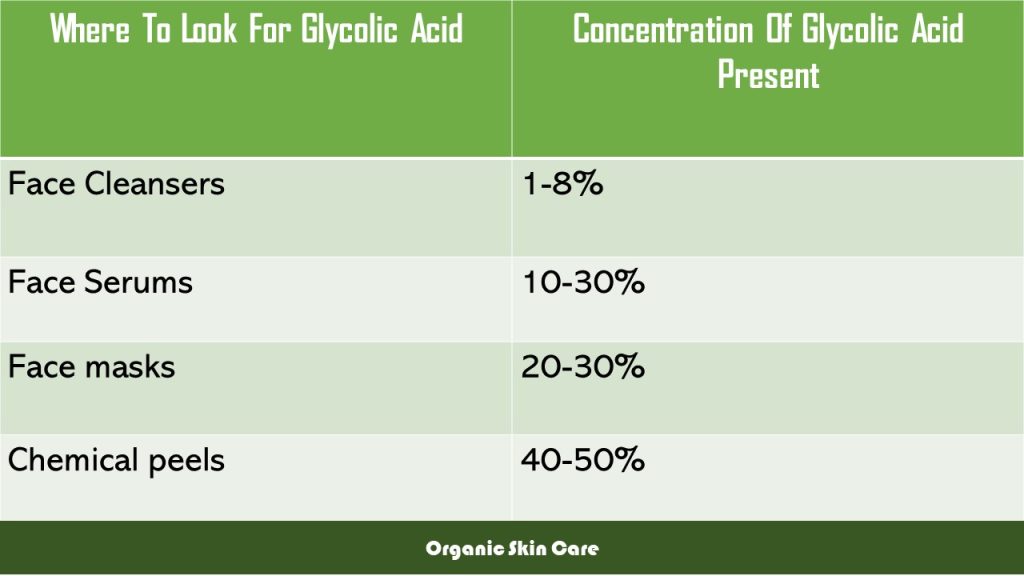
Glycolic acid comes from 1% up to 50% strength. So, how much glycolic acid should you use for blackheads removal?

Well, studies suggest that:

  • Use 30% or more to exfoliate your skin and decongest pores.
  • Use 15% or less to prevent pores from blocking.

Look for glycolic acid in:

balckheads removal with glycolic acid

Retinols

Vitamins everywhere! Retinols come from Vitamin A. Studies suggest that they work great for all types of acne, including blackheads. They:

  • Increase skin cell turnover. That is, it removes dead cells and boosts new cell growth. No chance for things to clog up!
  • Also, it prevents everything from clogging up pores (maybe microbes or excess oils).

Wonder what makes retinol so unique in removing deep blackheads? It is that they dive deep into your skin and aid blackheads removal effectively.

Also, as they get right into the dermis, they help you reclaim your youth by boosting collagen!

Use 0.25 to 1.5% of retinol to clear blackheads. However, if our skin is sensitive, try lesser strength first.

Look for retinoids 

  • Serums
  • Dedicated creams for blackheads removal

Since retinol increases cell turnover, it makes your skin more prone to sun damage. So, never forget to hit on your sunscreen when using retinol.

Use them in the evening before you hit the bed.

Also, do not use pore strips for blackhead removal when using retinol. Remember, your skin is delicate when you use retinol!

Now, let’s talk about many ways by which you can get quick blackhead removal.

2-Cleanse through your pores (with cleansing oils)

The core step to every skin care is cleansing. The same is true to getting rid of blackheads. 

But what if I tell you that you can remove blackheads by using cleansing oils? Yeah, I know. You may wonder how oil can help you against it when excess oils clogging pores are causing it in the first place.

Well, the answer is quite simple. The idea behind it is that like dissolves like.

So, here is what I mean.  

That is a nasty-looking blackhead.

As you apply cleansing oils to your dry face, it settles deep into your pores surrounding impurities. 

With gentle circular motions with your wet hands, oil emulsifies impurities, taking them along with it and clearing your pores.

Booyah! You did it!

blackheads removal

You can choose your cleansing oil as plant-based or synthetic cleansing oils. 

Plant-based cleansing oil, for instance, may include:

  • Sunflower Seed Oil 
  • Olive Oil

Synthetic oils may include:

  • Caprylic triglyceride
  • Isopropyl Myristate

So, if your skin reacts to plant-based oils, you can choose synthetic ones with fewer plant oils.

3-Exfoliate with comedolytics

Alternatively, you can get a quick blackheads removal using face acids, such as:

  • Salicylic acid
  • Lactic Acid
  • Glycolic acid

Yeah! You guess it right! These exfoliants will remove the dead cells and decongest your pores. Thus, they will remove blackheads (comedolytics) and will not let newer ones form.

4-Put on a face mask!

Face masks never get old! Here are our top picks for face masks that help with blackhead removal.

Charcoal Masks

Well, here are a few of the many reasons for which you can use a charcoal face mask to remove blackheads:

  • Activated charcoal adsorbs excess oils, sebum, and toxins on its surface. 
  • That pulls away gird, grime, and impurities, to give you a flawless look (and removing blackheads, of course!)
  • They also balance the natural oils of your skin.

Charcoal face masks work best for oilier, acne-prone skin.

Charcoal Mask Product to try

GM Collin Charcoal Mask comes from bamboo charcoal. The extensive charcoal formula removes micropollutants and refreshes your skin. Get an essence of clean, cleansed, and pure skin without blackheads.

DIY Charcoal Face Mask

To make a DIY charcoal face mask:

  • Take a teaspoon of charcoal powder.
  • Mix with brewed green tea goodness.
  • Add a tablespoon of clay powder.

Next, mix to get a fine paste. Apply liberally on your face or blackheads on your nose. 

Let it dry. 

Wash it with cold water.

If charcoal masks dry out your skin, try making them with face oils.

  • Take a tablespoon of activated charcoal.
  • Add a few drops of rosemary oil to it.
  • Add a pinch of baking soda.
  • Also, you may add a few drops of lavender oil if you like.

And that is it!

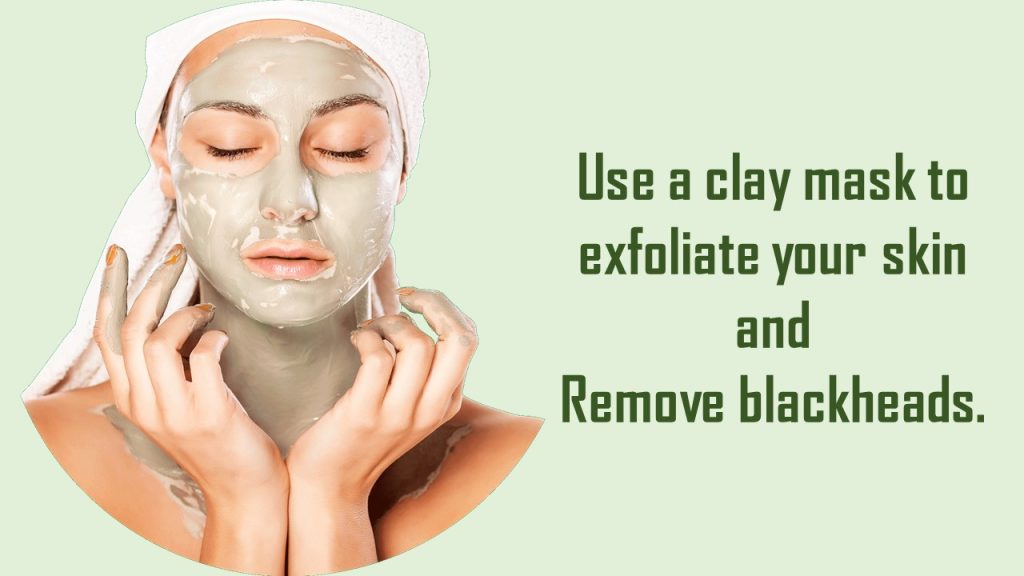
Clay Masks

Clay masks filled up our beauty shelves for ages! And that is well deserved! Clay masks do a lot when it comes to skin care. Read next about how clay masks help with blackheads removal.

So, first things first. Clay masks are exfoliants. Also, they suck the debris out of the pores, which minimizes the look of your pores. Over time, this reduces skin oiliness and clears blackheads. 

For better clearance of pores, use a hot shower or a hot towel before using clay masks.

Also, there are a variety of clay types available. The mildest form is kaolin clay, and bentonite clay is the most effective. The one you need depends on if your skin is dry or if you have ever used clay masks before. 

If you have sensitive skin, use milder clay masks. But, if you have acne-prone or oily skin, you can use bentonite clay masks.

Clay masks can hydrate your skin! Yes, it is possible. You may think of clay masks as super drying. Because clay alone may be too drying for your skin. That is true. However, this is not always the case. 

If you choose your clay masks with hydrating ingredients, your skin will not dry out! Thus, use clay masks with ingredients that hold moisture to your skin. Some clay masks include hyaluronic acid, yogurt, honey, aloe, or glycerine. They are cleansing, exfoliating yet hydrating!

According to a study, a clay mask can heal some skin lesions and ulcers. Also, it helps act against microbes.

clay masks for blackheads removal

Clay mask products to try!

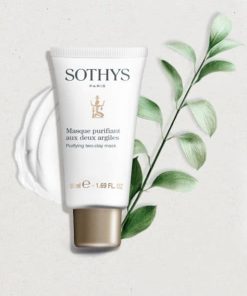
A holy grail product for blackheads removal is Sothys Purifying Two-Clay Mask! A genius formula of green and white clay with salicylic acid promises blackheads removal. Also, it gives you enormous sebum control.

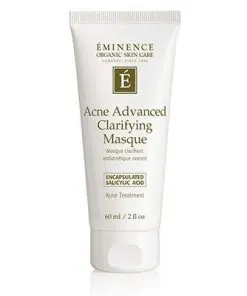
Eminence Organics Acne Advanced Clarifying Masque combines salicylic acid with kaolin and red clay. Also, it combines exfoliating sulfur and moisturizing basil oil, a blockbuster blend to remove blackheads!

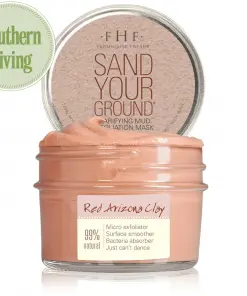
FarmHouse Fresh Sand Your Ground, Clarifying Mud Exfoliation Mask comes with bentonite clay, willow bark extracts, and pumice that evens your skin tone and removes blackheads.

Sulfur Masks

The way sulfur mask helps the skin remove blackheads is more or less the same. That is to suck away dead skin and control excess sebum. However, not many ingredients work well if you have sensitive skin. That is where sulfur gets you covered!

A study suggests that:

  • Sulfur plucks away the dead cells.
  • It washes away bacteria.
  • Sulfur even has anti-fungal effects.

Sulfur face mask products to try!

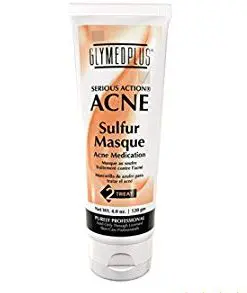
GlyMed Plus Serious Action Sulfur Mask has oil-absorbing sulfur with clay that deeply clears pores and pulls nasty blackheads away!

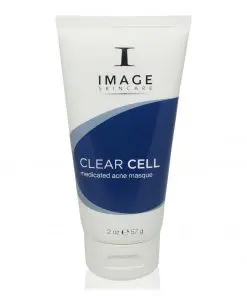
Image Skin Care Clear Cell Medicated Acne Masque has face acids (salicylic acid and glycolic acid) with sulfur to get rid of blackheads quicker!

5-Try Chemical Peels for More Stubborn Blackheads

DID YOU KNOW?

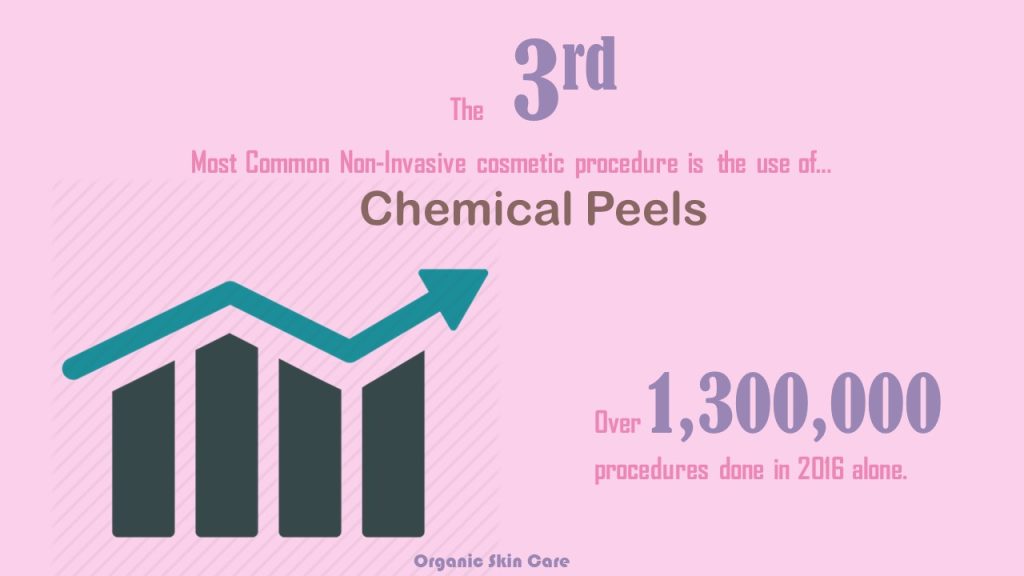
Surprisingly! A chemical peel is the third most common cosmetic procedure done in the United States (non-invasive).

blackheads removal

A chemical peel is a more targeted treatment to remove deep blackheads. The deal with these chemical peels is you allow some chemicals on your skin to settle for a few minutes. The chemical will spread uniformly and gradually remove dead skin cells. 

That allows new skin to grow and take over and thus resurfaces your skin.

Also, it soothes and evens out the overall texture of your skin (making it flawless!).

Many AHAs and BHAs can work as peeling agents.

Now, the depth of skin targeted depends on the peel type. 

Superficial peels only affect the epidermis. They help your skin with:

  • Acne including Blackheads
  • Brown patches or melasma
  • Skin damage from sunlight (such as scaly patches)

Medium depth peels affect superficial parts of the dermis. Here is what they are for:

  • Pigment disorders of the skin
  • Multiple scaly spots from sunlight exposure

Deep peels affect deeper parts of the dermis (indeed, work deep!) and help your skin with:

  • Severe ultraviolet damage to the skin
  • Deep wrinkles
  • Scars

So, you can consider the option of chemical peel for blackheads removal and to give your skin a fresh start!

How to prevent blackheads

  • Cleanse whenever you sweat. A clever beauty hack to prevent blackheads is to use an oil-based cleanser after a workout or excess sweating. And then give it a double cleanse with a salicylic acid foaming cleanser. 
  • Remove the makeover before you sleep. Never give a chance for the pores to congest!
  • Wash oily hair more often. That is because oil can get to your face. Yes, oils can find their way! Thus, wash hair more often with an oily scalp to prevent breakouts.
  • Slather on your sunscreen (oil-free)
  • Use oil-free moisturizers.
  • Do not use skin care products with alcohol. The long-term use of alcohol in skin care may enlarge your skin pores. Also, alcohol can dry out a sensitive skin.
  • Avoid oil-based products. Slather on oil-free sunscreen and moisturizers to prevent blackheads.
  • Use non-comedogenic products.
  • Do not pop blackheads! Yes, we all agree! It is too tempting to pluck them away! But, it can just lead to even more damage to your skin. Squeezing, plucking, or popping them increases inflammation. Also, it can form scars, something you will never let happen!
  • Wash your pillowcases and bed sheets more often.

Frequently asked questions!

How do you get rid of deep blackheads on your face?

To get rid of deep blackheads on your face:

1-Use blackheads removal ingredients, such as salicylic acid, glycolic acid, and retinol.

2-Cleanse your face more often and whenever you sweat.

3-Exfoliate your skin.

4-Use charcoal, clay, or sulfur face masks to remove blackheads.

5-Try chemical peels.

Is it OK to squeeze blackheads?

No, it’s never good to squeeze blackheads as, it only allows inflammation and scars to take over!

Can blackheads be permanently removed?

Unfortunately, you cannot easily remove blackheads permanently. However, with consistent skin care, you can minimize the appearance of blackheads and even prevent newer ones from popping out.

Can blackheads be removed naturally?

To remove blackheads naturally, use ingredients such as tea tree oil or witch hazel. Also, try DIY charcoal masks and egg white face masks.

Does toothpaste get rid of blackheads?

Toothpaste doesn’t help you getting rid of blackheads as it can be too harsh on your face. It can irritate your skin and can disbalance the normal skin pH. That can even further cause breakouts.

5 Smart Ways To Get Rid Of Blackheads – Once And For All Read More »

Refreshed hero image for: 8 Top Tips For Younger Looking Eyes

8 Top Tips For Younger Looking Eyes

Dry eyelid skin is a problem that’s rarely talked about, but can be incredibly frustrating and difficult to deal with. It’s particularly common in the winter when the humidity drops, sucking moisture straight out of the skin. The skin of our eyelids is roughly 40% thinner than the rest of the skin on our faces, so it is even more susceptible to dryness. Dryness under the eyes can cause your skin to lose elasticity and lead to fine lines under the eyes and wrinkles. That leaves us with premature aging and signs of aging eyes.

That is how, wrinkles, fine lines under eyes become more noticeable, and irritation and rashes around the eyelids are more likely, so it can turn into something that can be insufferable. But good news—this is a problem that you can get rid of with eight easy-to-follow tips!

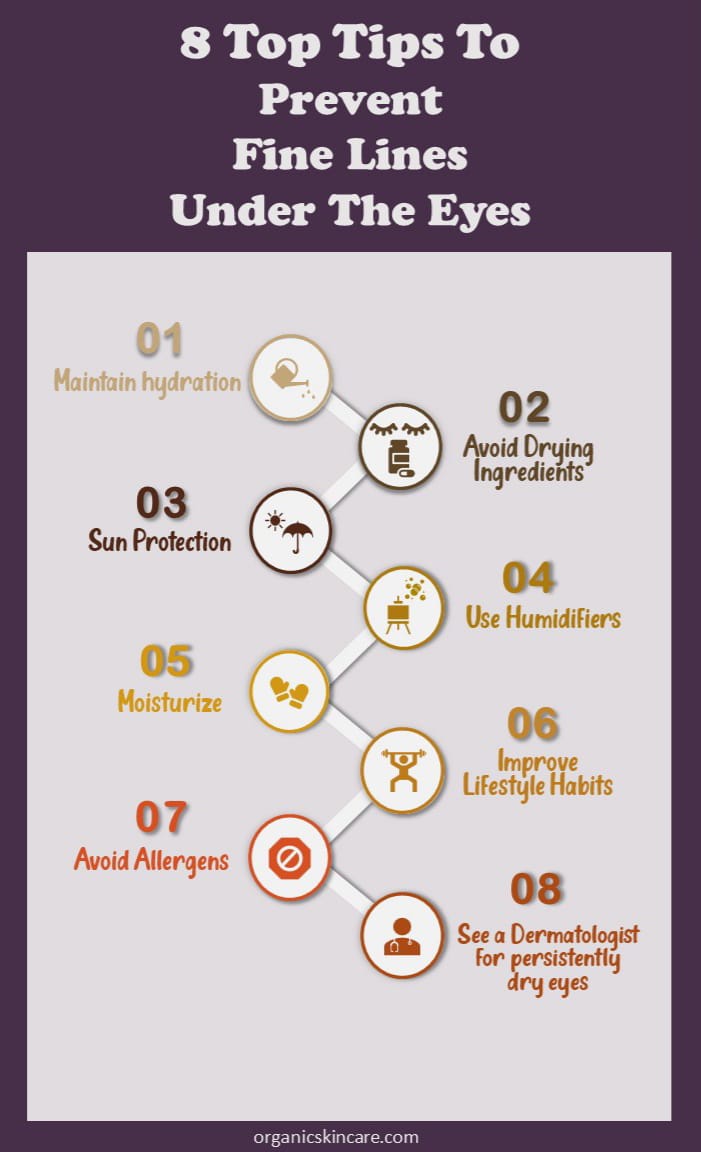
lines under eyes; infographics

1. Hydration

The most important thing you can do to help your skin in general and, particularly, fine lines under the eyes; make sure you’re hydrated! If you aren’t taking in enough water and you’re dehydrated, the first place it’s going to show up; is in the skin around your eyes.

If you struggle with dry eyelids or fine lines under your eyes, then it could be as simple as making sure you’re drinking plenty of water and including lots of water-rich foods such as fruit and vegetables in your diet.

It’s not just about water, but also making sure that you also have plenty of electrolytes; so that you’re not just flushing your system out.

There’s a handy trick for checking if you’re dehydrated:

Pinch the skin on the back of your hand. If you’re properly hydrated, then your skin will relax back immediately, but if you’re dehydrated, then it will tense and remain that way for a few seconds.

hydration; lines under eyes

2. Avoid Drying Ingredients

Several ingredients notoriously dry out the skin and can become even more of an issue when used around the eyelids. That includes exfoliants, alpha hydroxy acids, and beta hydroxy acids.

There is absolutely no reason to be using these around the eyelids, especially when you are already dealing with dryness and fine lines under the eyes, as they can only exacerbate it.

Benzoyl peroxide is another ingredient that has a drying effect. While it can have wonderful benefits for inflammatory acne, it is particularly drying and can aggravate the fragile skin around the eyelids so much that you can experience swelling and other uncomfortable side effects.

Retinol is another one that can be difficult; while fantastic for improving the appearance of wrinkles and fine lines under the eyes, many retinol products are simply too strong for the delicate skin around the eyes. If you want to use retinol, then make sure you are using an eye cream with retinol in it around your eyes, rather than a regular retinol product. Eye-specific products will be formulated so that the concentration of retinol is weaker than in other products, making them less drying.

However, sometimes your regular skincare products might migrate to the area around your eyes—and that’s fine, it happens! One way you can prevent this is to use a little petroleum jelly around the eyes to create a barrier, and this will stop products with drying ingredients from affecting the eyelid skin.

3. Sun Protection

Protecting our skin from the sun is super important—and your eyelids are no exception! Sun damages the deeper layers of the skin, impairs the ability of the skin to stay hydrated, and makes you more prone to water loss, dryness, and irritation, not to mention lines under the eyes and skin cancers.

However, regular sunscreens can burn if they get in the eyes, so a mineral sunscreen may be a better option that the delicate skin of your eyelids will likely tolerate better. Wearing a hat and sunglasses will also help!

4. Humidifiers

You may find that having a humidifier in your bedroom is helpful, particularly in the winter or if you live in an especially dry climate. Even a subtle change in humidity levels can help keep your skin hydrated and reduce the loss of water from your skin. It is especially useful at night, as this is when your skin does most of its healing and repair—and as a result, loses more water.  

5. Moisturize

It’s a common misconception that you need dedicated eye creams to moisturize your eyelids—however, you really don’t! The one you use on the rest of your face should be just fine, assuming that it doesn’t have any ingredients that might irritate the skin. If you already have a dedicated eye cream that you find beneficial, you don’t have to stop using it! But you also don’t have to rush out and buy a dedicated product. The important thing is that you moisturize to reduce the appearance of lines under your eyes and wrinkles.

moisturize; lines under eyes

6. Lifestyle Habits

How you live your life can have a huge impact on the appearance and health of your skin. Drink plenty of water, get eight hours of sleep a night, eat healthily, exercise regularly, and watch your alcohol consumption.

We’ve already discussed how your skin repairs itself as you sleep, so you really must make sure that you get enough of it! During the day your skin is exposed to many environmental stressors, such as ultraviolet radiation and pollution that generates free radicals, which can impair moisture retention. Not getting adequate sleep cuts off the repair process prematurely, impairing moisture retention and creating worsening water loss.

Staying hydrated is important, as we’ve already covered, but you don’t need to go overboard or zone in on a specific target. Just make sure that you’re drinking enough. You should also look at your diet critically. Make sure that you’re including plenty of fruits and vegetables, as they are wonderful sources of hydration and antioxidants that can help counteract some of the free radical damage.

Excessive alcohol consumption isn’t good for your health at all, and it will particularly show up around your eyelids. It is a toxin and is very dehydrating because your body has to put in so much work to get it out of your system. Overindulging can make a huge difference and cause lots of damage to your skin, so try to only drink in moderation.

Exercise will not directly help your skin, but it will help reduce inflammation levels and aid stress responses which translates into it indirectly helping your skin better staying hydrated and moisturized, meaning your eyelids will be less dry. 

7. Allergies

Allergies can cause your eyes to water, and this, combined with rubbing at them, creates microtears in the skin. These microtears can make the skin dry out as water exits through them, and can also cause dark undereye circles. So, if you have allergies, whether due to pollen, mold, pet dander or dust mites, then treat them! You might need to switch things up in your home, like no longer letting your dog or cat sleep with you, changing how you clean your bed linens to ensure all dust mites are gone, and taking allergy medication regularly. If you have an allergist, check with them to make sure you’re taking the right medication.

8. See a Dermatologist

If you’re dealing with persistent, stubborn dry eyelids, then it’s time to call in the professionals and speak to a dermatologist. You could have an underlying primary skin condition that is causing symptoms of dryness, like eczema or contact dermatitis. You could have developed an allergy to a cosmetic product you use regularly that’s led to dermatitis. Or maybe it’s seborrheic dermatitis, or maybe your rosacea is impacting the health of your eyelid skin.

You could also be having a reaction to a product you use on your hands—while it may not cause issues there, the skin on your eyelids is so much more fragile and prone to bad reactions when you touch your eyes. This can include nail polish and even metal jewelry, in addition to hand creams and soap. Think critically about what could be coming into contact with your eyes to help your dermatologist narrow down what could be causing an issue.

If you start utilizing all—or even just some—of these tips, you’re sure to see some improvement in your dry eyelid skin! That, in turn, helps you get rid of wrinkles and fine lines under the eyes.

8 Top Tips For Younger Looking Eyes Read More »

Pause Well-Aging Hot Flash Cooling Mist 2 fl oz / 60 ml - front of bottle

Pause Hot Flash Cooling Mist 2oz — Menthol + Holy Basil Refreshing Spritz

Pause Hot Flash Cooling Mist is a refreshing 2 fl oz (60 ml) facial and neck mist from Pause Well-Aging — the wellness-led skincare brand created specifically for people navigating perimenopause and menopause. A single 2–3 spray application delivers an instant icy cooling sensation via a layered cooling-agent system (Menthol, Menthone Glycerin Acetal, Isopulegol), while skin-supportive actives — Niacinamide, peptides, and 3-O-Ethyl Ascorbic Acid (Vitamin C) — work in the background. The formula also includes Holy Basil (Tulsi), an adaptogenic botanical the brand has built much of its identity around.

Key benefits

  • Instant cooling sensation — A multi-molecule cooling complex (Menthol + Menthone Glycerin Acetal + Isopulegol + Menthoxypropanediol) produces an immediate, refreshing chill on contact.
  • Lightweight, fast-absorbing mist — Won’t smear makeup or leave a greasy residue. Use it over makeup or bare skin.
  • Skin-supportive actives — Niacinamide for an even-looking complexion, stable Vitamin C (3-O-Ethyl Ascorbic Acid) for brightening support, and a peptide pair (Palmitoyl Tripeptide-1 + Palmitoyl Tetrapeptide-7) used widely in modern anti-aging formulas.
  • Adaptogen-led wellness positioning — Built around Holy Basil (Ocimum Sanctum), traditionally used in Indian Ayurvedic practice for balance and stress support.
  • Designed for skin experiencing hormonal change — Pause Well-Aging formulates specifically for the perimenopausal and menopausal demographic.

Hero ingredients

  • Cooling Complex — Menthol, Menthone Glycerin Acetal, Isopulegol, Menthoxypropanediol, and Methyl Diisopropyl Propionamide combine for an immediate, longer-than-menthol-alone cooling effect on the skin surface.
  • Holy Basil (Tulsi) — Ocimum Sanctum Leaf Extract. An adaptogen with a long history of use in Ayurveda. Pause Well-Aging has built much of its identity around this botanical.
  • Niacinamide (Vitamin B3) — Supports a more even-looking complexion and the skin’s barrier function. A workhorse in modern skincare.
  • 3-O-Ethyl Ascorbic Acid — A water-soluble Vitamin C derivative used for brightening support and antioxidant protection.
  • Peptide pair — Palmitoyl Tripeptide-1 + Palmitoyl Tetrapeptide-7 are signaling peptides used across modern formulas associated with the appearance of firmer, smoother skin.
  • Plant extracts — Eclipta Prostrata (Bhringraj), Silybum Marianum (Milk Thistle), and Poria Cocos Polysaccharide round out the wellness-oriented botanical lineup.

How to use

  1. Shake the bottle gently before each use.
  2. Hold the bottle 6–8 inches from your face or neck.
  3. Close your eyes and spritz 2–3 times directly onto warm skin.
  4. Let the mist settle for a few seconds — no need to wipe or pat.
  5. Repeat as often as needed throughout the day, particularly when you feel a wave of warmth coming.

Tip: keep one bottle at your desk, one in your handbag, and one bedside. The mist is alcohol-based and absorbs in seconds, making it suitable for re-application over makeup.

What it’s NOT

Important honesty notes:

  • This is a cosmetic mist, not a medical device, treatment, or drug. It produces a sensation of cooling on the skin surface; it does not regulate body temperature or alter hormonal events.
  • The formula contains alcohol high in the ingredient list — this is intentional (it carries the cooling agents and dries quickly), but very dry or compromised skin may want to follow with a hydrating serum or moisturizer.
  • It contains added fragrance (Parfum) and the menthol family of cooling agents, which can be irritating to highly reactive skin. Patch-test on the inner forearm before facial use if you have sensitive skin.

Who it’s for

  • Anyone experiencing warm-skin sensations and wanting a fast, portable cooling spritz.
  • People in perimenopause or menopause who want skincare designed with their stage of life in mind.
  • Daily commuters, hot-weather travelers, and anyone working in warm indoor environments.
  • Yoga, Pilates, and barre-class regulars who want a mid-class cool-down.

Specifications

  • Brand: Pause Well-Aging
  • Product: Hot Flash Cooling Mist
  • Size: 2 fl oz / 60 ml
  • Format: Pump-spray mist (alcohol-based)
  • Skin type: All skin types — patch-test first if highly reactive
  • Use frequency: As often as needed throughout the day
  • Where to use: Face, neck, dĂ©colletage, and any warm zone

Full ingredient list

Water, Alcohol, Isopulegol, Menthone Glycerin Acetal, Methyl Diisopropyl Propionamide, Polyhydroxystearic Acid, Sodium Caproyl/Lauroyl Lactylate, Triethyl Citrate, Eclipta Prostrata Extract, Isononyl Isononanoate, Ethylhexyl Isononanoate, Silybum Marianum Fruit Extract, Sodium Cocamidopropyl PG-Dimonium Chloride Phosphate, Hydrolyzed Enteromorpha Compressa, Hydroxyethyl Acrylate/Sodium Acryloyldimethyl Taurate Copolymer, Menthol, Menthoxypropanediol, Ocimum Sanctum Leaf Extract, Phenoxyethanol, Propanediol, Citric Acid, Ethylhexylglycerin, Butylene Glycol, Glycerin, Niacinamide, 3-O-Ethyl Ascorbic Acid, Dimethylaminoethanol Tartrate, Ribose, Poria Cocos Polysaccharide, Carbomer, Glycogen, Polysorbate 20, Palmitoyl Tripeptide-1, Palmitoyl Tetrapeptide-7, Parfum, Vanillyl Butyl Ether.

Frequently asked questions

How does the cooling sensation work?

The formula contains five cooling-agent molecules — Menthol, Menthone Glycerin Acetal, Isopulegol, Menthoxypropanediol, and Methyl Diisopropyl Propionamide. They activate the skin’s cold receptors (TRPM8) to produce an icy sensation that feels much stronger than menthol alone and lasts a few minutes per application.

Will it stop or treat a hot flash?

No. The mist is a cosmetic product that produces a refreshing sensation of cooling on the skin’s surface. It does not regulate body temperature or alter hormonal events. Many users find the cooling sensation helpful as a comfort tool during a warm wave, but it should not be treated as a medical intervention.

Is it safe to use over makeup?

Yes — the mist is fine and quick-drying, so it can be re-applied throughout the day over makeup without causing streaking or smudging in most cases. Test on a small area if you wear very heavy or oil-based makeup.

Will the alcohol be drying?

The formula uses alcohol as a carrier so the cooling agents can absorb and dry quickly. If your skin is very dry or compromised, follow the mist with a hydrating serum or moisturizer once the cooling effect has settled.

What is Holy Basil and why is it in here?

Holy Basil (also known as Tulsi, Ocimum Sanctum) is an adaptogenic botanical with a long history in Ayurvedic practice. Pause Well-Aging has built much of its brand identity around adaptogens — botanicals traditionally associated with helping the body adapt to stress.

Can I use it on my body?

Yes. The mist is suitable for the face, neck, décolletage, and any warm zone of the body. Avoid mucous membranes and broken skin.

How long does the bottle last?

With 2–3 sprays per use, a 2 fl oz bottle typically lasts 4–8 weeks depending on application frequency. The brand designs these for portable, on-demand use.

Is it tested on animals?

Pause Well-Aging publishes its cruelty-free position on its corporate website; we don’t restate brand-level claims that may change over time. Check the brand’s current ethics page for the most up-to-date status.

Is it for women only?

No. The mist is unisex. Anyone experiencing skin warmth or wanting a refreshing cooling spritz can use it.

What customers say

Pause Well-Aging is the first skincare brand built specifically for the three stages of menopause — featured in WWD, Allure, and Vogue Beauty. Hot Flash Cooling Mist is the brand’s signature hero product.

  • Instant cooling sensation — designed for hot-flash relief on demand
  • Lowers skin-surface temperature and reduces flush/redness
  • Menthol and Holy Basil soothe alongside the cooling effect
  • Travel-friendly 2oz size — purse-ready for the unexpected moment

Sources: Customer reviews and editorial coverage on WWD, Allure, Vogue Beauty (press); brand-direct — independent of organicskincare.com.
Compiled May 2026, paraphrased to comply with platform attribution rules.
External data points; your experience may vary.

Frequently asked questions

What does Pause Hot Flash Cooling Mist actually do during a hot flash?

The mist delivers an immediate evaporative cooling sensation that lowers surface skin temperature by several degrees for 30–60 seconds. Menthol creates the cooling perception; Holy Basil extract calms accompanying redness. It’s a topical relief tool — designed for the moment a hot flash starts — not a hormonal treatment.

Is the Cooling Mist only for menopausal women?

No. While Pause Well-Aging is built around menopause, the Cooling Mist is useful for anyone who needs instant cool-down: post-workout, hot weather, post-laser/post-procedure recovery, or simply a midday refresh. The formulation is suitable for all skin types.

What’s in the mist — is there any alcohol or fragrance?

The active actives are menthol (cooling sensation) and Holy Basil extract (calming antioxidant). The formula is sulfate-free and free of synthetic fragrance. Like most cosmetic mists, it includes a small amount of denatured alcohol as a solvent — this is what allows the rapid evaporation that produces the cooling effect. Review the full INCI at pausewellaging.com if you avoid alcohol-containing skincare.

How should I use the Cooling Mist throughout the day?

Hold the bottle 6–8 inches from your face, close your eyes, and mist 2–3 sprays. Apply at the moment of a hot flash, after sweating, after sun exposure, or as a midday refresh. Safe to mist over makeup. Keep the bottle at room temperature or chilled in the fridge for a more pronounced cooling effect.

How long does the 2oz bottle last?

At 3–5 uses per day (typical for managing recurring hot flashes), a 2oz bottle lasts approximately 4–6 weeks. With occasional use (post-workout or hot-weather refresh), a bottle can last 3+ months.

Is Pause Well-Aging cruelty-free?

Yes. Pause Well-Aging is cruelty-free and the brand publishes clean formulation standards on pausewellaging.com. The brand was founded by beauty-industry veteran Rochelle Weitzner specifically to address skincare for the three stages of menopause — perimenopause, menopause, and post-menopause.

Pause Hot Flash Cooling Mist 2oz — Menthol + Holy Basil Refreshing Spritz Read More »

Erno Laszlo Soothing Relief Hydration Serum 30ml / 1 fl oz - front of bottle

Erno Laszlo Soothing Relief Hydration Serum 30ml — Sensitive Skin (Tester, No Retail Box)

This listing is for a manufacturer TESTER unit — the bottle, dispenser, formulation, and seal are 100% genuine and full size (30 ml / 1 fl oz), but no outer retail box is included. Tester units are produced by brands for in-store demonstration and beauty counter staff training; they are commonly sold through closeout channels at significant discounts. The product inside is identical to retail-box stock.

Erno Laszlo Soothing Relief Hydration Serum is part of Erno Laszlo’s Sensitive Skin Collection — a lightweight, milky-textured serum that helps replenish vital hydration and reinforce the skin’s moisture barrier. The formula combines Erno Laszlo’s proprietary SensCalm® Complex (Red Sage Root Extract, Bisabolol, and Ginger Root Extract) with Barridome Technology® built around groundcherry extract (Physalis Pubescens) to help create a second-skin protective layer on reactive, easily irritated skin. Signs of dryness or sensitivity are visibly diminished, revealing a soothed, calmer-looking complexion.

Key benefits

  • Calms and hydrates sensitive, reactive skin — A blend of plant extracts and skin-mimetic actives helps reduce the visible look of redness and irritation while restoring moisture.
  • Lightweight, fast-absorbing milky serum — Sits comfortably under moisturizer, SPF, and makeup without pilling or stickiness.
  • Supports the moisture barrier — Barridome Technology with groundcherry extract creates a thin protective veil that helps lock in hydration against environmental stressors.
  • SensCalm Complex — A signature blend of Red Sage, Bisabolol, and Ginger that’s been featured across Erno Laszlo’s sensitive-skin range.
  • Suited to layered routines — Use after toning and before moisturizer; pairs well with the Sensitive Skin Soothing Relief Hydration Lotion (also available at organicskincare.com) for a complete two-step ritual.

Hero ingredients

  • SensCalm® Complex — Red Sage Root Extract (Salvia Miltiorrhiza), Bisabolol (chamomile-derived calming molecule), and Ginger Root Extract (Zingiber Officinale). A signature trio used across Erno Laszlo’s sensitive-skin offerings to help quiet reactive skin.
  • Barridome Technology® with Groundcherry Extract — Physalis Pubescens Fruit Juice, an antioxidant-rich extract that anchors a hydrating, moisture-locking matrix on the skin’s surface.
  • Squalane — A lipid-mimetic emollient that softens skin and reinforces the barrier without occluding pores or leaving residue.
  • Madecassoside — A purified molecule derived from Centella Asiatica (gotu kola), widely used in modern barrier-repair skincare for its visible calming effect.
  • Allantoin + Bisabolol — A pair of well-tolerated soothing actives that pair well for redness-prone skin.
  • Tocopherol (Vitamin E) — A stabilising antioxidant that supports the skin’s lipid layer.

How to use

  1. Cleanse and tone face and neck.
  2. Dispense 3–4 drops of the serum onto your fingertips.
  3. Smooth over face, avoiding the immediate eye area.
  4. Gently press into skin until fully absorbed (usually 30 seconds).
  5. Follow with moisturizer. In the morning, finish with broad-spectrum SPF.
  6. Use morning and night.

Tip: pair with a gentle, fragrance-free cleanser. Reactive skin tolerates this serum better when surrounding routine products are also low-irritation.

Tester unit details

  • What you receive: One sealed 30 ml / 1 fl oz Erno Laszlo Soothing Relief Hydration Serum bottle, with the manufacturer’s pump dispenser.
  • What you don’t receive: The printed cardboard outer retail box.
  • Is it authentic? Yes. Tester units are produced by Erno Laszlo on the same manufacturing line as retail stock, in the same bottle, with the same formulation, batch coding, and seal.
  • Why testers exist: Brands produce tester units for in-store demonstration at beauty counters and authorized partner training. When a retail location closes, rebrands, or rotates stock, these units enter the closeout / surplus market.
  • Brand status: Erno Laszlo has discontinued active marketing of this product line; mainstream retailers are clearing remaining inventory. This makes tester stock from authentic distributor channels increasingly rare.

Who it’s for

This serum is best suited to:

  • Sensitive or reactive skin that struggles with stinging, redness, or persistent dryness.
  • Skin recovering from environmental stress — wind, sun, cold, or central heating.
  • Routines that include exfoliating or active treatments (retinol, AHA, BHA) where a calming layer adds tolerance support.
  • Anyone who appreciated Erno Laszlo’s discontinued sensitive-skin line and wants to stock up at closeout pricing.

Best practice: patch-test on the inner forearm for 24 hours before facial use, particularly for highly reactive skin. Discontinue if redness, burning, or stinging develops.

Specifications

  • Brand: Erno Laszlo
  • Collection: Sensitive Skin Collection
  • Product type: Lightweight, milky hydration serum
  • Size: 30 ml / 1 fl oz
  • Packaging: TESTER unit — sealed bottle without printed outer retail box
  • Skin type: Sensitive, reactive, dehydrated
  • When to apply: Morning and night
  • Where to apply: Face — avoiding the immediate eye area
  • Brand status: Discontinued by manufacturer; closeout inventory only

Full ingredient list

Water, Propanediol, Butylene Glycol, 1,2-Hexanediol, Squalane, Physalis Pubescens Fruit Juice, Allantoin, Caprylic/Capric Triglyceride, Caesalpinia Spinosa Fruit Extract, Acrylates/C10-30 Alkyl Acrylate Crosspolymer, Glyceryl Caprylate, Sodium Stearoyl Glutamate, Bisabolol, Aminomethyl Propanol, Xanthan Gum, Kappaphycus Alvarezii Extract, Salvia Miltiorrhiza Root Extract, Madecassoside, Sodium Benzoate, Tocopherol, Zingiber Officinale Root Extract.

Note: fragrance-free formulation. Always check the printed batch on your unit if you have specific contraindications.

Frequently asked questions

What’s a “tester unit” and is it genuine?

Yes — tester units are produced by Erno Laszlo on the same line as retail stock, in the same sealed bottle and dispenser. The only difference is the absence of the printed cardboard outer box. Tester stock enters the closeout market when retail locations close, rebrand, or rotate inventory.

Why is this product so much less expensive than retail?

Three reasons combine: (1) no retail box, (2) Erno Laszlo has discontinued this product line, (3) mainstream retailers are clearing remaining inventory. Closeout channels like organicskincare.com source from authorized distributors and pass the savings on to customers.

Is the bottle full size and sealed?

Yes — 30 ml / 1 fl oz, sealed by the manufacturer. The expiration window matches standard production timelines (typically 24–36 months from manufacture for unopened serums).

What is SensCalm Complex?

SensCalm Complex is Erno Laszlo’s proprietary calming blend, combining Red Sage Root Extract (Salvia Miltiorrhiza), Bisabolol (chamomile-derived), and Ginger Root Extract. The trio is featured across Erno Laszlo’s sensitive-skin range to help quiet reactive skin.

Can I use this with retinol or AHA/BHA exfoliants?

Many people use it as a layered calming step in routines that include exfoliating or active treatments. Apply this serum after your active treatment and before your moisturizer to add a tolerance-supporting layer. Patch-test first if your routine is heavy on actives.

Is it fragrance-free?

Yes — there is no added fragrance in the INCI list. The natural smell comes from the plant extracts (Ginger, Red Sage, Chamomile). If you have a known sensitivity to any of those plant-derived components, patch-test before facial use.

How does this serum compare to the Soothing Relief Hydration Lotion?

The serum is a lightweight, milky water-phase product intended for the serum / treatment step in your routine. The Hydration Lotion is a heavier, cream-textured moisturizer for the final hydration step. Many fans of the discontinued line use the serum then the lotion as a two-step calming ritual.

How long will it last?

With 3–4 drops applied twice daily to the full face, a 30 ml bottle typically lasts 2–3 months. Use within 6–12 months of opening for best results.

Will Erno Laszlo restock this product?

The manufacturer’s product page now redirects to their homepage, signalling discontinuation. Mainstream retailers are working through remaining inventory; once it’s gone, it’s likely gone.

What customers say

Amazon shoppers rate the standard retail version of Erno Laszlo’s Soothing Relief Hydration Serum 3.8☆ across 17 reviews, with the strongest praise from reactive- and rosacea-prone customers.

  • Lightweight, milky texture absorbs quickly without residue
  • Visibly calms redness and irritation, often within a week of use
  • Works well as a hydrating base under heavier moisturizers
  • Doesn’t clog pores — recommended by sensitive-but-oil-prone reviewers
  • Frequently cited by reviewers managing rosacea or post-procedure recovery

Sources: Customer reviews and editorial coverage on Amazon — independent of organicskincare.com.
Compiled May 2026, paraphrased to comply with platform attribution rules.
External data points; your experience may vary.

Frequently asked questions

Is Erno Laszlo Soothing Relief Hydration Serum safe for rosacea-prone skin?

Yes. The SensCalm Complex is Erno Laszlo’s signature blend for reactive sensitivity, formulated to calm visible redness without irritating active rosacea flares. Most reactive-skin Amazon reviewers report visible improvement within 5–7 days of nightly use. Patch test on the inner forearm first if you’ve reacted to other serums.

What is the difference between the tester version and the retail version?

The product is identical — same formulation, same 30ml volume, same Erno Laszlo manufacturing batch. The only difference is packaging: tester units ship without the outer retail box. They were originally produced for in-store sampling at Erno Laszlo retail partners, and we acquired closeout inventory at wholesale. The serum, dropper, and inner glass bottle are all genuine and sealed.

How does Soothing Relief Hydration Serum compare to a vitamin C serum?

They serve different purposes. Vitamin C serums brighten and protect via antioxidants but can sting reactive skin. Soothing Relief uses niacinamide and panthenol as primary actives — non-acidic, well-tolerated by rosacea-prone skin. Choose Soothing Relief if your priority is calming and barrier repair; choose vitamin C if your priority is brightening and pigmentation.

When should I apply Soothing Relief in my skincare routine?

Apply after cleansing and toning, before moisturizer. Most reviewers use it morning and night. The lightweight milky texture absorbs fully in 30–60 seconds and layers well under heavier creams or SPF. Avoid the immediate eye area.

How long does the 30ml bottle last?

At twice-daily use of 4–5 drops per application, a 30ml bottle lasts approximately 6–8 weeks. Use less if applying once daily; use slightly more if covering neck and décolleté.

Is this serum cruelty-free and fragrance-free?

Yes. Erno Laszlo is cruelty-free (no animal testing per the brand’s official policy). The Soothing Relief Hydration Serum is fragrance-free and alcohol-free — formulated specifically for reactive sensitivity. Full INCI ingredient list available on the brand’s official product page at ernolaszlo.com.

Erno Laszlo Soothing Relief Hydration Serum 30ml — Sensitive Skin (Tester, No Retail Box) Read More »
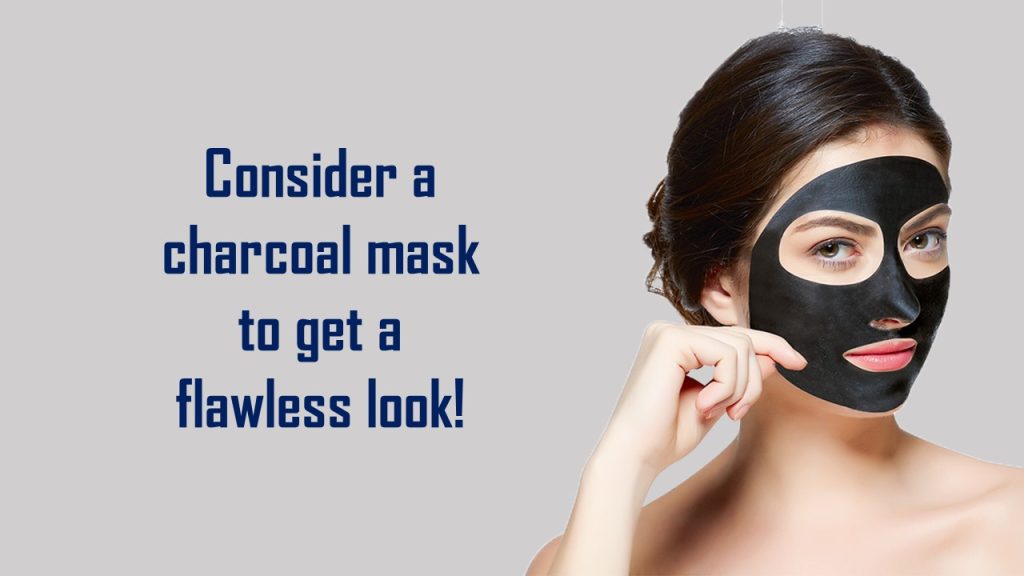
Erno Laszlo Soothing Relief Hydration Lotion 50ml - front of bottle

Erno Laszlo Soothing Relief Hydration Lotion 50ml (Short-Dated)

Overview

Erno Laszlo Soothing Relief Hydration Lotion is a fragrance-free, alcohol-free moisturizing lotion that calms and cushions sensitive, reactive, and dry skin. Founded in 1927 by celebrity dermatologist Dr. Erno Laszlo, the New York heritage brand has spent nearly a century formulating clean, science-backed skincare for the world’s most discerning complexions. This Soothing Relief Hydration Lotion is the centerpiece of the brand’s Sensitive Skin Collection — an aqueous, weightless formula designed to deliver lasting moisture without colorants, alcohol, or fragrance.

Important note: this is short-dated stock. Best By 08/12/2026 — approximately three months from the date of sale. The product is genuine, sealed, and identical to current retail stock; the deep discount reflects the limited shelf life. We disclose this prominently so you can plan your routine and use the bottle within its optimal window.

Key Benefits

  • Sensitive-skin support: Bisabolol — sourced from chamomile — calms visible redness and helps reduce the appearance of irritation.
  • Lasting hydration: Sodium Hyaluronate and Glycerin attract and hold moisture in the upper layers of the skin, supporting the skin barrier through the day.
  • Weightless texture: The aqueous lotion absorbs in seconds and layers cleanly under serums, treatments, SPF, or makeup.
  • Free from common irritants: Formulated without fragrance, alcohol, parabens, sulfates, or color/dyes — designed for reactive and sensitivity-prone complexions.
  • Reef-safe formulation: No oxybenzone or octinoxate.
  • Gentle refinement: A trace of Lactic Acid sits near the end of the ingredient list, providing very mild surface-cell turnover without irritation in this delicate formulation.

Hero Ingredients

  • Sodium Hyaluronate: The sodium salt form of hyaluronic acid. Holds many times its weight in water and pulls moisture into the upper layers of the skin — one of dermatology’s most reliable hydrators.
  • Bisabolol: An active compound from the chamomile plant with documented soothing and antioxidant properties. Helps reduce the appearance of redness and supports a calmer, more even complexion.
  • Glycerin: Naturally present in healthy skin. Pulls water into the upper layers of the skin and helps reinforce the skin barrier.
  • Salvia Miltiorrhiza Root Extract: A botanical conditioning agent traditionally used in skincare to support a calm, even complexion.
  • Zingiber Officinale (Ginger) Root Extract: An antioxidant botanical that supports the skin against environmental stress.

How to Use

  1. After cleansing, pat the skin until just slightly damp.
  2. Dispense a quarter-sized amount into the palm of your hand.
  3. Gently smooth across the face and neck until fully absorbed.
  4. Follow with serum, treatment, and SPF in the morning; serum, treatment, and a sleep mask or facial oil in the evening.
  5. Use daily — morning and night — for best results.

Specifications

Brand Erno Laszlo
Collection Sensitive Skin Collection
Product Type Hydrating Lotion / Aqueous Moisturizer
Size 50 ml / 1.7 fl oz
Skin Type Sensitive, Reactive, Dry, Normal-to-Dry, Combination
Best By Date August 12, 2026 (Short-Dated)
Packaging Sealed retail bottle; new, never opened
Free From Fragrance, Alcohol, Parabens, Sulfates, Color/Dyes
Other Notes Reef-safe formulation. Contains Lactic Acid (very low position) and silicone derivatives.
Country of Origin United States

Full Ingredient List

Water, Propanediol, Butylene Glycol, Glycerin, 1,2-Hexanediol, PEG/PPG-18/18 Dimethicone, PEG-40 Hydrogenated Castor Oil, Phenoxyethanol, Bisabolol, Caprylyl Glycol, Cellulose Gum, Salvia Miltiorrhiza Root Extract, Chondrus Crispus Powder, Pentylene Glycol, Sodium Hyaluronate, Lactic Acid, Sodium Carboxymethyl Beta-Glucan, Zingiber Officinale Root Extract.

Frequently Asked Questions

Why is this product offered at such a deep discount?

This bottle is short-dated — its Best By date is August 12, 2026, approximately three months from the date of sale. The product itself is sealed and identical to retail stock; the price reflects the limited shelf life. As long as you use it within its window, you’ll get the full intended experience.

Is this suitable for sensitive skin?

Yes. The formula was developed specifically for the Erno Laszlo Sensitive Skin Collection. It is fragrance-free, alcohol-free, paraben-free, sulfate-free, and color-free — the most common categories of cosmetic irritants are removed. If you are highly reactive, we still recommend patch-testing on the inner forearm for 24 hours before applying to the face.

Can I use this with retinol or vitamin C?

Yes. This lotion is hydration-focused and layers cleanly under or over active treatments. Apply your retinol or vitamin C serum first on damp skin, then apply this lotion to lock in moisture and buffer the active. Morning routine: cleanse → vitamin C → this lotion → SPF. Evening routine: cleanse → retinol → this lotion → optional sleep mask.

Does the Lactic Acid in the formula make this an exfoliant?

No — the Lactic Acid in this formula sits near the end of the ingredient list, indicating a very low concentration. It is included as a mild pH-balancing and surface-refinement ingredient, not as an active AHA exfoliant. The lotion’s primary role is hydration and barrier support.

Is this product safe during pregnancy or while breastfeeding?

The formulation does not contain ingredients commonly flagged as pregnancy-incompatible (no retinoids, no salicylic acid, no hydroquinone). As with any cosmetic, we recommend consulting your obstetrician or dermatologist for personalized guidance.

Will this clog my pores?

The formulation is largely lightweight and humectant-based. It does contain PEG-40 Hydrogenated Castor Oil, which is not classified as fungal-acne-safe. If you are specifically managing fungal acne (Malassezia folliculitis), consult a dermatologist before use. For typical comedonal acne, the formula is generally well-tolerated.

How long will one 50ml bottle last?

With twice-daily application across the face and neck, a 50ml / 1.7 fl oz bottle lasts approximately 6-10 weeks for most users — well within the August 2026 Best By window.

Is this product cruelty-free or vegan?

To our knowledge, this product is not certified cruelty-free or vegan. If those certifications are required for your routine, please consider an alternative.

{
“@context”: “https://schema.org”,
“@type”: “FAQPage”,
“@id”: “https://organicskincare.com/product/erno-laszlo-sensitive-skin-hydrating-lotion-50ml/#faq”,
“mainEntity”: [
{
“@type”: “Question”,
“name”: “Why is this product offered at such a deep discount?”,
“acceptedAnswer”: {
“@type”: “Answer”,
“text”: “This bottle is short-dated — its Best By date is August 12, 2026, approximately three months from sale. The product is sealed and identical to retail stock; the price reflects the limited shelf life.”
}
},
{
“@type”: “Question”,
“name”: “Is this suitable for sensitive skin?”,
“acceptedAnswer”: {
“@type”: “Answer”,
“text”: “Yes. The formula was developed for the Erno Laszlo Sensitive Skin Collection. It is fragrance-free, alcohol-free, paraben-free, sulfate-free, and color-free. We recommend patch-testing on the inner forearm before facial use for highly reactive skin.”
}
},
{
“@type”: “Question”,
“name”: “Can I use this with retinol or vitamin C?”,
“acceptedAnswer”: {
“@type”: “Answer”,
“text”: “Yes. Apply your active first on damp skin, then apply this lotion to lock in moisture and buffer the active. Morning: vitamin C, then this lotion, then SPF. Evening: retinol, then this lotion, then optional sleep mask.”
}
},
{
“@type”: “Question”,
“name”: “Does the Lactic Acid make this an exfoliant?”,
“acceptedAnswer”: {
“@type”: “Answer”,
“text”: “No. Lactic Acid sits near the end of the ingredient list, indicating a very low concentration used for pH-balancing and surface refinement — not as an active AHA exfoliant. The lotion’s primary role is hydration and barrier support.”
}
},
{
“@type”: “Question”,
“name”: “Is this safe during pregnancy or breastfeeding?”,
“acceptedAnswer”: {
“@type”: “Answer”,
“text”: “The formula contains no retinoids, salicylic acid, or hydroquinone. As with any cosmetic during pregnancy, we recommend consulting your obstetrician or dermatologist for personalized guidance.”
}
},
{
“@type”: “Question”,
“name”: “Will this clog pores?”,
“acceptedAnswer”: {
“@type”: “Answer”,
“text”: “The formulation is lightweight and humectant-based. It does contain PEG-40 Hydrogenated Castor Oil, which is not classified as fungal-acne-safe. For typical comedonal acne the formula is generally well-tolerated; for fungal acne, consult a dermatologist.”
}
},
{
“@type”: “Question”,
“name”: “How long does one 50ml bottle last?”,
“acceptedAnswer”: {
“@type”: “Answer”,
“text”: “With twice-daily face and neck application, a 50ml / 1.7 fl oz bottle lasts approximately 6-10 weeks for most users — well within the August 2026 Best By window.”
}
}
]
}

{
“@context”: “https://schema.org”,
“@type”: “HowTo”,
“@id”: “https://organicskincare.com/product/erno-laszlo-sensitive-skin-hydrating-lotion-50ml/#howto”,
“name”: “How to Apply Erno Laszlo Soothing Relief Hydration Lotion”,
“description”: “Apply Erno Laszlo Soothing Relief Hydration Lotion morning and evening as part of a sensitive-skin ritual.”,
“totalTime”: “PT1M”,
“step”: [
{“@type”: “HowToStep”, “position”: 1, “name”: “Cleanse”, “text”: “After cleansing, pat the skin until just slightly damp.”},
{“@type”: “HowToStep”, “position”: 2, “name”: “Dispense”, “text”: “Dispense a quarter-sized amount into the palm of your hand.”},
{“@type”: “HowToStep”, “position”: 3, “name”: “Apply”, “text”: “Gently smooth across the face and neck until fully absorbed.”},
{“@type”: “HowToStep”, “position”: 4, “name”: “Layer”, “text”: “Follow with serum, treatment, and SPF in the morning, or serum, treatment, and sleep mask in the evening.”},
{“@type”: “HowToStep”, “position”: 5, “name”: “Repeat”, “text”: “Use morning and night for best results.”}
]
}

What customers say

Amazon shoppers rate Erno Laszlo’s Soothing Relief Hydration Lotion 4.1☆ across 24 reviews for the comparable 1.7oz size; the larger 5oz format has accumulated 562 reviews on Walmart.

  • Hydrates without leaving a greasy or sticky finish
  • Calms visible redness and soothes reactive skin
  • Silky, lightweight texture absorbs quickly
  • Comfortable on sensitive and post-procedure skin

Sources: Customer reviews and editorial coverage on Amazon, Walmart — independent of organicskincare.com.
Compiled May 2026, paraphrased to comply with platform attribution rules.
External data points; your experience may vary.

Frequently asked questions

Is Erno Laszlo Soothing Relief Hydration Lotion safe for rosacea-prone skin?

Yes. The SensCalm Complex is Erno Laszlo’s proprietary blend for reactive sensitivity, formulated to calm visible redness without irritating active rosacea flares. The lotion is fragrance-free and alcohol-free, two attributes most often called out by rosacea-prone reviewers as the reason it works for them. Patch test on the inner forearm first if you’ve reacted to other lotions.

What is SensCalm Complex and how does it work?

SensCalm Complex is Erno Laszlo’s signature blend of niacinamide, panthenol, and groundcherry extract. Niacinamide reduces visible redness and reinforces the skin barrier; panthenol attracts and binds moisture; groundcherry extract delivers antioxidant support. Together they form the active layer that calms reactive skin within minutes of application.

When should I apply this lotion in my skincare routine?

Apply after cleansing and toning, before any heavier moisturizer or sunscreen. Most reviewers use it twice daily, morning and night. The milky texture absorbs in 30–60 seconds and layers cleanly under makeup or richer creams. Avoid the immediate eye area.

How long does the 50ml bottle last?

At twice-daily use, a 50ml bottle typically lasts 8–10 weeks. Use less if applying once daily; use slightly more if covering neck and décolleté alongside the face.

What does “short-dated” mean and is the product still safe to use?

Short-dated means the manufacturer’s best-by date is closer than the standard 2–3 year window from production. This unit is dated 08/12/2026 — over a year of shelf life remaining at time of listing. The formula is sealed, genuine, and unaffected; short-dating is a closeout-channel convention that allows us to price the product at a fraction of retail. Store in a cool dry place after opening.

Is this lotion fragrance-free and cruelty-free?

Yes — fragrance-free and alcohol-free per Erno Laszlo’s official Soothing Relief formulation. Erno Laszlo is cruelty-free; the brand does not test on animals. Full INCI ingredient list available on the brand’s official product page at ernolaszlo.com.

Erno Laszlo Soothing Relief Hydration Lotion 50ml (Short-Dated) Read More »
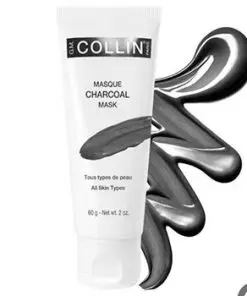
Shopping Cart
Scroll to Top
0