Organic Skin Care

Soft-focus skin-like texture transitioning to smooth luminous texture evoking pore-refining science

Best Niacinamide Serums for Sensitive Skin (2026): An Esthetician’s Picks

New to a sensitive-skin routine? Start with our complete sensitive-skin routine guide — all 7 steps, in order.

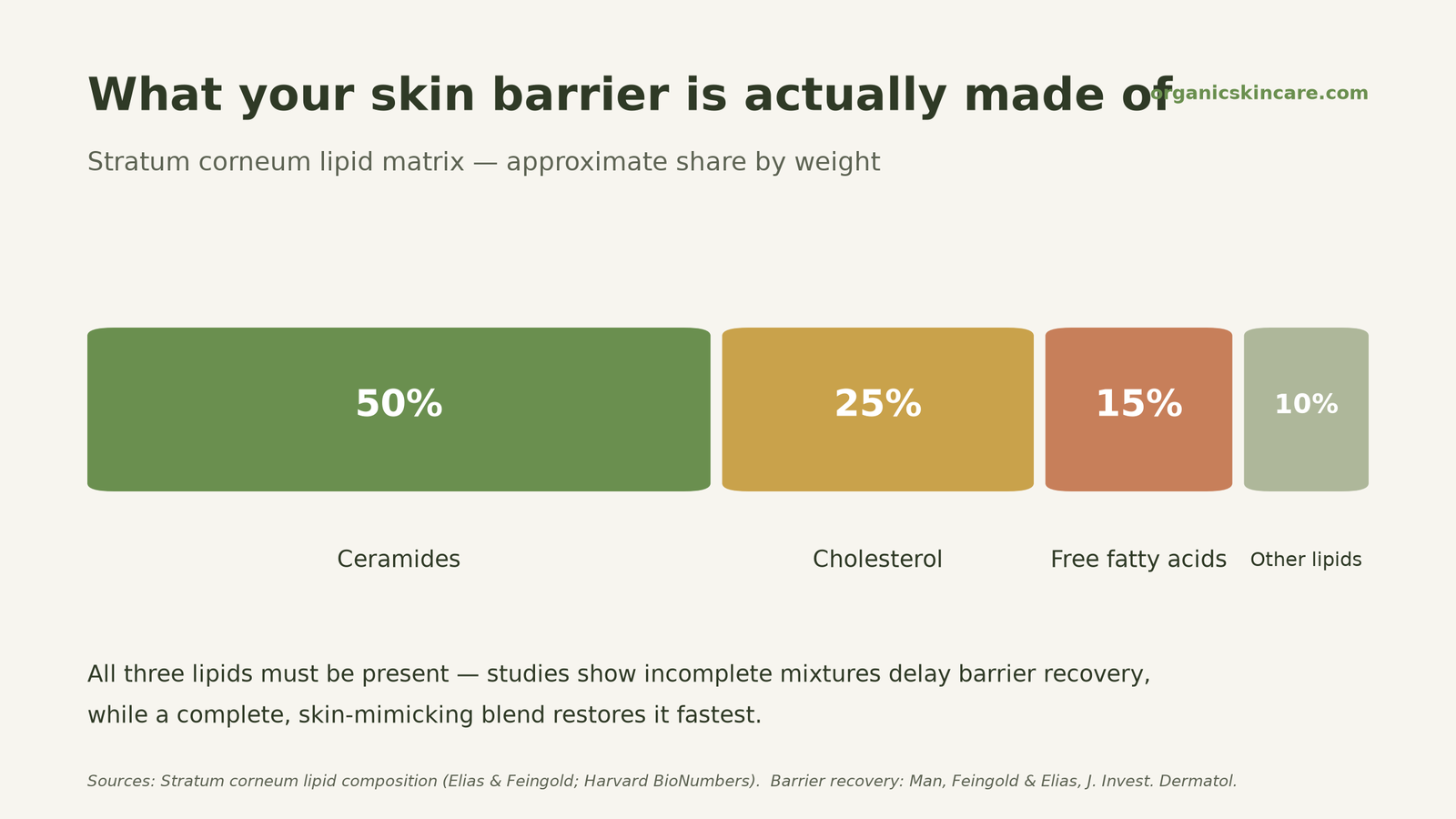
Niacinamide is vitamin B3, and on sensitive skin its real job is quiet repair: it helps skin produce more ceramides, the lipids that hold the moisture barrier together, which is why over a few weeks it can visibly calm redness and ease the look of pores and oil. The catch is dose, not enthusiasm. Most reactive skin does best in roughly the 4 to 10% range; very high strengths like 20% add no extra barrier benefit and are more likely to trigger flushing or stinging, so more is not better.

This roundup contains affiliate links. If you buy through the Amazon links, OSC may earn a commission at no extra cost to you, which does not change our editorial picks. Our in-house picks (Phyris, Eminence) link to our own product pages, not Amazon.

Our pick from the OSC shelf

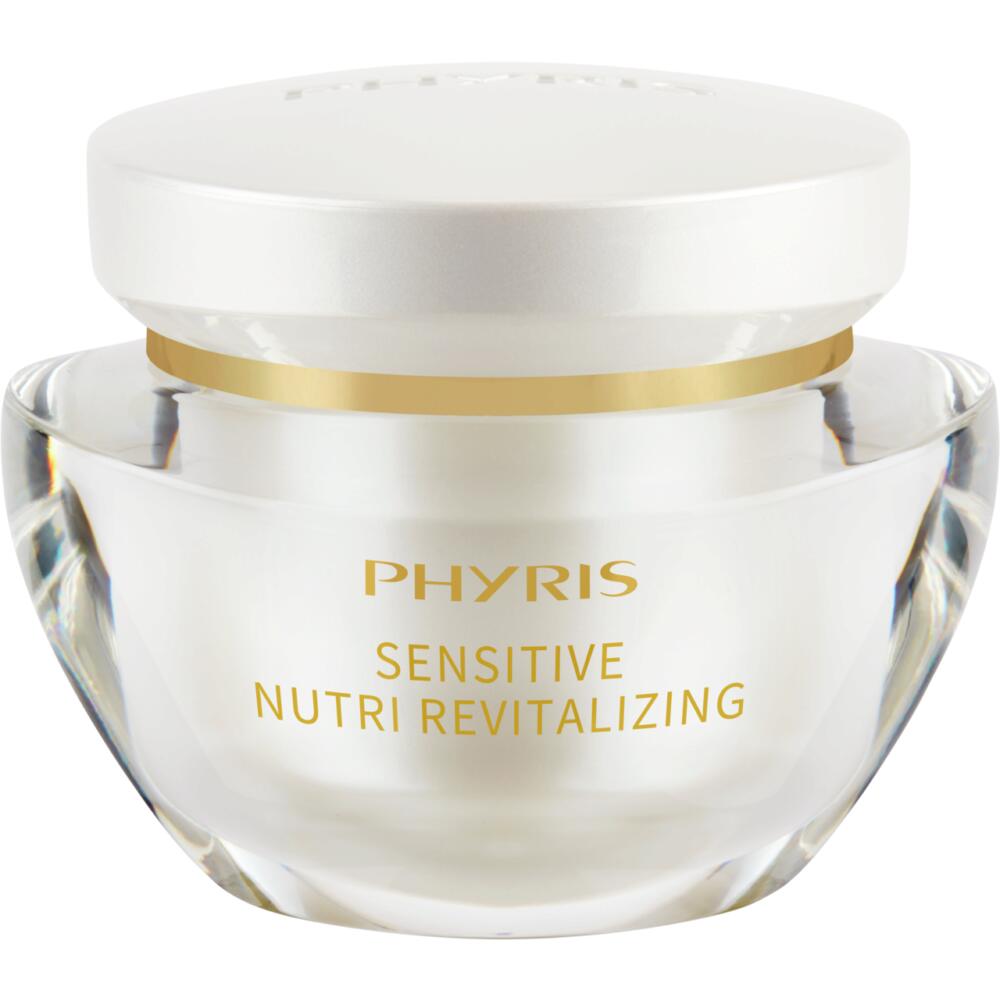
Phyris Sensitive Calming Serum

Phyris Sensitive Calming Serum — $62

Our in-house, esthetician-curated pick for skin that flushes. Its ingredient list genuinely includes niacinamide, sitting mid-list — the gentle, well-tolerated zone rather than the high-dose, flush-risk zone — paired with a barrier-soothing complex (hydrolyzed oat protein, jojoba, sweet almond, and shea lipids) built for the Phyris Sensitive line to support the moisture barrier and visibly calm redness. It is a treatment serum to layer under a moisturizer. Honest tradeoff: it contains fragrance (Parfum) plus rosemary and soybean botanicals, so the most fragrance-reactive or rosacea-prone readers should patch test first, and Phyris does not publish the exact niacinamide percentage.

Prefer niacinamide paired with a gentle retinol alternative? The Eminence Bakuchiol + Niacinamide Moisturizer is our other in-house option (currently restocking — see our bakuchiol guide). The Amazon picks below are buy-now alternatives.

What the research shows

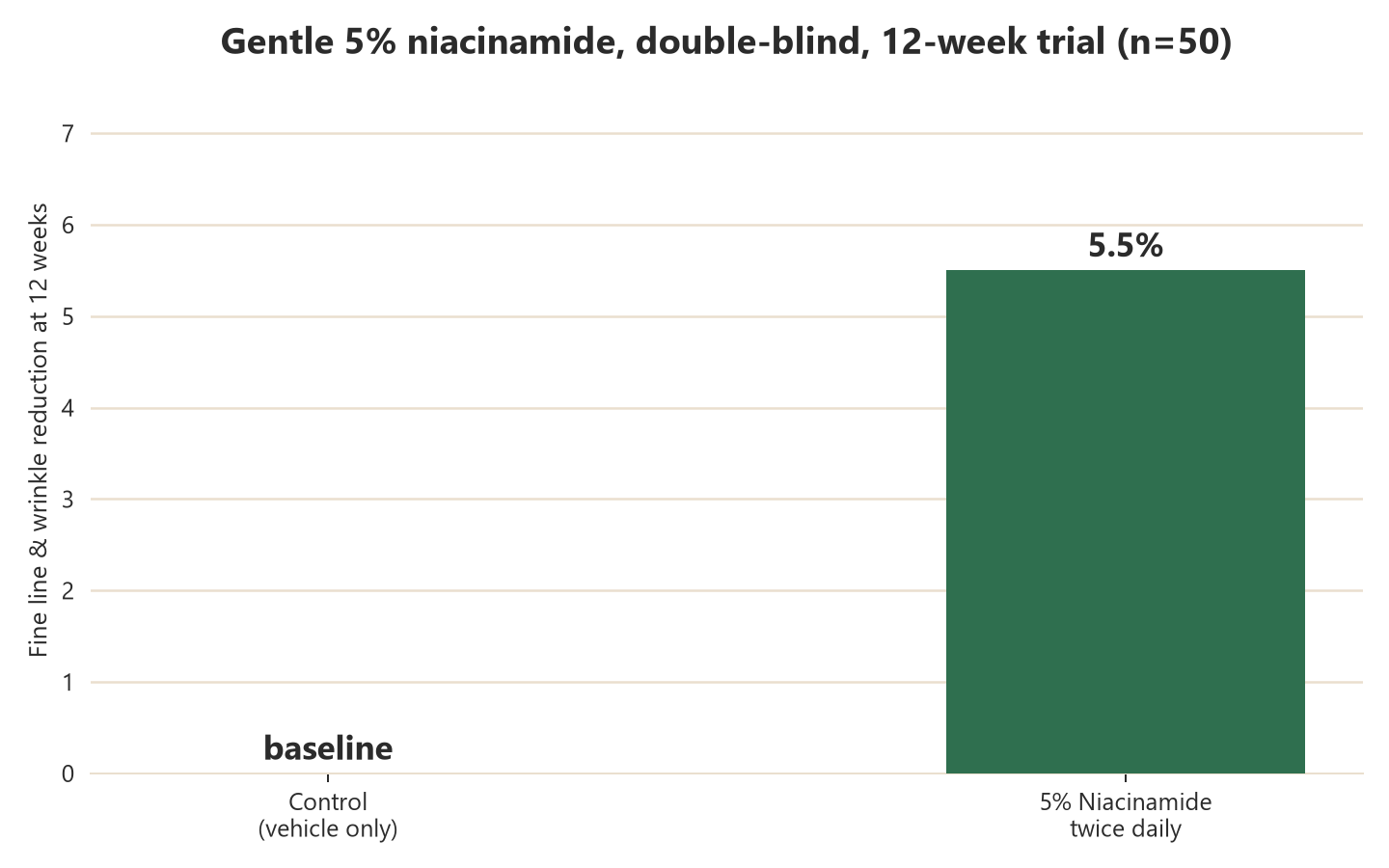
Chart showing 5.5 percent fine line and wrinkle reduction with 5 percent niacinamide versus control at 12 weeks
A gentle, well-tolerated concentration still moved the needle in a real double-blind trial.

In a 12-week, double-blind, placebo-controlled trial by Bissett and colleagues at Procter & Gamble (International Journal of Cosmetic Science), a gentle 5% niacinamide cream measurably reduced fine lines and wrinkles by about 5.5% versus a matched control, alongside significant improvements in hyperpigmentation, redness, and sallowness — with the study reporting no irritation, burning, or stinging at that concentration. It is exactly why a 4–5% niacinamide formula is the dermatology-studied sweet spot for reactive skin — and what separates a barrier-friendly serum from one chasing faster results at a higher, harsher percentage.

How to choose a niacinamide serum for sensitive skin

Stay in the 4 to 10% range

This is the well-tolerated band where niacinamide supports the barrier and helps regulate oil without the flushing higher strengths can cause on reactive skin. If a label hides the percentage, treat it as a low-strength formula and patch test anyway. The often-cited barrier and redness research used roughly 4 to 5%, so a modest number is enough.

Look for supporting partners: zinc, ectoin, oat, or hyaluronic acid

Zinc PCA pairs with niacinamide to help regulate oil and reduce the look of pores; ectoin, oat, and hyaluronic acid help skin hold water and reinforce the barrier so the serum soothes rather than strips. For sensitive skin these pairings matter more than a high single number.

Choose fragrance-free

Added fragrance is one of the most common triggers for redness and stinging in reactive and rosacea-prone skin. “Unscented” can still contain masking fragrance, so read the INCI for parfum, fragrance, and essential oils before you commit.

Match the texture to your skin

A lightweight, watery serum suits oilier, pore-prone skin, while a serum buffered with glycerin, squalane, or light oils sits better on dry or compromised barriers. Thin, alcohol-forward formulas can sting a stressed barrier.

Plan how it layers

Niacinamide is one of the easiest actives to combine. It sits comfortably with vitamin C in the morning and with retinol or bakuchiol at night, works under SPF, and pairs with exfoliating acids if you space them out. If a vitamin C serum ever feels like too much, niacinamide is the gentler way to work on tone.

Patch test, then go slow

Apply to the inner forearm or behind the ear for a few days before the face, and start every other day. Sensitive skin earns its tolerance gradually, even with a gentle active, and a brief sting in the first week usually means the percentage or another ingredient is too strong.

The 8 best niacinamide serums for sensitive skin on Amazon

Ranked from the gentlest low-percentage formulas up to a higher-strength option, so you can match the dose to your skin. Each owns a distinct use-case.
Best gentle low-percentage starter for reactive skin
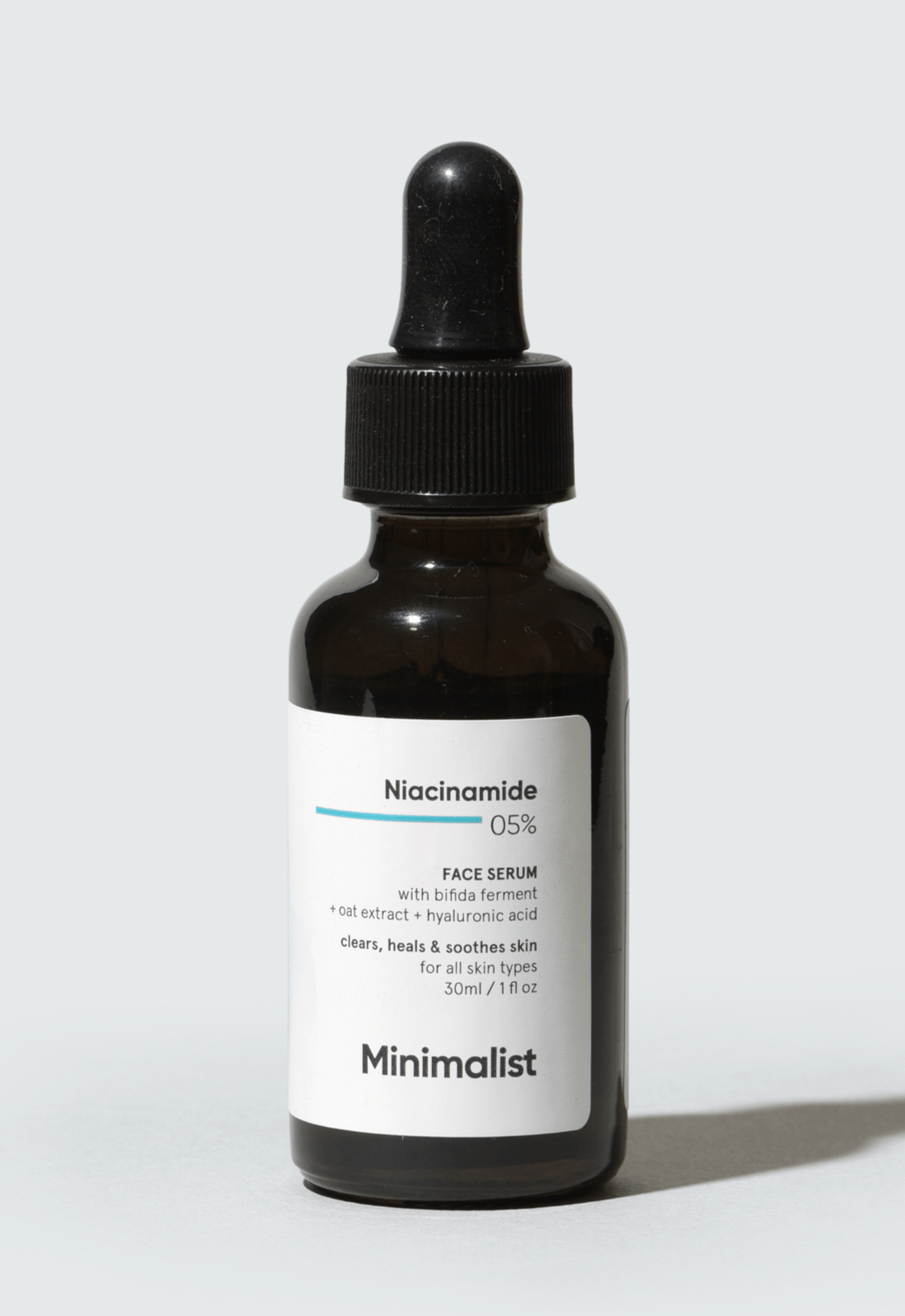
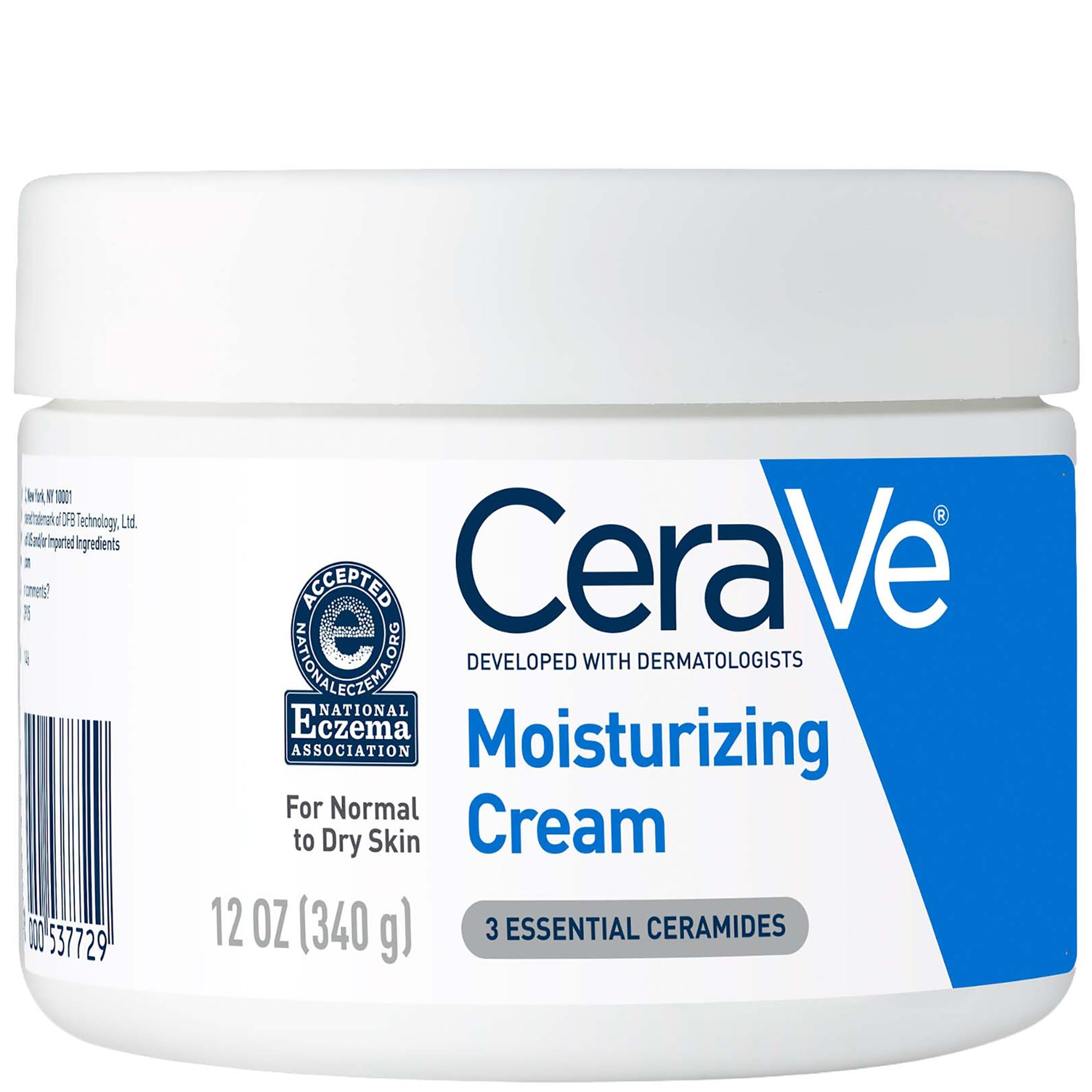
Minimalist 5% Niacinamide Serum with Hyaluronic Acid

1. Minimalist 5% Niacinamide Serum with Hyaluronic Acid

A 5% niacinamide serum buffered with hyaluronic acid, fragrance-free, and squarely in the gentle band, which makes it a sensible starting point for reactive skin or a barrier that is still settling. The lower percentage supports the moisture barrier and helps even tone without the flushing higher strengths can provoke.

  • 5% niacinamide + hyaluronic acid · fragrance-free · in the gentle 4–10% band
  • Best first niacinamide for a reactive or compromised barrier
  • Tradeoff: milder oil/pore effect than a 10% serum

Check price on Amazon →~$12

Best budget barrier-support pick
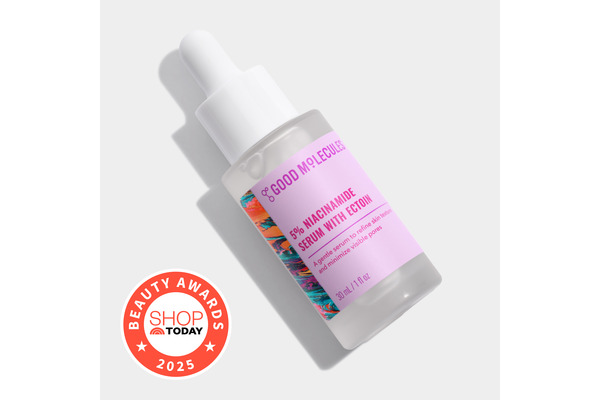
Good Molecules Niacinamide Serum with Ectoin

2. Good Molecules Niacinamide Serum with Ectoin

This combines 5% niacinamide with ectoin, an osmolyte that helps skin hold water and supports the moisture barrier, so the soothing partner does as much work as the active. At a few dollars it is among the gentlest budget options for a stressed barrier.

  • 5% niacinamide + ectoin · osmolyte barrier support
  • Best value pick for a dehydrated or compromised barrier
  • Tradeoff: subtle oil/pore effect; benefits build slowly with daily use

Check price on Amazon →~$8

Best for redness-prone, very reactive skin
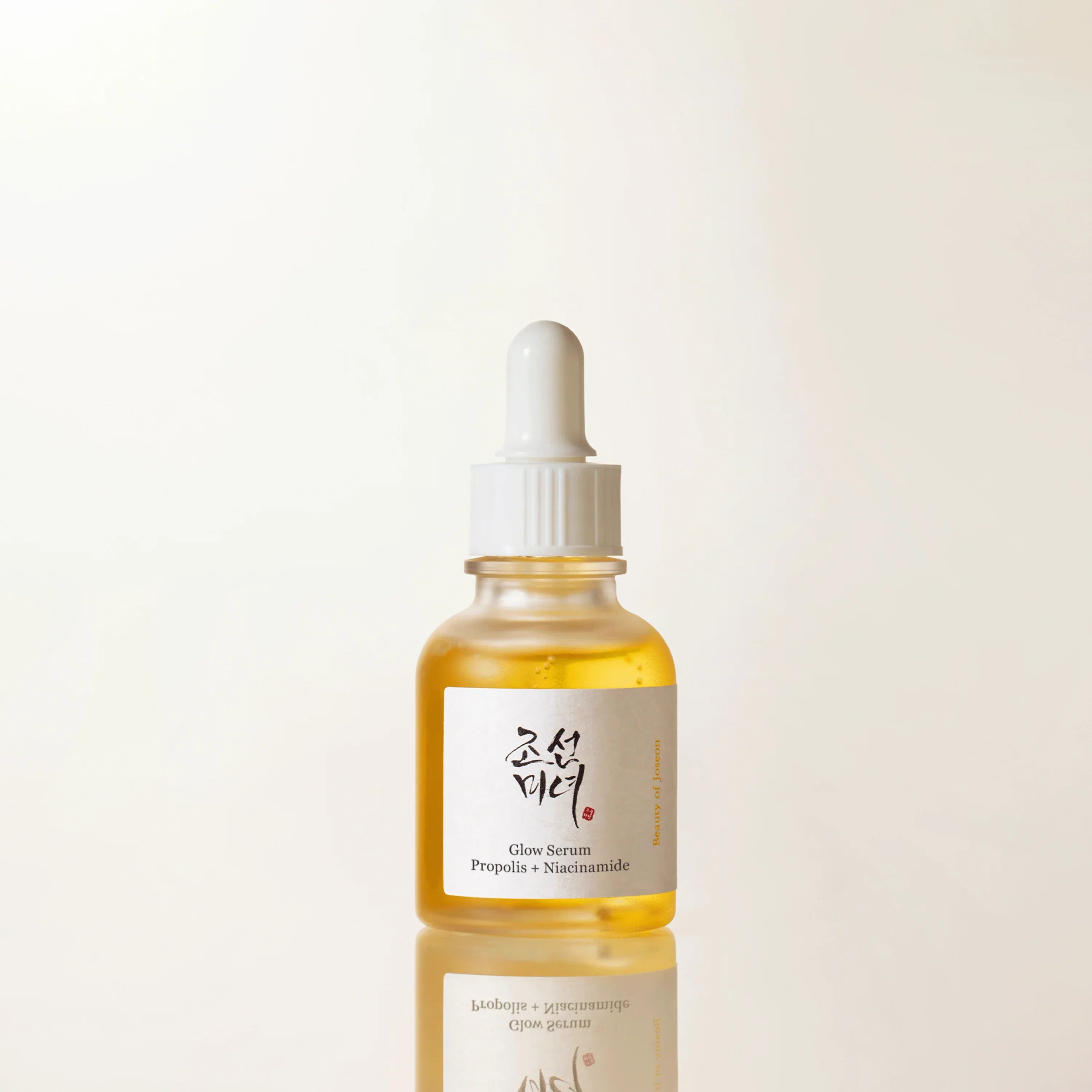
Beauty of Joseon Glow Serum Propolis + Niacinamide

3. Beauty of Joseon Glow Serum: Propolis + Niacinamide

This uses a deliberately low niacinamide level alongside propolis, a humectant-rich soothing ingredient, so it leans calming rather than active-heavy, which suits redness-prone skin that reacts to most serums. It visibly calms redness and adds hydration without a high percentage.

  • Low-percentage niacinamide + propolis extract · calming-first, humectant-rich
  • Best for rosacea-prone skin that stings on most actives
  • Tradeoff: propolis is bee-derived — skip if you react to bee products

Check price on Amazon →~$15

Best budget 10% + zinc for oily, pore-prone skin
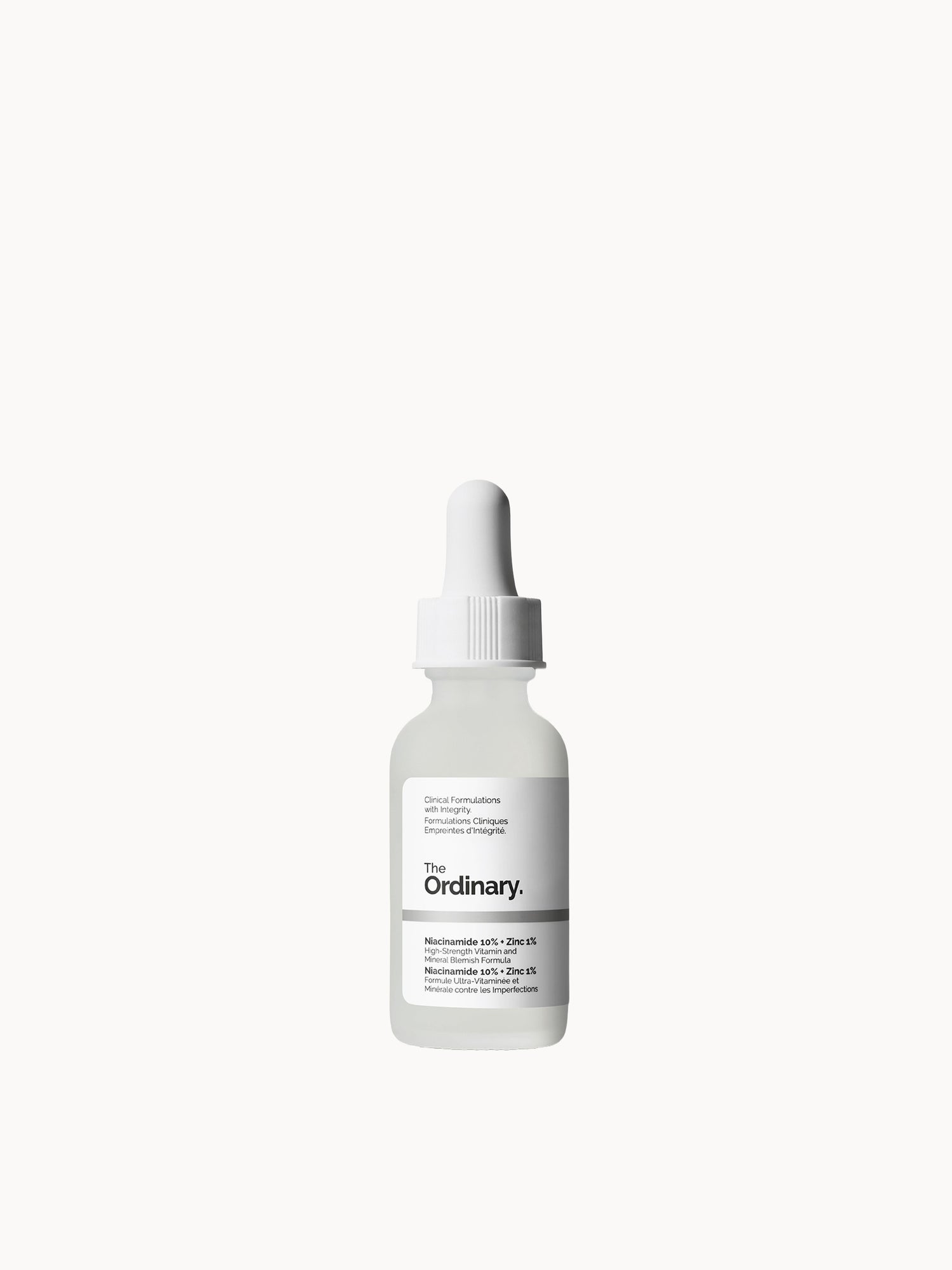
The Ordinary Niacinamide 10% + Zinc 1% Serum

4. The Ordinary Niacinamide 10% + Zinc 1% Serum

This pairs 10% niacinamide with 1% zinc PCA, a combination that helps regulate oil and reduce the look of pores on combination and oily-sensitive skin. It is fragrance-free and inexpensive, which makes it a sensible first trial of the zinc pairing.

  • 10% niacinamide + 1% zinc PCA · fragrance-free
  • Best low-cost 10%+zinc option for oily-sensitive skin
  • Tradeoff: 10% is the ceiling of the gentle range; gel texture can pill — apply on its own first

Check price on Amazon →~$6–8

Best adjustable, mixable fragrance-free option
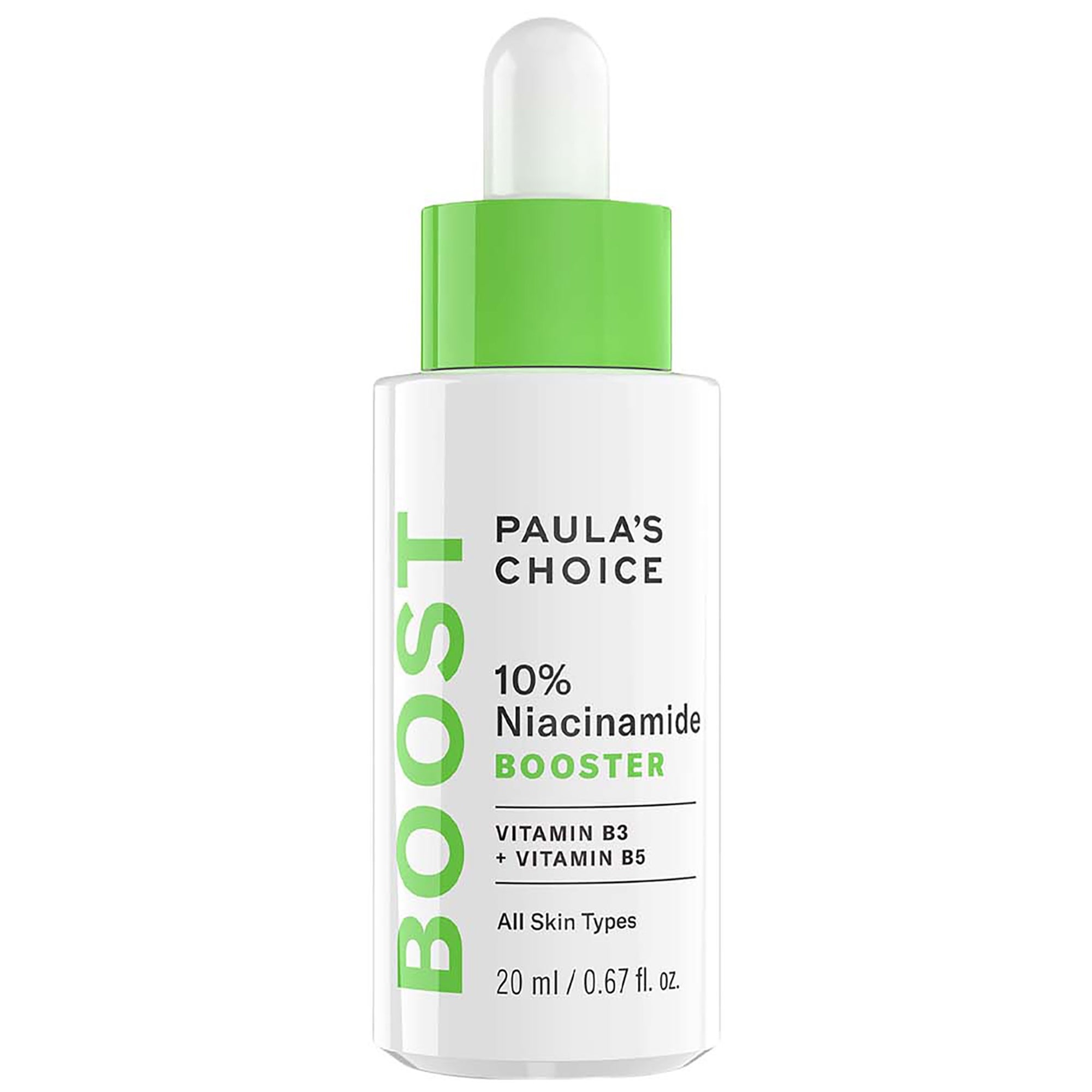
Paula's Choice BOOST 10% Niacinamide Booster

5. Paula’s Choice BOOST 10% Niacinamide Booster

Fragrance-free and made to be used neat or mixed into your moisturizer, which lets reactive skin dilute the 10% and step the strength up as tolerance builds, a level of dose control most serums do not offer. Licorice root extract adds a partner that helps visibly calm redness.

  • 10% niacinamide + licorice root extract + hyaluronic acid · fragrance-free
  • Best for the careful reader who wants to titrate strength
  • Tradeoff: small size, higher price; start diluted on cautious skin

Check price on Amazon →~$49

Best for uneven tone & dark spots (dermatologist brand)
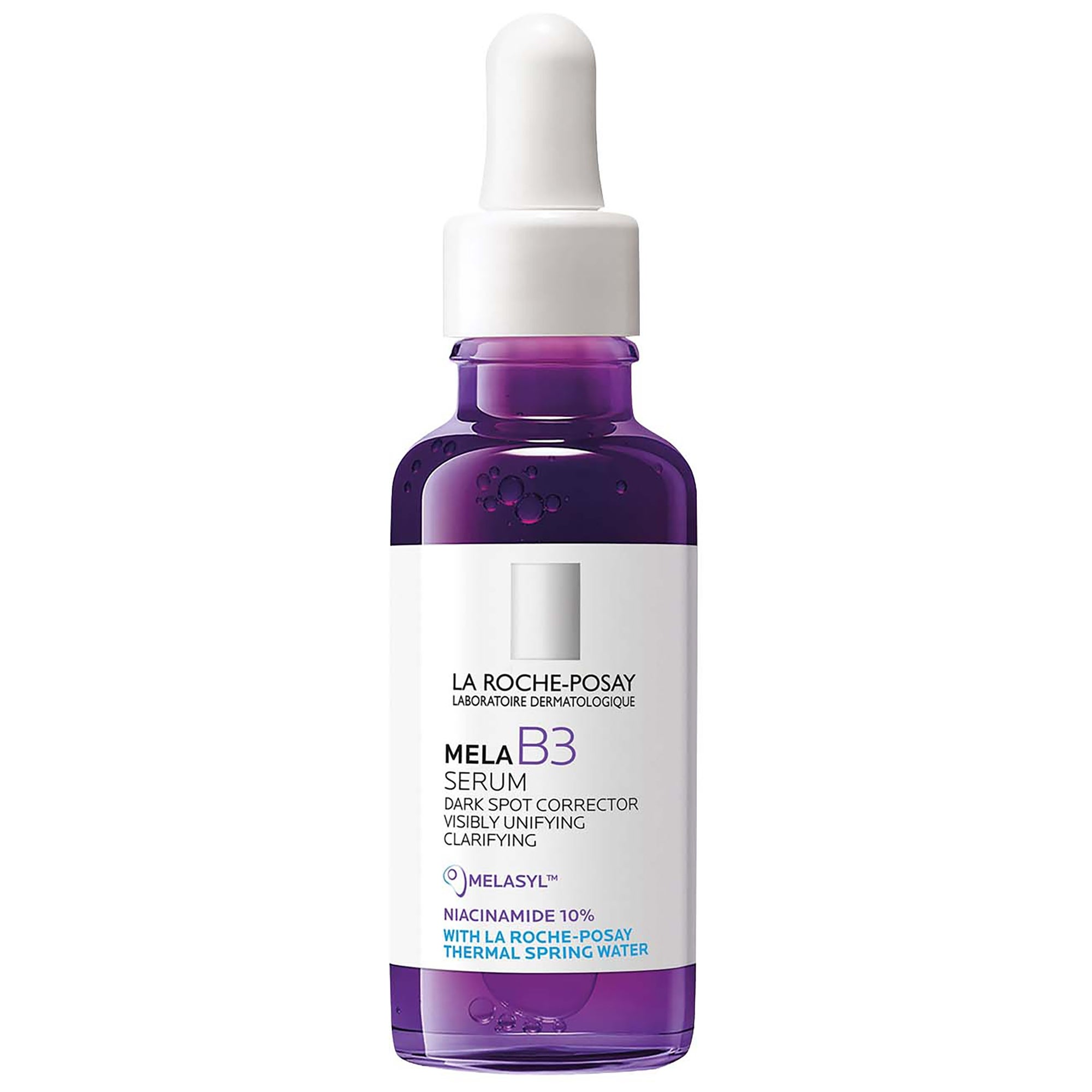
La Roche-Posay Mela B3 Serum

6. La Roche-Posay Mela B3 Serum (Melasyl + 10% Niacinamide)

From a pharmacy brand built around sensitive skin, this 10% niacinamide serum adds Melasyl to target the look of uneven tone, dark spots, and post-blemish marks while niacinamide supports the barrier and visibly calms redness. Many reactive users tolerate it well.

  • 10% niacinamide + Melasyl + LHA · targets the look of dark spots / uneven tone
  • Best for discoloration-focused reactive skin
  • Tradeoff: contains fragrance — not the safest for fragrance-reactive skin; patch-test

Check price on Amazon →~$45

Best fragrance-free purist pick for oily-sensitive skin
Geek and Gorgeous B-Bomb 10% Niacinamide Serum

7. Geek & Gorgeous B-Bomb 10% Niacinamide Serum

A fragrance-free, ingredient-purist formula that pairs 10% niacinamide with zinc PCA and sarcosine to help regulate oil and reduce the look of pores, which makes it a strong match for oily-sensitive skin. The short ingredient list keeps trigger risk low.

  • 10% niacinamide + zinc PCA + sarcosine · fragrance-free · short ingredient list
  • Best clean/purist pick for oily-sensitive skin
  • Tradeoff: sold on Amazon via a third-party seller — verify price/stock before buying

Check price on Amazon →~$10

Best higher-strength pick for oilier, resilient sensitive skin (with a caveat)
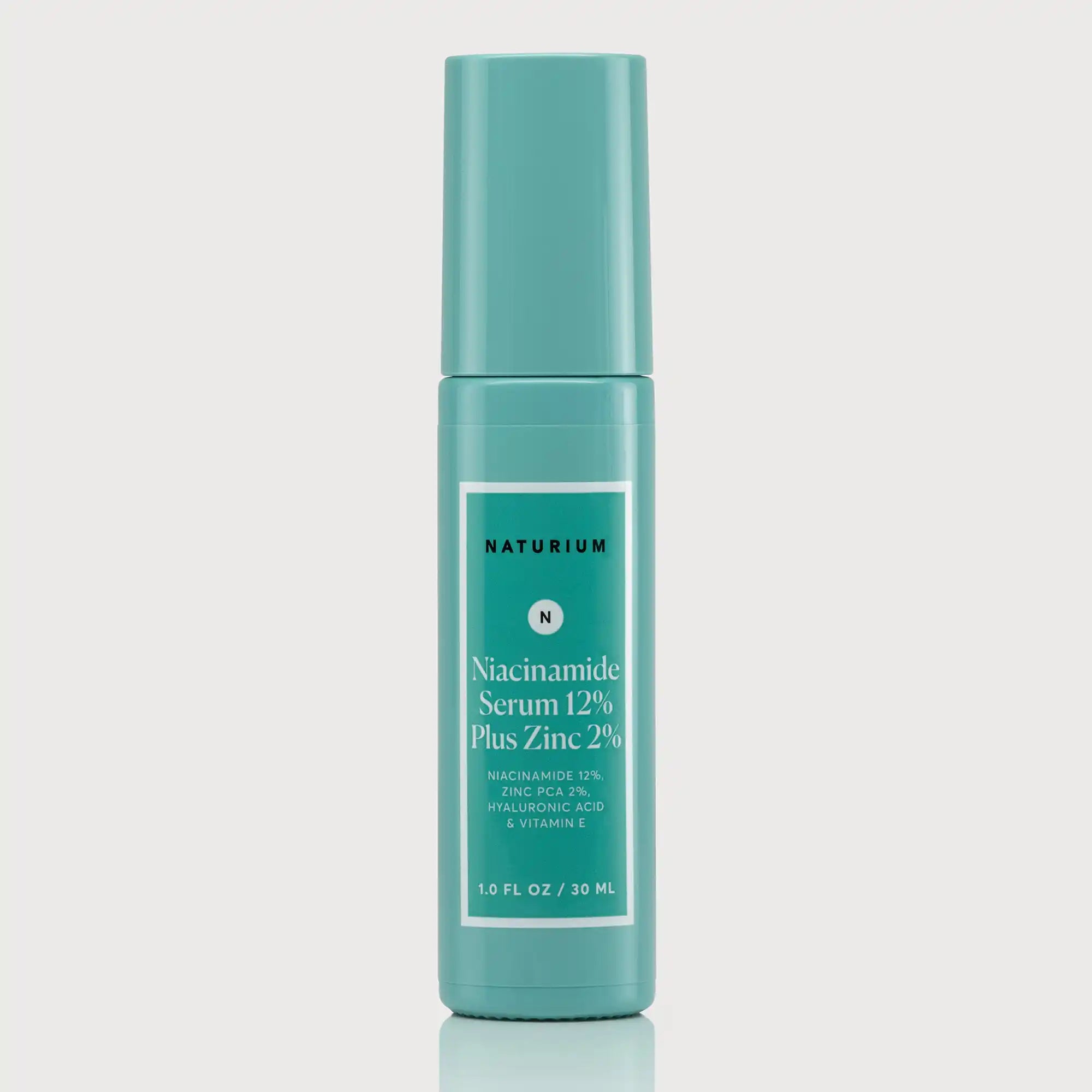
Naturium Niacinamide Face Serum 12% Plus Zinc 2%

8. Naturium Niacinamide Face Serum 12% Plus Zinc 2%

At 12% niacinamide with 2% zinc, this sits just above the gentle 4 to 10% band, so it is the pick for oilier or more resilient sensitive skin rather than a first serum for very reactive complexions. The higher dose works more assertively on oil and the look of pores, and zinc supports that.

  • 12% niacinamide + 2% zinc PCA + hyaluronic acid + vitamin E
  • Best for oilier-but-sensitive skin that already tolerates 10%
  • Tradeoff: 12% is above the well-tolerated band — patch-test, start every other day, step down if it stings

Check price on Amazon →~$14

Frequently asked questions

What percentage of niacinamide is best for sensitive skin?
For most sensitive skin, 4 to 10% does the work, supporting the barrier, helping regulate oil, and reducing the look of pores. The barrier and redness research commonly cited used around 4 to 5%, so you do not need a high number. Strengths near 20% offer no extra benefit for sensitive skin and are more likely to cause flushing.
Can you use niacinamide with vitamin C?
Yes. The old idea that the two cancel out comes from raw-ingredient lab conditions, not finished serums. In modern formulas they layer well. If you prefer, use vitamin C in the morning and niacinamide at night, or apply niacinamide after your vitamin C has absorbed.
Should I use niacinamide in the morning or at night?
Either works, and many people use it twice a day. In the morning it layers well under SPF and can help with oil through the day; at night it supports overnight barrier repair and pairs with retinol or bakuchiol. Consistency matters more than timing.
Does niacinamide help with redness and rosacea-prone skin?
Niacinamide can visibly calm redness and supports the moisture barrier, which is often weak in rosacea-prone skin, so many people find it soothing. It is not a treatment or cure for rosacea. If you have diagnosed rosacea, use it as supportive care alongside your dermatologist’s plan.
Does niacinamide cause purging or flushing?
Niacinamide does not cause purging, because it does not speed up cell turnover the way retinoids or acids do. A small number of people feel a brief, harmless flush from high percentages; staying in the 4 to 10% range and patch testing usually prevents it.
How long does niacinamide take to work?
Oil and the look of pores often look more even within about four weeks of daily use, while barrier strength and redness usually improve over eight to twelve weeks. If a serum stings or worsens redness in the first week, the percentage or another ingredient is likely too strong, so scale back.

Related reading: vitamin C serums · bakuchiol & clean retinol alternatives · mineral facial sunscreens · Eminence Organic Skin Care.

Disclosures. This article contains affiliate links to Amazon (tag: davidgakshtey-20); OSC may earn a commission at no extra cost to you. The Phyris and Eminence picks are brands we carry directly and link to our own product pages, not Amazon. Content was produced with AI assistance and reviewed by our team. Benefit language is limited to “supports the moisture barrier,” “visibly calms redness,” and “reduces the look of pores”; niacinamide does not cure, treat, or heal any condition. Patch-test new products, and if you have diagnosed rosacea, use these as supportive care alongside your dermatologist’s plan.

Best Niacinamide Serums for Sensitive Skin (2026): An Esthetician’s Picks Read More »

Glowing citrus cross-section macro evoking vitamin C antioxidant network

Best Vitamin C Serums for Sensitive Skin: Gentler, More Stable Forms

New to a sensitive-skin routine? Start with our complete sensitive-skin routine guide — all 7 steps, in order.

Vitamin C is an antioxidant that neutralizes the free radicals UV light and pollution generate, and it is also a cofactor your skin uses to build collagen — which is why, used consistently, it brightens the look of dull, uneven tone. The complication for sensitive skin is that the most-studied form, L-ascorbic acid (LAA), is acidic and unstable: it can sting reactive or rosacea-prone skin, and it oxidizes quickly once air reaches the bottle. That is why the form of vitamin C and its percentage matter more than the number on the front of the label, and why gentler derivatives such as tetrahexyldecyl ascorbate or sodium ascorbyl phosphate often suit skin that LAA leaves flushed.

Some links below are affiliate links. If you buy through them, OSC may earn a commission at no extra cost to you. Our picks are chosen by our estheticians on merit, not commission. Our two in-house picks are linked to our own product pages, not Amazon.

Our pick from the OSC shelf

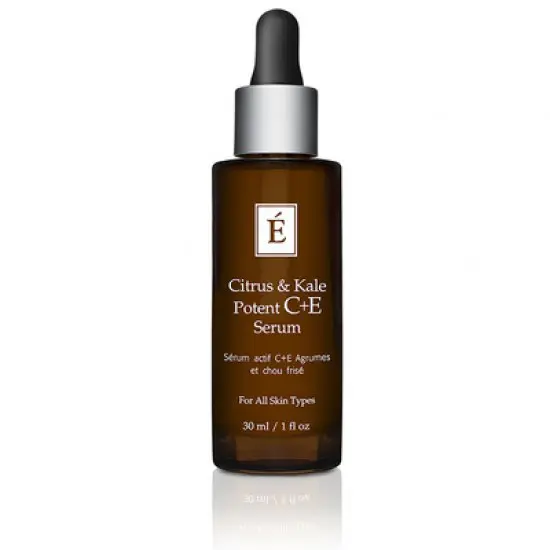
Eminence Citrus and Kale Potent C+E Serum

Eminence Citrus & Kale Potent C+E Serum — $110

Our in-house flagship organic vitamin C serum, and its formula maps neatly onto everything this roundup recommends for sensitive skin: 16% vitamin C in a dual form — pure L-ascorbic acid for potency plus sodium ascorbyl phosphate (SAP), the gentler, more stable derivative reactive skin tolerates better — alongside botanical ferulic acid and vitamin E to keep the actives stable and lower the sting high-strength vitamin C can cause. A leafy-green and citrus antioxidant blend with avocado oil and botanical hyaluronic acid keeps it lightweight. It brightens the look of dull, uneven skin. As the curator’s pick, it is the formula we measure the Amazon options against.

Heads up: the Citrus & Kale serum is on backorder — sign up on its product page to be notified when it restocks. Want an in-stock owned option now? The ilike Organics Vita-C Gel Mask ($160, COSMOS-certified, gentle ascorbyl glucoside) is a rinse-off 1–2x/week treatment — not a daily leave-on serum, and its citrus components warrant a patch test for very reactive skin. The Amazon picks below are daily serums you can buy right now.

What the research shows

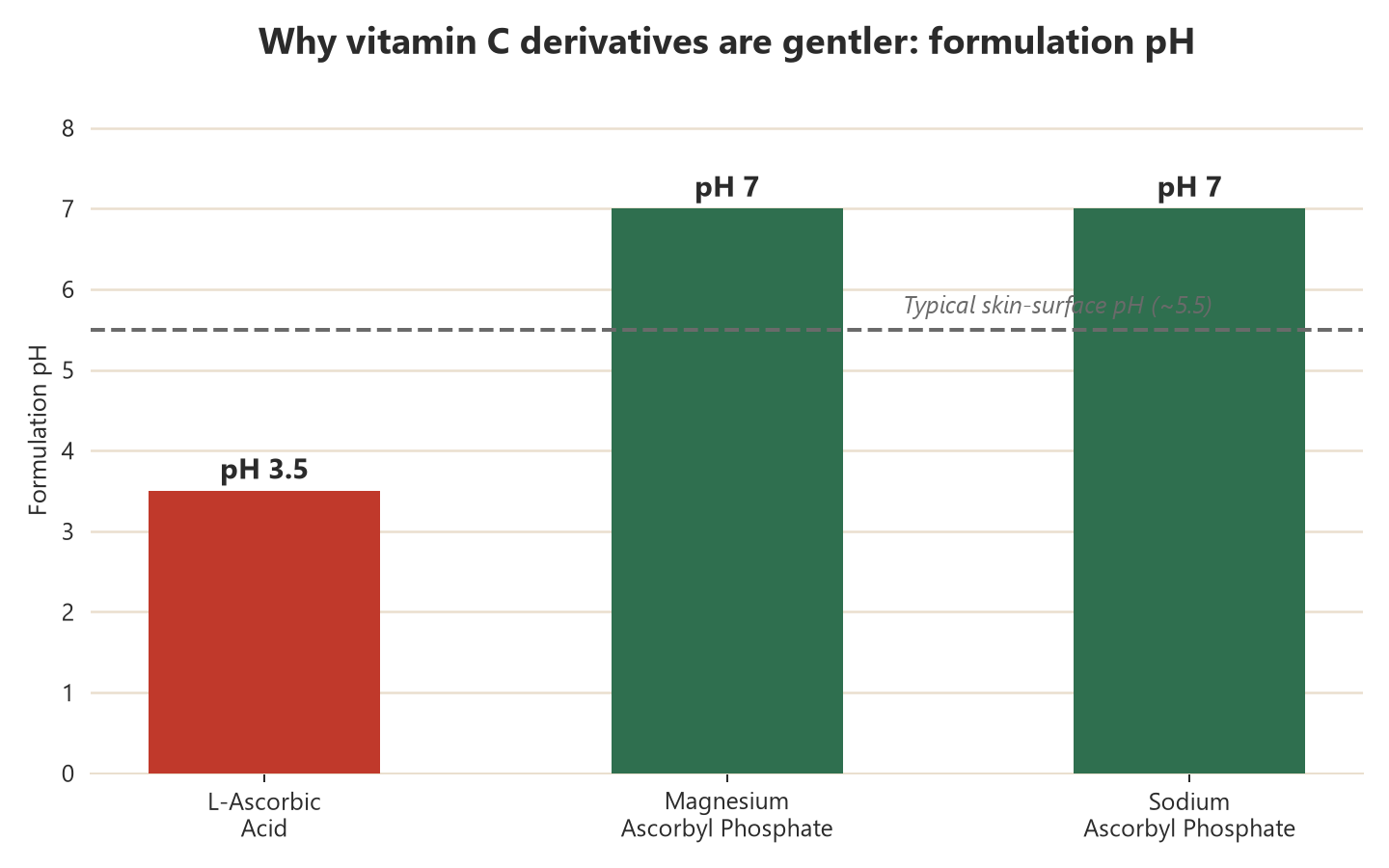
Chart comparing the pH needed for L-ascorbic acid versus gentler derivatives like magnesium and sodium ascorbyl phosphate
A near-neutral pH is what lets a vitamin C derivative sit comfortably on reactive skin.

In Sheldon Pinnell’s landmark percutaneous-absorption study at Duke University (Dermatologic Surgery), pure L-ascorbic acid only penetrated skin effectively when formulated under pH 3.5 at close to 20% concentration — the same acidic, concentrated conditions that make it sting on reactive skin. It is exactly why derivatives like magnesium and sodium ascorbyl phosphate were formulated to work at a near-neutral pH instead — and what separates a vitamin C serum sensitive skin can actually wear daily from one that delivers the same antioxidant benefit at the cost of a stinging, reddened face.

How to choose a vitamin C serum for sensitive skin

Start with the form, not the percentage

Sensitive skin tolerates pH-neutral derivatives better than acidic L-ascorbic acid. Tetrahexyldecyl ascorbate (THD ascorbate) is oil-soluble and stable; sodium ascorbyl phosphate (SAP) and magnesium ascorbyl phosphate (MAP) are water-soluble and mild; ascorbyl glucoside converts to vitamin C in the skin. All are less potent gram-for-gram than LAA, but easier to use daily without redness — and daily use is what shows up in the mirror.

Match the concentration to your tolerance

With LAA, reactive skin does better starting near 8–10% rather than the 15–20% marketed to normal skin. Derivatives are effective at lower numbers: SAP around 5%, MAP roughly 3–5%, THD ascorbate from about 3% to 10%. A lower percentage you tolerate beats a high one that triggers flushing and sits unused.

Look for vitamin E and ferulic acid alongside it

Vitamin C, vitamin E, and ferulic acid stabilize one another and broaden antioxidant protection; the pairing is well documented in dermatology research (Pinnell, 2001). A serum that includes them is doing more antioxidant work and tends to stay stable longer in the bottle.

Check the packaging before you check the price

Vitamin C degrades with light and air. Opaque bottles, airless pumps, or aluminum tubes protect it; clear glass droppers and wide-mouth jars do not. This matters most for L-ascorbic acid and least for stable derivatives like SAP and THD ascorbate.

Skip added fragrance and citrus essential oils

Fragrance is one of the most common triggers for reactive and rosacea-prone skin, and citrus oils (orange, lemon, bergamot) can be phototoxic. A fragrance-free formula adds no irritation risk and lets you judge how the vitamin C itself behaves. Scan the first five ingredients for alcohol denat. too, which can amplify stinging.

Plan how it layers — SPF every morning, bakuchiol if retinol is too much

Vitamin C in the morning complements sunscreen; it does not replace it, so always apply a broad-spectrum SPF over it (see our mineral sunscreen guide). Introduce vitamin C on its own, 2–3x/week, before stacking it with acids or retinoids. If you want a collagen-supporting active at night but retinol leaves you red, bakuchiol is a gentler alternative sensitive skin usually tolerates better.

The 8 best vitamin C serums for sensitive skin on Amazon

Ranked from the gentlest derivatives to well-formulated L-ascorbic acid, so you can start where your skin is. Each owns a distinct use-case.
Best gentle SAP for rosacea-prone & oily-sensitive skin
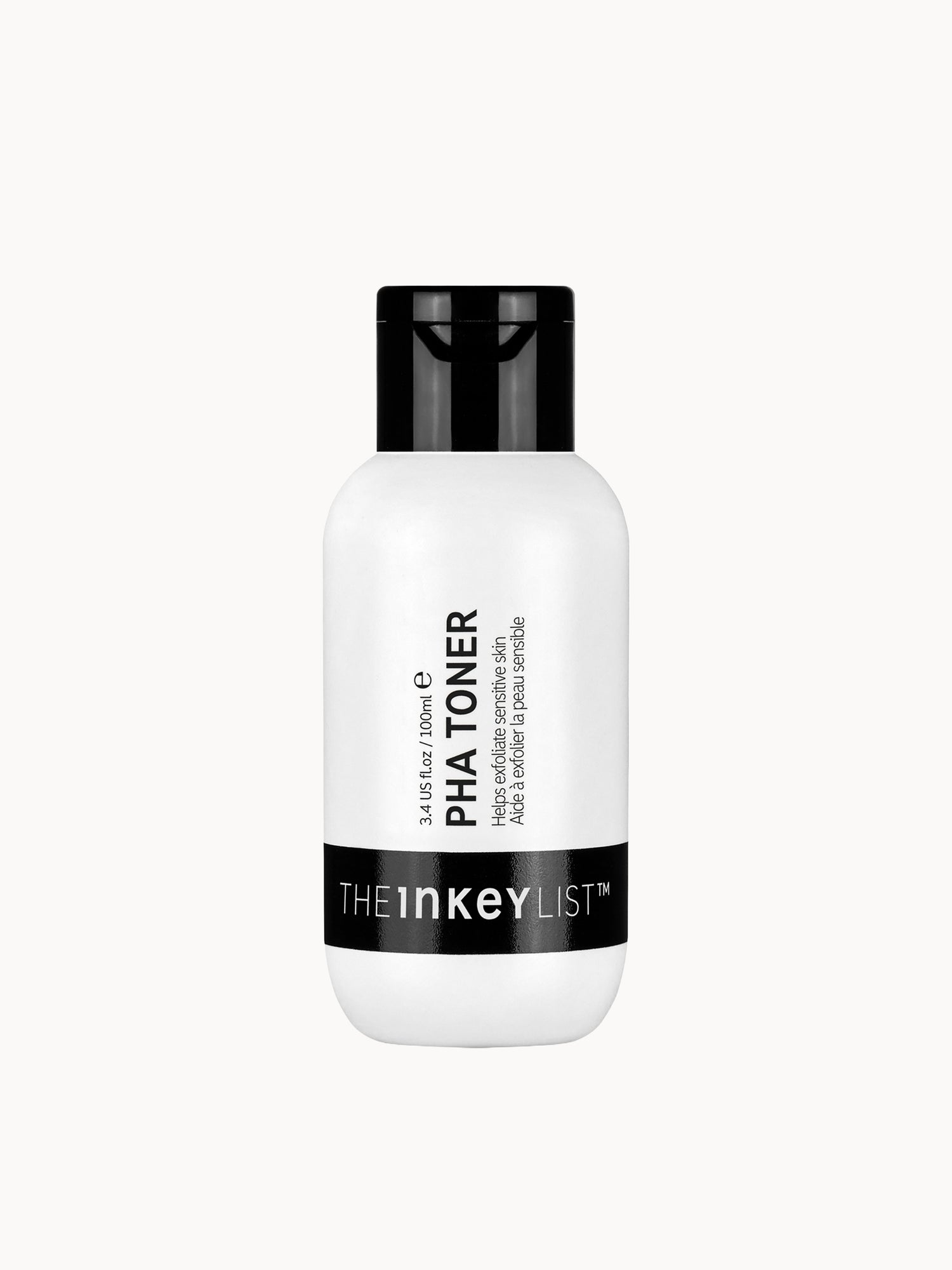
Mad Hippie Vitamin C Serum

1. Mad Hippie Vitamin C Serum

Built on sodium ascorbyl phosphate (SAP), a vitamin C derivative that stays stable near skin-neutral pH, so it does not carry the acidic sting that high-strength L-ascorbic acid can. The brand reports 0% irritation in its own clinical testing (a brand-stated figure), and the formula rounds it out with vitamin E, ferulic acid, hyaluronic acid and soothing aloe and chamomile. It brightens the look of dull, uneven skin while supporting the barrier, which is why it leads the gentle tier here.

  • Form: sodium ascorbyl phosphate (SAP), ~10%, non-acidic · + E, ferulic, HA, aloe, chamomile
  • Best for rosacea-prone, oily-sensitive skin
  • Tradeoff: gentler but less potent than LAA; clary sage botanical — patch-test

Check price on Amazon →~$28–36

Best fragrance-free THD for the most reactive / eczema-prone skin
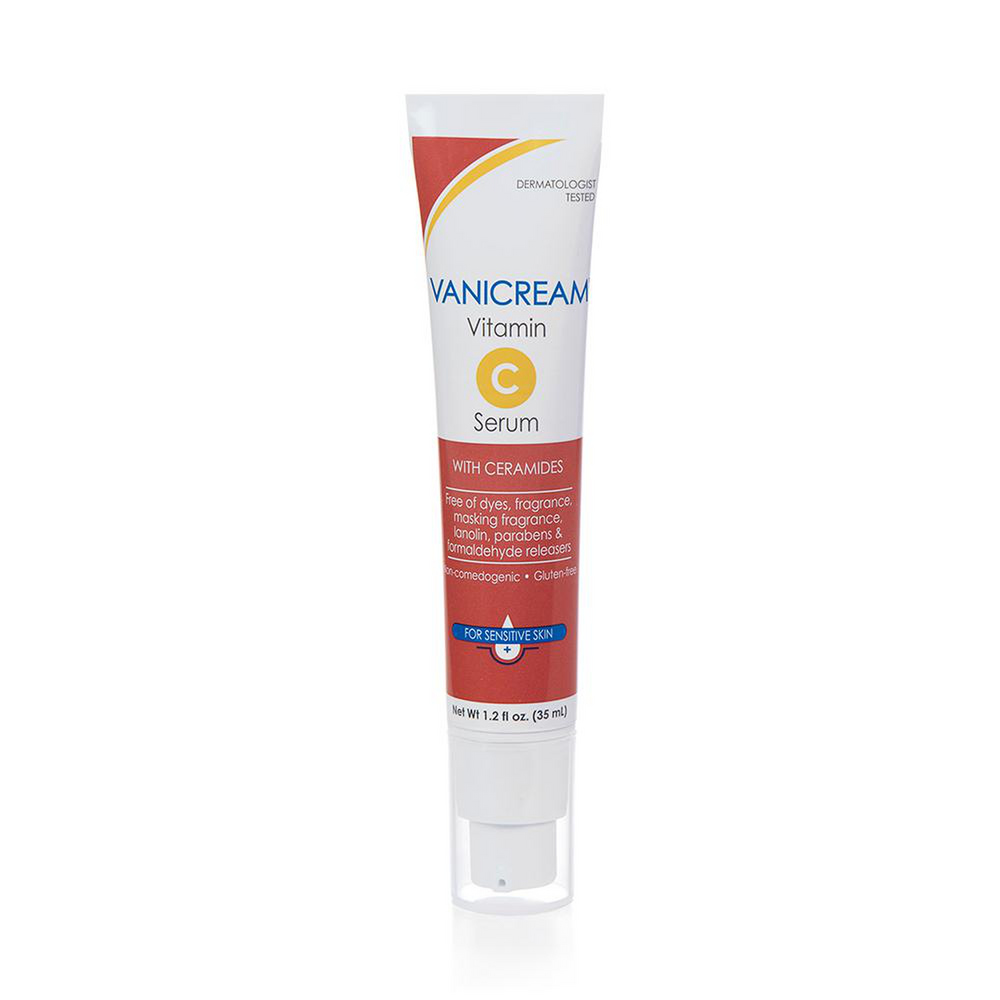
Vanicream Vitamin C Serum

2. Vanicream Vitamin C Serum

A fragrance-free serum built on tetrahexyldecyl ascorbate (THD ascorbate), an oil-soluble derivative that works without a low pH, so there is no acid sting. It is formulated without fragrance, dyes, lanolin and parabens and dermatologist-tested for sensitive and eczema-prone skin, which makes it one of the calmer ways to start vitamin C. At its low price it is a sensible first bottle for skin that flushes easily.

  • Form: tetrahexyldecyl ascorbate (THD), oil-soluble, pH-neutral
  • Fragrance-free, dye-free, lanolin-free, paraben-free · best for the most reactive skin
  • Tradeoff: pared-back formula; works more slowly than LAA

Check price on Amazon →~$16–20

Best hydrating THD for dry, mature, reactive skin
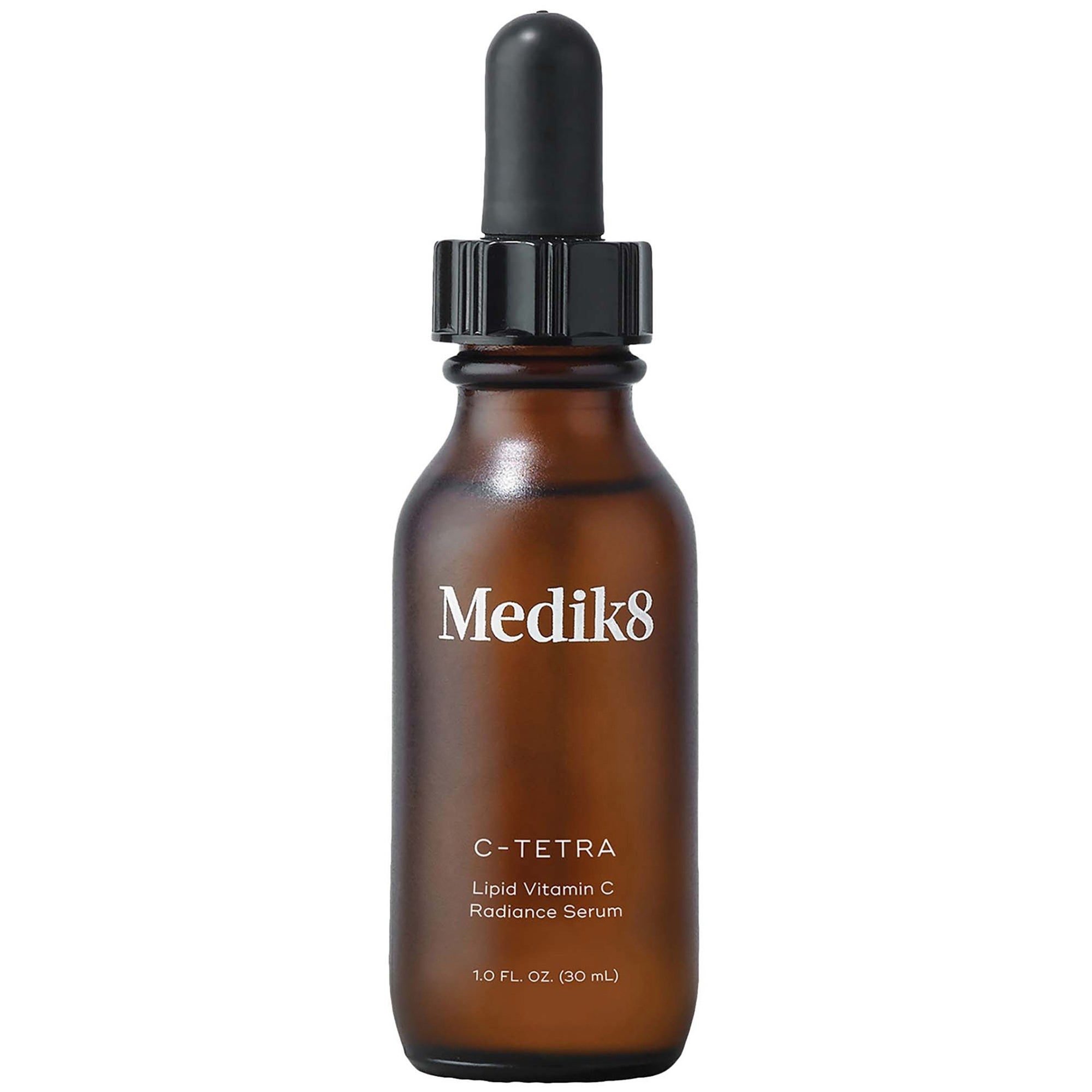
Medik8 C-Tetra Vitamin C Serum

3. Medik8 C-Tetra Vitamin C Serum

Uses THD ascorbate suspended in a squalane base, a combination that suits dry, mature or reactive skin that finds water-based vitamin C drying. Because THD is non-acidic and oil-soluble, it absorbs without the tingle of low-pH formulas and resists oxidation in the bottle. It is a professional-brand THD option that fits our esthetician-led shelf, and a strong stand-in while the Eminence flagship restocks.

  • Form: THD ascorbate in a squalane base · non-acidic, oxidation-resistant
  • Best for dry, mature, reactive skin
  • Tradeoff: pricier per oz; a richer finish than a watery serum

Check price on Amazon →~$45–53

Best multi-form middle ground
Naturium Vitamin C Complex Serum

4. Naturium Vitamin C Complex Serum

Blends a small, stabilized amount of L-ascorbic acid with two gentle derivatives — sodium ascorbyl phosphate and ascorbyl glucoside — in a cushioning glycerin base, so it sits between a pure derivative and a full-strength acid. That middle ground brightens the look of uneven tone with less sting than a straight high-percentage formula. NYT Wirecutter named it a best pick for sensitive skin, and its low price makes it an easy available-now option.

  • Form: stabilized LAA + SAP + ascorbyl glucoside (multi-form) · + hyaluronic acid
  • Best step-up from a pure derivative
  • Tradeoff: small LAA fraction is slightly more active — patch-test fruit actives

Check price on Amazon →~$17–22

Best budget gentle derivative / lowest-risk first try
Good Molecules Vitamin C Serum with Oryzanol

5. Good Molecules Vitamin C Serum with Oryzanol

Pairs two pH-neutral derivatives — ascorbyl glucoside and magnesium ascorbyl phosphate — at a gentle ~8%, with no free L-ascorbic acid, so there is little sting and little of the fast oxidation that plagues acidic serums. At around $13 it is a low-risk way for reactive or rosacea-prone skin to trial vitamin C and see how it behaves before committing to a stronger formula. It brightens the look of dull, uneven skin at the most accessible price in this list.

  • Form: ascorbyl glucoside + magnesium ascorbyl phosphate (~8%), no free LAA
  • pH-neutral, low-sting · best budget / lowest-risk first try
  • Tradeoff: results build slowly; basic formula (no E or ferulic)

Check price on Amazon →~$13

Best for the look of dark spots & deeper, melanin-rich sensitive skin
Eadem Milk Marvel Dark Spot Serum

6. Eadem Milk Marvel Dark Spot Serum

A fragrance-free serum that uses 3-O-ethyl ascorbic acid, a stable vitamin C derivative, with sodium ascorbate and niacinamide, formulated with melanin-rich, sensitive skin in mind to lower the risk of post-inflammatory marks. It is a considered pick for reactive skin working on the look of dark spots and uneven tone, reducing the appearance of dark spots rather than removing them. The niacinamide adds barrier and tone support without the sting of a low-pH acid.
  • Form: 3-O-ethyl ascorbic acid (stable) + sodium ascorbate + niacinamide
  • Fragrance-free, formulated for melanin-rich sensitive skin · best for the look of dark spots
  • Tradeoff: higher price; brand-stated before/after timelines

Check price on Amazon →~$68

Best barrier-supporting starter L-ascorbic acid (drugstore)
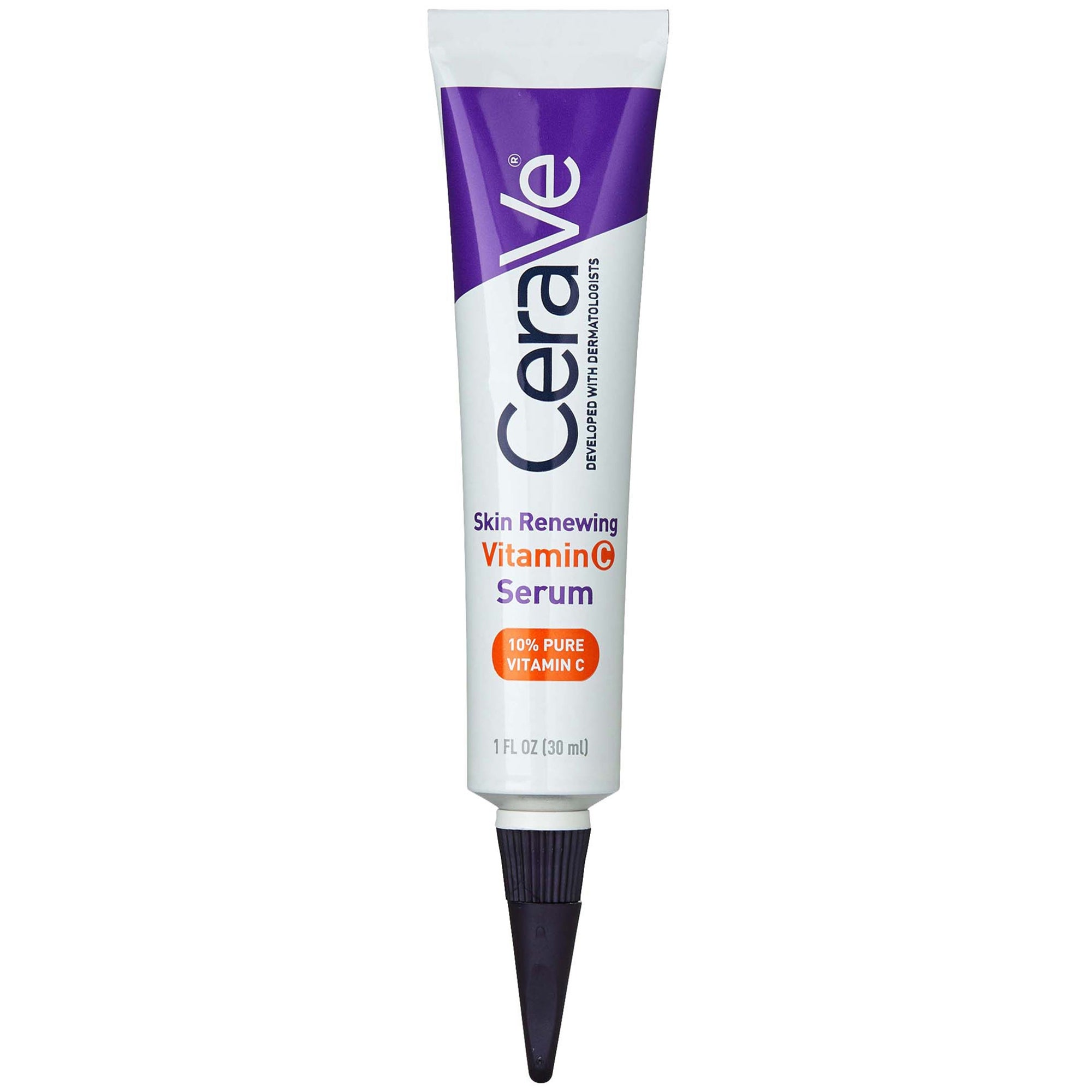
CeraVe Skin Renewing Vitamin C Serum

7. CeraVe Skin Renewing Vitamin C Serum

A 10% encapsulated L-ascorbic acid cushioned by three barrier ceramides, hyaluronic acid and vitamin B5, and fragrance-free — a sensible bridge between a gentle derivative and a full-strength acid. The lower dose, the encapsulation that slows delivery, and the ceramide support make it one of the easier ways to use true L-ascorbic acid on cautious skin. Dermatologists frequently recommend it as an accessible, barrier-friendly entry point.

  • Form: 10% encapsulated L-ascorbic acid · + 3 ceramides, HA, vitamin B5; fragrance-free
  • Best barrier-supporting starter LAA
  • Tradeoff: still an acid — buy fresh, store cool/dark, replace once color shifts

Check price on Amazon →~$20–25

Best well-formulated L-ascorbic acid for the tolerant end of sensitive skin
Maelove The Glow Maker Vitamin C Serum

8. Maelove The Glow Maker Vitamin C Serum

A 15% L-ascorbic acid serum with vitamin E and ferulic acid — the antioxidant trio modeled on the well-known SkinCeuticals C E Ferulic formula, unscented and buffered with hyaluronic acid, at a fraction of the benchmark’s price. Vitamin E and ferulic acid stabilize the L-ascorbic acid and broaden its antioxidant action. It is the pick for the tolerant end of sensitive skin, and a fair-value way to use a real LAA formula once your barrier is stable.

  • Form: 15% L-ascorbic acid + vitamin E + ferulic acid (unscented) · + HA buffer
  • Best LAA for the tolerant end of sensitive skin
  • Tradeoff: acidic 15% LAA — not a first vitamin C; start 2–3 nights/week, skip during a flare

Check price on Amazon →~$30–40

Frequently asked questions

Which vitamin C form is best for sensitive skin?
For reactive or rosacea-prone skin, a gentler derivative usually beats high-strength L-ascorbic acid. Tetrahexyldecyl ascorbate (THD ascorbate) is oil-soluble, pH-neutral, and stable, so it absorbs without the acidic sting. Sodium ascorbyl phosphate (SAP) and magnesium ascorbyl phosphate (MAP) are water-soluble, also pH-neutral, and well tolerated; ascorbyl glucoside is another mild option that converts to vitamin C in the skin. These are less potent gram-for-gram than LAA, but tolerability is what keeps you consistent — and consistency is what shows in the mirror.
What percentage of vitamin C should sensitive skin use?
Start low. With L-ascorbic acid, sensitive skin does better beginning around 8–10% rather than the 15–20% aimed at normal skin. Derivatives work at lower numbers because they behave differently: SAP is typically effective near 5%, MAP around 3–5%, and THD ascorbate from roughly 3% to 10%. A well-tolerated percentage you apply daily does more than a high one that triggers redness and sits unused.
Should I use vitamin C in the morning or at night, and do I still need sunscreen?
Either works, but morning has an edge. Vitamin C’s antioxidant action helps defend skin against free radicals from daytime UV and pollution, and it complements sunscreen rather than replacing it — always layer a broad-spectrum SPF over it. If you also use a retinoid or an exfoliating acid at night, keeping vitamin C in the morning separates your actives and lowers irritation risk.
Can I use vitamin C with niacinamide, retinol, and SPF?
Yes. The old warning that niacinamide and vitamin C cancel each other out came from decades-old research on raw, heated ingredients and does not reflect modern stabilized formulas — they work fine together and both support a more even-looking tone. With retinol, sensitive skin is usually more comfortable splitting them (vitamin C in the morning, retinol at night) to avoid stacking two potential irritants; if retinol is too harsh, bakuchiol is a gentler swap. SPF over vitamin C in the morning is the pairing dermatologists recommend most.
How can I tell if my vitamin C serum has oxidized?
Color and smell are your cues. Fresh L-ascorbic acid serums are clear to pale yellow; once they turn deep yellow, amber, or brown, the vitamin C has oxidized and lost potency, and an oxidized serum can be more irritating to sensitive skin. A sharp or metallic smell is another sign. Derivative-based serums (SAP, THD, MAP, ascorbyl glucoside) are more stable and shift color more slowly. Store any vitamin C cool, capped, and out of direct light, and buy a size you can finish within a few months.
How long until I see brightening?
Give it about 8 to 12 weeks of daily use. Antioxidant protection begins immediately at the molecular level, but the visible change in the look of dullness and uneven tone follows your skin’s natural cell turnover and collagen support, which takes weeks rather than days. Take a photo in the same lighting at the start so you can judge the change honestly later.

Related reading: bakuchiol & clean retinol alternatives · best organic & mineral facial sunscreens · Eminence Organic Skin Care.

Disclosures. This article contains affiliate links to Amazon (tag: davidgakshtey-20); OSC may earn a commission at no extra cost to you. The Eminence and ilike picks are brands we carry directly and link to our own product pages, not Amazon. Content was produced with AI assistance and reviewed by our team. Brand-stated figures (such as Mad Hippie’s “0% irritation” testing) are the brand’s own claims. Vitamin C does not treat any medical condition; introduce a new active slowly and patch-test if your skin is sensitive.

Best Vitamin C Serums for Sensitive Skin: Gentler, More Stable Forms Read More »

Macro photo of Psoralea corylifolia bakuchiol plant with a glowing serum droplet at golden hour

Bakuchiol Serums for Sensitive Skin: Clean Retinol Alternatives

New to a sensitive-skin routine? Start with our complete sensitive-skin routine guide — all 7 steps, in order.

Bakuchiol is a plant compound from the seeds of Psoralea corylifolia that signals skin cells through the same retinoic-acid pathway retinol uses, which is why it can reduce the appearance of fine lines and even out tone without the flaking, stinging, and redness retinol often triggers. In a 2019 randomized, double-blind trial (44 participants, 12 weeks), it performed comparably to over-the-counter retinol on wrinkle depth and pigmentation, with fewer reports of irritation. The honest tradeoff: it is gentler, so for most skin it also works more slowly, and it is not a substitute for prescription tretinoin.
This post contains affiliate links. OSC may earn a commission if you buy through them, at no extra cost to you. It does not change which products we recommend. Our picks are chosen by our estheticians on formulation, and every one was checked to confirm it contains no retinol, retinaldehyde, or retinyl esters.

Our pick from the OSC shelf

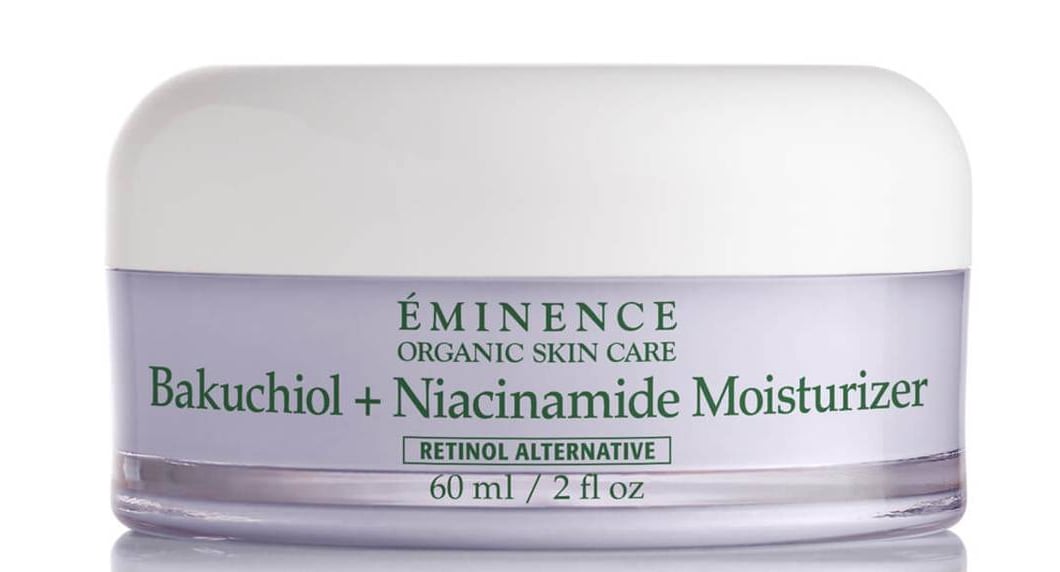
Eminence Organics Bakuchiol + Niacinamide Moisturizer

Eminence Organics Bakuchiol + Niacinamide Moisturizer — $69

The organic age-corrective product we curate and recommend in-house: bakuchiol working on the retinoic-acid pathway to soften the look of fine lines, paired with niacinamide to help calm redness and reinforce the skin barrier. One moisturizer, no retinoids, formulated to the professional-grade standard we stand behind for sensitive, reactive skin.

Heads up: as of this writing it is on backorder — check the product page to get notified when it restocks, or browse the Eminence Organic Skin Care collection. The Amazon picks below are the options you can buy right now.
What the research shows

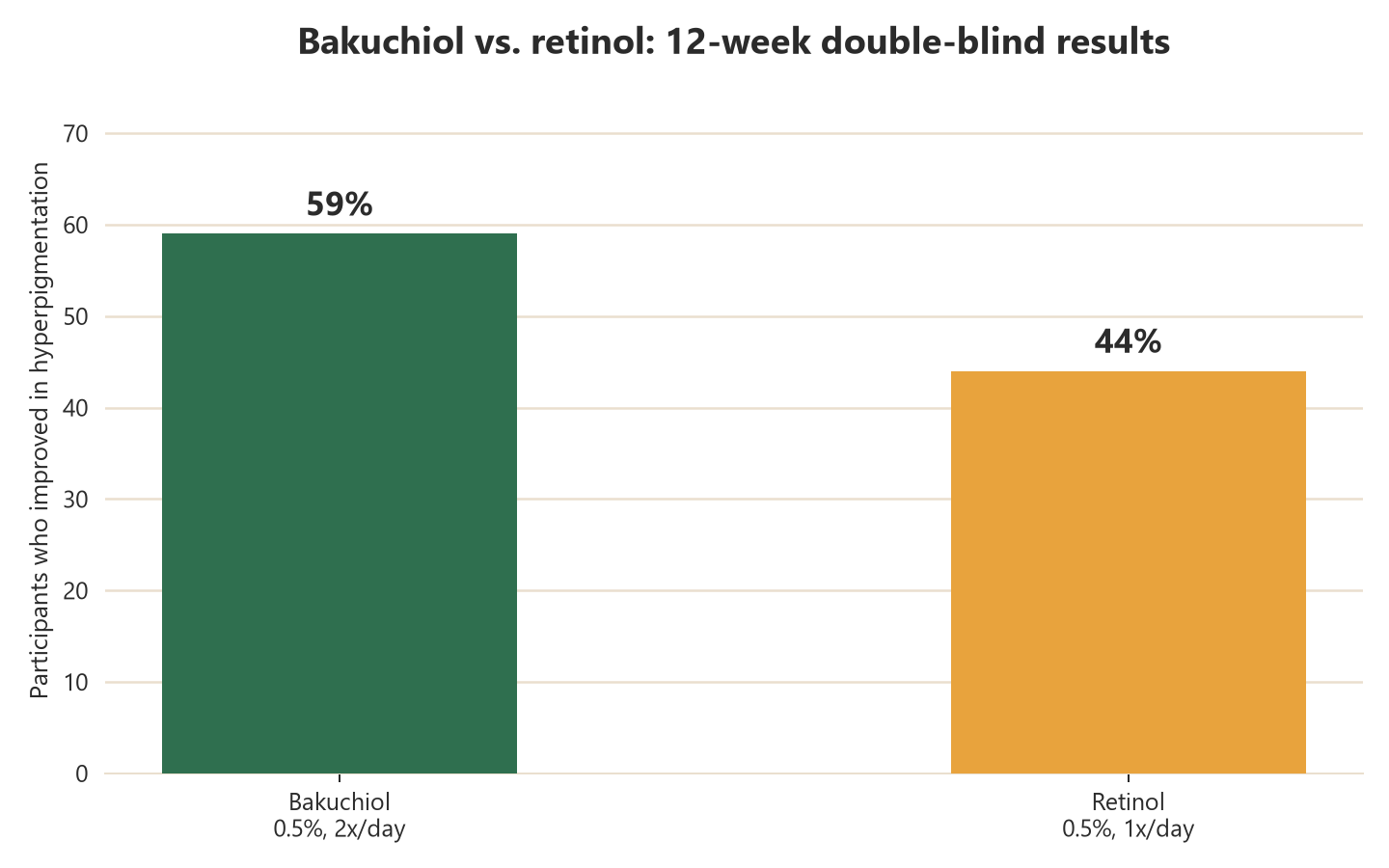
Chart showing 59 percent of bakuchiol users vs 44 percent of retinol users improved in hyperpigmentation at 12 weeks
Two different actives, comparable results — bakuchiol matched retinol on efficacy with meaningfully less irritation.

In a randomized, double-blind, 12-week trial led by Simran Dhaliwal and colleagues at UC Davis (British Journal of Dermatology), twice-daily bakuchiol matched once-daily retinol almost exactly on wrinkle reduction and edged it out on hyperpigmentation — 59% of bakuchiol users improved versus 44% of retinol users — while the retinol group reported significantly more scaling and burning at every single check-in across the study. It is exactly why a well-formulated bakuchiol serum has earned the term “retinol alternative” for reactive skin — and what separates a real head-to-head clinical comparison from a plant extract riding on the word “natural” alone.

How to choose a bakuchiol product

Check the concentration, and whether it’s purified bakuchiol

The clinical results most often cited used 0.5% bakuchiol; well-formulated serums usually list 0.5%–2%. Favor labels that state “bakuchiol” as the active rather than raw Psoralea corylifolia (babchi) seed oil as the hero, since raw babchi can carry photosensitizing psoralens.

Confirm it is genuinely retinol-free

Some products pair “bakuchiol” with retinol, retinaldehyde, or retinyl esters, which reintroduces the irritation you were avoiding and rules the product out during pregnancy. Scan the INCI list for retinol, retinal, and retinyl before you buy. Brand terms like “phyto-retinol” or “beta-retinol” are marketing names for bakuchiol, not added retinoids — but verify the ingredient list to be sure.

Look at the supporting actives

Niacinamide, peptides, ceramides, hyaluronic acid, and squalane pair well with bakuchiol and help support the skin barrier. If your skin is reactive, hold off on stacking bakuchiol with strong acids or actual retinol at first; vitamin C in the morning and bakuchiol at night is a simple, low-friction split.

Match the format to your skin

Lightweight serums absorb fast and layer well for combination or oily skin; richer creams and facial oils suit dry or mature skin. Format affects both comfort and how much active stays on the skin.

Read the pregnancy and nursing note honestly

Bakuchiol contains no retinoids, which is why it is a common choice when retinol is off the table. But cosmetic actives are rarely studied in pregnancy and bakuchiol has no pregnancy-specific safety data, so it is commonly considered a reasonable alternative rather than a proven-safe one. Clear any product with your OB or dermatologist before starting.

Patch-test before full-face use

Apply a small amount to the inner forearm or behind the ear for three to five nights before bringing a new active to your face. Sensitive and rosacea-prone skin especially benefits from this slow introduction.

The 8 best bakuchiol & clean retinol alternatives you can buy on Amazon

Every pick below was checked to confirm it contains no retinol, retinaldehyde, or retinyl esters. Each owns a distinct use-case so you can match it to your skin and budget.

Best budget bakuchiol serum
Acure Radically Rejuvenating Dual Phase Bakuchiol Serum

1. Acure Radically Rejuvenating Dual Phase Bakuchiol Serum

Acure pairs bakuchiol with blue tansy and turmeric in a two-layer formula you shake before use. It is vegan, fragrance-free, and the most accessible entry point for finding out whether a plant-based retinol alternative suits your skin before spending more. Use it at night and follow with a moisturizer.

  • Bakuchiol (no retinol) + blue tansy, turmeric · bi-phase serum
  • Vegan, fragrance-free · pregnancy: commonly considered safe, confirm with your provider
  • Tradeoff: concentration not disclosed; oil layer can look shiny — best at night

Check price on Amazon →~$22–25

Best for pregnancy & nursing (and very reactive skin)
Dermelect Flawless Bakuchiol Treatment

2. Dermelect Flawless Bakuchiol Treatment

Dermelect’s cushiony cream combines bakuchiol with squalane, hyaluronic acid, and panthenol to support the barrier while it works on tone and the look of fine lines. It is fragrance-free and rated roughly 91% top-allergen-free, which is why it is frequently chosen for reactive skin and for pregnancy and nursing. The product name is the brand’s own; it makes no medical promise.

  • Bakuchiol (no retinol) + squalane, hyaluronic acid, panthenol · cream
  • Fragrance-free, ~91% top-allergen-free · pregnancy: commonly considered safe, confirm with your provider
  • Tradeoff: contains dimethicone + ginger extract — patch-test the botanicals

Check price on Amazon →~$59

Best clean prestige bakuchiol + peptides serum
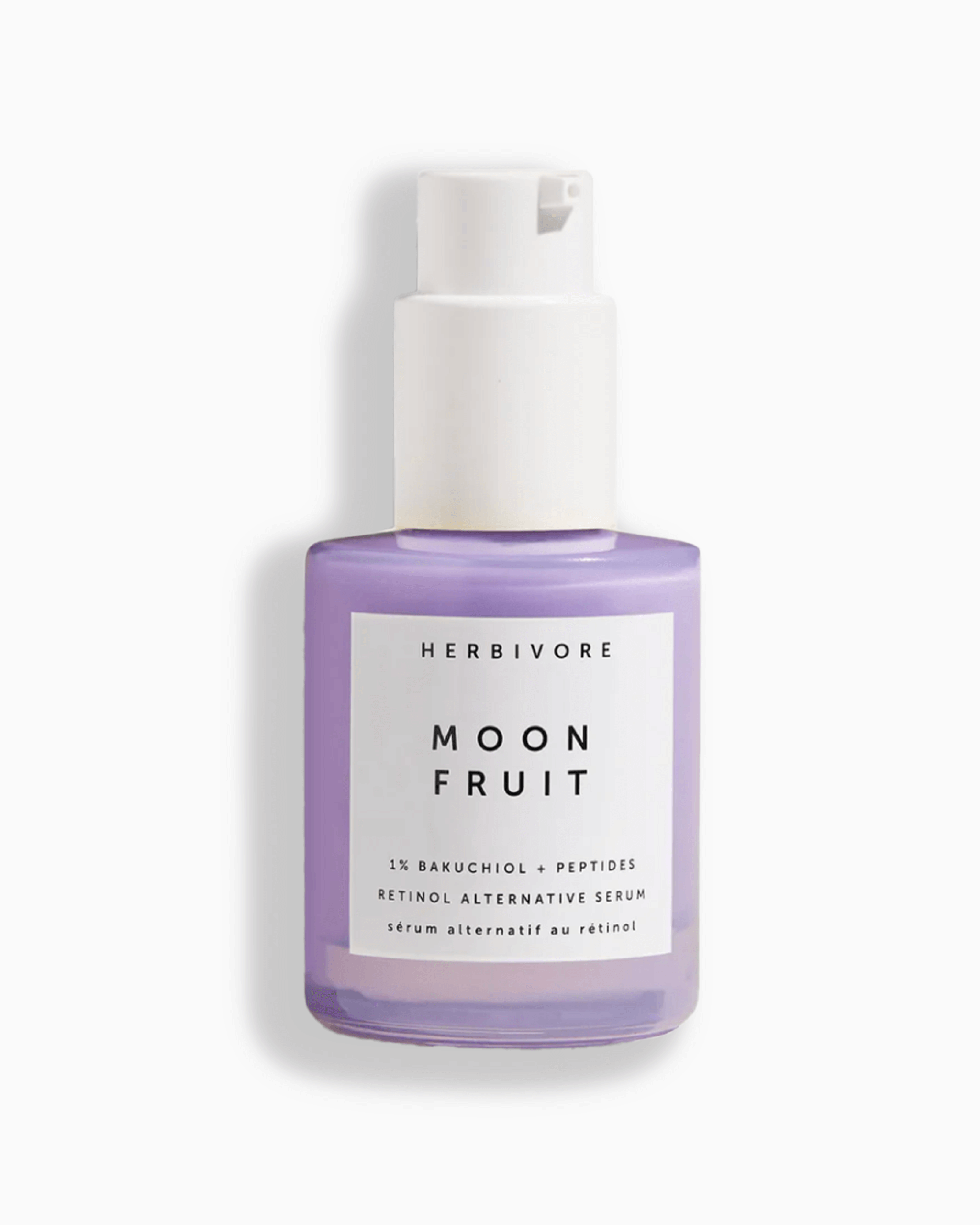
Herbivore Moon Fruit Bakuchiol + Peptides Retinol Alternative Serum

3. Herbivore Moon Fruit Bakuchiol + Peptides Retinol Alternative Serum

Herbivore’s Moon Fruit pairs bakuchiol with peptides and fruit extracts in a clean, prestige formula — the ingredient-purist’s pick. It works on the retinoic-acid pathway to soften the look of fine lines and even tone while staying free of synthetic fragrance and retinoids. A considered splurge for sensitive skin that wants results without the irritation.

  • Bakuchiol (no retinol) + peptides + fruit extracts · serum
  • Synthetic-fragrance-free, vegan · pregnancy: commonly considered safe, confirm with your provider
  • Tradeoff: prestige price — a considered splurge

Check price on Amazon →~$54–68

Best certified-organic bakuchiol serum
KORA Organics Plant Stem Cell Retinol Alternative Serum

4. KORA Organics Plant Stem Cell Retinol Alternative Serum

KORA Organics carries COSMOS-certified-organic and EWG VERIFIED status, the strongest clean-and-organic credential on this list, pairing bakuchiol with alfalfa extract in a milky, dual-action serum. It works on the retinoic-acid pathway to ease the look of fine lines and uneven tone while staying gentle. Make sure you are buying the Plant Stem Cell Retinol Alternative, not the Super A serum, which contains actual retinoids.

  • Bakuchiol (no retinol) + alfalfa stem-cell extract · milky serum
  • COSMOS-certified organic, EWG Verified · pregnancy: commonly considered safe, confirm with your provider
  • Tradeoff: brand also sells a “Super A” retinoid serum — buy the right one

Check price on Amazon →~$58–68

Best for combination skin (lightweight + hydrating)
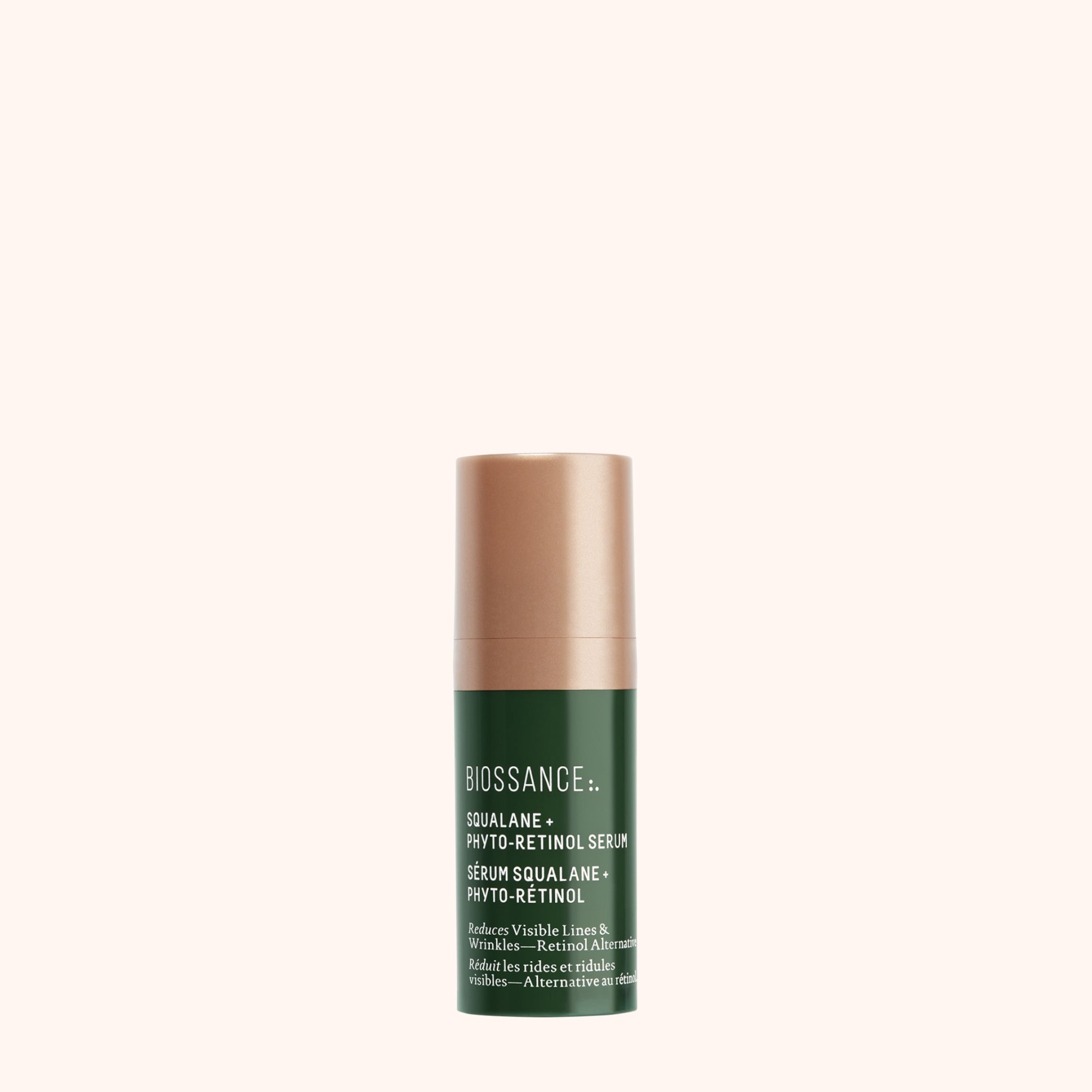
Biossance Squalane + Phyto-Retinol Serum

5. Biossance Squalane + Phyto-Retinol Serum

Biossance blends bakuchiol, which it calls “phyto-retinol” as its brand term for the plant compound, with sugarcane-derived squalane and niacinamide. The result is hydrating and lightweight, a sensible fit for combination skin. To be clear: the ingredient list confirms bakuchiol with no retinol, retinaldehyde, or retinyl esters, despite the listing’s auto-generated tag.

  • Bakuchiol (“phyto-retinol”, no retinol) + squalane + niacinamide · serum
  • Lightweight, hydrating · pregnancy: commonly considered safe, confirm with your provider
  • Tradeoff: Amazon listing auto-tags “retinol” — a data artifact, not an ingredient

Check price on Amazon →~$54–72

Best bakuchiol moisturizer (cream format)
Alpyn Beauty PlantGenius Melt Moisturizer with Bakuchiol

6. Alpyn Beauty PlantGenius Melt Moisturizer with Bakuchiol

For readers who prefer a moisturizer over a serum, Alpyn delivers bakuchiol alongside ceramides, squalane, and hyaluronic acid in one barrier-supporting cream. The ceramide-and-squalane base makes it a comfortable choice for dry or mature skin that wants its plant-based retinol alternative in a single nighttime step.

  • Bakuchiol (no retinol) + ceramides + squalane + hyaluronic acid · cream
  • Barrier-supporting · pregnancy: commonly considered safe, confirm with your provider
  • Tradeoff: a fixed moisturizer gives less control over layering than a serum

Check price on Amazon →~$48–60

Best budget facial oil for dry skin
Good Molecules Bakuchiol Oil Blend for Dry Skin

7. Good Molecules Bakuchiol Oil Blend for Dry Skin

At around $10, Good Molecules suspends bakuchiol in rosehip and chia seed oils for the price-sensitive reader with dry skin. Honest framing: the workhorse here is the rosehip oil and its barrier-nourishing fatty acids, with bakuchiol as a supporting active, so if you want a higher, stated bakuchiol percentage the Herbivore is a better fit. Fragrance-free with a short ingredient list.

  • Bakuchiol in rosehip seed oil (~80%) + chia seed oil (no retinol) · facial oil
  • Fragrance-free, short ingredient list · pregnancy: commonly considered safe, confirm with your provider
  • Tradeoff: rosehip oil is the hero; can feel rich on oily skin

Check price on Amazon →~$10

Best for the eye area
Burt's Bees Renewal Firming Eye Cream with Bakuchiol

8. Burt’s Bees Renewal Firming Eye Cream with Bakuchiol

Burt’s Bees brings bakuchiol to the eye area with a 99%-natural, drugstore-accessible firming eye cream, a gentle option for the thin skin around the eyes where many people cannot use retinol. It pairs bakuchiol with vitamin E to support the look of firmness over time. Patch-test first, since this area reacts more readily than the rest of the face.

  • Bakuchiol (no retinol) + vitamin E · eye cream
  • 99% natural origin · pregnancy: commonly considered safe, confirm with your provider
  • Tradeoff: the eye area reacts more readily — patch-test even gentle formulas

Check price on Amazon →~$22–29

Frequently asked questions

Is bakuchiol as effective as retinol?
In the head-to-head trial most often cited (44 people, 12 weeks, 2019), 0.5% bakuchiol matched 0.5% retinol on reducing the appearance of wrinkles and dark spots, with less peeling and stinging. Keep the context in mind: it was one small study comparing bakuchiol to over-the-counter retinol, not prescription tretinoin, and the changes build gradually. For sensitive skin that cannot tolerate retinol, a comparable result you can actually wear is worth more than a stronger one you cannot.
Is bakuchiol safe during pregnancy?
Bakuchiol contains no retinoids, which is why many people choose it when retinol and prescription retinoids are avoided in pregnancy and nursing. The honest caveat: cosmetic actives are seldom tested in pregnancy, and bakuchiol has no pregnancy-specific safety studies, so it is commonly considered a reasonable alternative rather than a proven-safe one. Clear any product with your OB or dermatologist before you start.
Can you use bakuchiol with retinol or vitamin C?
With vitamin C, yes; bakuchiol is stable enough to layer with most actives, though many people simply use vitamin C in the morning and bakuchiol at night. With retinol you also can, and some formulas combine the two to soften irritation. But if your goal is a retinol-free routine for sensitive skin or pregnancy, read the label and skip anything that lists retinol, retinal, or retinyl.
Should I use bakuchiol in the morning or at night?
Either works. Unlike retinol, bakuchiol is not broken down by light, so it fits a morning or an evening routine. Some people use it twice daily, which mirrors how it was applied in the 2019 study. Daily sunscreen every morning still matters.
How long does bakuchiol take to work?
Plan on 8 to 12 weeks of consistent use before judging fine lines and tone, with early smoothness and texture changes sometimes showing around week 4. Because it is gentler than retinol, it rewards patience. Using it consistently matters more than using a lot.
Does bakuchiol cause purging?
Bakuchiol is not associated with the “purge” some people get from retinoids, because it does not accelerate cell turnover in the same aggressive way. Most sensitive-skin users tolerate it without an initial breakout, though any new product can occasionally cause congestion, which is why a patch test first is worth the few days.

Related reading: Eminence Organic Skin Care · best organic & mineral facial sunscreens.

Disclosures. This article contains affiliate links to Amazon (tag: davidgakshtey-20); OSC may earn a commission at no extra cost to you. The Eminence pick is a brand we carry directly and is not an affiliate link. Content was produced with AI assistance and reviewed by our team. Every product was checked to confirm it is free of retinol, retinaldehyde, and retinyl esters. Bakuchiol is not a treatment for any medical condition; patch-test new products and, if pregnant or nursing, confirm with your provider.

Bakuchiol Serums for Sensitive Skin: Clean Retinol Alternatives Read More »

Translucent mineral sunscreen veil glowing in soft sunlight, macro detail

Best Organic & Mineral Facial Sunscreens for Sensitive Skin

New to a sensitive-skin routine? Start with our complete sensitive-skin routine guide — all 7 steps, in order.

Mineral sunscreens use two filters, zinc oxide and titanium dioxide, that sit on the skin’s surface and scatter and absorb UV before it reaches deeper layers. Because they are not taken into the skin the way chemical filters are, reactive and redness-prone skin tends to tolerate them with less stinging. The honest tradeoff is texture: mineral formulas can leave a white cast, so the right pick depends as much on finish and tint as on the SPF number.
This roundup contains affiliate links. If you buy through them, OSC may earn a small commission at no extra cost to you. Our picks are chosen by our estheticians on formulation, not on commission. Prices and availability are set by the retailer and shown on their site.

Our pick from the OSC shelf

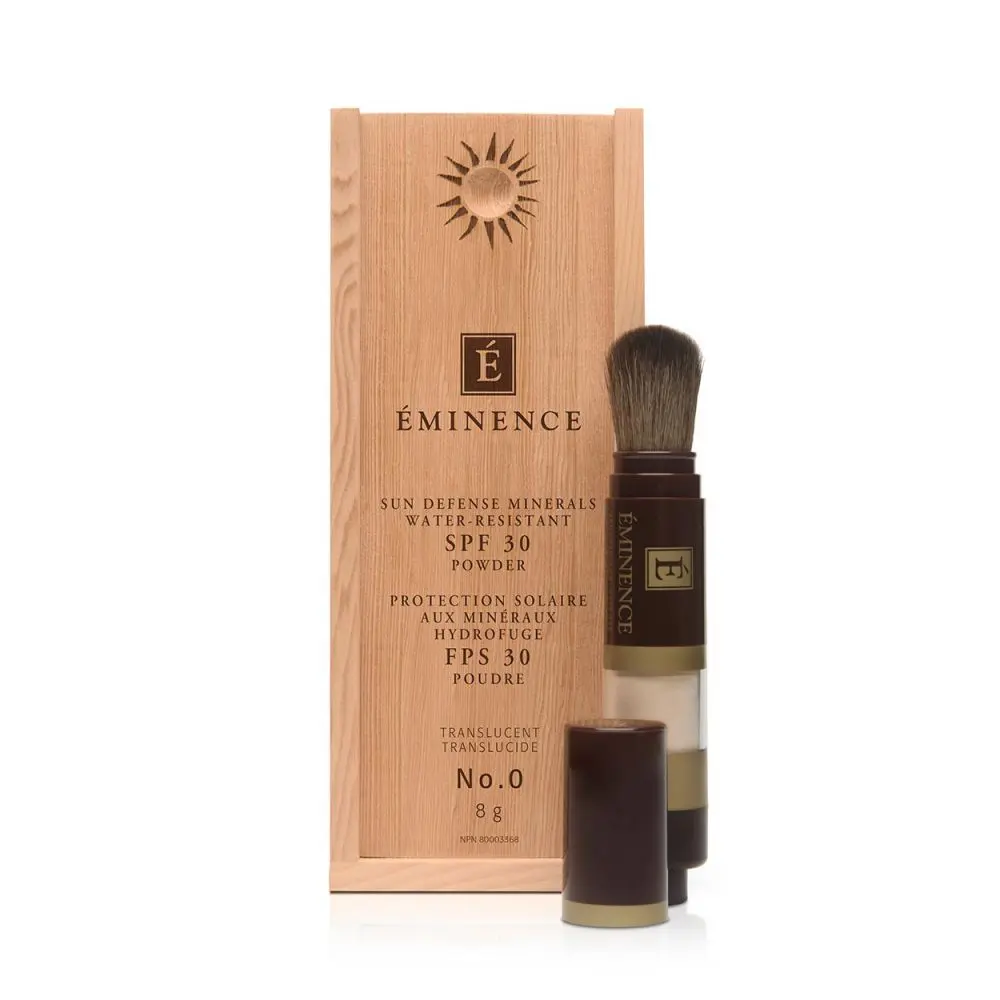
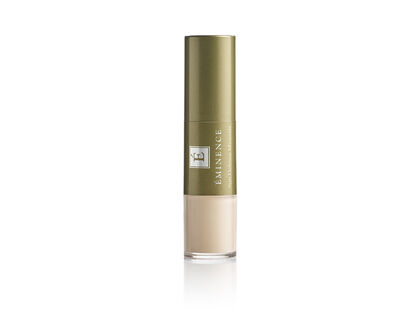
Eminence Organics SPF 30 Sun Defense Minerals

Eminence Organics SPF 30 Sun Defense Minerals — $58

The one we reach for first is from a line we carry ourselves. Sun Defense Minerals is a brush-on mineral powder built on zinc oxide, which makes it a true physical-filter SPF with no chemical filters — and because it is a powder, it is the cleanest way to reapply protection over makeup through the day, the step most people skip. It comes from Eminence’s professional organic range, formulated for sensitive skin. If you want a single product to anchor a clean routine, start here; if you prefer a lotion base, the Amazon picks below cover that.

Also from Eminence when it is back in stock: the Bright Skin Moisturizer SPF 40, a zinc-based daily moisturizer-SPF. Browse the full Eminence Organic Skin Care collection.

What the research shows

Chart showing oxybenzone plasma concentration far exceeding the FDA's 0.5 ng/mL safety-testing threshold
Mineral filters like zinc oxide and titanium dioxide aren’t absorbed into the bloodstream at all — they’re the only two UV filters the FDA classifies as safe and effective without reservation.

In the FDA’s own randomized clinical trial, led by Murali Matta and colleagues (JAMA), participants using chemical sunscreens absorbed common UV filters into their bloodstream at levels the agency itself flags for further study — oxybenzone reached an average of 189 ng/mL, more than 375 times the FDA’s 0.5 ng/mL threshold for requiring additional safety testing, while avobenzone and octocrylene stayed far lower. Zinc oxide and titanium dioxide remain the only two filters the FDA classifies as safe and effective without reservation. It is exactly why a true mineral sunscreen sits on top of the skin instead of moving through it — and what separates physical SPF from a chemical formula still waiting on the safety data to catch up.

How to choose a clean mineral facial sunscreen

Zinc oxide, titanium dioxide, or both

Zinc oxide covers the widest range of UV, including the longer UVA wavelengths tied to aging and pigmentation. Titanium dioxide handles shorter UVB a little better and often feels lighter, but on its own it leaves more of a cast. The most reliable broad-spectrum mineral formulas pair the two, or run zinc oxide high enough (roughly 10 to 20 percent) to carry the protection alone.

Look for non-nano particle size

Non-nano means the mineral particles are larger than 100 nanometers, so they rest on the skin’s surface rather than forming a fine, inhalable dust. This matters most for loose powders and sprays, not creams and lotions. For sensitive skin the practical point is simple: non-nano zinc oxide is the form with the longest safety record and the one dermatologists most often point to.

White cast versus tint, matched to your skin tone

Untinted mineral sunscreens can leave a pale or grey film that reads heavier on deeper skin tones. A tinted formula uses iron oxides to blend the cast into a sheer, skin-matching finish, and iron oxides add a bonus: they help screen visible light, which research links to melasma and pigmentation. If your skin is melanin-rich or pigmentation-prone, a tinted or truly invisible mineral SPF is usually the better daily choice.

SPF 30 or higher, and confirm broad spectrum

SPF measures protection against UVB, the burning rays; broad spectrum or a PA rating (PA+ to PA++++) tells you it also covers UVA, the aging and pigment rays. For daily facial wear, SPF 30 to 50 broad spectrum is the dermatologist-backed range. Higher numbers add small margins and often a heavier feel, so judge a formula on finish and reapplication over a bigger SPF figure.

Scan the INCI for sensitive-skin triggers

A mineral filter does not make the whole formula gentle. Check for added synthetic fragrance (listed as fragrance or parfum), denatured alcohol high on the list, and concentrated essential oils, especially citrus oils, which are common reasons reactive skin reacts. Fragrance-free and low on essential oils is the safer starting point for rosacea-prone and easily irritated skin.

Finish and reapplication, judged honestly

A sunscreen only protects if you actually wear it and reapply, so the texture has to fit your skin and your makeup. Drier skin does better with a dewy, moisturizing base; oily and acne-prone skin does better with a matte, lightweight finish. Plan to reapply every two hours of real sun exposure, which is where powder and stick formats earn their place over a cream you cannot layer.

The 8 best mineral facial sunscreens you can buy on Amazon

Each pick is a physical-filter (mineral) formula suited to sensitive skin. We note which are certified organic and which are clean-but-not-organic, so you can choose on your own terms.
Best for acne-prone & oily reactive skin
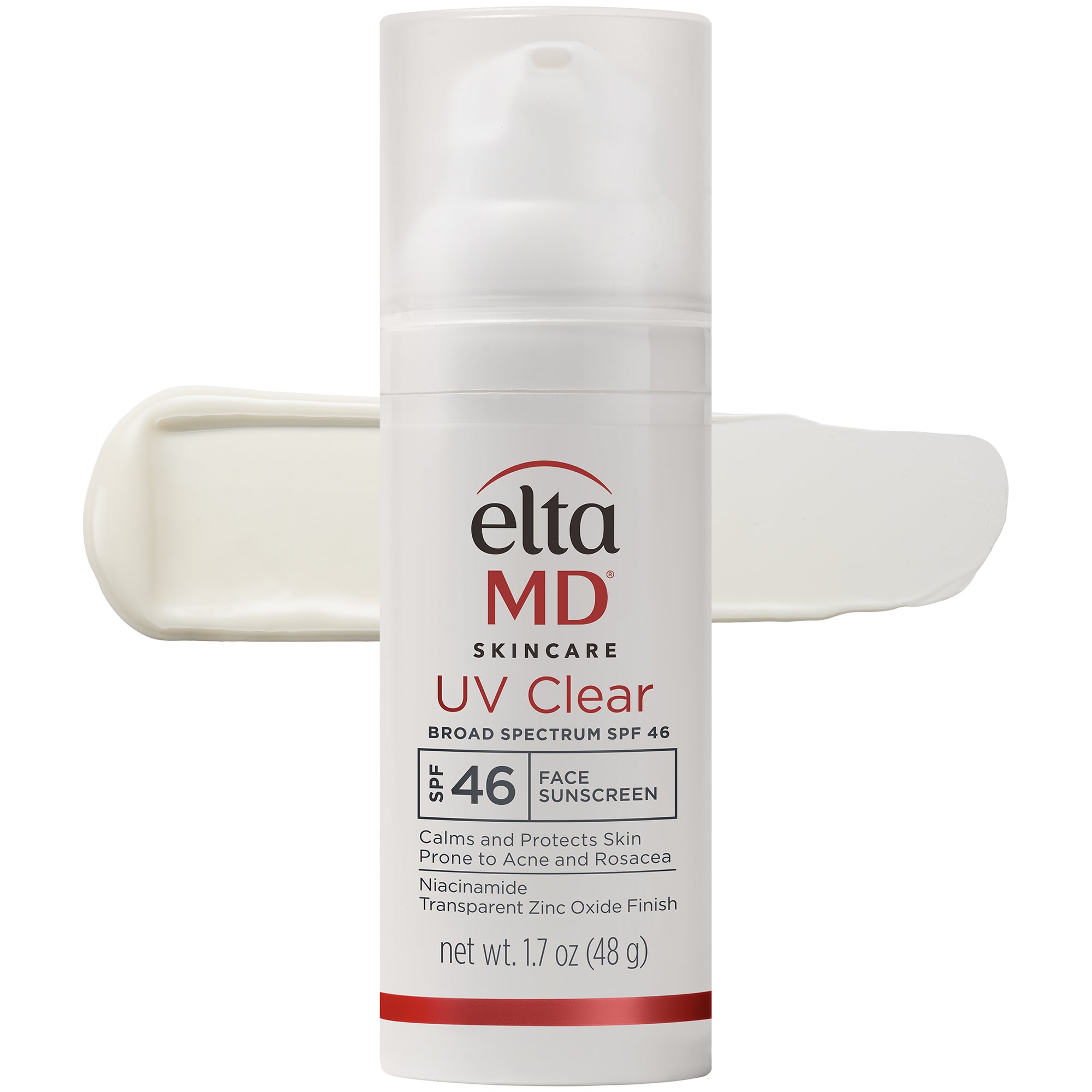
EltaMD UV Clear Broad-Spectrum SPF 46

1. EltaMD UV Clear Broad-Spectrum SPF 46

The mineral face SPF dermatologists reach for most when skin is sensitive, redness-prone, and breaks out. The only active is transparent zinc oxide 9%, paired with niacinamide at 5% and hyaluronic acid; it is fragrance-free, oil-free, and non-comedogenic, so it sits light on oily and acne-prone skin without a heavy cast. One caution worth repeating: choose UV Clear or UV Physical, not the look-alike UV Sport or UV Active, which use chemical filters.

  • Active: transparent zinc oxide 9%
  • SPF 46, broad spectrum · fragrance-free, oil-free, non-comedogenic
  • Clean, not organic · tradeoff: apply a generous, even layer

Check price on Amazon →~$39–45

Best derm-trusted mineral for redness-prone skin
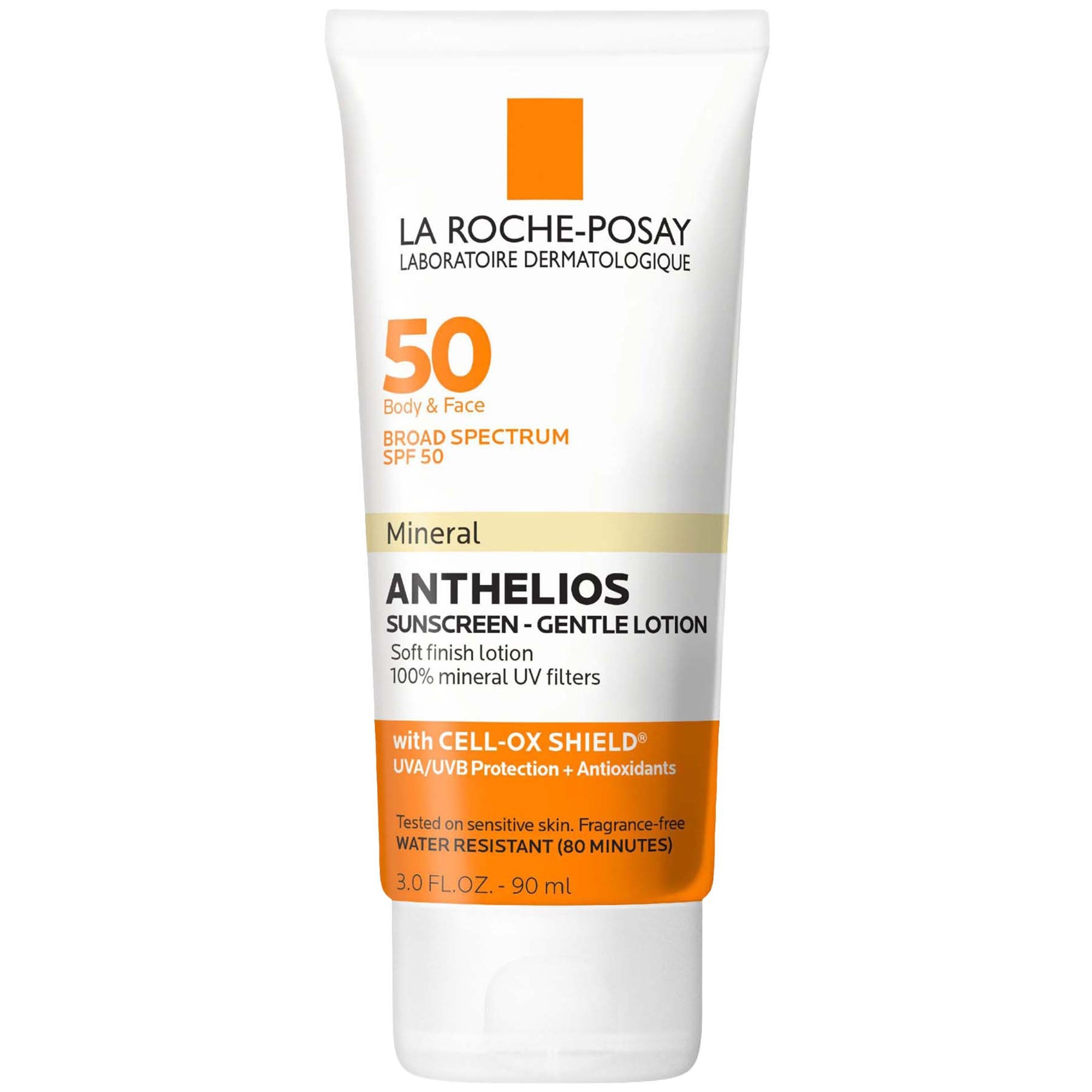
La Roche-Posay Anthelios Mineral Sunscreen SPF 50 Gentle Lotion

2. La Roche-Posay Anthelios Mineral Sunscreen SPF 50 (Gentle Lotion)

A 100% mineral lotion using titanium dioxide and zinc oxide, oxybenzone-free and oil-free, with the Cell-Ox Shield antioxidant complex for environmental defense. It is fragrance-free and sensitive-skin tested, which is why it is a long-standing dermatologist recommendation for reactive, redness-prone skin. This is the untinted Mineral version — note that the standard Anthelios lines (Melt-In Milk, UVMune) use chemical filters, so look for “Mineral” on the label.

  • Actives: titanium dioxide + zinc oxide (100% mineral)
  • SPF 50, broad spectrum · oxybenzone-free, oil-free, fragrance-free
  • Clean, not organic · tradeoff: untinted, so a faint cast is possible on deeper tones

Check price on Amazon →~$26–32

Best for early-aging & sun-damage concern
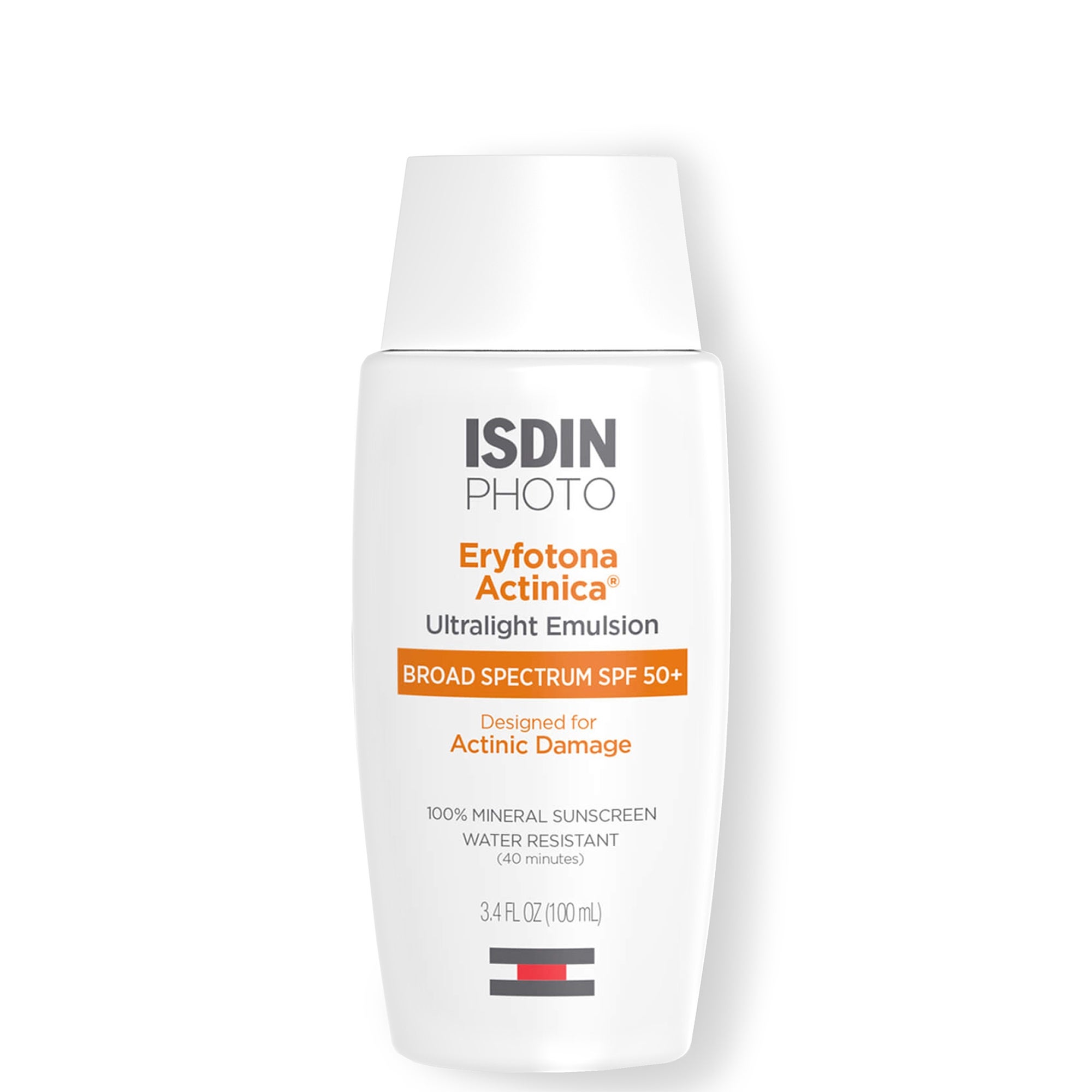
ISDIN Eryfotona Actinica Mineral Sunscreen SPF 50+

3. ISDIN Eryfotona Actinica Mineral Sunscreen SPF 50+

A lightweight milky emulsion built around zinc oxide, with two extras aimed at the early-aging concern: DNA Repairsomes (a photolyase enzyme studied for helping address existing sun damage) and vitamin E. It is fragrance-free, absorbs with minimal cast, and layers cleanly under makeup. A strong daily choice for skin focused on long-term photoprotection rather than coverage.

  • Active: zinc oxide (100% mineral)
  • SPF 50+, broad spectrum · DNA Repairsomes + vitamin E
  • Clean, not organic · tradeoff: higher price; protection, not coverage

Check price on Amazon →~$60–73

Best invisible finish — no white cast, all skin tones
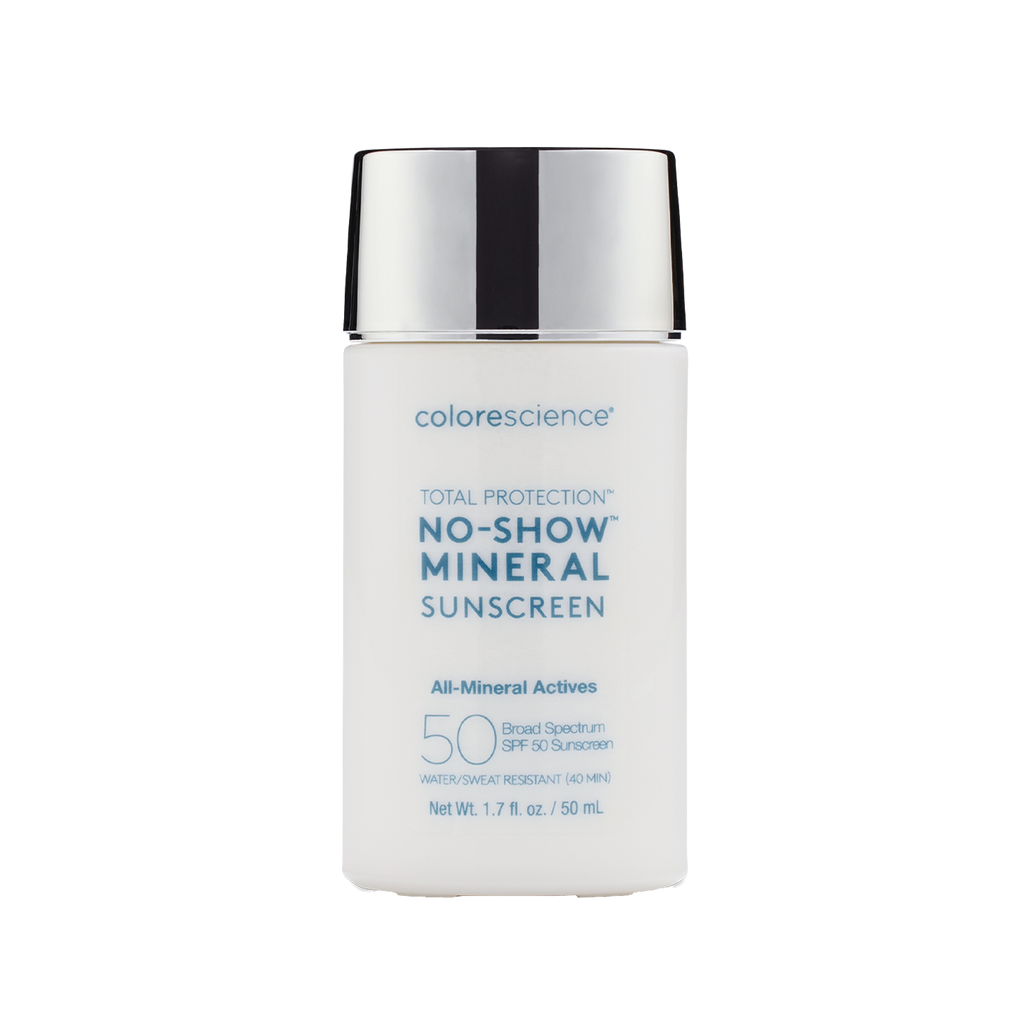
Colorescience Total Protection No-Show Mineral Sunscreen SPF 50

4. Colorescience Total Protection No-Show Mineral Sunscreen SPF 50

A 100% invisible all-mineral formula built around zinc oxide, engineered to disappear on every skin tone rather than leaving the pale film mineral SPFs are known for. A strong daily pick for medium-to-deep complexions that want physical-filter protection without a cast. The tinted Sunforgettable siblings add iron oxides if you prefer a sheer tint and extra visible-light defense.

  • Active: zinc oxide (100% mineral)
  • SPF 50, broad spectrum · 100% invisible finish · water-resistant
  • Clean, not organic · tradeoff: higher price band; untinted

Check price on Amazon →~$48

Best for very reactive / allergy-prone skin & best value
Vanicream Facial Moisturizer with Mineral Sunscreen SPF 30

5. Vanicream Facial Moisturizer with Mineral Sunscreen SPF 30

The value anchor for skin that reacts to almost everything. It is free of dyes, fragrance, parabens, lanolin, and formaldehyde-releasers, which is why allergy-prone and eczema-prone skin tolerates it so well, and the filters are zinc oxide and titanium dioxide only. Plain, no-frills, low irritation risk, and the lowest price in this lineup.

  • Actives: zinc oxide + titanium dioxide (mineral only)
  • SPF 30, broad spectrum · doubles as a daily facial moisturizer
  • Clean, not organic · tradeoff: untinted, functional texture

Check price on Amazon →~$13–16

Best minimal-ingredient, certified-organic option
Badger Daily Mineral Face Sunscreen SPF 30

6. Badger Zinc Oxide Mineral Face Sunscreen SPF 30

About as short an ingredient list as mineral SPF gets, which is why it suits the INCI-reader: clear non-nano zinc oxide in a certified-organic base of sunflower oil and vitamin E, formulated as a lightweight face sunscreen. The honest cost is feel and finish, traded for a clean, high-zinc formula from a long-standing organic brand.

  • Active: clear non-nano zinc oxide
  • SPF 30, broad spectrum · certified-organic base · reef-conscious
  • Certified organic · tradeoff: a faint cast and a richer feel

Check price on Amazon →~$20

Best dewy-glow everyday serum
Well People Daygleamer Mineral Sunscreen Serum SPF 34

7. Well People Daygleamer Mineral Sunscreen Serum SPF 34

A serum-textured mineral SPF for skin that wants a dewy finish instead of a matte one. Non-nano zinc oxide is blended with niacinamide, aloe, and antioxidant oils for a glow that does not read chalky, and it is EWG Verified, silicone-free, and non-comedogenic. A comfortable everyday option.

  • Active: non-nano zinc oxide
  • SPF 34, broad spectrum · niacinamide + aloe + antioxidant oils
  • EWG Verified · tradeoff: the dewy finish can read shiny on very oily skin

Check price on Amazon →~$26

Best fragrance-free, organic-leaning value
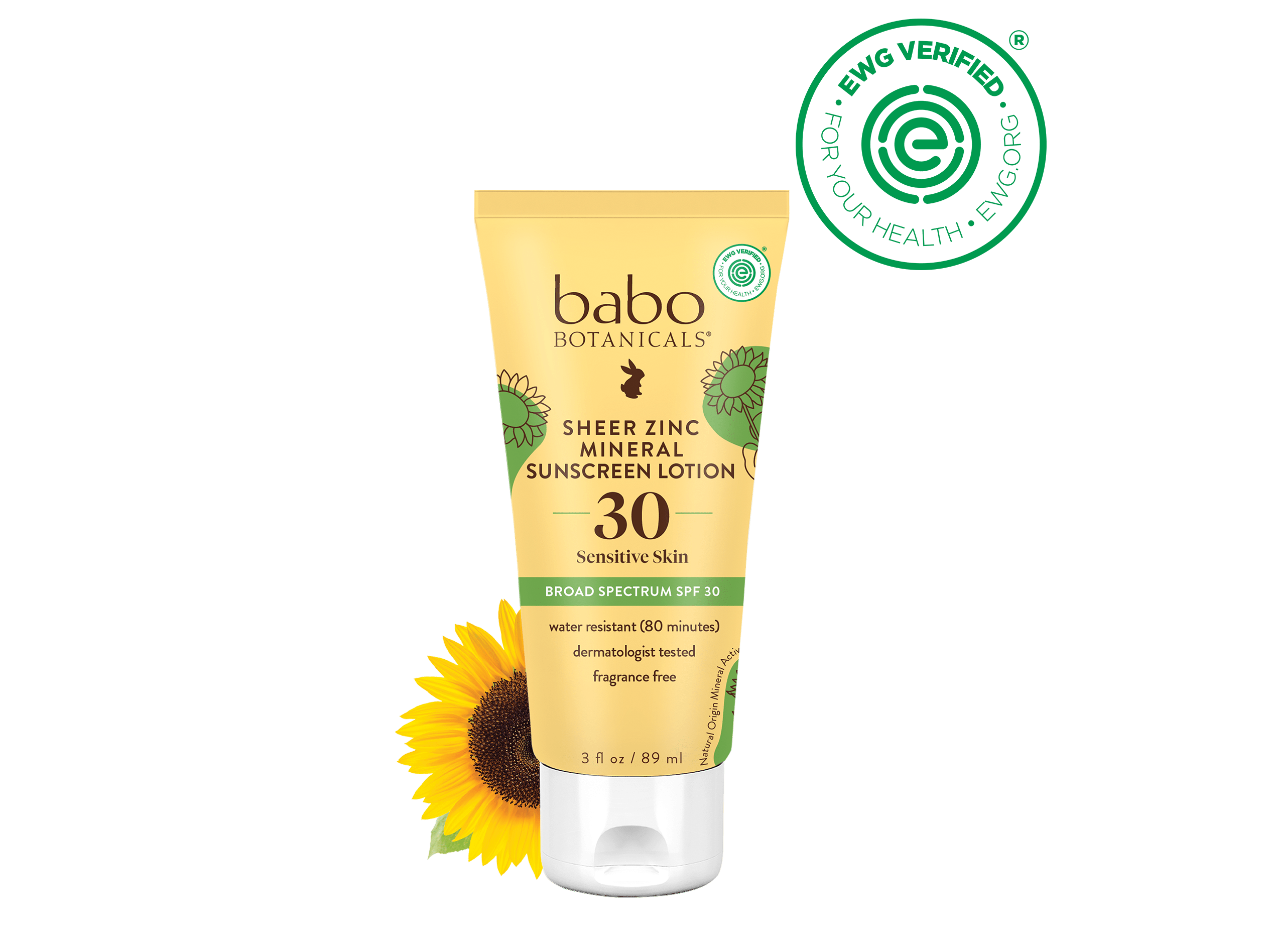
Babo Botanicals Sheer Zinc Mineral Sunscreen Lotion SPF 30

8. Babo Botanicals Sheer Zinc Mineral Sunscreen Lotion SPF 30

A fragrance-free, plant-based lotion built for sensitive and eczema-prone skin, with non-nano zinc oxide and a roughly 70-percent-plus organic content base. It is vegan and reef-conscious — a dependable organic-leaning pick without a luxury price.

  • Active: non-nano zinc oxide
  • SPF 30, broad spectrum · fragrance-free, vegan, reef-conscious
  • ~70%+ organic content · tradeoff: a slight cast, matte feel

Check price on Amazon →~$18

Frequently asked questions

What’s the difference between mineral and chemical sunscreen?
Mineral sunscreens use zinc oxide and titanium dioxide, which stay on the skin’s surface and scatter and absorb UV. Chemical sunscreens use filters like avobenzone, oxybenzone, octinoxate, and homosalate, which sink into the skin and absorb UV through a chemical reaction. For sensitive and reactive skin, the mineral route is usually the lower-irritation choice, and in 2019 the FDA named zinc oxide and titanium dioxide the only two filters it currently classifies as safe and effective without more data.
Why does mineral sunscreen leave a white cast, and how do I avoid it?
Zinc oxide and titanium dioxide are naturally white, so they can leave a pale or grey film, most visibly on deeper skin tones. To reduce it, choose a tinted or invisible formula, apply in thin layers and let each one set, or pick a sheer formula built with well-dispersed particles. A faint cast at first usually softens within a few minutes as the formula settles.
How do I reapply mineral sunscreen over makeup?
You cannot rub a cream over makeup without smearing it, so reapply with a format that layers on top. A mineral SPF powder dusted on with a brush, or a mineral SPF setting spray applied generously, both refresh protection without disturbing your base. Aim to top up every two hours of direct sun, and more often if you are sweating.
Is mineral sunscreen better for rosacea or redness-prone skin?
For many people with rosacea it is the easier sunscreen to tolerate, because mineral filters stay on the surface and tend to sting less than chemical filters on a reactive barrier. UV is also one of the most documented triggers for facial flushing, so dermatologists routinely include daily broad-spectrum SPF in a redness-aware routine. Look for fragrance-free, alcohol-light formulas, and a skin-tinted option can reduce the appearance of redness while you wear it. Sunscreen does not treat rosacea; it is one supportive part of a routine.
Is mineral sunscreen reef-safe?
Reef-safe is a marketing term with no legal definition, so always read the INCI. Non-nano zinc oxide and titanium dioxide are generally viewed as more reef-friendly, while oxybenzone and octinoxate are the two chemical filters tied to coral harm in lab studies and banned from sale in Hawaii and Key West. If reef impact matters to you, choose a non-nano mineral formula and confirm there is no oxybenzone or octinoxate in the list.
What does non-nano zinc oxide mean, and is it safer?
Non-nano means the particles are larger than 100 nanometers, so they rest on the skin rather than forming a fine, inhalable dust. The inhalation question only applies to loose powders and aerosol sprays, not to creams and lotions, where the particles are bound in the formula. For most shoppers the takeaway is reassurance: non-nano zinc oxide is the most-studied, longest-used form, which is why it appears on so many sensitive-skin labels.

Related reading: Eminence Organic Skin Care · uneven tone & dark spots.

Disclosures. This article contains affiliate links to Amazon (tag: davidgakshtey-20); OSC may earn a commission at no extra cost to you. The Eminence pick is a brand we carry directly and is not an affiliate link. Content was produced with AI assistance and reviewed by our team. Always patch-test a new sunscreen if your skin is sensitive, and follow the directions on the label.

Best Organic & Mineral Facial Sunscreens for Sensitive Skin Read More »
Refreshed hero image for: Fine Lines, Wrinkles, and How to Treat Them at Home

Fine Lines, Wrinkles, and How to Treat Them at Home

Everyone worries about aging and the appearance of fine lines and wrinkles, and understandably so. But is anti-aging really the right term? If we’re not aging, then we’re dead, and if we’re dead, then we have MUCH bigger problems than fine lines and wrinkles!

Anti-aging is really a fight against time, but the truth is that we should be evolving with time, rather than fighting against it. Age does, after all, come with experience and wisdom, and in order to grow old gracefully we have to accept that our faces will change as we do. However, it’s understandable that everyone wants to ensure that they’re always looking like their best self by minimizing the signs of aging. It’s not about fighting every single line and wrinkle, but it’s about feeling better overall.

What are fine lines and wrinkles?

Technically, there is no difference between a fine line and a wrinkle. They are the same thing. A wrinkle is a crease, ridge or fold in the skin, and at best, a fine line is a more superficial version. But that doesn’t make them any less upsetting for those of us who don’t want them!

What causes our skin to age?

The skin is made up of several layers. At the very top is the epidermis, which is a thin layer on the top of your skin in which cells travel upward in a 28-day cycle to replenish.

Beneath this is the dermis, which is the cushion of the skin and has three main components: elastin, glycosaminoglycans (GAGs), and collagen. Elastin is what gives your skin and the muscles of your face elasticity, while GAGs include hyaluronic acid, which gives your skin hydration and plumpness.


It’s collagen, however, which has the strongest impact on how we age. Collagen is what gives our skin firmness, but after we hit our mid-twenties, collagen production decreases by one percent per year. By the time we reach our 90s, our bodies are producing almost no collagen at all, and so we become extremely wrinkled.

This is intrinsic aging, because it is an inevitable part of the cycle of life, and a result of the aging pattern determined by our genetics. Obviously, we cannot beat our genetics, and so we must accept this is just a fact of life, much like death and taxes!

However, this is only one form of aging. We also have to consider extrinsic aging. This is everything in the outside world that affects our skin: oxidative stress, pollution, sun exposure, smoking habits, alcohol intake and diet.

As we get older, all of these factors can lead to the superficial thickening of your skin, which can give you a leathery appearance and can emphasize wrinkles. It can also lead to certain types of pre-cancers, AKs, nonmelanoma skin cancers such as SECs, and basal cells. It also adds to a rough, uneven skin tone that will only get worse as you get older.

How do we prevent our skin from aging?

Prevention is the most important thing you can do to minimize how fast your skin is going to age, both intrinsically and extrinsically. You might be 15 and reading this thinking it won’t happen to you—but the truth is, you’re not invincible. Eventually, time will catch up with you, and the best thing you can do is act now to limit the damage.

Sun protection

So how do you limit the effects of aging? Well, the first and most important thing you can do is use proper sun protection.

The sun will always take a toll on your skin. UVA and UVB are the two sources of UV light that are directly linked to aging and sunburn, so the best thing you can do is to properly protect your skin from them. No matter the weather, you should use proper sun protection, 365 days a year.

Your baseline should be to use SPF 30 products. SPF 30 gives you 97% protection, which is a good baseline for day-to-day life. However, if you live in a particularly hot and sunny climate, or you spend a lot of time outdoors, you should take this into consideration and use SPF 45 or higher. You also want to ensure that you have both UVA and UVB production in your products to make sure that you’re getting as much protection as possible.

Sleeping habits

It might be difficult, but you should try and sleep on your back as much as possible to prevent forming folds on your face while you sleep that will turn into wrinkles. Sleeping on a silk pillowcase will also help limit the signs of aging, as they have less resistance and so have less traction on your face.

Diet

Diet is a really important part of looking after your skin. You want to keep your protein levels up, because protein contains the building blocks of collagen, and so will help boost your collagen production more than a supplement will. So, make sure you’re including a lot of eggs, fish, and other high protein foods in your diet. The Journal of Dermatology has also published research suggesting that avocado oil increases collagen production, so you may want to consider adding this to your diet.

You also want to ensure that you’re eating food that is rich in antioxidants. This includes leafy greens, blueberries, mangos etc. Antioxidants will help limit the signs of aging, and keep your skin in the best shape you can. You don’t have to completely overhaul your diet and cut out all sugar and carbs, but try to enjoy them in moderation.

Lastly, you need to make sure you hydrate! Being properly hydrated will give your skin some proper plumpness. You should be aiming for two and three liters of water a day, which is six to eight full glasses. 

Ultimately, the most important thing is that you try your best to make healthy changes for your benefit.

Organic Skin Care

Barrier repair through proper skincare is also essential to protecting your skin from the signs of aging. There are a multitude of ingredients for you to look out for in your products that will help hydrate your skin and stimulate collagen production.

Hyaluronic Acid

Hyaluronic acid is one of the most well-known skincare ingredients for hydration. It’s a hydrating humectant used in a wide range of skincare products, and is very popular for helping hydrate your skin. However, it can be inflammatory and reactive, so you should be wary of including it in every step of your skincare routine.  

Glycerin

Glycerin is an underrated hydrating ingredient that is relatively cheap and included in a vast number of products. It’s a nonirritating humectant that draws in water and gives your skin a firmer, more plump appearance instantly.

Urea

Urea serves a dual purpose. It’s both a humectant that absorbs water, and a good keratolytic, meaning that it’s going to get rid of the dead superficial skin cells. So, depending on the concentration of your urea product, it can make a big difference.

Anything less than 10% is a moisturizing urea. Between 10 and 20%, it is a moisturizing keratolytic. Above 20%, and it will just break up the superficial dead skin.

This is good, because not only does it clean, but it also helps to smooth your skin. The combination of natural aging and sun damage can create a thickening of the superficial epidermis, enhancing the appearance of fine lines and wrinkles. Urea helps smooth this out, and hydrates the skin to reduce the appearance of wrinkles.

Beta-Glucan

Beta-glucan is one of those underrated ingredients. Some studies indicate that it may be more hydrating than hyaluronic acid, as it holds onto water and prevents transepidermal water loss.

Vitamin C Serum

Vitamin C is an antioxidant and a necessary ingredient in the production of collagen. It’s important to include products high in Vitamin C in your daily routine to both protect your skin from future damage, and help your skin repair existing damage. You may also want to consider taking a supplement to help boost this even more.

Alpha-Hydroxy Acids

Alpha-hydroxy acids such as glycolic acid, the smallest AHA out there, have been shown to boost collagen production and can penetrate the skin more deeply than other products. This is why exfoliating is really important, as it helps open up the pores for products to be as effective as possible.

Retinols

Retinols and retinoids have been tried and tested in stimulating collagen production. As retinol becomes more popular, it’s becoming easier and easier to find products that include it. It’s particularly useful as a serum around the eyes to help promote collagen production and reduce the appearance of fine lines.

At home devices

There are a number of at-home devices on the market to help in your antiaging journey. LED lights are particularly popular, but you must remember to do your research as not all light sources are created equally, and some will be more effective than others.

Microcurrent devices such as the NuFace and the Ziip are also popular, but you have to be very consistent in using them. You have to use them every single day to see results, so be sure that you’re ready for the commitment.

Wrapping up

Hopefully, you’ve learned a lot about what causes signs of aging, such as fine lines and wrinkles, and what you can do to prevent them. Ultimately, it’s important to remember that you can never truly eradicate the signs of aging—but it is possible to ensure that you’re always putting your best self forward.

Fine Lines, Wrinkles, and How to Treat Them at Home Read More »
Refreshed hero image for: Organic Skin Care for Mature Skin [ People Over 40 ]

Organic Skin Care for Mature Skin [ People Over 40 ]

Caring for your skin is essential at any age. However, people with mature skin have an entirely different set of considerations than our younger counterparts. These differences mean we need an organic skin care routine just for people over 50.

How Mature Skin is Different

It’s easy to say that mature skin is different. However, to find the best organic skin care for people over 50, we need to understand its differences precisely. Then you can use this information to develop the best routine for you.

Hormone Shifts

Both men and women experience significant hormone shifts around or before age 50. Among other changes, this affects collagen production, which causes the skin to lose strength.

Decreased Cell Turnover

Processes within your body slow down over time, and that includes your skin cell turnover. That means your skin cells are active longer, and you do not gain new skin cells as quickly.

The Moisture Issue

For many, aging also means significantly drier skin. This change is caused by a combination of lower oil production, sun damage, and decreased cell renewal.

Increased Skin Sensitivity

You may also experience increased skin sensitivity as you age. Skin is thinner and has less ability to heal itself from the damaging ingredients.

Ingredients to Look for in Organic Skin Care Products

Fortunately, for most of us, companies are examining organic skin care for people over 50 as the general population ages. There are many ingredients you can introduce to your skin that help combat the signs of aging.

It’s important not to mix too many of these ingredients, as that can trigger a skin stress reaction. Find the one or two items that work for your skin, and then spread them out in your routine for maximum benefit.

Retinol

Retinol is part of Vitamin A, and using it decreases the signs of aging in the skin. Retinol increases collagen production, which strengthens skin. This choice improves skin color and texture.

Niacinamide

Niacinamide is a variety of Vitamin B, and scientists are still theorizing all the benefits of this ingredient. Niacinamide contains two precursor ingredients for skin healing and may promote the protective lipid layer over your skin.

Peptides

Peptides are chains of amino acids, which your skin can use to create other compounds. Depending on your product choices, using peptides can result in healthier looks, firmer skin, or fewer breakouts.

Vitamin C

Humans cannot produce Vitamin C in our bodies, but it is a vital ingredient in all tissue repair. That includes your skin, where it increases collagen production, thickens skin, and even helps protect skin from UV rays.

Antioxidants

Antioxidants are essential to helping skin repair itself and help minimize visible damage. Additionally, some antioxidants help the skin produce vital compounds.

Hyaluronic Acid

Hyaluronic acid is a popular skincare ingredient right now. It can alleviate dry skin, improve skin appearance, and speed up wound healing. Much more information about Hyaluronic Acid.

Healthy Organic Skin Care Routines for Mature Skin People Over 40

Developing an organic skin care routine for people over 50 requires understanding the complex changes. This routine also requires adaptation, as all skin over 50 is different, and you will experience further skin changes.

Organic Morning Skin Care Routine for Mature Skin People Over 40

Cleanse

Since sleeping does not result in as much debris, you can choose to do this with warm water instead of a product. If your skin needs something more significant, try to use a creamy product that does not contain alcohol.

Serum

Serums are concentrated ingredients that help your skin. You can find many of the beneficial ingredients we talked about earlier in this article as serums.

Organic Moisturizer

A good moisturizer is a key to keeping your skin healthy. Moisturizer provides liquid to support all your skin’s processes, and it helps seal everything under it against your skin so more of it is absorbed.

Organic Oil

Since your skin is drier, you can add oils without worrying as much about the balance. You can get a variety of oils, so experiment with a few to see what works for your organic skin care routine for people over 50.

Organic Sunscreen

Sunscreen is an essential organic skin care step for people, whether they are over 50 or not. Sunscreen prevents most of the damaging UVA and UVB rays from hitting your skin, which in turn prevents sun damage.

It’s important to note that sunscreen makeup is different from sunscreen. A good sunscreen evenly distributes and protects. You need at least 30 SPF for daily use.

Evening Organic Skin Care Routine for Mature Skin

Makeup Remover

If you choose to wear makeup, it’s important to remove that at the end of the day. Try to use the gentlest product you can find for this.

Cleanse

When doing organic skin care for people over 50, keeping moisture on the skin is crucial. We recommend using a creamy cleanser or a cold cream to remove the debris of the day.

Serum

Morning and evening serums can be different, and we recommend that they are. The evening is when most people use healing serums like retinol to help their skin regenerate overnight.

Moisturizer

Moisturizer is a key ingredient overnight for skin regeneration. It seals your chosen serum in and then assists the natural regeneration processes that happen while you sleep.

Organic Oil

Nighttime oil is an optional addition if you want to add more beneficial ingredients. You should be careful while selecting an oil. You need one that will not interact with your serum choice and cause your skin issues.

The Exfoliation Trick

Exfoliation is an essential part of organic skin care for people over 50 since it exposes the younger cells underneath. Using a brush before showering is a great way to stimulate the skin and remove dead skin cells without the risk of drying your skin.

How often you should exfoliate depends on your skin. Some people over 50 can do it as little as once per week, while others need to do it every other day.

What to Do If You Have a Skin Reaction

You have two options if you have a skin reaction. You can stop using the product entirely, or you can drop the frequency of the product. Sometimes using a product only two or three times per week will provide you with the skin benefits and mitigate any reactions.

Wrap Up

Organic skin care for people over 50 looks different than it does for younger people. We must pay more attention to product selection and how our skin reacts so that we can continue to look as young as we feel.

Organicskincare.com is here to support organic skincare product lovers of all ages in their quest to find the perfect products that help their skin look amazing.

Organic Skin Care for Mature Skin [ People Over 40 ] Read More »

Refreshed hero image for: Organic Skin Care Tips and Favorite Organic Skin Care Ingredients

Organic Skin Care Tips and Favorite Organic Skin Care Ingredients

It’s not uncommon to be concerned about the signs of aging skin.

These include wrinkles, sagging, and discoloration. While there’s no proven treatment or strategy to completely reverse skin aging, there are some things that you can do that will benefit the health of your skin.

Watch what you eat

First and foremost, focus on what you put into your body just as much as what you put on your skin. With regard to nutrition and aging, one phenomenon that’s been well studied is the formation of advanced glycation end products and their effect on your skin.

Advanced glycation end products accumulate as we age and explain a lot of the diseases of aging, not only wrinkling and decreased elasticity of the skin, but also cataracts, heart disease, and diabetes.

Glycation occurs when a sugar molecule like fructose or glucose binds to a protein. This generates an advanced glycation end product that’s inflammatory and can damage collagen in the skin.

Advanced glycation end products can either be produced endogenously, as a result of high blood sugar levels, or consumed exogenously in the foods that we eat. These end products crosslink the collagen and elastic fibers in our skin and lead to wrinkles and decreased elasticity, as well as sagging and discoloration.

Unfortunately, advanced glycation end products are highly stable and almost impossible to eradicate.
Common sources of advanced glycation end products include packaged crackers, brown colas, sugary donuts and, unfortunately, barbecue grill meats. Endogenous glycation can occur as a result of high blood sugar levels from eating a lot of sugary or processed foods. These inflammatory advanced glycation end products are absorbed by the gut. It’s estimated that glycation of collagen in the skin occurs at about 3.7 percent per year. Diets high in processed, sugary foods can increase the rate of glycation.

Reduce Sun Exposure

Besides watching your diet, be aware that ultraviolet radiation can increase the rate of glycation of collagen in the skin.

Ultraviolet radiation is the number one culprit in aging our skin. Sun exposure damages elastin and causes loss of collagen synthesis. This leads to drooping of the jaw line, wrinkles, discoloration, and thickening of the skin. But most importantly, beyond cosmetic concerns, ultraviolet radiation causes skin cancers.

Of course, you can’t just stop going outside.

Make sure you apply a broad-spectrum, SPF 30 or higher sunscreen to your face and other exposed areas. Don’t forget to apply sunscreen to your neck and ears, as these are common sites of aging as well as pre-malignant skin cancers. Donning a broad-brimmed hat and long sleeves with a tight weave can also provide protection from ultraviolet radiation. Exercise in the early morning and avoid going outdoors between the hours of 10 a.m. and 4 p.m., as this is when the sun is most intense.

Consider a Retinoid Cream

In addition to daily sunscreen use, probably the best-studied cream for anti-aging is a retinoid. A retinoid is a vitamin A derivative that boosts collagen production, increases skin cell turnover, decreases oil production, breaks up clogged pores, and can improve the overall texture of your skin. Ask your doctor or health care provider for a prescription.

When starting a retinoid, it’s important to follow the directions carefully. Irritation is a common side effect. Start with a small amount and be patient as you ease yourself into consistent use.

Retinoids should be applied to a freshly washed face in the evening before bedtime, as they can become unstable when exposed to UV light. Apply a moisturizer following application of the retinoid to decrease irritation of the skin. Remember, topical retinoids are not recommended for women who are pregnant, nursing, or contemplating conceiving.

Consider Cosmetic Procedures

Finally, be smart about what cosmetic procedures you choose. And as I said, while nothing can completely reverse the clock on aging, these choices can help slow down the rate. First of all, try a peel. As you age, your skin turnover rate decreases. Getting a peel can help exfoliate the skin and make it appear brighter and more lustrous. A chemical peel is a deeper process that does the same thing and may also boost collagen production.

You may want to find out if you’re a candidate for laser resurfacing. It’s a relatively new procedure that actually increase collagen production and improve the look of aged skin. Resurfacing can improve skin texture while minimizing wrinkles, discoloration and old acne scars.

Keep It Simple And Be Consistent

In terms of anti-aging skincare, consistency is key, not cost or quantity of products.

In addition to starting every day with a protective sunscreen, make sure you wash the makeup off of your face at night. As we sleep, the skin turns over, renewing and restoring itself from the cares of the day. As we age, the turnover rate slows, so don’t increase the work your skin has to do by leaving a thick layer of makeup on.

You don’t need an expensive, over-the-top skin care regimen to take care of and promote youthful skin. You just need a healthy diet, consistent sun protection and cleansing habits, and maybe a retinol cream to boost collagen production. These simple, organic methods can reduce the effects of aging on your skin.

Organic Skin Care Tips and Favorite Organic Skin Care Ingredients Read More »

Refreshed hero image for: 10 Tips For Organic Skin Care In Your 20s

10 Tips For Organic Skin Care In Your 20s

We mostly focus on prevention and maintenance.

1 Sun Protection

When it comes to preventing aging, the number one thing at any age, but especially in your 20s, is wearing sunscreen and protecting your skin from the sun. The vast majority of external aging is due to exposure to ultraviolet radiation.

Ultraviolet radiation from the sun penetrates the deeper layers of the skin and chews up the collagen there. So, if you’re not wearing sunscreen in your 20s, get on that now. I also heavily encourage the use of sun-protective clothing, like broad-brimmed hats, long sleeves, and not staying out in the sun too long. These are things that will really add up over your lifetime and reduce the visible signs of photo-aging.

Sun protection is not just a summer thing or a sunny day thing. Incidentally, UV is around all of the time, and cumulatively over a lifetime, that adds up and increases the visible signs of photo-aging, things like wrinkles, modeled pigmentation, and sagging skin. So even if it’s cloudy out, that’s not an excuse to not protect your skin from the sun.

2 Wash Your Face

Cleansing the skin of the face is important to do on a daily basis. The face and neck is the most exposed to environmental stressors, things like pollution and allergens. You also need to remove sunscreen, makeup, and cosmetics at the end of the day. If those things stay on your skin, they can cause damage throughout the night.

When we sleep at night, our skin goes to work repairing some of the damage done throughout the day. If you still have garbage on your face in the form of pollutants, allergens, leftover makeup, etc., it distracts your skin from the real healing work, and promotes the formation of free radicals that can age your skin. If you have an underlying skin condition like acne or eczema, these things left on the skin can aggravate those conditions as well.

On the other hand, it’s really easy to go overboard with cleansing. Using a harsh cleanser or cleansing too frequently can strip your skin of its natural lipids and disrupt the acid mantle of the skin barrier, and therefore make you predisposed to dry skin and irritation.

The key is figuring out a cleansing method and frequency that works for you. Some people with oily skin do just fine cleansing their skin twice a day. They like to wash their face in the morning to remove some of that shiny sebum from the surface of the skin, and they never have issues with dryness. Others, like myself, with drier skin may do better only cleansing once a day.

No matter the frequency, pay attention to the cleanser that you’re using. You really want to pay attention that your cleanser is not leaving your skin feeling squeaky clean. That is basically a sign of a harsh cleanser that is stripping the skin barrier, which can lead to a lot of dryness and irritation and disrupt the microbiome of your skin. Ditching your cleanser altogether is also not a good idea. Strike a balance that works for you, but make sure you have some degree of cleansing on a daily basis.

3 Exfoliate If Needed

There is a chance you can ignore the need to exfoliate. Beauty ads often stress exfoliating, which can give people in their 20s a lot of anxiety because they don’t know where to start.

There are a lot of different exfoliants out there. There’s chemical. There’s mechanical. But in your 20s, there’s a good chance you don’t really need to focus on exfoliating. People with certain skin conditions, like acne, may benefit from it; but exfoliating can also lead to clogged-up pores and acne flare-ups. Some people benefit from consistent use of products like salicylic acid, a chemical exfoliant that focuses on those oily surfaces that cause acne.

People with a dry skin condition called keratosis pylorus have trouble exfoliating dry skin; it stays around the pore and they get these little dry, red bumps. They actually benefit from consistent use of an alpha hydroxy acid moisturizer to soften that dryness and help it exfoliate. So, some people do benefit from using an exfoliant, but not everybody needs to be using one.

If you don’t have these conditions, don’t worry about exfoliating. When you cleanse the skin, you’re exfoliating to a certain extent by encouraging the sloughing of those skin cells naturally.

4 Moisturizing

Moisturizers are really important to apply to the skin after cleansing because they help aid in skin barrier recovery and help reduce what’s called trans epidermal water loss that ultimately leads to dryness. Moisturizers also help in in restoring the acid mantle and facilitating an overall healthier skin.

Certain moisturizers are especially important for people who have an underlying skin condition, like eczema or acne or rosacea, because all a lot of these diseases have an underlying component to them that has to do with an impaired skin barrier. Plus, these conditions are often treated with medications whose side effects include dryness, irritation, burning, and stinging. Using a moisturizer along with these medications reduces those side effects and ultimately yields better results.

5 Vitamin C Serum

Vitamin C, if you’re not familiar, also goes by the name Ascorbic Acid. It is an antioxidant that, when applied topically to the skin, has been shown in small studies to improve collagen production, reduce damage due to ultraviolet radiation exposure, and reduce free radical production.

Ascorbic acid is a very nuanced and finicky ingredient. In my opinion, using a vitamin C serum is absolutely not necessary at any age. It’s a matter of personal consumer preference. We do not have studies that actually show that using a vitamin C serum ultimately reduces the signs of photo-aging. You can make the argument that it would be beneficial to introduce it in your 20s, but in my opinion, we don’t have the data to say that it makes a long-term difference.

6 Retinol

Retinol/vitamin A is one treatment on which we do have significant data demonstrating its efficacy for reducing the burden of sun damage and photo aging, and helping your skin deal with ultraviolet radiation. Retinoic acid, a.k.a. TRED, is the retinol/vitamin A form that has been around the longest, so we’ve been able to best demonstrate its anti-aging benefits.

Trentino in retinoic acid is only available by prescription, but we do have studies that suggest that using an over-the-counter retinol also has anti-aging benefits, it just takes longer to start working. Down below, I’ll list some over-the-counter retinol and vitamin A dappling products that can help with acne control.

People in their 20s and 30s often ask me how to convince your doctor to prescribe Retno for anti-aging. Many doctors have reservations about prescribing it for cosmetic reasons, especially in young people, because they’re liable if you have an adverse reaction.

If you do want to incorporate a topical vitamin A, using retinol over the counter, consistently and long term, can offer some long term advantages.

The biggest game-changer in producing ultimate results is going to be sunscreen and sun protection. But the other thing that matters is your lifestyle.

7 Diet

Your diet makes a huge difference in the health of your skin. Ultimately, your skin care doesn’t matter if you have a crappy diet.

People who eat fruits and vegetables have a better ability to combat the damaging effects of ultraviolet radiation on the skin. It takes more sun to damage their skin than somebody who isn’t getting the carotenoids, vitamins, and minerals from fresh, whole fruits and vegetables.

Don’t fear the sugars found in fruits and vegetables. Find those that you enjoy eating and try to get a variety. Make sure that you incorporate healthy fats into your diet, things like nuts, seeds, avocado, to help with the lipid barrier.

Stay away from sugary processed foods, they have a high glycemic index, which translates into the increased formation of advanced glycation end products in the skin. Think of it as chewing gum on your collagen fibers and things like that—basically clumping up due to sugar. These glycation end products contribute to wrinkle formation and the darkening of the deeper layers of the skin with age. Additionally, if you have acne, eating sugary foods can spike your insulin levels, which promotes oil production and causes acne flare-ups.

I’m not going to tell you to never eat cookies or cake or candy or sweets that you enjoy. But eat a balanced diet and try not to gravitate towards sugary processed foods or convenience foods. Things that come out of a window are generally not the best for us. They’re fine once in a while, but make sure that you are eating healthy foods, ideally cooked at home. That eventually will show up on your skin for sure.

8 Exercise

No, you don’t have to be an athlete. Just make sure that you get some cardiovascular exercise a few times a week at least, and generally try to move more. It really makes a difference in the health of your skin and your skin’s ability to handle free radical damage.

Exercise ultimately reduces total body inflammation levels and improves circulation, which translates to healthier, more radiant skin. If you have acne or any other inflammatory skin condition, the reduction in inflammation that comes with consistent exercise will help those conditions.

9 Sleep

Getting eight hours of sleep is probably one of the best things that you can do for your skin long term. When we sleep, certain hormones have released that impact the ability of the skin to regenerate.

If you don’t sleep adequately, you don’t give your skin enough time to properly recover. Plus, if you’re over-tired, your body is going to release more stress hormones that further impair your skin function.

In my twenties, it was all the rage to subsist on very little sleep. If I could go back in time and tell my younger self something, it would be this. Even though people are not stressing it, it is very important. I wish I had done it sooner, if you form poor sleep habits in your teens and twenties, it’s going to be harder to correct when you get wiser. I know this firsthand because I’ve been working on it myself for many years now.

10 Fewer Skin Care Products

No magazine, infomercial, or beauty editor is going to tell you this. You don’t need seventeen products to keep your skin healthy. Focus on cleanser, moisturizer, and sunscreen, and stay consistent with those on those three things. That’s perfect. Once you dial that in, that’s all you really need to be doing to keep your skin healthy

Yes, some products can improve some of the visible signs of photo aging and help make your skin look a little bit better, a little more glowing, less transient. But your lifestyle choices are going to carry you long-term. The fewer things you put on your skin, the better.

For example, because if I prescribe a patient one eczema cream, the likelihood of them using that one cream consistently is pretty good. If I prescribe them two creams, the likelihood of consistent use drops significantly. This is why cosmetics companies make combination creams. You can use each individual ingredient, but your compliance will go down tremendously. It’s not sustainable. Fewer products equal better consistency, and it’s ultimately better for counter space and your wallet as well.

Those are my top 10 tips for skin care in your 20s. One final note: enjoy your 20s. It was a very stressful time for me, but it was also a very fun time. Enjoy life, and smile more. Your future self will thank you!

Facebook
Twitter
LinkedIn

10 Tips For Organic Skin Care In Your 20s Read More »

Refreshed hero image for: The Best Organic Trending Ingredients For 2023 – For All Skin Types

The Best Organic Trending Ingredients For 2023 – For All Skin Types

If you’re looking for a comprehensive list of organic skin care ingredients to include in your skin care routine, look no further! We’ve covered some organic ingredients according to each skin care concern. So, you can skim through the whole list; without worrying about your skin type! So, look through these organic skin care ingredients to see which will work best for your skincare regimen.

Organic Ingredients For Oily / Acne-prone skin Type

The first one is for those having oily and acne-prone skin. The reason why we have merged those is that both ingredients are pretty much related to each other. The list of ingredients mentioned below will help both oily/acne-prone skin.

Green tea

Green tea is one of the vibrant ingredients one must look out for on a skin product. The active ingredient in green tea, EGCG, absorbs sebum, which is one of the causes of oily skin.

Cucumber water

Cucumber water can help soothe your skin from the inside out. Keeping your skin hydrated will flush out toxins and maintain a healthy complexion. It contains pantothenic acid and vitamin B-5 effective in treating acne.

Garlic extracts  

Garlic extracts are powerful antibacterial, antiviral, and antiseptic properties derived from allicin. It also kills any acne-causing bacteria. As a result, this gives your skin more nutrients and improves blood circulation.

Bergamot essential 

It has antibacterial and anti-inflammatory characteristics that help with acne and pimple therapy. That gives the advantage of a slow aging process and purifying of the skin.

Strawberry seed oil 

Strawberry seed oil safeguards your skin from UV radiation and wrinkles reduction. Strawberry seed oil also fights off free radicals, improving metabolism and moisture retention. They boost the look of your skin because they consist of gamma-tocopherol, linoleic, and oleic fatty acids.

Grape

Are you bothered by dark spots and wrinkles? The grape is the organic ingredient that protects your skin from UV radiation and free radicals, which can create wrinkles and dark spots. It is a soothing tool for rejuvenating the skin as a whole.

Yarrow oil 

Yarrow oil provides you with a wide range of healing advantages. Yarrow oil is ideal for greasy, acne-prone skin because of its astringent qualities.

Willow Bark Extract 

Willow Bark Extract Provides gentle exfoliation for more radiant skin. It Helps:

  • To reduce acne and excess oil.
  • Reduce signs of aging.
  • The appearance of wrinkles.
  • Refine pores.

It helps alleviate conditions such as psoriasis, eczema, and rosacea. That Keeps skin looking firm and youthful.

Related: 10 Simple Organic Ingredients For Acne-Prone Skin- To Change Your Acne Care Routine For Good!

organic skin care ingredients
Image On Freepik

Organic Skin Care Ingredients For Dry Skin Type

The causes of dry skin are usually:

  • Sun damage
  • Harsh weather.
  • Using artificial products.

Therefore, we have listed some of the best ingredients your skin care products needs!

Coconut

Emollient is a potent antioxidant and a unique characteristic of coconuts. It keeps your skin hydrated and enhances your skin.

Cupuacu butter. 

It is also a super-emollient that hydrates your skin. It acts as an elasticity restorer and gives antioxidants and hydration.

Cocoa butter 

Cocoa butter has a high fatty acid content, which helps with skin nourishing, elasticity enhancement, and keeping the skin hydrated. Additionally, it hydrates the skin and eliminates scars and other bothersome skin imperfections.

Avocado oil

Avocado oil is high in nutrients and antioxidants, which help to keep your skin supple and hydrated. It contains omega-9 fatty acids and plant sterols, which can nourish and moisturize your skin.

Organic Prunus Armeniaca Kernel Oil 

Organic Prunus Armeniaca Kernel Oil is high in antioxidants. Vitamin E with nutritious fatty acids (oleic acid 54-74%, linoleic acid 12-35%). It is a powerful all-purpose emollient with nourishing and moisturizing effects (a high oleic oil, which is effective for dry skin types), easily absorbed into your skin.

Goji berry

It is a perfect non-irritating remedy for your skin dehydration. It contains high Vitamin C that supports tight and firm skin and also helps promote skin elasticity and radiance.

Cranberry seed oil.

Cranberry seed oil is abundant in antioxidants, which protect the skin from environmental stressors. Having lovely skin is always easy with omega-3 to omega-6 fatty acids.

Our Score

Easy, lightweight hydration. Hyaluronic acid locks in moisture to plump, soothe, and support elasticity — for silky, smooth skin.

Organic Skin Care Ingredients For Sensitive Skin Type

Aloe leaf

Aloe leaf hydrates the skin by providing enzymes, antioxidants, and vitamins A and C. It also has anti-inflammatory glycol-proteins and soothing properties that improve hydration and natural moisture to the skin, as well as treatment for skin irritation.

Gotu Kola extracts

You will acquaint yourself with a massive skincare deal if you look out for this unique ingredient in a product. It works perfectly for varicose vein treatment. As a result, it improves blood circulation and speeds up your skin healing process.

Horsetail extracts

Horsetail extracts are another potent antioxidant and anti-inflammatory ingredient that promotes anti-aging, acne, rapid irritation, burns, and rashes. It results in rapid healing and recovery of wounds.

Red raspberry

It also has potent antioxidant and anti-inflammatory properties that protect and treat sensitive skin prone to inflammation and redness. It is high in vitamins, phenols, and hydroxyl acids, all of which help to maintain beautiful skin.

Sunflower oil 

Sunflower oil contains powerful nutrients that help to fight all skin care issues. It is a repellant against wrinkles, acne, redness, inflammation, and other skin problems. It contains Vitamins-E with emollient, skin softener, and skin moisturizer.

Flaxseed oil

It treats and combats chronic skin issues such as dermatitis, eczema, acne, and many others. The existence of fatty acids helps to reduce inflammation and promote skin beauty.

Patchouli essential oil

It is an active remedy for body odor, inflammation, water retention, constipation, and wound. It also promotes weight loss and aids the wound-healing process and the growth of new skin.

Calendula oil

Calendula oil has antifungal, anti-inflammatory, and antibacterial properties that might make it useful in healing wounds, soothing eczema, and relieving diaper rash. It also serves as a disinfectant.

Organic Juglans Regia Seed Oil

This ingredient contains three essential components of walnut oil that help protect the skin which is:

  • Antioxidant.
  • Antibacterial.
  • Anti-inflammatory. 

Antioxidant Action of Organic Juglans Regia Seed Oil(H3):

It can help you look younger by reducing the appearance of lines and wrinkles.

Antibacterial Action of Organic Juglans Regia Seed Oil(H3):

The antibacterial components can aid in the protection against skin pathogens, which are constantly the body’s largest and most exposed organ. 

Anti-inflammatory Action of Organic Juglans Regia Seed Oil(H3):

Finally, the oil’s anti-inflammatory properties help relieve chronic conditions such as

  •  Eczema.
  •  Psoriasis.
  • Inflammation.  
  • Allergic reaction.
Top Rated
Sensiderm Cleansing Milk
9.7

Sensiderm Cleansing Milk is a very light creamy texture emulsion that restores the hydro-lipidic barrier and neutralizes PH balance.

Best Seller
Super Soft Cleanser
9.5

Cleansing milk with valuable oils. Gently cleanses and prevents the skin from drying out. PH-neutral and excellently suitable for removing eye makeup.

Editors Choice
Comfort Cleansing Milk
9.1

Comfort Cleansing Milk is a mild cleanser that washes away dirt, make-up, and other impurities while soothing and softening. 

Organic Skin Care Ingredients That Work For All Skin Types

Sweet Almond oil

Sweet Almond oil is an organic skin moisturizer fortified with Vitamin E to provide a solution that irritates your skin. The benefits of Sweet Almond oil also include 

  • Healthy skin cells.
  • Protection against UV radiation damage.
  • Vitamin A to combat acne.
  • Smoothening of the skin.

Raw sugar cane

Raw sugar cane is a perfect antidote for skin imperfections. The Alpha Hydroxy Acids (AHA) in sugar cane serve as :

  • Anti-aging remedy.
  • Reduce blemishes
  • Combat acne 
  • Keeping the skin exfoliated.

Jojoba oil

Using skincare products containing jojoba oil is one natural way to keep your skin warm and glowing. It contains Vitamins E and B-complex, which are effective for skin repair and nourishment.

Organic Skin Care Ingredients For Aging Skin

Aging skin is very common at a young age. Therefore, essential nutrients are necessary that absorb inside the skin. These ingredients must be organic for a long-term effect on your skin.

Geranium essentials

Geranium essentials is an effective cosmetology ingredient that is beneficial for:

  • Removal of dead cells.
  • Reducing aging signs.
  • Rehydrates wrinkled skin.  
  • Improving regeneration of your skin.

Sweet Orange oil 

This substance provides antiseptic, anti-inflammatory aroma-therapeutic benefits and works perfectly to keep the skin texture beautiful, clear, and smooth. It also reduces acne, aging, and other unpleasant skin condition.

Sesame seed oil

It has potent antibacterial properties that help to detoxify the body, improve flawless skin, and treat irritated and damaged skin. It also reduces the appearance of aging in the skin.

Resveratrol

Resveratrol contains a powerful antioxidant that reduces the signs of aging. It protects the skin from free radical damage to enhance your skin.

Kiwi seed oil

Kiwi seed oil is high in Vitamin C, which helps to prevent wrinkles, acne, dark spots, and other skin problems. It is also high in vitamins A and E and fatty acids, which help to improve skin elasticity.

Orange

Orange contains a high concentration of citric acid. It exfoliates your skin, removes acne, and improves your radiance. It is also effective against oxidants that can help hydrate the skin, and delay aging. In addition to it, it boosts healthy collagen production.

Carrot root

Carrot root provides powerful antioxidant properties that help in soothing irritated or dry skin, wrinkles, stretch marks, and other cell-degenerating problems. It is rich in Vitamin-A and many other vitamins that can help boost skin smoothness.

Sweet cherry

Sweet cherry contains an antioxidant called anthocyanins which combat free radicals that can increase the aging process on the skin. It is rich in Vitamins A, B, C, and E, keeping your skin radiant and healthy.

Blueberry seed oil 

The blueberry seed oil contains potent polyphenol antioxidants that can help fight against free radicals that can damage the skin. It is rich in phytonutrients and fatty acids to moisturize, regenerate skin cells and improve skin elasticity.

Sage leaf

It contains enough antioxidants to regenerate the skin and combat free radicals, which cause wrinkles, fine lines, and aging. It contains Vitamin A and calcium, which help your skin to regenerate.

Malic acid

It is one of the most effective skincare antidotes which combat skin aging, acne, and dead skin. It is also effective to keep your skin hydrated, soft, and beautiful.    

Natural Retinol stimulation 

Natural Retinol stimulation can help to improve skin elasticity and collagen production. Retinol is ideal for targeting fine lines, wrinkles, dryness, pigmentation, and sunspots with brightening power as it plumps, smooths, and firms the skin while also evening out tone and texture.

Rosehip Oil

Rosehip oil is high in Vitamin A, which is known to help fight age spots and wrinkles; therefore, rosehip oil is excellent for anti-aging. It also contains molecules small enough to penetrate deep layers of the skin. As a result of it, it increases moisture and collagen levels while decreasing wrinkles and fine lines.

Grapefruit Extract 

Grapefruit Extract contains potent against oxidants and protects the skin from damage caused by the sun, condenses wrinkles, and promotes the texture and health of the skin.

Organic Elderberry Seed Oil

Organic Elderberry Seed Oil is effective against oxidants and soothes irritated or dry skin. This oil is popular among those who have aging skin because of its moisturizing and regenerative properties. Elderberries are rich in anti-aging and free-radical fighting properties, keeping your skin glowing and healthy for a long time. It is the ideal skin tonic, especially for mature, dehydrated skin. Elderberry also aids in the prevention of distressing skin conditions such as breakouts, boils, and scars.

Retinol

Retinol is a vitamin A derivative, so it makes sense that these are natural oils also rich in vitamins, like rosehip and carrot seeds. Rosehip oil is exceptional in regenerating and healing the skin while increasing collagen production and skin elasticity.

Organic Skin Care Ingredients For Pigmentation

Honey

It contains a natural lightening agent that works perfectly for spot removal and skin pigmentation. It has potent antioxidants, antiseptics, and antibacterial agents that fight acne, dehydration, and loose skin. Honey acts as a pore cleanser and enhances skin beauty.

Apple juice

Apple juice is an essential ingredient that contains vitamin C, which helps to keep the skin looking young. It also has potent malic alpha-hydroxy acids, phytonutrients, and phenols, which prove effective against oxidant activity to promote soft and beautiful skin.

Lemon

Lemon has powerful antioxidants which restore the luster of the cluster or sagging skin, rejuvenate the dull complexion, and stimulates the body to fight against harmful bacteria.

Acai berry

Acai berry is rich in antioxidants and phytochemicals and a good source of essential fatty acids, which help with skin radiance.

Rosehip fruit

This potent ingredient comes from the rose plant. It contains a lot of Vitamin C and essential fatty acids, which help to brighten the skin. It also contains antioxidants, which help to prevent free radical damage and hyperpigmentation.

Pineapple enzymes

It contains enzymes known as Bromelain and other components like potassium, magnesium, and phosphorus to fortify the exfoliation benefit and brighten the skin. The effective properties also provide help to exfoliate dead skin cells.

Pomegranate

Pomegranate contains potent antioxidants that protect the outer layer of skin while rejuvenating skin cells in the inner layers. It also improves skin radiance and the overall healing process.

Olive oil

It contains potent antioxidants that protect against the damage caused by free radicals. It contains vitamins A, D, E, and K, which help to rehydrate and soften the skin while improving its beauty.

Shea Butter

Shea Butter has moisturizing, anti-inflammatory properties. It contains vitamins A and E, which keep the skin healthy and protect it from harmful ultraviolet rays.

Stone Crop plant

Stone Crop plant helps reduce pigmentation and lighten the complexion. It also assists in regeneration, firming stressed skin, toning the epidermis, moisturizing, helping reduce signs of aging, and calming sensitive skin.

Organic Bearberry Extract

It is very effective at lightening skin pigment imperfections such as age spots, sun spots, Melasma, and blotchy skin tone for a more uniform, brighter complexion. Bearberry also increases cell turnover and is high in antioxidants.

Organic Rosa Canina Fruit Oil 

Though it says fruit oil in its name, the rosehip fruit contains seeds that contain the oil. So this one is the same as Rosa Canina Seed Oil, or Rosehip Oil, known for its high omega fatty acid content (linoleic acid – 51%, linolenic acid – 19%, and oleic acid – 20%) and skin-regenerative properties.

It hydrates, moisturizes, helps exfoliate, and helps brightens skin. It helps boost collagen formation, helps protect against sun damage, reduces hyperpigmentation, It helps reduces scars and fine lines.

Rosehip oil is rich in essential fatty acids and antioxidants, which are integral for tissue and cell regeneration in the skin. Also, this oil is considered a folk remedy for wound healing, scar and fine-line reduction, and other purposes. Rosehip oil contains antioxidants such as vitamins A, C, and E. These vitamins have been shown to collaborate in the fight against visible sun damage. They may also help to prevent photoaging.


From now on, ditch the harsh chemicals, and switch your skin care to organic skin care ingredients! They are safe and work for all skin concerns without irritating your skin. Also, they clean up your pores and you get a flawless clearer face. More hydrated and glowing than ever!

Top Rated
Bright Skin Moisturizer SPF 40
9.7

Bright Skin Moisturizer Broad Spectrum SPF 40 Sunscreen hydrates, and protects the skin during sun exposure to prevent premature aging while helping even out the skin tone.

Best Seller
Skin Lightening Serum
9.5

Visibly brightens and evens skin tone. Fades dark spots, age spots, skin discoloration, uneven skin tone, sun spots, freckles, and acne scars. Can be used on the face, hands, chest, knees, elbows, and other sensitive skin areas.

Editors Choice
Brightening Fluid
9.1

Brightening Fluid helps boost clarity and protects the skin from free-radical damage. W. Complex, which features vitamin C and azeloglycine, stimulates collagen production and reduces the acceleration of melanin pigments to minimize dark spots.

The Best Organic Trending Ingredients For 2023 – For All Skin Types Read More »

Refreshed hero image for: 10+ Homemade Organic Face Mask Recipes To Brighten Your Skin

10+ Homemade Organic Face Mask Recipes To Brighten Your Skin

Let me tell you! A spick and span, radiant, flawless, and simply glowing skin is your (and everyone’s) dream skin. According to a survey from 2019, 82.5% of women agree that;

Brighter and glowing skin is the most important characteristic that defines beauty!

Well, let us be honest. Almost every one of us has tried products that glow skin at some point in our lives. But, prolonged use of such products may not be possible for many of us, especially if you have sensitive skin that doesn’t do well with chemicals in products. And that is where organic and homemade face masks for glowing skin come to the rescue!

Let us explore the best face masks for glowing skin at homeall DIY, straight from your kitchen, but ridiculously effective!

Ingredients that promise glowing skin

Lemon

This tangy citrus is a powerhouse of antioxidants such as vitamin C. There is a long list of what lemon can do to your skin! 

  • Lemon fights free radicals
  • It boosts up collagen in your skin
  • Lightens or bleaches your skin (thanks to citric acid, which is an AHA)
  • Thus, it glows your skin, lightening dull areas
  • Fades dark spots
  • Removes excess oil and sebum (say bye-bye acne!)

Best For; Oily Skin

That makes it a holy grail when it comes to glowing skin naturally.

face masks for glowing skin

Tomato

Here is what makes tomatoes one of the best face masks for glowing skin;

  • It gently exfoliates dead skin. Thus, newer skin cells get up to the top! It is safer than many harsh exfoliators on the market.
  • Also, it reduces skin oil. 
  • No more clogged pores. As it gently removes dead skin, it also deep cleanses pores.
  • The flavonoids in tomatoes calm down irritated skin.

Best for; Sensitive skin, oily skin

tomatoes-face masks for glowing skin

Turmeric (my grand mum swears by it!)

Turmeric is a part of daily spices in Asia. You can find it everywhere without a hassle. The beauty of turmeric is that it counters inflammation on your skin. Also, it knocks down the free radicals-the root cause of dull skin.

  • Turmeric may help with acne. That is because it soothes your skin against breakouts
  • It may reduce dark circles and puffiness under your eyes by improving the blood flow 
  • Also, turmeric protects your skin from skin hazards outdoors (pollution, dirt, and grime)
  • Turmeric helps nourish dry skin and regulates sebum on your skin

Best for; All skin types (including sensitive skin!)


turmeric-face masks for glowing skin

Honey

Organic honey is a great source to balance, hydrate, and brighten your skin. Here is why you should use honey for glowing skin:

  • Intensely moisturizing. Honey hydrates your skin without leaving it oilier. It hydrates your skin from the top layers all e way up to the deeper dermis!
  • It makes your skin look younger. Reclaim your youth with this natural, easy-to-use DIY skin care ingredient. Organic honey is rich in antioxidants that repair skin, control the appearance of fine lines, and prevent wrinkles, by and large, under the eye area.
  • Soothes and calm your skin. Organic honey calms down a stressed-out skin. Why? Because it is a rich source of vitamins that act against skin redness and swelling. Some authorities believe it to be effective for eczema and psoriasis too.
  • Honey regulates skin pH. Surprisingly, honey is a source of organic bacteria that balance your skin and optimize its pH. Thus, it makes your skin stabilize its natural barrier. Also, this prevents skin breakouts, making your skin supple and flawless.
  • Fights against bacteria. The use of honey as a natural antiseptic is not new. The anti-microbial properties allow it to fight your skin against bacteria.
  • Honey fades acne scars. That is because it accelerates the skin healing process. 

The incredible effects of honey on the face also depend on its sources. Shop for organic honey here!

Best For; All skin types (mainly drier skin)


honey-face masks for glowing skin

Yogurt

Yogurt is a rich probiotic that restores your skin to default settings! Here is how;

  • Yogurt contains lactic acid. Lactic acid is a gentle exfoliator. It removes dead skin without irritating, leaving your skin more supple, glowing, and radiating.
  • Yogurt is full of probiotics that maintain the natural integrity of your skin barrier. No time for harmful bacteria to settle on and cause breakouts!
  • Also, it makes your skin glow by inhibiting the enzyme tyrosinase. This enzyme forms melanin. Melanin is what pigments your skin. Thus, when you stop it, you get lesser melanin (thus lightening your skin).
  • Yogurt also contains zinc and B vitamins. Both of them work well in fighting against free radicals.

Almond

Add them to your diet, apply them to your skin as a paste, or use almond oil; almond in every form does wonder to your skin. It is a storehouse of zinc, vitamin E, omega-3, and omega-6 fatty acids. 

  • Vitamin E nourishes your skin by fighting sun damage and environmental toxins, making it more supple, smooth, and radiant. Studies suggest that vitamin E reduces oxidative stress on your skin. 
  • Zinc heals your skin. It is a natural exfoliant, tons of which exist in almonds. Get rid of dull skin with this organic goodness of almonds, and rejuvenate your skin! Together, these antioxidants make your skin more youthful and; get that glam glow back.
  • Omega 3 and 6 fatty acids directly affect skin texture and glow. Here is how! Both of them work by reducing, guess what, melanin! Isn’t it surprising that simple kitchen ingredients inhibit your melanin and reduce pigmentation?


face masks for glowing skin-almonds

Aloe Vera

Aloe vera is a plant of a drier climate. Thus, it stores a lot of moisture in it. So, if you want to hydrate your skin naturally, try aloe vera face masks. 

Does aloe vera make my skin glow?

Yes! Aloe vera can make you glow. Also, it:

  •  lightens blemishes
  •  reduces under-eye dark circles
  •  moisturizes
  •  lessens skin puffiness
face masks for glowing skin-aloe vera

Face Mask For An Instant Glowing Skin

No time for a long day at a spa? We got you covered! Try out our best face mask for an instant glow to your skin in three simple steps:

Step-1: CLEANSE

Make sure you cleanse your face before you apply a mask to it. Here is how you do it:

  1. Take a tablespoon of wheat flour.
  2. Add one tablespoon of Greek yogurt to it.
  3. Next, add a teaspoon of milk.
  4. Mix all of them to form a paste.
  5. Apply all over your face.
  6. Massage gently, and wash your face after about 5-7 minutes with cold water.

That cleanses your face thoroughly and prepares your skin for the next steps.

Step-2 EXFOLIATE

For an instant glow with a face mask, make sure you exfoliate your face before jumping to the final step.

  1. Take a tablespoon of brown sugar.
  2. Add two tablespoons of dry milk powder to it.
  3. Next, add a tablespoon of yogurt.
  4. Drizzle 3-4 drops of fresh lemon juice.
  5. That is it! Mix all nicely. Apply all over your face for about 8-10 minutes. Wash your face.

Step-3 FACE MASK

Ready for the final step? Here is a sweet and short face mask recipe that promises an instant glow to your face:

  1. Take a tablespoon of milk.
  2. Add one teaspoon of green tea leaves to it. Or you can open up a green tea bag and use it.
  3. Next, add a tablespoon of almond powder. Or you can grind a few almonds to form a fine powder (make sure there is no moisture in it).
  4. Now, take a vitamin E capsule and open it up with a knife, taking out the oil.
  5. Put in 2-3 drops of coconut oil.
  6. Combine well. Apply liberally all over the face and neck. Wash it with water after about 15 minutes. Make sure you let it completely dry. And ta-dah! The best face mask for an instant glow is ready to brighten up your skin.

Homemade Face Mask for Glowing an Oily Skin

Here we have come up with a few of the best face masks for glowing an oily skin type, with these simple but super effective recipes:

Recipe-1

  1. Take one ripened tomato and blend it to form a puree.
  2. Next, add two teaspoons of pomegranate seed paste to it.
  3. Combine and apply to your oily face. Leave it for about 20 minutes before washing.

Tomatoes are natural astringents that also control sebum production. Pomegranate seeds are a storehouse of antioxidants. Moreover, they shrink the appearance of pores.

Recipe-2

  1. Take a bowl of yogurt/curd.
  2. Add two tablespoons of aloe vera gel.
  3. Next, add two tablespoons of cornmeal to it.
  4. Sprinkle some turmeric powder on it. 
  5. Combine the ingredients well. Rinse with a warm towel or lukewarm water after about 15 minutes.

Tip: Use it as a face mask for glowing skin or body scrub!


Recipe-3

  1. Take one cup of curd. 
  2. Add a tablespoon of honey.
  3. Combine 5-6 drops of rosemary essential oil.
  4. Next, add one tablespoon of jojoba oil.
  5. Mix everything well. Apply nicely all over your face. Wash your face after 20 minutes.

It is one of the best face masks for glowing oily skin, controls sebum, reduces acne breakouts, and lessens signs of aging.


Recipe-4

  1. Take two tablespoons of Bentonite Clay.
  2. Add two tablespoons of yogurt to it.
  3. Next, add a pinch of turmeric to it. 
  4. Top it up with 2-3 drops of tea tree oil.
  5. Combine to form a paste, adding a few drops of water if needed.

Bentonite clay heals skin enriched with antioxidants and minerals that repair acne-prone skin. Also, it keeps acne-causing bacteria at bay. Yogurt is a natural source of lactic acid that gently exfoliates and clears skin which is why it works best for oily skin.

Recipe-5

  1. Take three tablespoons of cocoa powder (unsweetened).
  2. Add a tablespoon of fresh cream.
  3. Put in two teaspoons of honey.
  4. Pour one-fourth cup of milk (you can use skimmed milk) into it.
  5. Mix well to form a paste. 

All these ingredients work well to keep your skin oil production in check! Additionally, this is one of the best homemade face masks for dull skin, as it reduces blemishes and fades pigmentation.

Homemade Face Mask for Glowing Dry Skin

Recipe-1

  1. Take three tablespoons of orange juice.
  2. Add two tablespoons of aloe vera gel to it.
  3. Mix well. Apply it and let the goodness of the mask absorb in. Wash it off after 15 minutes.

The citrus juice is rich in vitamin C that makes your skin glowing by reducing signs of aging, pigmentation, and sunburns. Aloe vera is a natural moisturizer that wouldn’t let your skin dry out!

Recipe-2

  1. Take half a tablespoon of kaolin powder.
  2. Add four tablespoons of any organic face cream.
  3. Combine well, adding a few drops of water if needed.

You can use this face mask weekly. Kaolin powder is a mild exfoliant, while face cream will help your skin lock in moisture.

Recipe-3

  1. Take a tablespoon of oats in a bowl.
  2. Put in one tablespoon of honey.
  3. Combine well with one-fourth cup of milk.
  4. Press and squeeze out the excess fluid, if any.
  5. Gently massage it on your skin in circular motions. Wash after 15-20 minutes with lukewarm water.

It is one of the best face masks to glow a dry skin and reduce itchiness and pigmentation.

the best face masks for glowing skin at home-oats face mask

Recipe-4

  1. Take one-fourth cup of carrot juice.
  2. Add two teaspoons of sour cream to it.
  3. Next, add one-fourth cup of cornstarch. 
  4. Mix all the ingredients well. Apply a thin layer to your face. Wash after ten minutes.

This DIY remedy brightens your skin and boosts up the glow. Vitamin A present in carrot juice takes care of all the layers of your skin by:

  • Preventing collagen breakdown (wouldn’t let your skin age or wrinkle)
  • Enhances skin texture
  • Lessen pigmentation
  • Protects your skin from sun damage

Homemade Face Mask for Glowing Skin with Turmeric

Turmeric makes one of the best homemade face mask recipes. Here is how you can make one;

Recipe-1

Key Ingredients

  • One teaspoon turmeric
  • Two tablespoons of chickpeas flour
  • A tablespoon yogurt
  • A teaspoon of honey
  • One teaspoon lemon juice (skip if you have dry skin)

Combine all the ingredients well. Apply to your face. Wash with plain water once it completely dries off. Use it 2-3 times a week for the best results!

Turmeric, with other natural ingredients, makes your skin radiant and glowy. Also, you will notice your skin to experience fewer breakouts. Thanks to the antioxidants present in turmeric!

Alternatively, you can try a homemade face mask for glowing skin with turmeric this way:

Recipe-2

Key Ingredients

  • A pinch of turmeric
  • Half teaspoon cucumber juice
  • One teaspoon of rose water

Mix well. Wait for 15 minutes. Wash with water without using soap. This face mask recipe is the best face mask for sensitive skin. All the ingredients used are proven to calm down a stressed-out skin!

Homemade Face Mask for Glowing Skin with Honey

Honey makes one of the best face masks for glowing skin! Here is a simple step by step guide to using a honey face mask for skin glow:

  1. Take a tablespoon of raw honey in a bowl.
  2. Add four tablespoons of jojoba oil to it.
  3. Mix well. Apply generously all over your face. Rinse off with plain water once it dries off.

This combo of honey with jojoba oil is simple and, at the same time, gives your skin a sure shot glow. That is because jojoba oil also glows and brightens skin.

Homemade Face Mask for Skin Glow With Aloe Vera

  1. Take two tablespoons of aloe gel.
  2. Add 6-8 drops of tea tree oil to it.
  3. Combine well. Slather on all over your face. Wash with lukewarm water as it dries.

Both of these ingredients promise skin glow. You can use it combo thrice weekly.

Here you go! We have given you a comprehensive list of the best face masks for glowing skin at home with organic ingredients (step by step). These homemade face masks are incredibly simple to make and, at the same time, highly effective too.

Which of these remedies suits you best? Speak your heart below!

10+ Homemade Organic Face Mask Recipes To Brighten Your Skin Read More »

Refreshed hero image for: A Science-Backed Organic Anti-Aging Skin Care That Dermatologists Swear By

A Science-Backed Organic Anti-Aging Skin Care That Dermatologists Swear By

Worried about age spots, sagging face with wrinkles, fragile, dry, and dull-looking skin? Your skin is the largest organ of your body and needs special care. Unfortunately, skincare is the most overlooked aspect of health. For more youthful and plump skin, you need a sound age-defying skin care. 

Get along as we craft for you the best organic anti-aging skin care – all science backed!

What happens to the skin as you age

Skin thickness, total fat, and moisture content of your skin reduce; as you age. The collagen and elastin turnover decreases too. That, in turn, causes the skin to lose its elasticity. Therefore, your skin may look dry, less plump, and sags.

As we age, our skin undergoes a number of changes. The most visible sign of aging is often the appearance of fine lines and wrinkles. While it’s natural to experience some level of skin aging, there are steps we can take to help keep our skin looking healthy and youthful. One important step is using organic skin care products. Read on to learn more about the benefits of organic skin care for aging skin.

Some Quick Links:

  1. Best Anti-Aging Products 
  2. Anti-Aging Facial Oils 
  3. Watch a Video
what happens as we age; the best organic anti aging skin care

How to prevent aging skin in the 30s

At this stage, your skin only needs prevention. So, you do not need specific anti-aging treatments. The skin care you do now will reward you in the future.

Always use sunscreen outdoors. Use sunscreen with an SPF of at least 30.

Ingredients to prevent aging skin in your 30s

Following are the ingredients recommended to prevent aging skin:

Glycolic Acid

Glycolic acid peels are chemical exfoliators. They are alpha-hydroxy acid and come from sugar cane.
Studies show glycolic acid to improve collagen synthesis, contributing to skin elasticity. Owing to its small molecular size, it penetrates deeper into your skin to give maximum benefits.

Use glycolic acid as an exfoliator twice weekly or as tolerated. Also, avoid glycolic acid if your skin is very dry or sensitive. However, you can use it with oily, combination, or normal skin.

Shop for Products With Glycolic Acid here!

Niacinamide or B3

Topical niacinamide improves skin texture, redness and fades age spots. Thus, use topical niacinamide for the best organic anti-aging skin care. 

You can use it in the form of a serum. Apply a few drops after cleansing and toning your skin. Also, use it before moisturizers so that they absorb well.

Shop for Niacinamide Serum here!

how to tighten under-eye skin

Vitamin C

Vitamin C can be used as a serum too. Vitamin C protects your skin against oxidants. Also, it reduces associated skin pigmentation.

Shop for Vitamin C serum here!

Vitamin C Serum; the best organic anti-aging skin care

How to prevent aging skin in the 40s

At this stage, the collagen level of your skin starts to decline. Moreover, cellular turnover may begin to reduce as well. Therefore, it is wise to opt for the best organic anti-aging skin care.

Use anti-oxidants to combat free-radicals induced damage.

Ingredients to prevent aging skin in your 40s

Salicylic Acid

Salicylic acid is a beta hydroxy acid. It is well known for its exfoliating properties. That explains its use in acne skin care regimens. But, clinical studies suggest the role of salicylic acid as an anti-aging ingredient as well. The use of 1% Salicylic acid:

  • Removes dead skin cells
  • Stimulates collagen and fibrillin layout
  • Reduces wrinkles depth

But, some people develop irritation with the use of salicylic acid. However, SA, when diluted with sodium hydroxide, yields similar results. That too without irritating skin in most of the people.

How To Use Salicylic acid?

You can use SA with the best organic anti-aging skin care products. These may include; serums or even cleansers.

Since salicylic acid is keratolytic. That is, it dissolves dead skin cells. Thus, it may cause your skin to be more sensitive to the effects of sunlight. So it is wise to use sunscreen with an SPF of at least 30 alongside. 

You can try Salicylic Acid Clarifying Pads as cleansers. They are the easiest ones to use on the planet.

the best organic anti-aging skin care; salicylic acid pads

Retinoids and Retinol

Are Retinoids And Retinol Same?

Retinoid and retinol are both derived from vitamin A. But, what is the difference between retinoids and retinol? Both of them are almost the same. However, they do differ in their potency. 

Retinols are a milder form of retinoids. On the other hand, retinoids are prescription medications. 

Both of them have a variety of implications in skin care. They accelerate cell growth. Also, the turnover of collagen and elastin enhances. 

Retinoids and retinol also treat sunlight-induced damage to your skin. Prolonged sunlight exposure damages skin in the following ways:

  • Initial skin thickening
  • Skin thinning due to chronic damage
  • Further exposure causes pigmentation and a loss of skin elasticity. 

So if you are looking for anti-aging skin care, retinol may seem promising. 

How to use it?

Use it at night; once you have cleansed your face. Next, moisturize your face. Do not forget your sunscreen in the daytime. 

You can use the best organic anti-aging skin care retinol creams available OTC. 

Potent Anti-Oxidant Serums For Aging Skin

The use of antioxidant serums will counter oxidative stress.

Shop for an organic antioxidant serum for aging skin here!

GM Collin Retinol Advanced Night Cream

Best Facial Oils for Aging Skin

Seabuckthorn Oil holds a special place in traditional medicine. 

Seabuckthorn oil prevents UVB-induced photoaging. It promotes collagen layout and reduces inflammatory markers, such as interleukins. That is how it prevents and treats skin aging.

Coconut oil has a wide variety of proven benefits. These include:

  • Locks skin moisture to soothe skin
  • Anticancer agent
  • Effective against Microbes
  • Potent anti-inflammatory ingredient
  • Mild analgesic properties

Rosehip oil “Rosehip oil has been shown to have high levels of vitamin A, lycopene, and beta-carotene, making it a good option for antiaging concerns,” says Dr. Shirazi. It can reduce the appearance of scars, fight inflammation and hyperpigmentation, and increase skin elasticity—all of which start to become more prevalent as we get older.

Argan oil nourishes skin with essential fatty acids like omega 3, 6, and 9, which strengthen the tissues in your skin and help to combat fine lines and wrinkles.

Olive oil is thought to be hydrating, as it contains squalene which helps to keep the skin moisturized and smooth,” says Dr. Garshick. “Olive oil can also help with antiaging as it serves as an antioxidant to help fight free-radical damage.” That said, he notes that as with all oils, it’s best used in moderation if you don’t want to run the risk of clogging your pores.

Avocdo oil According to research, avocado oil is “an excellent source of enrichment for dry, damaged, or chapped skin.” The same study found that the oleic acid in avocado oil helps to increase collagen synthesis, which helps your body grow new, healthy skin cells and leads to a stronger skin barrier and fewer fine lines and wrinkles. The ingredient has also got its fair share of healthy fats, which help to strengthen your skin’s lipid layer.

Almond oil According to research, avocado oil is “an excellent source of enrichment for dry, damaged, or chapped skin.” The same study found that the oleic acid in avocado oil helps to increase collagen synthesis, which helps your body grow new, healthy skin cells and leads to a stronger skin barrier and fewer fine lines and wrinkles. The ingredient has also got its fair share of healthy fats, which help to strengthen your skin’s lipid layer.

Rose oil maintains skin hydration. It also helps to regenerate skin cells and improve cell membrane functions. 

Lavender oil improves blood flow to your skin. That leads to enhanced skin elasticity.

Sandalwood oil suppresses inflammation in the skin cells. Besides, it restores moisture. That explains the role of sandalwood oil as one of the best organic anti-aging skin care ingredients.

Clary Sage oil prevents proteins and DNA from free radicals. Free radicals augment signs of aging. 

Other face oils to use for the best organic anti-aging skin care include:

Anti-aging eye cream

The skin surrounding the eyes is thinner than the rest of the face. Thus this delicate part is most prone to wrinkles. Studies prove that anti-aging eye cream reduces wrinkle depth. They can restore overall smoothness. So, it is imperative to add an eye cream to your aging skin care routine. 

For effective eye cream, look for the ingredients such as;

Niacinamide, peptides, carnosine, and anti-oxidants

Always use SPF 30 in the daytime alongside.

Read here to know about top tips for younger-looking eyes!

Nelly De Vuyst Eye Contour is an incredible product for anti-aging eye care. The key ingredients include Salmon DNA and allantoin.

A study suggests that salmon DNA promotes hyaluronic acid formation in the skin. That results in reduced moisture loss from the skin; and improves skin elasticity remarkably. 

Allantoin is a chemical found in humans and animals, also extracted from a shrub called comfrey. A study suggests that allantoin improves skin irritation. Thus, if your skin is irritated with skin care treatment and products, allantoin may help. Allantoin improves skin texture by promoting collagen layout. It reduces the appearance of wrinkles and fine lines. 

the best organic anti-aging skin care

You can also use Ilift Eye-Wrinkle Serum for fighting wrinkles around the eyes. It is a unique blend of organic extracts, bio-peptides, and hyaluronic acid. Thus, the combo is incredible for wrinkles, fine lines and gives a perfect moisturizing lift. All in one solution for your anti-aging eye care need in one place.

iLift Eye Wrinkle Serum

Furthermore, can continue with the ingredients mentioned under how to prevent; aging skin in the 20s. Remember what you feed your skin at this stage will pay you in the long run.

How to prevent aging skin in the 40s

Skin further sags, and wrinkles predominate. Moreover, the skin may be dry and dull-looking. At this stage, use the best organic anti-aging skin care, along with skin tightening devices.

Microdermabrasion

Microdermabrasion is a non-invasive cosmetic procedure. It involves the process of exfoliation that removes the outermost layer of skin. That is how it makes the skin more even in tone and texture. Also, it reduces the appearance of fine lines and wrinkles.

Facial massage

Facial massage is a technique that involves stimulating pressure points on your face and neck. You can do facial massages on your own or via a practitioner. The idea is to rejuvenate healthier skin by relaxing the muscles of your face. Also, massage improves blood flow to your skin, promoting happier skin.

Radiofrequency

Radiofrequency is a non-invasive procedure that targets the deeper layer of your skin. It involves heating your dermis with energy waves. With this method, the idea is to stimulate collagen production in your skin.

That is how you can reclaim a more youthful skin in your 40 and 50.

Continue with the use of ingredients mentioned above. Along with them, the use of hyaluronic acid is promising at this point.

A Few Words About Hyaluronic Acid

A younger skin retains moisture. That is a prime factor to differentiate it from older skin. Thus, the younger the skin is, the more pliable it is. Stress, radiations, injury, aging all contribute to moisture loss. Thus, nature has blessed our skin with hyaluronic acid.

Hyaluronic acid has a unique property of moisture retention. However, aging can cause lower levels of hyaluronic acid too. Thus it is wise to add hyaluronic acid to your skin care regimen. It can improve dry skin, making it firmer, and reduce the appearance of fine lines.

Read here to explore all the effects of hyaluronic acid on your skin.

Shop for hyaluronic acid serum here!

Hyaluronic Acid Intensive Hydrating Facial Serum

How to prevent aging skin in the 50s and beyond

The skin at this point may become visibly loosened and stretched. Also, blood vessels become prominent, as do wrinkles. Age spots and pigmentation are visible too.

Now, this is the time to limit the use of anti-aging skin care products. Otherwise, they may further irritate your skin.

Anti-aging essentials to use at this point include;

  • Eye care cream
  • Serum
  • Face oils

Simple Anti-Aging Skin Care Routine

To make the most of the best organic anti-aging skin care, you should follow the correct order of your skin care routine. That allows better penetration of products. Also, some products work better when applied after another.  

5 step anti aging skin care routine; the best organic anti-aging skin care

Step 1: CLEANSING

The first step of simple anti-aging skin care is to cleanse. Use low pH skin cleansers to protect your skin microflora from damage. That is how you can clear away all the dirt and grime and protect your skin’s natural barrier too.

Shop for Best Anti-Aging Facial Cleansers

Step 2: EXFOLIATE

Skin cells renew like other body cells. That is why you need to exfoliate at least twice weekly to get rid of dead skin cells. As a result, newer skin cells will take their place, making your skin look more plump and youthful.

A class of exfoliators called chemical exfoliators; works by inducing inflammatory changes. That, in turn, augments collagen turnover. Well! Isn’t it the holy grail you need for more plump skin?

Chemical exfoliators include alpha-hydroxy acids such as lactic acid and glycolic acid.

Shop for Best Anti-Aging Radiance Exfoliating Products

Step 3: SERUM

Vitamin C serums are potent anti-oxidants that work by promoting collagen layout in your skin. Furthermore, they reduce oxidative stress.

Shop for Best Anti-Aging Serums

Step 4: MOISTURIZATION

As mentioned earlier, aging leaves your skin drier and lustreless. That is, the total water content of the skin declines remarkably. Hence, you need the best organic anti-aging skin care moisturization. That will help you keep your skin hydrated; by preventing water evaporation from your skin.

Shop for Best Anti-Aging Moisturing Creams Products

Step 5: SUNSCREEN

UV rays contribute to aging skin by collagen breakdown. Also, UV damage causes skin thinning. Therefore, the use of quality anti-aging sunscreen is unavoidable. It is a primary step even when it comes to; preventing aging skin in the 20s or treating aged skin later.

You are never too late to start the use of an effective sunscreen. Studies show how a broad-spectrum sunscreen; can reverse aging skin over time.

Shop for Sunscreen Lotion here!

Tips For Aging Skin; What Dermatologists Recommend!

  • Be early to start a sound anti-aging skin care regimen. You may commence anti-aging skin care in your 20s. That way, you can prevent aging skin before it’s too late. 
  • Know what you eat. Add a lot of anti-oxidants to your diet. 
  • Maintain hydration. As you age, your skin loses its ability to retain moisture. 
  • Do not overdo exfoliation.
  • Always look for ingredients that help aging skin and choose anti-aging skin care products.
  • Cleanse before you go to bed. 
  • Use pillowcases that are either satin or silk instead of cotton to prevent sleep lines. Alternatively, you can use special pillows that do not cause sleep lines.
  • Quality sleep heals at the cellular level, your body in general, and your skin in particular. Therefore, you need at least eight hours of sleep; to prevent premature aging of your skin.

Home Remedies For Wrinkles

One way to make the most of organic anti-aging skin care is to try home remedies. All of the following home remedies for wrinkles and aging skin are research-backed and practical to use.

Aloe Vera

Aloe verais a simple organic skin care ingredient; that has numerous effects on the skin. Apply aloe vera gel directly over your skin especially, over under-eye wrinkles. Gently massage for a few minutes, and rinse away with water. 

A surprising study suggests aloe vera extracts to increase the synthesis of collagen and hyaluronic acid by two folds.

Another study proves anti-oxidant, anti-inflammatory, and skin regenerating properties of aloe vera. 

Egg Whites

Egg white reduces skin wrinkles by augmenting collagen synthesis. Take some egg white in a bowl, and give it a mix. Apply over your wrinkles, specifically the under-eye area. Next, wash it with cold water after it completely dies out.

A protective egg membrane is present between eggshell and egg white. This membrane is rich in proteins and bioactive peptides. The study also claims it to be even more promising.

Yogurt Face Scrub

Yogurt and other probiotics restore a lower skin pH. That allows the natural skin barrier to stabilize and the skin microbiome to flourish. Hence, include this simple ingredient for the best organic anti-aging skin care.

Take one-fourth cup of yogurt, and combine it with two tablespoons of gram flour. You can adjust the consistency by adjusting the amount of gram flour. Apply the scrub and let it dry. Rinse away with lukewarm water and pat dry.

Also, you can add some honey to it if you want.

Vitamin C, E, and Raspberry extracts

The aging face is dry, dull, and uneven in tone. Multiple factors such as radiation and oxidants contribute to this process. Therefore, to counter this stress, you need potent anti-oxidants.
Use vitamin C and E as anti-oxidants with effects against pigmented skin as a bonus.

Raspberry extracts have proven benefits to hydrate and revitalize your skin. Hence they specifically fight against wrinkles. That is what makes an aged face smooth and more radiant.

You can make a DIY raspberry face mask. Blend a handful of fresh raspberries in a blender. Add a tablespoon of honey and oatmeal to it and combine. Your raspberry fruit mask is ready to do its magic. Apply over cleansed face and neck for ten minutes and wash it.

Turmeric essential oil

Turmeric is well known to suppress inflammation. It counters oxidative stress and fights against microbes. Furthermore, a study shows that turmeric oil reduces ultraviolet radiation-induced signs of aging.

Turmeric essential oil is a whole medicine for your skin in itself. You can add a few drops of turmeric oil to your face mask and use it. Alternatively, you can use the best organic anti-aging skin care turmeric facial cleansers to serve the purpose.

Physiological changes of aging skin are bound to happen. What you can do is play your part. You cannot completely halt the process. However, with sensible skin care, you can slow the process. Choose ingredients and products that are proven to reduce the signs of aging. Your future self will love you for that. Never skip a broad-spectrum sunscreen. You will enjoy healthier and happier skin for years to come.

A Science-Backed Organic Anti-Aging Skin Care That Dermatologists Swear By Read More »

Refreshed hero image for: 5 Smart Ways To Get Rid Of Blackheads – Once And For All

5 Smart Ways To Get Rid Of Blackheads – Once And For All

Blackheads are dark, bumpy plugs that may appear on the face, nose, neck, back, or chest. Blackheads, otherwise called open pores or open comedones, are simply a collection of debris and dirt inside your pores that oxidizes with air to give it a black color and form blackheads.

If you have busted a gut for blackheads removal without success; hold on; we got you covered! Here we will dissect all the different ways to remove blackheads permanently!

So, Let’s get straight into it!

1-Pick ingredients that help with blackhead removal

Salicylic Acid

Yes, you guess it right! Salicylic acid is a superhero ingredient for acne (especially blackheads and whiteheads).

As the dirt, dead cells, and excess oil from your skin congests your pores, they block. When they interact with air, it oxidizes them. Thus, it makes them appear black, forming blackheads. And here is where the role of this face acid comes into play!

Several studies support the role of salicylic acid on your skin. In a nutshell, here is what it does for your skin:

  • It exfoliates your skin, which allows you to get rid of dry and dead skin cells. That, in turn, gets newer cells to the top of your skin. You get that glam glow back!
  • Break down comedones or, to put it simply, decongest your pores. Thus, you unplug your pores of all the gird to get a flawless look.
  • Also, help you get rid of mild acne and even prevent frequent breakouts. 
  • So, it soothes and reduces redness and calms your skin!
  • It is a good option for a chemical peel!

Thus, these effects of salicylic acid suggest how it does wonders for quick blackheads removal. 

With that said, wondering how much of this is enough to make it work. Well, a study suggests that:

Use 0.5 to 2% of salicylic acid, and yay! You can put an end to it!

Look for salicylic acid in:

  • Cleansers
  • Chemical Exfoliators
  • Spot Treatment Creams
  • Soaps

As a side note, it’s not just acne or blackheads that get away with salicylic acid. There are a ton of other skin conditions for which your derm may prescribe you salicylic acid, such as:

  • Teenage acne
  • Melasma (pigmentation)
  • Sun damage to the skin
  • Freckles
  • Lentigines

Tea Tree Oil

Well! Natural is always better. Tea tree oil is a natural essential oil that comes from its plant. 

Studies suggest that:

  • It reduces inflammation on your skin. Thus, it calms and soothes it. The same it does to hair follicles. Therefore, the pores are less congested.
  • It fights against bacteria, reducing the chances of pore swelling.

How much is enough? Well the study conducted; shows that 5% of tea tree oil gel; works well for blackheads.

Look for tea tree oil in:

  • Moisturizers
  • Face Scrubs

Witch Hazel

Another natural ingredient for blackheads removal is witch hazel. The way it causes blackhead removal is:

  • Deep cleansing your pores and unplugs them. That reduces the possibility of getting blackheads in the first place.
  • Also, it protects your skin by fighting free radicals.
  • It reduces swelling on your skin. Remember, inflamed skin is always prone to acne (including blackheads).

Look for witch hazel in:

  • Cleansers
  • Pore Strips
  • Toners

Glycolic Acid

Another face acid for blackheads removal! Glycolic acid, otherwise known as fruit peel, is an excellent exfoliant. That comes from sugarcane. It is a weak organic acid that removes dead skin from your skin, including ones that clog up your pores and form blackheads.

And, guess what! The small size allows it to get into your skin deeper enough, to dissolve all; the excess oil and sebum.

That may even prevent more blackheads form; in the first place. Sounds promising? Yeah, it is!

Besides blackheads removal, it does well for:

Glycolic acid comes from 1% up to 50% strength. So, how much glycolic acid should you use for blackheads removal?

Well, studies suggest that:

  • Use 30% or more to exfoliate your skin and decongest pores.
  • Use 15% or less to prevent pores from blocking.

Look for glycolic acid in:

balckheads removal with glycolic acid

Retinols

Vitamins everywhere! Retinols come from Vitamin A. Studies suggest that they work great for all types of acne, including blackheads. They:

  • Increase skin cell turnover. That is, it removes dead cells and boosts new cell growth. No chance for things to clog up!
  • Also, it prevents everything from clogging up pores (maybe microbes or excess oils).

Wonder what makes retinol so unique in removing deep blackheads? It is that they dive deep into your skin and aid blackheads removal effectively.

Also, as they get right into the dermis, they help you reclaim your youth by boosting collagen!

Use 0.25 to 1.5% of retinol to clear blackheads. However, if our skin is sensitive, try lesser strength first.

Look for retinoids 

  • Serums
  • Dedicated creams for blackheads removal

Since retinol increases cell turnover, it makes your skin more prone to sun damage. So, never forget to hit on your sunscreen when using retinol.

Use them in the evening before you hit the bed.

Also, do not use pore strips for blackhead removal when using retinol. Remember, your skin is delicate when you use retinol!

Now, let’s talk about many ways by which you can get quick blackhead removal.

2-Cleanse through your pores (with cleansing oils)

The core step to every skin care is cleansing. The same is true to getting rid of blackheads. 

But what if I tell you that you can remove blackheads by using cleansing oils? Yeah, I know. You may wonder how oil can help you against it when excess oils clogging pores are causing it in the first place.

Well, the answer is quite simple. The idea behind it is that like dissolves like.

So, here is what I mean.  

That is a nasty-looking blackhead.

As you apply cleansing oils to your dry face, it settles deep into your pores surrounding impurities. 

With gentle circular motions with your wet hands, oil emulsifies impurities, taking them along with it and clearing your pores.

Booyah! You did it!

blackheads removal

You can choose your cleansing oil as plant-based or synthetic cleansing oils. 

Plant-based cleansing oil, for instance, may include:

  • Sunflower Seed Oil 
  • Olive Oil

Synthetic oils may include:

  • Caprylic triglyceride
  • Isopropyl Myristate

So, if your skin reacts to plant-based oils, you can choose synthetic ones with fewer plant oils.

3-Exfoliate with comedolytics

Alternatively, you can get a quick blackheads removal using face acids, such as:

  • Salicylic acid
  • Lactic Acid
  • Glycolic acid

Yeah! You guess it right! These exfoliants will remove the dead cells and decongest your pores. Thus, they will remove blackheads (comedolytics) and will not let newer ones form.

4-Put on a face mask!

Face masks never get old! Here are our top picks for face masks that help with blackhead removal.

Charcoal Masks

Well, here are a few of the many reasons for which you can use a charcoal face mask to remove blackheads:

  • Activated charcoal adsorbs excess oils, sebum, and toxins on its surface. 
  • That pulls away gird, grime, and impurities, to give you a flawless look (and removing blackheads, of course!)
  • They also balance the natural oils of your skin.

Charcoal face masks work best for oilier, acne-prone skin.

Charcoal Mask Product to try

GM Collin Charcoal Mask comes from bamboo charcoal. The extensive charcoal formula removes micropollutants and refreshes your skin. Get an essence of clean, cleansed, and pure skin without blackheads.

DIY Charcoal Face Mask

To make a DIY charcoal face mask:

  • Take a teaspoon of charcoal powder.
  • Mix with brewed green tea goodness.
  • Add a tablespoon of clay powder.

Next, mix to get a fine paste. Apply liberally on your face or blackheads on your nose. 

Let it dry. 

Wash it with cold water.

If charcoal masks dry out your skin, try making them with face oils.

  • Take a tablespoon of activated charcoal.
  • Add a few drops of rosemary oil to it.
  • Add a pinch of baking soda.
  • Also, you may add a few drops of lavender oil if you like.

And that is it!

Clay Masks

Clay masks filled up our beauty shelves for ages! And that is well deserved! Clay masks do a lot when it comes to skin care. Read next about how clay masks help with blackheads removal.

So, first things first. Clay masks are exfoliants. Also, they suck the debris out of the pores, which minimizes the look of your pores. Over time, this reduces skin oiliness and clears blackheads. 

For better clearance of pores, use a hot shower or a hot towel before using clay masks.

Also, there are a variety of clay types available. The mildest form is kaolin clay, and bentonite clay is the most effective. The one you need depends on if your skin is dry or if you have ever used clay masks before. 

If you have sensitive skin, use milder clay masks. But, if you have acne-prone or oily skin, you can use bentonite clay masks.

Clay masks can hydrate your skin! Yes, it is possible. You may think of clay masks as super drying. Because clay alone may be too drying for your skin. That is true. However, this is not always the case. 

If you choose your clay masks with hydrating ingredients, your skin will not dry out! Thus, use clay masks with ingredients that hold moisture to your skin. Some clay masks include hyaluronic acid, yogurt, honey, aloe, or glycerine. They are cleansing, exfoliating yet hydrating!

According to a study, a clay mask can heal some skin lesions and ulcers. Also, it helps act against microbes.

clay masks for blackheads removal

Clay mask products to try!

A holy grail product for blackheads removal is Sothys Purifying Two-Clay Mask! A genius formula of green and white clay with salicylic acid promises blackheads removal. Also, it gives you enormous sebum control.

Eminence Organics Acne Advanced Clarifying Masque combines salicylic acid with kaolin and red clay. Also, it combines exfoliating sulfur and moisturizing basil oil, a blockbuster blend to remove blackheads!

FarmHouse Fresh Sand Your Ground, Clarifying Mud Exfoliation Mask comes with bentonite clay, willow bark extracts, and pumice that evens your skin tone and removes blackheads.

Sulfur Masks

The way sulfur mask helps the skin remove blackheads is more or less the same. That is to suck away dead skin and control excess sebum. However, not many ingredients work well if you have sensitive skin. That is where sulfur gets you covered!

A study suggests that:

  • Sulfur plucks away the dead cells.
  • It washes away bacteria.
  • Sulfur even has anti-fungal effects.

Sulfur face mask products to try!

GlyMed Plus Serious Action Sulfur Mask has oil-absorbing sulfur with clay that deeply clears pores and pulls nasty blackheads away!

Image Skin Care Clear Cell Medicated Acne Masque has face acids (salicylic acid and glycolic acid) with sulfur to get rid of blackheads quicker!

5-Try Chemical Peels for More Stubborn Blackheads

DID YOU KNOW?

Surprisingly! A chemical peel is the third most common cosmetic procedure done in the United States (non-invasive).

blackheads removal

A chemical peel is a more targeted treatment to remove deep blackheads. The deal with these chemical peels is you allow some chemicals on your skin to settle for a few minutes. The chemical will spread uniformly and gradually remove dead skin cells. 

That allows new skin to grow and take over and thus resurfaces your skin.

Also, it soothes and evens out the overall texture of your skin (making it flawless!).

Many AHAs and BHAs can work as peeling agents.

Now, the depth of skin targeted depends on the peel type. 

Superficial peels only affect the epidermis. They help your skin with:

  • Acne including Blackheads
  • Brown patches or melasma
  • Skin damage from sunlight (such as scaly patches)

Medium depth peels affect superficial parts of the dermis. Here is what they are for:

  • Pigment disorders of the skin
  • Multiple scaly spots from sunlight exposure

Deep peels affect deeper parts of the dermis (indeed, work deep!) and help your skin with:

  • Severe ultraviolet damage to the skin
  • Deep wrinkles
  • Scars

So, you can consider the option of chemical peel for blackheads removal and to give your skin a fresh start!

How to prevent blackheads

  • Cleanse whenever you sweat. A clever beauty hack to prevent blackheads is to use an oil-based cleanser after a workout or excess sweating. And then give it a double cleanse with a salicylic acid foaming cleanser. 
  • Remove the makeover before you sleep. Never give a chance for the pores to congest!
  • Wash oily hair more often. That is because oil can get to your face. Yes, oils can find their way! Thus, wash hair more often with an oily scalp to prevent breakouts.
  • Slather on your sunscreen (oil-free)
  • Use oil-free moisturizers.
  • Do not use skin care products with alcohol. The long-term use of alcohol in skin care may enlarge your skin pores. Also, alcohol can dry out a sensitive skin.
  • Avoid oil-based products. Slather on oil-free sunscreen and moisturizers to prevent blackheads.
  • Use non-comedogenic products.
  • Do not pop blackheads! Yes, we all agree! It is too tempting to pluck them away! But, it can just lead to even more damage to your skin. Squeezing, plucking, or popping them increases inflammation. Also, it can form scars, something you will never let happen!
  • Wash your pillowcases and bed sheets more often.

Frequently asked questions!

How do you get rid of deep blackheads on your face?

To get rid of deep blackheads on your face:

1-Use blackheads removal ingredients, such as salicylic acid, glycolic acid, and retinol.

2-Cleanse your face more often and whenever you sweat.

3-Exfoliate your skin.

4-Use charcoal, clay, or sulfur face masks to remove blackheads.

5-Try chemical peels.

Is it OK to squeeze blackheads?

No, it’s never good to squeeze blackheads as, it only allows inflammation and scars to take over!

Can blackheads be permanently removed?

Unfortunately, you cannot easily remove blackheads permanently. However, with consistent skin care, you can minimize the appearance of blackheads and even prevent newer ones from popping out.

Can blackheads be removed naturally?

To remove blackheads naturally, use ingredients such as tea tree oil or witch hazel. Also, try DIY charcoal masks and egg white face masks.

Does toothpaste get rid of blackheads?

Toothpaste doesn’t help you getting rid of blackheads as it can be too harsh on your face. It can irritate your skin and can disbalance the normal skin pH. That can even further cause breakouts.

5 Smart Ways To Get Rid Of Blackheads – Once And For All Read More »

Shopping Cart
Scroll to Top
0