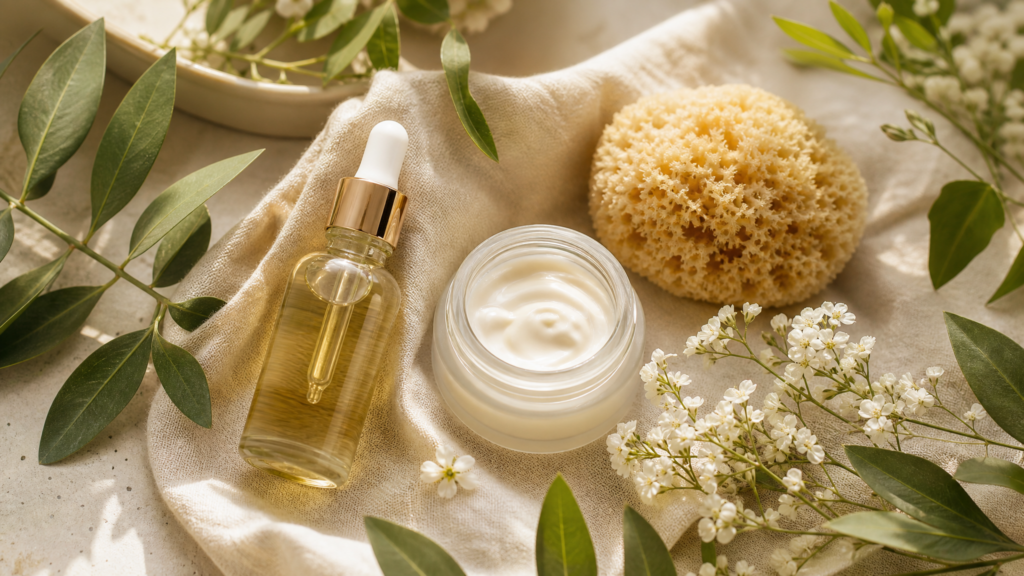
organic skin care

Refreshed hero image for: 10 Tips For Organic Skin Care In Your 20s

10 Tips For Organic Skin Care In Your 20s

We mostly focus on prevention and maintenance.

1 Sun Protection

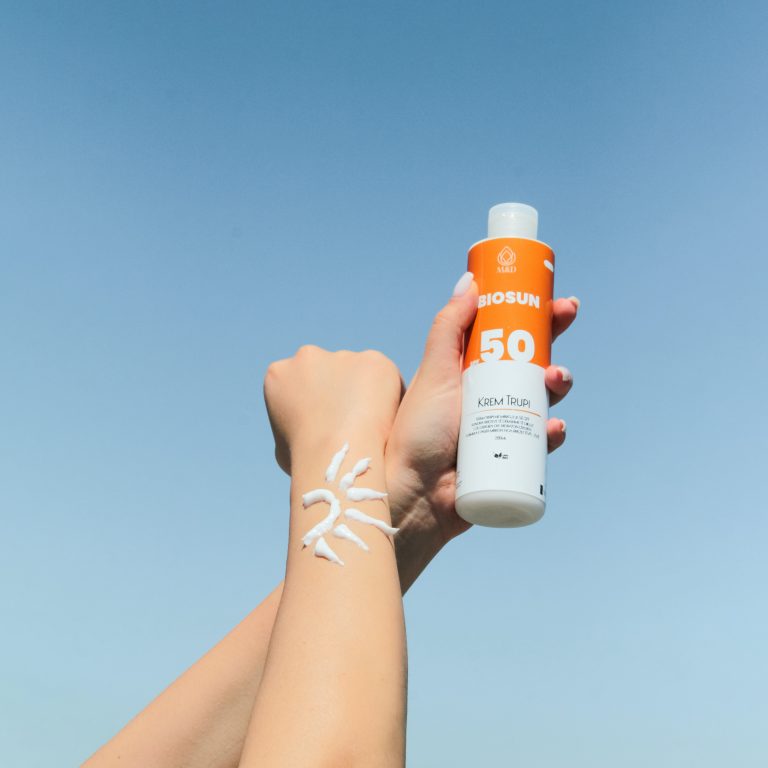
When it comes to preventing aging, the number one thing at any age, but especially in your 20s, is wearing sunscreen and protecting your skin from the sun. The vast majority of external aging is due to exposure to ultraviolet radiation.

Ultraviolet radiation from the sun penetrates the deeper layers of the skin and chews up the collagen there. So, if you’re not wearing sunscreen in your 20s, get on that now. I also heavily encourage the use of sun-protective clothing, like broad-brimmed hats, long sleeves, and not staying out in the sun too long. These are things that will really add up over your lifetime and reduce the visible signs of photo-aging.

Sun protection is not just a summer thing or a sunny day thing. Incidentally, UV is around all of the time, and cumulatively over a lifetime, that adds up and increases the visible signs of photo-aging, things like wrinkles, modeled pigmentation, and sagging skin. So even if it’s cloudy out, that’s not an excuse to not protect your skin from the sun.

2 Wash Your Face

Cleansing the skin of the face is important to do on a daily basis. The face and neck is the most exposed to environmental stressors, things like pollution and allergens. You also need to remove sunscreen, makeup, and cosmetics at the end of the day. If those things stay on your skin, they can cause damage throughout the night.

When we sleep at night, our skin goes to work repairing some of the damage done throughout the day. If you still have garbage on your face in the form of pollutants, allergens, leftover makeup, etc., it distracts your skin from the real healing work, and promotes the formation of free radicals that can age your skin. If you have an underlying skin condition like acne or eczema, these things left on the skin can aggravate those conditions as well.

On the other hand, it’s really easy to go overboard with cleansing. Using a harsh cleanser or cleansing too frequently can strip your skin of its natural lipids and disrupt the acid mantle of the skin barrier, and therefore make you predisposed to dry skin and irritation.

The key is figuring out a cleansing method and frequency that works for you. Some people with oily skin do just fine cleansing their skin twice a day. They like to wash their face in the morning to remove some of that shiny sebum from the surface of the skin, and they never have issues with dryness. Others, like myself, with drier skin may do better only cleansing once a day.

No matter the frequency, pay attention to the cleanser that you’re using. You really want to pay attention that your cleanser is not leaving your skin feeling squeaky clean. That is basically a sign of a harsh cleanser that is stripping the skin barrier, which can lead to a lot of dryness and irritation and disrupt the microbiome of your skin. Ditching your cleanser altogether is also not a good idea. Strike a balance that works for you, but make sure you have some degree of cleansing on a daily basis.
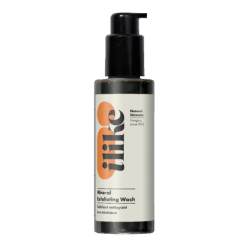
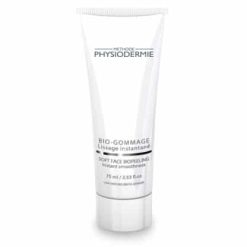
3 Exfoliate If Needed

There is a chance you can ignore the need to exfoliate. Beauty ads often stress exfoliating, which can give people in their 20s a lot of anxiety because they don’t know where to start.

There are a lot of different exfoliants out there. There’s chemical. There’s mechanical. But in your 20s, there’s a good chance you don’t really need to focus on exfoliating. People with certain skin conditions, like acne, may benefit from it; but exfoliating can also lead to clogged-up pores and acne flare-ups. Some people benefit from consistent use of products like salicylic acid, a chemical exfoliant that focuses on those oily surfaces that cause acne.

People with a dry skin condition called keratosis pylorus have trouble exfoliating dry skin; it stays around the pore and they get these little dry, red bumps. They actually benefit from consistent use of an alpha hydroxy acid moisturizer to soften that dryness and help it exfoliate. So, some people do benefit from using an exfoliant, but not everybody needs to be using one.

If you don’t have these conditions, don’t worry about exfoliating. When you cleanse the skin, you’re exfoliating to a certain extent by encouraging the sloughing of those skin cells naturally.

4 Moisturizing

Moisturizers are really important to apply to the skin after cleansing because they help aid in skin barrier recovery and help reduce what’s called trans epidermal water loss that ultimately leads to dryness. Moisturizers also help in in restoring the acid mantle and facilitating an overall healthier skin.

Certain moisturizers are especially important for people who have an underlying skin condition, like eczema or acne or rosacea, because all a lot of these diseases have an underlying component to them that has to do with an impaired skin barrier. Plus, these conditions are often treated with medications whose side effects include dryness, irritation, burning, and stinging. Using a moisturizer along with these medications reduces those side effects and ultimately yields better results.
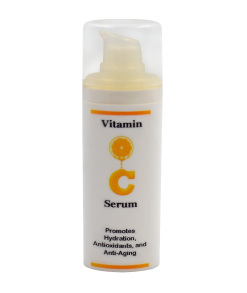
5 Vitamin C Serum

Vitamin C, if you’re not familiar, also goes by the name Ascorbic Acid. It is an antioxidant that, when applied topically to the skin, has been shown in small studies to improve collagen production, reduce damage due to ultraviolet radiation exposure, and reduce free radical production.

Ascorbic acid is a very nuanced and finicky ingredient. In my opinion, using a vitamin C serum is absolutely not necessary at any age. It’s a matter of personal consumer preference. We do not have studies that actually show that using a vitamin C serum ultimately reduces the signs of photo-aging. You can make the argument that it would be beneficial to introduce it in your 20s, but in my opinion, we don’t have the data to say that it makes a long-term difference.

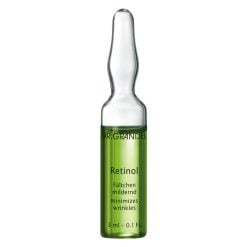
6 Retinol

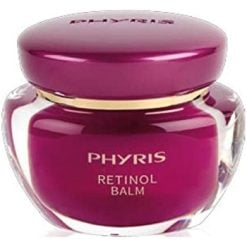
Retinol/vitamin A is one treatment on which we do have significant data demonstrating its efficacy for reducing the burden of sun damage and photo aging, and helping your skin deal with ultraviolet radiation. Retinoic acid, a.k.a. TRED, is the retinol/vitamin A form that has been around the longest, so we’ve been able to best demonstrate its anti-aging benefits.

Trentino in retinoic acid is only available by prescription, but we do have studies that suggest that using an over-the-counter retinol also has anti-aging benefits, it just takes longer to start working. Down below, I’ll list some over-the-counter retinol and vitamin A dappling products that can help with acne control.

People in their 20s and 30s often ask me how to convince your doctor to prescribe Retno for anti-aging. Many doctors have reservations about prescribing it for cosmetic reasons, especially in young people, because they’re liable if you have an adverse reaction.

If you do want to incorporate a topical vitamin A, using retinol over the counter, consistently and long term, can offer some long term advantages.

The biggest game-changer in producing ultimate results is going to be sunscreen and sun protection. But the other thing that matters is your lifestyle.
7 Diet

Your diet makes a huge difference in the health of your skin. Ultimately, your skin care doesn’t matter if you have a crappy diet.

People who eat fruits and vegetables have a better ability to combat the damaging effects of ultraviolet radiation on the skin. It takes more sun to damage their skin than somebody who isn’t getting the carotenoids, vitamins, and minerals from fresh, whole fruits and vegetables.

Don’t fear the sugars found in fruits and vegetables. Find those that you enjoy eating and try to get a variety. Make sure that you incorporate healthy fats into your diet, things like nuts, seeds, avocado, to help with the lipid barrier.

Stay away from sugary processed foods, they have a high glycemic index, which translates into the increased formation of advanced glycation end products in the skin. Think of it as chewing gum on your collagen fibers and things like that—basically clumping up due to sugar. These glycation end products contribute to wrinkle formation and the darkening of the deeper layers of the skin with age. Additionally, if you have acne, eating sugary foods can spike your insulin levels, which promotes oil production and causes acne flare-ups.

I’m not going to tell you to never eat cookies or cake or candy or sweets that you enjoy. But eat a balanced diet and try not to gravitate towards sugary processed foods or convenience foods. Things that come out of a window are generally not the best for us. They’re fine once in a while, but make sure that you are eating healthy foods, ideally cooked at home. That eventually will show up on your skin for sure.

8 Exercise

No, you don’t have to be an athlete. Just make sure that you get some cardiovascular exercise a few times a week at least, and generally try to move more. It really makes a difference in the health of your skin and your skin’s ability to handle free radical damage.

Exercise ultimately reduces total body inflammation levels and improves circulation, which translates to healthier, more radiant skin. If you have acne or any other inflammatory skin condition, the reduction in inflammation that comes with consistent exercise will help those conditions.

9 Sleep

Getting eight hours of sleep is probably one of the best things that you can do for your skin long term. When we sleep, certain hormones have released that impact the ability of the skin to regenerate.

If you don’t sleep adequately, you don’t give your skin enough time to properly recover. Plus, if you’re over-tired, your body is going to release more stress hormones that further impair your skin function.

In my twenties, it was all the rage to subsist on very little sleep. If I could go back in time and tell my younger self something, it would be this. Even though people are not stressing it, it is very important. I wish I had done it sooner, if you form poor sleep habits in your teens and twenties, it’s going to be harder to correct when you get wiser. I know this firsthand because I’ve been working on it myself for many years now.

10 Fewer Skin Care Products

No magazine, infomercial, or beauty editor is going to tell you this. You don’t need seventeen products to keep your skin healthy. Focus on cleanser, moisturizer, and sunscreen, and stay consistent with those on those three things. That’s perfect. Once you dial that in, that’s all you really need to be doing to keep your skin healthy

Yes, some products can improve some of the visible signs of photo aging and help make your skin look a little bit better, a little more glowing, less transient. But your lifestyle choices are going to carry you long-term. The fewer things you put on your skin, the better.

For example, because if I prescribe a patient one eczema cream, the likelihood of them using that one cream consistently is pretty good. If I prescribe them two creams, the likelihood of consistent use drops significantly. This is why cosmetics companies make combination creams. You can use each individual ingredient, but your compliance will go down tremendously. It’s not sustainable. Fewer products equal better consistency, and it’s ultimately better for counter space and your wallet as well.

Those are my top 10 tips for skin care in your 20s. One final note: enjoy your 20s. It was a very stressful time for me, but it was also a very fun time. Enjoy life, and smile more. Your future self will thank you!

Facebook
Twitter
LinkedIn

10 Tips For Organic Skin Care In Your 20s Read More »
Refreshed hero image for: Organic Skin Care Vs. Non-Organic

Organic Skin Care Vs. Non-Organic

Are you trying to decide between organic skin care and non-organic skin care? You are not alone. As the demand for natural ingredients in beauty products grows, it is becoming increasingly difficult to decipher which product is genuinely organic. Understanding what makes a product truly organic, how to tell if a product is genuine and choosing the right products for your skin type are all essential steps when making an informed decision about your skincare routine. Plus, learn more about the comparison between organic and non-organic options so that you can make an educated choice on which one will work best for you. Creating an effective skincare routine with these tips can help ensure healthier-looking skin from head to toe.

Table of Contents:


Understanding Organic Skin Care


Organic skin care is a type of beauty regimen that uses natural ingredients and avoids synthetic chemicals. It focuses on using products derived from plants, minerals, and other naturally occurring substances to nourish the skin. Organic skin care products are free from artificial fragrances, dyes, preservatives, and other potentially harmful ingredients.

What is Organic Skin Care?

Organic skin care involves using only natural ingredients in order to maintain healthy-looking skin without exposing it to harsh chemicals or toxins. This includes avoiding synthetic fragrances, dyes, preservatives, and other potentially harmful additives found in non-organic skincare products. Natural plant oils such as coconut oil or jojoba oil can be used as moisturizers while clays like bentonite clay can be used for cleansing purposes. Essential oils like lavender oil or tea tree oil can also be added for their therapeutic benefits. In addition to these organic ingredients being gentle on the skin they are also more sustainable than their non-organic counterparts which makes them an environmentally friendly choice when it comes to skincare routines.

Benefits of Organic Skin Care

Organic skincare has many advantages over traditional chemical-based skincare options, including being gentler on the skin due to its lack of harsh chemicals; having fewer potential irritants which makes it suitable for those with sensitive skins; providing better hydration due to its use of natural plant oils; containing antioxidants that help protect against environmental damage; and offering a more sustainable option compared with conventional cosmetics production methods which often involve animal testing or unsustainable packaging materials among other things. Additionally, organic skincare may provide additional health benefits such as helping reduce inflammation caused by acne breakouts or eczema flare ups thanks to its anti-inflammatory properties found in some essential oils like lavender oil or chamomile extract.

Disadvantages of Non-Organic Skin Care

Non-organic skincare products contain numerous synthetic compounds such as parabens, phthalates, sulfates, formaldehyde releasers, triclosan, and propylene glycols. All of these have been linked to various health issues ranging from allergies and asthma attacks to hormone disruption and cancer. Furthermore, most non-organic brands do not utilize any sustainability practices meaning they rely heavily upon single use plastics and excessive energy consumption during manufacturing processes thus contributing further towards global warming.

Organic skin care is becoming increasingly popular, as more people become aware of the benefits and disadvantages associated with non-organic products. To ensure that you are purchasing genuine organic products, it’s important to know how to tell if a product is genuinely organic.

Key Takeaway: Organic skin care offers many benefits such as being gentler on the skin, providing better hydration and containing antioxidants that help protect against environmental damage. Non-organic skincare products contain numerous synthetic compounds linked to various health issues and do not utilize any kind of sustainability practices.

How to Tell if a Product is Genuinely Organic

It is important to ensure that a product is genuinely organic before purchasing it. Knowing how to tell if a product is truly organic can help you make an informed decision and get the most out of your skin care routine.

Ingredients List:

The first step in determining whether or not a product is genuinely organic is looking at its ingredients list. Organic products should contain only natural, plant-based ingredients such as essential oils, herbs, and botanical extracts. Avoid any products with synthetic fragrances, preservatives, or other artificial additives as these are not considered “organic” by definition.

Certification Labels and Logos:

Look for certification labels and logos on the packaging of the product, which indicate that it has been certified as being made from genuine organic ingredients. This will usually be displayed prominently on the front label so it should be easy to spot. Some common certifications include USDA Organic, Ecocert Certified Natural Cosmetics (CNC), and BDIH Certified Natural Cosmetics (BDIH).

It is also worth researching both the brand and its manufacturer to learn more about their production processes and standards when creating genuinely organic products. Many brands now have websites where that provide detailed information about their commitment to using only natural ingredients in their formulas, so this can be a great source of information.

When it comes to organic skin care, it’s important to know how to tell if a product is genuinely organic. By researching the ingredients list, certification labels and logos, as well as the brand and manufacturer, you can ensure that you’re investing in quality products. Now let’s look at how to choose the right skin care products for your needs.

Choosing the Right Skin Care Products

When it comes to skin care, the most important thing is choosing the right products for your individual needs. Identifying your skin type and needs is essential in order to make sure you’re using the correct products. Knowing what kind of skin you have will help you determine which ingredients are best suited for your complexion. For example, if you have dry or sensitive skin, look for moisturizing ingredients like hyaluronic acid or aloe vera that can help hydrate and soothe irritated areas.

Knowing the different types of products available is also key when selecting a product line. There are cleansers, toners, serums, masks, exfoliators and moisturizers – all designed to target specific concerns like acne or wrinkles. It’s essential to understand how each product works so that you can create an effective routine explicitly tailored to your needs.

Reading reviews and testimonials from other users can be extremely helpful when deciding on a particular brand or product line. This allows you to understand how others feel about particular items before making a purchase decision yourself. Additionally, many brands offer sample sizes so that customers can try out their products before committing to buying them in full-size bottles or jars.

When it comes to choosing the right skin care products, it is important to understand your skin type and needs as well as the different types of products available. Now let’s take a look at how organic and non-organic skin care compare in terms of cost, quality, and safety.

Comparison between Organic Skin Care and Non-Organic Skin Care

It is important to understand the differences between organic and non-organic skin care in order to make an informed decision about which type of product is best for you.

Cost Comparison:

Organic skin care products tend to be more expensive than non-organic ones due to the higher quality ingredients used in their production. However, they can often last longer since they contain fewer harsh chemicals that can strip away natural oils from your skin. Additionally, organic products may also have fewer side effects such as irritation or breakouts due to the lack of synthetic preservatives or fragrances.

Quality Comparison:

Organic skin care products are typically made with high quality ingredients that are free from toxins and other harmful substances found in conventional cosmetics. This means that these products will not only be better for your overall health but also provide superior results when compared with non-organic alternatives. Furthermore, organic ingredients are often sourced ethically and sustainably so you can feel good about supporting a company whose values align with yours.

Non-organic skincare products may contain potentially hazardous chemicals such as parabens, phthalates, sulfates, formaldehyde releases, and artificial colors, which could cause long term damage if used over time. Conversely, organic skincare contains natural plant extracts that do not pose any risk of harm when applied topically on your face or body. Furthermore, most certified organic brands use biodegradable packaging materials so there is no need to worry about contributing plastic waste to our environment either.

Comparing organic and non-organic skin care products can help you decide what is best for your skin. Now that we’ve discussed their differences, let’s look at how to create an effective organic skin care routine.

Key Takeaway: Organic skin care products are typically more expensive but offer superior quality and safety due to their natural ingredients, ethical sourcing and biodegradable packaging. Benefits include: fewer side effects, better results, no hazardous chemicals or plastic waste.

Creating an Effective Organic Skin Care Routine

Cleansing is the first step in creating an effective organic skin care routine. It helps to remove dirt, oil, and other impurities from the surface of your skin. Organic cleansers are made with natural ingredients such as aloe vera, coconut oil, and essential oils that help to nourish and hydrate your skin while cleansing it gently. Make sure to use a gentle cleanser that won’t strip away too much moisture or irritate your skin.

Exfoliating is another important step in any organic skincare routine. Exfoliation helps to remove dead skin cells from the surface of your face so that new ones can grow in their place for a more youthful appearance. Natural exfoliants like sea salt, sugar, oatmeal, or baking soda can be used as part of an organic skincare routine without causing irritation or damage to the delicate layers of facial tissue beneath them.

Moisturizing is also essential for healthy-looking skin when using an organic skincare routine. Natural moisturizers like shea butter or jojoba oil help keep your face hydrated by locking in moisture and preventing dryness throughout the day. It is best to choose a lightweight formula that absorbs quickly into the skin without leaving behind greasy residue on top of it.

FAQs in Relation to Organic Skin Care and Non-Organic Skin Care

What is the difference between organic and inorganic skin care?

Organic skin care products are made from natural ingredients that are grown without the use of synthetic fertilizers, pesticides, or other artificial chemicals. These products often contain plant-based oils and extracts that nourish and protect the skin. In contrast, inorganic skin care products may contain harsh chemicals such as parabens, sulfates, phthalates, and fragrances which can be damaging to the skin over time. Organic skincare also typically contains fewer preservatives than inorganic skincare which makes it a healthier choice for those with sensitive skin types. Additionally, organic skincare is more environmentally friendly since its production does not involve any synthetic processes or materials.

Is organic skin care really better?

Yes, organic skin care is better for your skin. Organic ingredients are free from harsh chemicals and synthetic fragrances, which can irritate the skin. They also contain natural antioxidants and vitamins that help nourish and protect the skin. Additionally, organic products are often more sustainable than their non-organic counterparts as they don’t use any artificial fertilizers or pesticides in their production process. Finally, using an organic skincare routine can reduce your exposure to potentially harmful toxins while still providing you with effective results.

What is the difference between organic and natural skin care products?

Organic skin care products are those that contain only natural ingredients derived from plants, animals, or minerals. These products do not include any synthetic chemicals, preservatives, fragrances, dyes or other additives. Natural skin care products on the other hand may contain some of these synthetic ingredients but must also include a majority of natural ingredients such as essential oils and plant extracts. Natural skin care products can be more gentle and nourishing for the skin than organic ones due to their lack of harsh chemicals. However, they may not always provide the same level of protection against environmental damage as organic options do.

What is considered organic skincare?

Organic skincare is a type of skin care that uses natural, plant-based ingredients and avoids synthetic chemicals. These products are free from artificial fragrances, dyes, parabens, sulfates and other harsh additives. Organic skincare also often contains beneficial botanicals such as aloe vera, chamomile extract and essential oils to nourish the skin while providing gentle cleansing. Additionally, organic skincare may contain antioxidants to help protect against environmental damage caused by UV rays or pollution. By using organic skincare products you can be sure that your skin is getting the best possible treatment without any potentially harmful ingredients.

Conclusion

In conclusion, it is important to understand the differences between organic skin care and non-organic skin care. Knowing how to tell if a product is genuinely organic can help you make an informed decision when choosing the right skin care products for your needs. Creating an effective organic skin care routine with quality ingredients will ensure that you get the best results from your products. Ultimately, both types of skincare have their benefits and drawbacks; however, opting for organic skincare whenever possible may be beneficial in terms of safety and effectiveness.

Organic Skin Care Vs. Non-Organic Read More »

Why Organic Skin Care Products are the Best


Why Organic Skin Care Products Are the Best (2026)


Written by Clelia Gakshteyn

Organic skin care products are the best choice for most people because they deliver active botanicals without synthetic pesticides, hormone-disrupting preservatives, or undisclosed “fragrance” chemicals. Certified organic formulas visibly support healthier-looking skin, reduce the risk of irritation, and are better for the planet — all backed by a growing body of ingredient science.

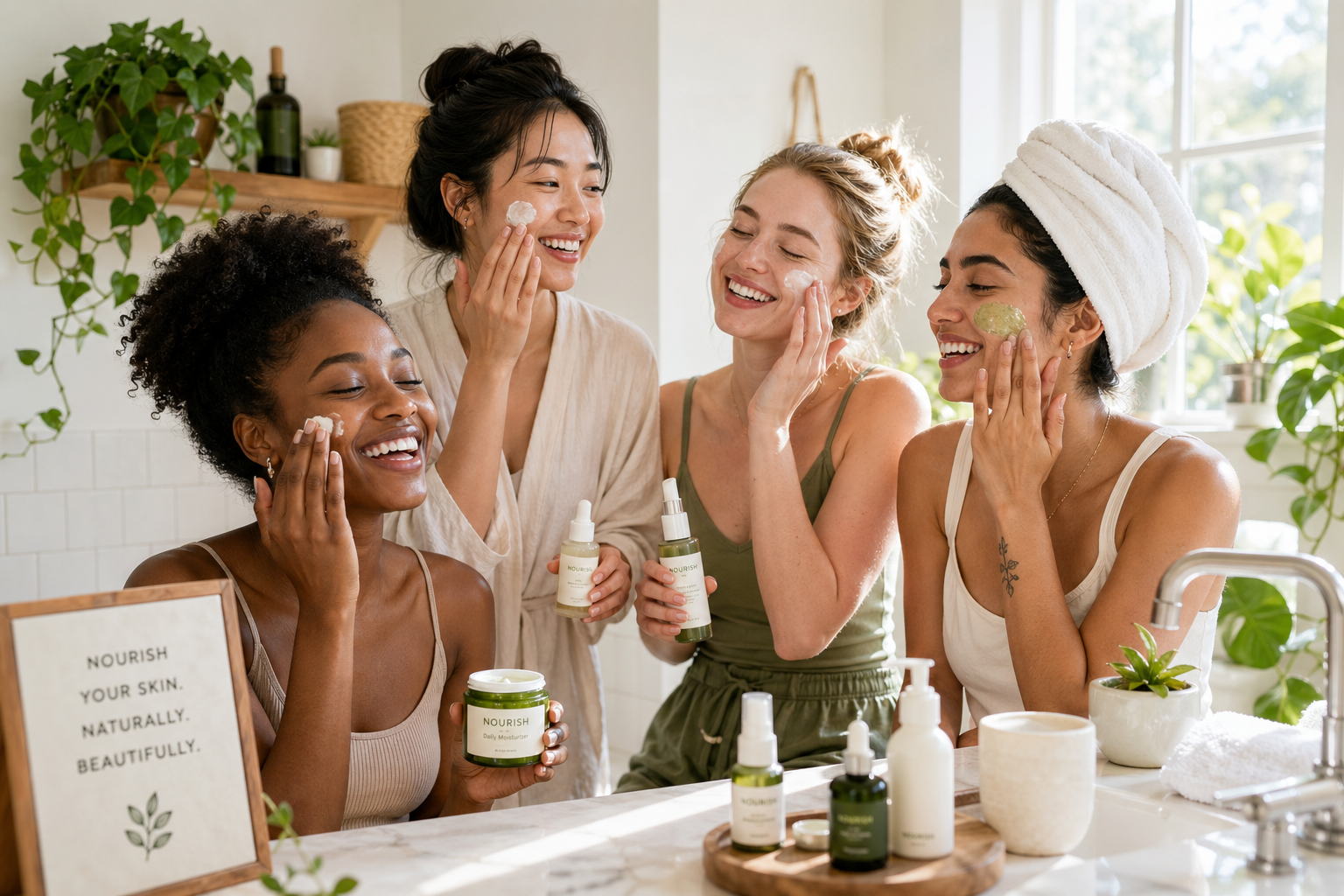
Diverse individuals using organic skincare products in a bright bathroom setting.

The Regulatory Gap Conventional Brands Don’t Want You to Know

Here’s a fact that surprises most people: the US has not passed a major federal law updating cosmetic ingredient safety since 1938. The European Union has banned or restricted over 2,400 cosmetic ingredients. The US FDA has restricted fewer than 15.

That gap matters for your skin. Ingredients like parabens, formaldehyde-releasing preservatives, and synthetic musks are still legal in US products — and still showing up in bestselling moisturizers, cleansers, and serums. The Environmental Working Group’s Skin Deep database (2025) flags over 40% of personal care products as containing at least one ingredient of moderate-to-high concern.

Certified organic products operate under a different standard. To earn the USDA Organic seal, a product must contain at least 95% organically produced ingredients — grown without synthetic pesticides, herbicides, or GMOs. Third-party certifiers like COSMOS and Ecocert add another layer of verification. You’re not just taking a brand’s word for it.

📋 Callout: What “Certified Organic” Actually Guarantees
A USDA Organic seal on a skin care product means:

  • At least 95% of ingredients are certified organically grown
  • No synthetic pesticides, herbicides, or GMO-derived ingredients
  • Third-party audited — not self-declared
  • No irradiation or sewage sludge used in production

Note: “Natural” and “clean” are unregulated marketing terms. Always look for a third-party certification seal.

The Modernization of Cosmetics Regulation Act (MoCRA), signed in 2022, did strengthen FDA oversight — requiring manufacturers to register facilities and report serious adverse events. It’s a step forward. But it still doesn’t pre-approve ingredients before they reach your bathroom shelf.

how to read a skin care ingredient label

What Your Skin Actually Absorbs — And Why It Matters

You’ve probably heard the claim that “your skin absorbs 60% of what you put on it.” The real science is more nuanced — and still worth paying attention to. Skin absorption varies significantly by molecule size, skin condition, and where on the body you apply a product (Bos & Meinardi 2000, Experimental Dermatology).

Thinner skin areas — like your eyelids, neck, and inner arms — absorb ingredients at much higher rates than your forearms or back. Broken or compromised skin barriers absorb even more. This means the products you use around your eyes and on irritated skin deserve the most scrutiny.

What we do know clearly: certain synthetic ingredients do penetrate the skin barrier and enter systemic circulation. A 2019 FDA-commissioned study (Matta et al. 2019, JAMA) found that four common chemical sunscreen filters — avobenzone, oxybenzone, octocrylene, and ecamsule — were detected in blood plasma after a single day of use at concentrations exceeding FDA safety thresholds. This doesn’t mean they’re definitively harmful, but it does mean the conversation about what we put on our skin is worth having.

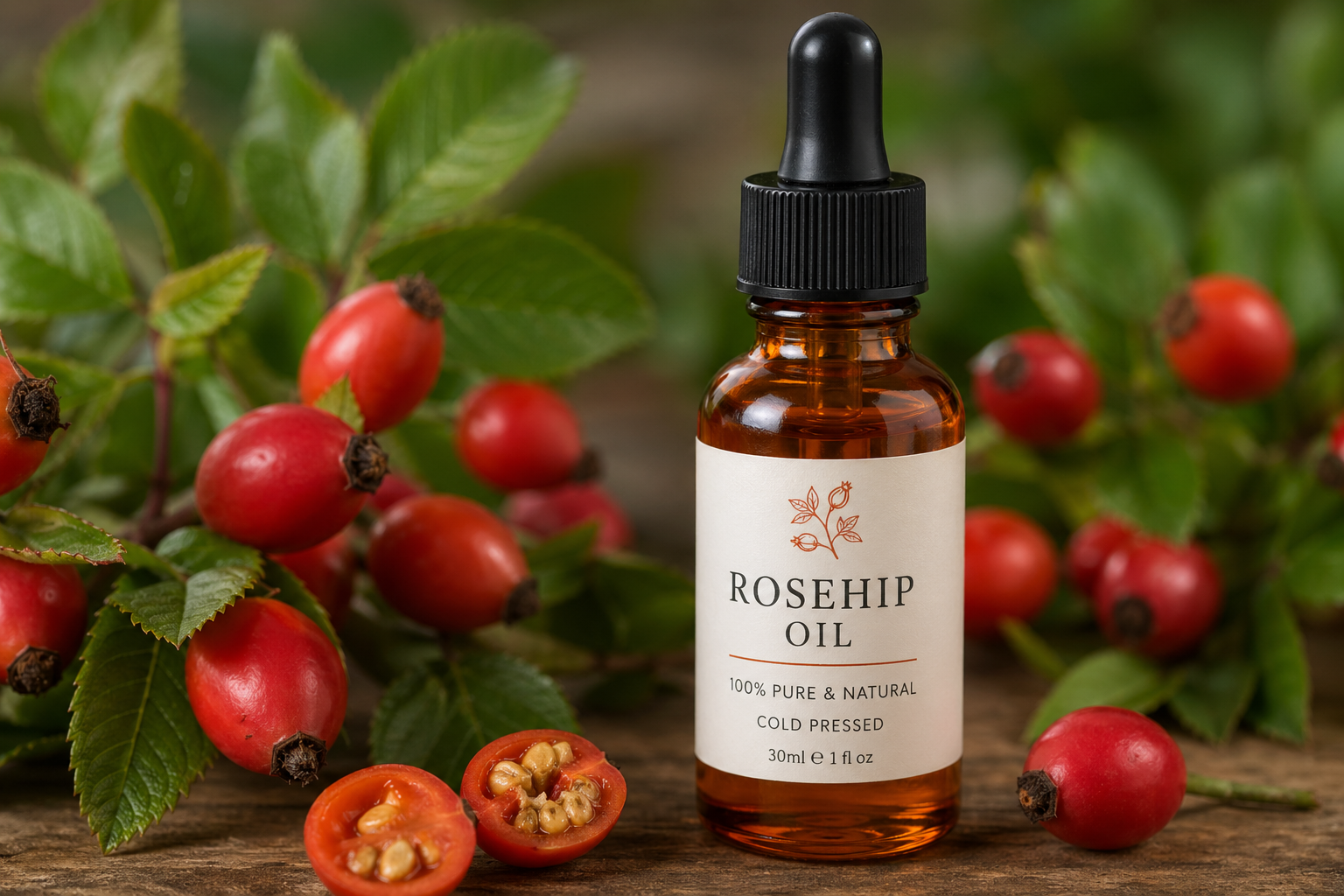
Close-up of rosehip oil with fresh rosehip berries and leaves.

The “Fragrance” Loophole — And How Organic Products Close It

Scan the ingredient list of almost any conventional skin care product and you’ll find one word: fragrance (or its synonym, parfum). That single word can legally conceal a blend of up to 3,000+ individual chemical compounds — none of which the brand is required to disclose.

The International Fragrance Association (IFRA) maintains a list of restricted fragrance ingredients, but compliance is largely voluntary. The Campaign for Safe Cosmetics has identified fragrance blends as one of the leading causes of contact dermatitis, hormone disruption, and respiratory irritation in personal care products.

Organic skin care products don’t hide behind “fragrance.” Every ingredient is listed by its INCI (International Nomenclature of Cosmetic Ingredients) name. If a product smells like lavender, you’ll see Lavandula angustifolia (lavender essential oil) on the label — not a proprietary chemical blend. Transparency is built into the certification standard.

⚠️ Safety Note: Essential Oils Aren’t Risk-Free Either
Organic products that use essential oils for scent are more transparent — but essential oils can still trigger reactions in sensitive skin. If you’re prone to redness or rosacea, look for fragrance-free certified organic options. “Unscented” and “fragrance-free” are not the same thing — unscented products may still contain masking fragrances.

best fragrance-free organic moisturizers for sensitive skin

[VIDEO_EMBED: YouTube video explaining how to read a cosmetic ingredient label and identify hidden fragrance chemicals]

The Ingredient Science: Why Organic Botanicals Visibly Work

Let’s get into the evidence — because “organic is better” only means something if the ingredients actually perform. The good news: some of the most well-researched actives in dermatology are plant-derived, and their organic-grown versions deliver those actives without pesticide residue diluting the formula.

Rosehip Oil

Organic cold-pressed rosehip seed oil is one of the most studied plant oils in cosmetic dermatology. It contains trans-retinoic acid equivalents, essential fatty acids (omega-3 and omega-6), and vitamin C precursors that work together to visibly improve skin tone and texture.

Valerón-Almazán et al. 2015 (Clinical and Cosmetic Investigational Dermatology) found that rosehip oil applied twice daily for 8 weeks significantly improved the appearance of scars, fine lines, and skin moisture compared to placebo.

Niacinamide

Niacinamide (vitamin B3) is one of the most versatile and well-tolerated actives in skin care. At 5% concentration, it visibly reduces the appearance of dark spots, minimizes the look of enlarged pores, and supports a more even skin tone.

Niacinamide at 5% concentration reduces the appearance of hyperpigmentation by up to 35% over 8 weeks, according to Bissett et al. 2005, Journal of Cosmetic Dermatology.

Green Tea Extract

Organic green tea extract (EGCG) is a potent antioxidant that helps neutralize free-radical damage from UV exposure and pollution. Kim et al. 2006 (International Journal of Dermatology) found that green tea polyphenols help inhibit UV-induced matrix metalloproteinase expression — the enzyme process linked to the visible breakdown of collagen in skin.

Plant-Derived Hyaluronic Acid

Hyaluronic acid derived through fermentation (rather than animal extraction) holds up to 1,000 times its weight in water, according to Stern et al. 2004 (Journal of Controlled Release). In organic formulas, you get this hydration powerhouse without the synthetic stabilizers often added to conventional versions.

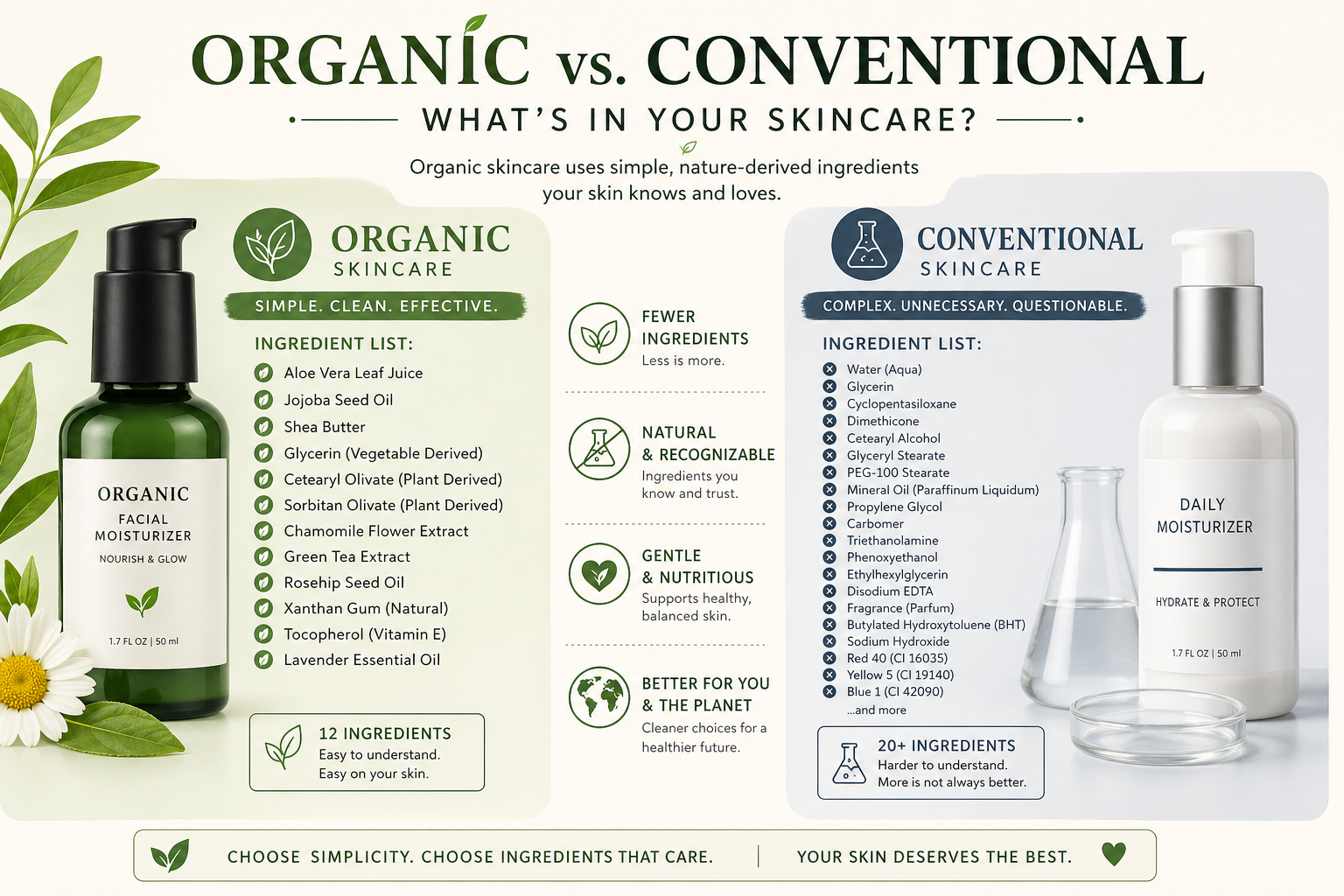
Infographic comparing organic and conventional skincare ingredients.

Fewer Ingredients, Fewer Triggers — The Case for Simpler Formulas

The average conventional skin care product contains 15–50 ingredients. Many of those are synthetic stabilizers, emulsifiers, and preservatives that exist to extend shelf life or improve texture — not to benefit your skin. More ingredients means more potential triggers for sensitive or reactive skin.

Organic formulas tend to be shorter and more purposeful. When you can read and recognize every ingredient on the label — Rosa canina (rosehip), Simmondsia chinensis (jojoba), Camellia sinensis (green tea) — you’re in a much better position to identify what your skin loves and what it doesn’t.

This matters especially if you have eczema, rosacea, or contact dermatitis. A 2021 review in the Journal of the European Academy of Dermatology and Venereology (Mowitz et al. 2021) identified fragrance and preservatives as the two most common causes of allergic contact dermatitis from cosmetics. Both are dramatically reduced or eliminated in certified organic formulations.

Patch-testing is still essential, even with organic products. Natural ingredients like essential oils, citrus extracts, and certain plant proteins can trigger reactions in sensitive individuals. Always test a new product on your inner arm for 24–48 hours before applying to your face.

how to patch test a new skin care product

Better for Your Skin — And the Planet You Live On

Choosing organic skin care isn’t just a personal health decision. Conventional cosmetic manufacturing contributes to water pollution, soil degradation, and biodiversity loss through synthetic chemical runoff and non-biodegradable packaging.

Certified organic farming practices build soil health, reduce synthetic chemical load in waterways, and support biodiversity. When you choose a COSMOS-certified organic product, you’re supporting supply chains that are audited for environmental impact — not just ingredient sourcing.

On the animal testing front: most certified organic brands are also cruelty-free, because the ingredient safety profile of plant-based formulas is already well-established. The EU banned cosmetic animal testing in 2013. In the US, Leaping Bunny certification is the gold standard — look for it alongside your organic certification seal.

Microplastics are another growing concern. Many conventional exfoliants and formulas contain synthetic polymers that wash into waterways and have been detected in marine ecosystems. Organic exfoliants use biodegradable alternatives — bamboo powder, rice bran, oat flour — that break down naturally.

How to Actually Shop for Organic Skin Care (Without Getting Greenwashed)

“Organic” on a label doesn’t always mean what you think. Greenwashing — using natural-sounding language and earthy packaging to imply organic credentials that don’t exist — is rampant in the beauty industry. Here’s how to shop smart:

  • Look for third-party certification seals: USDA Organic, COSMOS Organic, Ecocert, or NSF/ANSI 305. These require independent auditing.
  • Ignore “natural,” “botanical,” and “plant-based” as standalone claims — these are unregulated marketing terms with no legal definition in cosmetics.
  • Read the INCI ingredient list: Ingredients are listed in descending order of concentration. If water (aqua) is first and your “organic rosehip oil” is near the bottom, you’re getting a trace amount.
  • Check the EWG Skin Deep database: Free tool that rates over 90,000 products for ingredient safety concerns.
  • Understand “made with organic ingredients”: This USDA designation means 70–94% organic content — still meaningful, but not the same as the full USDA Organic seal.
  • Shorter ingredient lists are often better: Especially for sensitive skin. If you can’t identify what most ingredients are, that’s worth investigating.
✅ Your Organic Skin Care Starter Checklist
Before buying any new skin care product, ask:

  • Does it carry a recognized third-party organic certification?
  • Can I read and recognize the ingredient list?
  • Is “fragrance” or “parfum” listed? (If yes, ask why.)
  • Is the brand cruelty-free certified (Leaping Bunny)?
  • Does the packaging minimize plastic waste?

If you answer yes to the first two and no to the third, you’re in good shape.

Build Your Organic Skin Care Routine

Ready to make the switch? Here’s a simple framework for building an effective organic routine — morning and evening — using clean, certified ingredients your skin will actually thank you for.

Morning routine: Gentle organic cleanser → antioxidant serum (vitamin C or green tea) → organic moisturizer → SPF (mineral, zinc oxide-based)

Evening routine: Double cleanse (oil cleanser + gentle foaming cleanser) → treatment serum (niacinamide or rosehip oil) → organic night moisturizer or facial oil

Start with one product swap at a time — your skin needs time to adjust to new formulas, and introducing everything at once makes it impossible to know what’s working.

Not sure which organic products are right for your skin type?
Take our 2-minute skin quiz and get a personalized organic routine recommendation →
Find Your Organic Routine

Frequently Asked Questions About Organic Skin Care

Are organic skin care products actually better for your skin?

Organic skin care products are formulated without synthetic pesticides, parabens, or artificial fragrances — ingredients linked to skin irritation and hormone disruption. Many certified organic ingredients, like rosehip oil and green tea extract, have peer-reviewed evidence supporting their ability to visibly improve skin texture, tone, and hydration over time.

What does “certified organic” mean on a skin care label?

A “certified organic” label means the product’s ingredients were grown without synthetic pesticides or fertilizers and verified by a third-party certifier like USDA, COSMOS, or Ecocert. In the US, a product must contain at least 95% organically produced ingredients to carry the USDA Organic seal.

Do organic skin care products work as well as conventional ones?

Yes — and in many cases, better. Organic ingredients like vitamin C from kakadu plum, retinol alternatives from rosehip, and niacinamide from natural sources deliver measurable results. Without synthetic fillers diluting the formula, you often get a higher concentration of active botanicals per application.

Can organic skin care products cause allergic reactions?

Natural doesn’t automatically mean reaction-free. Some people are sensitive to botanical ingredients like essential oils or plant extracts. However, organic products typically use fewer total ingredients, making it easier to identify and avoid your personal triggers. Always patch-test a new product on your inner arm for 24–48 hours before full application.

What ingredients should I avoid in conventional skin care products?

Key ingredients to watch for include parabens (methylparaben, propylparaben), sodium lauryl sulfate (SLS), synthetic fragrances listed as “parfum,” formaldehyde-releasing preservatives, and oxybenzone in sunscreens. The Environmental Working Group’s Skin Deep database rates over 90,000 products for ingredient safety.

Is organic skin care better for sensitive skin?

Generally, yes. Organic formulas avoid the synthetic dyes, artificial fragrances, and harsh preservatives most commonly associated with contact dermatitis and sensitivity flares. Shorter, plant-based ingredient lists are easier for reactive skin to tolerate. Look for fragrance-free certified organic options if your skin is particularly reactive.

References

  • Bos JD & Meinardi MM. 2000. “The 500 Dalton rule for the skin penetration of chemical compounds and drugs.” Experimental Dermatology.
  • Matta MK et al. 2019. “Effect of sunscreen application under maximal use conditions on plasma concentration of sunscreen active ingredients.” JAMA.
  • Bissett DL et al. 2005. “Niacinamide: A B vitamin that improves aging facial skin appearance.” Journal of Cosmetic Dermatology.
  • Valerón-Almazán P et al. 2015. “Evolution of post-surgical scars treated with pure rosehip seed oil.” Clinical and Cosmetic Investigational Dermatology.
  • Kim J et al. 2006. “Green tea polyphenols and UV-induced matrix metalloproteinase expression.” International Journal of Dermatology.
  • Stern R et al. 2004. “Hyaluronic acid: a key molecule in skin aging.” Journal of Controlled Release.
  • Mowitz M et al. 2021. “Fragrance and preservatives as causes of allergic contact dermatitis.” Journal of the European Academy of Dermatology and Venereology.
  • Environmental Working Group. 2025. Skin Deep Cosmetics Database. ewg.org/skindeep.


Why Organic Skin Care Products are the Best Read More »

Refreshed hero image for: Organic Skin Care for Sensitive Skin

Organic Skin Care for Sensitive Skin

Quick Answer: The best organic skin care for sensitive skin uses barrier-supporting ingredients like oat extract, chamomile, centella asiatica, and ceramide-rich plant oils. Avoid synthetic fragrance, alcohol denat., and essential oils in high concentrations — even in “natural” products. A simplified 3-step routine (gentle cleanser → calming serum or moisturizer → mineral SPF) visibly reduces redness and reactivity within 4–6 weeks.

If your skin flushes, stings, or breaks out every time you try something new, you already know the struggle is real. Sensitive skin isn’t a flaw — it’s a skin type that simply needs a smarter approach. And in 2026, organic skin care has never been better equipped to deliver exactly that.

The clean beauty space has matured enormously. We now have peer-reviewed research backing many plant-based ingredients, stricter certification standards, and formulations sophisticated enough to rival conventional dermatology brands. This guide cuts through the noise so you can build a routine that actually works — without the guesswork or the redness.

Elegant organic skincare products for sensitive skin on a wooden tray with botanicals

What Is Sensitive Skin, Really?

Sensitive skin is defined by a compromised skin barrier, leading to reactions like stinging and redness. A 2023 review found that up to 70% of individuals report some level of skin sensitivity.

Sensitive skin is characterized by a compromised or overreactive skin barrier — the outermost layer of your skin (the stratum corneum) isn’t doing its job of keeping irritants out and moisture in. When that barrier is weakened, everyday ingredients that most people tolerate easily can trigger stinging, redness, or breakouts on your skin.

A 2023 review in the Journal of the European Academy of Dermatology and Venereology found that up to 70% of people self-report some degree of skin sensitivity, making it one of the most common skin concerns worldwide. That said, “sensitive skin” can look very different from person to person.

Common Signs Your Skin Is Sensitive

  • Redness, flushing, or blotchiness after product use or temperature changes
  • Stinging, burning, or itching — especially after cleansing
  • Tightness or dryness that feels uncomfortable
  • Frequent reactions to new products
  • Visible capillaries or a tendency toward rosacea-like symptoms
  • Skin that takes longer than usual to calm down after irritation

Sensitive Skin vs. Sensitized Skin

Here’s a distinction worth knowing: true sensitive skin is largely genetic, while sensitized skin is acquired — caused by over-exfoliation, harsh products, pollution, or chronic stress. The good news? Sensitized skin can often be reversed with the right routine. Both types respond well to gentle, organic formulations focused on barrier repair.

💡 Esthetician Tip: If your skin suddenly became “sensitive” in your 30s or 40s, it may actually be sensitized — meaning your barrier has been damaged over time. A simplified, organic routine focused on barrier repair can make a visible difference within 4–6 weeks.
how to repair your skin barrier naturally

Why Organic Skin Care Works for Sensitive Skin

Organic skin care works for sensitive skin because certified organic products are free from synthetic pesticides and harsh chemicals, which can irritate a weakened skin barrier.

The word “organic” gets thrown around a lot, so let’s be precise. In skincare, certified organic products are made with ingredients grown without synthetic pesticides, herbicides, or GMOs, and processed without harsh chemical solvents. Look for certifications like USDA Organic, COSMOS Organic, or Ecocert — these have real standards behind them.

Why does this matter for sensitive skin? Because pesticide residues and synthetic processing agents can be skin irritants — and if your barrier is already compromised, even trace amounts can trigger a reaction. Certified organic formulations reduce that risk significantly.

What the Research Actually Says

📊 Quotable Fact: “Colloidal oatmeal (Avena sativa) significantly reduces skin itching, dryness, and scaling in subjects with sensitive and eczema-prone skin, according to Kurtz & Wallo 2007, Journal of Drugs in Dermatology.”

Organic plant-based ingredients like colloidal oat, centella asiatica, and chamomile have genuine peer-reviewed evidence behind them. They’re not just “gentle by default” — they actively support barrier function and help visibly calm reactive skin.

Beyond ingredient quality, organic formulations tend to have shorter ingredient lists. Fewer ingredients means fewer potential triggers — a real advantage when your skin reacts to almost everything.

what does COSMOS organic certification mean

Best Organic Ingredients for Sensitive Skin

Colloidal oat is a top organic ingredient for sensitive skin, known for its soothing properties and ability to reduce redness due to its avenanthramides content.

Not all gentle ingredients are created equal. These are the evidence-backed organic ingredients that consistently perform well for sensitive and reactive skin types.

Close-up of a hand applying organic moisturizer to sensitive skin

1. Colloidal Oat (Avena sativa)

Colloidal oat is one of the most well-studied soothing ingredients in dermatology. It contains avenanthramides — polyphenols with documented ability to help reduce the appearance of redness and calm reactive skin. Kurtz & Wallo (2007, Journal of Drugs in Dermatology) confirmed its effectiveness in visibly reducing itching, dryness, and scaling in sensitive and eczema-prone skin.

Look for it in cleansers, moisturizers, and overnight masks. It’s one of the few ingredients that works across all sensitive skin subtypes.

2. Chamomile (Matricaria chamomilla)

Chamomile is rich in bisabolol and apigenin, compounds shown to help visibly reduce redness and support a calmer-looking complexion. It’s a staple in organic sensitive skin formulations for good reason — it’s effective, well-tolerated, and pairs beautifully with other calming actives.

For a moisturizer built around this ingredient, the Eminence Organics Calm Skin Chamomile Moisturizer combines chamomile with antioxidant protection to help visibly soothe redness while hydrating reactive skin — and it’s vegan, paraben-free, and gluten-free.

3. Centella Asiatica (Cica)

Centella asiatica — often called “cica” — has become one of the most talked-about barrier-repair ingredients in clean beauty. Its active compounds (asiaticoside, madecassoside) help support the look of a healthy skin barrier and visibly calm stressed skin. Lee et al. (2012, Evidence-Based Complementary and Alternative Medicine) noted centella’s role in supporting skin’s natural recovery process.

It’s especially useful if your sensitivity is linked to a damaged barrier rather than a genetic predisposition.

4. Rosehip Seed Oil

Cold-pressed rosehip seed oil delivers essential fatty acids (linoleic and alpha-linolenic acid) that help replenish a lipid-depleted barrier. Valerón-Almazán et al. (2015, Clinical and Cosmetic Investigational Dermatology) found rosehip oil helped improve the appearance of skin texture and tone with consistent use.

It absorbs quickly and is non-comedogenic, making it suitable even for sensitive skin that’s also prone to congestion.

5. Aloe Vera

Aloe barbadensis leaf juice is a hydrating, film-forming ingredient that helps the skin’s surface feel cooler and more comfortable after irritation. It’s best used as a base ingredient in serums and toners rather than as a standalone treatment.

6. Niacinamide (Vitamin B3)

Niacinamide at 4–5% concentration visibly reduces the appearance of redness and helps support barrier ceramide production. Bissett et al. (2005, Journal of Cosmetic Dermatology) found that 5% niacinamide reduced the appearance of hyperpigmentation by up to 35% over 8 weeks — and it’s one of the most universally well-tolerated actives for sensitive skin.

If you want to add a brightening booster to your routine without risking irritation, the Eminence Organics Skin Care Superfood Booster-Powder blends botanical Vitamin C, K, and B3 (niacinamide) to help visibly brighten and even skin tone — just mix it into your existing moisturizer.

Quick-Reference: Best Organic Ingredients for Sensitive Skin

Ingredient Key Benefit Best Used In
Colloidal Oat Visibly calms itching & redness Cleansers, masks, moisturizers
Chamomile Helps reduce the appearance of redness Toners, moisturizers, serums
Centella Asiatica Supports visible barrier recovery Serums, creams
Rosehip Seed Oil Replenishes barrier lipids Face oils, serums
Aloe Vera Hydrates & soothes surface discomfort Toners, serums, mists
Niacinamide (B3) Visibly reduces redness & dark spots Serums, moisturizers, boosters

Ingredients to Avoid — Even in “Natural” Products

Avoid synthetic fragrances, which are the most common cause of contact dermatitis, and other potential irritants even in ‘natural’ products when caring for sensitive skin.

“Natural” does not automatically mean gentle. Some of the most common irritants in skincare are plant-derived. If your skin is sensitive or sensitized, these are the ingredients most worth watching out for — regardless of whether a product is labeled organic or natural.

[VIDEO_EMBED: How to read a skincare ingredient label for sensitive skin — YouTube tutorial]

Top Irritants to Avoid

  • Synthetic fragrance (parfum/fragrance) — the single most common cause of contact dermatitis in skincare. Avoid it entirely if your skin is reactive.
  • Essential oils in high concentrations — lavender, peppermint, eucalyptus, and citrus oils can all trigger reactions in sensitive skin, even in “clean” formulas.
  • Alcohol denat. (denatured alcohol) — disrupts the skin barrier and increases transepidermal water loss (TEWL), making sensitivity worse over time.
  • Witch hazel (high-astringency forms) — the tannins in witch hazel can be drying and irritating for reactive skin types.
  • Sodium lauryl sulfate (SLS) — a harsh surfactant that strips the skin barrier. Even in “natural” cleansers, SLS is a common trigger.
  • High-concentration AHAs/BHAs without buffering — glycolic acid and salicylic acid at high concentrations can cause significant irritation if your barrier is already compromised.
  • Certain preservatives — methylisothiazolinone (MI) and methylchloroisothiazolinone (MCI) are well-documented sensitizers (Lundov et al. 2011, Contact Dermatitis).
⚠️ Safety Note: If you experience persistent redness, swelling, or hives after using any skincare product — organic or not — discontinue use and consult a board-certified dermatologist. Patch testing new products on your inner arm for 24–48 hours before full application is always a smart first step for sensitive skin.

Building Your Organic Sensitive Skin Routine

For sensitive skin, a simple 3-step organic routine is recommended: a gentle cleanser, a calming serum or toner, and a moisturizer to avoid overwhelming the skin barrier.

The golden rule for sensitive skin: less is more. A 3-step routine done consistently outperforms a 10-step routine that overwhelms your barrier. Here’s how to build a simple, effective organic routine for reactive skin.

Infographic comparing best organic ingredients for sensitive skin

Morning Routine

  1. Gentle Organic Cleanser — Use a low-pH, sulfate-free formula. Micellar water or a cream cleanser works well. Avoid foaming cleansers with SLS.
  2. Calming Serum or Toner — Look for centella asiatica, niacinamide, or aloe vera. Keep it simple — one active at a time.
  3. Barrier Moisturizer + SPF — Mineral SPF (zinc oxide or titanium dioxide) is far better tolerated by sensitive skin than chemical UV filters. Apply after moisturizer or use a combined SPF moisturizer.

Evening Routine

  1. Double Cleanse (if wearing SPF or makeup) — Start with a cleansing oil or balm, follow with your gentle cream cleanser.
  2. Treatment Step (optional) — If your skin is stable, this is where you’d add a low-concentration retinol or a calming serum. If your skin is reactive right now, skip this step entirely until your barrier is stronger.
  3. Rich Barrier Moisturizer — Evening is when your skin does most of its repair work. Use a slightly richer formula than your morning moisturizer. For sensitive skin that also shows early signs of aging, the Phyris Anti-Aging for Sensitive Skin is formulated to visibly reduce fine lines while calming and strengthening reactive skin — a rare combination.

Weekly Add-Ons (Once Stable)

  • Enzyme mask (papaya or pumpkin enzyme) — gentler than AHA exfoliation, 1x per week maximum
  • Hydrating sheet mask with hyaluronic acid or centella — great for a visible plumping boost
  • Facial oil (rosehip or sea buckthorn) — seal in moisture on dry or cold nights
best organic SPF for sensitive skin

How to Choose the Right Organic Products for Sensitive Skin

To choose the right organic products for sensitive skin, check for certifications like USDA Organic, examine the first five ingredients, and ensure they are gentle and suitable.

Reading labels is your most powerful tool. Here’s a practical framework for evaluating any new organic product before it touches your face.

The 5-Question Label Check

  1. Is it certified? Look for USDA Organic, COSMOS Organic, or Ecocert on the label. “Made with organic ingredients” is a weaker claim — it means only 70% of ingredients are organic.
  2. What’s in the first five ingredients? The first five ingredients make up the bulk of the formula. If water, aloe, or a plant oil is first — good sign. If alcohol or fragrance is in the top five — skip it.
  3. Is there fragrance (parfum)? If yes, put it back. Even “natural fragrance” can be a blend of dozens of undisclosed compounds.
  4. How long is the ingredient list? For sensitive skin, shorter is generally safer. Aim for 10–15 ingredients max in your core products.
  5. Has it been patch tested? Apply a small amount to your inner arm or behind your ear for 24–48 hours before using on your face. This simple step can save you a week of redness.
📊 Quotable Fact: “Methylisothiazolinone (MI) is a significant cause of allergic contact dermatitis, with sensitization rates rising sharply after its introduction into rinse-off and leave-on cosmetic products, according to Lundov et al. 2011, Contact Dermatitis.”

Common Mistakes to Avoid With Sensitive Skin

Common mistakes for sensitive skin include introducing multiple new products at once and over-exfoliating; limit new products to one every two weeks and exfoliation to once a week.

Even well-intentioned routines can backfire. These are the most common mistakes people with sensitive skin make — and how to course-correct.

  • Introducing too many new products at once. If you add three new products in one week and your skin reacts, you won’t know which one caused it. Introduce one new product every 2 weeks.
  • Over-exfoliating. Sensitive skin does not need daily exfoliation. Even gentle enzyme exfoliants should be limited to once a week until your barrier is strong.
  • Assuming “organic” means “safe for all.” As covered above, many plant-derived ingredients are potent irritants. Always check the full ingredient list.
  • Skipping SPF. UV exposure is one of the biggest drivers of barrier damage and visible redness. Mineral SPF is non-negotiable — even on cloudy days.
  • Using hot water to cleanse. Hot water strips the skin barrier. Use lukewarm water and pat (don’t rub) your skin dry.
  • Abandoning a routine too quickly. Barrier repair takes time. Most people need 4–8 weeks of consistent use before seeing meaningful visible improvement.
Morning skincare routine with organic products for sensitive skin
🌿 Editor’s Picks for Sensitive Skin

Frequently Asked Questions

Certified organic skin care is generally better for sensitive skin due to the absence of common irritants, but always check the full ingredient list and perform a patch test.

Is organic skin care better for sensitive skin than conventional skin care?

Certified organic skin care tends to be better tolerated by sensitive skin because it excludes synthetic fragrances, harsh surfactants, and certain preservatives that are common irritants. That said, “organic” alone isn’t a guarantee of gentleness — always check the full ingredient list and patch test before use.

Can sensitive skin use retinol?

Yes, but with caution. Start with a low concentration (0.025–0.05%), use it only 1–2 nights per week, and always follow with a barrier-supporting moisturizer. Bakuchiol — a plant-derived retinol alternative — is a gentler option that helps improve the appearance of fine lines with less risk of irritation for reactive skin types.

How long does it take for organic skin care to work on sensitive skin?

Most people see a visible reduction in redness and reactivity within 4–6 weeks of a consistent, simplified organic routine. Barrier repair takes time — skin cell turnover cycles are approximately 28 days. Stick with your routine for at least one full cycle before evaluating results.

Are essential oils safe for sensitive skin?

Many essential oils — including lavender, peppermint, and citrus — are common irritants for sensitive skin, even in small concentrations. If you have reactive skin, it’s safest to choose fragrance-free formulas or products where essential oils appear very low on the ingredient list (below 0.5%).

What’s the difference between USDA Organic and COSMOS Organic certifications?

USDA Organic is a US-based standard requiring 95%+ certified organic ingredients. COSMOS Organic is a European standard that also regulates manufacturing processes, packaging, and the origin of synthetic ingredients. Both are credible — COSMOS is generally considered more comprehensive for cosmetics specifically.

Can I use vitamin C on sensitive skin?

Yes — but choose a stable, lower-concentration form. L-ascorbic acid at 10% or below is generally well tolerated. Alternatively, look for gentler vitamin C derivatives like ascorbyl glucoside or sodium ascorbyl phosphate, which are less acidic and less likely to cause stinging on reactive skin.

The Bottom Line

Sensitive skin benefits from simplicity and consistency, thriving on certified organic formulations that include barrier-supporting ingredients without synthetic irritants.

Sensitive skin thrives on simplicity, consistency, and the right ingredients. Certified organic formulations — built around barrier-supporting actives like colloidal oat, chamomile, centella asiatica, and niacinamide — give your skin what it needs without the synthetic irritants that trigger reactions.

Organic Skin Care for Sensitive Skin Read More »

Refreshed hero image for: 7 Brilliant Tips For Skin Condition Rosacea, According To Experts

7 Brilliant Tips For Skin Condition Rosacea, According To Experts

The skin condition rosacea is an incredibly uncomfortable disease to live with. This post will share some dermatologist tips for navigating skin care, choosing skin care, and things to avoid in skin care products for people with rosacea rash.

What Causes Rosacea Rash?

If you have this skin condition rosacea, you already know how challenging it can be to navigate the skin care aisle and select skin care products that do not irritate you, sting, burn, and cause excessive redness and irritation on your skin.

Rosacea rash is an inflammatory skin condition which occurs due to hypersensitivity, to things that come in contact with the skin, and that hypersensitivity manifests with symptoms such as burning, tingling, flushes of redness, heat, and little red bumps that almost look like acne and pimples but are a little different in their underlying nature.

Additionally, avoiding triggers that can cause a flare-up, such as sun exposure, spicy foods, and Alcohol consumption can also be helpful in managing the condition.

1-Keep It Simple!

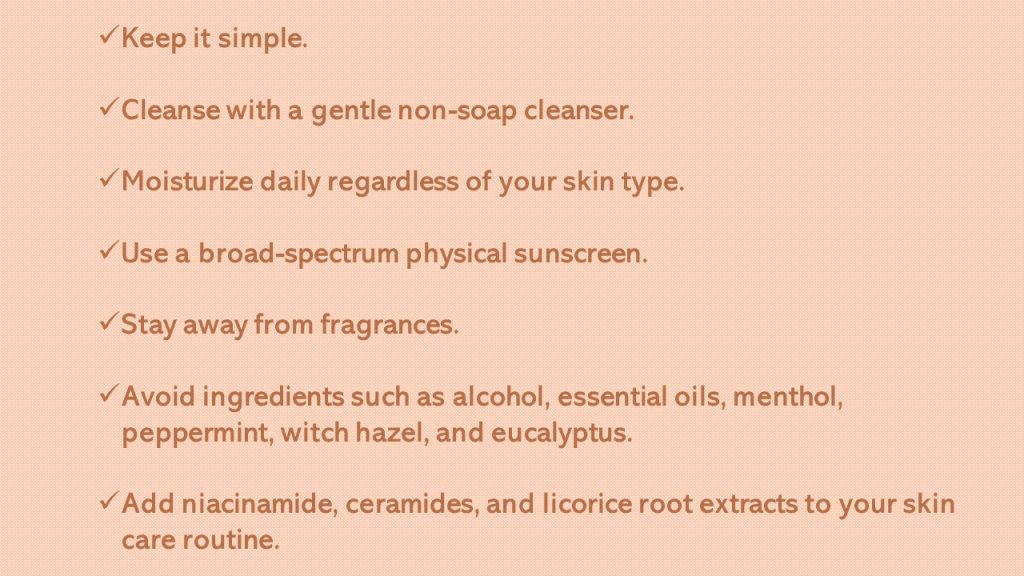
The key for rosacea skin rash is to keep it simple. Your routine and the products you use should not be excessive, no more than three products. Think about it. Rosacea is a skin disease in which things that come in contact with the skin are very likely to irritate you, so reduce the number of things that you put on your skin.

The three basic tenets of a skin care routine, really for anybody, but in particular for people with rosacea, should be: a gentle cleanser, a moisturizer, and a sunscreen.

2-Use A Gentle Non-Soap Cleanser

My essential skincare tip for rosacea is cleansing your skin. It is important to cleanse your skin with a gentle, non-soap cleanser. Things that settle on the skin from our environment can contribute to prolonged symptoms and exacerbate redness and irritation.

The way you cleanse your skin is also very important.

You need to be very gentle.

Use lukewarm water, avoid extreme temperatures, and just use your finger pads in a circular motion across the face.

Cleansing your skin this way is important for everybody, but in particular for people with skin condition rosacea, because physical touch can cause redness and irritation, and precipitate flares of your disease.

In other words, things like spin brushes, scrub brushes, facial brushes, and harsh washcloths can be your nemesis. So just use your finger pads in a gentle, circular motion and then rinse the cleanser off with lukewarm water.

3-Moisturize Regardless Of Your Skin Type!

My next tip is to use a moisturizer on a daily basis, whether your skin is dry or oily. Moisturizers hydrate the skin by trapping water on the surface of the skin and sealing it in place. They also condition and smooth the skin cells and reduce inflammation and irritation.

skin condition rosacea rash and moisturization

Apply moisturizer on damp skin, immediately after cleansing. This capitalizes on the hydrated status of your skin at the time of cleansing. When there’s water on your skin, moisturizer will really help drive hydration into your skin, which will reduce the severity of rosacea.

We have several studies showing that individuals who use moisturizer along with their prescription topical and oral rosacea medications have better treatment results than if they don’t use a moisturizer.

4-Use A Broad-Spectrum Physical Sunscreen

My next tip will come as no surprise because I mention it every chance I get: protect your skin from the sun by wearing a broad-spectrum sunscreen. Rosacea patients have a challenge, however, in finding a sunscreen that will protect their skin without irritating the rosacea rash.

Select a physical sunscreen. That means when you look at the active ingredients of the sunscreen, the active ingredients should be only zinc oxide or zinc and titanium dioxide, which create a physical barrier to protect the skin. These active ingredients are best tolerated by people with rosacea. They won’t cause irritation, stinging, and burning.

sunscreen for rosacea rash

Other sunscreens include chemical ingredients, chemical filters, things like oxybenzone, avobenzone, octocrylene; these ingredients can be irritating for people with this skin condition, rosacea.

It’s best to select a mineral-only physical sunscreen whose active ingredient is either zinc oxide or zinc plus titanium dioxide. You should also choose broad spectrum sunscreen with an SPF, sun protection factor, of 30 or higher.

Make sure your sunscreen is fragrance free, since fragrance can be problematic for people with rosacea.

Look for ingredients like silicones, which go by the name dimethicone and a few other names I’ll list down below to help you navigate the ingredients.

Silicones are oil-free and tend to be lightweight, so they are well-tolerated in moisturizers and sunscreens for people with rosacea.

Hyaluronic acid is a humectant that will frequently be included in moisturizers and sunscreens and is also well-tolerated in people with rosacea. It helps to hydrate the skin and can help to combat some of the dryness that you might experience with a mineral sunscreen.

Sunscreen needs to be applied on a daily basis, even when it’s cloudy outside or you’re indoors all day, because the sun’s ultraviolet radiation can filter through the clouds and come through your windows, and can contribute to the inflammation of your rosacea rash.

5-Opt For Fragrance-Free Products

When it comes to the ingredients list on skincare products, it can be a daunting task to figure out what to look for and what to avoid.

The number one thing that you should be excluding from your skin care products is fragrance. I always encourage everybody to select fragrance free products, but people with skin condition rosacea in particular have to do this.

People with rosacea have a higher likelihood of developing something called allergic contact dermatitis, meaning you become sensitized against an ingredient and then you develop a skin allergy every time you come in contact with it.

Fragrance is one of the most common allergens in skincare products, plus people with rosacea rash are more likely to have flares of their symptoms regardless of allergy when they come in contact with fragrance.

This is because fragrance compounds can not only function as irritants on the skin and drive inflammation, but they’re also things called vasodilators.

Vasodilators make the blood vessels in our skin dilate and bring more redness into the skin, which is the opposite of what you want to do with rosacea.

Selecting fragrance free products is tricky to navigate because you might be duped into thinking that a product labeled unscented is safe. Unscented is not the same as fragrance free; it often means the product contains a masking fragrance to hide the scent of the product.

Fragrance goes by a lot of names, and manufacturers are not really required to disclose the inclusion of fragrance in their products. I will list these names down below in the description box so you know what specific ingredients to avoid.

6-Ingredients To Avoid

In addition to fragrance, you also want to avoid any type of essential oils: lavender oil, rose oil, rosehip oil. Any type of essential oil, regardless of how it was processed and made, can fragrance ingredients that can irritate and bother the skin of rosacea, even if you can’t smell them.

You also want to avoid any alcohols in your skin care products.

Alcohols are frequently added to sunscreens to stabilize active ingredients. For people in general, alcohol and alcohol denaturants are not something to fear. But alcohol definitely can contribute to irritation and a flare of rosacea rash because it tends to cause dryness, and people with rosacea just don’t tolerate that to the same degree as other skin types..

Menthol is another ingredient to avoid. You’ll find menthol in a lot of face washes and it imparts a tingling sensation.

Peppermint and witch hazel are often added for the same reason. You don’t want to tingle with rosacea. All these ingredients can be really irritating to people with rosacea.

Eucalyptus is frequently added as a preservative; avoid it as well.

7-Beneficial Ingredients

After that long list of things to avoid, you may be wondering if there’s anything at all you can put on your skin! There are some beneficial botanic ingredients for rosacea care, one of which includes niacinamide.

Niacinamide is anti-inflammatory, so it can help reduce redness, and it can also help heal your skin barrier and keep your skin hydrated.

Ceramides are also a good ingredient to consider for skin condition rosacea. They are part of our natural lipid barrier, and when included in moisturizers they can help strengthen our skin barrier.

Licorice root extract is very helpful in rosacea skin care products because, like niacinamide, it can be calming and anti-inflammatory.

So you will find licorice root in a variety of products that are designed to reduce redness and are marketed towards people with rosacea.

From a cosmetic perspective, some products include chromium or color correction with a green tint. This helps to camouflage redness and even out skin tone very nicely.

The Outlook

skin condition rosacea; tips for rosacea skin rash

That concludes my skincare tips for people with rosacea. Remember, the main thing is to keep it simple: cleanse, moisturize, sunscreen. Be really gentle with your skin and avoid any inflammatory ingredients.

7 Brilliant Tips For Skin Condition Rosacea, According To Experts Read More »

Shopping Cart
Scroll to Top
0